Disclosure: As an Amazon Associate, airfryerkitchensupply.com earns from qualifying purchases. Links on this page are affiliate links; they cost you nothing extra. Prices and availability change often, so check the current Amazon listing before you buy.
Is a Portable Washing Machine Worth It? The Short Answer
Is a portable washing machine worth it? Worth it if you rent without laundry hookups, live small, travel in an RV, wash frequent small loads, or lose hours weekly to shared facilities. Not worth it if a plumbed machine already serves you, your laundry is mostly bulky, or you cannot supervise water connections. That is the whole answer to is a portable washing machine worth it in one breath — the rest of this guide prices the decision in time, space, effort and routine rather than money, so you can test it against your own week honestly.
Key takeaways: the machine pays back in reclaimed time and schedule control first, in utilities second; its costs are space, supervision and drying logistics; and the deciding question is whether your laundry pattern is small-and-frequent or large-and-weekly. Everything below expands those three points with real household profiles.
In this guide
What You Actually Get
What ownership delivers, Think about where the water actually goes before you think about any cycle or control. A portable washer fills from a tap, usually through an inlet hose with a quick-connect adaptor, and it drains by pump or by gravity into a sink, a bathtub or a floor drain. That simple loop decides almost everything about daily life with the machine: how close it must live to the sink, how long the hoses need to be, whether you can walk away during a cycle, and how much of your bathroom or kitchen the laundry routine temporarily takes over. Households that plan the water path first — measuring the distance, checking the tap thread, and picturing the drain hose route — almost never regret the purchase, while households that start with capacity charts often discover the real constraint was plumbing all along.
What ownership delivers, Load size is the quiet trade at the heart of every portable machine. Smaller tubs wash smaller loads, which sounds like a limitation until you notice how laundry habits change: instead of one huge weekly mountain, most owners settle into two or three modest loads spread across the week. Shirts, underwear, gym kit, tea towels and baby clothes cycle through quickly, the machine never sits full of damp fabric, and nothing waits long enough to smell. Bulky items are the honest exception — a thick duvet, a heavy bath mat or a week of towels for a big family will still belong to a larger machine or a laundromat trip. Judged on the everyday eighty percent of laundry, though, the small tub stops feeling small surprisingly fast.
What ownership delivers, Detergent behaviour changes at this scale, and getting it right prevents most of the complaints new owners report. A portable tub needs far less detergent than a full-size load; too much produces a foam surplus that the rinse cannot clear, leaving fabric stiff and sometimes triggering extra rinses that waste the water saving the machine was bought for. Liquid detergent disperses fastest in small volumes of water, pods designed for large loads can overdose a small tub, and a modest amount of powder works if it is dissolved before clothes go in. Treat the first few washes as calibration: if you see lingering suds in the final rinse, cut the dose before you blame the machine.
What ownership delivers, Sorting still matters, even when every load is small. Mixing heavy denim with light synthetics in a compact tub unbalances the spin and shortens the life of the suspension, while washing dark dyes beside pale cottons risks the same colour transfer you would get in any machine. Portable owners develop a quick rhythm: a lights load, a darks load, and a separate pass for the grimy category — work clothes, pet blankets, cleaning cloths — so soil never migrates onto everyday garments. Because loads are small, sorting rarely means waiting days for a full basket; each category reaches washable size within a few days in most households, which keeps the whole system moving without effort.
The Real Costs Beyond Money
The hidden costs, Fabric care in a small tub is gentler than many people expect. The shorter agitator or pulsator action, combined with smaller water volumes, treats everyday cottons, synthetics and blends perfectly well, and delicates benefit from the fact that they are never crushed under a mountain of heavier laundry. Use the gentle setting where one is offered, turn printed garments inside out, and zip or button anything with hardware that could snag. Wool and anything labelled dry-clean only still do not belong in the machine, portable or otherwise. Owners who wash gym wear and technical fabrics report the small machine is ideal for them: loads are frequent, water is fresh each time, and synthetic odours never sit long enough to set.
The hidden costs, Storage is the feature nobody lists on the box and everybody uses. A portable washer earns its keep in homes where floor space rotates between jobs: the machine lives in a closet, a bathroom corner or beside the kitchen sink, then rolls or slides into working position on wash day. Measure the storage spot with the same care as the working spot, including room for the hoses and the power cord, and check that the route between the two has no threshold or step that makes moving a nuisance. Machines with built-in handles or castors reward this planning; heavier models punish it. If the machine is annoying to move, you will wash less often, and the whole point of owning it quietly evaporates.
The hidden costs, Renters face a paperwork question alongside the practical ones, and it is worth answering before the machine arrives. Most leases care about permanent plumbing changes, and a portable washer that connects to a tap with a removable adaptor and drains into a sink usually makes none — but some buildings restrict in-unit laundry outright, and a quick check of the lease or a message to the landlord protects you. Because the connection is temporary, the machine also leaves with you when you move, which changes the value calculation versus paying for a plumbed installation you would abandon. Keep the original tap fittings in a labelled bag so the sink can be restored exactly as you found it.
Who It Pays Off For
The Renter Without Hookups
For a renter whose building laundry is distant, busy or unreliable, the portable converts laundry from an expedition into a background task. The payback is measured in evenings: no hauling baskets through rain, no waiting for a free machine, no clothes left unattended among strangers. Within weeks, most such owners stop calculating and simply enjoy owning their schedule.
The Student and First-Apartment Household
Students and first renters gain control and predictability: uniforms, gym kit and weekly basics washed in-room, on their timetable, provided housing rules allow the machine. The value peaks during exam periods and bad weather, exactly when shared facilities are most miserable. The machine then graduates with them to the next home, which stretches its value across several years of transitions.
The Carer and the High-Frequency Household
Where laundry is daily and separation matters — baby clothes, care items, pet bedding — the portable’s small-and-often rhythm is not a compromise but the ideal. The machine removes the stress of the growing pile, keeps categories apart, and turns an anxious chore into a calm ten-minute routine. For these households the worth-it question usually answers itself within the first week.
For these households, Maintenance is simple but not optional, and five unglamorous habits decide whether a portable washer stays fresh for years. Leave the lid open after washing so the tub dries; wipe the lint filter after every few loads, because a clogged filter redeposits fluff on dark clothes; run an empty hot wash occasionally to clear detergent residue; check the inlet hose washers for drips before they become leaks; and keep the drain hose unkinked in storage so it does not crack along a fold. None of this takes more than minutes a month, yet skipped maintenance is behind most odour complaints, most drainage complaints and most premature pump problems owners report.
Who Should Skip It
The Bulky-Laundry Household
If your week is duvets, bath mats, and towel loads for five, a portable becomes a supplement at best and a frustration at worst. You would still travel for the big items while also supervising small loads at home — the worst of both routines. A plumbed machine or a good laundromat habit serves you better.
The Set-and-Forget Household
If your expectation is to start a load and leave the house, temporary hose connections argue against you. Supervision is brief but real, and owners who resent it stop enjoying the machine quickly. Be honest about this before buying; it is the most common reason nearly-new portables get resold.
On the other hand, For RV and boat life, the portable format solves a specific geography problem: laundry facilities are irregular, sometimes distant, and often busy exactly when you need them. A compact washer in a wet bay or bathroom corner turns a half-day laundromat expedition into background chores done while you cook or plan the next leg. The constraints are real — fresh water supply, grey-water disposal rules and power draw all need thought, and marina or campsite rules vary — but within those limits the machine earns its space. Many travellers wash small loads more often, keep a minimal wardrobe rotating, and arrive at paid facilities only for bedding and bulky items.
Strengths and Trade-Offs
- Strength: Washes everyday laundry at home without permanent plumbing, using a removable tap connection.
- Strength: Small loads match how singles, couples, students and carers actually produce laundry.
- Strength: Stores in a closet or corner and moves with you when you change homes.
- Trade-off: Bulky items such as thick duvets still need a larger machine or a laundromat trip.
- Trade-off: Temporary hose connections demand supervision while filling and draining.
- Trade-off: Spin cycles are audible and need a level, balanced load to stay calm.
Read together, the two lists describe a category that rewards realistic expectations. Nothing on the trade-off side is a defect; each item is the price of a machine that connects to a tap, stores in a closet and leaves when you do. The strengths, meanwhile, compound weekly: every avoided laundromat trip, every same-day wash of something needed tomorrow, and every small load washed in a small amount of water adds up to a routine that quietly serves the household. Weigh the lists against your own week rather than against an idealised full-size laundry room.
Alternatives to Consider
The honest alternatives are a laundromat routine optimised for one weekly trip, a wash-and-fold service for those who value time over involvement, hand washing for genuinely minimal wardrobes, and saving toward a plumbed compact machine if your housing allows installation. Each beats the portable for someone: services for the time-poor, plumbed compacts for stable homes, laundromats for bulky loads. The portable wins specifically where temporary connection, small footprint and ownership across moves matter.
Among alternatives, Baby and toddler laundry is a use case owners mention with genuine feeling. Small clothes arrive in relentless volume, often need washing the same day, and benefit from being kept separate from adult workwear and pet items. A portable machine handles the rhythm perfectly: a quick small load each evening, gentle cycles for soft fabrics, and no waiting for a full-size basket to accumulate. The same logic serves anyone caring for a family member whose laundry needs to stay separate and frequent. Hygiene habits still apply — hot washes where fabrics allow, thorough drying, and regular tub cleaning — but the machine turns a daily chore into a ten-minute routine.
Among alternatives, Pet owners form another loyal group. Hair-covered blankets, washable pads, soft toys and the towels used after muddy walks are exactly the loads nobody wants in the main household wash rotation more than necessary, and exactly the loads a small machine handles without complaint. Shake items outside first, clean the lint filter diligently, and run an empty rinse after heavily soiled loads so hair does not migrate. The spin balance lesson applies doubly here, because a single sodden pet blanket is the classic unbalanced load; pair it with towels of similar weight. For multi-pet households the machine often becomes the dedicated pet-laundry station and earns its floor space on that job alone.
How to Get the Most Value If You Buy
To maximise value, The environmental ledger of a portable washer is mostly about matching machine size to load size. Right-sized loads mean less water per garment, less energy heating and moving that water, and fewer emergency laundromat trips by car. Against that, a second appliance is another manufactured object, and a household that already owns an efficient full-size machine gains little by adding one. The strongest case belongs to households whose alternative is genuinely worse: long drives to shared facilities, oversized machines washing tiny loads, or disposable workarounds. Buy the machine to solve a real pattern in your week, keep it for years, maintain it simply, and the footprint argument mostly takes care of itself.
To maximise value, A realistic weekly rhythm helps more than any single feature. Many owners land on a pattern like this: darks on one evening, lights on another, a small delicates or gym-wear load whenever the basket fills, and household cloths with the weekend clean. Each load is short, the machine is never left holding wet laundry, and drying — on a rack near the machine — keeps pace because small loads dry fast. The routine collapses the psychological size of laundry: there is no laundry day, just a background task that takes less attention than cooking dinner. Households that try to replicate the old weekly mountain in miniature, by contrast, spend a whole evening feeding a small tub and blame the machine for a scheduling choice.
Safety First: Water, Electricity and a Spinning Tub
Every portable washing machine brings water and electricity into the same small space, so a few habits matter more than any feature list. Seat the drain hose firmly in the sink or tub before you start, and clip or weight it so pump pressure cannot push it loose mid-cycle. Never leave the machine unattended while it is filling or draining; a hose that slips can empty a full tub across a floor in minutes, and floors under and around the machine should be able to tolerate water, because small splashes are a normal part of portable laundry life.
Keep the electrical side just as disciplined. Plug into a ground-fault protected outlet where one is available, as general good practice for any appliance used near water, and always handle the plug with dry hands when you connect or disconnect it. Keep cords out of puddles and away from the drain stream. When the spin cycle runs, the machine must stand level and balanced: if it starts to vibrate hard, walk across the floor or thump against a wall, stop it, open the lid and redistribute the load evenly before restarting. Finally, treat the tub as strictly off-limits for children — a child must never climb into the tub or sit on top of the machine, and the lid stays closed whenever the machine is not being loaded or unloaded.
Models to Weigh Against These Trade-Offs
Four real models show how the balance shifts in practice. None escapes the category trade-offs, but each weights them differently.

Magic Chef Portable Washer
Magic Chef Portable Washer — a compact-appliance brand option with straightforward controls. It is here, so check price on Amazon before deciding and judge it against the pros and cons above: connection confidence, spin balance, storage fit and how easily the tub and lint filter clean. The right choice is the one whose trade-offs your household will barely notice.
Panda Portable Washing Machine
Panda Portable Washing Machine — a compact automatic-style portable for tight footprints. It is here, so check price on Amazon before deciding and judge it against the pros and cons above: connection confidence, spin balance, storage fit and how easily the tub and lint filter clean. The right choice is the one whose trade-offs your household will barely notice.
BLACK+DECKER Portable Washer
BLACK+DECKER Portable Washer — a familiar name in a compact single-tub format for push-button cycles. It is here, so check price on Amazon before deciding and judge it against the pros and cons above: connection confidence, spin balance, storage fit and how easily the tub and lint filter clean. The right choice is the one whose trade-offs your household will barely notice.

Costway Portable Washer
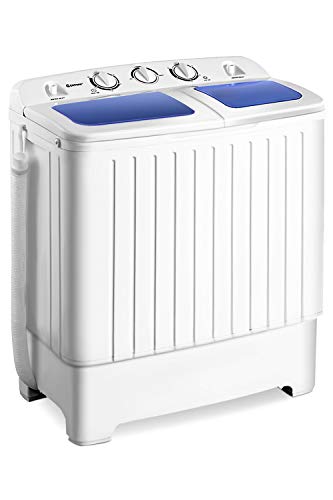
Costway Portable Washer — a value-minded line spanning manual and automatic styles. It is here, so check price on Amazon before deciding and judge it against the pros and cons above: connection confidence, spin balance, storage fit and how easily the tub and lint filter clean. The right choice is the one whose trade-offs your household will barely notice.
The Decision Checklist
Answer yes or no, honestly: Is most of my laundry small enough for a compact tub? Do I wash at least twice a week, or wish I could? Is my current laundry option costing me time, travel or stress weekly? Do I have a sink, a level spot and a storage corner that fit? Can I stay nearby while the machine fills and drains? Do housing rules allow it? Is my bulkiest regular item still manageable, or rare enough to outsource? Five or more yes answers: buy with confidence. Three or fewer: solve the laundry problem another way.
More Practical Detail Worth Knowing
In this context, Sorting still matters, even when every load is small. Mixing heavy denim with light synthetics in a compact tub unbalances the spin and shortens the life of the suspension, while washing dark dyes beside pale cottons risks the same colour transfer you would get in any machine. Portable owners develop a quick rhythm: a lights load, a darks load, and a separate pass for the grimy category — work clothes, pet blankets, cleaning cloths — so soil never migrates onto everyday garments. Because loads are small, sorting rarely means waiting days for a full basket; each category reaches washable size within a few days in most households, which keeps the whole system moving without effort.
In this context, The spin cycle deserves respect because it is where a light machine meets real physics. As the tub accelerates, any uneven pocket of wet fabric becomes a swinging weight, and a portable washer — far lighter than a plumbed-in machine — will tell you about it immediately with noise, vibration and walking across the floor. The fix is almost always load craft rather than machinery: distribute items evenly around the tub, avoid washing one heavy item alone, and pair similar weights together. Twin-tub owners get a manual version of the same lesson when they pack the spinner basket; automatic owners meet it as an out-of-balance pause. Either way, a balanced load spins drier, quieter and kinder to the machine.
In this context, Noise is relative, and setting expectations honestly helps. A portable washer is not silent: pumps hum, water sloshes, and the spin cycle announces itself through floors and thin walls. In a house with a utility corner this barely registers, but in a studio apartment the spin can interrupt a call or wake a light sleeper in the same room. Timing becomes the practical tool — wash while you are out on errands nearby, or during hours when the household is awake and active, rather than late at night. Rubber feet, a level floor and a folded mat rated for appliance use can soften vibration transfer, though none of them turn a spinning tub into a silent one.
More Practical Detail Worth Knowing
In this context, Renters face a paperwork question alongside the practical ones, and it is worth answering before the machine arrives. Most leases care about permanent plumbing changes, and a portable washer that connects to a tap with a removable adaptor and drains into a sink usually makes none — but some buildings restrict in-unit laundry outright, and a quick check of the lease or a message to the landlord protects you. Because the connection is temporary, the machine also leaves with you when you move, which changes the value calculation versus paying for a plumbed installation you would abandon. Keep the original tap fittings in a labelled bag so the sink can be restored exactly as you found it.
In this context, Water and energy use are where portables quietly shine for the right household. Filling a small tub for a small load uses a fraction of the water a full-size machine draws for the same few garments, and most portable cycles finish quickly, so the motor runs for less time. The saving disappears if you run half-empty loads back to back all day, so the honest pattern is full-but-not-stuffed small loads, washed as they accumulate. Owners who switched from laundromat routines notice a different saving: no travel, no waiting, and no carrying baskets in bad weather. The machine pays in convenience first and in utilities second, and both are real.
In this context, Maintenance is simple but not optional, and five unglamorous habits decide whether a portable washer stays fresh for years. Leave the lid open after washing so the tub dries; wipe the lint filter after every few loads, because a clogged filter redeposits fluff on dark clothes; run an empty hot wash occasionally to clear detergent residue; check the inlet hose washers for drips before they become leaks; and keep the drain hose unkinked in storage so it does not crack along a fold. None of this takes more than minutes a month, yet skipped maintenance is behind most odour complaints, most drainage complaints and most premature pump problems owners report.
More Practical Detail Worth Knowing
In this context, For RV and boat life, the portable format solves a specific geography problem: laundry facilities are irregular, sometimes distant, and often busy exactly when you need them. A compact washer in a wet bay or bathroom corner turns a half-day laundromat expedition into background chores done while you cook or plan the next leg. The constraints are real — fresh water supply, grey-water disposal rules and power draw all need thought, and marina or campsite rules vary — but within those limits the machine earns its space. Many travellers wash small loads more often, keep a minimal wardrobe rotating, and arrive at paid facilities only for bedding and bulky items.
In this context, Dorm and first-apartment living is where the category earns much of its reputation. Shared laundry rooms mean queues, costs per load, machines that eat coins or cards, and the low-grade anxiety of leaving clothes unattended. A portable washer in your own room removes the queue entirely for everyday items, provided house rules allow it and the sink connection behaves. Students typically wash uniforms, gym kit and weekly basics in the machine and still use shared facilities for duvets and big towel loads. Check dorm rules first — some residences prohibit in-room washers — and keep a waterproof mat under the working position as cheap insurance for the floor and for your deposit.
In this context, Baby and toddler laundry is a use case owners mention with genuine feeling. Small clothes arrive in relentless volume, often need washing the same day, and benefit from being kept separate from adult workwear and pet items. A portable machine handles the rhythm perfectly: a quick small load each evening, gentle cycles for soft fabrics, and no waiting for a full-size basket to accumulate. The same logic serves anyone caring for a family member whose laundry needs to stay separate and frequent. Hygiene habits still apply — hot washes where fabrics allow, thorough drying, and regular tub cleaning — but the machine turns a daily chore into a ten-minute routine.
More Practical Detail Worth Knowing
In this context, The environmental ledger of a portable washer is mostly about matching machine size to load size. Right-sized loads mean less water per garment, less energy heating and moving that water, and fewer emergency laundromat trips by car. Against that, a second appliance is another manufactured object, and a household that already owns an efficient full-size machine gains little by adding one. The strongest case belongs to households whose alternative is genuinely worse: long drives to shared facilities, oversized machines washing tiny loads, or disposable workarounds. Buy the machine to solve a real pattern in your week, keep it for years, maintain it simply, and the footprint argument mostly takes care of itself.
In this context, A realistic weekly rhythm helps more than any single feature. Many owners land on a pattern like this: darks on one evening, lights on another, a small delicates or gym-wear load whenever the basket fills, and household cloths with the weekend clean. Each load is short, the machine is never left holding wet laundry, and drying — on a rack near the machine — keeps pace because small loads dry fast. The routine collapses the psychological size of laundry: there is no laundry day, just a background task that takes less attention than cooking dinner. Households that try to replicate the old weekly mountain in miniature, by contrast, spend a whole evening feeding a small tub and blame the machine for a scheduling choice.
In this context, Drying deserves its own plan, because a portable washer only does half the laundry job. The spin cycle — especially a twin-tub spinner, which owners consistently praise for how dry it leaves fabric — removes enough water that most items dry on a rack within hours rather than days. In humid climates or winter, pair the machine with a small fan or a heated airer, and avoid drying loads faster than your space can absorb the moisture. Never treat the washer tub as a drying cabinet; leaving damp clothes sitting in it breeds odour and undoes the wash. Households that plan drying space at the same time as washing space report the smoothest routines.
More Practical Detail Worth Knowing
In this context, Controls on portables range from a single timer dial to modest electronic panels, and simpler is often better at this scale. A timer dial cannot crash, rarely confuses guests or family members, and makes the machine easy to share in a rental or multi-generational home. Electronic models add preset cycles and gentler fabric programmes, which help if you wash varied fabrics often. Whichever style you choose, test your understanding on the first supervised loads: know how to pause, how to drain manually if a cycle is interrupted, and how to run a rinse-and-spin to rescue an over-soaped load. That small fluency turns the machine from a gadget into a household tool.
In this context, Floors and neighbours both notice a portable washer, so placement is a courtesy decision as well as a practical one. A machine on a solid ground floor behaves very differently from the same machine on a sprung upper floor, where spin vibration travels. If you live above someone, wash at sociable hours, keep the machine level, and consider a dense anti-vibration mat. Inside your own rooms, keep the working position away from sleeping areas if the household includes light sleepers. None of this is complicated, but it is the difference between a machine the whole building ignores and one that becomes a topic of conversation in the stairwell.
In this context, Think about where the water actually goes before you think about any cycle or control. A portable washer fills from a tap, usually through an inlet hose with a quick-connect adaptor, and it drains by pump or by gravity into a sink, a bathtub or a floor drain. That simple loop decides almost everything about daily life with the machine: how close it must live to the sink, how long the hoses need to be, whether you can walk away during a cycle, and how much of your bathroom or kitchen the laundry routine temporarily takes over. Households that plan the water path first — measuring the distance, checking the tap thread, and picturing the drain hose route — almost never regret the purchase, while households that start with capacity charts often discover the real constraint was plumbing all along.
More Practical Detail Worth Knowing
In this context, Sorting still matters, even when every load is small. Mixing heavy denim with light synthetics in a compact tub unbalances the spin and shortens the life of the suspension, while washing dark dyes beside pale cottons risks the same colour transfer you would get in any machine. Portable owners develop a quick rhythm: a lights load, a darks load, and a separate pass for the grimy category — work clothes, pet blankets, cleaning cloths — so soil never migrates onto everyday garments. Because loads are small, sorting rarely means waiting days for a full basket; each category reaches washable size within a few days in most households, which keeps the whole system moving without effort.
In this context, The spin cycle deserves respect because it is where a light machine meets real physics. As the tub accelerates, any uneven pocket of wet fabric becomes a swinging weight, and a portable washer — far lighter than a plumbed-in machine — will tell you about it immediately with noise, vibration and walking across the floor. The fix is almost always load craft rather than machinery: distribute items evenly around the tub, avoid washing one heavy item alone, and pair similar weights together. Twin-tub owners get a manual version of the same lesson when they pack the spinner basket; automatic owners meet it as an out-of-balance pause. Either way, a balanced load spins drier, quieter and kinder to the machine.
In this context, Noise is relative, and setting expectations honestly helps. A portable washer is not silent: pumps hum, water sloshes, and the spin cycle announces itself through floors and thin walls. In a house with a utility corner this barely registers, but in a studio apartment the spin can interrupt a call or wake a light sleeper in the same room. Timing becomes the practical tool — wash while you are out on errands nearby, or during hours when the household is awake and active, rather than late at night. Rubber feet, a level floor and a folded mat rated for appliance use can soften vibration transfer, though none of them turn a spinning tub into a silent one.
More Practical Detail Worth Knowing
In this context, Renters face a paperwork question alongside the practical ones, and it is worth answering before the machine arrives. Most leases care about permanent plumbing changes, and a portable washer that connects to a tap with a removable adaptor and drains into a sink usually makes none — but some buildings restrict in-unit laundry outright, and a quick check of the lease or a message to the landlord protects you. Because the connection is temporary, the machine also leaves with you when you move, which changes the value calculation versus paying for a plumbed installation you would abandon. Keep the original tap fittings in a labelled bag so the sink can be restored exactly as you found it.
In this context, Water and energy use are where portables quietly shine for the right household. Filling a small tub for a small load uses a fraction of the water a full-size machine draws for the same few garments, and most portable cycles finish quickly, so the motor runs for less time. The saving disappears if you run half-empty loads back to back all day, so the honest pattern is full-but-not-stuffed small loads, washed as they accumulate. Owners who switched from laundromat routines notice a different saving: no travel, no waiting, and no carrying baskets in bad weather. The machine pays in convenience first and in utilities second, and both are real.
In this context, Maintenance is simple but not optional, and five unglamorous habits decide whether a portable washer stays fresh for years. Leave the lid open after washing so the tub dries; wipe the lint filter after every few loads, because a clogged filter redeposits fluff on dark clothes; run an empty hot wash occasionally to clear detergent residue; check the inlet hose washers for drips before they become leaks; and keep the drain hose unkinked in storage so it does not crack along a fold. None of this takes more than minutes a month, yet skipped maintenance is behind most odour complaints, most drainage complaints and most premature pump problems owners report.
More Practical Detail Worth Knowing
In this context, For RV and boat life, the portable format solves a specific geography problem: laundry facilities are irregular, sometimes distant, and often busy exactly when you need them. A compact washer in a wet bay or bathroom corner turns a half-day laundromat expedition into background chores done while you cook or plan the next leg. The constraints are real — fresh water supply, grey-water disposal rules and power draw all need thought, and marina or campsite rules vary — but within those limits the machine earns its space. Many travellers wash small loads more often, keep a minimal wardrobe rotating, and arrive at paid facilities only for bedding and bulky items.
In this context, Dorm and first-apartment living is where the category earns much of its reputation. Shared laundry rooms mean queues, costs per load, machines that eat coins or cards, and the low-grade anxiety of leaving clothes unattended. A portable washer in your own room removes the queue entirely for everyday items, provided house rules allow it and the sink connection behaves. Students typically wash uniforms, gym kit and weekly basics in the machine and still use shared facilities for duvets and big towel loads. Check dorm rules first — some residences prohibit in-room washers — and keep a waterproof mat under the working position as cheap insurance for the floor and for your deposit.
In this context, Baby and toddler laundry is a use case owners mention with genuine feeling. Small clothes arrive in relentless volume, often need washing the same day, and benefit from being kept separate from adult workwear and pet items. A portable machine handles the rhythm perfectly: a quick small load each evening, gentle cycles for soft fabrics, and no waiting for a full-size basket to accumulate. The same logic serves anyone caring for a family member whose laundry needs to stay separate and frequent. Hygiene habits still apply — hot washes where fabrics allow, thorough drying, and regular tub cleaning — but the machine turns a daily chore into a ten-minute routine.
The Break-Even Test in Practice: When a Portable washing machine Earns Its Place and When It Quietly Does Not
Worth is not a property of the product; it is a relationship between the product and the household using it. A portable washing machine earns its place when the jobs it does well are jobs your household actually has, week after week, in the space, water access and laundry load it must serve. It quietly fails to earn its place when its best features answer problems you rarely meet. The test below turns that idea into questions you can answer honestly before deciding.
This is where the value argument is won or lost. Start with fit, because fit failures cannot be fixed by enthusiasm later. In practice that means three things: check how the machine fills and drains, and whether your sink fittings suit it; confirm the floor can take vibration during the spin cycle without the machine walking; and measure the spot including hose reach to the tap and drain. Write the answers down rather than holding them in your head, because a portable washing machine is usually chosen over several browsing sessions, and the constraint you checked on Monday is the one forgotten by Friday. If any of the three checks produces an awkward answer, treat it as information about format, not as a problem to wave away — a different format of portable washing machine often removes the conflict entirely, while a compromise on fit tends to be re-litigated every time the product is used.
Count this honestly, because occasional use changes the answer completely. Then picture the product in its real situations rather than its best one. The routine cases are easy to imagine: an RV or cabin routine with limited water and drainage options, or a household washing delicates and baby clothes separately from the main machine. The more useful exercise is the harder day: washing bulky items that soak up water and exceed sensible capacity; and storing the machine damp, so hoses and tubs develop stale odours. A portable washing machine does not need to be perfect in those moments, but it does need a workable answer to them — a way to be moved, covered, adjusted, cleaned or simply tolerated until conditions improve. If the honest answer is that the hard day would make you stop using it altogether, that is a decision-grade fact, and it is far cheaper to learn it now than after delivery.
Frequently Asked Questions
Can I leave a portable washing machine running while I go out?
It is strongly discouraged. The temporary hose connections that make the machine portable are also its weak point: a drain hose that slips or an inlet joint that weeps can put a tub of water on the floor while nobody is watching. Stay within earshot, check the connections in the first minutes of the cycle, and treat filling and draining as attended stages. The cycles are short, so supervision costs little — most owners simply fold the previous load or tidy the kitchen while the machine works.
What should I do if the machine vibrates or walks during the spin?
Stop the cycle, let the tub come to rest, then open the lid and redistribute the clothes evenly around the drum before restarting. Check that the machine stands level on a firm floor and that you have not loaded one heavy item alone — pair it with similar-weight pieces. Persistent violent vibration on a level floor with a balanced load is a reason to stop using the machine and have it looked at. Never try to hold a walking machine still by sitting or leaning on it, and never let a child sit on the machine at any time.
Can a portable washing machine handle a full week of laundry for one person?
Yes, provided you spread it out rather than saving it all for one session. One person typically produces several small loads a week — clothes, towels and bedding separated — and a portable tub handles each comfortably. Wash two or three times a week in short sessions and the machine keeps pace easily. The pattern fails only when a week of laundry is forced through in a single evening, which is a scheduling problem rather than a machine problem. Bedding and the bulkiest items may still suit a larger machine occasionally.
Where does the water come from and where does it go?
The machine fills from a nearby tap, usually a sink or bathtub faucet, through an inlet hose with a quick-connect adaptor that screws or clips on for the wash and comes off afterwards. Drainage goes back into the same sink or tub through a drain hose, either pumped or by gravity depending on the model. That is why placement near a sink matters so much, why the drain hose must be seated firmly before every cycle, and why you should stay nearby while the machine fills and drains.
Do portable washing machines clean as well as full-size machines?
For everyday soil — body oils, light food splashes, gym wear, dust — yes, the cleaning is genuinely comparable, because the chemistry of detergent, water and agitation is the same. Where full-size machines pull ahead is heavily soiled workwear, very large items, and high-temperature sanitising washes. In a portable, good results depend on not overloading, dosing detergent for the small water volume, and sorting so heavy soil stays with heavy soil. Owners who follow those basics rarely report a cleaning gap on normal laundry.
How much detergent should I use in a portable washer?
Much less than in a full-size load — the small tub holds a fraction of the water, so a full-size dose creates foam the rinse cannot clear. Start with a small amount of liquid detergent, watch the final rinse for lingering suds, and adjust downward until the rinse water runs clear. Avoid large pods designed for big machines unless the maker explicitly supports splitting or small-load use. Overdosing is the single most common beginner mistake, and it causes stiff fabric, residue and extra rinses rather than cleaner clothes.
Related Reading and Next Steps
Keep exploring with the guides below. They cover the same small-space laundry questions from different angles, so you can compare verdicts, check the trade-offs again, or move straight to setup and daily use once you have chosen a machine.
our portable washing machine review
our portable washing machine reviews roundup
the portable washing machine buying guide
portable washing machine pros and cons in full
how to choose a portable washing machine step by step
how to use a portable washing machine safely
washing machine vs portable washing machine compared
cordless vacuums for hardwood floors in apartments
dorm-ready air fryer deal roundups for students
best RV vacuum picks for small-space cleaning
The honest test is your next four weeks of laundry, not your best intentions. If missed laundromat trips, small daily loads, and clothes you need clean tonight are already your routine, a compact Panda, Magic Chef or BLACK+DECKER portable will earn its corner quickly, provided you can stay nearby, manage the hoses, and accept smaller loads. If your laundry is mostly bulky bedding or you expect to press start and walk away, skip it and spend the money on a service or full-size access instead. Fit the machine to the routine you actually live.