Disclosure: As an Amazon Associate, airfryerkitchensupply.com earns from qualifying purchases. Links on this page are affiliate links; they cost you nothing extra. Prices and availability change often, so check the current Amazon listing before you buy.
Short answer first, because is a lazy susan worth it deserves one: a lazy susan is worth it if you have a deep cabinet, a wandering fridge or an under-sink cupboard you dread — and it is not worth it if your shelves are shallow, stuffed or already fully visible. The tray itself sits in the entry tier of kitchen spending, so the real question is never the money. It is whether your kitchen has the problem this simple tool solves, and whether you will use it by the four habits that make it safe.
Key Takeaways
- Worth it if: depth hides your items and you will declutter to a single layer.
- Not worth it if: shelves are shallow, stuffed, or already easy to survey.
- The true costs are a little shelf space and a little cleaning, not money.
- Value compounds: one tray serves cabinet, fridge and table for years.
Is a Lazy Susan Worth It? What You Actually Get
A lazy susan solves one specific problem: the back of a shelf is where kitchen items go to be forgotten. Cans expire behind newer cans, spice jars duplicate because the first jar was invisible, and the bottle you need is always behind three bottles you do not. A rotating tray converts depth into access. Everything sits in a single layer, one push brings the back to the front, and the whole contents of a shelf can be surveyed in seconds. That is the entire promise, and it is enough — most cabinet frustration is not a lack of space but a lack of reach.
Load balance is the first honesty any turntable discussion needs. A rotating tray is a spinning platform, and physics does not care about your organising enthusiasm. Tall, top-heavy bottles belong at the centre, close to the axis, where their lean matters least. Heavy items should be spread evenly rather than clustered on one side, because an unbalanced tray wobbles, spins unevenly and can walk itself toward the shelf edge. Glass jars deserve extra respect: spin slowly, with a fingertip rather than a flourish, and never flick a loaded tray the way you would spin a game-show wheel. A turntable used gently lasts for years; a turntable used as a toy sheds its load onto the cabinet floor.
Cabinet use and countertop use are genuinely different jobs. Inside a cabinet, the turntable is an access tool: it lives behind a door, gets loaded with jars and cans, and is judged on grip, rim height and how it behaves on a shelf that may not be perfectly level. On a countertop, it is a shared station: oils by the hob, tea and coffee supplies, a fruit-and-condiment centre on the table. Countertop trays are seen all day, so looks matter more and loads are lighter and more varied. Buying one tray for both jobs usually means it does neither brilliantly, which is why many organised kitchens end up with a plain grippy tray inside the cabinet and a better-looking one outside it.
Spice storage deserves its own paragraph because spices are where turntables prove themselves fastest. Spice jars are small, numerous, similar-looking and used in a hurry mid-recipe, which is a recipe for rummaging. On a tray, a cook spins once and reads labels like a carousel. Alphabetising is optional; visibility is the real system. The tray also exposes duplicates and the jar of something bought for one recipe in a previous decade — information a dark shelf hides until a clear-out forces the reckoning.
There is also a quiet accessibility argument. Cabinets punish anyone who cannot crouch, reach or haul — older cooks, injured cooks, cooks with limited mobility, and anyone simply having a stiff morning. Bringing the back of the shelf to the front with a fingertip is not a luxury for those households; it is the difference between a cabinet that works and a cabinet that gets avoided. Placing everyday items on a tray at a comfortable height is one of the kindest small changes a kitchen can receive.
In this guide
The Real Costs Beyond Money
Finally, a lazy susan is not a storage expansion. It does not create space; it spends a little space — the corners of the circle, the margin the tray needs to spin — to buy access to all the space you already have. Cabinets that are stuffed to the door will not be saved by rotation, because a tray needs a single layer to work. The honest sequence is to declutter first, keep what you actually use, and then let the tray make that kept collection effortless to reach. Judged that way, a turntable is one of the cheapest genuine upgrades a kitchen can get.
Bearings are the quiet heart of a turntable. Some trays ride on ball bearings, others on a simple rotating base, and the difference shows up under load and over time. A good bearing spins smoothly with weight on it, does not grind, and does not develop a wobble that makes bottles tremble. Care is simple but not optional: crumbs, sugar and spice dust migrate under trays and into the mechanism, so lift the tray out regularly, wipe the shelf, and wash the tray itself according to its material. A tray that starts to grate or stick is usually dirty rather than broken, and ten minutes of cleaning restores most of them.
There is also a learning curve, small but real. Households spin too fast for the first week, load the edge with the tall olive oil bottle, and learn the centre rule from one clinked jar. Children need the gentle-spin lesson too. None of this is a reason to hesitate — it is a weekend of adjustment — but a fair account of whether a lazy susan is worth it should count it, along with the cupboard corner the circle cannot use and the minute of cleaning the underside asks for each month.
Who It Pays Off For
The Deep-Cabinet Household
Consider the corner cabinet, the traditional black hole of kitchen storage. Items placed in its depths are effectively in another postal district, and most households respond by storing things there they never use — which is a confession, not a system. A large turntable is the one intervention that genuinely redeems a corner cabinet, because rotation is the only way to bring the back of a round-ish space forward without unloading everything in front of it. Corner cabinets with a tray get used daily; corner cabinets without one become archives.
A lazy susan solves one specific problem: the back of a shelf is where kitchen items go to be forgotten. Cans expire behind newer cans, spice jars duplicate because the first jar was invisible, and the bottle you need is always behind three bottles you do not. A rotating tray converts depth into access. Everything sits in a single layer, one push brings the back to the front, and the whole contents of a shelf can be surveyed in seconds. That is the entire promise, and it is enough — most cabinet frustration is not a lack of space but a lack of reach.
The Spice-Heavy Cook
Spice storage deserves its own paragraph because spices are where turntables prove themselves fastest. Spice jars are small, numerous, similar-looking and used in a hurry mid-recipe, which is a recipe for rummaging. On a tray, a cook spins once and reads labels like a carousel. Alphabetising is optional; visibility is the real system. The tray also exposes duplicates and the jar of something bought for one recipe in a previous decade — information a dark shelf hides until a clear-out forces the reckoning.
Think about the tray as part of a system rather than a solo purchase. Labels on jars read faster when they all face outward on a tray. A tray beside a set of uniform containers looks and behaves like a designed pantry rather than an accumulation. Grouping by meal — breakfast things together, baking things together — means one spin retrieves a whole task. The tray is the platform; the grouping is the intelligence. Both together are what people actually mean when they say a kitchen feels organised.
The Cook Who Needs Reach, Not Rummaging
There is also a quiet accessibility argument. Cabinets punish anyone who cannot crouch, reach or haul — older cooks, injured cooks, cooks with limited mobility, and anyone simply having a stiff morning. Bringing the back of the shelf to the front with a fingertip is not a luxury for those households; it is the difference between a cabinet that works and a cabinet that gets avoided. Placing everyday items on a tray at a comfortable height is one of the kindest small changes a kitchen can receive.
Renters have a particular reason to love turntables: they are organisation that requires no drilling, no adhesive and no permission. A tray drops onto a shelf and lifts out again on moving day, leaving the cabinet exactly as it was found. The same applies to anyone reorganising on a budget — a tray is a reversible experiment. If a cabinet layout does not work, the tray moves to the fridge or the bathroom in a minute, and nothing has been wasted. Few kitchen upgrades are this forgiving of a wrong guess.
Who Should Skip It
Skip it if your shelves are shallow enough to survey at a glance — the tray would solve a problem you do not have. Skip it, for now, if your cabinets are stuffed; rotation needs a single layer, and the decluttering you are avoiding is the actual purchase your kitchen needs. And skip the tiered designs if your storage is mostly tall bottles, because you would be buying a restriction dressed as an upgrade. In each case the money is better spent on the unglamorous fix that matches the real problem.
Strengths and Trade-Offs of Owning One
Strengths
- Every item on the shelf becomes reachable and visible in seconds.
- The purchase is reversible, portable and firmly in the entry spending tier.
- One tray keeps serving through years of kitchen rearrangements.
Trade-offs
- A little shelf capacity is spent on the circle’s corners and spin margin.
- Safe use demands centre loading and gentle spins, especially with glass.
- The bearing and underside need occasional cleaning to stay smooth.
Alternatives to Consider
Shelf risers lift the back row into view and keep full capacity, but the front row still hides whatever stands behind it at the sides. Storage bins group items and pull out like drawers, at the cost of seeing only the front bin’s contents without lifting it down. Pull-out cabinet hardware is the complete solution and the complete commitment — installation, permanence and a landlord conversation. Each alternative is the right answer for some kitchen; the turntable’s claim is that it solves the access problem for the least money, effort and commitment of any of them.
If you decide the answer is yes, these representative designs cover the cabinet, fridge and countertop cases.
Copco Non-Slip Turntable — the dependable cabinet workhorse
The Copco Non-Slip Turntable is the turntable most people picture when they first organise a deep cabinet, and it earns that place through simplicity rather than novelty. The non-slip surface grips jars and bottles so they travel with the tray instead of sliding toward the edge, and the raised rim helps contain the small lean that every bottle makes when the tray starts moving. In a spice cabinet it turns the back row into a front row with one gentle push, and in a fridge it keeps condiments from migrating behind the milk. It suits cooks who want one honest tray that does its job quietly, wipes clean without ceremony, and never asks to be treated as a delicate object. Its trade-off is plainness: it will not win a styling contest, and like every single-tier tray it trades vertical storage for access, so a cabinet that relied on stacking will need its shelves rethought around it.
Best for: households whose kitchen matches the use described above. Not suited for: anyone whose shelves, cakes or habits clash with the trade-off named in this mini review. This pick is positioned in the entry-to-mid tier of its category by its materials and design rather than by any fixed figure.
OXO Good Grips Turntable — the smooth spinner with soft edges
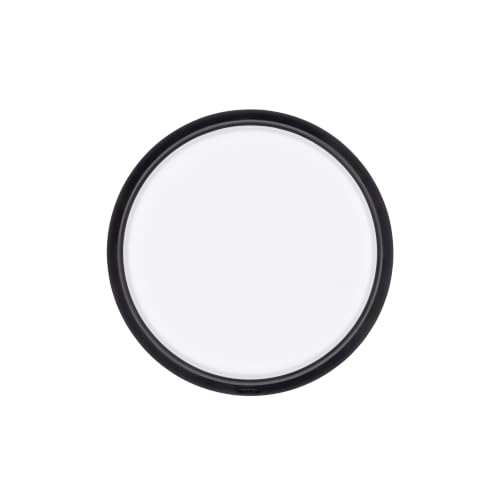
The OXO Good Grips Turntable brings the brand’s usual soft-touch thinking to a very simple object. The non-slip top and base keep both the load and the tray itself planted, the spin feels controlled rather than freewheeling, and the low profile slips into cabinets where a taller organiser would foul the shelf above. It is a particularly good fridge turntable, because cold, slightly damp shelves are exactly where a grippy base earns its keep, and the tray lifts out for washing without a wrestling match. Choose it if your main frustration is bottles that wander every time the tray moves. Skip it if you need a raised edge for very tall, top-heavy bottles, because a low lip contains less lean, and tall items belong near the centre of any turntable regardless of brand.
Best for: households whose kitchen matches the use described above. Not suited for: anyone whose shelves, cakes or habits clash with the trade-off named in this mini review. This pick is positioned in the entry-to-mid tier of its category by its materials and design rather than by any fixed figure.

madesmart Lazy Susan — the organiser with compartments
The madesmart Lazy Susan takes a different route: instead of one open tray, it divides the circle into sections, which changes how a cabinet behaves. Packets, tubes, small jars and odd-shaped items that would topple on an open tray sit upright in their own compartments, and the whole collection rotates as one tidy unit. It is excellent for the junk-drawer end of kitchen storage — vitamins, spice packets, sauce sachets, baking decorations — where the enemy is not depth but chaos. The honest limitation is flexibility: compartments are fixed opinions about what you store, and a household whose items do not match those opinions will fight the dividers. Measure your tallest regular item against the compartment walls before committing, and keep heavier jars for an open tray where they can sit at the centre.
Best for: households whose kitchen matches the use described above. Not suited for: anyone whose shelves, cakes or habits clash with the trade-off named in this mini review. This pick is positioned in the entry-to-mid tier of its category by its materials and design rather than by any fixed figure.
How to Get the Most Value If You Buy
Setting up a turntable well takes ten unhurried minutes. Empty the shelf completely, wipe it down, and let it dry, because grit under a tray becomes grinding in the bearing. Place the empty tray and spin it once to confirm it clears everything around it. Then load in order: tallest and heaviest items first, at the centre; medium items around them; lightest and smallest toward the edge where their lean matters least. Spin slowly and watch for wobbles, near-clips and bottles that lean against the rim — rearrange until a gentle push produces one calm rotation. That test spin, done once, prevents a season of small annoyances.
Cleaning a turntable is mostly about the underside. Crumbs and spice dust collect beneath trays and work into the rotating mechanism, so build the habit of lifting the tray out whenever you do a proper cabinet clean. Wash plastic trays in warm soapy water and dry them fully before reloading; wipe bamboo down, dry it promptly, and never leave it soaking in the sink. Check the shelf surface too — a sticky ring where a jar leaked will make any tray drag. If a spin starts to feel gritty, it is almost always debris, not damage, and a thorough clean is the first and usually only repair needed.
A few habits keep a turntable safe for years. Spin with a fingertip at the edge, slowly, especially with glass. Never load a tray beyond a single layer — stacking on a rotating platform invites avalanches. Keep the heaviest items off the very edge. When children use a table turntable, load it with unbreakables until the gentle-spin habit is learned. And if a tray develops a permanent wobble or a cracked base, retire it: a failing turntable in a high cabinet is a dropped jar waiting for its moment, and a replacement tray sits firmly in the entry tier of kitchen spending.
Think about the tray as part of a system rather than a solo purchase. Labels on jars read faster when they all face outward on a tray. A tray beside a set of uniform containers looks and behaves like a designed pantry rather than an accumulation. Grouping by meal — breakfast things together, baking things together — means one spin retrieves a whole task. The tray is the platform; the grouping is the intelligence. Both together are what people actually mean when they say a kitchen feels organised.
The Decision Checklist
- Do items regularly disappear at the back of a shelf?
- Have you bought a duplicate of something you already owned this year?
- Is at least one cabinet deep enough that you cannot touch its back wall comfortably?
- Are you willing to declutter that shelf to a single layer?
- Will the tallest regular item, on the tray, clear the shelf above?
- Is there a fridge shelf or under-sink cabinet with the same problem?
Four or more yes answers: buy the tray, starting with the worst shelf. Two or fewer: your kitchen’s problem lies elsewhere, and this guide’s honest advice is to spend the money there instead.
A Deeper Look at Making a Turntable Work
Height inside the cabinet is the constraint buyers discover last. A tray raises its load by its own thickness, and bottles that once slid under the shelf above may no longer lift out cleanly once they are standing on a platform. The check is simple and must happen before purchase: your tallest regular item, plus the tray, plus the room your hand needs to lift it, against the shelf above. Failing that check does not end the idea — a lower-profile tray or a different shelf usually solves it — but discovering it after delivery is how trays end up returned.
There is a gentle etiquette to a shared table turntable too. Spin slowly, announce nothing, and never rotate while someone else is serving themselves from it — the moving dish under a serving spoon is a spill rehearsing itself. Load the table tray so the heaviest dish sits near the centre and the lightest at the edge, exactly as in a cabinet, and keep bottles of sauce in the middle where their height is safest. Households that observe these small courtesies find the tray becomes invisible infrastructure; households that spin it like a game wheel find it becomes a story told at future dinners.
When a tray finally wears out — a cracked base, a bearing that stays gritty after cleaning, a wobble that no load arrangement fixes — replace it without nostalgia and without upgrading by default. The replacement should be bought by the same measurements as the original, because the shelf has not changed. The one exception is evidence: if the old tray failed at a specific job, let the new one answer that job, with a higher rim for the bottles that leaned or a grippier base for the fridge shelf that made it skate.
Finally, judge a turntable after a month, not a day. The first week includes the learning curve — the too-fast spins, the edge-loaded bottle, the rearrangement. By the fourth week the habits are set, the shelf has been wiped twice because wiping became easy, and the real verdict is available: do you still lose things in that cabinet, or not? That single question, answered honestly, is worth more than any feature list, and it is the verdict this whole family of guides is built around.
A word about pairs. Many kitchens discover that one tray creates the appetite for a second, because the contrast between the organised shelf and the remaining chaos becomes impossible to ignore. Resist reorganising everything at once. Add the second tray to the next-worst shelf, live with the pair for a month, and let the system grow by evidence. Kitchens organised in one dramatic weekend tend to relapse; kitchens organised shelf by shelf, each step proven, tend to stay organised for years.
Glass deserves one more honest paragraph. Glass jars on a rotating tray are the daily reality of most pantries, and they are perfectly safe under the rules — centre loading, gentle spins, single layer. What glass cannot survive is the combination of edge loading and enthusiasm. If your household includes a enthusiastic spinner, move the glass to a fixed shelf and let the tray carry cans and packets until the habit matures. Matching the load to the household is not a compromise; it is the entire skill of using this tool well.
Start with the audit most people skip. Before a turntable enters the house, empty the target shelf onto the counter and sort ruthlessly: the everyday items, the weekly items, the items that exist because they have always existed. Only the first two groups earn a place on the tray. The third group is why the shelf felt full, and no organiser — rotating or otherwise — can fix a collection that is half archaeology. This declutter is not a preliminary chore; it is most of the benefit, with the tray simply making the improved collection effortless to use.
Seasonal rotation is a use case worth planning for. Baking supplies surge in December, preserving and pickling gear appears in late summer, and the barbecue sauces colonise a shelf of their own for a few months a year. A tray makes these swaps painless because a whole category lifts out as one unit and another takes its place. Households that cook seasonally often keep a spare tray in service for exactly this reason, and it is a better use of money than a second tier on a tray that does not need one.
Noise is a small quality-of-life detail that rarely appears in product descriptions. A tray that rattles, grinds or clicks as it turns will be used less, especially in an open-plan kitchen where the cabinet is opened twenty times a day. The sound usually comes from debris in the mechanism or from hard items shifting on a hard surface, and both are fixable: clean underneath, and let the non-slip surface do its work. A quiet, calm spin is not a luxury feature — it is the difference between a tool that disappears into the routine and one that announces itself every time.
Think about who else uses the shelf. A tray loaded for one cook’s habits can frustrate another’s: the tall person’s bottles at the back are the short person’s invisible ones, and a shared household needs the spin to reveal everything to everyone. Load shared trays so that a single slow rotation displays every label to a person standing normally in front of the cabinet, not just to the person who arranged it. It takes one extra minute at setup and saves a low-level domestic friction that repeats daily.
The bathroom and home office deserve a mention because turntables migrate. The tray that organised spices for two years often ends its career holding medicines, toiletries or desk supplies, and it works just as well there — the physics of depth and reach do not care which room they are in. This second life is part of the value calculation: a simple, sturdy tray is almost never wasted money in a household, because there is always another deep shelf somewhere that needs exactly what it does.
Countertop stations benefit from a rule borrowed from cafés: the tray should hold one complete task and nothing else. A tea station holds tea, sweetener, mugs or the pot — not also the vitamins and the dog treats. A complete-task tray gets used as a unit, spun as a unit and tidied as a unit, and it stays tidy because its membership is obvious. The moment unrelated items join, the station dissolves back into counter clutter that happens to rotate, which is worse than ordinary clutter because it looks organised while behaving otherwise.
Worked Examples and Long-Term Ownership
The environmental footnote is brief and in the turntable’s favour. It is a buy-once object: no refills, no batteries, no consumables, and a second life in another room when the kitchen is reorganised. The most sustainable kitchen tool is the one that never needs replacing, and a well-chosen tray is close to that ideal. Choosing the sturdier version of a simple design, rather than the cheapest, is the whole strategy — for the wallet and for the cupboard alike.
If you take one procedure from this entire guide, make it the monthly two minutes: lift the tray, wipe the shelf, wash or wipe the tray, reload with the centre rule, one calm test spin. That tiny ritual is the difference between the turntable households praise for years and the one that ends up gritty, wobbling and exiled to the top shelf. Tools rarely fail their owners; maintenance, skipped quietly, fails tools. Two minutes a month is the cheapest insurance in the kitchen.
And a closing thought on expectations. A turntable will not make a small kitchen large, a chaotic cook systematic, or a stuffed cabinet virtuous. It will make every reachable thing in one cabinet reachable-er, visibly, daily, for years, for entry-tier money. Judged against that modest, exact promise, it is one of the best-value objects in the home. Judged against magic, everything disappoints. Buy it for the promise it actually makes.
Worked example one: the narrow galley kitchen. Counter space is rationed, cabinets are deep because the kitchen is old, and two cooks pass each other like trains. A turntable inside the main cabinet returns the back row to daily service, and a small countertop tray holds only the oil, salt and pepper mill that every meal uses. Nothing else changes — no remodel, no hardware — yet the kitchen feels a size larger because nothing in it has to be excavated. This is the turntable’s home ground, and the example most buyers are actually living.
Worked example two: the family fridge on a Friday. The weekly shop has just landed, small jars and sauces are multiplying, and by Wednesday the back of the middle shelf will be a mystery zone. A single fridge tray, loaded with the condiments as one group, ends the mystery before it forms: the whole sauce collection lifts out for the Friday wipe-down and returns in one movement. The tray does not hold more food; it holds the food’s organisation, which is the part that usually collapses by midweek.
Worked example three: the accessible kitchen. A cook who uses a wheelchair, or who simply cannot crouch to a low cabinet any more, reorganises so that daily items live on trays at the heights that work. The spin replaces the reach, the reach was the barrier, and the kitchen becomes theirs again without a single structural change. When people describe a turntable as a small thing, this example is the reply: small tools that restore independence are not small at all.
A note on buying in a shop versus from a listing. In a shop, put weight on the tray — a bag of shopping will do — and spin it. You are listening for grinding, feeling for wobble, and checking that the rim keeps a leaning bottle honest. From a listing, you cannot do any of that, so lean on the measurable facts: the tray’s footprint against your shelf, its profile against your clearance, and its material against its room. Photographs flatter every tray equally; measurements do not.
What about the very small kitchen with one cabinet? The honest answer is that a turntable may still be its best single upgrade, because a one-cabinet kitchen lives or dies by whether everything in that cabinet can be reached. But the declutter rule bites hardest here: the tray must hold the daily collection only, with the rarely used items accepting their fate elsewhere. A small kitchen cannot afford a rotating archive, and a tray forced to be one will be blamed for a problem it was never meant to solve.
Hospitality has a turntable chapter too. A tray of teas, coffees and sweeteners that a guest can spin for themselves is a small act of welcome — it says help yourself and means it. The same applies to a breakfast tray of jams and spreads. Hosts who entertain in small spaces lean on trays because they compress a whole offering into one footprint a guest can survey at a glance, and because clearing the table afterwards is one lift instead of six trips.
Longevity, honestly assessed, favours the simple designs. A plain tray with a sound bearing has almost nothing to fail: no coating to peel, no mechanism beyond the spin itself, no parts to lose in a move. The elaborate organisers with tiers, dividers and accessories can be excellent, but each addition is a future failure point or a future argument with a dishwasher rack. Buy complexity only when your contents genuinely demand it, and let the default be the tray that will still be spinning, unremarked, in a decade.
More Scenarios and a Final Buying Note
Consider the shared-house kitchen, where several adults cook independently and nobody’s organising system survives contact with anybody else’s. A tray imposes a gentle, self-explaining order: items live on the circle, the circle spins, labels face out. It requires no agreement, no labels meeting and no house rules poster, because the system’s logic is visible at a glance. In households where elaborate organising schemes have died before, the tray’s simplicity is not a limitation — it is the reason this one survives.
A final buying note on sets. Turntables are sometimes sold in pairs or sets, and a pair genuinely suits the cabinet-plus-fridge combination that this guide keeps returning to. But buy the second tray only when you can already name its shelf and its load; a spare tray bought on speculation becomes the very clutter the first tray was bought to cure. Named shelf, named load, then purchase — in that order, sets are good value. In any other order, they are inventory.
And if the tray disappoints? Give it the honest month first, with the declutter done and the centre rule kept, because most disappointment is the learning curve wearing a disguise. If it still disappoints, move it to the fridge or under the sink before concluding anything — a tray in the wrong room is the commonest false verdict in this category. Only a tray that fails in two rooms has actually failed, and by then it has usually taught you something true about your kitchen that the next purchase can use.
One more scenario deserves space: the holiday kitchen. December concentrates a year’s worth of baking ingredients, gifted bottles and visiting relatives into the same cabinets, and it is precisely when a tray proves itself — the baking shelf spins as one unit instead of being excavated per recipe. After the holidays, the same tray absorbs the leftovers gracefully because its contents can be surveyed in one spin and honestly culled. Seasonal peaks are when storage systems are truly tested, and rotation passes the test that fixed shelves fail.
A Closing Note
There is one last habit that separates the kitchens where a turntable thrives from the kitchens where it merely survives: putting things back facing outward. A tray’s whole value is visibility, and visibility is renewed every time a jar returns to the circle with its label to the front. It takes no extra time — the jar is already in your hand — and it means the next spin reads like a shelf in a good shop rather than a rummage in a dark one. Small disciplines, repeated daily, are what organisation actually is; the tray simply gives that discipline a place to live.
So the closing advice is deliberately unglamorous. Measure the shelf, declutter to a single layer, load the centre, spin gently, wipe underneath once in a while, and let a simple rotating tray do its one job for years. Kitchens are not improved by dramatic purchases nearly as often as they are improved by small tools used properly every day, and few tools make the case as cleanly as this one.
One more consideration belongs in any honest worth-it calculation: the cost of the problem when it is left alone. The duplicated spice jars, the sauce that expired unseen, the jar dropped during a one-handed excavation of a deep shelf — these small losses recur quietly for years, and a tray that ends them pays for itself in avoided waste alone, before its daily convenience is counted at all. Worth, properly calculated, includes the price of doing nothing, and doing nothing in a deep cabinet is not free.
Worth It for Whom? A Lazy Susan Break-Even Test Based on Your Actual Routine
Most advice about a lazy susan focuses on the day you buy it, yet satisfaction is decided later, at the table, cupboard or fridge shelf it turns on, during passing shared dishes and reaching items stored at the back. So work backwards from daily life: fix the routine, the space and the people in your mind first, and only then weigh the features that looked persuasive on a product page. Start with the diameter against the shelf or table, with clearance to turn fully loaded. If that check fails, stop there, since the remaining virtues of any lazy susan are built on a foundation your home has already rejected. Ask which part of the lazy susan will look tired first and whether that tiredness is cosmetic, cleanable, repairable or terminal, because the answer sets the realistic lifespan.
Sometimes the right purchase is smaller than planned because an existing possession covers the heavy or rare jobs, leaving the new lazy susan to specialise in the frequent ones. Imagine the routine at its most demanding rather than its most pleasant, and notice which weaknesses in a lazy susan would stop being theoretical and start being daily. Spaces lie in photographs and tape measures do not, so record the available dimensions, the swing and access clearances, and the route the lazy susan takes through the door before it ever arrives. If the honest answer is that a borrowed, shared or simpler alternative covers your real need, believe it, because a lazy susan that sits idle is not a bargain at any specification.
- Set a one-month review date to test your own prediction.
- Count honest uses in a typical month before deciding.
- Add storage, cleaning and replacement-part costs to the reckoning.
- Name the simpler alternative and what it cannot do for you.
- Set the minimum usage that justifies keeping it.
Set a review date about a month after purchase and judge the lazy susan then against the three jobs you named, while adjusting, exchanging or returning is still practical. When owners give up on a lazy susan, the cause is often items toppling when the turn is rushed, and sticky spills working into the mechanism, not a dramatic breakdown, so treat that pattern as the main risk your decision has to answer. For items that suffer from constant use without rest, a planned spare is not extravagance; it is how the routine survives the day the main one is wet, dirty, broken or missing. The purchase price is the smallest part of some ownership stories. Space, upkeep and the occasional replacement part are where a lazy susan keeps charging you.
Equally, beware of under-buying for a routine that happens daily, since a small saving at purchase is repaid in irritation every week the lazy susan stays in service. If something does go wrong, your own notes are gold: dates, symptoms and what you already tried will get you a useful answer far faster than a general description of disappointment. Where the lazy susan involves weight, heat, blades, water or power, and most do in some combination, the safe choice is the one whose correct use is also its easiest use. Prevention is unglamorous and effective: wiping spills immediately and keeping the bearing surface clean and dry, done consistently, protects performance better than any occasional rescue effort after problems have set in.
Dead heats between two candidates are broken by weaknesses, not strengths: pick the lazy susan whose compromises fall on the jobs you do least often. Uncertainty about your own routine cannot be fixed by research about products. Settle how, where and how often the lazy susan will be used, and the shortlist usually shortens itself. If a shortlist is already forming, run these checks against the exact listings you are comparing, for example the Copco Non-Slip Turntable and the OXO Good Grips Turntable, reading the current listing details rather than relying on memory. Think about handing the task over: if someone else had to use, clean or reset the lazy susan from your brief description alone, the design and your setup would pass or fail together.
Decide whether the placement is permanent or provisional, and buy accordingly, because a lazy susan chosen for a fixed home and one chosen to move, fold or travel are different designs wearing similar names. Compatibility deserves a slower look than it usually gets, because a lazy susan never works alone; it must suit the surfaces, fittings, storage, light and other items already around it. Do the arithmetic of use before the arithmetic of money: a lazy susan used daily and one used monthly are different purchases even at the same price. A lazy susan rarely has one user. Children, partners, guests and grandparents all interact with it differently, and the best choice is the one the whole household can live with, not just the purchaser.
The most future-proof question is also the simplest: if your routine changed moderately, would this lazy susan adapt, or would it become the wrong tool kept out of guilt? The first fortnight involves unlearning old habits as much as learning new ones, so allow the lazy susan that adjustment period before delivering a final verdict, unless a basic fit check has failed.
Frequently Asked Questions
Do lazy susans really save space?
Not exactly — they save access, which most people experience as saved space. A turntable spends the corners of its circle and needs a margin to spin, so the shelf technically holds a little less. What it returns is total visibility: nothing hides at the back, duplicates stop being bought, and expired jars stop accumulating in the dark. Kitchens feel bigger when every item can be reached in seconds, and that feeling, rather than raw capacity, is what a lazy susan actually delivers.
Where does a lazy susan work best?
Deep cabinets, corner cabinets, fridges and under-sink cupboards — anywhere depth defeats reach. Deep shelves gain the most because rotation converts their whole depth into front-row access. Fridges gain control over wandering condiments. Under-sink cabinets gain an end to crouching and rummaging among tall bottles. Shallow shelves you can already see across gain the least, and very cluttered shelves gain nothing until they are decluttered to a single layer the tray can actually carry.
How should I load a lazy susan so nothing falls?
Tall and heavy items go at the centre, close to the axis, where their lean matters least. Lighter, smaller items ride toward the edge. Spread weight evenly rather than clustering it on one side, and keep glass jars in the middle where a gentle spin cannot walk them outward. Spin slowly, with a fingertip, never with a flick. If something leans against the rim during a slow test spin, rearrange before closing the cabinet door — the test spin is the whole safety system.
Can a lazy susan go in the fridge?
Yes, and it is one of its best uses, provided the tray has a non-slip base that grips a cold, slightly damp shelf. Keep the tray modest in size so air still circulates, do not load it with the heaviest items in the fridge, and lift it out whole when something leaks — that easy cleaning is half the point. Plastic trays suit fridge duty best because they are unbothered by moisture and wash thoroughly without ceremony.
How do I clean and maintain the bearing?
Lift the tray out regularly, because crumbs, sugar and spice dust migrate underneath and work into the rotating mechanism. Wipe the shelf, wash the tray in warm soapy water if it is plastic, or wipe and promptly dry it if it is bamboo, and let everything dry before reloading. A spin that starts to feel gritty is almost always debris rather than damage, and a proper clean restores most trays. A tray that stays wobbly or cracked after cleaning should be retired.
Is a two-tier lazy susan better than a single tier?
Only for the right contents. Two tiers double capacity for small, uniform items like spice jars and can transform a spice cabinet. But the lower tier is partly shadowed, tall bottles are excluded entirely, and the whole arrangement is less stable under uneven loads. For mixed jars, cans and family-size bottles, a single tier with everything visible is usually the better tool. Inventory your own cabinet honestly and let its contents, not the product photos, make the decision.
Related Guides
Keep reading: the lazy susan buying guide
Keep reading: lazy susan pros and cons in full
Keep reading: our lazy susan review
Keep reading: lazy susan reviews compared
Keep reading: pantry organiser systems that pair with turntables
Keep reading: food storage container sets for organised shelves
Keep reading: canister sets for countertop staples
Keep reading: magnetic spice racks for cabinet doors