Canister sets turn a crowded counter into something orderly, and they keep dry staples like flour, sugar, coffee and tea easy to find. The right set depends on what you store, how much counter space you have, and how often you reach for each jar during a normal week of cooking. Think about where the jars will live. A set that looks lovely on an open counter may be too tall for the cabinet, and a shelf set may need slimmer shapes so that labels stay readable at a glance.
We have not used these products ourselves, so this guide does not claim personal experience with any of them. Instead it shows how to choose: which features matter, what to confirm on a product page, and which common mistakes to avoid before you buy. A short list of what you cook most often is a handy first step: bakers need big flour and sugar jars, while coffee and tea drinkers may want smaller, tighter-sealing ones.
As an Amazon Associate we earn from qualifying purchases. Links on this site are affiliate links, and they do not change the information we give.
In this guide
Quick Picks
| Pick | Product | Best For |
|---|---|---|
| Best Overall | Vtopmart Glass Food Storage Jars, 7 Pack | See-through glass storage for a full pantry |
| Best for Bakers | OXO Good Grips 8-Piece Baking POP Container Set | Airtight push-button seals and sized-for-baking jars |
| Best Shatterproof | Rubbermaid Brilliance Pantry Container Set, 8-Piece | Latched lids and plastic that survives drops |
| Best Ceramic | Sweejar Ceramic Food Storage Jar Set of 4 | Countertop looks that block light |
| Best Budget | Shazo Airtight Food Storage Containers, 6-Piece | Matching jars for small staples |
Our Picks
1. Vtopmart Glass Food Storage Jars, 7 Pack — Best Overall
Vtopmart’s seven-jar set is the easiest way to move a whole pantry into glass in one purchase. The jars are borosilicate glass in graduated sizes, from small jars for tea and spices up to the largest sizes reviewers use for flour and pasta, and the clear walls answer the guide’s first question at a glance: you always see what is inside and how much is left. Each bamboo lid carries a silicone sealing ring to slow air exchange, and the flat lids let the jars stack or line up neatly on a shelf. The glass is dishwasher safe, while the bamboo lids should be washed by hand and dried well, which matches the care notes in the guide. Choose this set if you want the classic glass-canister look, a wide spread of sizes, and lids that seal well enough for everyday dry staples.
View Vtopmart Glass Food Storage Jars on Amazon

2. OXO Good Grips 8-Piece Baking POP Container Set — Best for Bakers
OXO’s POP system is built around the seal, which is the feature the guide puts near the top of the checklist. One push of the button on the lid creates an airtight seal, and the same button pops it open, so the lids are easy to work even with floury hands. This baking set is sized around real ingredients: the two 4.4-quart containers each swallow a 5 lb bag of flour or sugar, the 1.1-quart container suits a 1 lb box of brown sugar, and the two 0.4-quart minis hold baking soda and powder. Two half-cup scoops and a brown sugar saver are included, and the square shapes stack without wasted space. The containers are BPA-free plastic rather than glass, which makes them light and safe to handle. Bakers who decant full bags will get the most from this set.

View OXO Good Grips 8-Piece Baking POP Container Set on Amazon

3. Rubbermaid Brilliance Pantry Container Set, 8-Piece — Best Shatterproof
The Brilliance pantry set is the pick for households where glass makes you nervous. The containers are BPA-free, shatter-resistant plastic with crystal-clear walls, and each lid latches down on both sides over a gasket that Rubbermaid rates as 100 percent airtight, which also makes the seal forgiving for kids and anyone with limited hand strength. This eight-piece set gives you four assorted containers with lids, in sizes the maker aims at flour, pasta, beans and cereal, and the straight sides stack efficiently in a cabinet. The plastic resists stains and odors better than basic containers, and everything is dishwasher safe, which answers the guide’s cleaning question in the simplest way. Choose this set if your canisters will live in a busy family kitchen, get pulled down by several people a day, or travel to a pantry shelf with hard floors below.

4. Sweejar Ceramic Food Storage Jar Set of 4 — Best Ceramic
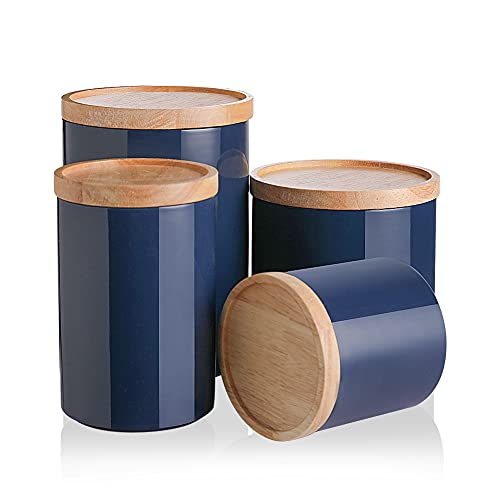
Ceramic is the material the guide suggests when light and looks matter, and Sweejar’s set of four is the countertop-friendly option here. The glazed ceramic bodies block light completely, which suits coffee beans, tea and spices that fade in clear jars, and the wooden lids carry a silicone seal ring to keep the fit snug. The four graduated jars stack, so the set can live in a tower on the counter or split up across shelves. Sweejar sells this set in several colors, including the turquoise shown on the listing, so it can match a kitchen’s accent color instead of hiding in a cabinet. The trade-offs are the usual ceramic ones: the jars are heavier than plastic and can chip if knocked against a stone counter. Pick this set if your canisters will sit out on display and you store light-sensitive staples.


5. Shazo Airtight Food Storage Containers, 6-Piece — Best Budget
Shazo’s six-piece set takes a different approach from the graduated sets above: six matching 1.2-liter containers with the same footprint, so they stack into a tidy block in a pantry or cabinet. Each lid locks on four sides over a silicone seal, the arrangement the guide recommends checking for, and Shazo rates the lids as leakproof as well as airtight. The clear BPA-free plastic keeps contents visible, and the uniform size is well matched to the smaller staples the guide lists: rice portions, sugar, coffee, tea, pasta shapes and snacks. What it will not do is swallow a full bag of flour, so treat it as the second set in a kitchen rather than the only one. For renters, dorm kitchens and anyone organizing small goods on a budget, six identical locking jars at this level are genuinely useful.

What to Look For
| Factor | Why it matters | What to check |
|---|---|---|
| Material | Glass, ceramic, steel and plastic each handle weight, light and odors differently | Match the material to what you store and how visible you want the contents |
| Seal design | A close-fitting lid helps keep dry goods fresh longer | Look for a gasket or snug lid and check what the maker says about airtight claims |
| Sizes in the set | Flour needs far more room than tea | Compare each canister’s capacity with your usual bag sizes |
| Opening width | A wide mouth makes scooping and filling easier | Check that a measuring cup or scoop fits inside the opening |
| Stacking and footprint | Stackable shapes save counter space | Measure the shelf or counter spot and the cabinet height above it |
| Cleaning | Crevices and ornate lids can trap crumbs | Check whether parts are dishwasher friendly or need hand washing |
Setup and Care Tips
- Wash and dry every canister fully before the first fill.
- Keep jars away from the stove, direct sun and the toaster.
- Label each jar with the contents and the date you filled it.
- Empty and wipe a jar before adding new supplies, rather than topping up old stock.
- Check lid gaskets now and then and wash them by hand if the maker advises it.
Mistakes to Avoid
- Buying a set whose largest jar is too small for a full bag of flour.
- Picking an ornate lid that is hard to open with wet hands.
- Forgetting to measure the cabinet height before choosing tall jars.
- Mixing coffee and sugar in similar-looking jars without labels.
- Filling a jar while it is still damp from washing.
How do you size a canister set to the staples you store?
Size a canister set by the bags you actually buy, not by how the jars look in a photo. If your flour comes in a large bag, the largest jar needs to swallow all of it, or you will be left with a half-empty bag and a stray clip.
Start by listing your staples in order of how much you go through: flour, sugar, rice, pasta, coffee, tea, oats, snacks. Then match each one to a jar size.
- Bulk staples such as flour, sugar and rice need the biggest jars in the set.
- Medium staples such as pasta, cereal and beans suit mid-size jars with a wide mouth.
- Small staples such as tea, spices, baking soda and coffee beans do well in small jars that you refill often.
Graduated sets, like the Vtopmart jars, give you a spread of sizes so each staple finds a sensible home. Matching sets, like the Shazo containers, trade that variety for a tidy block that stacks neatly. Neither is wrong; the better fit depends on whether your pantry is mostly bulk goods or mostly small items.
Capacity numbers on a listing are usually given in quarts, liters or ounces, and makers do not always measure the same way. Check the product page for the stated bag sizes a jar is meant to hold, and read the description carefully before assuming a jar will take a full bag. Also leave a little headroom: a jar filled to the very rim is hard to close and harder to pour from.
Finally, think about how many different staples you have today versus how many you might add. A set with one or two spare jars is more useful than a set that exactly matches what you own this month.
Glass vs ceramic vs plastic canisters: which material fits your kitchen?
Glass suits people who want to see their food, ceramic suits people who want a styled counter and light protection, and plastic suits busy households that worry about drops. Each material has honest trade-offs, so match it to your habits.
- Glass: You can see the contents and the level at a glance, and glass does not hold on to odors or stains the way some plastics can. It is heavier than plastic and can break if dropped on a hard floor.
- Ceramic: Opaque bodies block light, which helps with coffee, tea and spices. They look uniform on the counter, but you cannot see what is inside, so labels matter. They are heavy and can chip against a stone counter.
- Plastic: Light, easy to handle and usually forgiving if dropped. Look for BPA-free wording on the listing, and check whether the plastic is described as stain and odor resistant.
Lids matter as much as the jar. Bamboo or wooden lids look warm and natural, but they usually need hand washing and thorough drying. Latching plastic lids and push-button lids are often easier to clean and to work with wet or floury hands, though the exact care rules vary by product, so read the manual.
Think about where the jars will sit. On an open counter, appearance and light exposure matter most, which points toward ceramic or good-looking glass. Inside a cabinet or pantry, stacking and ease of use matter more, which points toward plastic or glass with flat lids.
If you cannot decide, many kitchens end up with a mix: ceramic or glass for the counter, and plastic for the heavy lifting in the pantry.
How do you keep dry staples fresh in canisters?
The best way to keep dry staples fresh is a tight seal, a dry jar and a cool, dark spot away from heat. A good canister helps, but how you fill and store it matters just as much.
Moisture is the main enemy of flour, sugar, salt and baking powder. Always make sure a jar is completely dry before you fill it, including the lid and the sealing ring. A jar that is still slightly damp from washing can cause clumping or spoilage.
Heat and light also affect quality over time. Avoid placing jars next to the stove, the toaster or a sunny window. Coffee and tea in particular can lose flavor when left in warm, bright spots, which is one reason opaque ceramic is popular for them.
A few habits help:
- Do not top up old stock with new. Empty the jar, wipe it, and refill so older contents do not linger at the bottom.
- Write the fill date on a label so you know how long a staple has been sitting.
- Keep a dry scoop in or beside the jar rather than using a wet spoon.
- Check the lid seal now and then, and clean the gasket according to the maker’s instructions.
- Store items with strong smells, such as spices, separately from delicate ones, such as tea.
Be careful with airtight claims. A listing may say a lid is airtight, but that is the maker’s description, not a guarantee of how long food will last. Treat a good seal as a helpful feature, and still use your own judgment on freshness, smell and appearance before you cook with any stored ingredient.
Which canister set should you buy?
Choose the set that matches how you cook and where the jars will live. Here is a simple way to match each buyer to the sets already covered above.
- If you want a see-through look and a wide spread of sizes, go for the Vtopmart Glass Food Storage Jars, 7 Pack. It suits a full pantry where you want to move many staples into glass at once.
- If you bake often and decant whole bags, choose the OXO Good Grips 8-Piece Baking POP Container Set. The push-button lids and baking-focused sizes are built for flour, sugar and similar staples.
- If you worry about breakage in a busy family kitchen, pick the Rubbermaid Brilliance Pantry Container Set, 8-Piece. The shatter-resistant plastic and latched lids make it forgiving.
- If your canisters will sit on display and you store coffee, tea or spices, look at the Sweejar Ceramic Food Storage Jar Set of 4. The opaque ceramic blocks light and suits a styled counter.
- If you want matching jars for small staples without a big outlay, consider the Shazo Airtight Food Storage Containers, 6-Piece. It works well as a second set alongside a larger one.
If you are torn between two, ask which problem you most want to solve. If it is clutter and visibility, glass or clear plastic helps. If it is freshness for coffee and tea, ceramic helps. If it is safety around children or hard floors, plastic helps.
It is also fine to buy two different sets for two jobs. Many kitchens keep a large-capacity plastic set for bulk baking goods in the pantry and a smaller glass or ceramic set on the counter for daily items. Compare the buttons above to see current details for each one.
What should you check before you buy a canister set?
Before you buy, confirm that the sizes, lids and care rules fit your kitchen. A few minutes with the listing can prevent most disappointments.
- Measure your space. Check the width of your counter spot or shelf, and the height of the cabinet above it, against the dimensions on the listing.
- Check the largest jar. Make sure it can hold a full bag of your most-used staple, such as flour or sugar.
- Look at the opening. A measuring cup or scoop should fit through the mouth of the jar without a struggle.
- Read what is included. Some sets come with scoops, labels or a sugar saver; others have only the jars and lids.
- Confirm the lid type and seal. Look for a gasket or ring, and note what the maker actually claims about airtightness.
- Check cleaning rules. Find out which parts are dishwasher safe and which need hand washing, especially bamboo or wooden lids.
- Read warranty and return terms. Confirm them on the listing so you know what happens if a lid does not fit or a jar arrives damaged.
- Look at how people rate it. Check how many people rated the set and read the lower-rated comments for repeated problems such as loose seals.
Also think about labels. Jars that look alike are easy to confuse, so decide in advance whether you will use chalk labels, stickers or a label maker. Some kitchens add a small whiteboard marker for quick changes.
Finally, consider stacking. If you plan to stack jars, confirm that the lids are flat and sturdy enough to carry the weight of another full jar on top.
Is a canister set worth it, and who should skip one?
A canister set is worth it if you want an orderly counter and fresher-looking staples, but it is not essential for everyone. Here are the honest downsides and the people who may do fine without one.
Is it worth paying more? A higher-priced set may bring thicker glass, better seals or nicer lids, but a higher cost does not automatically mean a better fit. A simple, well-sealed set that matches your bag sizes often serves you better than a decorative one that does not. Spend on the features you will use daily, such as a wide mouth and an easy lid.
What are the downsides?
- Glass and ceramic can break or chip, and both are heavier than plastic.
- Decanting takes time, and you have to keep jars clean and dry.
- Bamboo and wooden lids need hand washing.
- Sets rarely suit every staple, so you may still need a few extra containers.
- Clear jars on a bright counter can expose food to light.
Who should skip it? If you buy small amounts and use them quickly, the original packaging may be fine. If your counter space is very tight, a cabinet shelf with a few simple containers may suit you better than a decorative counter set. And if you rarely cook from scratch, a small set of two or three jars may be enough.
If you are still unsure, start small. Compare the picks above, check the current listing for size and what is included, then choose the set that fits the way you cook and store food.
FAQ
Are glass canisters better than ceramic ones?
Neither is better in every case. Glass lets you see what is inside, while ceramic blocks light and often looks more uniform on the counter. Choose based on what you store and your kitchen style. Clear materials make it easy to spot when a staple is running low, while opaque ones keep light away from items that fade or lose flavor in bright rooms.
How many canisters do I need?
Most kitchens do well with three or four for flour, sugar, coffee and one extra item. Add more only if you bake often or buy staples in bulk. A set with graduated sizes tends to stack and group neatly, and it leaves a spare jar for oats, pasta or snacks.
What size canister do I need for a bag of flour?
Pick a canister whose listed capacity matches the bag size on the package, with a little headroom. Check the product page for what the maker says the jar can hold, since capacity is measured in different units. If the bag does not fit, consider keeping the leftover in a second small jar.
Are airtight canisters really airtight?
Airtight is the maker's description of the seal, not a guarantee of how long food will keep. A gasket or silicone ring helps slow air exchange, but you should still check smell, texture and appearance before using stored food. Read the listing for exactly what is claimed.
Should I put canisters on the counter or in a cabinet?
Cabinets and pantry shelves protect food from light and heat better, while counters keep daily items within reach. A good compromise is to keep everyday staples such as coffee and sugar on the counter and bulk goods in the pantry. Avoid spots next to the stove or in direct sun.
How do you clean canister lids with bamboo or wood?
Wash bamboo and wood lids by hand with mild soap and warm water, then dry them well. Soaking or putting them through the dishwasher can cause warping or cracking. Always follow the care notes from the maker.
Can you store coffee and tea in the same canister set?
You can use the same set, but keep each in its own jar, because coffee and tea can share aromas. Opaque ceramic or a jar kept in a dark cabinet helps protect flavor. Label the jars so they are not mistaken for sugar or flour.
Is plastic or glass safer for storing food?
Both are widely used for dry food, and the best choice depends on your household. Glass resists stains and odors but can break, while plastic is lighter and tougher but may stain. For plastic, look for BPA-free wording on the listing.
How often should you refill and wipe canisters?
Empty and wipe a jar each time it runs out, rather than topping up on old stock. Make sure it is fully dry before refilling. A quick check of the lid seal at the same time keeps the jar working well.
Choosing Canister sets With More Confidence
The picks above give you a shortlist, but the right choice among canister sets usually comes down to how you will actually use the product in your kitchen counter and pantry, week after week. A model that looks ideal in a comparison table can disappoint if it does not suit your space, your routine or the other items it has to work alongside. This section slows the decision down and looks at the practical checks experienced buyers make before ordering, so you can weigh the options in this guide against your own situation rather than against a generic idea of what is best.
Start with fit and compatibility, because those are the checks that rule options in or out. For canister sets, that means confirming the measurements, connections or mounting points described in the sections above against what you already have. Lid seals decide how well dry goods stay fresh between refills. Write the key numbers down before you shop, compare them line by line with the maker notes for each pick, and treat any mismatch as a reason to pause rather than something to solve after delivery. Most returns in this category start with a skipped measurement, not with a faulty product.
Next, think about build and materials in terms of the work involved. Heavier construction is not automatically better, and a lighter design is not automatically flimsy; what matters is whether the materials suit the job. Clear sides make it easier to see when a staple is running low. Look at how the parts that move, flex or take weight are described above, and favour the option whose construction matches the hardest job you will realistically ask of it, not the easiest demonstration job and not an extreme case you may never meet.
Ease of everyday use deserves more weight than it usually gets. Ask how the product behaves on an ordinary day: how it is carried, opened, adjusted, cleaned or put away, and whether those small actions feel simple or fiddly. Measure your shelf height before choosing tall jars. Features that save a few seconds once may matter less than a design you can live with daily. If several people will share the same canister set, consider the least experienced user in the group, because a product only one person can operate comfortably tends to sit unused the rest of the time.
Finally, weigh total ownership rather than the headline appeal of a single feature. Consumables, replacement parts, accessories and storage all shape what a purchase costs you in time and effort over its life. Check what is included in the box for each pick above, what you would still need to add, and whether those extras are easy to find. A slightly simpler option that you can maintain properly will usually serve you better than a feature-heavy one that depends on parts or routines you will not keep up with.
Matching Canister sets to Real Situations
Different households and users ask very different things of the same product. The scenarios below describe the most common situations readers mention for canister sets, and the qualities that tend to matter most in each one. Find the scenario closest to yours, then re-read the matching pick descriptions above with those priorities in mind.
For beginners and first-time buyers
If this is your first purchase in the category, simplicity is your friend. Choose the option among the canister sets above whose setup and controls are described in the most straightforward terms, and avoid paying attention to advanced features you cannot yet judge. A forgiving first purchase teaches you what you actually value, and it leaves you better informed if you upgrade later. Keep the packaging and instructions until you have used the product through a full normal cycle, and note which small frustrations appear, because those notes are the best buying guide you will ever write for yourself.
For frequent, heavy use
If the product will be used most days, durability and serviceability move to the top of the list. Look again at the picks above and favour the ones whose construction, moving parts and wear points are described most convincingly. Frequent use also makes cleaning and routine checks more important, since small neglect compounds quickly. It is worth choosing a design you can inspect easily, because catching a loose fitting, a worn edge or a tired component early is far easier than dealing with a failure in the middle of a job you cannot postpone.
For small spaces
Space changes the ranking. In a compact room, garage or vehicle, the best option is often the one that stores neatly, moves easily or does double duty, rather than the largest or most powerful. Measure not only where the product will live in use, but also where it will go when it is not needed, and how you will get it from one place to the other. Among the canister sets in this guide, the picks described as compact, folding, lightweight or space-saving deserve a second look if your storage is tight, even if a bigger option looks more capable on paper.
For shared or family use
When several people rely on the same purchase, consistency matters. Choose canister sets that behave predictably, tolerate slightly different techniques and do not depend on one person’s careful habits to work well. Clear instructions, obvious controls and sturdy everyday handling all help. It also helps to agree on simple house rules from the start: where the product lives, who cleans or checks it, and what to do when something seems wrong. Shared products that everyone understands tend to last longer and cause fewer arguments than technically superior ones that only one person has mastered.
Setup, First Use, and Getting the Basics Right
Good setup is unglamorous, but it decides much of your experience with canister sets. Begin by unpacking everything in a clear space and checking the contents against the list in the instructions before anything is assembled, fitted or switched on. Missing brackets, seals, tools or small parts are far easier to sort out at this stage than halfway through a job. Photograph the layout of parts as you unpack if the design is unfamiliar; that simple record helps if you later need to repack, return or reassemble anything.
Work through the maker’s instructions in order, even if the steps look obvious. Manufacturers sequence steps for a reason, often because a later adjustment depends on an earlier one being done loosely, tightly or in a particular position. Keep the tools the instructions call for within reach, and avoid forcing any part that resists: resistance usually means misalignment, the wrong part or a step done out of order. For anything involving fixings, power, heat, water or weight-bearing parts, follow the safety guidance in the manual for your exact model rather than general advice, including this guide.
On first use, start gently. Run the product through its easiest normal task before asking it to handle the hardest one, and watch, listen and feel for anything unusual: vibration, noise, smell, looseness, uneven movement or results that do not match the description. Small oddities caught on a calm first run are usually simple adjustments. Keep notes on the settings, positions or arrangement that worked, because repeating a good setup is much easier than rediscovering it each time. If the product has adjustable parts, change one thing at a time so you can tell what made the difference.
Finish the setup stage by creating a simple home base for the product and its essentials: the manual, any included tools, spare parts and cleaning items, kept together in one known place in your kitchen counter and pantry. Label anything that is not obvious, and store small parts in a closed container so they are not separated from the main item. This ten-minute habit prevents most of the frustration owners report months later, when a needed accessory cannot be found or an instruction booklet has long since disappeared into a drawer of unrelated paperwork.
Care, Cleaning, Storage, and Routine Checks
Most canister sets do not fail suddenly; they decline gradually through skipped cleaning, loose fittings and poor storage. A light, regular routine protects performance far better than an occasional deep rescue. After each use, deal with the obvious: remove dirt, moisture, residue or debris before it hardens, dries on or works into moving parts, using only the cleaning methods and products the maker allows for the materials involved. When in doubt, start with the mildest method, a soft cloth and plain water where the instructions permit it, and test any cleaner on a hidden area first.
Build a short periodic check into your routine, monthly for frequently used items and at the start of each season for stored ones. Look over joints, fasteners, seals, edges, cords, hinges or other moving and load-bearing parts, depending on the design, and tighten, clean or replace anything the manual identifies as a wear item. Note changes rather than relying on memory: a new rattle, a stiff movement or a mark that was not there before is information. Acting on small changes early keeps them small, and it also keeps the product safer and more pleasant to use.
Storage deserves the same care as use. Keep the product clean and fully dry before it is put away, in a place protected from damp, extreme heat, direct sun and knocks, with enough room that it is not crushed or bent by heavier items. Keep accessories with the main product, and avoid storing anything under tension, pressure or load unless the maker specifically allows it. If the product will sit unused for a long stretch, check it occasionally anyway; seals dry out, batteries in associated devices fade, fabrics and foams suffer in damp air, and pests find undisturbed corners attractive.
Know when maintenance ends and replacement begins. Consumable parts are designed to be renewed, and replacing them on schedule is normal ownership, not failure. Structural damage, cracked housings, frayed cords, distorted frames or anything that affects safe operation is different: stop using the product and follow the maker’s guidance or a qualified repair route. Keeping a brief record of purchase date, parts replaced and checks done makes warranty questions, resale and repeat purchases much simpler, and it helps you judge honestly whether a product has earned its place or reached the end of its useful life.
How the Picks in This Guide Compare With Each Other
Readers often ask for a single winner, but the more useful question is which pick suits which job. The notes below restate the roles the guide above assigns to each option, so you can compare them side by side without re-reading every section. No new claims are added here; use these summaries to shortlist, then confirm the details in the full descriptions and the maker’s own listing before you decide.
Vtopmart Glass Food Storage Jars, 7 Pack is presented above as best overall: See-through glass storage for a full pantry. Put it at the top of your list if that description sounds like your situation in your kitchen counter and pantry, and weigh it against the neighbouring picks on the points the full review raises, such as fit, included parts and everyday handling. If the role sounds appealing but the details in its section raise a doubt for your case, that doubt is worth trusting, because the same strength that suits one buyer is often exactly what makes a product wrong for another.
OXO Good Grips 8-Piece Baking POP Container Set is presented above as best for bakers: Airtight push-button seals and sized-for-baking jars. Put it at the top of your list if that description sounds like your situation in your kitchen counter and pantry, and weigh it against the neighbouring picks on the points the full review raises, such as fit, included parts and everyday handling. If the role sounds appealing but the details in its section raise a doubt for your case, that doubt is worth trusting, because the same strength that suits one buyer is often exactly what makes a product wrong for another.
Rubbermaid Brilliance Pantry Container Set, 8-Piece is presented above as best shatterproof: Latched lids and plastic that survives drops. Put it at the top of your list if that description sounds like your situation in your kitchen counter and pantry, and weigh it against the neighbouring picks on the points the full review raises, such as fit, included parts and everyday handling. If the role sounds appealing but the details in its section raise a doubt for your case, that doubt is worth trusting, because the same strength that suits one buyer is often exactly what makes a product wrong for another.
Sweejar Ceramic Food Storage Jar Set of 4 is presented above as best ceramic: Countertop looks that block light. Put it at the top of your list if that description sounds like your situation in your kitchen counter and pantry, and weigh it against the neighbouring picks on the points the full review raises, such as fit, included parts and everyday handling. If the role sounds appealing but the details in its section raise a doubt for your case, that doubt is worth trusting, because the same strength that suits one buyer is often exactly what makes a product wrong for another.
Shazo Airtight Food Storage Containers, 6-Piece is presented above as best budget: Matching jars for small staples. Put it at the top of your list if that description sounds like your situation in your kitchen counter and pantry, and weigh it against the neighbouring picks on the points the full review raises, such as fit, included parts and everyday handling. If the role sounds appealing but the details in its section raise a doubt for your case, that doubt is worth trusting, because the same strength that suits one buyer is often exactly what makes a product wrong for another.
When two picks still look close after that comparison, decide on the practical tiebreakers: which one fits your measured space or existing equipment with less adaptation, which one you can clean and maintain with the routine described above, and which one’s included accessories leave you least to buy separately. Those unglamorous factors decide satisfaction far more often than a single headline feature. It also helps to imagine the product on its worst day in your routine, tired, rushed or short of space, and choose the option that still behaves well under those conditions.
Common Mistakes and How to Avoid Them
The most common mistake with canister sets is buying for an imagined use instead of the real one. A product chosen for an occasional ambitious project, a hoped-for hobby or a room that has not been rearranged yet will spend its life being worked around. Be honest about frequency: how often the product will be used this month, not in an ideal month. If the honest answer is rarely, the simpler, easier-to-store picks above deserve more credit. If the answer is daily, the sturdier, easier-to-maintain options earn theirs. Matching the purchase to the real routine is the single decision that predicts satisfaction best.
A second mistake is ignoring the supporting cast. Many products depend on surfaces, power, ventilation, clearance, compatible accessories or another item working properly, and disappointment often belongs to the support act rather than the headline purchase. Before ordering, walk through a complete use in your head, from storage to setup to cleaning to putting away, and list everything that journey touches. Check each item on that list against your space and equipment. This five-minute rehearsal catches the missing adapter, the too-short reach, the awkward doorway and the absent storage spot while they are still free to fix.
Over-tightening, overloading and over-cleaning form a third family of mistakes. More force is rarely the answer: fixings strip, seals distort, finishes suffer and delicate parts bend when enthusiasm replaces the manual’s guidance. Respect the limits the maker states for your model, use the gentlest effective cleaning method first, and stop and reassess when something resists. Likewise, resist modifying a product to make it do a job it was not designed for. The picks in this guide cover a range of intended uses, and choosing the right one is safer and cheaper than adapting the wrong one.
Finally, many buyers skip the early check window. Use a new purchase promptly and normally in its first days, while packaging, receipts and return options are still to hand. Problems that appear immediately are usually the easiest to resolve with the seller or maker, and a product that is wrong for you is easiest to exchange before it has been heavily used, marked or separated from its accessories. Keep a note of order details and model information in the same place as the manual. It sounds administrative, but future you, facing a warranty question or a replacement part, will be grateful for those two minutes of organisation.
More Questions Buyers Ask About Canister sets
What should I check first when my canister set arrives?
Check the contents against the packing list, inspect for transit damage, and confirm that the model, size and variant match what you ordered before assembling or using anything. Photograph anything that looks wrong before you disturb the packaging. Then read the manual fully once, even briefly, because model-specific warnings and setup order are easy to miss when you skim. Only after those checks should you set the product up and run a gentle first use, watching for anything that does not match the description in this guide or the maker’s listing.
How do I know which size or version of canister sets I need?
Base the decision on measurements and compatibility information you can verify: the space available, the equipment or vehicle it must work with, and the maker’s own fit guidance for your exact situation. Avoid guessing from a similar-looking model or a friend’s purchase, because small differences in year, trim, room layout or existing fittings can change the answer. If the maker offers a size or fit guide, use it with your own written measurements beside it, and when you fall between two options, consider how you will actually use the product most days rather than on its biggest day.
Can a beginner use canister sets confidently?
The Short Version
Choose a set that fits your counter, holds a full bag of your most-used staple, and has lids that are easy to open and clean. Think about material and labeling, and skip extras that only add clutter. A tidy, labeled set is one you will keep using.
Related Guides
- How to Choose the Best Canister Vacuums: Buyer's Guide (2026)
- Upright vs Canister vs Stick Vacuums: Which Type Suits You
- How to Choose the Best 8×42 Binoculars: Buyer's Guide (2026)
- How to Choose the Best Activity Centers: Buyer's Guide (2026)
- How to Choose the Best Airbrush Kits: Buyer's Guide (2026)