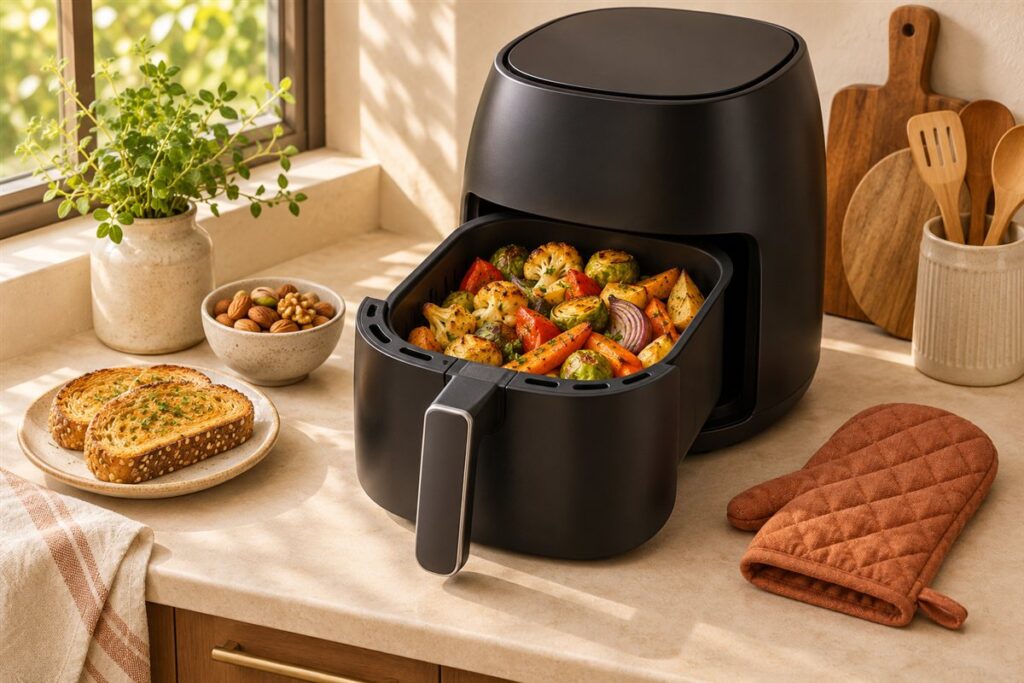
Mushrooms are mostly water, which can make them soggy in some pans. In an air fryer the moving air dries and browns them in about 8-14 minutes at roughly 350-390 F. A bit of oil, even cuts, and room in the basket give the best color.
Clean Without Soaking
Mushrooms soak up water like a sponge, so avoid long rinses. Wipe them with a damp cloth or paper towel, or give them a very quick rinse and dry them right away. Trim the dry ends of the stems.
Cutting Options
- Whole small caps: Good for stuffing or easy snacking.
- Halves or quarters: Cook fast and brown on the cut sides.
- Thick slices: Keep a meaty bite, but shrink as they cook.
Cut larger mushrooms into pieces of similar size, so they finish together.
How to Cook Them
- Toss the mushrooms with a teaspoon or two of oil until lightly shiny.
- Add salt, pepper, garlic powder, or dried herbs.
- Spread them in the basket without crowding.
- Cook for 5 minutes, then shake the basket.
- Cook for another 3-9 minutes, until deeply browned and tender.
- Finish with a splash of soy sauce, butter, or lemon if you wish.
Timing by Cut
| Cut | General time | Tip |
|---|---|---|
| Sliced | 7-10 minutes | Shake often, as slices can dry out |
| Quartered | 8-12 minutes | Even browning |
| Whole small | 10-14 minutes | Cook stem side up for stuffing |
| Large caps | 8-12 minutes | Turn once |
Stuffed Mushroom Idea
Remove the stems from whole caps and chop them. Mix with breadcrumbs, cheese and herbs, then fill the caps. Cook at a moderate setting for about 8-12 minutes, until the filling is browned and the caps are tender. If the filling includes raw meat, cook it first, or follow food-safety guidance for doneness.
Serving and Storing
Cooked mushrooms suit steak, eggs, pasta, pizza, toast and grain bowls. They shrink a lot, so cook more than you think you need. Store leftovers in the fridge in a covered container, and reheat them until steaming hot. Raw mushrooms keep best in a paper bag in the fridge rather than in a sealed plastic container, where moisture builds up.
Salt draws water out of mushrooms, so some cooks add it near the end of cooking rather than at the beginning. Try both ways with one batch and see which browns better in your machine.
Choosing and Storing Mushrooms
Fresh mushrooms should feel firm and dry, with smooth caps and no slimy patches or dark, wet spots. The gills on the underside should look intact rather than shriveled or heavily darkened. Smaller button mushrooms are mild, cremini have a deeper flavor and portobellos are large and meaty. Pick mushrooms that are similar in size when you can, so they finish cooking at the same time.
Storage affects both flavor and texture. Keep mushrooms in the refrigerator in a paper bag or a container lined with a paper towel, which absorbs moisture and slows spoilage. Plastic wrap or sealed plastic bags trap humidity and make them slimy. Use them within a few days for the best results, and discard any that smell off or look slick. Do not wash them until you are ready to cook.
If you forage or buy unfamiliar varieties, only eat mushrooms you can identify with certainty from a reliable source, since some wild species are poisonous. For everyday cooking, stick to varieties sold as food. Specialty types like oyster, shiitake or king oyster each have their own character. Shiitake stems are tough and usually removed, while oyster mushrooms are delicate and cook faster.
Buy loose mushrooms when you can, because you can pick the size you want, and check the date on packaged ones before you buy.
Preparing and Trimming Different Varieties
Preparation depends on the variety. For button and cremini, trim the dry end of the stem and cut as desired. For portobellos, remove the stem, and some cooks scrape out the dark gills with a spoon to prevent the dish from turning dark and to reduce wetness. Shiitake caps are tender, but stems are woody and best saved for stock rather than eaten. Oyster mushrooms can be torn into strips by hand, which gives ragged edges that crisp well.
Think about shape. Cut mushrooms with a flat cut face for good contact and browning. Slices cook fast and shrink a lot, quarters keep a meatier bite and whole small caps hold moisture well. Keep your pieces uniform. Very thin slices may dry out, and tiny pieces can fall through the basket slots, so use a liner or tray if your manual allows, or cut a little larger.
- Wipe dirt away with a damp cloth or brush.
- Avoid soaking, since mushrooms absorb water.
- Pat dry before oiling.
- Save trimmings for stock.
Use a sharp knife and a stable board, and cut away from your hand.
Taste a mushroom raw only if it is a variety sold for that purpose, and cook the rest, since most are easier to digest and taste better cooked.
Seasoning, Marinades and Flavor Boosts
Mushrooms absorb flavors well, but too much liquid prevents browning. A light toss in oil and seasoning is a reliable approach. Garlic powder, onion powder, smoked paprika, thyme, rosemary and black pepper are all good choices. Soy sauce, tamari, Worcestershire sauce or balsamic vinegar add savory depth, though they are best used in small amounts or added near the end so they do not make the mushrooms soggy.
A short marinade can work if you keep it thin and drain well. Mix oil with garlic, herbs and a splash of soy sauce or vinegar, toss the mushrooms and let them sit for a few minutes, then drain off extra liquid and cook. For richer flavor, finish the cooked mushrooms with butter, a little garlic or a squeeze of lemon. Fresh parsley or chives added after cooking brighten the dish.
Think about the final use when seasoning. For pasta or steak toppings, a savory, garlicky profile works well. For tacos or grain bowls, try cumin and chili. For stuffed mushrooms, season the filling more heavily than the caps. Check labels on sauces and blends if you need to avoid certain ingredients. Salt lightly, since reduced mushrooms concentrate in flavor and can taste salty.
Stuffed and Whole Mushroom Ideas
Whole caps make an easy appetizer. Pop out the stems, chop them and mix with breadcrumbs, grated cheese, garlic and herbs, then spoon the filling into the caps. Other fillings include cream cheese with chives, cooked sausage with breadcrumbs, or spinach with feta. Pack the filling lightly, and place the caps stem side up in a single layer so they do not tip over.
Large portobello caps can be cooked whole as a vegetarian main. Brush with oil, season, and cook gill side up if you plan to fill them, or gill side down for a burger-style patty. Fill with cheese and vegetables near the end and let the cheese melt. Because they hold moisture, they may need longer than smaller mushrooms, so check for tenderness with a fork.
If you add meat to a filling, cook it fully according to food-safety guidance before stuffing, or cook the stuffed mushrooms until the filling is hot throughout. Wash hands and surfaces after handling raw meat. Serve stuffed mushrooms soon after cooking, while the topping is crisp. Make-ahead versions can be assembled earlier and refrigerated, then cooked just before serving.
If your basket has wide slots, a perforated liner approved by the manual stops small pieces from dropping through.
Avoiding Sogginess and Getting Deep Color
Mushrooms are mostly water, which is why they shrink and sometimes stew in their own liquid. To get deep browning, give them space, keep the layer thin and avoid adding salt too early. If the basket is crowded, work in batches. Some cooks drain accumulated liquid halfway through, or tip the basket gently to let steam escape.
Heat affects color. Too low and mushrooms steam without browning, while too high can scorch the edges before the middle softens. Start in the middle of your unit’s range and adjust based on your results. Shake or turn the pieces halfway through, and look for caramelized edges. A short rest outside the basket lets steam escape and keeps the texture meaty.
If the mushrooms taste bitter or burnt, check for crumbs left in the basket and lower the heat slightly next time. If they are rubbery, they probably need more time to let moisture cook off. Clean the basket after cooking, since mushroom juices can leave a sticky film. Wash with warm soapy water and a soft sponge once cool, and dry the basket completely before putting it back.
Keep notes on time and temperature for each variety, because the best settings depend on size, moisture and your model.
FAQ
Why are my mushrooms rubbery?
They may have been crowded or underdone. Give them space and a few more minutes, until the moisture cooks off.
Which types work best?
Common button, cremini and portobello all work. Delicate types such as oyster mushrooms cook faster, so check earlier.
Should I wash mushrooms before cooking?
A quick wipe with a damp cloth is usually enough. If you rinse them, do it briefly and dry them right away, because they absorb water.
Can I cook frozen mushrooms in the air fryer?
Some packaged ones are intended for it, but frozen mushrooms release a lot of water and may turn soft. Check the package, cook in a thin layer and expect a different texture.
Do I need to remove the stems?
Not for most button and cremini mushrooms. Remove tough stems from shiitake, and remove stems from large caps if you want to stuff them.
Why do my mushrooms shrink so much?
They are mostly water, which evaporates during cooking. Plan to cook more than you think you need.
Can I use dried mushrooms?
Dried mushrooms need to be rehydrated first and are better in sauces than air frying. Follow the package directions.
How do I keep stuffed mushrooms from tipping?
Cut a tiny slice off the base if needed so they sit flat, and arrange them in a snug single layer.
The Short Version
Wipe, cut evenly, coat lightly, and cook in a single layer for about 8-14 minutes with a shake. Adjust for your model and follow your maker’s manual.