
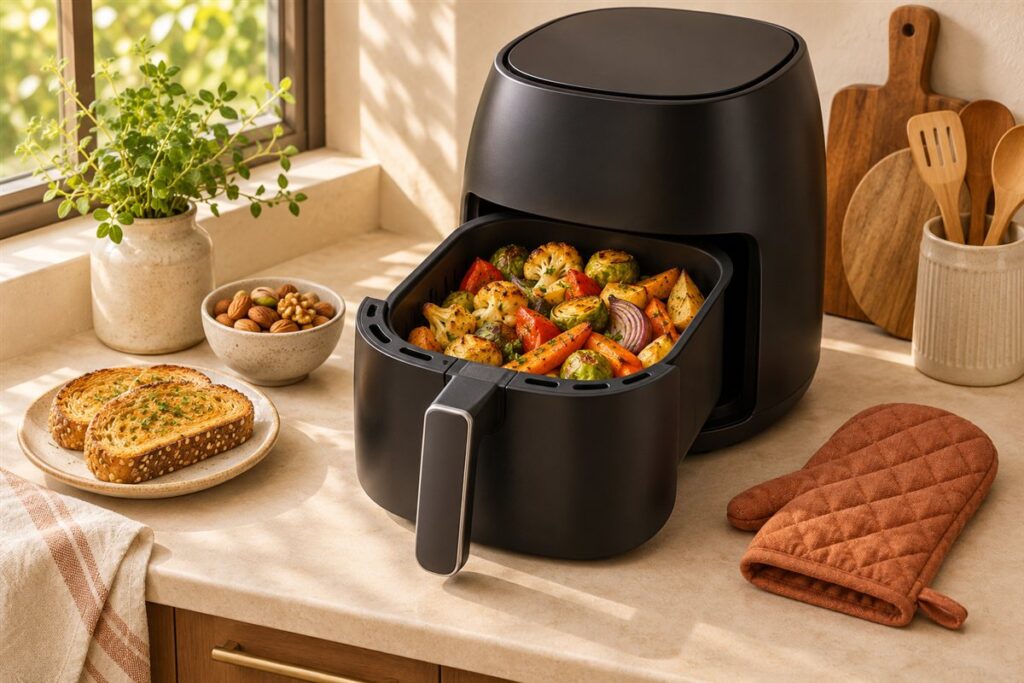
Brussels sprouts brown beautifully in an air fryer, with crisp outer leaves and tender centers. A general range is about 375-400 F for 10-16 minutes, shaking the basket now and then. The trick is cutting them evenly and keeping them dry.
Prep Comes First
Trim the stem ends and pull off any loose or yellowed outer leaves. Cut each sprout in half from top to bottom. Very large ones can go in quarters, so every piece is about the same size.
- Rinse and dry thoroughly. Water on the surface slows browning.
- Toss with one or two teaspoons of oil per generous handful.
- Add salt, pepper, and any dry spices.
- Place them cut side down in the basket when you can.
Cooking in Five Moves
- Preheat for a few minutes if your model suggests it.
- Add the sprouts in a single, loose layer.
- Cook for about 6 minutes, then shake the basket well.
- Continue for another 4-8 minutes, checking at intervals.
- Test one with a fork. It should slide in easily, with browned edges.
Loose outer leaves darken first and can taste bitter if they burn, so remove any very dark bits at the end.
Flavor Variations
| Style | Add before cooking | Add after cooking |
|---|---|---|
| Garlic and lemon | Garlic powder, salt | Lemon juice, zest |
| Sweet and tangy | Oil, pepper | Balsamic glaze or honey |
| Spicy | Chili flakes, paprika | Squeeze of lime |
| Cheesy | Oil, salt | Shredded hard cheese |
Troubleshooting
If the sprouts are soft instead of crisp, they were probably crowded or wet. Cook smaller batches and dry them well. If the outside darkens while the inside is hard, lower the temperature slightly and extend the time, or cut the sprouts smaller. If you cook sprouts with bacon or other fatty foods, empty the drawer between batches to limit smoke.
Making a Bigger Batch
If you are cooking for several people, work in two rounds rather than filling the basket. Keep the first round warm on a plate while the second cooks, then toss them together with any dressing. Crowded sprouts steam, and steamed sprouts lose the browned edges that make this method worth using. Leftovers reheat well for a few minutes, though they will be a little softer.
Sprouts of different sizes will finish at different times. Sort them into small and large piles before cooking, and add the large ones to the basket first. This simple habit saves you from removing burnt pieces later.
Picking Sprouts That Cook Well
The quality of the sprouts you start with shows up in the finished dish. Choose heads that are firm, compact, and bright green, with leaves that sit tightly against each other. Yellowing leaves, black spots, or a strong cabbage smell often mean the sprouts are older, and older sprouts tend to taste more bitter and sulfurous once cooked.
Size matters for even cooking. Sprouts vary from small, about the size of a large grape, to quite large. Smaller ones can be cooked whole or halved, while large ones are better quartered so the center softens before the outside darkens. Buying a pile of similar-sized sprouts saves time, but if the sizes are mixed, sort them into groups and cook the larger ones a bit longer or cut them smaller.
Loose sprouts let you choose individual heads, while stalks sold with the sprouts still attached stay fresh a little longer. If you buy a bag, check the date and look through the packaging for moisture, which speeds spoilage. Store unwashed sprouts in the refrigerator, in a breathable bag or container, and trim and wash just before cooking. Wet leaves steam rather than crisp, so dry them well after rinsing.
Cutting Style and Crispy Outer Leaves
How you cut the sprouts changes the texture. Halving gives you a flat cut face that browns deeply when placed down in the basket, which creates the caramelized, nutty edge many people want. Quartering produces more surface area and more crisp, loose leaves, but also a higher chance of burning.
Shredding or separating leaves gives a different result altogether. Peeled leaves cook quickly and turn into crisp, chip-like pieces, similar to roasted kale. This suits people who prefer a lighter, crunchier side, and it works well as a topping for bowls or a snack. Keep an eye on them, since thin leaves can go from crisp to charred in a short span.
Loose outer leaves will naturally fall off as you trim and halve the sprouts. Rather than throwing them out, toss them in the same oil and seasonings and cook them alongside. They finish sooner than the halves, so you can scatter them in for the last stretch of cooking, or remove them early. Trim only the dry bottom of the stem, not the whole core, since cutting too deeply makes the leaves fall apart.
Balancing Bitterness With Flavor
Brussels sprouts have a reputation for bitterness, which is mostly about how they are cooked. Gentle steaming or overcooking can bring out sulfur notes, while quick, high-heat roasting caramelizes natural sugars and softens the edge. Browning is your friend here, so do not stop at pale and soft.
Flavor additions can then do the rest of the balancing work. Consider matching the sprouts with something from each of these groups.
- Sweet: A small drizzle of honey, maple syrup, or a sweet glaze added toward the end of cooking so it does not burn.
- Sour: Lemon juice, vinegar, or a tangy dressing applied after cooking.
- Salty and savory: Soy sauce, grated hard cheese, or crumbled cooked bacon, tasted before adding extra salt.
- Fat: A little butter, olive oil, or toasted nut oil rounds out the edges.
- Heat: Chili flakes or a spicy sauce brings contrast.
Sugary coatings scorch easily in an air fryer, so add them in the last couple of minutes. If your sprouts are especially large or strong-tasting, quarter them and cook until deeply browned. Taste a piece before adjusting seasoning, since the sweetness and bitterness differ between batches.
Even Cooking and Batch Management
Overloading is the most common reason sprouts turn out soft and pale. They need space for hot air to move, and the moisture they release has to escape. Spread them in a single layer or, at the most, a shallow pile, and shake or stir at least once. If your basket is small, cook in rounds and keep the first batch warm.
Orientation also matters. If you want strong browning on cut faces, place them cut side down at first, then shake later in the cooking time. Some cooks prefer to start with the sprouts tossed in oil and seasonings, then leave them undisturbed for the first stretch so the cut faces make contact with the hot basket surface.
Watch for the telltale signs of progress. Loose outer leaves darken first and can become very dark, which is usually fine if they taste crisp rather than bitter and acrid. Test the density by piercing the largest sprout with a fork, which should go in with light resistance. If the outsides are dark but the centers are still firm, lower the temperature slightly and continue, or cut the next batch smaller. Keep notes on your model’s pace for next time.
Serving, Storing, and Reheating
Brussels sprouts are best eaten soon after cooking, while the edges are still crisp. If you need to hold them for a short time, spread them on a plate or rack instead of covering them, because covering traps steam and softens the leaves.
They work as a side with roast meats, fish, or grain dishes, and can also be folded into pasta, tossed in salads, or added to tacos. Chopped cooked sprouts add body to a frittata or fried rice. Because the flavor is robust, pair them with ingredients that can stand up to it, such as mustard, garlic, citrus, or smoked foods.
To store leftovers, let them cool, then keep them in a covered container in the refrigerator and eat them within a few days. The crisp texture fades, but a short, hot blast in the air fryer brings back some crunch. Avoid long reheating, which dries out the leaves. If you plan to reheat, undercook the first round slightly. Discard any sprouts that smell sour or develop slimy leaves.
FAQ
Can I cook them frozen?
Yes, many people do. Expect a few extra minutes and a softer texture, and follow the package directions where available.
Do I need to blanch them first?
Not for air frying. Raw, halved sprouts cook through in the time range above.
Why do my sprouts taste bitter?
Bitterness often comes from undercooking, old sprouts, or leaving them pale. Cook until the cut faces are well browned and finish with something acidic or lightly sweet to balance the flavor.
Can I cook the leaves on their own?
Yes. Separated leaves turn crisp quickly, so use a lower setting, watch closely, and remove them as soon as they feel dry and crunchy.
Should I remove the core?
Usually only the dry bottom of the stem needs trimming. Cutting the core out entirely can make the leaves fall apart.
How do I prevent burning while using a glaze?
Add sugary glazes only in the final minutes of cooking. Sugar scorches quickly, so keep the batch moving and check frequently.
Can I mix sprouts with other vegetables?
Yes, as long as the pieces are cut to cook at similar speeds. Denser vegetables like carrots need smaller cuts or a head start.
What is the best oil for cooking them?
Any cooking oil suited to high heat works. Use enough to coat the sprouts lightly, since too much oil can make them greasy and too little leaves them dry.
Are Brussels sprouts good cold?
Many people enjoy cooked sprouts cold in salads and grain bowls. Add a dressing with some acid to freshen the flavor.
The Short Version
Halve the sprouts, dry them, coat lightly with oil, and cook in a loose layer for about 10-16 minutes with a shake in the middle. Adjust for your machine and follow your maker’s manual.









