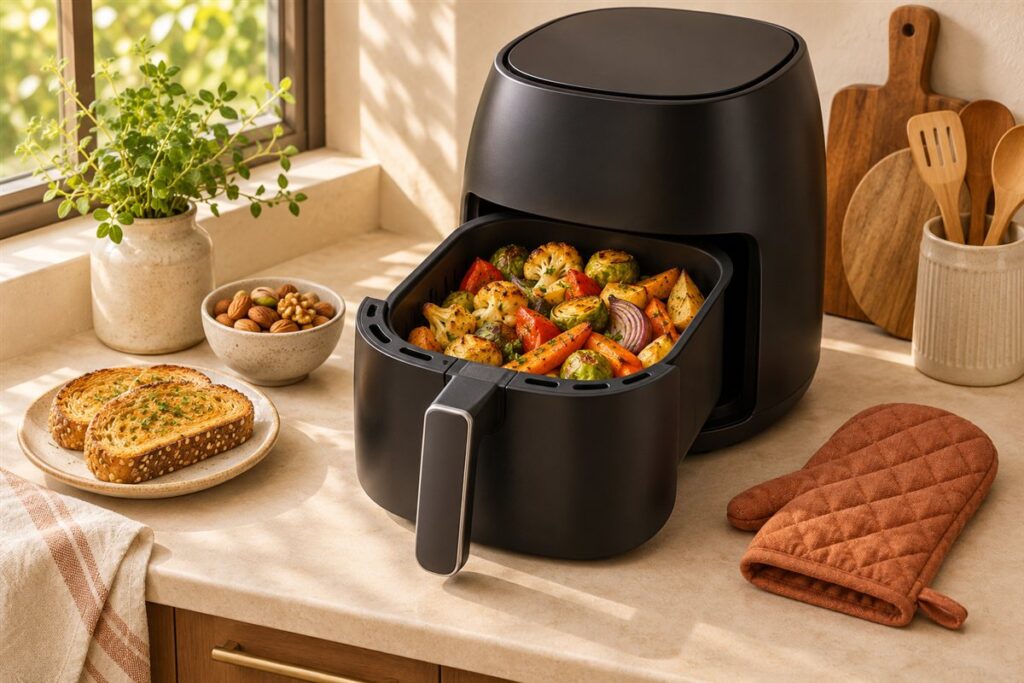
Meatballs brown evenly in an air fryer and finish in about 8-15 minutes at around 360-390 F, depending on size. Frozen ones take a little longer. As with any minced meat, confirm doneness with a thermometer and official food-safety guidance rather than by color.
Homemade Meatballs
Mixing and Shaping
Combine minced meat with breadcrumbs, an egg, seasonings, and a splash of milk or water. Mix just until combined, since overmixing makes them tough. Use a scoop or two spoons so all the balls are the same size, about one to one and a half inches across.
Cooking
- Preheat the air fryer for a few minutes.
- Lightly oil the basket or spray the meatballs.
- Place them in a single layer with a little space between.
- Cook for 5-6 minutes, then shake the basket or turn them.
- Cook for another 3-8 minutes, until browned.
- Check the center of a few with a thermometer.
Frozen Meatballs
Pre-cooked frozen meatballs can go straight into the basket. They often need 8-14 minutes, shaken once or twice. Read the package for exact directions, since sizes and recipes differ. Use a thermometer if you are unsure whether they are hot all the way through.
Timing by Size
| Size | Fresh, general range | Frozen, general range |
|---|---|---|
| Small (1 inch) | 7-10 minutes | 7-10 minutes |
| Medium (1.5 inches) | 10-14 minutes | 10-14 minutes |
| Large (2 inches) | 14-18 minutes | 14-20 minutes |
Serving Ideas
- Toss with warm tomato sauce after cooking.
- Tuck into rolls with melted cheese.
- Serve over pasta or rice, or with a dipping sauce.
If you want a glaze, brush it on in the last two minutes so it sets rather than burns.
Making Ahead and Freezing
Homemade meatballs freeze well. Shape them, place them on a tray in a single layer, and freeze until firm, then move them to a container or freezer bag. You can cook them straight from frozen with a few extra minutes, checking the center for doneness. Label the container with the date, and use it within the time suggested by food-safety guidance.
Flavor Variations
Try adding finely chopped onion, fresh herbs, or a spoonful of tomato paste to the mix. Different minced meats, such as turkey, chicken, pork or beef, all work, but lean types are drier, so a little extra oil or moisture from milk-soaked crumbs helps.
Choosing the Meat and Fat Balance
The meat you select decides how juicy and tender meatballs turn out. Very lean mixtures, such as lean turkey or chicken, can dry out and turn dense, while mixes with more fat stay moist but release more grease. A common approach is to blend meats, for example beef with pork or beef with veal, or to use a medium-fat ground meat as the base. Check the label for the fat percentage on ground beef and other minced meats.
If you use lean poultry, add moisture from other ingredients. Grated onion, finely chopped mushrooms, a splash of milk, or a bit of olive oil help. Fattier mixtures need less help but may smoke in an air fryer, because fat drips onto hot surfaces. In that case, cook them on a rack if your manual allows it, and clean the drawer between batches.
Fresh, cold meat is easier to shape. Keep it refrigerated until you are ready to mix, and work quickly with cool hands. If you buy pre-made raw meatballs, read the label for seasonings and any added fillers, and check whether they are raw or cooked. Handle raw ground meat carefully, wash your hands, and keep boards and utensils separate from foods that will not be cooked. Use fresh ground meat within the date on the label.
Binders, Fillers, and Seasoning
A meatball is more than meat. Binders hold the mixture together and soften the texture. The most common are breadcrumbs, soaked bread, crushed crackers, cooked rice, or oats, combined with an egg. Soaking breadcrumbs in milk or water before mixing creates a panade, which keeps meatballs tender because it prevents the proteins from tightening too much.
- Too little binder: Meatballs crumble when turned or sauced.
- Too much binder: They become pasty or bready and lose meaty flavor.
- Egg: Adds cohesion. One egg per pound of meat is a common starting point, but follow your recipe.
- Dairy: Grated hard cheese adds savory flavor and salt, so reduce added salt accordingly.
Seasoning should be assertive since meatballs are mild once formed. Garlic, onion, parsley, black pepper, and herbs form a classic base. Spices such as cumin, coriander, paprika, or fennel seed steer toward different cuisines. Because tasting raw meat is unsafe, cook a small test patty in a pan or the air fryer, taste it, and adjust the mix before shaping the rest. Mix gently and only until combined, as overworked meat makes tough meatballs.
Shaping for Consistency
Even shaping leads to even cooking. Aim for a uniform size so every meatball finishes at the same time. A small cookie scoop or a spoon measure gives consistent portions, and a kitchen scale helps if you want precision. Dampen your hands with water or a little oil so the meat does not stick, then roll gently between your palms. Light pressure keeps meatballs tender; squeezing hard packs them tight.
Size is a choice. Small, bite-sized meatballs cook quickly and suit appetizers, soups, or sandwiches. Larger ones are better as a main course with pasta. Flattening slightly on one side can prevent rolling in the basket, though perfectly round balls brown more evenly when turned. Leave space between them, since touching balls steam each other and can stick together.
Chill the shaped meatballs for a short period if your kitchen is warm, since firm meatballs hold their shape better. Place them in the basket in a single layer, and use tongs to turn them. If the mixture feels too wet to shape, add small amounts of breadcrumbs. If it is dry and cracking, add a splash of liquid. Keep notes on what works so you can repeat the successful ratio.
Sauces and Finishing in Liquid
Air-fried meatballs have a browned, slightly crisp exterior, and a sauce can complement that or soften it, depending on your preference. For a crisp finish, serve the sauce on the side and let diners dip. For a tender, saucy dish, simmer the cooked meatballs briefly in warm sauce on the stove so they absorb flavor without losing their shape.
Common sauces include tomato-based marinara, creamy mushroom or gravy, sweet and sour, barbecue, and yogurt-herb or tzatziki. Choose a sauce to match the seasoning: Italian-style meatballs suit tomato sauce, while spiced meatballs pair with yogurt sauces or flatbread. Warm the sauce separately, and check that it is steaming hot before serving, especially if you used leftover sauce.
If you brush a sugary glaze onto the meatballs, apply it in the last few minutes so it caramelizes without burning. Glazes sticking to the basket can be hard to clean, so use a liner designed for air fryers if your manual permits. Serve meatballs over pasta, rice, polenta, or mashed potatoes, in sub rolls with melted cheese, or skewered with vegetables. A fresh side such as a green salad or roasted vegetables balances the richness.
Doneness, Safety, and Storage
Ground meat needs to be cooked thoroughly. The widely used safe internal temperature for ground beef, pork, and similar meats is 160 F, and for poultry it is 165 F. A probe thermometer inserted into the center of a meatball is the most reliable check, since color can be misleading. Test a larger meatball, and if the temperature is short, return all of them for a bit longer.
Let the meatballs rest for a couple of minutes after cooking so juices redistribute. Serve hot, and avoid leaving them at room temperature for long periods. Cool leftovers quickly, and refrigerate them in a covered container, eating them within a few days. Reheat until steaming hot throughout.
For longer storage, freeze cooked or raw meatballs. Arrange them on a tray so they do not touch, freeze until solid, then transfer to a freezer bag with the air pressed out and a date on the label. Cook raw frozen meatballs directly from frozen, adding extra time and confirming the internal temperature, or thaw them in the refrigerator first. Do not thaw on the counter. Discard any meatballs that smell sour or feel slimy.
FAQ
Why did my meatballs fall apart?
The mix may be too wet or too loose. Add a little more breadcrumb, chill the balls for a short time before cooking, and shake the basket gently.
Can I cook plant-based meatballs?
Usually, but times differ. Check the package directions and adjust to your model.
Why are my meatballs dry?
Very lean meat, too much cooking, or too little moisture are common causes. Add a panade or finely chopped vegetables and check doneness earlier.
Do I need to turn the meatballs?
Turning once or twice helps all sides brown. Use tongs and be gentle with softer mixtures.
Can I make meatballs without egg?
Yes, a panade or a little yogurt or mashed beans can help bind them. They may be a bit more delicate, so handle them gently.
How do I keep meatballs from sticking to the basket?
Lightly oil the meatballs or the basket, or use a perforated liner if your manual allows. Do not crowd them.
Can I cook meatballs in a sauce in the air fryer?
Generally no, since dry hot air is not suited to liquids. Cook them first, then combine with warm sauce.
Can I use gluten-free breadcrumbs?
Yes, though the texture may differ slightly. Soak them well so they absorb moisture.
How many meatballs fit at once?
Fill the basket in a single layer with small gaps. Cook in rounds if needed.
The Short Version
Keep the balls the same size, cook them in a single layer for about 8-15 minutes, and shake once. Check doneness with a thermometer and food-safety guidance, and follow your maker’s manual.