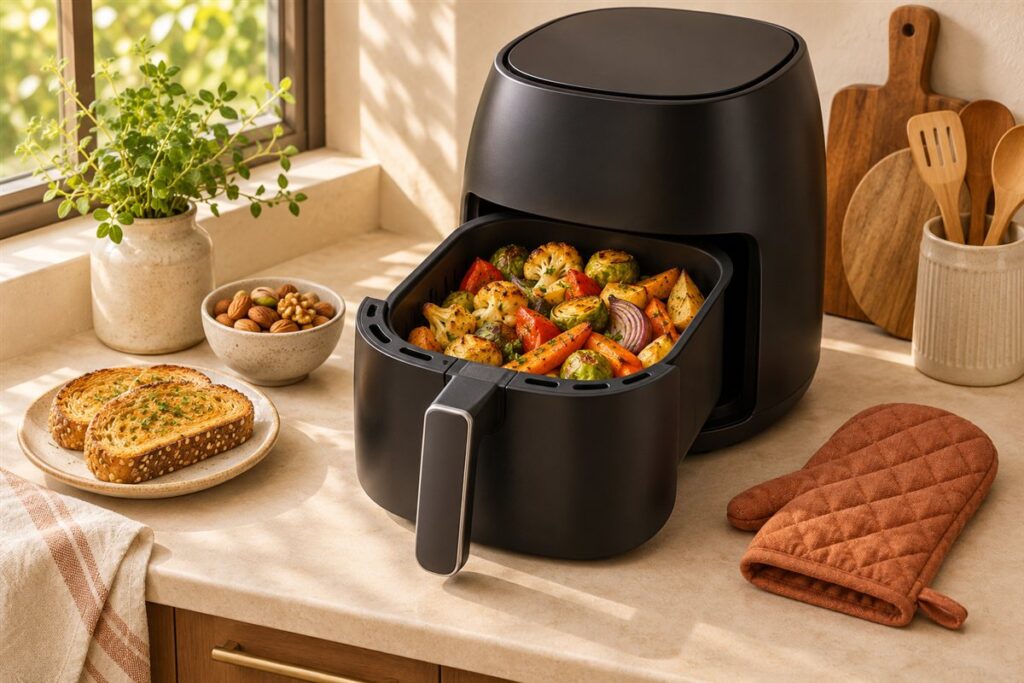
Hot dogs are one of the simplest things to cook in an air fryer. Most take about 5-8 minutes at around 360-390 F, and the outside browns lightly while the inside heats through. Check the package for the maker’s heating directions, since some products need to be heated until steaming hot.
Quick Method
- Take the hot dogs out of the package and pat them dry.
- Make two or three shallow slits along each one, or a spiral cut, if you want them to open up and brown more.
- Place them in a single layer in the basket with a little space between each.
- Cook for 3-4 minutes, then turn them over.
- Cook for 2-4 more minutes, until browned and hot all the way through.
Warming the Buns
Buns take only a minute or two. Open them slightly and place them in the basket after the hot dogs are out. Watch carefully because bread browns fast. A light touch of butter on the cut side adds flavor, but keep the bun clear of the heating element.
If you want to cook both together, add the buns for the last 1-2 minutes, set on top of a clean rack or basket liner if your manual allows.
Frozen, Fresh, and Wrapped Styles
| Style | General range | Note |
|---|---|---|
| Standard chilled | 5-8 minutes | Turn once |
| Frozen | 8-12 minutes | Check the center is hot |
| Cheese-filled | 5-7 minutes | Watch for splitting |
| Wrapped in dough | 8-12 minutes | Follow the package |
Toppings and Extras
- Cooked onions or peppers can be warmed in the basket for a few minutes.
- Cheese melts well in the last minute of cooking.
- Sauces and relishes are best added once cooked.
Common Issues
If the skins split, the heat may be a little high, so lower it and try again. If the center stays cool, extend the time in short steps. Overcrowding blocks airflow and leaves pale spots, so cook a few at a time. Empty the drawer between batches and let the machine cool before cleaning, as your maker’s manual describes.
Cooking for a Group
For a crowd, cook in rounds and keep finished hot dogs warm on a clean plate, covered loosely, while the next batch cooks. Put buns in last, so they are warm when everyone sits down. Set out toppings in small bowls so that people can build their own.
Types of Hot Dogs and Sausages
Not all hot dogs behave the same in an air fryer. Skin-on or natural-casing sausages tend to snap and blister, with a firmer bite. Skinless varieties are softer and often juicier but wrinkle less. Beef, pork, chicken, turkey, and plant-based options differ in fat content, and fat affects how they brown and how much they shrink. Leaner dogs can dry out sooner, while fattier ones crisp and may spit.
Size changes cooking time. Slim franks heat through quickly, jumbo or foot-long versions need longer, and cocktail-sized sausages take only a short time. Check the package for whether the product is fully cooked, which is typical, or needs thorough cooking. Plant-based options often brown faster and can be softer; follow their package guidance.
When choosing, read the label for allergens, such as gluten, soy, or milk, and for any storage instructions. Most hot dogs are processed foods and often high in sodium, so consider this if you are watching your intake. Packages should be refrigerated until use, and opened packages are best used within the period printed on the label, often a number of days. Do not use any that look slimy or smell sour. If you are cooking from frozen, check whether they are meant to be cooked that way.
Scoring, Slicing, and Shaping
How you cut a hot dog changes the cooking and the way it looks. Scoring shallow slits across the surface lets heat in, helps prevent bursting, and gives crevices where toppings can sit. Make cuts about a fraction of the depth of the sausage, and avoid slicing all the way through.
- Straight diagonal slits: Fast and simple, producing a rippled surface with more browned edges.
- Spiral cut: Wind a knife around the dog or thread it on a skewer, giving a curly shape with lots of crisp surface. Skewer use should be handled carefully.
- Lengthwise split: Cut a pocket for cheese, relish, or chili, which holds fillings in place.
- Bite-sized rounds: Quick to heat and good for snacks, kids, or topping pizzas and mac and cheese.
Cut shapes cook faster than whole dogs, so check early. Rounds can slip through the basket or dry out, so keep a close watch. Pat the surface dry before cooking for better browning, and a light brush of oil encourages color. If you fill a split dog with cheese, expect leaks and use a liner or a tray designed for air fryers if your manual allows it.
Buns, Toasting, and Assembly
A hot dog is only as good as its bun, and a small amount of care improves the whole thing. Soft buns can be warmed briefly for a tender texture or toasted until lightly crisp. Cut-side-down toasting gives a golden surface that holds up to wet toppings. Brushing the inside with butter adds flavor, but it browns fast, so watch it closely.
Timing is the main concern. Buns warm in far less time than hot dogs, so add them near the end of cooking, or warm them after the dogs come out while they rest. Place the buns in a single layer, not touching the element, and check them often. Never leave bread unattended in a hot air fryer, since it can scorch or even flare.
To assemble, tuck the dog in the bun and add toppings in a sensible order: sauces first or last depending on whether you want them to soak in, then crunchy items such as onions or pickles, and cheese last if you plan to melt it. For melted cheese, return the assembled dog to the air fryer for a short time, watching until the cheese softens. Wrap the bottom in a napkin or paper sleeve for serving. Gluten-free buns can crumble, so handle them gently.
Topping Bar Ideas for Gatherings
Hot dogs lend themselves to build-your-own meals, and a topping bar turns a simple dinner into an event. Prepare toppings in advance so the hot dogs can be served fresh from the machine. Set out small bowls and spoons, and label each item, especially if any contain common allergens.
Think in categories. Classic condiments include ketchup, mustard, relish, and mayonnaise. Fresh toppings might include chopped onions, tomatoes, peppers, shredded lettuce, and pickles. Warm toppings, such as chili, sauteed onions, melted cheese sauce, or baked beans, need a heat source, so keep them warm in a pan or small slow cooker. Crunchy toppings, such as crushed chips, fried onions, or crispy bacon bits, add contrast.
Regional styles offer inspiration without needing special products: a coleslaw and chili combination, sauerkraut with mustard, a spicy slaw with hot sauce, or a Mediterranean-style version with cucumber, tomato, and a yogurt sauce. Offer a lighter option, such as a lettuce wrap or a whole-grain bun, for guests who want it, and have a plant-based option available. Keep cold toppings chilled, replace bowls that have sat out for a long time, and use clean serving utensils for every bowl to avoid cross-contact.
Safety, Storage, and Leftovers
Hot dogs are typically sold fully cooked, but food safety agencies generally advise heating them until steaming hot, particularly for people at higher risk such as pregnant people, older adults, young children, and those with weakened immune systems. Follow the guidance on the package and your local authority. Use a thermometer if you want certainty; the common target for reheating ready-to-eat meats is steaming hot throughout.
Children can choke on whole hot dogs, which are a recognized choking hazard because of their shape and texture. Cut them lengthwise and then into small pieces for young children, and supervise them while they eat.
Refrigerate leftover cooked hot dogs promptly in a covered container, and eat them within a few days. Reheat until hot throughout, using the air fryer for a few minutes at a moderate setting. Do not leave cooked hot dogs out at room temperature for long periods, particularly at outdoor gatherings in warm weather. If they have been sitting out, discard them rather than saving them.
Clean the basket after cooking, since fat and sauce residue can smoke the next time you use it. Wash it with warm, soapy water once it is cool and dry it fully. Unopened packages can often be frozen for longer storage, so check the label.
FAQ
Do I need oil?
No. Hot dogs have enough fat of their own. A tiny brush of oil is optional if you want extra browning.
How do I know they are hot enough?
They should be steaming and hot in the middle. Follow the package directions and relevant food-safety guidance for reheating processed meats, especially for children and older adults.
Why did my hot dogs split open?
Splitting is common when the skin heats faster than the inside. Score them lightly and use a slightly lower setting to reduce bursting.
Can I cook hot dogs from frozen?
Many can be cooked from frozen, but they need extra time and should be steaming hot in the center. Check the package for guidance.
Do I need to poke or score the hot dogs?
Scoring is optional but helps heat penetrate and reduces bursting. It also adds texture to the surface.
Can I cook corn dogs the same way?
Frozen corn dogs are commonly cooked in air fryers, but their directions differ. Follow the package and check the center.
How can I keep the buns from getting soggy?
Toast the cut side briefly and add wet toppings just before eating. Avoid wrapping a hot dog in a bun for long periods.
Are plant-based hot dogs cooked differently?
They are often similar but can brown faster. Watch them and follow the package.
Can I cook hot dogs wrapped in pastry?
Yes, such as pigs in blankets. The pastry cooks at its own pace, so check both the sausage and the dough.
The Short Version
Slit the hot dogs, cook for about 5-8 minutes with one turn, and warm the buns briefly at the end. Adjust for your model and follow the package directions and your manual.