
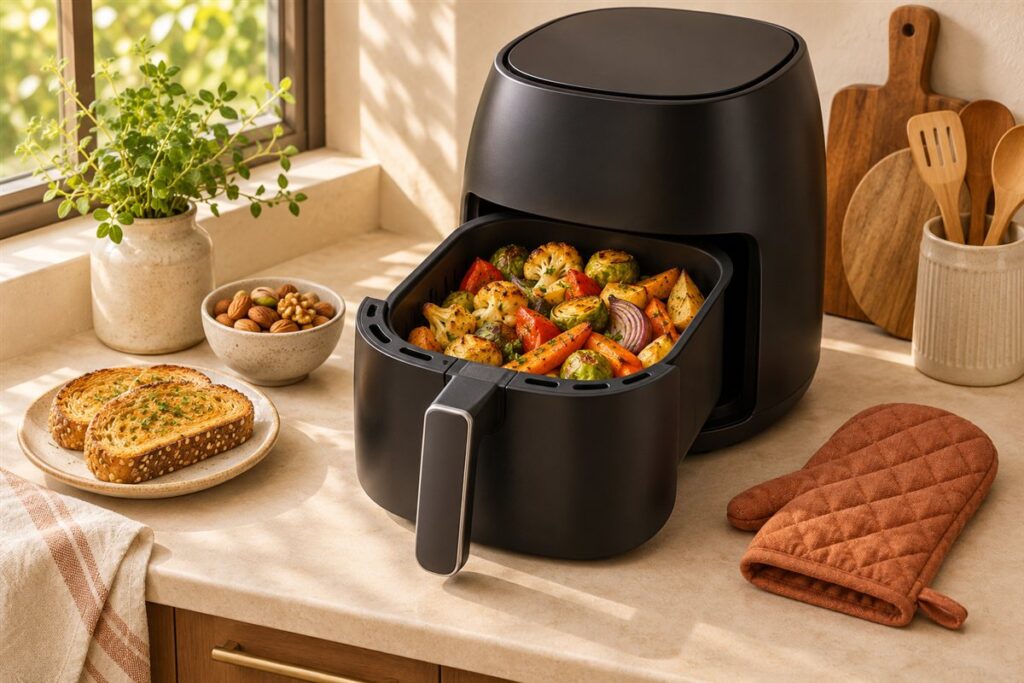
Crispy air fryer wings come down to dry skin, a light coating, single-layer spacing, and enough heat. Cook them until they reach the safe internal temperature for poultry shown by food safety authorities, and check with a thermometer.
Prepare the Wings
Moisture is the enemy of crisp skin. Spend a little time here and the cooking is easy.
- Pat the wings very dry with paper towels. If you have time, leave them uncovered in the fridge for an hour to dry further.
- Cut large wings into flats and drumettes if they are not already cut apart.
- Toss with a very small amount of oil and a dry seasoning. Salt, pepper, and garlic powder are a classic base.
- Some cooks add a small amount of baking powder to the seasoning, which can help the skin crisp. Use a thin dusting only, and make sure it is plain baking powder.
Cook Them Properly
- Preheat if your manual recommends it.
- Arrange wings in a single layer with space between each one.
- Cook at a medium temperature first so the fat renders, then raise the heat near the end for color.
- Turn the wings halfway through.
- Check the thickest part with a thermometer. Do not rely on color alone.
Fat will collect in the drawer. Clean it after use to cut down on smoke the next time.
Saucing Without Losing the Crunch
Wet sauces soften the crust fast. For the best texture, cook the wings fully, then toss them in sauce just before serving. Thick glazes can also be brushed on for the last minute or two, but keep sugary sauces away from the end of a hot cook since they burn easily. Dry rubs can go on before cooking and need no extra step.
Wing Problems and Fixes
| Problem | Likely cause | Fix |
|---|---|---|
| Rubbery skin | Wet wings or low heat | Dry better and finish at higher heat |
| Uneven browning | Crowded basket | Cook in two batches |
| Burnt sauce | Sugar added too early | Toss after cooking |
| Smoke | Old grease in drawer | Clean between uses |
Making a Big Batch
For a crowd, cook in rounds and hold the finished wings on a rack over a tray in a low oven, uncovered, so the skin stays crisp. Do not stack hot wings in a closed container. Reheat any leftovers in the air fryer for a few minutes rather than in the microwave, and make sure they are steaming hot throughout.
Choosing the Right Wings
Crisp results start at the shop. Wings are sold whole, split into flats and drumettes, or as mixed packs, and each form has its advantages. Pre-split wings save time and cook more evenly because the pieces are similar in size. Whole wings are often less expensive and have more skin, but they take more room in the basket and need cutting.
Check the label for added solutions, brines or seasonings. Wings that have been injected or pre-seasoned may contain extra liquid and salt, so they can release more water and need extra drying, and you may want to season more lightly. Plain wings give you full control. If you buy frozen wings, check whether they are raw or fully cooked, because the handling and cooking times differ, and follow the package directions.
- Look for even size so that pieces finish together.
- Choose wings that look fresh and are within their date.
- Keep raw poultry separate from other foods in your shopping bag and fridge.
- Trim excess skin or loose fat if you prefer a tidier result.
Size affects timing. Large wings need longer than small ones, so do not mix very different sizes in one batch. If you have a mix, cook the larger ones first and add the smaller ones later, or run two batches. A thermometer is the safest way to check each piece.
Dry Rubs and Flavor Ideas
Dry rubs give flavor without adding moisture, which suits air frying well. A simple base is salt, black pepper, garlic powder and paprika. From there you can lean in different directions: smoked paprika and a touch of cumin for a barbecue style, lemon zest and dried herbs for a fresh style, or chili powder and onion powder for a spicier one. Check labels on spice blends, because some contain a lot of salt or sugar.
Sugar in a rub can burn at high heat, so use sweet blends sparingly and watch the color near the end of the cook. Season evenly by tossing the wings in a bowl rather than sprinkling from above, and make sure the seasoning has a very light film of oil to cling to.
Salting ahead of time can improve flavor and help dry the skin. Salting the wings and leaving them uncovered in the fridge for a period before cooking is a common method. Keep them on a rack or a plate, and follow normal food safety rules for raw poultry, including keeping the fridge cold and not holding them for longer than the guidance allows.
Finish with fresh herbs, a squeeze of citrus or a dusting of seasoning once the wings come out.
Sauce Styles and Timing
Sauce is where wings can lose their crunch, so choose how and when to apply it. Thin, vinegar-based hot sauces coat well but soften the skin quickly. Thick sauces cling in a heavier coat and hold on longer but can make the crust soggy if left. Sticky, sugar-based glazes, such as honey or sweet chili styles, brown fast and can burn.
The simple approach is to cook the wings fully, warm the sauce in a bowl, then toss the wings briefly and serve at once. For a baked-on glaze, brush a thin coat on during the last minute or two and let it set. Serve extra sauce on the side so guests can control how wet their wings are.
- Warm the sauce first so it does not cool the wings.
- Use a large bowl so you can toss without crushing the skin.
- Do not dip raw-handled tools back into finished sauce.
- Keep dips, such as a creamy dressing, chilled and separate.
Cheese-based or creamy sauces should be kept for dipping. Dry-rubbed wings with a dip on the side give the crispest experience.
Food Safety With Raw Poultry
Raw chicken needs careful handling. Keep it on the lowest shelf of the fridge in a covered container so juices cannot drip onto other foods. Wash your hands, boards, knives and counters with hot soapy water after handling raw wings. Use separate utensils and plates for raw and cooked food. Washing raw chicken is generally discouraged by food safety agencies, because it can spread germs around the kitchen, so pat it dry with paper towels and bin the towels.
Thaw frozen wings in the fridge, in a way that keeps juices contained, or follow the package instructions. Do not thaw on the counter for long periods. Cook to the safe internal temperature given by your local food safety authority, checking the thickest part without touching bone. Do not rely on color or juices alone.
Basket and drawer contents deserve a thought too. Raw juices can collect, so handle the basket carefully, and wash it as the manual advises. If you use a marinade on raw wings, do not serve it as a sauce unless it has been properly boiled, or keep a separate portion aside before it touches the raw meat. Following these steps lets you enjoy the wings with confidence.
Serving for Groups and Gatherings
Wings are often cooked for more than one person, so planning helps. Work out roughly how many batches your basket requires, and start early. Prepare all the wings in advance by drying and seasoning, so each round goes straight in. Have the sauce, dips and sides ready so the wings can be served as soon as they come out.
Think about the sides. Crisp vegetables, such as celery and carrot sticks, add freshness and crunch, and cool dips balance heat. A simple salad or coleslaw rounds out the plate. If you are serving guests with different tastes, offer a mild and a spicy sauce, and keep them in separate bowls.
Provide plenty of napkins and a bin for bones. Label spicy sauces if guests may not know which is hot, and be aware of allergens in sauces and rubs. For a long gathering, run batches at intervals rather than all at once so people can eat the wings while they are at their best. A little organisation lets the host enjoy the event too.
FAQ
Do I need to thaw frozen wings first?
Raw frozen wings usually cook better if they are thawed in the fridge so they heat evenly. Precooked frozen wings can often go straight in, so follow the package.
How do I know the wings are done?
Use a food thermometer in the thickest part without touching the bone, and follow the target temperature given by your local food safety agency.
Should I buy whole wings or pre-cut?
Pre-cut wings save time and cook evenly. Whole wings need splitting but give you more control and often more skin.
Why are my wings crisp on one side only?
They may not have been turned, or the basket was crowded. Space them in a single layer and flip halfway through.
Can I use a wet marinade on wings?
You can, but drain it well and pat the wings dry, or the skin will not crisp. A dry rub is simpler for crunchy results.
Is baking powder necessary?
No. It is an optional trick some cooks use. Dry skin and good spacing matter more, and you should use plain baking powder only in a thin dusting.
How many wings can I cook at once?
It depends on your basket size. Aim for a single layer with gaps and cook extra in a second batch.
Can I cook pre-cooked frozen wings from frozen?
Often yes, but follow the package directions for time and temperature, and make sure they are hot all the way through.
What dips go well with wings?
Cool, creamy dips and fresh vegetable sticks balance spicy sauces. Keep dips chilled and serve them separately.
The Short Version
Dry the skin, season lightly, give each wing room, and finish hot. Sauce at the end, and confirm doneness with a thermometer.









