Disclosure: As an Amazon Associate, airfryerkitchensupply.com earns from qualifying purchases. Links on this page are affiliate links; they cost you nothing extra. Prices and availability change often, so check the current Amazon listing before you buy.
This guide is built around one simple phrase, coat rack pros and cons, and around the real hallway it has to serve. In the first hundred words the honest summary is this: coat rack pros and cons only makes sense when the rack fits your space, your coats and your household habits, holds its load evenly without tipping, and keeps wet layers off the floor. Everything below tests that summary in detail, with real product names in prose, clear strengths and trade-offs, and no shortcuts around safety or fixings.
Key Takeaways
- Load freestanding racks evenly, heaviest coats low and near the centre, or they can tip.
- Wall racks must hit studs or use proper anchors suited to the wall.
- Children climbing a rack is a real hazard, so placement matters as much as design.
- Space hooks for real coats and leave clear drop room for long coats.
- Plan for drips with a mat or tray under the hanging zone.
In this guide
The Pros in Detail
The most useful way to judge any rack is to picture the busiest ten minutes of your day. Coats come off at once, bags land wherever there is space, scarves slip, and someone is always looking for keys. A good setup absorbs that rush without drama. A poor setup turns it into a pile. Look past the styled photo and imagine wet sleeves, thick winter layers and a child reaching up for a hat, because that ordinary pressure is what the furniture has to handle every single week.
Stability deserves more attention than style. A freestanding rack loaded on one side will tip, and that is not a defect in one brand, it is physics. Weight hung far from the centre pulls the base over, especially on a smooth floor. Load evenly around the post, put the heaviest coats low and near the centre where the design allows it, and never treat one side as the family side while the other stays empty for weeks at a time.
Children change the safety picture completely. A coat rack looks like a climbing frame to a small child, and a loaded rack that falls is heavy. Place a freestanding rack where climbing is unlikely, keep it out of a play route, and consider a wall mounted design fixed properly instead if your hallway is also a play space. Teach the rule early, check the base for wobble after any knock, and never hang a heavy bag high where a pull could bring the whole thing forward.
Wall mounted racks solve the tipping problem only when they are fixed honestly. Screws must hit studs or use proper anchors suited to the wall, because a row of wet winter coats is far heavier than it looks. A rail that feels solid with two light jackets can creep, bow or pull away under a full family load. If you cannot find studs where you want the rail, move the rail, use a backing board fixed to the studs, or choose a freestanding design instead.
Wet weather is the quiet test. Coats drip, umbrellas drip more, and boots leave a dark patch that grows through winter. Put a washable mat or a tray under the hanging zone, leave a small gap between the rack and a painted wall, and let air move so damp fabric can dry instead of staying pressed together. In a narrow entry that simple floor protection matters more than an extra hook, because it saves the flooring you walk on every day.
Hook spacing decides whether coats actually dry and whether you can find anything. Hooks packed tightly look generous on a listing, but in use the coats merge into one thick curtain. Fewer hooks with real space between them often hold more usable coats than a crowded row. Think about coat length too. Long coats need clear drop space so hems do not pool on shoes, while short jackets and children’s coats can live happily on a lower row.
Height is a household decision, not a standard number. Tall hooks suit long coats and adults who can reach comfortably, but they shut out children and shorter guests. A two level arrangement, or a freestanding tree with hooks at varied heights, lets everyone hang their own things instead of handing them to the tallest person. That small independence keeps coats off chairs and floors, which is the whole reason the rack exists in the first place.
Materials shape both look and upkeep. Painted metal feels crisp and wipes clean, but edges and joints deserve a look for rough finishes that could snag knitwear. Wood and bamboo bring warmth and hide small marks kindly, though they prefer a drier spot and a quick wipe when wet coats come in. Neither family is automatically better. Match the material to your hallway light, your flooring, and how much gentle maintenance you will honestly do.
The footprint question comes before the style question. Measure the floor patch, then measure the swing of the front door, the arc of any inner door, and the walking line through the hall. A hall tree with a bench is generous in a wide entry and a daily obstacle in a narrow one. A slim tree or a wall rail keeps the route clear. Tape the outline on the floor for a day and live with it before you commit to any design.
Capacity should be counted in real coats, not in hooks. A thick padded winter coat takes the space of two light jackets, and a family that hosts often needs guest capacity on top of the daily load. Count the everyday coats, add bags and scarves honestly, then add a margin for visitors and for the season when everyone is in their heaviest layer at once. Buying for the average Tuesday leaves you short on the wettest Saturday of the year.
Assembly is part of the product, whether listings admit it or not. Freestanding trees usually go together with simple joins and a little patience, while hall trees with benches and shelves ask for more time and a second pair of hands. Lay every part out first, tighten in stages rather than forcing one joint fully home, and recheck the fixings after the first week of use. Small movements in the first days are normal, and a quick retighten settles most early wobble.
Care is mostly small habits. Wipe hooks where wet gloves and hats rest, empty the drip tray or shake out the mat before it stays damp, and dust the top hooks that rarely get used. Check wall fixings twice a year by loading the rail normally and watching for movement. Check a freestanding base by giving the post a gentle push at shoulder height. Any new rock or lean is information, and it is far easier to fix early than after a fall.
A rack also has to earn its place visually. The entry is the first room you and your guests read, and a calm, contained hanging zone makes the whole home feel more ordered. Choose a finish that sits quietly with your door hardware, flooring and wall colour rather than chasing a statement you may tire of. Open designs feel lighter in small halls. Solid hall trees feel more like furniture and can anchor a larger space, but they ask for room to breathe.
Guests reveal the truth about an entry. If visitors stand holding their coats, your system is not obvious enough. Leave a few hooks clearly free, keep the guest zone at an easy height, and avoid making visitors move your family coats to find space. A small, clear landing strip for keys and a bag near the rack completes the welcome. None of this needs extra furniture, just a little deliberate emptiness in a place that naturally wants to fill up.
The Cons in Detail
Renters face a different balance. Drilling into studs may not be allowed, heavy adhesive hooks rarely suit a full coat load, and a freestanding tree avoids the whole argument. If you do choose a wall rail in a rental, agree it with your landlord first and keep the fixings honest. An over door hook row can help for light items, but treat it as overflow for scarves and hats rather than the main home for heavy winter coats.
Small apartments reward vertical thinking. A tall, narrow tree uses air instead of floor, a wall rail above a slim shoe cabinet keeps two jobs in one strip, and a corner that currently holds a bag pile can become the whole entry station. The risk in a small space is visual crowding, so keep the palette simple, leave one hook empty on purpose, and move seasonal coats to a wardrobe when their season ends instead of letting the rack grow all year.
Seasonal rotation is the habit that keeps any rack working. When spring arrives, wash and store the heavy coats elsewhere and the rack suddenly feels generous again. When autumn returns, bring back only what will actually be worn. Without that rhythm, even a large hall tree becomes a storage wall where today’s coat hides behind three forgotten ones. The rack is for the current week of your life, not an archive of every layer you own.
Noise and floor marks are small but real. Metal hooks can click against a wall, bases can scuff hard floors, and a bench style hall tree can scrape if it is dragged instead of lifted. Felt pads under a base, a mat under the drip zone, and a habit of lifting rather than sliding the furniture solve most of it. In a flat with neighbours below, a soft landing for boots under the rack also softens the evening thump.
Think about hands and accessibility as well. Large, open hooks are kinder for stiff fingers, for children, and for anyone hanging a coat one handed while holding a bag. Tiny pegs and deep double hooks look neat but can fight you when the coat loop is small or the fabric is thick. If older relatives visit often, keep at least part of the hanging space at a comfortable, reachable height with hooks that do not demand a precise aim.
Lighting changes how an entry works. A dark hallway hides the free hook and encourages dumping. Even a simple improvement in light near the rack makes the system easier for everyone, especially in winter when most arrivals happen after dark. You do not need a redesign, just enough light to see hooks, find the mat, and notice when the rack is leaning or overloaded before it becomes a problem.
Budget thinking should be in tiers, not in promises. Entry tier racks cover the basics for light, careful use. Mid tier designs usually bring better joins, calmer finishes and more thoughtful hook layouts. Premium pieces tend to offer stronger materials, furniture level looks and bench or storage extras. Any tier can fail if it is overloaded or fixed badly, and a modest rack used within its limits will serve better than a grand one asked to hold a whole wardrobe.
The honest limit of any coat rack is that it is open storage. It will never hide mess the way a closed wardrobe does, and it shows every extra item you add. That openness is also its strength. You see the load, you see the lean, and you can fix both in seconds. Households that like closed, hidden storage may prefer a cabinet with hooks inside, while households that value speed and visibility will love the openness and use it well.
The most useful way to judge any rack is to picture the busiest ten minutes of your day. Coats come off at once, bags land wherever there is space, scarves slip, and someone is always looking for keys. A good setup absorbs that rush without drama. A poor setup turns it into a pile. Look past the styled photo and imagine wet sleeves, thick winter layers and a child reaching up for a hat, because that ordinary pressure is what the furniture has to handle every single week.
Stability deserves more attention than style. A freestanding rack loaded on one side will tip, and that is not a defect in one brand, it is physics. Weight hung far from the centre pulls the base over, especially on a smooth floor. Load evenly around the post, put the heaviest coats low and near the centre where the design allows it, and never treat one side as the family side while the other stays empty for weeks at a time.
Children change the safety picture completely. A coat rack looks like a climbing frame to a small child, and a loaded rack that falls is heavy. Place a freestanding rack where climbing is unlikely, keep it out of a play route, and consider a wall mounted design fixed properly instead if your hallway is also a play space. Teach the rule early, check the base for wobble after any knock, and never hang a heavy bag high where a pull could bring the whole thing forward.
Wall mounted racks solve the tipping problem only when they are fixed honestly. Screws must hit studs or use proper anchors suited to the wall, because a row of wet winter coats is far heavier than it looks. A rail that feels solid with two light jackets can creep, bow or pull away under a full family load. If you cannot find studs where you want the rail, move the rail, use a backing board fixed to the studs, or choose a freestanding design instead.
Wet weather is the quiet test. Coats drip, umbrellas drip more, and boots leave a dark patch that grows through winter. Put a washable mat or a tray under the hanging zone, leave a small gap between the rack and a painted wall, and let air move so damp fabric can dry instead of staying pressed together. In a narrow entry that simple floor protection matters more than an extra hook, because it saves the flooring you walk on every day.
Hook spacing decides whether coats actually dry and whether you can find anything. Hooks packed tightly look generous on a listing, but in use the coats merge into one thick curtain. Fewer hooks with real space between them often hold more usable coats than a crowded row. Think about coat length too. Long coats need clear drop space so hems do not pool on shoes, while short jackets and children’s coats can live happily on a lower row.
What the Trade-Offs Mean for You
Height is a household decision, not a standard number. Tall hooks suit long coats and adults who can reach comfortably, but they shut out children and shorter guests. A two level arrangement, or a freestanding tree with hooks at varied heights, lets everyone hang their own things instead of handing them to the tallest person. That small independence keeps coats off chairs and floors, which is the whole reason the rack exists in the first place.
Materials shape both look and upkeep. Painted metal feels crisp and wipes clean, but edges and joints deserve a look for rough finishes that could snag knitwear. Wood and bamboo bring warmth and hide small marks kindly, though they prefer a drier spot and a quick wipe when wet coats come in. Neither family is automatically better. Match the material to your hallway light, your flooring, and how much gentle maintenance you will honestly do.
The footprint question comes before the style question. Measure the floor patch, then measure the swing of the front door, the arc of any inner door, and the walking line through the hall. A hall tree with a bench is generous in a wide entry and a daily obstacle in a narrow one. A slim tree or a wall rail keeps the route clear. Tape the outline on the floor for a day and live with it before you commit to any design.
Capacity should be counted in real coats, not in hooks. A thick padded winter coat takes the space of two light jackets, and a family that hosts often needs guest capacity on top of the daily load. Count the everyday coats, add bags and scarves honestly, then add a margin for visitors and for the season when everyone is in their heaviest layer at once. Buying for the average Tuesday leaves you short on the wettest Saturday of the year.
Assembly is part of the product, whether listings admit it or not. Freestanding trees usually go together with simple joins and a little patience, while hall trees with benches and shelves ask for more time and a second pair of hands. Lay every part out first, tighten in stages rather than forcing one joint fully home, and recheck the fixings after the first week of use. Small movements in the first days are normal, and a quick retighten settles most early wobble.
Care is mostly small habits. Wipe hooks where wet gloves and hats rest, empty the drip tray or shake out the mat before it stays damp, and dust the top hooks that rarely get used. Check wall fixings twice a year by loading the rail normally and watching for movement. Check a freestanding base by giving the post a gentle push at shoulder height. Any new rock or lean is information, and it is far easier to fix early than after a fall.
A rack also has to earn its place visually. The entry is the first room you and your guests read, and a calm, contained hanging zone makes the whole home feel more ordered. Choose a finish that sits quietly with your door hardware, flooring and wall colour rather than chasing a statement you may tire of. Open designs feel lighter in small halls. Solid hall trees feel more like furniture and can anchor a larger space, but they ask for room to breathe.
Guests reveal the truth about an entry. If visitors stand holding their coats, your system is not obvious enough. Leave a few hooks clearly free, keep the guest zone at an easy height, and avoid making visitors move your family coats to find space. A small, clear landing strip for keys and a bag near the rack completes the welcome. None of this needs extra furniture, just a little deliberate emptiness in a place that naturally wants to fill up.
Renters face a different balance. Drilling into studs may not be allowed, heavy adhesive hooks rarely suit a full coat load, and a freestanding tree avoids the whole argument. If you do choose a wall rail in a rental, agree it with your landlord first and keep the fixings honest. An over door hook row can help for light items, but treat it as overflow for scarves and hats rather than the main home for heavy winter coats.
Small apartments reward vertical thinking. A tall, narrow tree uses air instead of floor, a wall rail above a slim shoe cabinet keeps two jobs in one strip, and a corner that currently holds a bag pile can become the whole entry station. The risk in a small space is visual crowding, so keep the palette simple, leave one hook empty on purpose, and move seasonal coats to a wardrobe when their season ends instead of letting the rack grow all year.
How to Buy Smart
Seasonal rotation is the habit that keeps any rack working. When spring arrives, wash and store the heavy coats elsewhere and the rack suddenly feels generous again. When autumn returns, bring back only what will actually be worn. Without that rhythm, even a large hall tree becomes a storage wall where today’s coat hides behind three forgotten ones. The rack is for the current week of your life, not an archive of every layer you own.
Noise and floor marks are small but real. Metal hooks can click against a wall, bases can scuff hard floors, and a bench style hall tree can scrape if it is dragged instead of lifted. Felt pads under a base, a mat under the drip zone, and a habit of lifting rather than sliding the furniture solve most of it. In a flat with neighbours below, a soft landing for boots under the rack also softens the evening thump.
Think about hands and accessibility as well. Large, open hooks are kinder for stiff fingers, for children, and for anyone hanging a coat one handed while holding a bag. Tiny pegs and deep double hooks look neat but can fight you when the coat loop is small or the fabric is thick. If older relatives visit often, keep at least part of the hanging space at a comfortable, reachable height with hooks that do not demand a precise aim.
Lighting changes how an entry works. A dark hallway hides the free hook and encourages dumping. Even a simple improvement in light near the rack makes the system easier for everyone, especially in winter when most arrivals happen after dark. You do not need a redesign, just enough light to see hooks, find the mat, and notice when the rack is leaning or overloaded before it becomes a problem.
Budget thinking should be in tiers, not in promises. Entry tier racks cover the basics for light, careful use. Mid tier designs usually bring better joins, calmer finishes and more thoughtful hook layouts. Premium pieces tend to offer stronger materials, furniture level looks and bench or storage extras. Any tier can fail if it is overloaded or fixed badly, and a modest rack used within its limits will serve better than a grand one asked to hold a whole wardrobe.
The honest limit of any coat rack is that it is open storage. It will never hide mess the way a closed wardrobe does, and it shows every extra item you add. That openness is also its strength. You see the load, you see the lean, and you can fix both in seconds. Households that like closed, hidden storage may prefer a cabinet with hooks inside, while households that value speed and visibility will love the openness and use it well.
The most useful way to judge any rack is to picture the busiest ten minutes of your day. Coats come off at once, bags land wherever there is space, scarves slip, and someone is always looking for keys. A good setup absorbs that rush without drama. A poor setup turns it into a pile. Look past the styled photo and imagine wet sleeves, thick winter layers and a child reaching up for a hat, because that ordinary pressure is what the furniture has to handle every single week.
Stability deserves more attention than style. A freestanding rack loaded on one side will tip, and that is not a defect in one brand, it is physics. Weight hung far from the centre pulls the base over, especially on a smooth floor. Load evenly around the post, put the heaviest coats low and near the centre where the design allows it, and never treat one side as the family side while the other stays empty for weeks at a time.
Setup and Care That Reduce the Cons
Children change the safety picture completely. A coat rack looks like a climbing frame to a small child, and a loaded rack that falls is heavy. Place a freestanding rack where climbing is unlikely, keep it out of a play route, and consider a wall mounted design fixed properly instead if your hallway is also a play space. Teach the rule early, check the base for wobble after any knock, and never hang a heavy bag high where a pull could bring the whole thing forward.
Wall mounted racks solve the tipping problem only when they are fixed honestly. Screws must hit studs or use proper anchors suited to the wall, because a row of wet winter coats is far heavier than it looks. A rail that feels solid with two light jackets can creep, bow or pull away under a full family load. If you cannot find studs where you want the rail, move the rail, use a backing board fixed to the studs, or choose a freestanding design instead.
Wet weather is the quiet test. Coats drip, umbrellas drip more, and boots leave a dark patch that grows through winter. Put a washable mat or a tray under the hanging zone, leave a small gap between the rack and a painted wall, and let air move so damp fabric can dry instead of staying pressed together. In a narrow entry that simple floor protection matters more than an extra hook, because it saves the flooring you walk on every day.
Hook spacing decides whether coats actually dry and whether you can find anything. Hooks packed tightly look generous on a listing, but in use the coats merge into one thick curtain. Fewer hooks with real space between them often hold more usable coats than a crowded row. Think about coat length too. Long coats need clear drop space so hems do not pool on shoes, while short jackets and children’s coats can live happily on a lower row.
Height is a household decision, not a standard number. Tall hooks suit long coats and adults who can reach comfortably, but they shut out children and shorter guests. A two level arrangement, or a freestanding tree with hooks at varied heights, lets everyone hang their own things instead of handing them to the tallest person. That small independence keeps coats off chairs and floors, which is the whole reason the rack exists in the first place.
Materials shape both look and upkeep. Painted metal feels crisp and wipes clean, but edges and joints deserve a look for rough finishes that could snag knitwear. Wood and bamboo bring warmth and hide small marks kindly, though they prefer a drier spot and a quick wipe when wet coats come in. Neither family is automatically better. Match the material to your hallway light, your flooring, and how much gentle maintenance you will honestly do.
The footprint question comes before the style question. Measure the floor patch, then measure the swing of the front door, the arc of any inner door, and the walking line through the hall. A hall tree with a bench is generous in a wide entry and a daily obstacle in a narrow one. A slim tree or a wall rail keeps the route clear. Tape the outline on the floor for a day and live with it before you commit to any design.
Capacity should be counted in real coats, not in hooks. A thick padded winter coat takes the space of two light jackets, and a family that hosts often needs guest capacity on top of the daily load. Count the everyday coats, add bags and scarves honestly, then add a margin for visitors and for the season when everyone is in their heaviest layer at once. Buying for the average Tuesday leaves you short on the wettest Saturday of the year.
Bottom Line
Assembly is part of the product, whether listings admit it or not. Freestanding trees usually go together with simple joins and a little patience, while hall trees with benches and shelves ask for more time and a second pair of hands. Lay every part out first, tighten in stages rather than forcing one joint fully home, and recheck the fixings after the first week of use. Small movements in the first days are normal, and a quick retighten settles most early wobble.
Care is mostly small habits. Wipe hooks where wet gloves and hats rest, empty the drip tray or shake out the mat before it stays damp, and dust the top hooks that rarely get used. Check wall fixings twice a year by loading the rail normally and watching for movement. Check a freestanding base by giving the post a gentle push at shoulder height. Any new rock or lean is information, and it is far easier to fix early than after a fall.
A rack also has to earn its place visually. The entry is the first room you and your guests read, and a calm, contained hanging zone makes the whole home feel more ordered. Choose a finish that sits quietly with your door hardware, flooring and wall colour rather than chasing a statement you may tire of. Open designs feel lighter in small halls. Solid hall trees feel more like furniture and can anchor a larger space, but they ask for room to breathe.
Guests reveal the truth about an entry. If visitors stand holding their coats, your system is not obvious enough. Leave a few hooks clearly free, keep the guest zone at an easy height, and avoid making visitors move your family coats to find space. A small, clear landing strip for keys and a bag near the rack completes the welcome. None of this needs extra furniture, just a little deliberate emptiness in a place that naturally wants to fill up.
Renters face a different balance. Drilling into studs may not be allowed, heavy adhesive hooks rarely suit a full coat load, and a freestanding tree avoids the whole argument. If you do choose a wall rail in a rental, agree it with your landlord first and keep the fixings honest. An over door hook row can help for light items, but treat it as overflow for scarves and hats rather than the main home for heavy winter coats.
Small apartments reward vertical thinking. A tall, narrow tree uses air instead of floor, a wall rail above a slim shoe cabinet keeps two jobs in one strip, and a corner that currently holds a bag pile can become the whole entry station. The risk in a small space is visual crowding, so keep the palette simple, leave one hook empty on purpose, and move seasonal coats to a wardrobe when their season ends instead of letting the rack grow all year.
Coat Rack Pros and Cons in Daily Life
Use this section as the practical shortlist. Compare hook height, hook spacing, footprint and fixing method first, and only then compare finishes.

Simple Houseware Coat Rack
The Simple Houseware Coat Rack is a entry tier option: a straightforward freestanding tree with a familiar branch style layout that suits a busy family hallway. Judge it the way you would judge it in your own hall, by hook spacing, by how the load sits, and by whether the footprint leaves your walking route clear. Keep the heaviest coats low and near the centre on any freestanding design, leave real space between coats so damp fabric can dry, and check the base or the fixings after the first busy week. Best for households whose needs match its layout. Not suited for anyone expecting it to hold a full wardrobe in a tight corner without careful, even loading.
VASAGLE Coat Rack
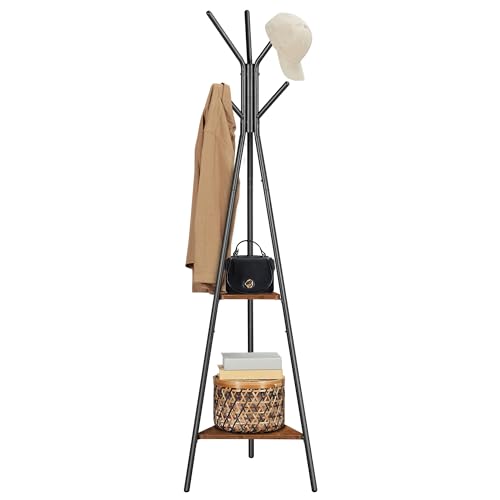
The VASAGLE Coat Rack is a mid tier option: a hall tree style design that combines hanging space with a bench and shoe storage in one footprint. Judge it the way you would judge it in your own hall, by hook spacing, by how the load sits, and by whether the footprint leaves your walking route clear. Keep the heaviest coats low and near the centre on any freestanding design, leave real space between coats so damp fabric can dry, and check the base or the fixings after the first busy week. Best for households whose needs match its layout. Not suited for anyone expecting it to hold a full wardrobe in a tight corner without careful, even loading.

Yaheetech Coat Rack
The Yaheetech Coat Rack is a mid tier option: a metal frame rack that aims for a tidy, open look in a rental entryway or spare room corner. Judge it the way you would judge it in your own hall, by hook spacing, by how the load sits, and by whether the footprint leaves your walking route clear. Keep the heaviest coats low and near the centre on any freestanding design, leave real space between coats so damp fabric can dry, and check the base or the fixings after the first busy week. Best for households whose needs match its layout. Not suited for anyone expecting it to hold a full wardrobe in a tight corner without careful, even loading.

HOOBRO Coat Rack
The HOOBRO Coat Rack is a premium tier option: a compact hall tree approach that mixes hooks, shelving and a place to sit while changing shoes. Judge it the way you would judge it in your own hall, by hook spacing, by how the load sits, and by whether the footprint leaves your walking route clear. Keep the heaviest coats low and near the centre on any freestanding design, leave real space between coats so damp fabric can dry, and check the base or the fixings after the first busy week. Best for households whose needs match its layout. Not suited for anyone expecting it to hold a full wardrobe in a tight corner without careful, even loading.
Strengths
- Hooks at a comfortable height make daily use effortless for the whole household.
- Open storage keeps coats visible, aired and quick to grab on the way out.
- A well placed rack ends the coat pile on chairs, banisters and the bed.
- Freestanding designs move with you and need no drilling, which suits renters.
- Wall designs free the floor and cannot be knocked over when fixed into studs.
- A bench or shelf variant turns dead entry space into a working station.
Trade-offs
- Open storage shows every extra item, so it rewards tidiness and punishes drift.
- Freestanding racks tip when loaded on one side or climbed on by children.
- Wall racks are only as strong as their fixings and the wall behind them.
- Crowded hooks stop coats drying and make the entry feel smaller.
- Long coats need clear drop space that compact designs cannot always give.
- Wet coats drip, so floor protection is an extra job you cannot skip.
read more about this topic in our related guide
read more about this topic in our related guide
read more about this topic in our related guide
closet storage ideas that pair well with an entryway rack
a runner that protects floors from wet coats and boots
textured rugs for a warmer hallway feel
compact bedside storage for small homes
Living With the Trade-Offs: A Coat Rack After the First Month
The honest test of any coat rack starts after the novelty fades, when the advantages you bought it for meet the small frictions of ordinary weeks. This section looks at how the balance described earlier plays out in month two and beyond, which drawbacks shrink once you adapt, and which ones grow louder the longer you live with them.
On the plus side, the strengths of a good coat rack compound quietly. Week after week of entryway coats, bags and hats by the door, the convenience stops registering as a benefit and simply becomes how the household runs, which is the real sign a purchase has landed. The advantage is largest for households whose routine matches the design brief, and smallest for anyone who bought it for an occasional job it happens to do adequately.
The drawbacks, though, have a pattern worth naming: they concentrate at the extremes. The recurring disappointment is tipping when heavy coats all hang on one side of a freestanding rack. Add the steady upkeep, because tightening fittings occasionally and dusting hooks so pale coats stay clean, and you have the true cost of ownership, which is measured in attention rather than money. None of these cons arrive on day one; they accumulate, which is why short first-impression reviews so rarely mention them.
Weighing the two sides comes down to frequency. If your household hits the strong cases several times a week and the weak cases rarely, the balance is clearly favourable. If your routine leans the other way, the honest answer flips, and a simpler or different design will serve you better. Test your own pattern against the edge case too: guest overload during gatherings, when every hook fills at once. How often that happens in your home is the single best predictor of which side wins.
A Final Decision Checklist
- Credit the plus side only where it repeats weekly, starting with whether it suits entryway coats, bags and hats by the door.
- Debit the minus side honestly: the recurring complaint is tipping when heavy coats all hang on one side of a freestanding rack.
- Count upkeep as a standing cost, because tightening fittings occasionally and dusting hooks so pale coats stay clean.
- Check the fit claims against your home, since wall clearance behind the rack and whether the base fits beside the door swing.
- Test the con that matters most, because guest overload during gatherings, when every hook fills at once.
- Write down your two most frequent uses and ask which side of the ledger each one lands on.
- Keep packaging and paperwork until the first full week shows whether the cons are liveable.
- Photograph the setup once it works well, so later frustration can be compared with the good baseline.
- Score the person who cleans it most a veto, because their friction decides how long it stays in service.
- Revisit every included part against the listing description on arrival day, while an exchange is still painless.
- Count honestly the shortlist against your written criteria, not against whichever listing photographs best.
- Revisit the largest regular job, not the largest imaginable one, when judging whether the size is right.
- Judge the second year in advance: replaceable parts and a serviceable design matter more than launch-day shine.
- Count honestly the footprint with tape on the floor for a day if space is tight, and live around the outline first.
- Weigh instructions photographed on your phone, so troubleshooting never starts with a search through drawers.
- Judge compatibility once more before ordering parts or accessories, remembering that wall clearance behind the rack and whether the base fits beside the door swing.
- Judge the storage spot honestly: if putting it away is awkward, the coat rack will slowly stop being used.
Frequently Asked Questions
Will a freestanding coat rack tip over?
Yes, it can, and honesty matters here. A freestanding rack loaded heavily on one side, or pulled by a child, can tip. Load coats evenly around the post, keep the heaviest items low and near the centre, place the rack out of climbing routes, and check for wobble regularly. If your hallway doubles as a play space, a wall mounted rack fixed into studs is the calmer choice for your household.
Do wall mounted coat racks need to hit studs?
For a real coat load, yes, or they need proper anchors genuinely suited to your wall type. A rail holding several wet winter coats carries far more weight than it appears to. Screws into plaster alone can creep and pull away over time. Find the studs, use a backing board if the spacing is awkward, and test the rail with a normal load while watching for any movement before trusting it daily.
How many coats can one rack hold?
Count coats, not hooks. A padded winter coat can take the room of two light jackets, and guests need space on top of the family load. Hooks spaced so coats hang without being crushed are the honest capacity, even if that number is lower than the hook count suggests. If every hook is full every day, the rack is too small for the household and a second, smaller overflow point will help.
Where should a coat rack go in a small entry?
Put it where the door swing, the walking line and the drip zone all stay clear. A slim freestanding tree in a corner, or a wall rail above low shoe storage, usually beats a wide hall tree in a narrow space. Tape the footprint on the floor and live with the outline for a day. Add a washable mat underneath, because wet coats will drip exactly where they hang.
Are coat racks safe around children?
They can be, with placement and habits doing most of the work. Children may try to climb a freestanding rack, and that is a real tip hazard. Keep the rack out of play routes, anchor or choose a wall design where possible, hang heavy bags low or elsewhere, and teach children to hand coats up rather than pull on hooks. Recheck stability after any knock or house move.
How do I stop wet coats damaging the floor?
Expect drips and plan for them. A washable mat or a shallow tray under the hanging zone, a small gap between coats and the painted wall, and enough air movement for fabric to dry will protect most floors. Shake outdoor water off at the door in heavy rain, rotate which coats sit in the dampest spot, and dry the mat itself regularly so it does not stay wet underneath.
Related Guides
Pair this guide with the other pieces in this cluster before you buy, because the review, the buying guide and the safety notes each catch mistakes the others miss. A rack chosen with all of them in mind is far more likely to still feel right after the first wet, busy month of real family use.