Disclosure: As an Amazon Associate, airfryerkitchensupply.com earns from qualifying purchases. Links to Amazon on this page are affiliate links; they cost you nothing extra. Listing details such as price and availability change often, so check the current Amazon listing before you buy.
The best non skid runner rugs combine a long, narrow shape with a backing that stays put when you walk, carry laundry or let the dog sprint down the hall. For most buyers we would start with the Gorilla Grip slip resistant runner for grip, a Ruggable runner for easy washing, and a Safavieh Adirondack runner for patterned style. If you already own a runner that slides, a Mohawk Home dual surface pad can fix it.
A runner is one of the hardest-working rugs in a home. It sits in narrow, busy corridors, in front of sinks and ovens, and beside beds. A slip hazard in those places is more than an annoyance, so the backing deserves as much thought as the pattern. We reviewed seven products sold on Amazon, compared how their makers describe the grip, and wrote down who each is good for and what to watch out for.
In this guide
Quick Picks
| Pick | Best for | Why it stands out | Link |
|---|---|---|---|
| Gorilla Grip Slip Resistant Runner Rug | Best overall for grip | Built around a non-slip backing | Check on Amazon |
| Ruggable Washable Runner Rug | Best for easy cleaning | Machine washable cover with pad | Check on Amazon |
| Safavieh Adirondack Runner | Best for patterned halls | Faded vintage look hides wear | Check on Amazon |
| Lahome Washable Kitchen Runner | Best for kitchens | Thin, easy to wash and move | Check on Amazon |
| Mohawk Home Dual Surface Rug Pad | Best fix for slipping rugs | Felt and rubber pad underneath | Check on Amazon |
How We Picked These Runners
We have not walked on or washed these products ourselves. This guide rests on manufacturer listings, published specifications and the way each brand positions its runner line. We looked for a stated non-slip backing or a companion pad, runner sizes that are easy to find, and a design that suits the usual places runners go. Before you order, read the current listing for the backing type, floor compatibility and exact dimensions.
7 Best Non Skid Runner Rugs
Gorilla Grip Original Slip Resistant Runner Rug
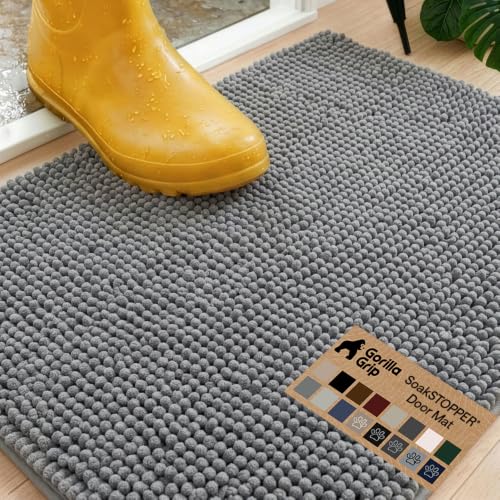
Gorilla Grip built its reputation on grip, and its runner line is the clearest example of a rug designed first for staying in place. It is sold in many sizes and patterns, and the brand states a slip-resistant backing on the listing. It is a natural pick for a kitchen sink, a laundry room or an entry where wet shoes make floors unpredictable.
- The non-slip backing is the headline feature.
- Several lengths and widths are listed, so you can match a hall.
- The designs are casual, which fits utility rooms.
The limitation is that a strong rubber-style backing may not be right for every floor finish. Read the listing for floor compatibility, since some backings can mark delicate surfaces over time.
Use it where safe footing matters more than a luxe look. A clean, simple pattern also makes it easy to pair with a mat at the door.
A smart way to use it is as the second layer in a wet zone. Put a scraper mat outside, a coarse mat just inside the door, and this runner along the path beyond. By the time feet reach the runner they are drier, so the backing keeps its grip for longer and the rug stays cleaner between washes.
Choose it if grip is the priority. Skip it if you have a finish the maker warns against.
Ruggable Washable Runner Rug
Ruggable pairs a patterned cover with a pad that is designed to keep it from sliding, and the cover goes in the washing machine. That makes it an attractive choice for a runner that will see mud, pet paws and spills. Runner sizes are commonly offered across many designs.
- A two-part system separates the pattern from the grip layer.
- The cover can be washed following the care label.
- The design range runs from plain to bold.
The trade-off is that you buy a cover and a pad together, and the cover is thinner than a woven rug. Expect a flatter feel under bare feet.
It suits a mudroom hallway, a kitchen galley or the stretch between the front door and the stairs.
The real advantage is the laundry cycle. Households with muddy boots or a shedding dog tend to give up on rugs because they cannot be cleaned, and a cover that goes in the machine removes that excuse. Check the listing for the machine size the maker recommends, since a long runner cover can be bulky, and follow the care label for temperature and drying.
Choose it if you want to wash the rug regularly. Skip it if you prefer a thick, plush feel.
Safavieh Adirondack Collection Runner
The Adirondack line is a favourite for hallways because the faded geometric look disguises scuffs and crumbs. Safavieh sells it in runner lengths in many colourways. It needs a pad on slippery floors, but with one it is a stable, handsome choice.
- Distressed patterning hides daily wear.
- A wide palette makes colour-matching easier.
- Runner sizes in a range of lengths are common.
The limitation is that the rug itself is not marketed as non-slip, so plan on pairing it with a good pad. Without one, it can creep on hardwood.
Pair it with the Mohawk Home dual surface pad below and you have a grippy, handsome hall runner.
Colour choice matters in a corridor, because the runner is often the longest stretch of colour in the house. Rust, navy and soft grey versions each give the hall a different mood, and the distressed finish lets the colour feel lived-in instead of stiff. Check the listing for the exact runner lengths offered before you commit to a hallway measurement.
Choose it if you want style plus durability. Skip it if you do not want to buy a pad.
Lahome Washable Kitchen Runner
Lahome makes thin, lightweight washable rugs in runner shapes with a non-slip style backing. They are easy to shake, rinse or wash, and they are low enough to slide under a door. That suits the kitchen, where a runner may need to be picked up often.
- Lightweight and easy to move for floor cleaning.
- Low profile avoids tripping edges.
- Many boho and neutral designs.
Because it is thin, comfort is modest. If you stand at the counter for long periods, a cushioned mat may serve you better.
In practice, this style of runner is about convenience. When a pot boils over, you pick it up, rinse it and replace it. Because it is light, it is also simple to roll away when you mop. Look closely at the backing description to see how the maker intends it to grip, and add a pad on smooth tile if it shifts.
Choose it if you want an easy refresh for a galley kitchen. Skip it if you want a thick anti-fatigue feel.
Nourison Aloha Runner
The Aloha line is positioned for indoor and outdoor use, and it comes in runner sizes that suit porches, covered walkways and sunrooms. The pattern range is modern, and the surface is meant to cope with moisture better than a delicate wool piece.
- Positioned for flexible indoor and outdoor use.
- Contemporary patterns suit modern halls.
- Runner lengths are available.
The limitation is that, like many woven runners, it benefits from a pad on slick floors. Read the listing about backing and care.
It earns its place if your runner has to cross two worlds, such as a back door that opens onto a deck, or a laundry room with an outdoor entrance. A surface that copes with moisture is a relief there, and the modern patterns keep the look current rather than rustic.
Choose it if your runner crosses a covered porch. Skip it if you want a formal indoor look.
Mohawk Home Dual Surface Rug Pad
This is not a rug, but it may be the most important product on the page. The Mohawk Home dual surface pad combines a felt side and a rubber-style side, designed to protect floors while holding a rug in place. Cut to size, it can turn a sliding runner into a stable one.
- Adds cushioning under thin runners.
- Works with the rugs you already own.
- Sold in sizes that you trim to fit.
The honest limitation is that you must measure carefully and trim it slightly smaller than the rug so edges do not show. Check floor compatibility on the listing.
To fit it, lay the pad on the floor, place the rug on top, and trace the rug outline lightly with a pencil on the pad. Cut about an inch inside that line. Because the pad is usually sold larger than needed, one purchase can often cover a runner and leave an offcut for a small mat.
Choose it if your existing runner moves. Skip it if you want one all-in-one product.
Safavieh Lyndhurst Collection Runner
Lyndhurst offers a traditional bordered runner that suits a formal hall, a stairway landing or a dining room corridor. It reads as classic and settled, and it comes in many colourways.
- Traditional layouts fit older homes.
- Runner lengths are widely offered.
- Soft colours blend with wood floors.
As with Adirondack, plan on a pad. The traditional look is lovely, but the rug is not itself a grip product.
It pairs well with stained wood, painted trim and brass fittings, and it brings a sense of arrival to an entry. If your home is older, a traditional border can echo architectural details such as panelling or a staircase, which ties the space together more convincingly than a random modern stripe.
Choose it if you want a polished entry hall. Skip it if your home is minimalist.
Comparison of All Seven Options
| Option | Grip approach | Key feature | Best use | Link |
|---|---|---|---|---|
| Gorilla Grip | Non-slip backing | Grip focus | Kitchen, laundry | Check on Amazon |
| Ruggable | Cover and pad | Washable | Mudroom hall | Check on Amazon |
| Adirondack | Add a pad | Hides wear | Hallway | Check on Amazon |
| Lahome | Thin backing | Light and washable | Galley kitchen | Check on Amazon |
| Nourison Aloha | Add a pad | Indoor and outdoor | Porch walkway | Check on Amazon |
| Mohawk Home pad | Felt and rubber | Fixes sliding | Any runner | Check on Amazon |
| Lyndhurst | Add a pad | Traditional border | Formal hall | Check on Amazon |
How Non Skid Backings Work
Most grip comes from one of three approaches. The first is a built-in backing, usually a textured or rubber-like layer on the underside of the rug. The second is a separate pad that sits between rug and floor. The third is a washable system where the pattern is a cover that attaches to a pad designed for that purpose.
Each has strengths. A built-in backing is simple, because there is nothing extra to buy. A separate pad is flexible, and you can replace it when it wears out. A cover and pad system is the most laundry-friendly. The right choice depends on floor type, because some backings are not recommended for certain finishes. When the listing names compatible floors, believe it, and when it is silent, ask the seller.
Runner Sizes Explained
Runner sizes are named by width and length, such as 2 x 6 or 2 x 8 feet, and the narrow dimension is the one that decides whether it looks right. A width around two to two and a half feet suits most halls. A wider hallway can take a wider runner, but keep visible floor on each side. For length, work backwards from the space: measure the clear stretch of floor and subtract the clearance you need at each end.
Kitchens are a special case. The runner should be long enough to cover the main working zone but short enough that cabinet doors do not bump it. A shorter, wider rug may work better than a very long one if your kitchen is galley-shaped. If you are shopping for two runners in a long hall, buying two shorter ones can be easier to clean and move.
Choosing a Runner by Room
Kitchen: favour washable, thin and easy to lift. Lahome and Gorilla Grip styles suit this room. Entry hall: choose a pattern that hides dirt and a backing that grips damp shoes. Ruggable and Adirondack with a pad fit well. Bedroom: a softer, slightly thicker runner pleases bare feet. Add a pad for comfort. Laundry room: pick something that can take spills and be washed. Formal hall: Lyndhurst with a pad gives a settled, traditional feel. Covered porch: Aloha, because it is positioned for flexible use.
How to Choose a Runner: A Buying Checklist
- Measure the corridor. Leave a few inches of bare floor on each side. A narrow strip of exposed floor frames the runner neatly.
- Pick the length. Standard hall runners come in several lengths. Choose one that stops short of doors so they can swing freely.
- Check floor compatibility. Hardwood, tile, vinyl and laminate may need different pads.
- Choose the thickness. Thin runners slide under doors. Thicker ones feel nicer but can catch.
- Think about washing. Kitchens and mudrooms benefit from rugs you can wash.
- Look at the pattern. Busy designs hide dirt. Plain ones show everything.
- Read the return terms. If the runner arrives rippled or the wrong shade, you want an easy way to send it back.
Runner Placement Tips for Kitchens, Halls and Bedrooms
In a kitchen, a runner usually sits in front of the sink and range. Keep it a few inches from the cabinet base so doors and drawers still open, and choose a washable design. In a hallway, centre the runner so equal floor shows on both sides, and avoid covering floor vents. In a bedroom, a pair of runners on either side of the bed adds soft landings without a full rug, and they suit narrow rooms.
On stairs, be cautious. A flat runner on a hall floor is a different product from stair treads, and you should follow the maker’s instructions for any item intended for stairs. Do not use a loose runner on steps unless the listing explicitly says it is designed for that purpose.
Matching Runner Style to Your Home
A runner is a long strip of design, so style choices show up quickly. In a farmhouse or cottage, faded and distressed designs feel natural and forgive daily wear. In a modern apartment, a simple stripe or a low-contrast geometric looks tidy and keeps the corridor from feeling busy. In a traditional home, a bordered runner repeats the lines of the staircase and the door frames.
Colour deserves a second thought. Dark runners hide dirt but show pale fur and lint. Light runners brighten a dim hall but need washing more often. A mid-tone with some pattern is the practical compromise for most households, and it is the safest option if you are unsure how your hall light behaves through the day.
Finally, think about the ends. Fringe adds charm but can tangle in a vacuum cleaner and trip small children. A flat, finished edge is easier to live with in a busy kitchen or mudroom, which is another reason washable options have become so popular.
Common Buying Mistakes
- Assuming every runner is non-slip. Many are not, so look for a backing or plan a pad.
- Buying a pad larger than the rug, which causes visible edges and tripping.
- Ignoring floor finish. Some backings are not suited to delicate surfaces.
- Choosing a pale colour for a muddy entry.
- Skipping a measurement and discovering the runner blocks a door.
Care, Cleaning and Safety Habits
Shake out or vacuum your runner regularly, because grit under the rug can wear the backing and scratch floors. Wash covers as the label directs. Lift the runner now and then to clean the floor beneath, and let both surfaces dry fully before putting the runner back. If the backing starts to crumble or lose grip, replace the pad or the rug instead of ignoring it. Curled edges are a tripping risk, so flatten them with a pad or replace the runner.
It is worth setting a reminder to check the grip every couple of months. Pull one corner gently and see whether the rug and pad move together. If the pad slides on the floor or the rug slides on the pad, one of them has lost traction, and a fresh pad is usually the least expensive fix in effort and time.
| Problem | What to try |
|---|---|
| Runner slides | Add or replace a pad |
| Corners curl | Flatten overnight with weight |
| Backing marks floor | Stop use and check compatibility |
Before you buy, walk the route the runner will cover and notice where people turn, pause or carry loads. Those are the spots where a rug is most likely to move, so make sure the backing or pad covers them fully. A runner that grips on the straight run but lifts at a corner is the one that causes trips, and a quick walk-through now is easier than a rearrangement later.
Final Recommendation
Choose by situation.
- For maximum grip: Gorilla Grip Slip Resistant Runner Rug.
- For easy washing: Ruggable Washable Runner Rug.
- For a patterned hall: Safavieh Adirondack Collection Runner, with a pad.
- For a galley kitchen: Lahome Washable Kitchen Runner.
- To fix a runner you own: Mohawk Home Dual Surface Rug Pad.
Measure your space, confirm the backing, and open the top two picks below to compare sizes.
Reading the Shortlist for Non-Skid Runner Rugs Like a Buyer, Not a Browser
Size is the first decision and the one most often got wrong, because rugs are consistently bought smaller than the room wants. In a seating area, the front legs of the furniture should generally rest on the rug so the pieces read as one arrangement; in a dining space, chairs should stay on the rug when pulled out; in a hallway, the runner should leave a border of floor rather than wall-to-wall uncertainty. Measure your room and your furniture, then choose from the sizes the picks above actually offer, because a beautiful rug in the wrong size looks like a mistake at any quality.
Material decides how the rug will live, not just how it looks on arrival. Wool brings resilience and a natural ability to hide day-to-day soil between cleans; plant fibres bring texture and a relaxed look with their own rules about water and staining; synthetics bring easy care and consistency at the cost of a different feel underfoot. The picks above span those families, so match the material to the room’s traffic and your household’s realities, pets, children, muddy shoes, rather than to the photograph that first caught your eye.
Pile and construction shape both comfort and upkeep. A denser, lower pile tends to behave in hallways, under doors and beneath dining chairs, while a deeper pile rewards bare feet in bedrooms and quiet corners but shows footprints and traps more debris. Construction also decides how edges wear and whether the rug lies flat or fights you with curled corners. Read each pick’s notes with the specific room in view, because the same rug can be the right answer in a bedroom and the wrong one under a dining table.
Colour and pattern are working tools, not just decoration. A pattern forgives the daily evidence of life between cleans, which is why patterned rugs rule busy households; a plain rug shows every crumb but calms a room and lets furniture speak. Light tones open a space and confess everything; deep tones ground a room and confess a different set of sins, pale pet hair among them. Choose with your household’s actual debris in mind, an unromantic but decisive exercise, and the rug will still look good on an ordinary Thursday, not just on delivery day.
Finally, budget and plan for what goes underneath. A suitable pad protects the floor, steadies the rug, adds a measure of comfort and extends the rug’s own life, and it belongs in the purchase decision rather than in a later afterthought. Check what each pick above expects in the way of backing or padding, especially on hard floors where slipping is both an annoyance and a hazard. The rug, the pad and the floor are one system; buy them as one system and the result will feel considered every time you cross the room.
Where Non-Skid Runner Rugs Earn Their Keep: Real Situations, Real Rooms
For a living room that hosts daily family life, the rug’s job is to absorb evidence gracefully. Traffic lanes, snack debris, pet traffic and the rearranged furniture of a normal week all land on it. Here the forgiving patterns and resilient materials in this guide earn their keep, and the correct size matters doubly, because a rug that anchors the seating properly also distributes the wear across its whole surface instead of concentrating it on one exposed island in the middle of the room.
A bedroom rug is judged by the first and last barefoot steps of the day. Softness and warmth at the bedside matter more than heroic durability, and a deeper pile that would be a nuisance under a dining chair is a pleasure here. Bedrooms also forgive lighter colours, because the debris load is gentler. Choose the bedroom rug with your feet rather than your eyes, and size it so the luxury lands where you actually step out of bed, which is not always where a smaller rug naturally ends up.
Hallways, entries and runners live the hardest life in the house: concentrated traffic, outdoor grit, wet shoes and doors that must swing clear above them. Low pile, serious grip or padding, and patterns that treat dirt as camouflage are the virtues here. This is also where a rug earns a safety role, because a runner that creeps or rucks on a hard floor is a trip being scheduled. The picks above suited to traffic are the ones whose descriptions sound almost boring; boring, in a hallway, is high praise.
Dining rooms ask a specific combination: chairs must slide without catching, spills must be survivable, and the rug must be large enough that a pulled-out chair stays on it rather than rocking between rug and floor. Flat, dense constructions win this room, and patterns that forgive the evidence of meals win the years. If your dining chairs have castors or your household includes small children conducting food experiments, weight those realities heavily, because a dining rug is cleaned more honestly and more often than any other in the house.
How the Picks in This Guide Compare With Each Other
With the full shortlist in front of you, the useful comparison is not a hunt for a single winner but a matching exercise between the picks and your own situation. The first part of this guide’s list, Gorilla Grip Slip Resistant Runner Rug, Ruggable Washable Runner Rug and Safavieh Adirondack Runner, and the later picks, Lahome Washable Kitchen Runner, Nourison Aloha Runner, Mohawk Home Dual Surface Rug Pad and Safavieh Lyndhurst Collection Runner, were chosen to cover different needs within the same category rather than to repeat the same answer several times. Read their individual reviews as a set: each one states plainly who it suits, where its strength lies and what its honest limitation is, and those three lines together contain the whole comparison that matters.
A practical way to use that set is to eliminate before you rank. Cross off any pick whose stated limitation collides with your non-negotiable: the surface, the space, the person or the routine it must serve every day. What survives that pass is usually a shortlist of two, and between two survivors the deciding evidence is rarely a specification; it is the detail of daily life, how the thing is cleaned, stored, carried, fitted or lived with at the hour you actually use it. That is why the reviews above give upkeep and handling the same weight as headline performance.
Notice, too, what the picks share, because the shared ground tells you what this category has settled. Features that appear across most of the list are the ones buyers consistently value and makers consistently deliver; features that appear on only one pick are either a specialist answer to a specific need, which may be exactly your need, or a flourish you can safely ignore. Let your situation arbitrate between the two readings. A specialist feature matched to a real problem in your home is worth more than a universally praised quality you will never call on.
If you are still torn at the end, return to the first decision in this guide: the constraint you measured or identified before you started comparing. Constraints end arguments that preferences prolong. The pick that respects your hardest constraint, whether that is a doorway, a floor type, a staircase, a sleeping position or a laundry routine, is almost always the one you will still be pleased with when the novelty has worn off and the object has become part of the furniture of your days.
Getting Started: The First Days With Your Choice
When the rug arrives, unroll it and give it time before judging it. Rugs travel rolled or folded and arrive with curls, creases and a temporary determination to return to their shipped shape. Lay it flat in its room, let the corners settle, and use weight or gentle reverse rolling on stubborn edges as the maker allows. A day or two of settling is normal, and a rug condemned in its first hour is often a rug that would have been perfect by the weekend. Check the size and colour in place during that settling time, while a return is still clean and simple.
Fit the pad before the furniture goes back, because it will never be easier than it is at that moment. Trim the pad slightly smaller than the rug so it stays invisible, position the rug deliberately rather than approximately, and only then arrange the furniture that will anchor it. Walk the room’s real paths once the rug is down: door swings, the route to the kitchen, the chair that always gets dragged. Small positional adjustments now prevent the daily irritations that make people dislike a rug they cannot explain disliking.
Introduce the rug to the household’s routine in its first week. Vacuum it as the maker directs for its material and pile, note how it behaves under the vacuum you own, and deal with the early shedding that many new rugs, especially natural piles, produce as loose surface fibres work free. Early shedding is usually a phase rather than a fault, and it diminishes with regular gentle vacuuming. What should not be ignored is a rug that will not lie flat, creeps across the floor despite its pad, or sheds in a way that worsens rather than settles.
Cleaning, Care and Storage That Fit a Real Routine
Vacuuming is the rug’s main meal, and the right technique depends on its material and pile. Regular, unhurried passes lift the grit that otherwise works down into the base and abrades fibres from below, which is where rugs actually wear out. Adjust the vacuum’s approach to the rug: some piles and constructions resent aggressive beater action, and fringes and edges deserve gentler handling than the field of the rug. A rug vacuumed little and often will outlast a rug vacuumed heroically and rarely, and it will look better on every day in between.
Spills are a race you can win with calm. Blot from the outside of a mark inward, lift what you can before anything is rubbed deeper, and use only the cleaning approach the maker allows for that material, because the wrong treatment can set a stain or strip a fibre’s character permanently. Test any cleaner on a hidden corner first. Natural fibres and wool each have their own sensitivities, and enthusiasm with the wrong bottle has ruined more rugs than the original spill ever threatened to. Speed matters, but the right speed is a prompt blot, not a frantic scrub.
Rotate the rug if the room allows it, even only end to end, so traffic and sunlight are shared across its surface rather than engraved into one lane and one faded patch. Rooms develop paths, and rugs record them faithfully; rotation is how you stop the record becoming permanent. The same applies under furniture, where legs compress pile in fixed points. Small pads or cups under heavy legs, and an occasional shift of position, keep the indentations from becoming the rug’s defining feature.
Plan a deeper clean on the maker’s terms, at intervals set by the room’s traffic rather than by guilt. Some rugs tolerate professional cleaning beautifully, some materials should never be soaked, and home machines vary in their kindness. Know which family your rug belongs to before the day it needs help, and keep the maker’s guidance where you can find it. A rug whose care rules are known and followed ages gracefully; a rug cleaned by guesswork ages in surprises.
Troubleshooting: When the Choice Feels Wrong
If a new rug will not lie flat after a fair settling period, work through the simple causes first: the pad, if any, may be the wrong size or type for the floor; a corner may need gentle reverse rolling and weight; the rug may be trapped under a furniture leg at a tension that lifts the opposite edge. Most flatness problems yield to patience and one of those adjustments. A rug that still ripples or curls aggressively after honest attempts is telling you something about its construction, and that conversation belongs inside the return window.
If the rug creeps or bunches, treat it as a safety issue before a cosmetic one. A rug moving on a hard floor needs the right pad or backing solution for that floor type, full stop, especially in hallways and at the tops of stairs. Tape and improvised fixes are temporary measures, not solutions, and they can mark floors. Solve the grip properly and the rug will also look better, because a rug that stays where it was placed reads as intentional, while one that migrates reads as an accident in progress.
If colours look different from the listing, check the light before the seller. Rugs are large fields of colour, and they borrow tone from walls, floors and the hour of the day more dramatically than almost any other furnishing. Live with it through a full day’s light, with the furniture it will actually accompany, and compare with the listing in the same spirit the guide above recommends for all colour decisions. If the mismatch survives that honest test, it is real, and it is far better resolved promptly than explained to yourself for years.
A Few More Practical Notes on Non-Skid Runner Rugs
Think of the rug as the room’s largest textile and let it settle arguments. A rug chosen to bridge the colours already present, the sofa, the curtains, the wood tone, makes a room feel decided even when the furniture arrived from different decades and different shops. This bridging is why measuring and choosing in place, with the room’s real light and contents, beats choosing from a screen in isolation. The rug that belongs in your room may not be the rug that photographed best in someone else’s, and belonging is the quality you will live with.
Keep the maker’s care guidance and your purchase details together, and note the rug’s material in plain words if the label is cryptic. Years later, when a spill or a professional clean raises the question of what this rug actually is, that note is the difference between a confident answer and an expensive guess. Rugs are long-lived purchases, and the households that keep them longest are usually the ones that can still answer basic questions about them in year five.
If two picks remain tied after size, material and care have had their say, let the room’s traffic decide. Walk the path the rug will serve, at the hour it serves it, and ask which candidate forgives that path more honestly. Beauty matters, and you should love the rug you choose, but a rug is walked on more than it is looked at, and the one that suits the walking will also, in time, be the one you find most beautiful, because it will still look like itself years from now.
Frequently Asked Questions
How wide should a hallway runner be?
Leave several inches of bare floor on each side. A runner that fills the whole width can look cramped and may rub against the walls.
Do I need a pad if the rug says non-slip?
Not always. If the backing is designed to grip your floor type, a separate pad may be unnecessary. Check the listing and watch for movement after a week.
Will a rubber backing damage hardwood?
Some can, depending on the finish and the backing material. Choose a product that lists your floor type as compatible.
Can I machine wash a runner?
Only follow the care label. Ruggable and Lahome style rugs are designed for washing, while woven rugs typically are not.
Is a runner safe on stairs?
Treat stairs separately. Use products that are designed for stairs and follow the maker’s directions.
How far should a runner stop from a door?
Leave enough clearance for the door to swing over the rug without catching. A few inches is common.
What if my runner ripples?
Rolling it the opposite way, using a pad, and giving it a day or two usually helps.
Can I cut a runner to length?
Do not trim a rug unless the maker says it is designed to be cut, since the edges may fray. A pad is different, and most pads are meant to be cut to size.
How big should a rug be for a seating area?
Big enough that the arrangement reads as one place rather than furniture gathered around a mat. As a working rule, the front legs of sofas and chairs resting on the rug unifies a seating group, and a rug that floats entirely in front of the furniture, touching nothing, usually looks smaller than the room wants. Measure your furniture’s footprint first and choose the size from the picks above that meets it, rather than choosing a size by price and hoping the room agrees. When torn between two sizes in a living room, the larger is right more often than the smaller.
Do I really need a rug pad?
On hard floors, almost always yes. A pad stops the creeping that makes a rug both untidy and unsafe, cushions the pile against the grit grinding that wears rugs from beneath, protects the floor’s finish from abrasive backings, and adds a quiet measure of comfort underfoot. The pad should suit the floor type and sit slightly smaller than the rug so it stays hidden. On carpet, the question differs and some rugs behave well directly, but on wood, tile or laminate the pad is part of the purchase, not an optional extra to consider later.
How do I stop rug corners from curling?
Give a new rug settling time first, because most curl is shipping memory that relaxes over days. Persistent corners respond to gentle reverse rolling, weight placed on the corner for a period, and the steadying effect of a proper pad underneath. Keep heat and aggressive treatments away unless the maker endorses them for that material. If one corner lifts because furniture placement tensions the rug, adjust the placement rather than fighting the corner. A corner that remains a trip hazard after honest attempts is a defect to raise while returns are still simple, not a quirk to live with.
Which rugs forgive pet households best?
The forgiving combination is a resilient or easy-clean material, a pattern that camouflages hair and the odd accident between cleans, and a pile height that does not trap debris beyond a vacuum’s reach. The picks above whose care notes sound undemanding are the ones to read first. Just as important is the routine: prompt blotting, regular vacuuming and a pad that protects the floor beneath from anything that gets through. No rug is pet-proof, but the right rug in a pet house looks good on ordinary days and recovers from the extraordinary ones without drama.
Can I put a rug over carpet?
You can, with the right expectations and usually a pad designed for that pairing. The risks are creep and rippling, because a rug on a soft, shifting base wants to travel and wrinkle, and heavier, stiffer rugs behave better than light, floppy ones. It works best as a defining layer in a seating area anchored by furniture. Judge the result over the first week of real traffic rather than on the first tidy hour, and solve movement with the correct pad rather than with furniture rearranged into a barricade.
What should I check in the first week before deciding to keep a rug?
Check the size against the furniture in real use, the colour through a full day of your room’s light, flatness after settling, grip on your floor with its pad, how it behaves under your vacuum, and whether doors swing clear above it. Walk your real paths, pull out the dining chairs, let the household live normally. Every one of those verdicts arrives within a week, and each is a fair reason to exchange a rug while the process is still simple, because a rug is too large a presence in a room to keep on politeness.
Bottom Line
A good non skid runner is the one that stays flat where you put it. Gorilla Grip leads on grip, Ruggable on washing, Adirondack and Lyndhurst on style when paired with a pad, Lahome on kitchens, and the Mohawk Home pad on rescuing a rug that slides. Measure, check the backing and floor compatibility, and buy with confidence.


