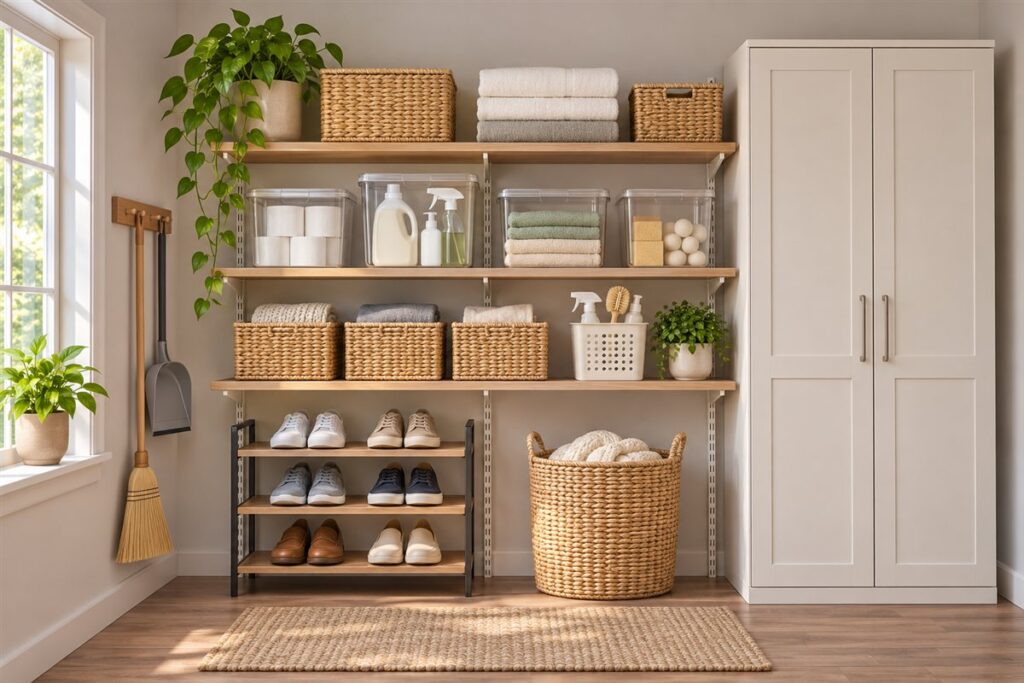
Wall shelves turn unused wall space into storage and display room. They come as floating boards, bracket-supported planks, ledges and cube units, and each style handles weight and appearance differently. A little planning avoids sagging boards and crowded rooms.
We have not used these products ourselves, so this guide describes construction and features only. Use it to compare listings, and follow the maker’s instructions for fixings and stated load limits, because the right hardware depends on your wall type and what you plan to put on the shelf.
As an Amazon Associate we earn from qualifying purchases. Links on this site are affiliate links, and they do not change the information we give.
What to Look For
| Factor | Why it matters | What to check |
|---|---|---|
| Material | Solid wood, engineered board and metal differ in strength and look. | Read the stated material, thickness and finish, and check edge detailing. |
| Depth and length | The shelf should suit what it will hold. | Measure your items, then compare them with the stated depth and length. |
| Load limit | Books and kitchenware are heavier than they look. | Read the maker’s stated capacity and what wall type it assumes. |
| Mounting style | Floating shelves hide hardware, while brackets are visible. | Check the fixing system and whether hardware suits studs, masonry or plasterboard. |
| Finish and colour | The shelf should blend with the room. | Compare finishes such as natural, white or black, and whether samples are offered. |
| Edge or lip | A raised edge keeps items from sliding off. | Look for a small lip on shelves that hold frames or bottles. |
| Set contents | Multi-packs can cover a wall in one go. | Check how many shelves are included and the fixings that come with each one. |
Setup and Care Tips
- Use a stud finder or check the wall type so the fixings you use match the surface.
- Mark positions with a pencil and a level before drilling any holes.
- Place heavier items near the wall end of the shelf and near supports.
- Dust the shelf with a dry cloth and wipe up spills quickly, especially on raw wood.
- Check the fixings now and then, tightening any screws that have worked loose.
Mistakes to Avoid
- Using the included screws without checking they suit your wall.
- Overloading a shelf beyond the maker’s stated limit.
- Choosing a shelf that is too shallow for the items you want to place on it.
- Skipping the level, which leaves the board sloping and items drifting.
- Forgetting about cable runs or switches that sit behind the planned position.
FAQ
Are floating shelves strong enough for books?
It depends on the design and the wall. Check the maker’s stated load limit and the wall types it assumes, and spread heavier items along the supports.
How far apart should shelves be?
Match the gap to what you store. Tall books and frames need more room, while small objects can sit closer. Cut paper templates and tape them to the wall to check the spacing.
The Short Version
A shelf looks simple, yet the fixings and the wall behind it decide how well it performs. Plan the layout on paper, and think about what you will actually place on each board.Compare material, depth, load limits, mounting style and finish. Measure your wall and belongings, and read each listing carefully before you choose.