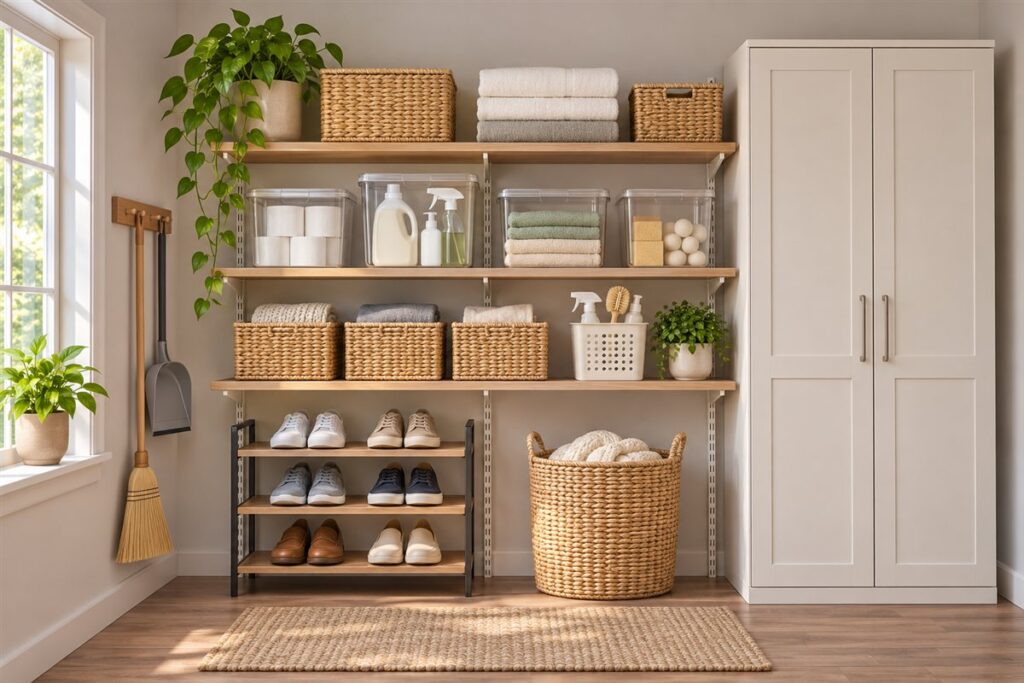
Utility shelving is a freestanding rack built to hold boxes, tools, cleaning supplies and household supplies in a garage, basement, pantry or workshop. Units differ a lot in frame material, shelf depth and how much weight the maker says each level can carry. Before you shop, measure the wall space you have, list what will go on the shelves and note whether the room is damp. Those details narrow the field quickly.
We have not used these products ourselves, so this guide does not claim personal experience with any of them. Instead it shows how to choose: which features matter, what to confirm on a product page and which common mistakes to avoid. Treat every capacity figure as the maker’s own claim, and follow the assembly manual closely.
As an Amazon Associate we earn from qualifying purchases. Links on this site are affiliate links, and they do not change the information we give.
What to Look For
| Factor | Why it matters | What to check |
|---|---|---|
| Load capacity | Heavy items need stronger shelves and frames | Compare the maker’s per-shelf and whole-unit figures with your heaviest boxes |
| Frame material | Steel, resin and wire behave differently in damp or hot rooms | Check the finish and whether it resists rust in your space |
| Shelf surface | Wire lets air and light through, while solid panels hold small items | Decide whether you need liners or solid decking for small parts |
| Dimensions | Width, depth and height must fit the space and the stored items | Measure the wall, the ceiling and any door swing before ordering |
| Adjustability | Movable shelves let you store tall items later | See how the shelf height is changed and whether tools are required |
| Assembly and stability | A wobbly rack is hard to use | Look for leveling feet and read whether wall anchoring is advised |
Setup and Care Tips
- Assemble the unit on a flat floor and level it before you load any shelf.
- Put the heaviest items on the lower levels and lighter ones above.
- Spread weight evenly across each shelf instead of piling it in one corner.
- Follow the manual on anchoring the unit to a wall if the maker advises it.
- Wipe the shelves from time to time and look for rust or loose parts.
Mistakes to Avoid
- Guessing the weight of your items instead of adding it up.
- Choosing a wire shelf for tiny parts that fall through.
- Ignoring ceiling height and door clearance.
- Putting a metal rack with a weak finish in a wet area.
- Skipping the leveling step and leaving the frame twisted.
FAQ
Wire or solid shelves for a garage?
Wire shelves are light, let air through and show what is stored. Solid panels suit small items and bottles that could tip. Some units offer liners or both types, so think about the mix of things you plan to store.
How deep should the shelves be?
Deeper shelves hold larger bins but take up floor space and make it harder to reach items at the back. Measure your most common storage boxes and choose a depth that fits them with a little room to spare.
The Short Version
Measure the space, weigh what you will store and compare the maker’s capacity, frame finish and adjustability. Pick a unit that suits the room and assemble it with care.