Disclosure: As an Amazon Associate, airfryerkitchensupply.com earns from qualifying purchases. Links to Amazon on this page are affiliate links; they cost you nothing extra. Listing details such as price and availability change often, so check the current Amazon listing before you buy.
The best swivel steering vacuums let the head pivot as you guide the handle, so you can make a tight turn around a chair leg or a coffee table instead of lifting and repositioning the whole machine. If your rooms are full of furniture, narrow hallways and awkward corners, steering matters more than most spec sheets admit. This guide compares six swivel steering uprights from Dyson, Hoover, Bissell and Eureka, with a quick pick table, a comparison chart, a buying checklist and answers to the questions shoppers ask before they order.
We have not run these machines ourselves. The details come from the makers’ published listings, so treat this as a shortlist and confirm the specifics on the Amazon page for the exact model code.

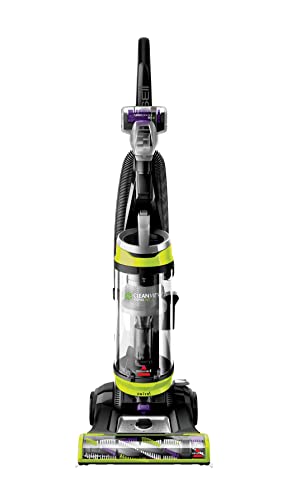
In this guide
Quick Picks: Swivel Steering Vacuums by Need
| Your priority | Pick | Why | Link |
|---|---|---|---|
| Best overall for tight turns | Dyson Ball Animal 3 | The whole body pivots on a ball, built around steering | Check on Amazon |
| Best for family rooms with rugs | Hoover WindTunnel 3 Max Performance Pet UH72630 | Corded upright with a swivel head and pet focus | Check on Amazon |
| Best for fewer cord tangles | Bissell CleanView Swivel Rewind Pet 2256 | Swivel head plus a cord that winds itself away | Check on Amazon |
| Best value-for-money wording | Bissell CleanView Swivel Pet 2252 | Swivel head and pet tool without the rewind feature | Check on Amazon |
| Best for small spaces | Eureka Airspeed AS2113A | Compact bagged upright that is simple to store | Check on Amazon |
How We Chose These Swivel Steering Models
Swivel steering is a hardware description, not a promise of effortless handling. Every maker uses the phrase differently, so we looked at how each listing describes the pivoting action: a ball body, a swiveling floor head or a flexing neck. We also checked body weight class, bin or bag type, tool kits and the general style of floor head.
All six models are real, current listings with model codes you can search exactly. We did not score them, since we have no first-person measurements, and we avoided any claim about performance that a spec page cannot support. Each product below gets its own angle so you can see where it fits your home rather than reading the same paragraph six times.
1. Dyson Ball Animal 3 Upright Vacuum
Dyson built its reputation on the ball design, in which the main body sits on a rolling sphere. Turn the handle and the whole machine rolls with you, which makes the steering feel less like pushing a trolley and more like guiding a chair on casters.
Who it suits: A shopper with a furnished living area, lots of chair legs and a willingness to pay for a premium upright with a distinctive handling style.
- The ball body is the signature steering feature, designed to follow your wrist around obstacles.
- It is a bagless cyclone design, so there are no bags to buy and the bin empties with a single release.
- Dyson lists tools for stairs, upholstery and gaps, which gives the machine a role beyond the floor.
In a real room: Picture a living room with a sectional, two side tables and a dining set in the next space. With a ball-steered upright you tend to steer with the wrist rather than the whole arm, so passes between furniture groups become one smooth line instead of a series of stops. That is the scenario this machine is designed around, and it is the main reason to look at the Dyson before the others on this list.
Honest limitation: It is a corded upright of considerable size, so the ball body helps on the floor but does not make it small when you store it or carry it upstairs.
Choose it if handling around furniture is your top complaint with your current vacuum. Skip it if you want the lightest possible machine or a very simple one.

2. Hoover WindTunnel 3 Max Performance Pet UH72630
Hoover’s WindTunnel series is one of the longest-running upright lines on the market, and the Max Performance Pet model is the version aimed at furry households. It combines a swivel steering head with a floor nozzle designed for rugs and carpet.
Who it suits: A family home with carpet, area rugs and pets, where the vacuum spends most of its time on soft flooring but still needs to turn corners.
- The swivel steering helps the head follow the handle around table legs and sofa edges.
- The WindTunnel airflow design pulls debris through channels in the head rather than relying on a single opening.
- Height adjustment lets you set the head for rugs or low carpet, which keeps the machine from fighting you on thicker pile.
In a real room: This is the kind of machine that lives in the hall closet and comes out for the weekly pass over the family room rug, the stair runner and the bedroom carpets. The swivel head is useful where rugs meet furniture, because you can nose the head around a leg without lifting the base. If you also have a second vacuum for bare floors, this one can specialize in soft surfaces.
Honest limitation: Like most full-size uprights, it is more machine than a studio apartment needs, and the cord will limit your reach between outlets.
Choose it if you want a conventional upright with pet-oriented tools and good rug handling. Skip it if you mainly clean hard floors and prefer a stick.
3. Bissell CleanView Swivel Rewind Pet 2256
This one is aimed at people who dislike the cord more than they dislike the vacuum. The rewind feature winds the cable back with a pull of a button, which turns the end-of-job ritual into a few seconds.
Who it suits: Anyone who tangles the cord around furniture or spends too long coiling it by hand after each session.
- The swivel head pivots as you steer, helping the machine get past obstacles without a fuss.
- The automatic cord rewind is a practical convenience that most uprights do not offer.
- Bissell’s pet-oriented tools, such as a TurboBrush attachment, are listed for stairs and upholstery.
In a real room: Cord management is a hidden part of steering. If the cable keeps catching on a table leg every time you turn, the swivel head cannot help much. A rewind cord removes that drag from the routine, because you can retract slack as you move and keep the line from wrapping around a corner. It is a small feature, but in a house with several rooms and one outlet per room it adds up.
Honest limitation: The rewind mechanism is one more moving part, so it is worth reading the care instructions for how to keep the cord path clear.
Choose it if cord management matters as much to you as steering does. Skip it if you want the most basic machine with the fewest mechanisms.
4. Bissell CleanView Swivel Pet 2252
The 2252 is the sibling without the cord rewind, which keeps the machine simpler. If you like the swivel head and the pet tools but do not need the winding mechanism, this is the one to compare.
Who it suits: A buyer who wants the Bissell swivel style and tool set without paying attention to extra features.
- The swivel head works the same way as the rewind version, so steering around furniture is unchanged.
- A bagless bin means no bags to restock, and the clear bin shows you when to empty.
- The tool kit points toward pet hair on stairs, upholstery and car seats.
In a real room: This is a sensible machine for a bedroom, a den or a family room where you plug in once and work outward. The steering handles beds, nightstands and chair bases, and the tool kit is there for the moments when the floor head cannot reach, such as the edge of a mattress or the stairs to the second floor. If you buy it, treat the cord as part of your routine and wind it as you finish each room.
Honest limitation: Without the rewind, you coil the cord yourself, and the cord can snag when you move between rooms.
Choose it if you want the swivel feature and tool set in the simplest form. Skip it if you hate cord handling and would rather pay for the rewind feature.
5. Eureka PowerSpeed Bagless Upright NEU182A
Eureka’s PowerSpeed line is known for being light for a full-size upright, with a design that tries to keep the machine easy to push and steer. It is a good candidate if your top worry is arm fatigue.
Who it suits: A homeowner who vacuums often, wants a lighter push and does not want a heavy premium model.
- The body is designed for easy maneuvering, with a swivel-style head that follows the handle.
- A bagless dust cup keeps running costs low because there are no bags to buy.
- It includes pet-friendly tools according to the listing, so it can double as a furniture vacuum.
In a real room: A lighter upright changes how often you reach for it. When the machine is easy to lift and push, a quick pass over the kitchen or entry becomes a two-minute job rather than a project, and many owners of lighter models report using them more often as a result. That is a human effect rather than a spec, but it is a real reason to put weight and steering together on your checklist.
Honest limitation: Lighter machines often carry a smaller dust cup, so you may be emptying it more frequently in a larger home.
Choose it if light handling matters most. Skip it if you need a very large bin or plan to vacuum thick rugs daily.
6. Eureka Airspeed AS2113A
If the other five feel like a lot of vacuum for your space, the Airspeed is the compact alternative. It is a bagged upright that Eureka positions as ultra-lightweight, aimed at smaller homes and storage-conscious buyers.
Who it suits: A small apartment, a second-floor bedroom or a shared dorm-style space where closet space is precious.
- Compact size makes it easier to store and carry than a full-size upright.
- The swivel-style head helps with tight corners and furniture legs.
- A bagged design keeps the dust contained until you remove and replace the bag.
In a real room: Small homes have a different problem from large ones: there is less floor, but everything is closer together. A compact upright can turn within a short radius, slide under a low table more easily and tuck into a narrow closet, which together matter more than a big bin in a one-bedroom apartment. It also suits a secondary vacuum role, for example upstairs while a heavier machine lives on the ground floor.
Honest limitation: You will need to keep replacement bags on hand, and a compact machine will not match a full-size model for large rooms.
Choose it if storage and weight beat bin capacity on your list. Skip it if you want the biggest tool kit or a very large dust bin.
Comparison of All Six Swivel Steering Vacuums
| Model | Size and format | Key feature | Best use | Link |
|---|---|---|---|---|
| Dyson Ball Animal 3 | Full-size bagless upright | Ball body steering | Furnished rooms | Check on Amazon |
| Hoover UH72630 | Full-size bagless upright | WindTunnel head, swivel steering | Carpet and pets | Check on Amazon |
| Bissell 2256 | Mid-size bagless upright | Swivel head, cord rewind | Cord-averse buyers | Check on Amazon |
| Bissell 2252 | Mid-size bagless upright | Swivel head, pet tools | Simple pet cleaning | Check on Amazon |
| Eureka NEU182A | Light bagless upright | Easy-push design | Frequent vacuuming | Check on Amazon |
| Eureka AS2113A | Compact bagged upright | Ultra-light body | Small spaces | Check on Amazon |
How to Choose a Swivel Steering Vacuum
- Map your obstacles. Count the chairs, table legs, sofa feet and narrow gaps in your busiest rooms. The more you have, the more steering matters.
- Understand the swivel type. A ball body, as in the Dyson, pivots the whole machine. A swiveling head, as in the Bissell models, pivots only the nozzle. Both help, but they feel different.
- Weigh the machine. Steering helps on the floor, but weight matters on stairs. A compact bagged model like the Airspeed suits stair-heavy homes better than a full-size upright.
- Bin or bag. Bagless means no refills but regular emptying. Bagged means fewer trips to the trash but replacement bags to track.
- Look at the tool kit. Pet and upholstery tools are common, but each listing is different. Check the product details.
- Consider the cord. A rewind cord, as on the 2256, is a convenience. A standard cord needs a few more seconds after each job.
- Match the code exactly. Model families have several near-identical variants. Use the full code in your search.
If your biggest frustration is turning, put steering at the top. If your biggest frustration is carrying, put weight first and treat steering as a bonus.
Floor Types and Steering: What Changes
Steering feels different depending on what the vacuum is rolling over. On hardwood and tile, a swivel head glides and turns easily, which is where the feature shines. On thick carpet, drag from the brush roll can reduce the benefit, so the head height setting matters. On rugs with fringe, take extra care to keep the head clear of tassels, and read the maker’s guidance on whether the brush should be on or off.
That is why the Hoover and the full-size Eureka both include height adjustment in their pitch. The steering and the height setting work together: the head must sit at the right depth for the swivel to be useful.
Swivel Steering Versus Robot, Stick and Canister Handling
Swivel steering is one way to solve the furniture problem, but it is not the only one. A cordless stick avoids the issue by being light enough that you simply lift it around obstacles, and it has no cord to snag. A canister leaves the head small and nimble, and you drag the body behind you. A robot vacuum removes the steering question altogether, because it navigates itself, although it cannot replace a weekly pass with a hose and tools.
The reason to choose a swivel upright over those is a combination of sustained power, a bigger bin and the ability to stand on its own. You get the floor coverage of a full-size machine and still turn corners without wrestling it. If your layout is mostly open with little furniture, steering may not matter and you can focus on other specs. If your layout looks like most family homes, with a sofa, a dining set and a long hallway, steering moves up the list and the six models above are a sensible place to compare.
Think about which obstacle you meet most often. Chair legs reward a head that pivots. Stairs reward low weight. Long cords reward a rewind feature. Choose the model whose strongest feature matches your most frequent annoyance.
Care Notes That Keep Steering Smooth
A swivel mechanism works best when it is clean. Hair and thread can collect around the pivot and the wheels, so unplug the machine and check those areas every few weeks. Wipe the wheels and look at the brush roll for wrapped strands, which add drag and make turns feel stiff. Empty the bin or change the bag before it is full, since a heavy bin changes the balance of the upright and can make the handle feel less responsive. If your model has a rewind cord, keep the cord path free of lint, and follow the maker’s manual for how to reset it if it sticks.
These habits apply to every model in this guide, though the details differ. The manual for your exact code is the best reference, and the listing usually links to it.
Common Mistakes When Buying for Steering
The first mistake is treating swivel steering as a single feature. Makers use the phrase for ball bodies, swiveling heads and flexing necks. Read the description to learn which one the listing means.
The second is ignoring weight. A model that steers well on a flat floor can still be tiring on a staircase. If you have stairs, think about what you will carry.
The third is overlooking storage. Some uprights are tall and bulky even when folded, so measure your closet.
The fourth is buying the wrong variant. Hoover, Bissell and Eureka sell many similar models, and the code is the only reliable way to match the machine you read about.
Final Recommendation: One Pick Per Buyer
- Most furnished homes: Dyson Ball Animal 3, for steering built into the machine.
- Carpet and pets: Hoover WindTunnel 3 UH72630, for its pet focus and height adjustment.
- Cord haters: Bissell CleanView Swivel Rewind Pet 2256, for the self-winding cable.
- Simple pet cleaning: Bissell CleanView Swivel Pet 2252, for the same steering and no extra mechanism.
- Light handling: Eureka PowerSpeed NEU182A, for an easier push.
- Small spaces: Eureka Airspeed AS2113A, for compact storage.
If you want to decide quickly, check the live listings for our two top picks below.
Related guides
Frequently Asked Questions
Is swivel steering worth it on a small apartment floor plan?
Yes, if the floor plan has many corners and furniture legs. In a very open layout, the benefit is smaller, and weight may matter more.
What is the difference between ball steering and a swivel head?
Ball steering lets the entire body pivot on a sphere. A swivel head pivots only the nozzle at the bottom. Ball designs usually change how the whole machine feels, while a swivel head is a lighter change.
Do these models work on hardwood?
Most list a hard floor setting or a way to switch the brush off. Check the manual before running any model on bare wood.
How do I check what tools are included?
Look at the product details and the box contents on the Amazon listing for the exact model code. Tool kits differ between sibling models.
Can I return it if the handling is not what I expected?
Returns follow Amazon’s policy and the seller’s terms at the time you buy. Look at the return window on the listing, and keep the packaging until you are sure.
Do I need to buy bags for these?
Only for the Eureka Airspeed, which is a bagged model. The other five are bagless, so you empty a bin instead.
Will a compact upright keep up with a large home?
It will cover the same floor area, but you may empty or change the bag sooner and make more trips between outlets.
What Swivel Steering Actually Changes While You Clean
Swivel steering sounds like a marketing phrase until you clean a furnished room with a fixed-head upright for comparison. A traditional upright turns by being dragged around its own wheels, so every change of direction is a small wrestling match that grows tiring across a whole house. A swivel model pivots its cleaning head, and in ball designs such as the Dyson Ball Animal 3 the whole body rolls around a central point, letting you steer with a twist of the wrist rather than a shove of the shoulders. The practical result is fewer passes around table legs, chair bases and the forest of furniture feet in a dining room, and less time spent backing up to take another run at a corner.
Steering design also affects how a vacuum behaves at the edge of a rug and in tight gaps. A head that turns sharply can slide alongside a sofa base instead of stopping a body’s width away from it, which is where crumbs and pet hair actually collect. The trade-off to understand is stability: very free-steering heads can feel twitchy on open floors until you learn a lighter grip, and some users prefer the planted feel of a heavier machine such as the Hoover WindTunnel 3 Max Performance Pet on long straight runs. Neither feel is wrong; the right choice depends on whether your home is mostly open plan or mostly furnished rooms with obstacles every few steps.
Matching a Swivel Upright to Your Floor Plan
Start by walking your home the way the vacuum will travel it. Count the tight turns: around the kitchen island, between the coffee table and the sofa, into the gap beside the bed. Homes with many turns reward the sharpest steering and a lighter body, which is where the Bissell CleanView Swivel models in this guide make their case. Homes with long hallways and big open rooms reward cleaning-path width and strong, steady suction more than agility, and a heavier upright stops feeling like a compromise. Apartments add another wrinkle, because the vacuum often lives in a closet it must be carried out of; a model you can lift comfortably with one hand while opening a door with the other will simply get used more.
Stairs deserve their own decision. None of the uprights in this guide is carried up a full flight mid-clean in the way a canister can be, so look at the hose and tools instead: the practical question is whether the wand and attachments reach your stair treads from a stable position at the bottom or on a landing. Pet households should picture the worst room, not the average one. If one bedroom is where the dog sleeps and sheds, choose for that room’s carpet and furniture density, and let the easier rooms take care of themselves. Finally, measure your storage space honestly, including the height under a shelf, because an upright that must be laid down or disassembled to store will quietly discourage midweek cleaning.
Technique: Getting the Most From a Swivel Head
Swivel steering rewards a different technique from the long straight pushes a fixed upright teaches. Use short, overlapping strokes in furnished areas and let the head pivot at the end of each pass instead of lifting and resetting the machine; lifting breaks the suction seal and wastes the energy the design is meant to save. Slow down slightly as you approach baseboards, because the head seals best against the floor at a moderate pace, and edge debris needs a moment under the brush roll rather than a fast skim. On rugs, make the first pass with the grain of the pile and the second across it, which lifts flattened fibers and releases grit that a single direction leaves behind.
Around furniture legs, steer in a gentle arc rather than stopping and jabbing: the pivoting head is designed to roll around obstacles while the brush keeps turning. For the strip of floor under low furniture, check whether your model reclines flat enough to slide beneath; several uprights in this class lay back surprisingly far once the body is released, which can save moving a bed or sofa. Finish each room by working toward the door so you exit over cleaned floor, and empty the bin or check the bag before it is packed full, because airflow — and therefore pickup on carpet — falls away well before a container looks completely full.
Keeping Steering Smooth and Suction Strong
The swivel joint itself needs almost no care, but the parts around it decide how the machine ages. Hair and thread wrap around the brush roll of every upright in this guide, and a roll strangled with hair both cleans poorly and makes the head harder to push, which owners often misread as a steering problem. Turn the machine over monthly, snip the wrapped strands along the roll, and pull them free. Check the wheels and the pivot area for grit, especially after cleaning an entryway, because a small stone lodged near the joint makes steering feel notchy. Wipe the underside plate clean so the head glides rather than drags.
Filters and airflow deserve the same routine attention. Bagless models such as the Bissell CleanView and Eureka picks rely on cyclonic separation plus filters, and a filter coated in fine dust quietly strangles suction long before the bin looks dirty; rinse or replace filters on the schedule the maker describes and let washable ones dry fully before refitting. The bagged Eureka Airspeed works the other way round: its performance stays consistent until the bag fills, and then drops, so keeping spare bags in the house is the whole maintenance secret. Hoses split at their cuffs and seals perish slowly; a yearly look over the hose, the wand connections and the cord for damage keeps a sound upright from being retired early over a cheap part.
How the Six Picks in This Guide Differ in Daily Life
The Dyson Ball Animal 3 is the steering specialist of the group, built around its ball pivot and aimed at pet households that clean furnished rooms often; it asks the most money of the six and returns the most agile handling. The Hoover WindTunnel 3 Max Performance Pet is the heavyweight traditionalist, favoring strong carpet cleaning and a planted feel over delicacy, and it suits larger homes with serious pet traffic. The two Bissell CleanView Swivel models, the 2256 and the 2252, are close relatives aimed at value: swivel heads, pet-focused tools and bagless convenience for households that want easy steering without paying for a flagship.
The Eureka PowerSpeed NEU182A competes on light weight and simplicity, an upright that is easy to carry between floors and store in a small closet, while the Eureka Airspeed AS2113A is the group’s bagged outlier for people who dislike emptying dust bins and prefer to seal debris into a bag. Choosing among them is mostly about ranking three things: how furnished your rooms are, how much pet hair you fight, and whether you prefer a bin or a bag. The guide’s comparison section above puts the specifications side by side; this section is the reminder that the best-handling machine on paper is the one whose weight, steering feel and emptying routine match the person who will push it every week.
More Questions Buyers Ask About Swivel Steering Vacuums
Does swivel steering wear out or become loose over time?
The pivot on a well-kept upright is one of its more durable parts, because it carries the head rather than the full weight of the machine and has no motor inside it. What owners perceive as looseness is usually grit around the joint or worn wheels changing how the head tracks. Keeping the underside clean and the brush roll free of wrapped hair preserves the original feel for years. If a head begins to wobble noticeably, check first for a cracked wheel or debris in the pivot before assuming the joint itself has failed.
Is a swivel upright a good choice for someone with back or shoulder trouble?
Often, yes, because steering with a wrist twist replaces the repeated shoving and dragging that a fixed-head upright demands in furnished rooms. The benefit is largest in homes with many obstacles and smaller in open spaces, where any upright rolls in straight lines. Weight matters as much as steering, though: a lighter model from this guide may serve a sore shoulder better than a heavier flagship, even if the flagship steers more sharply. If stairs are part of the routine, judge the machine by its hose-and-tools reach, since carrying any upright step by step is the hardest part of the job.
How well do these uprights clean under beds and sofas?
Most swivel uprights recline far enough to slide under furniture with moderate clearance, and the pivoting head helps angle into the space once it is under. Very low furniture still defeats any upright, and that strip of floor is a job for the hose and a flat attachment, or for moving the piece occasionally. Before buying, compare the reclined height in the listing with the gap under your lowest sofa or bed frame; a few centimeters decide whether weekly cleaning reaches that dust or only the deep spring clean does.
Can a swivel vacuum handle a home with both carpet and hardwood?
Yes, and that mixed-floor brief is exactly what this class of upright is built for. The points to verify on a listing are a brush roll that can be switched off or a height adjustment for hard floors, so the roll does not scatter debris or mark the surface, and wheels soft enough not to rattle or scratch. Technique helps too: slow down on hard floors, since suction at the head does the work there, and speed up slightly on carpet where the brush roll needs passes to agitate fibers. The models in this guide all target mixed homes, but their hard-floor manners differ, which the comparison section helps separate.
What size home is too big for a compact swivel upright?
There is no fixed floor area where a compact upright stops working, but there is a point where its smaller bin, narrower head and shorter cord turn a whole-house clean into a stop-start chore. As a rough guide, compact models feel at home in apartments and small houses cleaned room by room, while large multi-story homes reward a full-size machine with fewer emptying stops and fewer outlet changes. The honest test is your own routine: if you clean the whole house in one session, size up; if you clean a room or two at a time, compact is a virtue, not a compromise.
Do I need special attachments for pet hair on upholstery?
An upright’s hose tools do most upholstery work, and a small turbo or pet tool, where included, spins a brush that lifts hair from sofa fabric far faster than a plain nozzle. Check the included-tools list on the listing rather than assuming, because the six models in this guide bundle different sets. A rubber-bristled hand tool also works well and never clogs. Whatever the tool, work in short strokes in one direction and gather the hair into a pile before vacuuming it up; random scrubbing mostly redistributes it across the cushion.
Why does my swivel vacuum feel harder to push on thick carpet?
Resistance on deep pile usually means the head is set too low, sealing itself to the carpet and fighting you on every stroke. Raise the height setting one step at a time until pushing feels firm but not strenuous; pickup stays strong because the brush still contacts the fibers. A brush roll wrapped in hair adds drag in the same way and is worth checking at the same time. Very plush carpets challenge every upright in this class, and on those, slower passes with the correct height outperform forcing a low head across the room.
Should I choose a bagged or bagless swivel upright?
Choose a bag if you dislike dust clouds when emptying, have allergy concerns in the household, or simply want the machine to feel consistent week after week with minimal filter care; the Eureka Airspeed in this guide represents that route. Choose bagless if you would rather avoid an ongoing bag purchase and do not mind emptying a bin outdoors and washing filters on schedule, as with the Bissell and Dyson picks. Running costs differ modestly either way — bags on one side, replacement filters on the other — so the decision is mostly about which small chore you would rather do.
Swivel Uprights in Homes With Pets, Kids and Mixed Messes
The daily reality in a busy household is not one kind of dirt but a rotation: pet hair through the week, food debris after every meal, grit at the door and the occasional catastrophic spill of something dry like cereal or potting soil. A swivel upright suits this reality because it moves between rooms and around furniture quickly enough that a five-minute rescue clean actually happens. The pet-focused models in this guide — the Dyson Ball Animal 3, the Hoover WindTunnel 3 Max Performance Pet and the Bissell CleanView Swivel Pet among them — exist because hair changes the maintenance equation: hair wraps brush rolls, fills bins faster and hides in upholstery, so the included pet tools and the ease of cleaning the roll matter as much as raw suction.
With children, the calculus adds durability and speed. An upright that lives ready in a closet, steers one-handed while you hold a toddler’s hand or a laundry basket, and empties without a dusty ceremony will be used at the moments that keep a house sane. Teach older children on a swivel model and the steering helps you: the machine goes where the wrist points, so a learner spends less time bumping skirting. Store the cord properly rather than in a tangled nest, because cord damage is the quiet killer of otherwise sound uprights, and keep small attachments in one pouch so the upholstery tool exists when the sofa needs it, not in a drawer three rooms away.
When a Swivel Upright Is Not the Whole Answer
Honest guidance includes the limits of the category. A swivel upright is a floor machine first: its hose reach serves stairs and upholstery, but a home with many stairs, delicate above-floor work or mostly hard floors with rugs may be better served by pairing a simpler upright with a lightweight stick for the in-between days. Ceilings, curtains and car interiors all sit outside an upright’s natural territory, and households that try to make one machine do everything end up doing the awkward jobs badly and resenting the tool. The better question than which vacuum does everything is which vacuum does the biggest share of your cleaning brilliantly — and for furnished, carpeted family homes, that is precisely the share the six models in this guide contest.
Timing matters too. If your floors are mostly hard with a few rugs, you may find a swivel upright is your weekly deep-clean machine while a sweeper or stick handles the daily passes; if your home is wall-to-wall carpet, the upright becomes the daily machine and deserves the larger share of your budget. Renters should weigh storage and stairs between floors, because an upright carried up two flights weekly will be quietly hated by month three. None of these caveats argues against the category; they argue for choosing the model whose strengths match the largest, most frequent job in your home, which is the principle behind every recommendation in this guide.
How often should I empty the bin or change the bag?
Earlier than instinct suggests. A bagless bin should be emptied when debris reaches roughly the fill line marked on it, and sooner in pet homes, because packed hair insulates the cyclone and dulls performance before the bin looks full. Emptying outdoors and tapping the bin’s sides to release the dust film takes seconds and restores the machine’s breathing. Bagged models such as the Eureka Airspeed in this guide should have the bag changed when it feels about two-thirds full to the hand; a bag left to pack solid makes the motor work harder and the cleaning worse. Making emptying a same-day habit, rather than a when-it-seems-dire one, is the cheapest performance upgrade any owner can make.
Can a swivel upright scratch hardwood floors?
A well-maintained one should not: the wheels are designed for hard floors and the brush roll can be switched off or raised on models that offer the control. Scratches blamed on vacuums usually come from grit trapped under a wheel or a damaged soleplate dragging debris across the surface, which is another argument for the monthly underside check described in this guide. On delicate or newly finished floors, vacuum a small hidden area first, keep the brush off until you are confident, and never drag a switched-off head sideways across the boards. Treat the machine’s underside as you would a shoe sole — check what it is carrying before it crosses your best floor.
What should I do if the vacuum loses suction gradually?
Work the airflow path in order, because gradual loss is almost never motor failure. Empty the bin or change the bag first, then clean or replace the filters and let washable ones dry completely, then check the hose and wand for a sock, a clump of hair or a split at the cuff, then inspect the brush roll housing for a blockage where debris enters. Test after each step and you will usually find the culprit by the third. If suction returns when the hose is detached but not through the floor head, the blockage is in the head or the neck; if it is weak everywhere, the filters or a hose leak are the likely story. This five-minute routine rescues most uprights that owners were ready to replace.
Swivel Uprights and Open-Plan Living
Open-plan homes have quietly become the swivel upright’s natural habitat, because the obstacles that define them — island corners, bar stools, a sofa floated in the middle of the floor, a dining set that never quite aligns — are exactly what a pivoting head was designed to flow around. In a walled house, a fixed upright’s turning circle is a minor annoyance in each room; in an open plan, the machine steers continuously for the whole clean, and the difference between wrestling and gliding compounds across the largest floors in the home. If your living space is open, weight your choice toward the models in this guide whose steering feels lightest and whose heads turn tightest, and test the idea in the shop or from the listing’s stated turning and recline details.
The open plan adds one more demand: noise travels. There is no door to close between the vacuum and the person on a call in the same space, so a machine you can run for a quick midday pass without ending every conversation in the room earns its place differently from one reserved for empty-house Saturdays. Nothing in this guide’s six is silent, but a well-kept machine — clean filters, a brush roll free of hair, no rattling loose attachment — is noticeably less harsh than a neglected one, which is one more return on the maintenance habits described above.


