A sous vide immersion cooker holds water at an exact temperature for hours, and that precision is what makes sous vide cooking different from every other method. The best sous vide immersion cookers clip onto a pot, circulate heated water around a sealed bag of food, and cook a steak, a chicken breast, or a piece of fish to the same temperature all the way through, with no overcooked edges and no guesswork.
This guide covers the best sous vide immersion cookers for home kitchens, from app-controlled WiFi models to simple circulators that need no phone at all. Every pick below is a real immersion circulator sold on Amazon, checked for power, control, and build. If you want restaurant-precise cooking at home, start here.
In this guide
Quick picks: best sous vide imersion cookers
| # | Product | Where to buy |
|---|---|---|
| 1 | Anova Culinary Sous Vide Precision Cooker 3.0 WiFi 1100 Watts | Check on Amazon |
| 2 | NKBIRD WiFi Sous Vide Cooker ISV-100W 1000 Watts | Check on Amazon |
| 3 | Greater Goods Sous Vide Cooker 1100W | Check on Amazon |
| 4 | Monoprice Sous Vide Immersion Cooker 800W | Check on Amazon |
| 5 | InkSous Sous Vide Cooker WiFi 2.4G 1000W ISSV-200-W | Check on Amazon |
| 6 | Breville BSV600PSS Joule Turbo Sous Vide Machine | Check on Amazon |
How the picks were chosen
Each cooker in this guide was checked against the same list. First, it had to be an immersion circulator by design: a device that clips onto a container, heats the water, and circulates it to hold a steady temperature. Complete sous vide kits and water ovens were not the focus, because the immersion circulator is the tool most home cooks buy first. Second, it had to state a usable power rating in watts, since power decides how fast the water heats and how well the cooker holds temperature in a large container. Third, it had to be a home-kitchen model with a clamp that fits a standard pot or container.
Control shaped the ranking. WiFi models let you start, monitor, and adjust a cook from a phone, which suits long cooks where you are away from the kitchen. Models with no app at all suit cooks who prefer a simple onboard display and no phone dependency. Both types earned places in this guide, because the right control depends on how you cook. A quiet brushless motor earned credit, since a circulator runs for hours and a noisy pump gets tiring. A clear display and simple controls earned credit too, because setting a temperature should take seconds, not a manual.
Build mattered as well. Stainless steel bodies resist water and wipe clean, and a sturdy clamp holds the circulator firmly on the pot without slipping. Models that state a waterproof rating earned credit, since a circulator works in and around water for hours at a time. Finally, each pick had to be verifiable on the site store: a matching brand and model name, a working product image, and a link that takes you to that exact model. Six circulators met every part of that test.
The best sous vide immersion cookers in detail


Top pick
1. Anova Culinary Sous Vide Precision Cooker 3.0 (WiFi), 1100 Watts
The Anova Culinary Sous Vide Precision Cooker 3.0 is a WiFi immersion circulator with 1100 watts of power and a stainless steel body. The 1100-watt heater brings a pot of water up to temperature quickly, and the WiFi connection lets you start, monitor, and adjust a cook from a phone. The stainless steel body stands up to regular use in and around water, and the clamp fits a standard pot or container.
Anova is the best-known name in home sous vide cooking, and the 3.0 model is the current version of the circulator that introduced many cooks to the method. The WiFi control is the practical advantage for long cooks: you can start a steak in the morning, check the temperature from another room, and get a notification when the cook is done. The 1100-watt power rating suits large containers as well as small pots, so the same circulator handles a single steak or a batch of chicken breasts.
Strengths:
- 1100 watts heats water quickly and holds temperature in large containers
- WiFi control lets you monitor and adjust a cook from a phone
- Stainless steel body resists water and wipes clean
Trade-offs:
- WiFi setup needs a phone and a home network
- App control adds a step for cooks who prefer onboard controls
- Needs a suitable pot or container and a lid or cover for long cooks
Who it fits: cooks who want app control and fast heating, and anyone cooking sous vide several times a week.
Best for: WiFi-controlled sous vide with fast heating. Not suited for: cooks who want no app and no phone dependency.
Check price on Amazon: Anova Culinary Sous Vide Precision Cooker 3.0 WiFi 1100 Watts

2. NKBIRD WiFi Sous Vide Cooker ISV-100W, 1000 Watts
The NKBIRD WiFi Sous Vide Cooker ISV-100W is a 1000-watt immersion circulator with WiFi and a free app, built for fast heating and app-controlled cooking. The 1000-watt heater brings water to temperature quickly, and the app gives you recipes and remote control. The circulator suits cooks who want the convenience of WiFi at a lower cost than the best-known brands.
The app is the difference here. It offers recipes alongside remote control, which helps a cook who is learning sous vide and wants guidance on time and temperature for different foods. The 1000-watt power rating is close to the top of this guide, so heating is fast and temperature holds steady in a standard container. For a first WiFi circulator, it covers the essentials without a premium price.
Strengths:
- 1000 watts heats water fast and holds temperature well
- WiFi app offers recipes and remote control
- Good value for a first WiFi circulator
Trade-offs:
- App quality matters more when the app is central to control
- Needs a phone and a home network for remote features
- Brand support may be thinner than the best-known brands
Who it fits: first-time sous vide cooks who want WiFi control and app recipes, and anyone who wants a capable circulator without a premium price.
Best for: app-guided sous vide cooking on a budget. Not suited for: cooks who want no app at all.
Check price on Amazon: NKBIRD WiFi Sous Vide Cooker ISV-100W 1000 Watts

3. Greater Goods Sous Vide Cooker, 1100W
The Greater Goods Sous Vide Cooker is an 1100-watt immersion circulator with no app and no WiFi, built around a quiet brushless motor. The 1100-watt heater matches the most powerful models in this guide, and the absence of an app is a deliberate choice: the circulator is controlled from its own display, with no phone and no network needed. The quiet brushless motor matters because a circulator runs for hours, and a noisy pump gets tiring.
This is the pick for cooks who want sous vide cooking without a phone. The onboard controls set the temperature and time directly, and the machine holds the water steady without any connection. The quiet motor is a real advantage for long cooks, since the circulator runs in the background while you do other things. For a kitchen where simplicity matters, it is the most straightforward circulator in this guide.
Strengths:
- 1100 watts heats fast and holds temperature in large containers
- No app or WiFi needed: simple onboard controls
- Quiet brushless motor suits long cooks
Trade-offs:
- No remote monitoring or app recipes
- Needs the cook to be nearby to check progress
- Fewer smart features than WiFi models
Who it fits: cooks who prefer simple onboard controls, and anyone who wants a quiet circulator for long cooks without a phone.
Best for: simple, quiet sous vide with no app. Not suited for: cooks who want remote control or app recipes.
Check price on Amazon: Greater Goods Sous Vide Cooker 1100W

4. Monoprice Sous Vide Immersion Cooker, 800W
The Monoprice Sous Vide Immersion Cooker is an 800-watt circulator with an adjustable clamp and a digital LED touch screen, built for easy cleaning and simple control. The 800-watt heater suits standard pots and containers, and the touch screen makes setting the temperature quick and clear. The adjustable clamp fits a range of pot sizes, and the design is easy to clean after use.
The touch screen is the practical advantage. A clear digital display with touch controls is easy to read at a glance, and it avoids the small buttons that can be fiddly with wet hands. The 800-watt power rating is lower than the top models, which means slower heating in a large container, but it is plenty for a standard pot and a family meal. For a cook who wants a clear display and simple controls, it is a solid choice.
Strengths:
- Digital LED touch screen is easy to read and set
- Adjustable clamp fits a range of pots and containers
- Easy to clean after use
Trade-offs:
- 800 watts heats more slowly than 1100-watt models
- Large containers take longer to reach temperature
- No WiFi or app control
Who it fits: cooks who want a clear touch display and simple controls, and anyone cooking sous vide in a standard pot.
Best for: straightforward sous vide with a clear display. Not suited for: very large containers or cooks who want remote control.
Check price on Amazon: Monoprice Sous Vide Immersion Cooker 800W
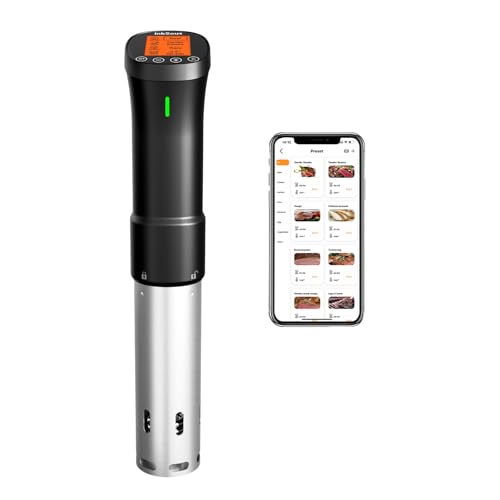
5. InkSous Sous Vide Cooker WiFi 2.4G, 1000W, ISSV-200-W
The InkSous Sous Vide Cooker ISSV-200-W is a 1000-watt WiFi immersion circulator with 2.4G connectivity and a free app with recipes, built for app-controlled cooking. The 1000-watt heater brings water to temperature quickly, and the WiFi connection lets you monitor and adjust the cook from a phone. The app includes recipes, which helps a cook who is learning time and temperature for different foods.
The recipe app is the feature that matters most for a beginner. Sous vide cooking depends on getting the time and temperature right for each food, and an app that offers tested recipes removes the guesswork. The 2.4G WiFi connection is the standard for smart kitchen devices, and it gives a stable connection for remote monitoring. For a cook who wants guidance as well as control, it is a good fit.
Strengths:
- 1000 watts heats water quickly
- WiFi app with recipes guides time and temperature
- Remote monitoring from a phone
Trade-offs:
- Needs a 2.4G network and a phone for remote features
- App recipes may not cover every food you cook
- Needs a suitable pot or container and a cover for long cooks
Who it fits: beginners who want app recipes and remote control, and cooks who like to monitor a long cook from another room.
Best for: app-guided sous vide with recipes. Not suited for: cooks who want no app and no phone dependency.
Check price on Amazon: InkSous Sous Vide Cooker WiFi 2.4G 1000W ISSV-200-W

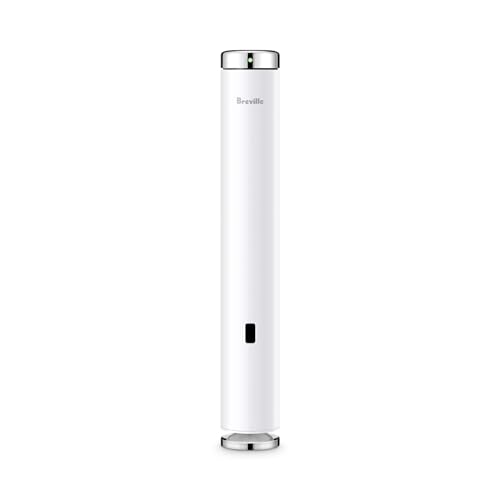
6. Breville BSV600PSS Joule Turbo Sous Vide Machine
The Breville BSV600PSS Joule Turbo is a sous vide machine in polished stainless steel, built to cook twice as fast with its Turbo feature. The Joule line is known for a compact, slim design that takes up little space on the counter and in storage, and the Turbo feature shortens the time to reach cooking temperature. The polished stainless steel body looks at home in a modern kitchen and wipes clean after use.
Speed is the reason to choose the Joule Turbo. Sous vide cooking is slow by nature, and a machine that heats faster and cooks faster saves real time on weeknights. The compact design is the second advantage: it stores easily in a drawer and clips onto a pot without taking over the counter. For a cook who wants sous vide results without the wait, it is the fastest option in this guide.
Strengths:
- Turbo feature cooks faster than standard circulators
- Compact, slim design stores easily
- Polished stainless steel body looks good and wipes clean
Trade-offs:
- Compact size may suit smaller containers best
- App control is central to the Joule experience
- Premium design costs more than basic circulators
Who it fits: cooks who want faster sous vide cooking, and anyone with limited storage who wants a compact circulator.
Best for: fast sous vide in a compact design. Not suited for: very large containers or cooks who want no app at all.
Check price on Amazon: Breville BSV600PSS Joule Turbo Sous Vide Machine
Best sous vide immersion cookers compared
| Cooker | Power | Control | Best for |
|---|---|---|---|
| Anova Precision Cooker 3.0 | 1100W | WiFi, app | WiFi control with fast heating |
| NKBIRD ISV-100W | 1000W | WiFi, app with recipes | App-guided cooking on a budget |
| Greater Goods | 1100W | Onboard display, no app | Simple, quiet sous vide |
| Monoprice | 800W | LED touch screen | Clear display, simple controls |
| InkSous ISSV-200-W | 1000W | WiFi 2.4G, app with recipes | App-guided cooking with recipes |
| Breville Joule Turbo | Turbo | App control | Fast sous vide, compact design |
How to choose a sous vide immersion cooker
Start with power, because it decides how fast the water heats and how well the cooker holds temperature. An 1100-watt circulator heats a large container quickly and recovers fast when you add cold food. An 800-watt model heats more slowly and suits a standard pot. If you cook in a large container or cook for a group, choose more power. If you cook in a standard pot for two, 800 watts is enough.
Next, decide on control. WiFi models let you start, monitor, and adjust a cook from a phone, which suits long cooks where you are away from the kitchen. Models with no app suit cooks who prefer a simple onboard display and no phone dependency. App recipes help beginners learn time and temperature, while a clear touch screen suits cooks who want to set the temperature and walk away. For more guidance on getting started, see our sous vide cooker buying guide and our guide to the best sous vide cookers for beginners.
Check the clamp and the container. The circulator must clip firmly onto your pot or container without slipping, and the container must be deep enough for the circulator to sit in the water without touching the bottom. A dedicated sous vide container with a lid is ideal, but a stock pot works well too. A lid or cover matters for long cooks, since it stops evaporation and keeps the water level steady.
Noise matters more than it seems. A circulator runs for hours, and a loud pump gets tiring in an open kitchen. A quiet brushless motor is worth seeking out, especially if you cook sous vide often. Check the noise level in the product description, and prefer models that mention a quiet motor.
Finally, think about storage. A slim circulator stores in a drawer, while a bulkier model needs a shelf. If your kitchen is small, a compact design such as the Joule earns its place. If you have room, size matters less than power and control. For a closer look at the machines themselves, see our guide to the best sous vide machines and our guide to using a sous vide cooker.
Price is the last factor, and immersion circulators are forgiving here. A capable circulator costs less than a good set of pans, and it lasts for years of regular use. WiFi models and compact premium designs cost more, and they are worth it only if you will use the features: a cook who runs long cooks away from the kitchen will notice WiFi, while a cook who stays nearby will not. Spend on power first, then on control, and treat a slim design as a bonus for a small kitchen.
How sous vide cooking works
Sous vide means under vacuum in French, and the method is simple: food goes into a sealed bag, the bag goes into a water bath held at an exact temperature, and the food cooks to that temperature all the way through. A steak cooked at 130 degrees Fahrenheit comes out at 130 degrees from edge to edge, with no gray band of overcooked meat near the surface. That precision is what makes sous vide different from a pan or an oven, where the outside always overcooks before the inside is done.
The immersion circulator is the tool that makes it work. It heats the water to the set temperature and circulates it so the temperature stays even throughout the container. Without circulation, the water near the heater would be hotter than the water at the edges, and the food would cook unevenly. The circulator runs for the whole cook, which can last from one hour for a fish fillet to a full day for a tough cut of beef.
Sealing matters. The bag must be sealed so water cannot get in and dilute the food, and air must be removed so the bag stays submerged and the heat reaches the food evenly. A vacuum sealer is the best tool for this, but the water displacement method works too: lower the open bag into water until the pressure pushes the air out, then seal it. Either way, the goal is a bag with no air pockets that sits fully under the water.
Finishing matters as well. Sous vide cooking gives you perfect internal temperature, but it does not brown the outside. A steak that comes out of the bag looks pale and unappetizing, so finish it with a quick sear in a hot pan, on a grill, or with a torch. The sear takes a minute or two per side, and it gives you the crust and color that make the dish look as good as it tastes.
Vacuum sealing and bags for sous vide
A vacuum sealer is the best companion for an immersion circulator. It removes air from the bag, seals it tight, and gives you a bag that stays submerged and cooks evenly. A sealer also lets you prep meals in advance: season the food, seal it, and store it in the refrigerator or freezer until you are ready to cook. For a cook who uses sous vide weekly, a sealer pays for itself quickly in convenience and results.
The water displacement method works without a sealer. Put the food in a zip-top bag, leave the top open, and lower the bag slowly into the water. The water pressure pushes the air out through the opening, and you seal the bag just before the water reaches the top. The method works well for most foods, and it needs no extra equipment. The trade-off is reliability: a zip-top seal is not as strong as a vacuum seal, and it can open during a long cook if the bag is not sealed well.
Choose bags rated for sous vide cooking. Standard zip-top bags work for short cooks at moderate temperatures, but a long cook at high temperature needs a bag made for the job. Vacuum sealer bags are made for heat and hold a seal for hours. Avoid thin bags that can split, and never use a bag that is not food-safe. Double-bag a cook that will run for a day or more, since a second bag is cheap insurance against a leak.
Keep the bag fully submerged. A bag that floats cooks unevenly, since the food above the waterline stays cooler. Use a weight, a clip, or a rack to hold the bag down, and check that no air pockets remain. If a bag floats, open it, remove the air, and reseal it. A fully submerged bag is the difference between an even cook and a patchy one.
Using and caring for your immersion cooker
Fill the container to the right level before you start. The circulator needs enough water to cover the food and the heating element, and the water level must stay between the minimum and maximum marks on the device. Too little water and the heater can run dry; too much and the water can overflow when you add the food. Add the food after the water reaches temperature, and check the level again once the bag is in.
Cover the container for long cooks. Evaporation drops the water level over hours, and a cook that runs dry can damage the circulator. A lid, a layer of plastic wrap, or a dedicated sous vide cover stops evaporation and keeps the temperature steady. For a cook longer than a few hours, a cover is not optional: it is part of the setup.
Clean the circulator after use. Rinse the lower part under running water to remove food residue and mineral deposits, and wipe the body with a damp cloth. If your tap water is hard, descale the circulator occasionally with a vinegar and water solution, following the manual for the ratio and time. A clean circulator heats faster and lasts longer than one coated in scale.
Store the circulator dry and upright. Let it dry fully before putting it away, and store it where the clamp and the heating element will not get knocked. A slim circulator fits in a drawer, while a bulkier model needs a shelf. Keep the cord wrapped loosely rather than tight, since a tightly wrapped cord can damage the wires over time.
Common mistakes to avoid
The most common mistake is setting the wrong temperature. Sous vide cooking is precise, and a few degrees matter: a steak at 130 degrees is medium-rare, while the same steak at 140 degrees is medium. Check a reliable time and temperature guide for the food you are cooking, and do not guess. The app recipes on WiFi models help, and a printed guide works just as well.
The second mistake is cooking for too short a time. Sous vide cooking is slow, and a thick steak needs hours, not minutes, to reach temperature all the way through. A thin fish fillet cooks in under an hour, while a thick roast needs a full day. Cutting the time short leaves the center undercooked, which defeats the purpose of the method.
The third mistake is skipping the sear. Sous vide cooking gives you perfect internal temperature, but it does not brown the outside. A steak that comes out of the bag without a sear looks pale and tastes flat. Sear it in a ripping hot pan for a minute per side, and the crust will make the dish.
The fourth mistake is letting the water level drop. Evaporation over a long cook can drop the water below the minimum mark, which can damage the circulator and ruin the cook. Cover the container, check the level every few hours on a long cook, and top it up with hot water if needed.
The fifth mistake is using the wrong bag. A bag that is not rated for sous vide can split during a long cook, and a bag with air in it floats and cooks unevenly. Use a vacuum sealer bag or a sturdy zip-top bag, remove the air, and keep the bag fully submerged.
Sous vide cooking times and temperatures
Time and temperature are the two numbers that decide a sous vide cook, and they work differently from other methods. Temperature decides the final doneness: the food cooks to the water temperature and no higher, so a steak in 130-degree water comes out medium-rare from edge to edge. Time decides how long the food needs to reach that temperature all the way through, and it depends on thickness. A thin fillet reaches temperature in under an hour, while a thick steak needs two or three hours.
Thickness matters more than weight. A thick steak takes far longer than a thin one of the same weight, because heat must travel from the outside to the center. As a rule, a one-inch steak needs about an hour, a two-inch steak needs two to three hours, and a roast needs many hours or a full day. When in doubt, give the cook more time: sous vide cooking is forgiving, and an extra hour rarely hurts, while too little time leaves the center undercooked.
Tough cuts benefit most from long cooks. A chuck roast, a pork shoulder, or a brisket needs many hours at a steady temperature for the connective tissue to break down into tender meat. A 24-hour cook sounds extreme, but it turns a tough, cheap cut into a tender meal that would cost far more as a premium steak. That transformation is the real magic of sous vide cooking: time and temperature turn humble cuts into excellent food.
Delicate foods need the opposite approach. Fish, eggs, and vegetables cook quickly and suffer from long times. A fish fillet needs less than an hour, and an egg needs a precise temperature for a set yolk. Vegetables need a higher temperature than meat, since their cell walls break down only above a certain heat. Check a reliable guide for each food, and write down what works: your own notes become your best recipes.
Final recommendation
For most home cooks, the Anova Culinary Sous Vide Precision Cooker 3.0 is the best starting point: 1100 watts of fast heating, WiFi control from a phone, and a stainless steel body that stands up to regular use. If you prefer no app at all, the Greater Goods circulator gives you the same 1100 watts with simple onboard controls and a quiet brushless motor. Beginners who want guidance should look at the NKBIRD ISV-100W or the InkSous ISSV-200-W, both of which pair 1000 watts with app recipes.
Cooks who want a clear display should choose the Monoprice 800W model with its LED touch screen, and cooks who want speed should choose the Breville Joule Turbo, which cooks faster and stores in a drawer. Whichever you choose, cover the container, keep the bag submerged, and sear the food after the cook. For more on starting out, see our guide to the best sous vide cookers for beginners and our sous vide cooker buying guide.
Start with the circulator that matches how you cook: WiFi control for long cooks away from the kitchen, simple onboard controls for a straightforward setup, or a compact design for a small kitchen. The method rewards patience, and the first steak cooked edge to edge is a good reason to keep going. A good circulator lasts for years, so choose one you will enjoy using every week.
Frequently asked questions
How long does sous vide cooking take?
It depends on the thickness of the food and the temperature. A thin fish fillet cooks in under an hour, a steak takes one to three hours, and a tough cut such as a chuck roast can take a full day. The circulator holds the exact temperature for the whole cook, so the food cannot overcook in the usual sense, but it can become mushy if left far too long. Check a time and temperature guide for the food you are cooking.
Do I need a vacuum sealer for sous vide cooking?
It helps, but it is not required. The water displacement method works with a zip-top bag: lower the open bag into water until the pressure pushes the air out, then seal it. A vacuum sealer gives a stronger seal and lets you prep meals in advance, which suits cooks who use sous vide often. For occasional cooking, the water displacement method is enough.
Is sous vide cooking safe?
Yes, when done correctly. The food cooks in a sealed bag at a controlled temperature, and the time and temperature must be enough to make the food safe to eat. Follow a reliable time and temperature guide, keep the bag sealed and submerged, and chill or serve the food promptly after cooking. Never cook food in a bag that is not food-safe.
Can I sear food before sous vide cooking?
You can, but most cooks sear after the cook, not before. A sear after cooking gives you a fresh crust and color without overcooking the inside. Searing before the cook can add flavor, but the crust softens during the long cook, so the post-cook sear matters more. Sear in a very hot pan for a minute per side.
What container should I use with an immersion circulator?
Any deep container that the circulator can clamp onto works: a stock pot, a large plastic container, or a dedicated sous vide container with a lid. The container must be deep enough for the circulator to sit in the water without touching the bottom, and a lid or cover stops evaporation on long cooks. A clear container lets you see the food without lifting the lid.
Can I cook frozen food sous vide?
Yes. Add extra time to the cook, usually about half as long again as the fresh time, and make sure the food reaches a safe temperature all the way through. Season the food before freezing for the best flavor, and use a bag rated for sous vide cooking. A frozen steak is one of the best uses for the method, since it cooks evenly from frozen.
What temperature should I cook a steak sous vide?
It depends on how you like it: 130 degrees Fahrenheit gives medium-rare, 140 degrees gives medium, and 150 degrees gives medium-well. The steak cooks to the water temperature all the way through, with no gray band near the surface. Sear it in a very hot pan for a minute per side after the cook for a crust.
Can I leave a sous vide cooker running overnight?
Yes, that is one of the strengths of the method. A long cook for a tough cut can run overnight safely as long as the container is covered to stop evaporation, the water level stays above the minimum mark, and the circulator is in good working order. Check the water level before bed, cover the container, and the cook will be ready in the morning.


