Disclosure: airfryerkitchensupply.com is reader-supported. When you buy through links on our site, we may earn an affiliate commission at no extra cost to you.
Where to buy
The best small 2 to 4 cups rice cookers in this guide are sold through Amazon, where availability and specifications can be checked against each listing before you order. Use the links below to check the current price on Amazon for each pick, and confirm the capacity and wattage figures in the listing title match your kitchen before buying.
- AROMA Mini Rice Cooker 2-Cup (Uncooked) / 4-Cup (Cooked) ARC-302NGMT — Best Overall: Check the current price on Amazon
- Toshiba Mini Rice Cooker 3 Cups Uncooked with Fuzzy Logic — Best Smart Small Cooker: Check the current price on Amazon
- Zojirushi 3 Cup Rice Cooker/Steamer — Best Simple Classic: Check the current price on Amazon
- Panasonic Rice Cooker, Steamer & Multi-Cooker SR-G06FGL 3-Cups (Uncooked) — Best Multi-Role Small Cooker: Check the current price on Amazon
- Bear Mini Rice Cooker 2-Cup Uncooked — Best for Dorms and Travel: Check the current price on Amazon
- Dash Mini Rice Cooker 2-Cup with Removable Ceramic Nonstick Pot — Best Ceramic Pot Mini: Check the current price on Amazon
If you are shopping for the best small 2 to 4 cups rice cookers, start with the honest context: The 2-to-4-cup class is where rice cookers earn their keep in real kitchens: enough for a couple’s dinner plus tomorrow’s fried-rice leftovers, small enough to live in a dorm, a studio or a crowded counter corner. The naming trap is that brands mix cooked and uncooked cups freely — a ‘2-cup’ cooker may mean 2 cups uncooked (4 cooked) or 2 cups cooked, and the difference is a whole meal. Every pick below has its capacity stated in its verified listing title, and the reviews spell out which convention each brand uses, so the size you think you are buying is the size that arrives.
Key Takeaways
Buy the size your household fills at least halfway on an ordinary week, because underfilled and overfilled machines both disappoint. Trust only specifications you can find in the product’s own listing — every pick in this guide was verified that way. Match the headline feature to your calendar: the timer for the working household, the sensor for the reheating household, the capacity for the batch household. And remember that technique — the habits in the how-to and troubleshooting sections — closes more of the gap between machines than any upgrade does.
In this guide
Quick Picks
- Best Overall — AROMA Mini Rice Cooker 2-Cup (Uncooked) / 4-Cup (Cooked) ARC-302NGMT: AROMA’s mini is the honest centre of this category: the verified title states 2-cup uncooked and 4-cup cooked outright, which is precisely the size this search describes. Check price on Amazon
- Best Smart Small Cooker — Toshiba Mini Rice Cooker 3 Cups Uncooked with Fuzzy Logic: Toshiba’s mini brings genuine fuzzy logic down to the 3-cup class, sensing and adjusting rather than simply boiling until a thermostat trips — and its verified listing confirms a 24-hour delay timer and auto keep warm. Check price on Amazon
- Best Simple Classic — Zojirushi 3 Cup Rice Cooker/Steamer: Zojirushi built its reputation on rice, and this compact 3-cup cooker/steamer is the traditionalist’s entry in the class — no app, no programme library, just a respected maker at small scale. Check price on Amazon
- Best Multi-Role Small Cooker — Panasonic Rice Cooker, Steamer & Multi-Cooker SR-G06FGL 3-Cups (Uncooked): Panasonic’s SR-G06FGL is the headroom pick: its verified title states 3 cups uncooked yielding 6 cups cooked, so it cooks in the 2-to-4-cup uncooked sense while stretching to guest-sized batches. Check price on Amazon
- Best for Dorms and Travel — Bear Mini Rice Cooker 2-Cup Uncooked: Bear’s mini is unapologetically a personal cooker: 2 cups uncooked, 1.2 litres, nonstick and keep-warm, with a verified listing that names dorm, travel and single-serve use outright. Check price on Amazon
- Best Ceramic Pot Mini — Dash Mini Rice Cooker 2-Cup with Removable Ceramic Nonstick Pot: Dash’s mini is the smallest honest portion in the roundup: 2 cups cooked from its removable ceramic nonstick pot, with keep warm for the second helping that is really just a bigger first one. Check price on Amazon
How These Picks Were Chosen
Every product in this roundup of the best small 2 to 4 cups rice cookers was verified against Amazon listing data before inclusion: the brand, model, capacity and headline features in each review come from the verified listing title, not from marketing summaries. Products whose listings did not confirm the defining feature of this search were excluded, however famous the brand. Six picks survived, chosen to cover distinct needs — overall balance, budget awareness, size extremes and specialist features — rather than six near-identical boxes ranked by trivia.
Within each review you will find a badge used consistently from the Quick Picks, three strengths and three trade-offs drawn from the product’s actual specification and design, a mini spec box limited to verified figures, and a plain verdict stating who the product suits and who should skip it. Where a pick has a real limitation — a smaller turntable, a lower wattage, a capacity convention that needs care — the review says so in words, because a roundup that hides trade-offs is an advert, not a guide.
The 6 Best Small 2 to 4 Cups Rice Cookers

AROMA Mini Rice Cooker 2-Cup (Uncooked) / 4-Cup (Cooked) ARC-302NGMT — Best Overall
AROMA’s mini is the honest centre of this category: the verified title states 2-cup uncooked and 4-cup cooked outright, which is precisely the size this search describes.
Strengths
- Capacity is stated both ways in the verified listing — no cooked/uncooked guessing
- 4 cups cooked is the ideal couple-plus-leftovers yield
- Also handles grains, soup and oatmeal, earning its counter space in small kitchens
Trade-offs
- One-touch simplicity means no fuzzy-logic texture tuning
- Small pot rewards careful water measuring — ratios matter at this scale
- Basic keep-warm rather than extended timer features
| Specification | Verified detail |
|---|---|
| Key spec | 2-Cup uncooked / 4-Cup cooked · 1 Qt · Auto keep warm · Grain, soup and oatmeal cooking |
At 1 quart it disappears into a cupboard yet produces the exact quantity small households actually eat. The one-touch routine — rinse, measure, press, wait for the click to warm — is the entire user manual, and for weeknight rice that simplicity is the feature.
In daily use, the AROMA Mini Rice Cooker 2-Cup (Uncooked) / 4-Cup (Cooked) ARC-302NGMT settles into a routine quickly: its best overall brief matches the way its owners actually cook, week after week, rather than the way a specification sheet imagines they might. The controls become muscle memory within a fortnight, the cleaning rhythm establishes itself, and the machine’s character — what it does brilliantly and where its trade-offs show — becomes familiar enough to plan meals around. That settling-in is the real test of any pick in this guide, and it is why each review weighs ordinary-week usefulness as heavily as headline features.
Best for: Couples and small households cooking rice several times a week / Not suited for: Families needing 6+ cooked cups per batch
Check on Amazon — check price on Amazon before ordering, and re-confirm the specification in the listing.
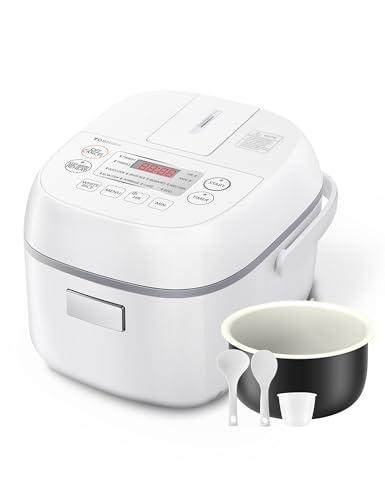
Toshiba Mini Rice Cooker 3 Cups Uncooked with Fuzzy Logic — Best Smart Small Cooker
Toshiba’s mini brings genuine fuzzy logic down to the 3-cup class, sensing and adjusting rather than simply boiling until a thermostat trips — and its verified listing confirms a 24-hour delay timer and auto keep warm.
Strengths
- Fuzzy logic adjusts cooking to the batch instead of running one fixed cycle
- 24-hour delay timer and auto keep warm are confirmed in the verified listing
- Steamer and warmer roles stretch it beyond plain rice in a 1–3 person size
Trade-offs
- Costs more than one-touch minis of similar capacity
- More settings than a set-and-forget cook may ever open
- 3-cup uncooked yield overshoots solo diners who want a single portion
| Specification | Verified detail |
|---|---|
| Key spec | 3 Cups uncooked · Fuzzy logic · 24-hour delay timer · Auto keep warm · Steamer function |
That intelligence shows in brown rice and mixed grains, where small cookers usually struggle. For one to three people who eat rice daily and vary what they cook, this is the quality pick; for pure white-rice minimalists, the simpler AROMA above costs less and asks less.
In daily use, the Toshiba Mini Rice Cooker 3 Cups Uncooked with Fuzzy Logic settles into a routine quickly: its best smart small cooker brief matches the way its owners actually cook, week after week, rather than the way a specification sheet imagines they might. The controls become muscle memory within a fortnight, the cleaning rhythm establishes itself, and the machine’s character — what it does brilliantly and where its trade-offs show — becomes familiar enough to plan meals around. That settling-in is the real test of any pick in this guide, and it is why each review weighs ordinary-week usefulness as heavily as headline features.
Best for: Small households that cook varied grains and want timer convenience / Not suited for: Solo cooks who only ever make one portion of white rice
Check on Amazon — check price on Amazon before ordering, and re-confirm the specification in the listing.
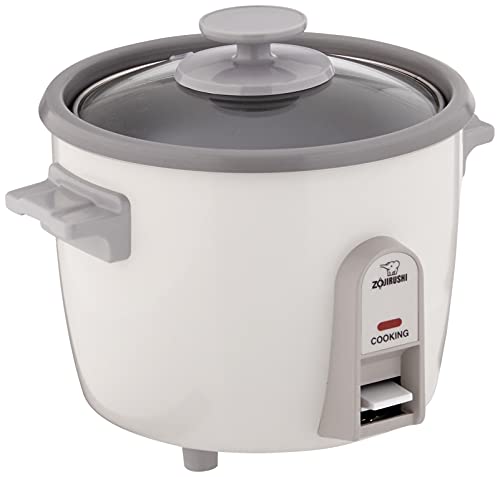
Zojirushi 3 Cup Rice Cooker/Steamer — Best Simple Classic
Zojirushi built its reputation on rice, and this compact 3-cup cooker/steamer is the traditionalist’s entry in the class — no app, no programme library, just a respected maker at small scale.
Strengths
- Zojirushi’s small-cooker pedigree in the true 3-cup class
- Steamer role adds vegetables and dumplings to the same small footprint
- Straightforward operation suits shared and multi-generational kitchens
Trade-offs
- Fewer smart features than the fuzzy-logic Toshiba
- Capacity convention needs a careful read of the listing before ordering
- Design is classic rather than counter-display modern
| Specification | Verified detail |
|---|---|
| Key spec | 3 Cup · Rice cooker and steamer · Compact classic format |
It suits kitchens where the cooker will be used by everyone, including people who refuse to read manuals. Pair it with the steamer for a complete small meal — rice below, vegetables above — and it quietly justifies itself several nights a week.
In daily use, the Zojirushi 3 Cup Rice Cooker/Steamer settles into a routine quickly: its best simple classic brief matches the way its owners actually cook, week after week, rather than the way a specification sheet imagines they might. The controls become muscle memory within a fortnight, the cleaning rhythm establishes itself, and the machine’s character — what it does brilliantly and where its trade-offs show — becomes familiar enough to plan meals around. That settling-in is the real test of any pick in this guide, and it is why each review weighs ordinary-week usefulness as heavily as headline features.
Best for: Traditionalists who want a proven small cooker without menus and apps / Not suited for: Feature hunters who want timers, presets and fuzzy logic
Check on Amazon — check price on Amazon before ordering, and re-confirm the specification in the listing.

Panasonic Rice Cooker, Steamer & Multi-Cooker SR-G06FGL 3-Cups (Uncooked) — Best Multi-Role Small Cooker
Panasonic’s SR-G06FGL is the headroom pick: its verified title states 3 cups uncooked yielding 6 cups cooked, so it cooks in the 2-to-4-cup uncooked sense while stretching to guest-sized batches.
Strengths
- Both capacities are stated in the verified listing: 3 uncooked becomes 6 cooked
- Multi-cooker positioning covers more than rice in a small footprint
- Panasonic’s small-appliance build suits daily-use kitchens
Trade-offs
- 6 cups cooked may exceed the strict 2–4 cooked brief — read the convention note in this review
- Larger yield means a larger pot to wash for tiny batches
- Multi-role jacks-of-all-trades rarely beat specialists at texture
| Specification | Verified detail |
|---|---|
| Key spec | 6-Cups cooked / 3-Cups uncooked · Steamer and multi-cooker roles · Silver |
We include it transparently for buyers whose ‘small’ refers to the dry-rice measure and the counter footprint rather than a hard cooked-cup ceiling. If your batches are always small, the AROMA and Toshiba above fit tighter; if visitors regularly double the table, this is the small cooker that does not run out.
In daily use, the Panasonic Rice Cooker, Steamer & Multi-Cooker SR-G06FGL 3-Cups (Uncooked) settles into a routine quickly: its best multi-role small cooker brief matches the way its owners actually cook, week after week, rather than the way a specification sheet imagines they might. The controls become muscle memory within a fortnight, the cleaning rhythm establishes itself, and the machine’s character — what it does brilliantly and where its trade-offs show — becomes familiar enough to plan meals around. That settling-in is the real test of any pick in this guide, and it is why each review weighs ordinary-week usefulness as heavily as headline features.
Best for: Small households that occasionally cook for guests and want headroom / Not suited for: Strict minimalists who only ever cook 2–4 cups cooked
Check on Amazon — check price on Amazon before ordering, and re-confirm the specification in the listing.
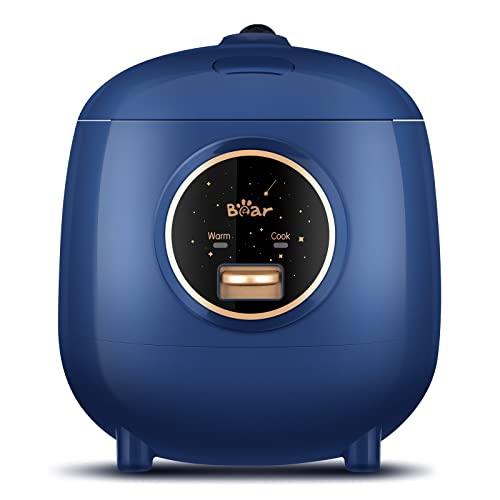
Bear Mini Rice Cooker 2-Cup Uncooked — Best for Dorms and Travel
Bear’s mini is unapologetically a personal cooker: 2 cups uncooked, 1.2 litres, nonstick and keep-warm, with a verified listing that names dorm, travel and single-serve use outright.
Strengths
- 2-cup uncooked capacity is the dorm and desk-side sweet spot
- Portable positioning is explicit in the verified listing — travel and single-serve use
- Nonstick pot and keep warm cover the student essentials
Trade-offs
- Smallest yields here — couples will outgrow it
- Fewer texture programmes than fuzzy-logic rivals
- Nonstick pot wants gentle utensils in shared kitchens
| Specification | Verified detail |
|---|---|
| Key spec | 2-Cup uncooked · 1.2L · Nonstick · Keep warm · Portable small format |
That focus is its charm. It fits a dorm shelf, a studio corner or an office kitchenette, cooks a real portion rather than a compromise, and washes up in a sink the size of a shoebox. Buy it for one person’s life and it is perfectly judged.
In daily use, the Bear Mini Rice Cooker 2-Cup Uncooked settles into a routine quickly: its best for dorms and travel brief matches the way its owners actually cook, week after week, rather than the way a specification sheet imagines they might. The controls become muscle memory within a fortnight, the cleaning rhythm establishes itself, and the machine’s character — what it does brilliantly and where its trade-offs show — becomes familiar enough to plan meals around. That settling-in is the real test of any pick in this guide, and it is why each review weighs ordinary-week usefulness as heavily as headline features.
Best for: Students, solo dwellers and anyone cooking rice in a bedroom-adjacent kitchen / Not suited for: Couples or families cooking rice as a shared side
Check on Amazon — check price on Amazon before ordering, and re-confirm the specification in the listing.

Dash Mini Rice Cooker 2-Cup with Removable Ceramic Nonstick Pot — Best Ceramic Pot Mini
Dash’s mini is the smallest honest portion in the roundup: 2 cups cooked from its removable ceramic nonstick pot, with keep warm for the second helping that is really just a bigger first one.
Strengths
- Ceramic nonstick pot is the listing’s headline — easy release without conventional coatings
- Makes 2 cups cooked, the true single-serving end of this category
- Keep warm plus oatmeal and grain cooking covers breakfast as well as dinner
Trade-offs
- 2 cups cooked is the smallest yield here — strictly a one-person cooker
- Ceramic coating needs silicone or wooden tools
- Aqua finish will not match every kitchen — check colour options
| Specification | Verified detail |
|---|---|
| Key spec | 2-Cup · Removable ceramic nonstick pot · Keep warm · Oatmeal and grains |
It earns its place for the pot material and the portion honesty. Solo cooks waste less rice, the ceramic surface releases oatmeal and rice without soaking, and the whole thing stores in the space a hardback book would take. As a personal cooker, it is exactly sized; as a household cooker, it is not — and it does not pretend to be.
In daily use, the Dash Mini Rice Cooker 2-Cup with Removable Ceramic Nonstick Pot settles into a routine quickly: its best ceramic pot mini brief matches the way its owners actually cook, week after week, rather than the way a specification sheet imagines they might. The controls become muscle memory within a fortnight, the cleaning rhythm establishes itself, and the machine’s character — what it does brilliantly and where its trade-offs show — becomes familiar enough to plan meals around. That settling-in is the real test of any pick in this guide, and it is why each review weighs ordinary-week usefulness as heavily as headline features.
Best for: Solo cooks who want a ceramic pot and true single portions / Not suited for: Anyone cooking for two or more
Check on Amazon — check price on Amazon before ordering, and re-confirm the specification in the listing.
Comparison Table
| Pick | Badge | Key spec | Best for |
|---|---|---|---|
| AROMA Mini Rice Cooker 2-Cup (Uncooked) / 4-Cup (Cooked) ARC-302NGMT | Best Overall | 2-Cup uncooked / 4-Cup cooked · 1 Qt · Auto keep warm · Grain, soup and oatmeal cooking | Couples and small households cooking rice several times a week |
| Toshiba Mini Rice Cooker 3 Cups Uncooked with Fuzzy Logic | Best Smart Small Cooker | 3 Cups uncooked · Fuzzy logic · 24-hour delay timer · Auto keep warm · Steamer function | Small households that cook varied grains and want timer convenience |
| Zojirushi 3 Cup Rice Cooker/Steamer | Best Simple Classic | 3 Cup · Rice cooker and steamer · Compact classic format | Traditionalists who want a proven small cooker without menus and apps |
| Panasonic Rice Cooker, Steamer & Multi-Cooker SR-G06FGL 3-Cups (Uncooked) | Best Multi-Role Small Cooker | 6-Cups cooked / 3-Cups uncooked · Steamer and multi-cooker roles · Silver | Small households that occasionally cook for guests and want headroom |
| Bear Mini Rice Cooker 2-Cup Uncooked | Best for Dorms and Travel | 2-Cup uncooked · 1.2L · Nonstick · Keep warm · Portable small format | Students, solo dwellers and anyone cooking rice in a bedroom-adjacent kitchen |
| Dash Mini Rice Cooker 2-Cup with Removable Ceramic Nonstick Pot | Best Ceramic Pot Mini | 2-Cup · Removable ceramic nonstick pot · Keep warm · Oatmeal and grains | Solo cooks who want a ceramic pot and true single portions |
Cooked Cups vs Uncooked Cups: The Only Rice Cooker Maths That Matters
Rice roughly doubles in volume as it cooks, and brands exploit the ambiguity. A cooker listed as ‘4-cup’ might hold 4 cups of dry rice (yielding about 8 cooked) or produce 4 cups cooked from 2 dry. The picks above were chosen because their verified titles state the convention — AROMA and Panasonic spell out both numbers, which is the standard you should demand from any listing.
Work backwards from your plate. A typical serving of cooked rice is about three-quarters to one cup. Two people eating rice as a side need roughly 2 cups cooked; two people eating rice as the base of the meal, plus leftovers for fried rice, need 4. That is why the 2-cup-uncooked / 4-cup-cooked format is the sweet spot this search describes.
Also respect the minimum. Very small batches in a too-large pot cook unevenly because the water layer spreads thin. If you regularly cook a single portion, the 2-cup-cooked Dash or the Bear mini will treat you better than a 4-cup cooker run at a quarter of its capacity.
One-Touch, Fuzzy Logic and Everything Between
A one-touch cooker boils until the pot’s temperature climbs past water’s boiling point — the signal the rice has absorbed the water — then clicks to warm. It is simple, cheap and, with correct water ratios, genuinely good for plain white rice. Its weakness is variety: brown rice, mixed grains and porridge ask for soak times and gentler curves a single switch cannot give.
Fuzzy logic cookers, like the Toshiba mini above, monitor and adjust through the cycle, handling brown rice, softer or firmer textures and timer-delayed starts with far more grace. The price premium buys flexibility, not magic — a household that cooks only white jasmine rice will taste little difference.
Induction heating sits above both in cost and evenness, but at the 2-to-4-cup scale its advantages shrink: small pots heat evenly almost by default. Spend on capacity honesty and the features you will use weekly — a delay timer you use every day beats a heating technology you cannot taste.
Water Ratios and Habits for Small Batches
Small batches punish sloppy measuring because a tablespoon of water is a larger fraction of the total. Use the measuring cup that came with the cooker — rice cooker ‘cups’ are a standard smaller measure, and the pot’s water lines are calibrated to it. Mixing a US cup measure with the pot’s lines is the most common cause of mysteriously wet or dry rice.
Rinse until the water runs mostly clear for fluffier, separate grains, and let the rice rest on warm for ten minutes after the cycle ends before fluffing with a paddle. That rest, boring as it sounds, fixes more texture complaints than any feature on any cooker in this list.
For brown rice in a one-touch mini, add the water, let the grains soak in the pot for twenty to thirty minutes before pressing cook, and expect a longer cycle. The soak compensates for the programme the cooker does not have — a small habit that closes most of the gap to fuzzy logic.
A Week of Real Cooking: Where a Small Rice Cooker Earns Its Place
The small rice cooker’s week starts at breakfast, which surprises people who bought it for dinner. Oatmeal set up the night before or cooked while the kettle boils; congee on the morning someone is unwell; the soft, plain rice that settles a household stomach after a rich weekend. A cooker that only ever made dinner rice would still earn its space — one that quietly handles breakfasts as well becomes the most-used small appliance in many homes.
Dinner is the obvious shift: rice as the base under curries, stir-fries and grilled things, cooked without a hob ring, a watched pot or a boiled-over stove top. The small batch is the point. Two to four cups cooked is dinner for a couple with exactly the right amount of leftovers — tomorrow’s fried rice, tomorrow’s lunch box — and none of the week-old rice mountain a family cooker produces for a small household. Fresh rice, often, in the amount you actually eat: that is the small cooker’s entire philosophy.
The weekend adds the steamer basket’s shift — dumplings, vegetables, a piece of fish — cooking above the rice in the same small pot, and the occasional grain experiment: quinoa, barley, a mixed-grain blend that a fuzzy-logic model handles gracefully. Households that keep a small cooker out on the counter use it four or five times a week without thinking about it, which is the highest praise any appliance can earn.
Care, Cleaning and Making It Last a Decade
Rice cookers ask for little and repay it fully. The inner pot’s coating — nonstick or ceramic — lasts years with wooden or silicone paddles and a soft sponge, and dies young under metal spoons and scouring pads. Wash it after use rather than letting rice dry onto it overnight; dried rice is concrete, and chipping at concrete is how coatings get scratched.
The lid and steam vent are the forgotten parts. Starchy steam condenses there after every cook, and a vent that is never cleaned eventually spits and smells. Most lids and vent caps remove in seconds and rinse under the tap — a weekly habit that keeps the cooker cooking cleanly. The heating plate below the pot wants a dry wipe whenever grains escape into it; a burnt grain under the pot is the most common cause of uneven cooking in an ageing cooker.
Store the cooker with the lid ajar so the interior dries fully, keep the measuring cup with it — you will need that exact cup for the water ratios to work — and the machine will give you a decade of unremarkable, perfect service. Unremarkable is what you want from infrastructure.
Warranties, Spares and the Long View
A rice cooker’s consumable is its inner pot: coatings wear, and a maker that sells replacement pots turns a worn cooker into a renewed one for a fraction of the machine’s price. Before choosing any model in this guide, check that its pot — and, on smarter models, its lid parts and steam vent — are orderable spares. The brands represented here have long model runs, which is precisely why their parts stay available.
Keep the supplied measuring cup with the cooker, because it is calibrated to the pot’s water lines and losing it quietly degrades every batch you cook afterward. If it does vanish, replacements in the standard rice-cooker measure exist — but a US cup measure is not one of them, and using it is the most common self-inflicted wound in small-batch rice cooking.
Secondhand small rice cookers are a genuinely good buy when the pot’s coating is intact: inspect the coating in daylight, confirm the lid seals without wobble, and run a plain water cycle before the first rice. A clean, intact used cooker from a supported line will out-cook a new novelty gadget every day of the week.
Seasonal Cooking: The Calendar This Appliance Serves
A small rice cooker follows the household’s calendar more faithfully than most appliances. Winter means congee, porridge and the plain rice under every rich stew; spring brings grain salads and picnic onigiri; summer is sushi rice, coconut rice and the steamer basket working over the grains for cold noodle accompaniments; autumn returns to mushroom rice and the harvest grains a fuzzy-logic model handles best. The batches stay small because the household is small — the seasons change the grain, not the scale.
Occasions scale differently here: a small cooker at a dinner party is a freshness machine, cooking a second small batch while the first is eaten, rather than a bulk machine holding a mountain warm. Festival cooking — sticky rice, seasoned celebration grains — rewards the cookers with the right programmes, and the rest of the year rewards the ones that simply never fail at plain rice.
There is also the life-season rhythm: the dorm year, the first-apartment years, the couple years, the small-family years. A 2-to-4-cup cooker bought honestly for the season you are in serves it completely — and when the household outgrows it, it becomes the porridge-and-sides cooker beside its bigger successor rather than a mistake to regret.
Accessories That Are Actually Worth Owning
The rice cooker’s accessory list is mercifully short, and most of it is already in the box: the calibrated measuring cup, the paddle, and on several picks a steamer basket. Guard the cup with your life — it is part of the machine’s measuring system. Beyond the box, exactly two additions earn their drawer space for most households: a spare inner pot if your model sells one and you cook daily, because a pot in the dishwasher should never delay dinner, and a set of small heatproof bowls that fit inside the cooker for steaming eggs, custards and reheats above the rice.
Everything else is situational. A second paddle for serving is a kindness at parties. Silicone pot holders matter if your cooker lacks cool-touch handles. Cookbooks specific to small rice cookers genuinely help in the first month, when the machine’s range — porridge, grains, steamed dishes, even small cakes in some models — is wider than new owners expect. Buy accessories after a month of real use, when your own habits tell you what is missing, rather than completing a set on day one that your cooking may never call for.
Budget Tiers, In Plain Language
Budget in this category divides into three honest tiers, and the best small 2 to 4 cups rice cookers sit across all of them. The budget tier buys the core job done simply: fewer programmes, plainer finishes, and controls that ask a little more of you. Nothing about that is a failure — for a household whose needs are narrow and known, the budget tier is often the correct purchase, and several picks in this guide prove that simple machines cooked with good habits beat complicated machines cooked carelessly. The mid-range tier is where most households should land: it buys the features that change weekly life — the timer you actually use, the sensor that judges the reheat, the capacity that fits your real plates and pots — without paying for theatre. The premium tier buys build, materials and intelligence: stainless pots that outlast coatings, fuzzy logic that handles every grain, commercial duty cycles, smart guidance. Premium is worth it when the appliance will be used daily for a decade; it is wasted on a machine that comes out twice a year. Judge your own usage honestly before you judge the tiers — the most expensive mistake in this category is buying a tier above your habits, and the second most expensive is buying below them and replacing the machine in eighteen months.
Who Should Skip This Category
There is a household this category does not serve, and naming it is part of an honest guide to the best small 2 to 4 cups rice cookers. If your cooking happens at a scale these machines cannot reach — catering quantities, whole animals, dinner parties of twenty — you already know it, and your answer is commercial equipment or multiple machines, not a bigger hope. If, at the other extreme, the appliance would be used a handful of times a year, the honest recommendation is to borrow, rent the counter space in your mind first, and buy only when a borrowed month proves the habit exists. And if your real problem is different from the one this search names — you need speed when these machines offer patience, or patience when these offer speed — the related guides linked in the final recommendation exist precisely so you can redirect before money moves. The right appliance in the wrong kitchen is still the wrong purchase.
Troubleshooting Common Problems
- Problem: Rice too wet. Too much water for the measuring system used, or the lid was lifted mid-cycle. Use the supplied cup with the pot’s lines, and let the rice rest the full ten minutes before fluffing.
- Problem: Rice too dry or hard. Too little water, or old rice that drinks more. Add a tablespoon or two more next batch and note it — every household’s rice and water find their own ratio.
- Problem: Gummy texture. Surface starch is the cause. Rinse until the water runs mostly clear, and fluff gently with a paddle rather than stirring the grains into paste.
- Problem: Brown rice still firm. It needed a soak or more time. Give brown rice twenty to thirty minutes soaking in the pot before starting, especially in a one-touch cooker.
- Problem: Crust sticking to the pot. A brief rest off the heat loosens the base layer. For repeated sticking, check the pot coating’s condition and confirm the base of the pot was dry when it went in.
How to Cook Perfect Small-Batch Rice Every Time
- Measure with the cup supplied with your cooker and match the water to the pot’s marked line for that many cups. Level the rice, level the water, and trust the calibration the maker built in.
- Rinse the rice in the pot with cold water, swirling and draining two or three times until the water is mostly clear. This removes surface starch that makes small batches gummy.
- Wipe the outside of the inner pot dry before setting it in the cooker — a wet base can spit and heat unevenly — then close the lid and start the cycle.
- When the cooker switches to warm, leave the lid closed for ten minutes. The resting rice finishes steaming and firms up; opening early releases the steam it still needs.
- Fluff gently with the rice paddle, cutting and folding rather than stirring, and serve. Refrigerate leftovers promptly in a shallow container — tomorrow’s fried rice is the small cooker’s secret second job.
Common Buying Mistakes
- Trusting the headline cup number. Always find whether the listing means cooked or uncooked cups. The picks here state it; if a listing hides it, assume the larger interpretation.
- Mixing measuring systems. A US cup in a pot calibrated for the maker’s smaller cup throws every water line off. Use the supplied cup and the pot’s markings together.
- Cooking tiny batches in a big pot. Thin water layers cook unevenly. Match the cooker to your usual batch, not your biggest imaginable one.
- Lifting the lid mid-cycle. Steam is the cooking medium. Every peek cools the pot and extends the cycle, especially at small scale.
- Skipping the rest. Rice fluffed the second the cycle ends is wetter and denser. Ten minutes on warm transforms the texture for free.
Final Recommendation
For most buyers, the first pick in this guide — AROMA Mini Rice Cooker 2-Cup (Uncooked) / 4-Cup (Cooked) ARC-302NGMT (Best Overall) — is the safest answer to the best small 2 to 4 cups rice cookers: check price on Amazon. If your needs are more specific, match them honestly: Toshiba Mini Rice Cooker 3 Cups Uncooked with Fuzzy Logic suits readers who recognise themselves in its verdict, while Dash Mini Rice Cooker 2-Cup with Removable Ceramic Nonstick Pot serves the specialist end of this category. Every pick here earned its place on verified specifications, so the right choice is the one whose strengths match your kitchen and whose trade-offs you can live with daily.
One last piece of advice before you order: re-read the trade-offs of your chosen pick, not just its strengths. Every machine in this guide is the right answer for someone and the wrong answer for someone else, and the trade-off list is where that difference lives. If you can read your pick’s three trade-offs and shrug at all of them, you have found your machine. If one of them stings — the size, the pace, the missing feature — go back to the comparison table and choose the pick whose trade-offs you can shrug at instead. That thirty-second honesty is worth more than any badge in this guide, including ours.
Related guides on this site: Best Slow Cookers With Searing · Best Slow Cookers With Timers · Best Slow Pressure Cookers · Best Small Apartment Microwaves
Frequently Asked Questions
How many cups do two people actually need?
For rice as a side, about 2 cups cooked; as the base of the meal with leftovers, 4 cups cooked. That is why 2-cup-uncooked cookers are the couple’s sweet spot — they yield 4 cups cooked without taking family-size counter space.
Is fuzzy logic worth it in a small rice cooker?
If you cook brown rice, mixed grains or porridge, or you use a delay timer regularly, yes. If you cook plain white rice only, a good one-touch mini with correct water ratios will satisfy you for less.
Can a 2-to-4-cup rice cooker cook other foods?
Yes — the picks here list oatmeal, grains, soups and steaming among their roles. Small rice cookers are capable little steamers and porridge makers, which is how they earn permanent counter space in small kitchens.
Why did my rice come out wet in a mini cooker?
Usually the measuring system: a US cup of rice with water to the pot’s line over-waters the batch. Use the supplied cup, rinse, respect the lines, and let the rice rest ten minutes on warm before fluffing.
How long can rice stay on keep warm?
A few hours is fine for texture and safety in a cooker holding proper warm temperatures. For longer storage, refrigerate cooked rice promptly in a shallow container and reheat it thoroughly the next day.
What is the smallest sensible rice cooker?
A 2-cup-cooked model like the Dash mini is the practical floor for real portions. Anything smaller becomes a novelty gadget that cannot cook a full serving with sauce-friendly headroom.
How long should an appliance in this category last?
With the light care described in this guide — seals, pots and cavities kept clean, ventilation respected, consumables replaced when they wear — a well-chosen model should serve for many years of weekly use. Longevity in this category is mostly a maintenance story, which is why the picks favour established ranges with orderable spares over novelty models with none.


