A skincare fridge is a small thermoelectric cooler sized for serums, sheet masks, eye creams and lip products. Cool storage can feel refreshing on the skin, and some people like it for products with fresh-ingredient formulas. Always follow each product’s own storage advice. A skincare fridge is not a medical device. It is a small convenience, much like a drink cooler sized for the bathroom or bedroom.
The six units below range from tiny four-liter cubes to a larger thermoelectric cooler that also holds drinks. Most are quiet and plug into a wall outlet. Some can also warm, and a few run from a car adapter, so check the listing for the power options. Think about where it will sit, since the cord, the vent and the door swing all need a clear space. We have not used these products ourselves, so confirm the details on the current listing before buying.
As an Amazon Associate we earn from qualifying purchases. Links below are affiliate links, and they do not change the product information we give.
What to Look For
| Feature | Why it matters |
|---|---|
| Capacity | A small cube holds serums; larger ones hold bottles and drinks |
| Cooling type | Thermoelectric units are quiet but not as cold as compressors |
| Noise | Look for a unit that is quiet enough for a bedroom |
| Power | Check for wall and car adapters if you travel |
| Door style | A flip-down door or a glass front changes how easy it is to see inside |
In this guide
Specs at a Glance
| Product | Type | Size class | Notes |
|---|---|---|---|
| Cooluli Skincare Mini Fridge | Thermoelectric | Small | Beauty-focused styling |
| Chefman Portable Personal Mini Fridge | Thermoelectric | Small | Cooler and warmer |
| AstroAI Mini Fridge | Thermoelectric | Small | Compact cube |
| Cooluli Infinity Mini Fridge | Thermoelectric | Small to mid | Cooler and warmer |
| Frigidaire Portable Mini Fridge | Thermoelectric | Small | Brand-name option |
| Igloo Iceless Thermoelectric Cooler | Thermoelectric | Larger | Handles drinks and bottles |
The 6 Best Skincare Fridges

Top pickBest for a bedroom vanity
1. Cooluli Skincare Mini Fridge
A compact cube made for skincare and cosmetics, sold in several colors. It plugs into a wall outlet and often includes a car adapter. Check the listing for the exact interior height before buying tall bottles.
Suits: a bedroom vanity. Strengths: a style designed for beauty products. Weaknesses: limited internal height. Skip it if you need to chill tall bottles.


Best for a mix of drinks and skincare
2. Chefman Portable Personal Mini Fridge
A small personal fridge that can cool or warm, depending on the setting. It fits on a nightstand or a desk. Look at the listing to learn which temperature modes it offers.
Suits: a mix of drinks and skincare. Strengths: simple controls. Weaknesses: a tight interior. Skip it if you want cold storage below normal room range.

Best for travel and dorms
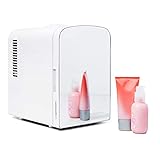
3. AstroAI Mini Fridge
A small cooler and warmer with a handle. It fits a few products and works for travel with the right adapter. It suits those who want portability over appearance.
Suits: travel and dorms. Strengths: a portable form. Weaknesses: small capacity. Skip it if you hold many products.

Best for bigger collections
4. Cooluli Infinity Mini Fridge
A slightly larger Cooluli that can also warm. The extra room holds taller serum bottles and small jars. Confirm the dimensions on the listing to see whether it fits on your counter.
Suits: bigger collections. Strengths: extra space for jars. Weaknesses: a larger footprint. Skip it if your vanity is tiny.
View Cooluli Infinity Mini Fridge on Amazon

Best for brand-conscious buyers
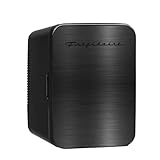
5. Frigidaire Portable Mini Fridge
A branded personal cooler in a small form. It handles a few cosmetics and drinks and carries easily. Read the listing for the power options before you travel.
Suits: brand-conscious buyers. Strengths: a recognized name. Weaknesses: modest capacity. Skip it if you want pastel styling.
Best for a shared space
6. Igloo Iceless Thermoelectric Cooler
A larger thermoelectric cooler built for drinks and food. It also works for a big beauty haul or for family sharing. It is better thought of as a general cooler than a skincare specialist.
Suits: a shared space. Strengths: greater capacity. Weaknesses: more bulk than a vanity needs. Skip it if you only need a small shelf.
View Igloo Iceless Thermoelectric Cooler on Amazon
Care and Setup
- Place the unit where air can circulate around the vents.
- Wipe the interior with a damp cloth and let it dry.
- Unplug it before moving it.
- Do not store items in direct contact with the cooling plate.
- Check each product’s label for storage guidance.
- Keep products in their original packaging when possible.
Mistakes to Avoid
- Expecting freezer-like cold from a thermoelectric cube.
- Blocking the fan vents with towels.
- Overfilling a small cube until the door will not close.
- Putting the unit next to a heater.
- Storing products against the cooling plate for long periods.
What Belongs in a Skincare Fridge
Not every beauty product benefits from cool storage. Many creams, cleansers and sunscreens are formulated to stay stable at room temperature, and chilling them can change the texture or even cause separation. Products that people most often keep cool include sheet masks, eye gels, facial rollers, some serums and lip products, and items labeled with a storage instruction such as keep refrigerated. The label and the brand’s own guidance should always win over general advice.
Natural or preservative-light formulas may have shorter shelf lives and a cool environment can slow certain changes, but a fridge does not make a product last indefinitely. Watch the period-after-opening symbol on packaging, which shows how many months a product is meant to be used after opening. Discard anything that changes smell, color or consistency.
Keep food and skincare separate. A skincare fridge is intended for cosmetics, so avoid mixing in items that can leak or spoil. Medications and prescription products have their own storage rules, so ask a pharmacist or follow the prescriber’s instructions rather than assuming a cosmetic cooler is appropriate.
Thermoelectric Cooling Explained
Most skincare fridges use thermoelectric cooling, a solid-state method that moves heat from the inside to the outside using a plate and a fan. It has no compressor, which is why these units are quiet, light and compact. The trade-off is that the cooling is relative to the surroundings. In a warm room the interior may not get as cold as it would in a cool one, and a unit running in a hot car or sunny window will struggle.
That means placement matters more than you might expect. Put the fridge in a shaded spot with space around the vents, away from radiators, sunlit windowsills and hair appliances. A fridge crammed against a wall or surrounded by clutter has to work harder and may not cool well.
Many thermoelectric models can also warm, switching the plate to a heating mode for items such as towels or lotions. If you plan to use this feature, check the listing for the stated temperature range and the control method. Do not assume a unit will hold a specific temperature. Compare the maker’s description with the situations where you will use it.
Size, Shelving and Noise
Volume is listed in liters, and it is easy to underestimate how quickly a small cube fills. Gather the bottles, jars and masks you plan to store and compare their height and width with the interior. Tall pump bottles may not fit under a low shelf, and wide jars can use up the whole floor of a very small unit. Removable shelves or adjustable dividers make it easier to organize.
Door design affects everyday use. A swing door opens outward and needs clear space beside the unit. A glass or mirrored front looks tidy on a vanity but may show fingerprints. Some units have a built-in light, which helps when you are looking for an item in a dim bathroom or bedroom.
Noise is usually low, but fans still hum. If the fridge will sit near your bed, look for owner feedback about sleep use and check whether the unit has a quiet mode. Also check the cord length, whether the plug is angled and whether there is an AC and DC option for travel. Weigh the unit to see whether you can carry it easily when moving it between rooms.
Hygiene and Routine Care
A small fridge can still grow mold or collect residue. Unplug it and empty the contents before cleaning. Wipe the interior with a soft cloth dampened with mild soap and water, rinse with a clean damp cloth and leave the door open until it is dry. Do not use abrasive pads or harsh chemicals, which can scratch surfaces and damage the interior.
Condensation can appear, especially when you open the door often or the room is humid. Wipe it away regularly. Never submerge the unit in water or spray it directly, and keep liquids away from the fan area. If a product leaks inside, clean it right away and check that no moisture has reached the vents.
- Keep items in their original containers or sealed bags.
- Do not stack items against the cooling plate for long periods.
- Rotate products so older ones get used first.
- Check the unit for dust around the vents each month.
Treat the fridge as a clean storage space, since skincare goes on your face and should not be exposed to dust or spills.
Buying Questions and Replacement Signs
Before buying, ask what temperature range the maker lists, whether the unit can warm as well as cool, what power options it offers, how loud it runs, and what is covered by the warranty. Think honestly about whether you will use it. If you only own a few products that call for cold storage, an inexpensive small model may be enough, and a shelf in a regular household fridge might work just as well.
Think about where it will live. A bathroom can be humid, which affects electronics, so make sure the manufacturer allows that environment. A bedside table needs a quiet model. A vanity needs a good look and a stable surface.
Signs it is time to replace the fridge include a fan that rattles or stops, a cooling plate that no longer chills, a door that does not seal, a damaged cord or plug, odors you cannot remove after cleaning and visible corrosion. Unplug it and stop using it if you notice sparks, burning smells or overheating. A skincare fridge is a small convenience, so replace it when it no longer does its job reliably.
Sizing and Capacity Questions Worth Settling First
A skincare fridge is small by design, and that makes size the first thing to get right. Count what you plan to store, then compare it with the interior dimensions.
Tall bottles and jars
Serums, toners and creams come in many shapes. Measure the tallest item you own and check the interior height and the door shelf depth. Adjustable shelves are a real advantage when your collection changes.
Capacity in liters
Listings give a volume figure, but it does not tell you how many bottles fit. Look at product photos that show real items inside, and use them to judge how crowded the space might be.
Exterior footprint
Measure the shelf, vanity or counter where it will stand, and allow some clearance for air to move around the unit. Read the maker instructions about spacing from walls.
Weight and portability
If you plan to move the unit between rooms, pick a lighter model with a carry handle. A heavier one is better placed in a single permanent spot.
Decision Table: Matching the Fridge to Your Routine
| Your situation | What to prioritize | Check on the listing |
|---|---|---|
| Bedroom vanity | Quiet running and a small footprint | How the maker describes noise |
| Bathroom counter | A location suitable for the unit | Maker guidance on damp areas, which varies |
| Shared household | A lock or a clear way to tell items apart | Door design and interior layout |
| Regular travel | Portable power options and a handle | Power adapters and carrying details |
| Large collection | Adjustable shelves and a roomier interior | Shelf options and door storage |
Placement in bathrooms deserves special care. Electrical appliances and moisture do not mix well, so follow the maker instructions and local electrical guidance. If you are unsure whether a spot is suitable, ask a licensed electrician.
Setup and Routine Care Checklist
- Read the manual, then unpack the fridge and remove protective film and packing.
- Wipe the interior with a damp cloth as the maker recommends, and let it dry.
- Let the unit rest upright for the time the instructions suggest before switching it on.
- Place it on a flat, stable surface with space around the vents.
- Plug it in, choose the setting that suits your items and give it time to settle.
- Check the temperature setting against the maker guidance for your products, since labels on the products themselves may say how they should be stored.
- Wipe spills promptly and clean the interior on a regular schedule.
Mistakes to Avoid When Choosing and Using One
Treating it like a full refrigerator. A small thermoelectric unit may have limits, and its cooling can be affected by room temperature. Read what the maker says it is built to do.
Overfilling the shelves. Packed items block airflow and make it hard to find things. Leave small gaps.
Ignoring product labels. Some products do not need cold storage at all, while others come with their own storage guidance. Follow the label on each item instead of assuming that colder is always better.
Skipping cleaning. Residue and moisture can build up in a small space. Wipe it down regularly and keep the door seal clean.
Forgetting about the plug. Keep the cord away from water and from areas where it can be tripped over, and avoid overloaded power strips.
If you have skin concerns that influence what you store or use, speak with a qualified professional. A fridge helps with organization, but it is not a treatment.
A Short Glossary of Terms You Will See
- Thermoelectric cooling: a cooling method that moves heat with an electric plate rather than a compressor. It is common in small units.
- Warming function: a switch on some models that lets the unit hold items warm instead of cool.
- Ambient temperature: the temperature of the room around the unit, which affects how cold the interior can get.
- Reversible door: a door whose hinges can be moved to the other side to suit your space.
- Eco mode: a setting that reduces power use, often with a lighter cooling effect.
How to Read a Skincare Fridge Listing
Product pages mix technical claims and lifestyle photos, so focus on facts you can check. Look for the cooling method, since small units often use thermoelectric cooling that works within a limited range relative to the room. The listing should explain this, and the manual should describe what temperature range to expect.
Check the power options. Some units run from a wall adapter, some offer a car adapter and some can run on a battery pack sold separately. Make sure the adapters you want are included, not just shown in photos.
Look for details on noise, because a unit that hums all night can be a nuisance in a bedroom. Read what the maker says rather than relying on the word quiet alone. Study the door as well: reversible doors and magnetic seals add convenience, and clear shelves help you find items fast.
Finally, consider the warranty and support pages on the maker site. A compact appliance is a small investment, but good documentation makes ownership easier. If a feature matters to you and the listing never mentions it, ask the seller or check the manual before you order.
A Small Ritual: Making the Skincare Fridge Part of the Routine
The skincare fridge succeeds or fails as a habit. Placed where the routine actually happens, stocked with the products of that routine in the order they are used, it becomes a small daily pleasure: the cool eye cream, the chilled mist, the stone roller cold from the shelf. Placed across the room or filled with products you do not use, it becomes a humming reminder of good intentions, so set it up for the routine you have, not the one you imagine.
Morning and evening ask different things of it. The morning routine wants depuffing and freshness, the evening routine wants the soothing, treatment end of the shelf. If space allows, a simple front and back or left and right division between the two keeps the little cabinet working at a glance, half asleep, without a rummage. Small fridges reward this kind of simple order out of all proportion to the effort it takes.
Be honest about the products that will never live in it. Makeup generally does not belong, perfume follows its own storage rules, and anything the maker says to keep at room temperature should stay in the drawer. A fridge stocked only with what benefits from it stays uncrowded, cold, and clean, and every item inside it gets used, which is the entire point of owning one.
How the Six Picks in This Guide Compare
With six picks on the table, the useful comparison is not which one is best in the abstract but which differences actually reach your daily life. Read the six descriptions above as a set: the Cooluli Skincare Mini Fridge and the Chefman Portable Personal Mini Fridge represent one end of this guide’s thinking, the AstroAI Mini Fridge and the Cooluli Infinity Mini Fridge sit in the middle ground where most households land, and the Frigidaire Portable Mini Fridge and the Igloo Iceless Thermoelectric Cooler answer more specific needs. The descriptions already tell you who each one suits and where each one asks you to compromise, so the work here is matching those profiles to your household rather than hunting for a single winner.
Start the comparison with the fixed facts of your situation, because they eliminate picks faster than any preference can. The space available, the route it must travel to get there, the size of your household, and the way you actually shop, cook, and store food are not opinions, and a pick that fails one of them is out however much you like its looks. Only when two or three picks survive those fixed facts do the softer questions, styling, controls, and extra features, deserve your attention, and by then the choice is usually between good options rather than between right and wrong.
Then compare the survivors on the cost of being wrong. If you are torn between the Cooluli Skincare Mini Fridge and the Igloo Iceless Thermoelectric Cooler, ask which mistake you would rather live with: the capability you might occasionally miss, or the size, complexity, or upkeep you will deal with every day. Everyday consequences should outweigh occasional ones in almost every purchase like this, which is why this guide keeps returning to your ordinary week as the test. Your biggest shop, your busiest cooking day, and your laziest Sunday are the three scenes to run each finalist through before you decide.
Finally, use the short version at the end of this guide as the tie breaker it was written to be. It compresses each pick into the household it serves best, in one line each. If one of those lines describes your home so exactly that it could have been written about you, that is your answer, and the remaining differences between the picks are details you will adapt to within a week of ownership and never think about again.
Temperature: What Skincare Products Actually Need
Most skincare does not need to be cold; it needs to be cool, stable, and away from heat and light. A dedicated skincare fridge holds a gentle cool rather than refrigerator cold, and that distinction matters, because products stored too cold can separate, thicken, or change texture in ways that make them unpleasant or less effective. The goal is protection from a hot, steamy bathroom, not chilling your serums like food.
Stability beats coldness. A product kept at one steady cool temperature ages better than one that swings between a hot shelf and a cold fridge as it is taken in and out all day. Choose the items that genuinely benefit, such as products the maker suggests keeping cool, water based formulas you find soothing when chilled, and natural products without strong preservatives, and give them a permanent home in the fridge rather than rotating everything you own through it.
Check labels before refrigerating anything. Some formulas, particularly certain oils, balms, and emulsions, are not designed for cold storage and can cloud, grain, or split. The maker’s storage guidance always outranks general advice, and anything medicinal belongs under its own labeled instructions rather than in a shared cosmetic fridge, where temperatures are gentle but not controlled to medical standards.
Organizing a Small Fridge So It Stays Useful
A skincare fridge is small, so organization is the difference between a helpful routine and a tiny cupboard of forgotten bottles. Keep daily items at the front and eye level, group by step in your routine rather than by brand, and leave seasonal or occasional products for the door or the back. If you cannot see a product, you will not use it, and skincare only works when it is actually applied.
Stand items upright and keep lids and pumps clean. Residue around a pump or a jar rim is both unhygienic and the main source of the sticky film that builds inside these fridges. Wipe bottles as they go back in, keep sheet masks and flat items filed rather than stacked in a heap, and resist overfilling, because cold air needs to circulate for the little cabinet to hold an even temperature.
Keep a simple rotation discipline. New products go in at the back, older ones come forward, and anything that changes smell, color, or texture comes out and is discarded, because a fridge slows change but does not stop time. A quick monthly sort takes two minutes and prevents the common discovery of three half used serums all past their best behind the moisturizer you actually use.
Placement, Power and Living With a Mini Fridge
Where the fridge sits decides how hard it works. Keep it out of direct sun and away from heat sources, leave the ventilation space the manual asks for, and be thoughtful in bathrooms, where steam and splashes are constant; many owners keep the fridge on a bedroom dresser or a shelf outside the splash zone and carry products the few steps to the mirror, which is kinder to the appliance and its contents.
These small fridges run on thermoelectric or small compressor systems and are designed for continuous gentle duty. Expect a faint hum or fan sound, which is normal, and place the unit on a stable surface that does not amplify vibration. If noise bothers you at night, distance and a soft mat under the unit help more than switching it off, since warming and cooling cycles defeat the point of storing products in it.
Condensation is part of life with a small fridge in a humid room. A little moisture inside is normal when warm air enters each time the door opens; wipe it during your regular clean so it does not pool under products. If frost or heavy condensation builds, check the door seal, how often the door stands open, and whether the unit is working too hard in an overheated spot before assuming a fault.
Cleaning and Hygiene for a Product Fridge
Clean the interior on a regular rhythm with a soft cloth and mild soapy water, then dry it fully before products go back. Spilled serum and moisturizer residue feed odors and make shelves sticky, and because these fridges run cool rather than cold, they do not suppress smells the way a food refrigerator does. Unplug the unit for cleaning, and never soak it or spray cleaner directly into vents or fittings.
Hygiene matters because many products touch your face. Use clean hands or a spatula for jar products rather than fingers, keep applicators and tools washed, and store facial tools such as rollers and stones clean and dry, whether or not they live in the fridge. The pleasant cool of a chilled tool is a bonus; a clean tool is the actual benefit.
Check the door seal and hinges as part of cleaning. A seal coated in product residue cannot sit flat, and a door that does not close fully makes the little motor run constantly while the interior warms. Wipe the seal gently, look for cracks, and make sure nothing inside is tall enough to nudge the door back open after you close it, which is a surprisingly common cause of a fridge that never feels cold.
Tools in the Cold: Rollers, Stones and Masks
Half of what many owners keep in a skincare fridge is not skincare at all but tools: rollers, sculpting stones, eye masks, and sheet masks, all kept there because cold is their whole point. A chilled tool depuffs and soothes in a way a room temperature one cannot, and the fridge keeps them ready at a moment’s notice. Keep tools clean and dry, in their own section, because a tool stored among open jars picks up residue that ends up on your face.
Sheet masks deserve a note of their own. Kept cool, they are one of the great small luxuries of the routine, and the fridge’s flat shelves suit their packets well. File them upright like records rather than in a pile, so you can see what you have, and rotate them by date as you would food, because a mask forgotten for a year at the back is a small waste that a visible system prevents entirely.
When Products Change: Knowing What to Keep and What to Bin
A fridge slows the aging of products; it does not stop it, and part of owning one is the monthly honesty of checking what is inside. Products that have changed color, separated in a way that does not recombine, developed an off smell, or simply passed the period after opening marked on their packaging should go, however much they cost. Skin is not the place to gamble on a doubtful serum, and a fridge kept current is a pleasure rather than a museum.
Keep a small marker habit: when you open a new product, write the month on the base with a fine pen. That one habit ends all guesswork about ages, makes rotation automatic, and turns the monthly sort into a two minute task. It also reveals your real usage, which products you finish and which you only admire, and that knowledge is worth more at the next purchase than any advertisement.
A Step-by-Step Way to Make the Final Decision
A disciplined way to finish this decision is to work through it in a fixed order, because the order stops the exciting details from outranking the important ones. First, settle the fixed facts about skincare fridges: the space, the access route, the household it must serve, and the jobs it must do in an ordinary week. Write those down. Any pick that fails a fixed fact is out, and removing it early protects you from falling for a feature list attached to something that will not fit your home or your life.
Second, read the surviving listings the way a skeptic reads them. Check exactly what is included, what is sold separately, what the model name and version actually are, and whether the photograph matches the version described, because ranges like this often sell near identical variants that differ in the one detail you care about. Confirm the dimensions from the specification rather than the headline, and if a detail you need is not stated, treat it as absent rather than assuming the best, since assumptions are where most disappointing purchases begin.
Third, think through delivery, installation, and the first week before you pay. Who brings it in, what must be moved or disconnected, where the old one goes, and what you will check in the first days while returning or exchanging is still simple: these questions cost nothing now and real money later. A purchase of this size should arrive to a plan, not to a surprise, and the households that enjoy their choice longest are usually the ones that planned the boring parts as carefully as they chose the exciting one.
Finally, give the decision a night’s distance if it still feels uncertain. The right pick tends to look right again in the morning, for reasons you can state plainly: it fits, it serves the household’s real habits, and its compromises are the ones you mind least. If you cannot state why a pick is right in two sentences, the hesitation is information, and the comparison sections above will usually show you which of the six answers your situation best.
Practical Notes for Everyday Owners
Introduce the fridge to your routine gradually. Start with the few products you use every day, notice whether you actually enjoy them chilled, and expand only if the habit sticks. A fridge bought for an elaborate routine that collapses after a month becomes storage for guilt rather than a tool you enjoy.
Travel and warm weather are where a skincare fridge quietly proves itself, keeping products stable through a heatwave that would leave a bathroom shelf genuinely hot. If your home gets very warm in summer, that stability alone can justify the purchase even if the chilled feeling is only a minor pleasure.
Keep the manual’s temperature and placement guidance with the unit. Small appliances like these are often moved between rooms and homes, and the clearances and settings that suit one spot may not suit another, so a quick check when you move it prevents weeks of wondering why it no longer feels as cold.
If you share a bathroom or a bedroom, agree on what the fridge is for. A dedicated purpose keeps it organized and hygienic; a fridge that slowly becomes general storage for drinks, snacks, and medication serves none of those jobs properly.
Keep the fridge’s own shelf discipline as simple as your routine: top for morning, bottom for evening, or left for daily and right for weekly. In a cabinet this small, any system you can run half asleep beats a perfect system you cannot, and the half asleep test is the one that matters at both ends of the day.
A skincare fridge makes a poor gift surprise and a good chosen purchase. Its value depends entirely on the owner’s routine and products, so it suits the person who has asked for one or whose bathroom shelf visibly overflows, rather than being a guess about someone else’s habits.
If the fridge hums in a quiet bedroom, place it on a folded cloth or a mat and a little away from the wall, which stops the surface and the wall amplifying the sound. Most units are quiet; placement decides whether you ever notice them at all.
Skincare Fridge FAQ
Do I need a skincare fridge?
No. It is a convenience. Many products are fine at room temperature, so follow each label.
Can I store drinks too?
Small cubes can hold a can or two, but the larger models handle drinks more easily.
Are they loud?
Most are quiet, with a faint fan hum. Check owner feedback for noise.
Can a skincare fridge freeze products?
Thermoelectric units generally cool to a modest range. Check the listing for the temperature range.
Which skincare products are best kept cold?
Sheet masks, eye gels, rollers and some serums are common choices, but always follow the product label. Many creams and sunscreens are fine at room temperature, and cold can change some textures.
Will a skincare fridge make my products last longer?
A cool environment can slow some changes, but it does not stop products from expiring. Use the period-after-opening guidance on the packaging, and discard items that change smell, color or texture.
Can I keep medication in a skincare fridge?
Do not assume so. Medicines have specific storage rules, and a cosmetic cooler may not hold the required temperature. Ask a pharmacist or follow the instructions on the label.
Why does my mini fridge not feel very cold?
Thermoelectric units cool relative to room temperature, so a warm room limits how cold they get. Move it to a shaded, ventilated spot and avoid overfilling it.
Can I use it in a humid bathroom?
Only if the maker allows it. Moisture can damage electronics. Many people place the unit in a bedroom or dressing area instead, away from showers.
How often should I clean it?
A light wipe every few weeks is common, and sooner if something spills. Unplug it first, use a mild soap and a damp cloth, and let it dry before closing the door.
Do these run all day and use a lot of power?
Small thermoelectric units generally draw modest power, but the exact figure varies. Check the listing for stated wattage and think about whether you need to run it constantly.
Which products benefit most from being kept in a skincare fridge?
Products that are soothing when cool, such as eye creams, gel moisturizers, sheet masks, and facial mists, are the most enjoyable chilled, and formulas the maker advises keeping cool, including some natural and preservative light products, benefit most in keeping quality. Heavy oils, balms, and anything whose label warns against cold storage are better kept in a cool drawer instead.
Can I keep food or drinks in a skincare fridge as well?
It is better not to mix them. These fridges hold a gentler cool than a food refrigerator, which is not cold enough to store perishable food safely, and food smells transfer to cosmetics. Keep the skincare fridge for products and tools, and use a proper mini fridge set to food safe temperatures if you want chilled drinks nearby.
Why does my skincare fridge feel warm on the outside?
Thermoelectric models move heat from inside to outside, so the exterior and the area near the vents feeling warm is the system working, not failing. Check that the vents are not blocked by walls or stored items, keep the unit out of hot spots, and give it the clearances the manual describes so it can shed the heat it removes.
How cold should the inside feel?
It should feel distinctly cool, like a cellar rather than a freezer, and products should feel pleasantly chilled rather than icy. Judging by hand is unreliable, so if you want certainty, a small thermometer left inside for a few hours tells you the real temperature, which you can compare with the range the maker describes for your model.
Is it worth running if I only own a few products?
For a small collection, a cool drawer away from bathroom steam may serve just as well, and the fridge earns its place when you have products that benefit from cool storage or a routine you enjoy more with chilled items. It is a comfort and keeping quality purchase rather than an essential, so judge it by whether you will use it daily.
How do I stop the fridge smelling of products?
Wipe spills as they happen, keep lids closed tightly, and clean the interior regularly as described above. A small open container of baking soda can help with background odor, as it does in a food fridge. Persistent smell usually means residue in a corner or under a shelf, so a thorough clean that reaches those places fixes what air freshening cannot.
Can I put perfume or nail polish in the skincare fridge?
Perfume generally prefers a cool, dark, steady place and can live happily in a drawer; the fridge is not harmful for most fragrances but is unnecessary and takes space from products that benefit. Nail polish is better kept at room temperature, since cold thickens it and can affect its texture. Keep the fridge for the products and tools that gain from the cold.
Why is there water pooling at the bottom of the fridge?
Condensation from humid air entering at each opening collects at the lowest point, and in a bathroom kept steamy it can be noticeable. Wipe it at the weekly clean, check the door is sealing and not being left ajar, and consider moving the unit out of the direct steam zone. Persistent heavy pooling with a warm interior is the combination that suggests the unit needs attention.
How do I travel with products that live in the fridge?
For short trips, most products tolerate a day or two at room temperature without harm, so take what you need without anxiety. For longer trips in hot weather, an insulated bag with a small cool pack protects the heat sensitive items, and on arrival they can go in a hotel fridge or the coolest drawer. The routine bends for travel; it does not break.
Is a skincare fridge worth it for sensitive skin?
Many people with reactive skin find cool products genuinely soothing, and the stability of cool storage suits the simpler, preservative light formulas often chosen for sensitive skin. The fridge is not a treatment and does not change what a product does, but as comfort and as storage it can earn its place. Follow your own clinician’s advice for anything prescribed.
The Short Version
For a vanity, the Cooluli Skincare. For a bit of everything, the Chefman. For travel, the AstroAI. For more room, the Cooluli Infinity. For a known brand, the Frigidaire. For shared use, the Igloo.