Disclosure: airfryerkitchensupply.com is reader-supported. When you buy through links on our site, we may earn an affiliate commission at no extra cost to you.
Where to buy
The best sewing machine for making clothes and quilts is a specification-dense purchase, and the details that decide garment-and-quilt success — included presser feet, extension or wide tables, stitch counts — are all in the listings. Every machine below was verified against its Amazon listing, so the links land on the exact model and bundle described in each review.
- Brother XR9550 Computerized Sewing and Quilting Machine — check price on Amazon
- SINGER Quantum Stylist 9960 Computerized Sewing & Quilting Machine — check price on Amazon
- Janome 3160QDC-G Sewing and Quilting Machine with Bonus Quilt Kit — check price on Amazon
- Brother CS7000X Sewing and Quilting Machine — check price on Amazon
- Janome JW8100 Fully-Featured Computerized Sewing Machine — check price on Amazon
- SINGER 4452 Heavy Duty Sewing Machine Bundle — check price on Amazon
Finding the best sewing machine for making clothes and quilts means refusing the usual compromise, because the two crafts pull a machine in opposite directions. Garment sewing wants finesse: buttonholes that behave, stitches for knits and delicate fabrics, and precise low-speed control. Quilting wants space and stamina: a wide table to support the quilt sandwich, a throat that swallows bulk, feed that moves layered fabric evenly, and feet like a walking foot and a quarter-inch foot. The six machines here are the verified models that genuinely serve both benches.
That dual brief shaped the shortlist hard. Every pick ships with either a wide table or an extension table as part of its verified listing — the single most useful quilting feature at these tiers — and every pick has the stitch library and buttonhole capability garment sewing demands. Two are honest heavy-duty choices for makers whose “clothes” include denim and canvas and whose quilts are thick; the rest are full-featured computerized machines where stitch selection, speed control and needle positioning make both crafts easier.
One honesty note: no machine in this price landscape is a longarm. These are domestic machines on which quilts up to generous throw and bed sizes are genuinely made every day — with the techniques in the how-to section, like quilting in sections and using the table properly — rather than specialist frames. If your ambition is competition quilting, that is a different purchase; for making clothes and quilts at home, these six are the real answer.
A word for the returning maker, because many readers of this search are coming back to sewing after years away: the machines have genuinely changed. Computerized stitch selection, automatic buttonholes and wide tables at these tiers would have been professional luxuries a generation ago. Your old skills transfer completely; what the new machines remove is the friction around them. That is the spirit in which the picks below were chosen — as tools that shorten the distance between a maker and a finished garment or quilt.
Key Takeaways
- The dual brief is real: garments want buttonholes, stretch stitches and control; quilts want table space, even feed and the right feet.
- An included wide or extension table is non-negotiable for quilting — every pick here has one in its verified listing.
- Buy for the foot set and the bundle, not the stitch count; accessories decide what actually gets made.
- Metal frames and heavy-duty motors serve denim, canvas and thick quilts; computerized finesse serves delicate fabrics and finishing.
- No domestic machine is a longarm — bed quilts are made with section technique, and that is normal, not a failing.
In this guide
Quick Picks
Brother XR9550 Computerized Sewing and Quilting Machine — Best Overall. Brother’s dual-craft sweet spot: 165 stitches, a wide table for quilts, and 8 included feet covering the garment essentials. Check the current price on Amazon
SINGER Quantum Stylist 9960 Computerized Sewing & Quilting Machine — Best for Garment Features. The garment specialist: 600 stitches, 13 one-step buttonholes, lettering fonts and 13 feet, on a metal frame with an extension table for quilts. Check the current price on Amazon
Janome 3160QDC-G Sewing and Quilting Machine with Bonus Quilt Kit — Best Quilting Bundle. Janome’s quilting-trim machine sold with a bonus quilt kit — the bundle aimed squarely at quilters who also sew garments. Check the current price on Amazon
Brother CS7000X Sewing and Quilting Machine — Best Value Computerized. The value computerized pick: fewer stitches than its Brother sibling but 10 included feet and the same wide-table quilting setup. Check the current price on Amazon
Janome JW8100 Fully-Featured Computerized Sewing Machine — Best Complete Kit. A complete-kit Janome: 100 stitches, 7 buttonholes, extension table, hard cover and 22 accessories — everything in one box. Check the current price on Amazon
SINGER 4452 Heavy Duty Sewing Machine Bundle — Best Heavy Duty. The muscle pick: SINGER’s Heavy Duty 4452 bundled with an extension table and accessory kit, for denim garments and thick quilts. Check the current price on Amazon
How These Picks Were Chosen
Candidates had to pass a dual-craft test. For quilts: an included wide or extension table in the verified listing, a presser-foot set that plausibly covers quilting work, and a frame and motor class able to feed multiple layers. For garments: a real stitch library including stretch and decorative stitches, at least one proper buttonhole style, and the control — speed slider, needle up/down or start/stop — that fine sewing rewards.
We verified every model against its Amazon listing, and the spec boxes repeat only what those listings state: stitch counts, included feet, table type. Where a listing is terse — one Janome bundle below — the review says so and judges the machine on its class and included kit rather than inventing specifications.
The list deliberately spans mechanical-leaning heavy-duty machines and computerized models, because makers divide honestly on that question: some want a metal-framed workhorse that will sew for twenty years, others want the computerized conveniences that make garment finishing faster. Both positions are respected here, with the trade-offs stated per machine.
We excluded dedicated embroidery machines and longarm systems as separate categories with separate budgets, and we excluded the ultra-budget toy-class machines that cannot feed a quilt sandwich or survive a denim hem. Everything between those poles that passed the dual-craft test and verified cleanly is represented in the six above, across the price and philosophy range the category honestly spans.
The 6 Best Sewing Machine for Making Clothes and Quilts

Brother XR9550 Computerized Sewing and Quilting Machine — Best Overall
The XR9550 takes the top spot because its verified kit list reads like the dual-craft brief itself: 165 built-in stitches for garment variety, a wide table that turns quilt handling from wrestling into sliding, and 8 included presser feet that cover the core techniques of both crafts without an immediate accessory order. The LCD display keeps that stitch library usable rather than theoretical.
Strengths
- Wide table included — the key quilting feature, in the box
- 165 stitches span garment construction, stretch fabrics and decorative quilting
- 8 included feet cover the essential techniques of both crafts
Trade-offs
- Computerized controls are a learning curve for mechanical-machine loyalists
- Domestic throat size still requires quilt-in-sections technique for bed quilts
- Plastic-bodied class: built for home volume, not daily industrial use
| Stitches | 165 built-in |
| Table | Wide table included |
| Feet | 8 included presser feet |
| Display | LCD |
For garment work, the XR9550’s breadth is its virtue: utility stitches for seams, stretch stitches for the knit tops and leggings that dominate home garment sewing, and decorative stitches that finish edges and embellish. Stitch selection on a screen, with the machine managing tension presets, shortens the setup between techniques — and home garment sewing is a craft of constant technique changes, from seam to buttonhole to hem in one garment.
For quilts, the wide table changes the physical experience: the quilt’s weight rests on the table instead of dragging off the needle plate, which improves stitch consistency and spares your shoulders. Piecing accuracy benefits from the machine’s controlled low-speed stitching. It is the most complete out-of-the-box answer to this search we could verify.
One XR9550 habit worth forming: organise its stitch library by your own projects rather than the manual’s order — note the stitch numbers for your knit seams, your overcasting, your buttonhole and your quilting straight stitch on a card kept with the machine. Computerized breadth only pays when the five settings you actually use are instant to reach, and most owners use perhaps fifteen of the 165 with any regularity.
Best for: Makers who sew garments and quilts in roughly equal measure / Not suited for: Production sewists needing industrial duty cycles
Check the current price on Amazon

SINGER Quantum Stylist 9960 Computerized Sewing & Quilting Machine — Best for Garment Features
If your making leans garment-first, the Quantum Stylist 9960 is the standout: its verified listing is a garment sewist’s checklist — 600 stitches including fonts for monogramming, 13 one-step buttonholes (buttonholes are where home garment sewing succeeds or fails), 13 presser feet, a metal frame, and an extension table that keeps its quilting credentials honest.
Strengths
- 13 one-step buttonholes and 600 stitches: the deepest garment toolkit here
- Metal frame gives the stability fine sewing and dense quilting both reward
- Extension table and 13 feet keep quilting fully in scope
Trade-offs
- Feature depth means a real manual-reading investment to use it well
- Alphabet and decorative stitches go unused by strictly practical sewists
- Heavier, committed machine — not a take-to-class lightweight
| Stitches | 600, including 5 fonts |
| Buttonholes | 13 one-step |
| Feet | 13 included |
| Frame | Metal |
| Table | Extension table included |
| Case | Hard case included |
Buttonholes deserve their paragraph: a shirt or jacket lives or dies at its closures, and one-step buttonholes — place the button, and the machine sizes and sews the buttonhole automatically — convert the most dreaded garment step into the most repeatable one. Thirteen styles cover shirts to coats. Add the stitch library’s breadth and the lettering fonts, and this is the machine for makers whose clothes are projects, not repairs.
Its quilting case rests on the metal frame’s steadiness under layered fabric, the extension table’s support, and a foot set that plausibly includes the quilting essentials. It will not outmuscle the heavy-duty picks on the thickest denim-and-batting stacks, but for the realistic mix of quilting most garment sewists do, it is complete.
The 9960’s lettering fonts deserve a practical framing: they will not embroider a jacket back, but for quilt labels — the maker’s name, the date, the recipient — they are genuinely lovely, and quilt labels are the detail future owners of your quilts will treasure. Garment makers use the same fonts for size and care labels on children’s clothes. It is the rare decorative feature with a weekly job.
Best for: Garment-led makers who also quilt; shirt and jacket sewists / Not suited for: Beginners wanting the simplest possible machine to learn on
Check the current price on Amazon

Janome 3160QDC-G Sewing and Quilting Machine with Bonus Quilt Kit — Best Quilting Bundle
The 3160QDC-G’s listing is terse — Janome sells this model on reputation — but what it states is pointed: this is the quilting configuration of a well-regarded computerized line, sold with a bonus quilt kit. The QDC designation is Janome’s quilting trim, and the bundle is aimed at the maker whose quilts lead and garments follow.
Strengths
- Quilting-trim configuration with a bonus quilt kit in the bundle
- Janome’s computerized line is known for smooth, quiet running
- Balanced size suits a permanent sewing table without dominating it
Trade-offs
- The listing is light on stated specifications — research the bundle contents before ordering
- Quilt-led tuning means garment specialists should compare foot sets carefully
- Premium-mid tier positioning within this list
| Configuration | Quilting trim (QDC) |
| Bundle | Bonus quilt kit included |
Janome’s appeal in this class is refinement: feed smoothness and stitch consistency are what owners praise, and both matter disproportionately in quilting, where a long seam either stays true or visibly wanders. The bonus quilt kit removes the accessory hunt that usually follows a quilting machine home — the feet and tools for the craft arrive with it, which is the difference between quilting this weekend and quilting eventually.
For garments, a computerized Janome of this class covers the standard brief — utility and stretch stitches, buttonholes, controlled speed — without the SINGER’s encyclopedic stitch count. Makers who sew clothes occasionally and quilt constantly are its natural owners; the review’s caution is simply to open the listing and confirm the kit’s exact contents match your quilting plans.
Because the 3160QDC-G’s listing is terse, the pre-purchase checklist matters: open the full listing, confirm the quilt kit’s contents item by item, and confirm the included feet against the quilting checklist in this guide — quarter-inch, walking, free-motion. Janome’s dealer and owner communities document this model thoroughly, so a few minutes of reading converts a terse listing into a fully specified purchase.
Best for: Quilt-led makers who want the accessories bundled from day one / Not suited for: Specification-first shoppers who dislike terse listings
Check the current price on Amazon
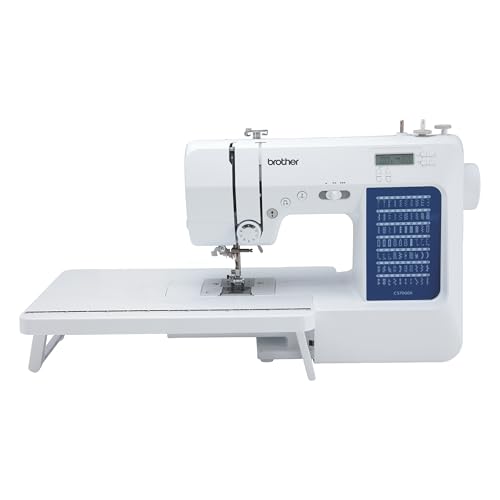
Brother CS7000X Sewing and Quilting Machine — Best Value Computerized
The CS7000X is the shrewd buyer’s Brother: 70 built-in stitches instead of 165 — but honestly, the 70 cover the techniques home sewists actually use — plus a wide table and a notably generous 10 included presser feet, more feet than the XR9550 ships with. For makers who would rather have tools than stitch-count bragging rights, this is the configuration to beat.
Strengths
- 10 included feet: the most complete tool kit per tier in this guide
- Wide table included for proper quilt support
- 70 well-chosen stitches cover real garment and quilting techniques
Trade-offs
- Decorative stitch variety is limited next to the XR9550 and SINGER 9960
- Same domestic throat limits as every machine here on king-size quilts
- LCD interface is functional rather than luxurious
| Stitches | 70 built-in |
| Feet | 10 included |
| Table | Wide table included |
| Display | LCD |
Presser feet are where sewing capability actually lives: the right foot turns a frustrating technique — a rolled hem, an invisible zip, a quarter-inch seam — into a repeatable one. Ten feet in the box means the CS7000X owner starts garment techniques that other buyers postpone until an accessory order arrives, and for quilting, the included feet plus the wide table make piecing and quilting workflows complete from the first project.
Choose between the two Brothers by philosophy: the XR9550 if you love stitch variety and decorative options, the CS7000X if you want maximum included tooling at a keener tier. Both are verified, both carry the wide table, and neither requires an immediate accessory spend to start making clothes and quilts.
The CS7000X versus XR9550 decision deserves one more angle: feet versus stitches is also a learning-style question. Newer makers benefit more from feet, because each foot unlocks a technique with a visible result; experienced makers with a foot collection already at home benefit more from the XR9550’s stitch breadth. Buy the machine that matches the drawer you already own.
Best for: Value-focused makers who prioritise included feet over stitch count / Not suited for: Decorative stitch enthusiasts wanting hundreds of options
Check the current price on Amazon

Janome JW8100 Fully-Featured Computerized Sewing Machine — Best Complete Kit
The JW8100’s verified listing is the most complete single purchase in this guide: 100 stitches, 7 buttonholes, an extension table for quilts, a hard cover, and 22 accessories. It reads like a checklist written by someone tired of accessory orders — the machine, the table, the protection and the tools arrive together.
Strengths
- 22 accessories and a hard cover: the fullest kit verified in this list
- Extension table included for quilt handling
- 100 stitches and 7 buttonholes cover the garment brief comfortably
Trade-offs
- A broad kit means some accessories will suit your crafts better than others
- Mid-tier motor class: capable, not a heavy-duty specialist
- Hard cover protects at home but this is not the lightest class machine
| Stitches | 100 built-in |
| Buttonholes | 7 |
| Table | Extension table included |
| Accessories | 22 included |
| Cover | Hard cover included |
The JW8100 suits the maker setting up a sewing space in one decision. Garment sewists get a real stitch library and seven buttonhole styles — enough for shirts through jackets — while quilters get the extension table that makes the difference between managing a quilt and fighting one. Janome’s computerized machines are valued for composed running at low speeds, which is where garment precision and quilt piecing both live.
Its honest position is the middle: not the stitch encyclopedia of the SINGER 9960, not the muscle of the heavy-duty pick below. What it offers instead is completeness — the fewest follow-up purchases in this guide — and for many home makers that is the most valuable specification of all.
The JW8100’s hard cover is worth a sentence of respect: sewing machines die by dust and by knocks, and a hard cover prevents both while making the machine storable in a shared room. Combined with its accessory breadth, the JW8100 is the pick for the maker whose sewing space is a dining table — everything packs away protected, and everything comes back out complete.
Best for: Makers equipping a sewing space in one purchase / Not suited for: Specialists wanting maximum stitches or maximum power alone
Check the current price on Amazon
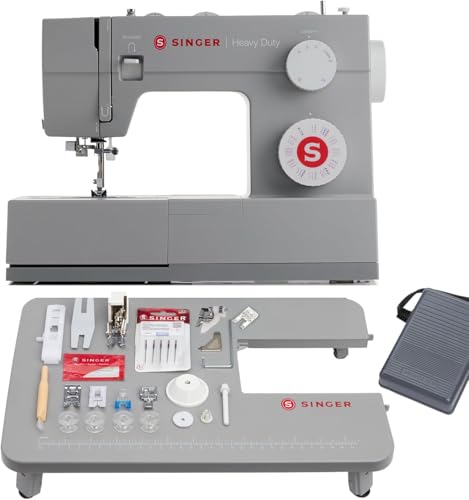
SINGER 4452 Heavy Duty Sewing Machine Bundle — Best Heavy Duty
Some makers’ “clothes and quilts” means jeans, canvas jackets, denim quilts and batting-heavy throws — work that stalls lighter machines. The SINGER 4452 Heavy Duty is the verified answer for them, and this bundle fixes the base machine’s usual gap by including an extension table and accessory kit alongside its 32 built-in stitches.
Strengths
- Heavy Duty class motor and frame feed denim, canvas and layered quilts
- Extension table included in this bundle — essential for quilt support
- Simple, mechanical-leaning controls suit makers who dislike menus
Trade-offs
- 32 stitches is a working set, not a decorative library
- Heavy-duty speed demands practice to control on delicate garment fabrics
- Fewer included feet in the bundle than the computerized picks carry
| Class | Heavy Duty |
| Stitches | 32 built-in |
| Bundle | Extension table and accessory kit included |
The Heavy Duty proposition is torque and simplicity: a strong motor, a metal frame, and controls a maker can learn in an afternoon and use for years. For garment sewing, that translates to hemming jeans without pleading with the machine, and seams through canvas and upholstery-weight fabrics. Delicate fabrics are sewable with the right needle and settings, but this machine’s heart is in the heavy work, and its speed takes a session or two to tame.
For quilts, the extension table in this bundle is what earns the 4452 its place here rather than as a garment-only pick: thick quilts need both the power to feed the sandwich and the surface to support it. Denim and t-shirt quilts — the heavy, sentimental kind — are this machine’s home ground.
Heavy Duty ownership has one non-obvious rule: slow down by gearing your technique, not by feathering the pedal — use the machine’s speed in short, deliberate runs on delicate work, and let it run freely on the long denim seams it loves. Owners who fight its pace sell these machines; owners who adapt their rhythm keep them for decades, which is the class’s entire promise.
Best for: Makers sewing denim, canvas and heavy quilts; mechanical simplicity fans / Not suited for: Delicate-fabric garment sewists wanting hundreds of stitches
Check the current price on Amazon
Comparison Table
| Pick | Badge | Key spec | Best for | Price |
|---|---|---|---|---|
| Brother XR9550 Computerized Sewing and Quilting Machine | Best Overall | 165 stitches, wide table, 8 presser feet, LCD display | Makers who sew garments and quilts in roughly equal measure | Check price |
| SINGER Quantum Stylist 9960 Computerized Sewing & Quilting Machine | Best for Garment Features | 600 stitches, extension table, 13 feet, 13 one-step buttonholes, metal frame | Garment-led makers who also quilt; shirt and jacket sewists | Check price |
| Janome 3160QDC-G Sewing and Quilting Machine with Bonus Quilt Kit | Best Quilting Bundle | Quilting-focused model with bonus quilt kit included | Quilt-led makers who want the accessories bundled from day one | Check price |
| Brother CS7000X Sewing and Quilting Machine | Best Value Computerized | 70 stitches, wide table, 10 included feet, LCD display | Value-focused makers who prioritise included feet over stitch count | Check price |
| Janome JW8100 Fully-Featured Computerized Sewing Machine | Best Complete Kit | 100 stitches, 7 buttonholes, extension table, 22 accessories, hard cover | Makers equipping a sewing space in one purchase | Check price |
| SINGER 4452 Heavy Duty Sewing Machine Bundle | Best Heavy Duty | Heavy Duty class, 32 stitches, extension table and accessory kit in bundle | Makers sewing denim, canvas and heavy quilts; mechanical simplicity fans | Check price |
How to Choose a Sewing Machine That Handles Both Garments and Quilts
A machine that sews both clothes and quilts is not a compromise machine — it is a machine whose specification covers two checklists at once. These sections give you both checklists, so you can test any model, including the six above, against the work you actually plan.
The quilting checklist: space, feed and feet
Space first: a wide or extension table supports the quilt so its weight does not drag against the needle — every pick in this guide includes one, and it should be a non-negotiable in yours. Throat space (needle to machine body) decides how much quilt you can bunch through the machine; domestic machines handle throws and most bed quilts with the section technique in our how-to, but measure your ambitions honestly.
Feed and feet follow: you want feed dogs that move layered fabric evenly, and feet for the three quilting jobs — a quarter-inch foot for piecing accuracy, a walking or even-feed foot for quilting the sandwich, and a free-motion foot if you plan meandering designs. Count these in the included kit, as this guide did, because buying them separately adds up.
The garment checklist: stitches, buttonholes and control
Garment sewing needs fewer stitches than marketing suggests, but specific ones: straight and zigzag in adjustable lengths, a stretch stitch for knits, an overcasting stitch for seam finishing, and a blind hem stitch. Buttonholes matter disproportionately — one-step automatic buttonholes, like the SINGER 9960’s thirteen, turn the hardest garment step into the most reliable one.
Control is the quiet specification: speed adjustment, needle up/down positioning and a start/stop option all make garment precision — collars, cuffs, topstitching — calmer. Computerized machines bundle these; mechanical heavy-duty machines trade them for power and simplicity. Know which side of that trade your sewing lives on.
Frame, motor and the fabrics you really sew
List the fabrics of your next five projects. Silk, lawn and jersey point to finesse machines with gentle feed and good low-speed control. Denim, canvas, coating and quilt sandwiches point to metal frames and heavy-duty motors. Most home makers sew the middle — quilting cottons, shirting, mid-weight knits — which every pick here handles, so the extremes of your list should break ties.
A metal frame is worth preferring at any tier: it holds alignment under vibration and survives decades. Both the SINGER 9960’s stated metal frame and the Heavy Duty’s class construction reflect that.
New versus accessory-complete: reading bundles
Bundles change value more than model numbers do. A machine with a wide table, a hard case and a deep foot set — the JW8100’s 22-accessory kit, the CS7000X’s 10 feet — can be the better purchase over a nominally higher model that ships bare, once you price the table and feet you would otherwise order within the month.
Read bundle listings line by line, as this guide’s reviews do: confirm the table is included rather than pictured, count the feet, and note whether the case is hard or soft. The verified listings above state these contents plainly, which is one reason they made the list.
Accessories worth buying after the machine
Once the machine is home, a short accessory list serves both crafts: a walking foot if your bundle lacks one, a quarter-inch foot with a guide, quality needles in every type your fabrics need, a second pack of bobbins (pre-wound bobbins are a garment-day luxury), and a proper machine brush and oil routine per the manual. Buy them after the first project, when you know which gaps are real.
Resist the giant generic foot sets sold cheaply online: feet must fit your machine’s shank and snap system, and a dozen ill-fitting feet teach worse habits than three correct ones. The included sets in this guide’s picks exist precisely to start you with correct fits.
Setting up a sewing space that serves both crafts
The dual-craft room needs two surfaces mentally, if not physically: the machine table, kept clear enough for the extension table and a quilt’s drape, and a cutting surface large enough for garment pattern pieces and quilt layering. Good light over the needle is non-negotiable for both crafts — most “machine problems” with stitch visibility are lighting problems.
Storage follows the project-box principle from the how-to: garment tools and quilting tools in separate, labelled homes, with the machine’s own feet in a third. The makers who sew most are not the ones with the biggest rooms; they are the ones whose setup time is five minutes instead of thirty.
Learning Curve: Your First Month With a Dual-Craft Machine
Plan the first month as tuition, in this order. Week one: seams and maintenance — straight stitching on quilting cotton, bobbin winding, cleaning, and a simple pieced block or two to learn the quarter-inch foot. Week two: a first quilted object with the table fitted — a runner or cushion — where the walking foot and section technique stop being theory. Week three: garment fundamentals on forgiving fabric — a knit top or an elastic-waist skirt — using the stretch stitches and finishing you bought the machine for. Week four: the buttonhole, practised on scraps until it bores you, then deployed on something real.
That sequence is deliberately interleaved: the crafts teach each other. Piecing teaches seam accuracy that garment sewing spends; garment finishing teaches edge control that quilting binding spends. Makers who alternate improve at both faster than specialists, which is the deepest argument for the dual-craft machine itself.
And keep the first projects small and finishable. A completed cushion and a completed skirt teach more — and encourage more — than an abandoned bed quilt and a half-sewn coat. Scale is a year-two pleasure; the machines in this guide will still be ready for it.
Throat Space, Feed Dogs and the Specifications That Actually Matter
Three specifications decide more real sewing than the stitch count on the box. Throat space — the distance from needle to the machine’s right-hand body — decides how much quilt you can pass through; measure it on any machine you consider and compare it against the quilts you genuinely plan, remembering that rolled quilts need less room than bunched ones and that the section technique shrinks the requirement further. Every domestic machine asks for that technique on bed quilts; a generous throat merely asks less often.
Feed dogs are the second: the toothed tracks under the presser foot that move fabric. More rows and a longer contact patch generally mean steadier feeding of quilt sandwiches and slippery garment fabrics alike — and the ability to drop or cover the feed dogs matters if free-motion quilting is in your plans. The listings in this guide do not all state feed specifications, which is itself a lesson: where a spec is unstated, the included feet and the machine’s class are your evidence, and owner communities for established models like these document the rest.
The third is speed control range, not top speed. Garment precision and quilting control both live at the slow end: a machine that stitches calmly at a crawl — for a collar point, a buttonhole, a quilt corner — is worth more than one with a racing top end. Heavy-duty models invert this, trading crawl for power, which is why the fabric list, repeated one final time, is the true specification sheet for this entire purchase.
Thread, Needles and the Consumables That Decide Stitch Quality
Owners blame machines for what consumables cause. Thread is the first: quality polyester or cotton thread, matched in weight to the project, produces the stitch consistency that cheap, linty thread never will — and it produces less of the fluff that clogs bobbin areas and masquerades as a tension fault. Buy thread like you buy fabric, by project, and the machine you already own will sew visibly better.
Needles are the second: they are consumables with a working life measured in hours of sewing, not years of ownership, and a dull or burred needle causes skipped stitches, pulled threads and fabric damage that get diagnosed as machine failure. The discipline is simple — a fresh needle per project, the correct type per fabric, as the how-to section sets out. Between thread and needles, most “my machine is misbehaving” episodes end without a service visit, which is why this guide spends its last section on the two cheapest items in the sewing room.
How to Set Up One Machine for Both Garments and Quilts
The dual-craft machine earns its keep when switching between crafts is a five-minute routine rather than a reconfiguration project. This is that routine.
- Fit the table for quilting, remove or keep it for garments. Slide the wide or extension table on for any quilt work so the fabric rests level with the needle plate. For garments, the table can stay — flat support helps there too — unless you need the free arm for sleeves and cuffs, in which case slide it off.
- Swap to the right foot before the project, not mid-seam. Quarter-inch foot for piecing, walking foot for quilting layers, zipper and buttonhole feet for garments. Changing feet at project boundaries keeps the wrong-foot mistakes out of your seams.
- Match needle to fabric, every time. Universal or ballpoint for knits, sharp/microtex for wovens and piecing, denim needles for heavy garment fabrics and thick quilts. A fresh needle is the cheapest stitch-quality upgrade in sewing.
- Test stitch settings on scraps of the actual project. Two minutes on offcuts of the same layers — garment fabric, or a mini quilt sandwich — lets you set tension and stitch length where mistakes are free.
- Quilt in sections on a domestic throat. For bed quilts: roll or bunch the portion passing through the throat, start quilting from the centre outward, and let the table carry the weight. Straight-line and gentle-curve designs suit domestic machines best.
- Slow down for garment precision. Use the speed control for collars, buttonholes and topstitching; reserve full speed for long quilt seams. Most computerized picks here make this a slider setting.
- Clean the bobbin area between projects. Quilting sheds lint into the bobbin case faster than garment sewing. A brush-out between projects prevents the tension mysteries that get blamed on the machine.
Keep a project box per craft — feet, needles and bobbins for garments in one, quilting feet and safety-pin basting supplies in another. The dual-craft life runs on small organisation, and the switch stays painless.
Keep a simple machine log — a notebook page per project noting fabric, needle, stitch settings and what you would change. It takes two minutes, and within a few projects it becomes your personal manual: the settings that worked on your fabrics, on your machine, in your hands. When a seam misbehaves months later, the log usually holds the answer, and it is the habit that most reliably separates makers who improve from makers who repeat.
Common Buying Mistakes
Buying for stitch count instead of included feet and table. Hundreds of stitches impress in listings; the table and the foot set decide whether quilts and garments actually get made. Price the accessories a bare machine will need.
Skipping the walking foot question. Quilting a layered sandwich without even-feed help invites puckering and drift. Confirm a walking foot is included or budget for one.
Choosing heavy-duty power for a delicate-fabric wardrobe. Torque is not finesse. If your garments are silk, lawn and jersey, a heavy-duty machine’s speed and feed will fight you.
Expecting a domestic machine to behave like a longarm. Bed quilts are absolutely possible on these machines with section technique, but competition-scale free-motion work is a different tool class. Buy for your real projects.
Ignoring buttonhole type until the first shirt. One-step automatic buttonholes are the single biggest garment-quality upgrade in this category. Check the listing for them before the shirt depends on it.
Final Recommendation
For most makers the Brother XR9550 is the balanced answer — wide table, deep stitch library, complete feet. Garment-led sewists should choose the SINGER Quantum Stylist 9960 for its buttonholes and stitch wealth; quilt-led makers, the Janome 3160QDC-G bundle or the complete-kit JW8100. Value hunters get the most included tooling from the Brother CS7000X, and heavy-fabric makers should go straight to the SINGER 4452 Heavy Duty bundle.
Whichever you choose, confirm the table and feet are in the box on the listing, and check the current price on Amazon for the exact bundle — in this category, the bundle is the product.
Budget a small reserve beyond the machine itself — needles in every type, quality thread, and the one or two feet your bundle lacks. A dual-craft machine with the right consumables outperforms a dearer machine starved of them, every single project.
Whichever machine you bring home, sew something small and finishable in the first week — a cushion, a tote, a simple skirt. Machines that make something immediately become habits; machines that wait for the perfect project become furniture. The whole point of a dual-craft machine is momentum, and momentum starts with one finished thing.
Keep researching with these related guides from our site: Best Sewing Machines For Beginners Best Quilting Machines Best Heavy Duty Sewing Machines Best Sewing Machines For Denim Best Beginner Quilting Kits
Frequently Asked Questions
Can one machine really handle both garments and quilts?
Yes — the requirements overlap more than marketing admits. A machine with a wide or extension table, a good foot set, stretch and utility stitches and proper buttonholes covers both crafts at home scale, as the six verified picks here demonstrate.
What is the most important quilting feature to look for?
The extension or wide table, followed by a walking foot for feeding the quilt sandwich evenly and a quarter-inch foot for accurate piecing. All three are checkable in a listing before you buy.
Do I need hundreds of stitches for garment sewing?
No. Garment sewing runs on perhaps a dozen core stitches — but buttonhole quality matters enormously, and decorative stitches earn their place on embellished projects. Buy for feet, table and buttonholes first, stitch count second.
Can these machines sew a king-size quilt?
With technique, yes: quilt in sections, roll the bulk through the throat, and let the table support the weight. Expect straight-line and gentle designs rather than dense free-motion, which is longarm territory.
Heavy duty or computerized — which is better for a beginner?
Computerized machines forgive more: speed control, needle positioning and automatic buttonholes shorten the learning curve. Heavy duty machines suit beginners whose projects are heavy fabrics. Match the machine to the fabric list, not the label.
How many presser feet should be included?
Enough to cover your crafts without an immediate order: for this dual brief, look for a set spanning piecing, quilting and core garment techniques. The picks here include between 8 and 13 feet, or accessory kits of equivalent breadth.
What is a walking foot and do I need one?
A walking foot feeds the top layer of fabric in step with the feed dogs below, so layered quilt sandwiches and slippery or thick fabrics move evenly instead of creeping. For quilting, it is close to essential; check whether your bundle includes one or budget for it as the first accessory.
Can I sew leather or heavy canvas on these machines?
Light leather and canvas are within reach of the heavy-duty pick with the correct needle and a test on scraps; the computerized picks handle garment-weight canvas and denim with care. Upholstery-weight production work is beyond any domestic machine’s honest brief.


