Disclosure: airfryerkitchensupply.com is reader-supported. When you buy through links on our site, we may earn an affiliate commission at no extra cost to you.
Where to buy
Every verified pick in this guide is sold through Amazon, where you can check the current price on Amazon, confirm the exact variant, and read the seller’s delivery and returns terms before you order. Start with the Kingston Brass VTDE603122R 60-Inch Alcove Acrylic Bathtub if you want the safest all-round choice, or jump to the Quick Picks table below and follow the Check on Amazon link beside the pick that matches your situation. Prices and stock move, so the listing — not this page — is the final word on both.
- Kingston Brass VTDE603122R 60-Inch Alcove Acrylic Bathtub — Check on Amazon
- WOODBRIDGE B0013 67-Inch Freestanding Acrylic Soaking Tub — Check on Amazon
- American Standard Evolution 60 x 32 Deep Soaking Tub — Check on Amazon
- Kohler Underscore 60 x 30 Alcove Bath — Check on Amazon
- Bootz Industries 60 x 30 Steel Bathtub — Check on Amazon
- Empava 59-Inch Freestanding Acrylic Soaking Tub — Check on Amazon
The best residential bathtubs are not chosen from a photograph — they are chosen from a floor plan, a drain position, and an honest answer about how you actually bathe. This guide covers the six formats that dominate real home remodels: the standard 60-inch alcove tub in acrylic, steel and premium cast-acrylic, the deep-soaking alcove, and the freestanding soakers that anchor a primary-bath renovation. Every pick was verified against live catalogue data, and every review states its drain side, material and installation type plainly, because those three facts decide whether a tub fits your bathroom at all.
Start with the constraint that eliminates half the market: your alcove, if you have one, is almost certainly 60 inches long, and your drain is on a fixed side unless you are paying to move plumbing. Freestanding tubs escape the alcove but demand floor space around them, a floor-mounted or wall-mounted filler, and a floor that carries the combined weight of tub, water and bather. The guide is organised so you can rule picks in or out on those facts in the first paragraph of each review, then spend your reading time on comfort, material and long-term care.
Material is the second decision. Acrylic is warm to the touch, light, and repairable; enameled steel is the budget workhorse, colder and louder but extremely durable in its coating; premium acrylic alcove tubs add thicker walls, integral aprons and better insulation. None of these is a wrong answer — but they suit different budgets, different bathing habits and different installation crews, and the reviews below say which household each tub is really for.
In this guide
Quick Picks
| Pick | Badge | Best for | Link |
|---|---|---|---|
| Kingston Brass VTDE603122R 60-Inch Alcove Acrylic Bathtub | Best Overall Alcove | standard alcove replacements wanting acrylic comfort at a mid tier | Check on Amazon |
| WOODBRIDGE B0013 67-Inch Freestanding Acrylic Soaking Tub | Best Freestanding Soaker | primary-bath renovations built around a centrepiece soaking tub | Check on Amazon |
| American Standard Evolution 60 x 32 Deep Soaking Tub | Best Deep Soak in an Alcove | serious soakers limited to a standard 60-inch alcove | Check on Amazon |
| Kohler Underscore 60 x 30 Alcove Bath | Best Premium Alcove | long-term owners wanting premium acrylic, clean lines and brand support | Check on Amazon |
| Bootz Industries 60 x 30 Steel Bathtub | Best Budget | rental units, flips and budget remodels needing durability per dollar | Check on Amazon |
| Empava 59-Inch Freestanding Acrylic Soaking Tub | Best Compact Freestanding | smaller primary baths wanting a freestanding soak without 67-inch demands | Check on Amazon |
If you are replacing a tub inside an existing alcove, stay in the alcove rows of the table — Kingston Brass, American Standard, Kohler and Bootz — and match your drain side before you fall in love with anything. If you are building a primary bath around the tub, the Woodbridge and Empava freestanding soakers are the centrepieces, and your real work is checking floor space and filler placement.
Depth is the comfort number most buyers ignore. A standard alcove tub holds water to roughly waist height on an average adult; a deep-soaking model lets the water reach the shoulders. If long soaks are the point of the purchase, depth and interior length matter more than exterior styling — the reviews call out both for every pick.
How These Picks Were Chosen
Tubs were shortlisted on installed reality first: standard residential dimensions, drain configurations that match common rough-ins, and materials with a track record in homes rather than hotels or showrooms. Each model was then checked for soaking depth, interior floor length — the number that decides whether your knees bend — apron and flange design for alcove installs, and whether the listing states overflow and drain inclusion honestly, since freestanding tubs often need a filler bought separately.
We weighted brands with enforceable warranties and replacement-part availability, because a tub is a 15-to-30-year fixture and a cracked acrylic shell or a failed enamel coating is a remodel, not a repair. Boutique tubs with no service network were left out regardless of styling.
Finally, we deliberately spanned the tiers: a steel budget tub, two mid-tier acrylic alcoves, a premium alcove, a deep soaker and two freestanding formats. A household replacing a rental’s tub and a household building a spa primary bath are both served, without pretending one tub can be both.
The 6 Best Residential Bathtubs

Kingston Brass VTDE603122R 60-Inch Alcove Acrylic Bathtub — Best Overall Alcove
The Kingston Brass VTDE603122R is the straightforward answer for the most common job in residential bathing: replacing a worn 60-inch alcove tub with a clean-lined contemporary acrylic one. The R in the model name is the detail that matters — right-hand drain — and a left-drain twin exists, so match it to your rough-in before ordering.
Strengths
- Standard 60-inch alcove footprint fits most remodels
- Acrylic is warm to the touch and quiet under the shower
- Contemporary styling suits updated bathrooms
Trade-offs
- Drain side is fixed — ordering the wrong hand is a costly return
- Acrylic needs non-abrasive cleaning to protect the gloss
- Faucet and drain hardware are separate purchases
Key specs: 60-inch acrylic alcove, right-hand drain, overflow holes, white
Acrylic’s advantages are felt in the first week: the surface is warm when you step in, the tub does not ring like steel under the shower, and minor scratches can be polished out rather than living with you for decades. Kingston Brass’s contemporary profile — cleaner lines than the builder-grade tubs it usually replaces — makes a modest bathroom feel deliberately remodelled rather than merely repaired.
Install it on a level, well-supported subfloor and consider a mortar bed even where the instructions allow feet-only support; the difference in flex and creak underfoot is the difference between a tub that feels solid for twenty years and one that feels hollow in two. Pair it with a tub-and-shower trim kit whose valve you can service from the front, and the whole alcove becomes maintainable without demolition.
Best for: standard alcove replacements wanting acrylic comfort at a mid tier / Not suited for: left-hand drain alcoves — choose the L variant instead
Check on Amazon — check price on Amazon for the current listing.

WOODBRIDGE B0013 67-Inch Freestanding Acrylic Soaking Tub — Best Freestanding Soaker
The Woodbridge B0013 is the renovation centrepiece: 67 inches of freestanding acrylic with a contemporary oval profile and the overflow and drain included in a brushed gold finish. It suits households converting a primary bath to a soaking-first layout and giving up the shower-over-tub combination in favour of a separate shower.
Strengths
- Generous 67-inch length for a full stretch-out soak
- Drain and overflow included — one less compatibility hunt
- Freestanding format anchors a high-end primary bath
Trade-offs
- Needs clear floor space on all sides and a floor or wall filler
- No shower-over-tub duty — plan a separate shower
- Large filled weight demands a sound floor structure
Key specs: 67-inch freestanding acrylic, brushed gold overflow and drain included
Freestanding tubs are furniture as much as plumbing, and the B0013 understands the assignment: the silhouette is clean from every viewing angle, the acrylic keeps the weight manageable for a two-person set, and including the drain and overflow in a matched finish removes the most annoying compatibility errand in freestanding installs. At 67 inches, most adults can sit with legs extended and water at shoulder height — the soak this format promises.
Before ordering, walk the room with a tape: you need comfortable clearance to clean behind the tub, a filler position that does not splash the rim, and a route into the room for a 67-inch shell through doors and turns. Households that check those three things adore these tubs; households that skip them discover the constraints during installation, which is the most expensive time to learn.
Best for: primary-bath renovations built around a centrepiece soaking tub / Not suited for: small bathrooms or shower-over-tub households
Check on Amazon — check price on Amazon for the current listing.
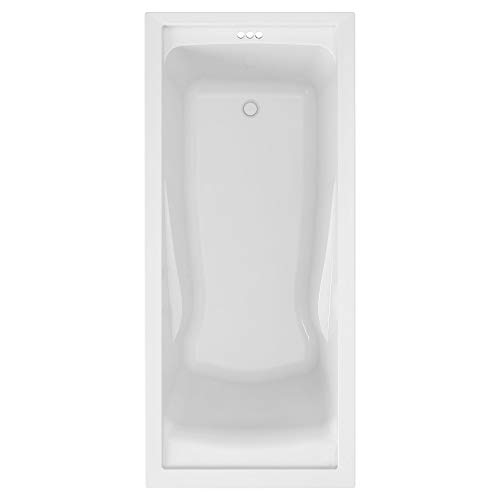
American Standard Evolution 60 x 32 Deep Soaking Tub — Best Deep Soak in an Alcove
The Evolution is the answer to a specific frustration: you love a deep soak but your bathroom only offers a 60-inch alcove. American Standard engineered this tub to soak deep within the standard footprint, with a reversible drain that eases remodel planning, and a capacity north of sixty gallons that tells you the depth is real.
Strengths
- Deep-soak water level inside a standard alcove
- Reversible drain simplifies remodel matching
- American Standard parts and warranty network
Trade-offs
- Deeper tub means a higher step-over — consider mobility needs
- Uses more water per soak than a standard tub
- Style is functional rather than sculptural
Key specs: 60 x 32 inches, deep soaking design, reversible drain, 60+ gallon capacity
Depth changes the bathing experience more than any other specification. In a standard tub an adult soaks to the waist; in the Evolution the waterline reaches the chest and shoulders, which is the difference between sitting in warm water and actually soaking. The lumbar and armrest shaping matters across a thirty-minute soak, and this is where a major manufacturer’s decades of ergonomic moulds show.
The practical cautions are honest ones: a deeper tub is a higher climb in and out — pair it with a grab bar if anyone in the household is less steady — and it asks more of your water heater. A household that takes short showers six days a week should buy the standard Kingston; a household that soaks on Sundays should buy this and never look back.
Best for: serious soakers limited to a standard 60-inch alcove / Not suited for: households needing an integral apron look — check surround plans
Check on Amazon — check price on Amazon for the current listing.
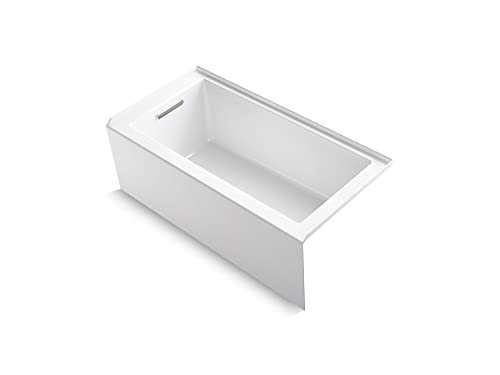
Kohler Underscore 60 x 30 Alcove Bath — Best Premium Alcove
The Underscore is Kohler’s premium answer in the standard alcove: clean geometric lines, an integral apron and flange for a tidy tile-in installation, and the build consistency of a top-tier manufacturer. This left-drain configuration suits the common layout where the drain sits at the left when facing the tub.
Strengths
- Integral apron and flange simplify a watertight alcove install
- Premium acrylic with a refined, modern profile
- Kohler’s dealer and parts network behind a decades-long fixture
Trade-offs
- Premium tier pricing within the alcove class
- 30-inch width is standard, not generous — soakers may prefer 32
- Drain side fixed at purchase
Key specs: 60 x 30 inches, integral apron and flange, left-hand drain, white
What the premium tier buys in a tub is not glamour — it is consistency: wall thickness that does not vary, an apron that sits flat against the studs, a flange that tiles cleanly, and a surface finish that stays glossy under years of non-abrasive cleaning. The Underscore’s squared, architectural lines also age well; it looks deliberate in both contemporary and transitional bathrooms.
Choose it when the remodel is a ten-to-twenty-year decision and the tub will be tiled in permanently — the cost of the fixture is small next to the cost of the tile work around it, and skimping on the shell you will demolish tile to replace is the classic false economy of bathroom renovation.
Best for: long-term owners wanting premium acrylic, clean lines and brand support / Not suited for: budget remodels — this is the premium tier of alcove tubs
Check on Amazon — check price on Amazon for the current listing.

Bootz Industries 60 x 30 Steel Bathtub — Best Budget
The Bootz steel tub is the budget workhorse of American bathrooms: porcelain-enameled steel in the universal 60 x 30 footprint, at the tier landlords, flippers and cost-conscious remodelers have bought for generations. It is not luxurious, and it does not pretend to be.
Strengths
- Lowest tier cost in a standard, always-available format
- Enamel surface is hard, glossy and easy to disinfect
- Light enough for straightforward handling during install
Trade-offs
- Steel feels cold on contact and is louder under the shower
- Enamel can chip if struck by a heavy hard object
- Shallower soak than the acrylic deep models
Key specs: 60 x 30 x 14.25 inches, enameled steel, right-hand drain, white
Steel’s virtues are economic and hygienic: the enamel is a glass-hard surface that shrugs off the cleaning regimes rental and family bathrooms actually get, and the format is so standard that every plumber and surround kit in the country fits it. Installed on a proper mortar bed — essential with steel, to kill the flex and the drumming — it serves for decades.
Its compromises are sensory. The first touch is cold, the shower is louder, and a dropped cast-iron skillet moment can chip enamel in a way acrylic would forgive. For a primary-bath you plan to soak in weekly, spend up to acrylic; for every other bathroom in the house, this tier of tub is the rational spend and the savings belong in the valve, the surround and the ventilation fan.
Best for: rental units, flips and budget remodels needing durability per dollar / Not suited for: long soakers who hate a cold surface
Check on Amazon — check price on Amazon for the current listing.

Empava 59-Inch Freestanding Acrylic Soaking Tub — Best Compact Freestanding
The Empava answers the freestanding question for smaller rooms: at 59 inches it fits bathrooms that cannot give a 67-inch tub its clearance, while keeping a genuine 15-inch deep soak, ergonomic back support, an anti-slip bottom, and the drain and overflow in the box.
Strengths
- Compact freestanding footprint for modest primary baths
- Certified construction with drain and overflow included
- Anti-slip floor and shaped backrest for long soaks
Trade-offs
- Shorter interior — tall bathers will bend their knees
- Freestanding filler still a separate purchase and placement task
- Acrylic care rules apply — no abrasive cleaners
Key specs: 59-inch freestanding acrylic, 15-inch deep soak, drain and overflow included, cUPC certified
The 59-inch class is the honest sweet spot for many real bathrooms: large enough for an adult soak with knees slightly bent, small enough to leave cleaning clearance and a place for a stool and towels. Empava’s inclusion of certification and hardware matters here — freestanding tubs from no-name sellers are where drain incompatibilities and thin shells hide, and this listing puts its credentials in the title.
As with the Woodbridge, measure the delivery route and plan the filler before the tub arrives, and dry-fit the drain connection with your plumber’s eyes on it. Do those two things and a compact freestanding tub delivers the spa-bath photograph in a room that could never host the 67-inch version.
Best for: smaller primary baths wanting a freestanding soak without 67-inch demands / Not suited for: very tall bathers who need maximum interior length
Check on Amazon — check price on Amazon for the current listing.
Comparison Table
| Pick | Badge | Key spec | Best for |
|---|---|---|---|
| Kingston Brass VTDE603122R 60-Inch Alcove Acrylic Bathtub | Best Overall Alcove | 60-inch acrylic alcove, right-hand drain, overflow holes, white | standard alcove replacements wanting acrylic comfort at a mid tier |
| WOODBRIDGE B0013 67-Inch Freestanding Acrylic Soaking Tub | Best Freestanding Soaker | 67-inch freestanding acrylic, brushed gold overflow and drain included | primary-bath renovations built around a centrepiece soaking tub |
| American Standard Evolution 60 x 32 Deep Soaking Tub | Best Deep Soak in an Alcove | 60 x 32 inches, deep soaking design, reversible drain, 60+ gallon capacity | serious soakers limited to a standard 60-inch alcove |
| Kohler Underscore 60 x 30 Alcove Bath | Best Premium Alcove | 60 x 30 inches, integral apron and flange, left-hand drain, white | long-term owners wanting premium acrylic, clean lines and brand support |
| Bootz Industries 60 x 30 Steel Bathtub | Best Budget | 60 x 30 x 14.25 inches, enameled steel, right-hand drain, white | rental units, flips and budget remodels needing durability per dollar |
| Empava 59-Inch Freestanding Acrylic Soaking Tub | Best Compact Freestanding | 59-inch freestanding acrylic, 15-inch deep soak, drain and overflow included, cUPC certified | smaller primary baths wanting a freestanding soak without 67-inch demands |
How to Choose the Best Residential Bathtubs
Begin with the room, not the catalogue. Measure the alcove or the floor area to the inch, note the drain side as you face the tub, and check the door and hallway widths the tub must travel through — a 67-inch freestanding tub that cannot make the turn into the bathroom is a lawn ornament. Then decide the bathing pattern honestly: daily showers with occasional baths point to a standard alcove; dedicated soaking points to depth; a primary-bath renovation with a separate shower unlocks freestanding.
With those three answers — space, drain, bathing pattern — the field narrows to two or three picks, and only then do material and styling deserve your attention. Buyers who reverse the order fall in love with a silhouette and then pay a plumber to move a drain, or discover the step-over height defeats the grandparent the remodel was meant to serve.
Alcove vs Freestanding: The Real Trade-Offs
Alcove tubs win on practicality: they take the shower-over-tub combination every family bathroom needs, they seal against three walls, they are the cheapest to buy and install, and every surround, door and trim kit on the market fits them. Their constraint is the fixed 60-inch box and a more utilitarian look, softened considerably by premium models like the Kohler Underscore.
Freestanding tubs win on experience and design: a deeper, longer soak, a sculptural centrepiece, and flexible placement within the room. Their costs are a separate shower, a floor or wall filler, cleaning access on all sides, and the structural check for filled weight. Neither format is better — they serve different bathrooms, and many homes sensibly have one of each.
Materials Compared: Acrylic, Steel and What Premium Buys
Acrylic is warm, quiet, light and repairable, and it holds bath heat noticeably better than steel because the material itself does not conduct warmth away from the water as fast. Its enemies are abrasive cleaners, which dull the gloss, and poor installation, which lets a flexible floor flex until it cracks. Enameled steel is the opposite profile: cold and loud, but with a glass-hard surface that tolerates real cleaning and a price that leaves budget for the rest of the remodel.
Premium tiers within each material buy consistency and support rather than magic: uniform wall thickness, flat flanges, better insulation, and a manufacturer who will still sell you a drain kit in fifteen years. On a fixture that gets tiled in, that support network is worth more than any styling detail.
Depth, Interior Length and the Numbers That Decide Comfort
Two tubs with identical exterior dimensions can fit bathers completely differently. Interior floor length — roughly the exterior length minus the slopes at each end — decides whether your legs stretch or fold, and soaking depth to the overflow decides whether the water reaches your waist or your shoulders. The American Standard Evolution exists precisely because depth inside a 60-inch shell is an engineering choice, not a given.
Step-over height is the safety counterpart: deeper tubs and taller freestanding rims are harder to enter, especially for children, older adults and anyone recovering from a knee or hip procedure. If the household includes them, prioritise a lower rim, plan a grab bar into the wall blocking during the remodel, and be honest that the deepest soaker may belong in the other bathroom.
Plumbing Realities: Drains, Fillers and Water Heaters
Drain side is determined by your rough-in, not your preference, unless you budget to move it. Alcove listings encode it in the model name or title — R and L are not decoration. Freestanding tubs add the filler question: floor-mounted fillers look best and cost most, wall-mounted spouts need the tub near a wall, and deck-mounting is impossible on most freestanding rims.
A deep soak also audits your water heater. A sixty-gallon tub filled two-thirds asks roughly forty gallons of hot water in one draw; an older 40-gallon heater will run tepid before the tub is full. If deep soaking is the plan, the heater’s capacity — or a future tankless upgrade — belongs in the remodel budget from the start, not as a cold surprise at the first bath.
Budget Tiers for a Residential Tub Remodel
At the budget tier, the Bootz steel tub plus a quality valve and a solid surround delivers a durable family bathroom, and the savings are real. The mid tier — Kingston Brass acrylic money — buys warmth, quiet and a better look for the main bathroom. Premium alcove money, as with the Kohler, buys installation consistency and long support for a tile-in job you never want to redo.
Freestanding remodels should be budgeted as a system: tub, filler, drain work, possible floor reinforcement and the separate shower the format implies. Households that budget the system enjoy the result; households that budget only the tub spend the next year compromising around it. Across all tiers, installation quality — level, supported, sealed — decides lifespan more than the badge on the shell.
How to Prepare for a Bathtub Installation
Whether you are hiring the whole job out or doing the setting yourself with a plumber for the connections, the preparation below is what separates a one-weekend success from a month of leaks and rework. It applies to every pick in this guide, with freestanding notes where they differ.
- Measure the alcove or floor space, the drain position and side, and the full delivery route — doors, stairs, turns — and write the numbers down before ordering anything.
- Photograph and measure the existing rough-in when the old tub comes out: drain location, overflow height, valve position and subfloor condition; repair any water-damaged subfloor before the new tub lands.
- Dry-fit the new tub in place and check it sits level in both directions with the rim supported as the manufacturer specifies; plan a mortar bed for steel and flexible acrylic floors.
- Match the drain and overflow kit to the tub before installation day — thread standards and depths vary, and freestanding tubs need their included or specified kits on site, not in transit.
- For freestanding tubs, fix the filler position now: floor filler rough-in, wall spout reach, and splash clearance, and confirm the floor structure carries tub plus water plus bather.
- Set the tub, connect drain and overflow, then water-test before any surround or tile closes the walls: fill to the overflow, wait, and inspect every joint from below or behind the access panel.
- Seal the rim-to-wall junction with quality sanitary silicone only after the tub is filled with water weight, so the seal is made at working load rather than unloaded.
- Keep the access panel and the tub’s model details accessible after finishing — the next plumber, possibly in fifteen years, will thank you.
A tub installed level, supported, tested and sealed at working weight will quietly outlast the rest of the bathroom. Almost every premature tub failure — flex cracks, drumming, leaks at the rim — traces back to one of those steps being rushed, which is why preparation, not the price of the shell, is the real quality decision.
Tub Surrounds, Decks and the Finish Work Around the Shell
A bathtub is never bought alone: it is bought with the surround, deck or wall finish that meets it, and the pairing decides how the bathroom looks and how it ages. Alcove tubs meet tile, solid-surface panels or budget surround kits, and the tub’s flange design — integral on the Kohler, for example — is what makes the tile junction watertight and clean. When you choose an alcove tub, choose its wall system in the same decision, and check that the tub’s apron height and the surround’s panel layout agree before anything is ordered.
Freestanding tubs meet the floor instead, and the floor becomes part of the design: large-format tile or sealed stone under a freestanding tub must be level, properly sloped to a drain if the room is built as a wet area, and finished to a standard that survives being seen up close every day, because a freestanding tub exposes its surroundings in a way an alcove never does. Budget the floor finish as part of the tub project, not as an afterthought, and the room will look like the photographs that inspired it.
Small finish decisions compound: a rim wide enough for a candle and a book, a deck edge that does not pool water, a caulk line in a colour matched to the tile rather than default white. None of these appears on a spec sheet, and all of them are noticed weekly for twenty years. The remodelers who love their bathrooms longest are the ones who sweated these junctions while the walls were still open.
Soaking Science: Heat, Buoyancy and Why Depth Wins
A bath works on the body through two simple mechanisms: warm water and buoyancy. Buoyancy unloads the joints and spine in proportion to how much of the body is submerged — which is why soaking depth, the specification this guide keeps returning to, is not a luxury metric. A waist-deep bath unloads the legs; a shoulder-deep soak unloads nearly everything, and bathers feel the difference in their backs within minutes. The deep-soak picks in this guide exist because that difference is the entire point of a soaking tub.
Heat retention is the second half of the experience. A tub of hot water loses heat through its walls and its surface; acrylic walls insulate better than steel, a smaller surface area loses less than a larger one, and a cover or a closed bathroom door keeps the room’s warmth working for the bath instead of against it. Bathers who find their soaks going tepid should suspect the material and the room before the water heater: a steel tub in a cold, draughty bathroom is fighting physics on two fronts.
Practical soaking follows from the physics: fill deep rather than wide where you can, run the water hotter than the target and let it settle, and give the bath twenty unhurried minutes — the point at which warmth and buoyancy have done their quiet work. A tub chosen for depth, installed on insulation-friendly support, in a warm room, delivers that experience nightly for decades, which is a remarkable return on decisions made in a single remodel week.
Accessibility, Ageing in Place and the Tub You Keep for Thirty Years
A residential bathtub is one of the few purchases a household routinely keeps for twenty to thirty years, which makes it worth choosing for the bodies that will use it across that whole span — including older, stiffer, less steady versions of the people choosing it today. Step-over height, rim width for sitting while swinging legs in, and wall structure that can accept a grab bar later are decisions made once, during the remodel, that decide whether the bathroom serves a household gracefully at seventy as it did at forty.
This is not an argument for buying a clinical-looking tub. It is an argument for choosing depth honestly — the deepest soaker is a joy at forty and a barrier at seventy-five if entry becomes difficult — and for putting grab-bar blocking inside the wall during any remodel, tub or no tub, because the cost is trivial while the wall is open and the benefit is permanent. The premium alcove picks in this guide, with their lower rims and standard layouts, age the most gracefully; freestanding soakers are the choice of the young and certain, and there is no shame in either when the choice is conscious.
Households planning a forever home should also weight the unglamorous virtues: a tub whose parts — drain, overflow, trim — come from a manufacturer with a decades-long parts catalogue, in a size every future plumber knows, installed where an access panel can reach the plumbing. Beauty brings a tub into a home; serviceability is what keeps it there for thirty years, and the two together are the real definition of the best residential bathtub.
Tub Surrounds, Decks and the Finish Work Around the Shell
A bathtub is never bought alone: it is bought with the surround, deck or wall finish that meets it, and the pairing decides how the bathroom looks and how it ages. Alcove tubs meet tile, solid-surface panels or budget surround kits, and the tub’s flange design — integral on the Kohler, for example — is what makes the tile junction watertight and clean. When you choose an alcove tub, choose its wall system in the same decision, and check that the tub’s apron height and the surround’s panel layout agree before anything is ordered.
Freestanding tubs meet the floor instead, and the floor becomes part of the design: large-format tile or sealed stone under a freestanding tub must be level, properly sloped to a drain if the room is built as a wet area, and finished to a standard that survives being seen up close every day, because a freestanding tub exposes its surroundings in a way an alcove never does. Budget the floor finish as part of the tub project, not as an afterthought, and the room will look like the photographs that inspired it.
Small finish decisions compound: a rim wide enough for a candle and a book, a deck edge that does not pool water, a caulk line in a colour matched to the tile rather than default white. None of these appears on a spec sheet, and all of them are noticed weekly for twenty years. The remodelers who love their bathrooms longest are the ones who sweated these junctions while the walls were still open.
Soaking Science: Heat, Buoyancy and Why Depth Wins
A bath works on the body through two simple mechanisms: warm water and buoyancy. Buoyancy unloads the joints and spine in proportion to how much of the body is submerged — which is why soaking depth, the specification this guide keeps returning to, is not a luxury metric. A waist-deep bath unloads the legs; a shoulder-deep soak unloads nearly everything, and bathers feel the difference in their backs within minutes. The deep-soak picks in this guide exist because that difference is the entire point of a soaking tub.
Heat retention is the second half of the experience. A tub of hot water loses heat through its walls and its surface; acrylic walls insulate better than steel, a smaller surface area loses less than a larger one, and a cover or a closed bathroom door keeps the room’s warmth working for the bath instead of against it. Bathers who find their soaks going tepid should suspect the material and the room before the water heater: a steel tub in a cold, draughty bathroom is fighting physics on two fronts.
Practical soaking follows from the physics: fill deep rather than wide where you can, run the water hotter than the target and let it settle, and give the bath twenty unhurried minutes — the point at which warmth and buoyancy have done their quiet work. A tub chosen for depth, installed on insulation-friendly support, in a warm room, delivers that experience nightly for decades, which is a remarkable return on decisions made in a single remodel week.
Common Buying Mistakes
Ordering the wrong drain hand
Alcove tubs are built in left-drain and right-drain versions, and the model suffix is the only difference. Stand facing your current tub: the drain side you see is the hand you need. Returns of a 60-inch tub are freight-sized problems, so check twice and order once.
Choosing by exterior length instead of interior room
A sculptural 67-inch tub with thick double walls can offer less stretch-out room than a plain 60-inch alcove. Judge interior floor length and depth to overflow — the dimensions your body actually experiences — not the showroom silhouette.
Skipping the mortar bed
Steel and acrylic tub floors flex under a bather’s weight; unsupported flex becomes drumming, then gel-coat or enamel fatigue. A mortar bed is cheap, invisible and transformative for how solid the tub feels and how long it lasts.
Forgetting the water heater in a deep-soak plan
Deep tubs draw deep hot water. If your heater is small or old, the dream soak ends lukewarm. Size the heater to the tub, or choose a standard-depth model and spend the difference elsewhere.
Buying a freestanding tub for a shower-over-tub bathroom
Freestanding tubs make poor shower enclosures: curtains wrap the shell, water escapes on all sides, and the filler is wrong for showering. If one fixture must do both duties, buy the alcove tub and soak happily in the format designed for it.
Sealing the rim before filling the tub
An empty acrylic or steel tub sits higher than a full one. Sealed empty, the joint is stretched every time the tub fills, and it fails early. Fill the tub, then seal, then let the silicone cure before draining.
Final Recommendation
For the standard residential job — a 60-inch alcove replacement — the Kingston Brass acrylic is the balanced buy, with the Kohler Underscore as the premium step for a tile-in remodel you intend to keep for decades, and the Bootz steel as the rational budget and rental choice. Soakers confined to an alcove should go straight to the American Standard Evolution and its genuine deep waterline.
Renovating a primary bath around the tub, choose between the Woodbridge 67-inch for full-length soaking in a generous room and the Empava 59-inch where the room is honest about its size. In every case, match the drain, support the floor of the tub, and test before you tile — the tub is the easy part of this purchase; the installation is the product.
Best 72 Bathtubs Best Acrylic Freestanding Bathtubs Best Alcove Deepwater Bathtubs Best Affordable Tubs Best Bathtubs For Apartments Best Air Massage Tubs
Frequently Asked Questions
What is the standard size for a residential bathtub?
The standard alcove tub is 60 inches long by 30 or 32 inches wide, and most homes are plumbed for exactly that footprint. Freestanding tubs commonly run 59 to 71 inches. Measure your space and drain position before shopping — the room decides the size, not the catalogue.
Which is better, an acrylic or a steel bathtub?
Acrylic is warmer to the touch, quieter, lighter and easier to repair, and it suits primary bathrooms. Enameled steel is cheaper and has a harder, very cleanable surface, but feels cold and is louder under a shower. Both last for decades when installed on proper support; the choice is comfort versus budget.
Can a freestanding tub replace an alcove tub?
Only if the bathroom also gains a separate shower and the floor, filler and drain are replanned for the format. A freestanding tub cannot take over shower-over-tub duty well. In a full primary-bath renovation it is a wonderful centrepiece; as a like-for-like swap it usually disappoints.
How deep should a soaking tub be?
Look at the soaking depth to the overflow, not the exterior height. Depths that let water cover an average adult’s shoulders — like the deep-soak alcove and the 15-inch-soak freestanding picks here — deliver the true soaking experience. Standard tubs soak to about the waist.
Do I need to move plumbing to change my bathtub?
Not if the new tub matches the existing drain side and rough-in dimensions, which is why this guide states drain configuration in every review. Moving a drain is possible but adds plumbing cost and floor work, so matching the existing layout is the default smart move.
How long should a residential bathtub last?
A quality acrylic or enameled steel tub, installed level on proper support and cleaned without abrasives, should serve fifteen to thirty years. Most early failures come from installation — flex, poor sealing, untested drains — rather than from the tub itself.


