Disclosure: airfryerkitchensupply.com is reader-supported. When you buy through links on our site, we may earn an affiliate commission at no extra cost to you.
Where to buy
Regular sized means the standard sixty-inch alcove that most bathrooms were framed for — and the good news is that this is the most competitive, best-understood corner of the bathtub market. Every linked pick below was confirmed as a current Amazon listing through Amazon data before earning a link, and the shortlist covers the honest spread of the category: cast iron that outlives the house, Americast and steel for sane budgets, and modern acrylic for depth and comfort.
- Kohler Villager 60-Inch Cast Iron Alcove Bath — Check the current price on Amazon
- American Standard Princeton 60 x 30 Americast Bath, Left Drain — Check the current price on Amazon
- WOODBRIDGE 60-Inch Acrylic Alcove Soaking Bathtub BA6030L — Check the current price on Amazon
- Kingston Brass Aqua Eden 60 x 36 Alcove Tub — Check the current price on Amazon
- Kohler Underscore 60 x 30 Alcove Bath — Check the current price on Amazon
- Bootz Industries Steel Bathtub, Right-Hand Drain — Check the current price on Amazon
The best regular sized alcove bathtubs all answer the same brief — sixty inches long, thirty to thirty-six inches wide, three walls, one apron front — and yet they are not interchangeable at all. Inside that standard footprint, the material decides how the tub feels underfoot, how long it keeps bathwater warm, how it sounds when the shower runs, and whether it is still presentable in twenty years or quietly flexing and creaking in five. Regular sized is a blessing for a renovator: your rough-in, your drain position and your wall framing almost certainly already suit it, so the entire decision can go on quality rather than geometry.
That is where this guide spends its attention. The six picks span the real material spectrum of the standard alcove: enamelled cast iron at the top, the engineered Americast and porcelain-steel options in the middle, and acrylic — the modern default — in several depths and widths. Each is a tub a plumber will install without sighing, from makers whose replacement parts and reputations will still exist when you need them.
One framing note before the picks: ‘regular sized’ also means the tub is the shower for most households. Judge these as shower bases as well as baths — floor grip, flat standing area, wall flange for tiling, and how the material takes daily shower traffic matter as much as soaking depth. A tub that is a lovely bath and a miserable shower will be resented three hundred days a year.
It is also worth saying what regular sized is not: it is not the small-tub compromise of a studio flat, and it is not the six-foot soaker of a spa bathroom. It is the size the housing stock was built around, which means every maker’s best engineering, every plumber’s deepest experience and every replacement part in the supply chain are aimed at exactly the footprint you already own.
In this guide
Quick Picks
- Kohler Villager 60-Inch Cast Iron Alcove Bath — Best Overall. The benchmark regular alcove tub: enamelled cast iron, a wide flat ledge, and a service life measured in decades rather than product cycles. — Check price on Amazon
- American Standard Princeton 60 x 30 Americast Bath, Left Drain — Best Mid-Range. Americast engineering — steel-backed, enamel-surfaced, far lighter than iron — with an above-floor rough-in that forgives imperfect plumbing. — Check price on Amazon
- WOODBRIDGE 60-Inch Acrylic Alcove Soaking Bathtub BA6030L — Best Modern Acrylic. A contemporary acrylic soaker with clean rectangular lines, an included pop-up drain, and the comfortable moulded shape modern bathers expect. — Check price on Amazon
- Kingston Brass Aqua Eden 60 x 36 Alcove Tub — Best Wide Option. The extra-wide regular: sixty long but thirty-six wide, turning a standard alcove into a genuinely roomy bath for broader shoulders and shared kids’ baths. — Check price on Amazon
- Kohler Underscore 60 x 30 Alcove Bath — Best Premium Acrylic. Kohler’s clean-lined acrylic alcove tub with an integral flange and apron — the premium, design-led take on the standard sixty-inch brief. — Check price on Amazon
- Bootz Industries Steel Bathtub, Right-Hand Drain — Best Budget. The honest budget staple: porcelain-enamelled steel, light, standard in every dimension, and the tub behind a million perfectly good bathrooms. — Check price on Amazon
How These Picks Were Chosen
Every pick is a true standard alcove: sixty inches in length, three-wall installation with an integral or fitted apron and a proper tiling flange, in left- or right-hand drain variants. Models were excluded if the drain position was exotic, if the apron was a flimsy afterthought, or if the maker’s specification for floor support and levelling was vague — alcove tubs fail at installation details, not at showroom inspection.
Within that frame, tubs were ranked on the material virtues that matter over decades: enamel or surface durability, rigidity underfoot, heat retention for bathers, weight the floor and the installer must handle, and the honesty of the soaking depth once the overflow height is accounted for. Advertised depth is measured to the rim; the water depth to the overflow is the number your bath actually gets, and the reviews below treat it that way.
Finally, each tub was checked for the unglamorous paperwork of a long life: a published specification, a real warranty, and drain and overflow assemblies that can be sourced without archaeology. A built-in fixture is a thirty-year relationship, and the makers represented here are the ones still answering the phone at year twenty.
The 6 Best Regular Sized Alcove Bathtubs

Kohler Villager 60-Inch Cast Iron Alcove Bath — Best Overall
The Villager is the tub builders name when a customer says they never want to think about the bathtub again. Cast iron gives it a planted, silent solidity — no flex, no drum-like shower noise — and the enamel surface shrugs off decades of cleaning. The four-inch ledge is a small design decision with daily consequences: bottles, a razor and a child’s bath toys all have somewhere to be that is not the floor of the tub.
Strengths
- Cast iron rigidity — zero flex and a quiet, solid shower floor
- Enamel surface durability measured in decades
- Wide ledge genuinely improves daily shower storage
Trade-offs
- Very heavy — a two-person-plus install and a floor that must be sound
- Cast iron costs more than every other material here
- Enamel can chip if struck hard with metal; chips are repairable but visible
Key specs: Cast iron, integral apron and tiling flange, wide rim ledge, right-hand drain in this variant.
Heat retention is the cast iron party trick bathers notice: the tub’s mass takes the chill off the water’s edge and the bath stays comfortable noticeably longer than in a thin-walled tub. Under a shower, the Villager feels like standing on the building itself. These are not thrills; they are the daily texture of a bathroom for the next thirty years, which is the correct timescale for judging a built-in tub.
Choose the drain hand to match your existing rough-in — this listing is the right-hand variant — and budget for the install help its weight demands. For a forever-home renovation, this is the default answer and the one the rest of the list is measured against.
Best for: forever-home renovations and anyone who bathes often / Not suited for: weight-restricted floors or a one-person DIY install
Check the current price on Amazon

American Standard Princeton 60 x 30 Americast Bath, Left Drain — Best Mid-Range
The Princeton’s Americast construction is the thoughtful middle path: a porcelain enamel surface bonded to a steel and composite body that keeps much of cast iron’s solidity and quiet at a fraction of the weight. The above-floor rough-in is its installer-friendly signature — the drain assembly sits above floor level, which forgives the slightly-off plumbing that real renovations, unlike brochures, always contain.
Strengths
- Solid, quiet feel without cast iron weight
- Above-floor rough-in eases retrofit installations
- Enamel surface cleans and wears like a premium tub
Trade-offs
- Still heavier than acrylic or plain steel tubs
- Americast is one maker’s system — fewer direct equivalents
- Surface care should follow enamel rules, not plastic-tub habits
Key specs: Americast construction, above-floor rough-in design, built-in overflow, left-hand drain.
In use, the Princeton fools most people into guessing cast iron: the floor does not flex, the shower does not boom, and the bath keeps its warmth respectably. For a renovation where the floor or the budget says no to iron but the household says no to a drum-like steel tub, this is precisely the compromise engineered for the job.
The left-drain variant here suits the most common bathroom layouts; confirm your rough-in side before ordering, as with every tub in this guide. Plumbers like this tub, and a tub your plumber likes gets installed carefully — an underrated virtue.
Best for: retrofit renovations wanting iron-like feel without iron weight / Not suited for: buyers set on the deepest soaking profile
Check the current price on Amazon

WOODBRIDGE 60-Inch Acrylic Alcove Soaking Bathtub BA6030L — Best Modern Acrylic
The Woodbridge represents what most buyers picture today: glossy acrylic, a rectangular modern profile, and a moulded interior shaped for an actual reclined human rather than a straight-sided box. Acrylic’s warmth to the touch is its quiet advantage — the tub never feels cold at first contact — and its light weight makes it the easiest full-size tub here to get up stairs and into the alcove.
Strengths
- Warm-to-touch acrylic and a comfortable moulded interior
- Light weight simplifies delivery and installation
- Drain and overflow included — one less compatibility hunt
Trade-offs
- Acrylic needs non-abrasive cleaning to keep its gloss
- Less massive feel than iron or Americast underfoot
- Modern styling suits contemporary bathrooms more than period ones
Key specs: Acrylic construction, integral apron, left-hand drain, chrome pop-up drain and overflow included.
Depth is the honest question with modern acrylics, and this class of 60-inch soaker answers it well: the interior is shaped to put the water where the bather is, so a standard footprint delivers a more luxurious soak than the old straight tubs. Under the shower it is perfectly serviceable, with the slight give acrylic always has compared to iron — noticeable in the first week, forgotten by the second.
For a contemporary bathroom refresh on a normal budget, this is the shape of the market’s centre of gravity: good-looking, comfortable, easy to install, and easy to live with if you clean it with the soft cloth it asks for.
Best for: modern bathroom refreshes and comfort-first bathers / Not suited for: households that clean everything with abrasive scouring pads
Check the current price on Amazon

Kingston Brass Aqua Eden 60 x 36 Alcove Tub — Best Wide Option
Regular sized fixes the length at sixty inches, but width is where the comfort hides. At thirty-six inches wide, the Aqua Eden gives shoulders and elbows room that thirty-inch tubs cannot, and it transforms bathing two small children from a negotiation into a pleasure. If your alcove framing allows the extra width — many do, since the wall studs, not the tub, set the limit — this is the upgrade that changes the bath rather than merely renewing it.
Strengths
- Six extra inches of width is a transformation, not a trim
- Roomy for larger bathers and for bathing children
- Acrylic keeps the big tub manageable in weight
Trade-offs
- Confirm the alcove truly fits 36 inches before ordering
- Larger water volume per bath than a 30-inch tub
- Wide rim leaves less ledge space at the sides
Key specs: Acrylic construction, 60 x 36 inch footprint, left-hand drain, integral apron.
Bathers who have only ever known thirty-inch tubs underestimate width because length gets the headlines. In practice, width is what lets you settle rather than perch. The Aqua Eden’s interior uses its inches honestly, with a bathing well that feels closer to a small soaking tub than to the standard rental rectangle.
Measure twice — the alcove’s finished width after tile backer, not the rough framing — and if the inches are there, this is the pick that makes guests ask what is different about your bathroom. The answer is six inches, correctly spent.
Best for: bigger bathers, parents bathing kids, comfort-led renovations / Not suited for: alcoves that measure a true 30 inches finished
Check the current price on Amazon
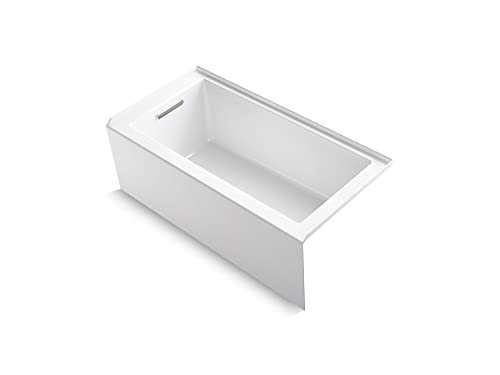
Kohler Underscore 60 x 30 Alcove Bath — Best Premium Acrylic
The Underscore is the designer’s regular tub: crisp lines, a clean integral apron, and proportions that make a standard bathroom look considered rather than defaulted. Kohler’s acrylic and the tub’s moulded geometry give a comfortable, slightly reclined soak, and the integral flange makes the tile junction neat and waterproof when installed as intended.
Strengths
- Clean contemporary design from a top-tier maker
- Integral flange makes tiling junctions straightforward
- Comfortable moulded bathing well in a standard footprint
Trade-offs
- Premium positioning among acrylic 60-inch tubs
- Drain assembly is a separate consideration on this model
- Acrylic care rules apply — soft cloths, no abrasives
Key specs: Acrylic construction, integral apron, integral tiling flange, left-hand drain.
What the premium buys here is refinement rather than size: edges that meet the tile cleanly, a surface that holds its gloss, and an interior shape refined by a maker who has moulded a great many tubs. In a bathroom where the tub apron is the largest single visual surface — which is most regular bathrooms — that refinement is on display every day.
Pair it with fixtures from the same design language and the standard alcove stops looking standard. For a main-bathroom renovation with a design budget, this is the acrylic to beat.
Best for: design-led main bathroom renovations / Not suited for: tight budgets — the Woodbridge covers the acrylic brief for less outlay
Check the current price on Amazon

Bootz Industries Steel Bathtub, Right-Hand Drain — Best Budget
Every category needs its honest floor, and in regular alcove tubs it is the enamelled steel Bootz. It is light enough for one installer, standard enough for any plumber, and durable enough that examples serve for decades in rental housing — the harshest testing ground in domestic life. The trade is feel: steel flexes and rings a little where iron is silent, and the bath sheds heat faster.
Strengths
- Lowest-cost route to a genuine, standard, warrantied tub
- Light weight — the easiest install in this guide
- Enamelled steel durability proven in rental housing at scale
Trade-offs
- Thinner feel underfoot and a livelier shower sound than iron
- Bathwater cools faster than in insulated or iron tubs
- Basic interior shape — a bath, not a soaking experience
Key specs: Porcelain-enamelled steel, 60 x 30 inch standard footprint, right-hand drain.
Judge this tub by its brief and it is excellent: a replacement for a damaged tub in a rental, a first home renovated on a real budget, a bathroom where the shower matters and the bath is occasional. Its shallower profile even suits households bathing small children, where a deep soaker is a liability rather than a luxury.
Spend the savings on the things that outrank tub material in daily happiness — a good shower valve, proper waterproofing, decent tile — and the Bootz bathroom will serve contentedly for years. It is the correct tub far more often than snobbery admits.
Best for: rentals, first homes and budget renovations / Not suited for: soaking enthusiasts — step up to acrylic depth or iron
Check the current price on Amazon
Comparison Table
| Pick | Badge | Key spec | Best for |
|---|---|---|---|
| Kohler Villager 60-Inch Cast Iron Alcove Bath | Best Overall | Cast iron, 60 x 30 in, integral apron, right-hand drain | forever-home renovations and anyone who bathes often |
| American Standard Princeton 60 x 30 Americast Bath, Left Drain | Best Mid-Range | Americast, 60 x 30 in, above-floor rough-in, left drain | retrofit renovations wanting iron-like feel without iron weight |
| WOODBRIDGE 60-Inch Acrylic Alcove Soaking Bathtub BA6030L | Best Modern Acrylic | Acrylic, 60 x 30 in, left drain, pop-up drain included | modern bathroom refreshes and comfort-first bathers |
| Kingston Brass Aqua Eden 60 x 36 Alcove Tub | Best Wide Option | Acrylic, 60 x 36 in, left drain, wide interior | bigger bathers, parents bathing kids, comfort-led renovations |
| Kohler Underscore 60 x 30 Alcove Bath | Best Premium Acrylic | Acrylic, 60 x 30 in, integral apron and flange, left drain | design-led main bathroom renovations |
| Bootz Industries Steel Bathtub, Right-Hand Drain | Best Budget | Enamelled steel, 60 x 30 in, right-hand drain | rentals, first homes and budget renovations |
How to Choose the Best Regular Sized Alcove Bathtubs: Material Is the Decision
Cast iron, Americast, acrylic, steel — in that order of mass
Material decides almost everything that matters in a built-in tub, because you will not be changing it when tastes change. Cast iron is the permanence play: rigid, quiet, warm-holding, heavy and priced accordingly. Americast keeps the enamel surface and much of the solidity at manageable weight. Acrylic is the comfort-and-design play: warm to touch, mouldable into real soaking shapes, light, and dependent on gentle cleaning. Enamelled steel is the budget play: honest, light, proven, and livelier underfoot. None is a mistake; each is a different allocation of the same renovation money.
Depth means water depth, not rim height
Specifications list the tub’s height to the rim; your bath fills to the overflow, several inches lower. Compare soaking depth — floor to overflow — between models, and remember width quietly adds as much comfort as depth. A 36-inch-wide standard tub can feel more luxurious than a deeper 30-inch one, because the bather can actually settle into the water rather than sit in a narrow channel of it.
The drain hand is not a detail
Left and right drain are not preferences; they are dictated by your existing rough-in, and moving a drain is a plumbing job that dwarfs any price difference between tubs. Confirm which side your drain sits on — judged by looking at the alcove from outside, standing as if about to step in — before ordering anything, and treat ‘reversible drain’ claims as a question to verify, not an assumption.
The Shower Test: Judging an Alcove Tub by Its Day Job
Most alcove tubs host five showers for every bath, so judge the floor as a shower base. A wide, flat standing area with a slip-resistant texture beats a narrow, curved soaking floor for daily use, and this is where some deep, sculpted soakers quietly lose points. Check the ledge too: the rim is your shampoo shelf, and the Villager’s wide ledge exists because that shelf matters every single morning.
Wall junctions decide the bathroom’s lifespan more than the tub does. An integral tiling flange, installed level and sealed as the maker directs, is what keeps shower water out of the wall for thirty years. Whichever pick you choose, the installation quality around it — level, supported under the floor of the tub, sealed at every junction — will matter more than the badge on the apron.
Budgeting a Regular Alcove Replacement Honestly
The tub itself is often the smallest line in an alcove replacement. Valves, drain assemblies, backer board, waterproofing, tile, and the labour of a careful installer surround it, and the old tub’s removal and disposal can surprise the unprepared. This is why the material decision should be made calmly: stepping from steel to acrylic, or acrylic to iron, changes the tub line significantly but the project total modestly — while skimping on waterproofing or installation to fund a fancier tub is the one trade this project punishes for decades.
Get the unglamorous lines priced first — valve, drain, flange, support, sealing — and then choose the best tub the remainder honestly buys. A household that does it in that order ends with a bathroom that feels premium everywhere it is touched, which is everywhere that matters.
Weight, Floors and the Delivery Nobody Plans For
A cast iron tub can weigh as much as three adults, and it must travel from the kerb, possibly up stairs, through doorways and into an alcove — before a drop of water is involved. Measure the route, not just the alcove: door widths, stair turns, and the bathroom door itself. Floors matter too; a sound, level subfloor is a precondition for iron and good practice for everything, since a tub that rocks will crack its seals and eventually its surface.
Acrylic and steel forgive all of this, which is a genuine part of their value in upstairs bathrooms and older houses. The correct question is not which material is best in the abstract but which your house, your route and your installer can receive gracefully. A Villager that cannot reach the bathroom is worth less than a Princeton installed beautifully.
Keeping Each Material at Its Best
Enamel — on iron, Americast or steel — wants non-abrasive cleaners and prompt attention to chips, which are small repairs if sealed early and rust invitations if ignored. Acrylic wants soft cloths and ordinary bathroom cleaners, and repays them by holding its gloss; its scratches, unlike enamel chips, can usually be polished out, which makes acrylic the forgiving surface for households with children and dropped bottles.
All tubs share two enemies: standing water at the seals, which is a maintenance issue, and grit underfoot, which grinds any surface over years. A rinse after sandy beach days and a seal inspection each year will keep any pick in this guide presentable for a very long time. The material sets the ceiling; the household’s habits decide how close to it the tub lives.
When Regular Sized Is Not the Answer
Honesty requires naming the cases where the standard alcove is the wrong brief. If nobody in the household ever bathes, a walk-in shower converts the same footprint into a larger, more accessible daily experience, and the tub’s resale argument has weakened with every passing decade. If the bather is tall, sixty inches is a knees-up compromise that a 66- or 72-inch alcove — where the framing allows — genuinely solves.
For everyone else — which is most households, most of the time — regular sized remains the sweet spot: the cheapest footprint to buy for, the easiest to install, the simplest to replace in thirty years, and, in the materials above, entirely capable of feeling luxurious. Standard dimensions are not a limitation the market tolerates; they are a competition it has perfected.
Alcove Tubs and Ageing in Place: Planning Thirty Years Ahead
A regular alcove tub is often chosen at exactly the life stage when thinking ahead pays most. If this renovation is meant to serve into retirement, the decisions made around the tub matter as much as the tub: blocking inside the walls for future grab bars costs almost nothing during a renovation and a fortune afterwards; a hand shower on a slide bar serves a seated bather, a child and a dog with equal grace; and a tub with a wide, flat ledge and a lower step-over height quietly extends the years the bathroom works unaided.
Among the materials, consider the bather of the future as well as the present. A lower-profile steel or standard acrylic tub is kinder to climb into than a deep soaker; a textured floor is worth more than a sculptural one; and a thermostatic valve that cannot scald is the single most valuable fitting in an ageing-in-place bathroom. None of this diminishes the room today — it simply means the standard alcove you install now will not need to be ripped out at the exact moment renovation is hardest to face.
What the Warranty and the Weight Tell You
Read a tub’s warranty as the maker’s own actuarial judgement. Long surface warranties cluster on cast iron and quality acrylic because those surfaces, correctly kept, genuinely last; short warranties on thin steel tell the same story from the other end. Weight is the other honest specification: mass in a tub is material, and material is rigidity, quiet and heat retention. When two tubs share a footprint and one weighs three times the other, the heavier one is not inefficient — it is made of more bathroom.
That said, specifications end where installation begins. A premium tub installed out of level, unsupported beneath its floor, will underperform a budget tub installed beautifully for its entire life. If the budget forces a choice between the next material up and a better installer, choose the installer every time; the finest Villager in the world cannot compensate for a rocking alcove, and a Bootz set true and solid will serve in silence for decades.
Pairing the Tub With Valves, Showers and Tile
The tub is one component in a wet system, and the standard alcove rewards standard thinking. A pressure-balanced or thermostatic shower valve protects every bather from the flush-surge scald; a diverter and hand shower add the flexibility that makes a tub-shower combination genuinely versatile rather than a compromise; and tile or panel choices above the flange should be made for cleaning reality — large formats and quality grout in the splash zone — rather than for the photograph alone.
Colour discipline helps the regular bathroom more than any single fitting: a white tub, white or pale walls and one accent carried in towels and accessories will look intentional in any of the six picks here, and it future-proofs the room against the day the accent changes. The tub is the room’s largest fixed colour commitment; keeping it white is not caution, it is strategy.
Resale, Rentals and the Standard Size Advantage
A regular alcove tub is the one bathroom fixture nobody has to explain to a future buyer, a tenant or a valuer. Sixty-inch alcoves are the expected format in family housing, and a sound, clean, standard tub in a sensible material reads as a bathroom that has been maintained rather than a project that has been started. For rental properties the calculus sharpens further: enamelled steel and Americast survive tenant turnover with minimal ceremony, acrylic rewards a gentler tenancy, and cast iron simply removes the tub from the landlord’s worry list for a generation.
This is also why exotic sizes and shapes are a false economy in ordinary housing. The standard tub can be replaced in thirty years by one person with a catalogue; the unusual tub must be hunted. Buying regular sized is buying the right to an easy future decision, and in housing, easy future decisions are a form of wealth.
How to Measure and Prepare for a Regular Alcove Tub Replacement
Most alcove replacements succeed or fail before the new tub arrives. An hour with a tape measure and a torch prevents the two classic disasters: a tub that does not fit the finished alcove, and a drain on the wrong side.
- Measure the alcove stud-to-stud for length, then subtract the finished wall build-up — backer board and tile — to get the true finished length and width the tub must fit.
- Confirm the drain side by standing outside the alcove facing it: drain on your left is a left-hand tub, on your right is right-hand. Photograph the existing drain and overflow for your plumber.
- Check the floor: it must be level and sound. Sight along a long level in both directions and note any slope the new tub’s levelling will need to absorb.
- Measure the delivery route — front door, hall, stairs, bathroom door — against the new tub’s largest dimension, especially for cast iron.
- Decide the wall finish meeting: confirm the tub has an integral tiling flange or plan the flange kit, and order the drain and overflow assembly that matches the tub’s drain hand.
- Arrange help and timing: cast iron needs at least two strong people and the old tub’s removal planned before the new one leaves its packaging.
- Dry-fit mentally with your plumber: valve height, spout position and any grab-bar blocking in the walls are ten-minute decisions now and weekend-long problems later.
With those checks done, installation is the routine job plumbers price keenly because the standard alcove holds no surprises. Keep the old tub until the new one is in the room and inspected — the only unrecoverable error in this project is a damaged new tub discovered after the old one has left.
While the walls are open, take photographs of everything: stud positions, valve and pipe runs, blocking for future grab bars, the flange and its sealing. Label the photos with the room and date and keep them with the house paperwork. Every future job in this bathroom — a leaking valve, a new rail, a grab bar for a parent — becomes faster and cheaper the day those photographs exist, and they cost four minutes during the one week the walls are open.
Common Buying Mistakes
Ordering the wrong drain hand
It happens constantly and it is entirely preventable. The drain side is judged facing the tub from outside the alcove. Write it down, photograph it, and check it against the order before paying — a right-hand tub in a left-hand bathroom is a very heavy ornament.
Measuring the rough alcove instead of the finished one
Tile and backer board consume an inch or more of the space the studs suggest. A tub chosen against rough measurements can arrive physically unable to enter its own alcove. Measure finished, or measure rough and subtract honestly.
Ignoring the delivery route for cast iron
A 300-pound-class tub that cannot turn on the stairs is a logistics problem no installer can charm away. Measure the route with the same care as the alcove, and be honest about what your staircase allows before falling for iron.
Skimping on support and levelling to save an hour
A tub floor that flexes because it was never properly bedded and levelled will telegraph its complaint for decades — creaks, seal failures, surface stress. The bedding step is invisible in the finished room and decisive in every year that follows.
Choosing soaking depth for a shower household
A deep, narrow, sculpted soaker is a worse daily shower than a shallower tub with a flat floor and a wide ledge. If baths are monthly and showers are daily, buy for the showers and let the bath be good rather than theatrical.
Letting the showroom bath decide for a shower household
Showrooms sell the soak: you sit in a dry tub in your clothes and imagine candles. Home sells the shower: five mornings a week, half awake, reaching for bottles on the ledge. Before ordering, stand in the tub if you can, mime the shower, check where bottles would live and how the floor feels in socks. The tub that wins that test is the one that will still please you in year five.
Forgetting the overflow and drain finish until the end
The drain and overflow are the only metal visible inside the tub, and a mismatched finish cheapens the whole installation for the price of a sandwich. Order them with the tub, in the finish of the room’s other hardware, and confirm whether your chosen model includes them — some picks here do, others assume you will choose your own.
Final Recommendation
For a forever bathroom, the Kohler Villager remains the answer the trade gives, and the American Standard Princeton is its sensible understudy where weight or budget objects. Modern acrylic splits by taste: the Woodbridge for value and shape, the Underscore for design polish, and the wide Aqua Eden for the single most effective comfort upgrade in a standard footprint. The Bootz steel tub holds the budget line with honour. That is the whole project in seven words, and every pick above rewards it.
Measure the alcove finished, confirm the drain hand, plan the delivery route — then choose the material your household will enjoy daily. In a standard footprint, you are spoilt for genuinely good answers.
Whichever material you land on, you are buying from the most competitive shelf in the bathroom — and that competition is exactly why a standard alcove, chosen well, can serve a household superbly for decades.
Measure twice, order once, and enjoy the bath.
- Kohler Villager 60-Inch Cast Iron Alcove Bath (Best Overall) — Check the current price on Amazon
- American Standard Princeton 60 x 30 Americast Bath, Left Drain (Best Mid-Range) — Check the current price on Amazon
- WOODBRIDGE 60-Inch Acrylic Alcove Soaking Bathtub BA6030L (Best Modern Acrylic) — Check the current price on Amazon
- Kingston Brass Aqua Eden 60 x 36 Alcove Tub (Best Wide Option) — Check the current price on Amazon
- Kohler Underscore 60 x 30 Alcove Bath (Best Premium Acrylic) — Check the current price on Amazon
- Bootz Industries Steel Bathtub, Right-Hand Drain (Best Budget) — Check the current price on Amazon
Related reading on this site: Best Alcove Tubs Under $1000, Best Bathtubs For Apartments, Best Cast Iron Bathtubs, Best Soaking Tubs, Best Bathtub Faucets, Best Shower Heads For Bathtubs
Frequently Asked Questions
What is the standard size for an alcove bathtub?
Sixty inches long by thirty inches wide is the classic regular size, with thirty-two and thirty-six inch widths as the common roomier variants. Height and soaking depth vary by model — always compare the water depth to the overflow, not the rim height, when judging how a tub will actually bathe.
Which tub material lasts the longest?
Enamelled cast iron has the longest track record, routinely serving for decades with its original surface. Americast and enamelled steel follow, and acrylic lasts very well when cleaned non-abrasively. In practice, installation quality and cleaning habits move a tub’s lifespan as much as its material does.
Can I replace a steel tub with a cast iron one in the same alcove?
Usually yes dimensionally — the standard footprint is shared — but the floor must be sound and level, the delivery route must physically allow it, and you will need serious help to move it. Many renovators choose Americast as the upgrade that captures most of the iron feel without the logistics.
How do I know if I need a left or right drain tub?
Stand outside the alcove facing the tub, as if about to step in. The side the drain sits on is the hand of the tub you need. Match your existing rough-in unless you are paying to move the plumbing — moving a drain costs far more than any difference between tubs.
Is a 36-inch-wide tub worth it over a 30-inch?
For bathers, very often yes: width is the dimension that lets you settle into the water, and it transforms bathing children. The conditions are that your finished alcove genuinely measures for it and that you accept a larger fill volume per bath. Measure finished width before falling in love with the idea.
Do acrylic tubs flex too much?
Quality acrylic tubs, properly bedded and supported at installation, feel firm in normal use, with slightly more give than iron that most users stop noticing within weeks. Flex problems are almost always installation problems — an unsupported floor — rather than a verdict on the material itself.
How long does a regular alcove tub replacement take?
For a like-for-like standard alcove with no surprises in the walls or floor, the tub work itself is typically a day or two within a wider bathroom project; tiling and finishing set the real calendar. The surprises — rot, moved plumbing, out-of-level floors — are what extend timelines, which is why the measuring and inspection steps in this guide happen before the old tub comes out.
Can one person install a regular alcove tub alone?
With acrylic or steel, a careful DIYer with plumbing experience can manage, though a second pair of hands makes the setting and levelling far easier. Cast iron is a firm no for solo work — its weight demands at least two people and punishes improvisation. Whichever material you choose, the levelling and bedding stage is where help matters most.


