The best pressure cookers turn tough cuts tender and weeknight dinners fast. By cooking under pressure, they cut cooking times dramatically: a stew that takes hours on the hob can be ready in under an hour, and dried beans go from hard to creamy without an overnight soak. Whether you choose an electric multi-cooker with presets or a classic stovetop model, a good pressure cooker earns its place by saving time without sacrificing flavour. The six models below are the strongest choices available through the site catalogue right now.
Pressure cookers suit cooks who want real food on a busy schedule. An electric model with presets handles the timing for you, while a stovetop model gives you direct control over the heat. Both cook beans, grains, stews, braises and stocks faster than any other method, and both keep more flavour in the pot because the cooking liquid stays sealed inside. Every model below is a genuine pressure cooker, verified against the product catalogue with brand and model details matched before any link was added.
Before you buy, think about capacity and type. A 6-quart cooker suits most households, while a 3-quart model suits one or two people and an 8-quart model suits batch cooking. Electric cookers are easier for beginners, while stovetop cookers heat faster and last longer. The comparison below weighs capacity, safety features, controls and everyday practicality, so you can choose the cooker that fits your kitchen.
Pressure cooking also changes how you shop. Tough, cheaper cuts of meat become tender under pressure, dried beans and lentils cook quickly without soaking, and stocks that once took all day are ready in an hour. A pressure cooker pays for itself by making inexpensive ingredients taste like expensive ones, and by cutting the time a proper meal takes on a busy evening.
Pressure cooking also saves energy. A pot that cooks in twenty minutes uses far less fuel than one that simmers for three hours, and the sealed lid keeps heat and moisture in the kitchen rather than letting them escape. For a household that cooks daily, that saving adds up over a year, and it is one more reason a pressure cooker earns its place in a busy kitchen.
In this guide
Quick picks: best pressrure cookers
| # | Product | Where to buy |
|---|---|---|
| 1 | Cosori Pressure Cooker 6QT, 9-in-1, Ceramic Coating Pot | Check on Amazon |
| 2 | Ninja HyperHeat 9-in-1 Pressure Cooker, 6.5-qt, Dark Gray, PC201GY | Check on Amazon |
| 3 | DUMOS 16-in-1 Electric Pressure Cooker, 6QT Programmable Multi Cooker | Check on Amazon |
| 4 | Instant Pot Duo 7-in-1 Mini Electric Pressure Cooker, Slow Rice Cooker, Steamer, Saute, Yogurt Maker, Warmer and Sterilizer | Check on Amazon |
| 5 | T-fal Clipso Stainless Steel Pressure Cooker, 6.3 Quart | Check on Amazon |
| 6 | OLIXIS 10-In-1 Electric Pressure Cooker, 3 Quart Multi Cooker | Check on Amazon |
How the Picks Were Chosen
Each model in this guide was chosen because it is a genuine pressure cooker, not a slow cooker, a rice cooker or a multi-cooker without a pressure function. Electric models had to offer real pressure cooking with safety features such as a locking lid and pressure release, and stovetop models had to be built for pressure cooking with a proper seal and valve. Models that were only accessories, replacement parts or lookalikes from another category were left out.
Capacity and safety mattered more than the number of presets. A cooker that lists many functions but has weak safety features is a poor choice. We favoured models with multiple safety mechanisms, clear controls and a size that matches a real household. The 6-quart size suits most families, while smaller and larger models were included for households at either end of the range.
Finally, every pick had to be verifiable in the product catalogue with a full brand and model match, including the exact model code where the listing carries one. Where two listings were close variants of the same model, only genuinely distinct models were used. No product was included on the strength of a headline claim alone.
We also checked that each model is practical to use every day. A pressure cooker that is hard to clean, hard to store or hard to seal will not be used, however good its specification looks. The models below were judged on the daily experience as well as the cooking: the lid, the seal, the pot and the controls all had to be straightforward.
We also favoured cookers with clear displays and simple controls, because a pressure cooker that is hard to read is hard to trust. The models below all show their settings clearly, and the electric models add timers and keep-warm functions without hiding the basics.
The Picks at a Glance
| Product | Standout Feature | Best For |
|---|---|---|
| Cosori Pressure Cooker 6QT, 9-in-1, Ceramic Coating Pot | 9-in-1 electric cooker with ceramic pot | The best all-round electric cooker |
| Ninja HyperHeat 9-in-1 Pressure Cooker, 6.5-qt, Dark Gray, PC201GY | Ninja HyperHeat with 9 functions | Fast cooking with sear and steam |
| DUMOS 16-in-1 Electric Pressure Cooker, 6QT | 16-in-1 with 12 one-touch presets | The most presets here |
| Instant Pot Duo 7-in-1 Mini Electric Pressure Cooker | 7-in-1 mini cooker | Small households and couples |
| T-fal Clipso Stainless Steel Pressure Cooker, 6.3 Quart | Stovetop stainless steel cooker | Classic stovetop pressure cooking |
| OLIXIS 10-In-1 Electric Pressure Cooker, 3 Quart | Compact 3-quart multi cooker | Singles and small kitchens |
Best Pressure Cookers in Detail in Detail
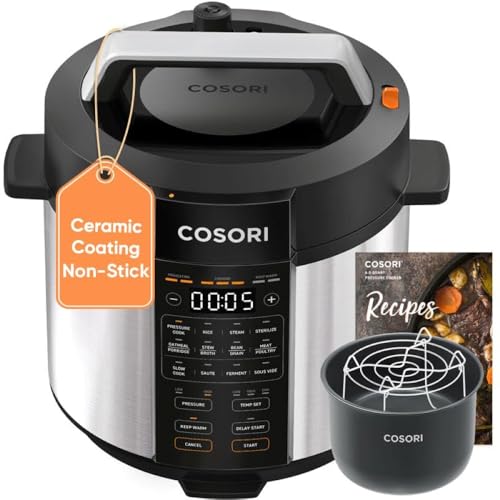
Cosori Pressure Cooker 6QT, 9-in-1, Ceramic Coating Pot
The Cosori 6-quart cooker is the best all-round electric pressure cooker in this guide. It combines nine functions, including pressure cooking, rice cooking, slow cooking, sous vide and saute, in a 6-quart body that suits most households. The ceramic coating on the inner pot is easy to clean and nonstick enough for everyday cooking, and the twelve safety features give confidence to a cook using pressure for the first time. It is the model to choose when you want one electric cooker to handle the week.
In everyday use, the Cosori is the cooker that handles the week. Rice on Monday, a stew on Tuesday, beans on Wednesday: the presets make each one a matter of pressing a button. The ceramic pot is easy to clean after sticky foods such as rice, and the 6-quart size means there is enough for the family with leftovers for lunch. The twelve safety features are reassuring for a cook who is new to pressure, and the sous vide function is a bonus for weekends. The Cosori is the cooker that handles the week without fuss. The presets cover the dishes a household cooks most, and the ceramic pot cleans easily after rice and beans. The safety features give confidence to a first-time user, and the 6-quart size means there is enough for the family.
Key specs: Electric pressure cooker; 6-quart capacity; 9-in-1 functions; ceramic coating pot; 12 safety features; rice cooker, slow cook, sous vide and saute functions.
Strengths:
- The 6-quart size suits most households, from couples to families of four.
- The ceramic coated pot is easy to clean and food releases well.
- Twelve safety features give confidence to first-time pressure cooker users.
Trade-offs:
- The ceramic coating needs gentle care to last, so avoid metal utensils and harsh scrubbing.
- A 6-quart cooker is bulky to store in a small kitchen.
- Nine functions mean a longer learning curve than a simple stovetop cooker.
This is the pick for a household that wants one electric pressure cooker to cover the week, with easy cleaning and strong safety features.
Best for: Everyday electric pressure cooking for most households.
Not suited for: Cooks who want a stovetop cooker, or who need a very small or very large capacity.
Check price on Amazon: Cosori Pressure Cooker 6QT, 9-in-1, Ceramic Coating Pot

Ninja HyperHeat 9-in-1 Pressure Cooker, 6.5-qt, Dark Gray, PC201GY
The Ninja HyperHeat PC201GY is a 9-in-1 pressure cooker that cooks twice as fast as a standard model, according to its maker, and it backs that claim with a broad function set: sear, saute, slow cook, steam and sous vide alongside pressure cooking. The 6.5-quart capacity suits a family, and the dark gray finish looks at home in a modern kitchen. It is the model to choose when speed matters and you want the pressure cooker to sear and steam as well.
The Ninja HyperHeat is at its best when speed is the point. The sear function browns meat in the same pot, then the pressure function finishes the dish, so a stew goes from raw ingredients to the table with one pot to wash. The 6.5-quart size suits a family, and the steam function handles vegetables while the main dish cooks. It is the cooker to reach for on a busy evening when dinner needs to be fast. The Ninja HyperHeat is the fastest cooker in this guide, and the sear function is the detail that makes it practical. Browning meat in the same pot before pressure cooking saves washing up and builds flavour. The 6.5-quart size suits a family with room for batch cooking.
Key specs: Ninja HyperHeat 9-in-1 pressure cooker; 6.5-quart capacity; model PC201GY; dark gray; sear, saute, slow cook, steam and sous vide functions.
Strengths:
- The HyperHeat design cooks faster than a standard pressure cooker.
- Sear and saute functions let you brown meat in the same pot before pressure cooking.
- The 6.5-quart capacity suits a family, with room for batch cooking.
Trade-offs:
- It is larger and heavier than a 6-quart cooker, so it needs a dedicated spot.
- Nine functions take a little learning for a first-time user.
- The nonstick pot needs gentle care to keep its coating.
This is the pick for a family cook who wants the fastest electric pressure cooker in this guide, with searing and steaming built in.
Best for: Fast family cooking with sear, steam and pressure in one pot.
Not suited for: Small households, or cooks who prefer a simple stovetop cooker.
Check price on Amazon: Ninja HyperHeat 9-in-1 Pressure Cooker, 6.5-qt, Dark Gray, PC201GY
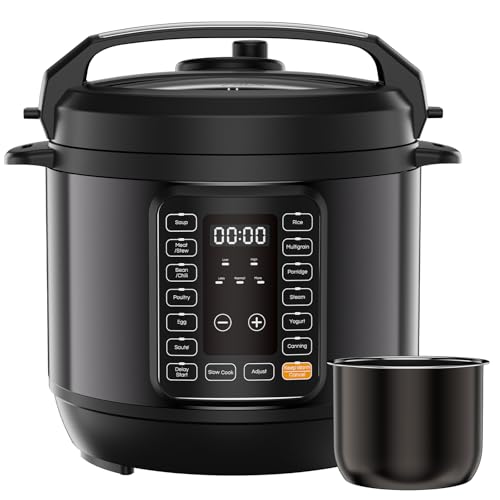
DUMOS 16-in-1 Electric Pressure Cooker, 6QT Programmable Multi Cooker
The DUMOS 6-quart cooker offers the most functions in this guide, with sixteen cooking modes and twelve one-touch presets covering soup, steam, yoghurt and more. It is a programmable multi cooker built around pressure cooking, so it can replace a rice cooker, a slow cooker and a yoghurt maker as well as a pressure cooker. For a cook who likes presets and wants one appliance to cover the most ground, the DUMOS is the most versatile choice here.
The DUMOS is the cooker for a household that likes presets. Twelve one-touch programmes cover soup, steam, yoghurt and more, so each dish is a button press away. The yoghurt function is a genuine extra for a family that eats yoghurt regularly, and the 6-quart size covers most meals. The sixteen functions look like a lot, but in practice you will use four or five of them most of the time, and the rest are there when you want them. The DUMOS is the most versatile cooker here, with sixteen functions and twelve presets. The yoghurt function is a genuine extra, and the 6-quart size covers most meals. It is the cooker to choose when you want one appliance to replace several.
Key specs: Electric pressure cooker; 6-quart capacity; 16-in-1 functions; 12 one-touch presets; programmable multi cooker; soup, steam and yoghurt functions.
Strengths:
- Sixteen functions and twelve presets cover the widest range of cooking in this guide.
- The 6-quart size suits most households.
- One-touch presets make it easy for a beginner to start cooking.
Trade-offs:
- Sixteen functions mean a lot of buttons, and some presets will rarely be used.
- The cooker is bulky, so it needs a dedicated storage spot.
- A multi cooker with this many functions takes time to learn well.
This is the pick for a cook who wants the most versatile electric cooker, with a preset for almost every dish and one appliance to replace several.
Best for: Cooks who want the widest range of presets in a single appliance.
Not suited for: Cooks who prefer simple controls, or who only need basic pressure cooking.
Check price on Amazon: DUMOS 16-in-1 Electric Pressure Cooker, 6QT Programmable Multi Cooker


Instant Pot Duo 7-in-1 Mini Electric Pressure Cooker, Slow Rice Cooker, Steamer, Saute, Yogurt Maker, Warmer and Sterilizer
The Instant Pot Duo Mini is the small-household pressure cooker in this guide. Its 7-in-1 design covers pressure cooking, slow cooking, rice cooking, steaming, sauteing, yoghurt making and warming, in a compact body that fits a small kitchen and a small household. The Duo line is the most widely used electric pressure cooker family, which means recipes and guidance are easy to find. It is the model to choose when you cook for one or two and want a proven, compact cooker.
The Instant Pot Duo Mini is the cooker for a small household that still wants proper cooking. A couple of chicken breasts, a pot of rice, or a small stew: the Mini handles those without the bulk of a full-size cooker. Because the Duo line is so widely used, recipes written for Instant Pot work directly, which makes the Mini easy to cook with from day one. It is also the easiest model here to store in a small kitchen. The Instant Pot Duo Mini is the compact cooker for a small household. It fits a small kitchen, it cooks for one or two, and the Duo line is so widely used that recipes are easy to find. It is the easiest model here to store and to learn.
Key specs: Instant Pot Duo 7-in-1 mini electric pressure cooker; slow rice cooker, steamer, saute, yoghurt maker, warmer and sterilizer functions.
Strengths:
- The compact size fits small kitchens and cooks for one or two people.
- The Duo line is widely used, so recipes and advice are easy to find.
- Seven functions cover pressure cooking, rice, steaming and yoghurt in one pot.
Trade-offs:
- The mini size is too small for batch cooking or a large family.
- It has fewer presets than the larger multi cookers.
- The small pot limits the size of roasts and whole chickens.
This is the pick for a single cook or a couple who want a proven, compact pressure cooker that fits a small kitchen.
Best for: Small households, couples and compact kitchens.
Not suited for: Families of four or more, or cooks who batch cook regularly.

T-fal Clipso Stainless Steel Pressure Cooker, 6.3 Quart
The T-fal Clipso is the classic stovetop pressure cooker in this guide, and it suits cooks who prefer direct control over the heat. The stainless steel body heats quickly on the hob, the one-hand opening system makes the lid easy to use, and the steam basket lets you steam vegetables while the main dish cooks below. A recipe book is included, which helps a first-time stovetop user get started. It is the model to choose when you want a stovetop cooker that will last for years.
The T-fal Clipso rewards a cook who likes control. On the hob, you decide the heat, you hear the valve, and you learn the rhythm of the cooker. The stainless steel body heats fast, the steam basket lets you cook vegetables above the main dish, and the recipe book gives a starting point for the first few cooks. It is a durable, simple cooker that will last for years with basic care. The T-fal Clipso is the classic stovetop cooker, and it suits a cook who likes direct control. The stainless steel body heats fast, the steam basket handles vegetables, and the recipe book helps a first-time user. It is durable and simple, and it will last for years.
Key specs: Stainless steel pressure cooker; 6.3-quart capacity; recipe book included; steam basket; easy-open lid; secure locking system.
Strengths:
- Stovetop cooking gives direct control over the heat and heats up fast.
- Stainless steel construction is durable and easy to clean.
- The steam basket and recipe book make it easy to start cooking straight away.
Trade-offs:
- Stovetop cooking needs more attention than an electric cooker with presets.
- There is no timer or automatic keep-warm function.
- The cooker needs a hob to work, so it cannot be used away from the stove.
This is the pick for a cook who prefers the control and durability of a stovetop cooker, and who does not need presets or a timer.
Best for: Classic stovetop pressure cooking with direct heat control.
Not suited for: Cooks who want presets, a timer, or set-and-forget cooking.
Check price on Amazon: T-fal Clipso Stainless Steel Pressure Cooker, 6.3 Quart

OLIXIS 10-In-1 Electric Pressure Cooker, 3 Quart Multi Cooker
The OLIXIS 3-quart cooker is the compact multi cooker in this guide, built for singles, couples and small kitchens. Its 10-in-1 design covers pressure cooking, rice, stew and steaming in a small stainless steel body that takes up little counter space. The 3-quart size is right for side dishes, grains and meals for one or two, and the programmable controls make it easy to set and leave. It is the model to choose when space is tight and the household is small.
The OLIXIS is the compact multi cooker for a small kitchen. Its 3-quart size suits side dishes, grains and meals for one or two, and the ten functions cover the dishes a small household cooks most. The stainless steel pot is easy to clean, and the programmable controls mean you can set the cook and leave it. It is the model to choose when space is tight and the household is small. The OLIXIS is the compact multi cooker for a small kitchen. Its 3-quart size suits side dishes and meals for one or two, and the ten functions cover the dishes a small household cooks most. The programmable controls make it easy to set and leave.
Key specs: Electric pressure cooker; 3-quart capacity; 10-in-1 multi cooker; programmable; stainless steel; rice, stew and steam functions.
Strengths:
- The compact 3-quart size fits small kitchens and small households.
- Ten functions cover pressure cooking, rice, stew and steaming in one pot.
- Programmable controls make it easy to set and leave.
Trade-offs:
- Three quarts is too small for a family meal or batch cooking.
- It has fewer functions than the larger 6-quart multi cookers.
- The small pot limits the size of roasts and whole dishes.
This is the pick for a single cook or a couple with a small kitchen who want a compact, programmable pressure cooker.
Best for: Singles, couples and small kitchens.
Not suited for: Families, or cooks who batch cook or entertain often.
Check price on Amazon: OLIXIS 10-In-1 Electric Pressure Cooker, 3 Quart Multi Cooker
Buying Guide
Start with capacity, because it decides what you can cook. A 3-quart cooker suits one or two people and side dishes, a 6-quart cooker suits most families, and an 8-quart or larger cooker suits batch cooking. A cooker that is too small will force you to cook in batches, while a cooker that is too large takes up space and uses more liquid than a small meal needs. Choose the size that matches your household, not the largest size you can afford.
Next, choose between electric and stovetop. Electric cookers are easier for beginners: they have presets, timers and automatic keep-warm, and they regulate pressure themselves. Stovetop cookers heat faster, last longer and give you direct control, but they need more attention. If you want set-and-forget cooking, choose electric. If you want control and durability, choose stovetop.
Check the safety features. A good pressure cooker has a locking lid that cannot open under pressure, a pressure release valve, and a backup safety mechanism. Electric models add sensors that stop the cooker if something goes wrong. Read the manual before the first cook, and never force a lid open. Safety features are not marketing extras; they are the reason modern pressure cookers are safe to use.
Finally, think about the inner pot. A stainless steel pot lasts longest and can be scrubbed, while a ceramic or nonstick pot is easier to clean but needs gentler care. If you sear meat often, a stainless steel pot takes higher heat. If you cook sticky foods such as rice and beans, a coated pot releases food more easily. Choose the pot that matches the food you cook most.
Think about the recipes you cook most. If you cook beans, grains and stews, a 6-quart electric cooker with presets will serve you well. If you cook stocks and braises, a stovetop cooker with a large capacity is better. If you cook for one or two, a compact cooker is enough. The right cooker is the one that matches your recipes, not the one with the most functions.
Think about the noise and the steam as well. Electric pressure cookers release steam when the valve opens, so they need clearance above them and should not sit under a low cabinet. Stovetop cookers are quieter but need a hob. If you cook in a small kitchen, the steam and the clearance matter, so plan where the cooker will sit before you buy.
How to Use and Care for Your Cooker
After each cook, wash the inner pot and the sealing ring with hot soapy water, and dry them fully before storage. The sealing ring absorbs smells over time, so wash it well and store the lid upside down or ajar so air can circulate. Check the steam release valve for blockages before each cook, and replace a worn sealing ring when it no longer sits flat or starts to smell.
For stovetop cookers, check the gasket and the valve regularly. The gasket is the seal that holds the pressure, and a cracked or hardened gasket will not seal properly. Wash the lid by hand and dry it fully, and store the cooker with the lid ajar so the gasket stays fresh. Never use a damaged gasket, and replace it at the first sign of wear.
Keep the outside of the cooker clean and dry, and never immerse an electric cooker body in water. Wipe it with a damp cloth and dry it before storage. If a cooker starts to behave differently, such as taking longer to reach pressure, check the seal, the valve and the liquid level before assuming the cooker is broken. Most problems come from a worn seal, a blocked valve or too little liquid.
For electric cookers, keep the outer body and the control panel dry. Wipe the rim where the lid sits, since food and steam collect there and can affect the seal. Check the float valve and the steam release valve for food particles after each cook, and make sure they move freely before the next cook. A blocked valve is the most common cause of a cooker that will not reach pressure.
Store the cooker with the lid off or ajar, so air can circulate and the sealing ring stays fresh. A sealed cooker left in a cupboard breeds smells that transfer to the next dish. Keep the inner pot dry, and store the accessories where they are easy to find.
Common Mistakes to Avoid
The most common mistake is overfilling the cooker. Fill it only to the recommended level, usually two-thirds full, and only half full for foods that expand such as beans and grains. Food and liquid expand under pressure, and an overfilled pot can block the valve and cause problems.
A second mistake is using too little liquid. Pressure cooking needs liquid to build steam, and a cooker run dry can scorch food and damage the pot. Follow the recipe for liquid amounts, and add at least the minimum the manual specifies. A related mistake is quick-releasing pressure for foods that need a natural release, such as large cuts of meat and beans, which can toughen or spit if the pressure drops too fast.
A third mistake is forcing the lid open. Never force a lid that will not open, because it means pressure is still inside. Wait for the pressure indicator to drop, use the release valve, and only open the lid when it moves freely. Forcing a lid is dangerous and can damage the seal.
A fourth mistake is browning meat badly before pressure cooking. Searing builds flavour, but it needs a hot pot and dry meat. If the meat is wet or the pot is crowded, it steams instead of browning, and the stew tastes flat. Dry the meat, sear it in batches, and deglaze the pot before sealing the lid.
A fifth mistake is ignoring the sealing ring. The ring wears out over time, and a worn ring will not seal properly, so the cooker takes longer to reach pressure or never reaches it at all. Replace the ring when it becomes loose, cracked or smelly, and keep a spare on hand so a worn ring never stops dinner.
Final Recommendation
If you want the best all-round electric pressure cooker, choose the Cosori 6-quart cooker, because its ceramic pot, strong safety features and 6-quart size suit most households. If you want the fastest cooking, choose the Ninja HyperHeat PC201GY. If you cook for one or two, choose the Instant Pot Duo Mini. For more on pressure cooking, see our guides to the best 7-in-1 programmable pressure cookers and the best 10-quart pressure cookers. For smaller sizes and budget options, our guides to the best 4-quart pressure cookers and the best electric pressure cookers under 100 cover those categories in more depth.
Whichever cooker you choose, learn its timing with a few forgiving recipes first. Beans, lentils and chicken thighs are good starters, because they are hard to spoil under pressure. Once you know how your model behaves, the tougher cuts and the longer braises will follow naturally.
Start with the Cosori if you are unsure, since its size and safety features suit most households. Move to the Ninja HyperHeat when speed matters, and keep the Instant Pot Duo Mini in mind for a small kitchen. Pressure cooking rewards a little practice, and the right cooker makes the learning easy.
Frequently Asked Questions
How much liquid does a pressure cooker need?
A pressure cooker needs liquid to build steam, and the exact amount depends on the recipe and the model. Follow the recipe and the manual, and never run a cooker dry. As a rule, add at least the minimum liquid the manual specifies, usually around a cup for a 6-quart cooker.
Can I cook dried beans in a pressure cooker without soaking?
Yes. Pressure cooking is one of the best ways to cook dried beans without soaking. Rinse the beans, add water, and cook under pressure. Do not fill the pot more than half full with beans and water, since beans expand as they cook.
What is the difference between natural release and quick release?
Natural release means letting the pressure drop on its own, which takes longer but is gentler on large cuts of meat and beans. Quick release means opening the valve to release pressure fast, which suits vegetables and foods that overcook easily. Follow the recipe for which method to use.
Is a stovetop or an electric pressure cooker better?
Electric cookers are easier for beginners, with presets, timers and automatic pressure control. Stovetop cookers heat faster, last longer and give direct control over the heat. Choose electric for convenience and stovetop for control and durability.
How do I clean a pressure cooker sealing ring?
Wash the ring with hot soapy water after each use and dry it fully. Store the lid upside down or ajar so air can circulate, which helps prevent smells. Replace the ring when it no longer sits flat or starts to smell even after washing.
Can I cook rice in a pressure cooker?
Yes. Pressure cookers cook rice quickly and evenly. Use the rice setting or a manual setting, follow the water ratio in the manual, and let the pressure release naturally for a few minutes before opening the lid so the rice finishes steaming.
Is pressure cooking safe?
Modern pressure cookers are safe when used correctly. They have locking lids, pressure release valves and backup safety mechanisms. Follow the manual, do not overfill the pot, check the seal and the valve before each cook, and never force a lid open.
Can I use a pressure cooker to can food?
Pressure canning is different from pressure cooking, and not every pressure cooker is safe for canning. Use a dedicated pressure canner for canning, and follow tested canning recipes. A standard pressure cooker is for cooking meals, not for preserving food.
Can I brown meat in an electric pressure cooker?
Yes. Most electric pressure cookers have a saute or sear function for browning meat before pressure cooking. Brown the meat in batches so the pot stays hot, deglaze with a little liquid, and then seal the lid for pressure cooking.
What foods should not go in a pressure cooker?
Foods that foam or expand a lot, such as pasta, oatmeal and some beans, need care and should never fill the pot more than half full. Delicate foods such as fish and soft vegetables can overcook quickly under pressure, so use short cooking times or cook them by another method.
How do I choose the right size pressure cooker?
A 3-quart cooker suits one or two people, a 6-quart cooker suits most families, and an 8-quart or larger cooker suits batch cooking. Choose the size that matches your household, and remember that a cooker should never be filled more than two-thirds full.
Can I cook frozen meat in a pressure cooker?
Yes. Pressure cooking works well for frozen meat, but you need to allow extra cooking time, usually about half as long again. Make sure the meat is not frozen in a block that will not fit the pot, and check that it is fully cooked before serving.


