A portable dishwasher with wheels is a full-size or compact unit on casters that you roll to the sink, connect to the faucet and use like a built-in. When the load is done, you roll it back out of the way. It is ideal for rentals and for kitchens without a dishwasher bay. Make sure your doorways and floors can handle the size and weight of a rolling dishwasher before you buy.
The six models below include full-size rolling units and a compact one that can sit on a cart, so you have a choice of capacity. We have not used these dishwashers ourselves, so confirm wheel design, hookup type and dimensions on the current listing before buying. Capacity and cycle claims are the makers’ own.
As an Amazon Associate we earn from qualifying purchases. Links below are affiliate links, and they do not change the product information we give.
What to Look For
| Feature | Why it matters |
|---|---|
| Casters | Locking wheels keep the unit steady while it runs |
| Width | Check door swing and aisle space before buying |
| Hookup | Quick-connect hoses attach to a standard faucet |
| Capacity | Full-size units hold more dishes than countertop ones |
| Top surface | A butcher-block or solid top can double as a counter |
In this guide
Specs at a Glance
| Dishwasher | Style | Mobility | Notes |
|---|---|---|---|
| Whirlpool WDP370PAHB | Full-size portable | Casters | Faucet-connected; top finish varies |
| GE GPT225SSLSS | Full-size portable | Casters | Stainless-style exterior |
| Avanti DWF18V3S | Portable | Casters | Narrower than full-size models |
| Danby DDW1801MW | Portable | Casters | Made for small kitchens |
| SPT SD-9254SS | Portable | Casters | Stainless-style, per the maker |
| COMFEE Portable Dishwasher | Compact | Casters or cart | Small footprint |
The 6 Best Portable Dishwashers with Wheels
Top pickBest for families without a built-in
1. Whirlpool WDP370PAHB Portable Dishwasher
A full-size portable dishwasher from a major brand, on casters and with a faucet connection. It has several cycles and a rolling frame.
Suits: families without a built-in. Strengths: brand support and full-size capacity. Weaknesses: takes a large footprint. Skip it if you live in a very small space.
View Whirlpool WDP370PAHB on Amazon
Best for rental kitchens
2. GE GPT225SSLSS Portable Dishwasher
A rolling dishwasher with a stainless-style exterior and a faucet hookup. It brings built-in features into a movable unit.
Suits: rental kitchens. Strengths: stainless look and rolling frame. Weaknesses: needs space beside the sink. Skip it if you want a countertop unit.
Best for narrow kitchens
3. Avanti DWF18V3S Portable Dishwasher
A narrower portable dishwasher on casters, made for apartments with limited space. It balances mobility with a decent interior.
Suits: narrow kitchens. Strengths: slimmer frame and rolling base. Weaknesses: less capacity than full-size models. Skip it if you wash large loads.
View Avanti DWF18V3S on Amazon
Best for small households
4. Danby DDW1801MW Portable Dishwasher
A portable dishwasher from a small-appliance specialist, on wheels and designed for flexible kitchen use.
Suits: small households. Strengths: compact build and a faucet hookup. Weaknesses: limited place settings. Skip it if you want a built-in-style look.
View Danby DDW1801MW on Amazon
Best for style-conscious renters
5. SPT SD-9254SS Portable Dishwasher
A stainless-style portable dishwasher with a rolling frame. It adds the look of a built-in without a permanent install.
Suits: style-conscious renters. Strengths: good looks and mobility. Weaknesses: check details on the listing. Skip it if you want a simple white model.
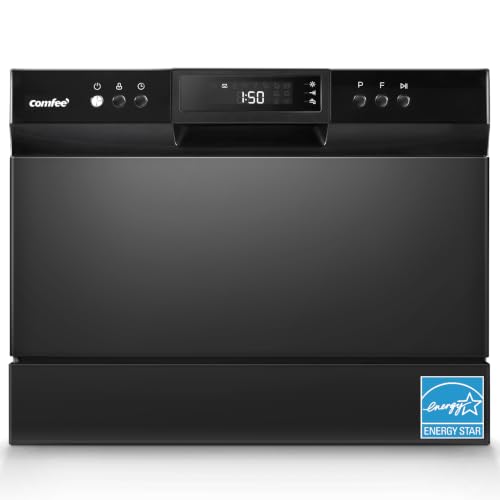
Best for very small kitchens
6. COMFEE Portable Countertop Dishwasher
A compact countertop dishwasher that you can place on a rolling cart. It suits those who want portability but not a full-size footprint.
Suits: very small kitchens. Strengths: small size and flexibility. Weaknesses: needs a cart for rolling. Skip it if you want built-in wheels.

Care and Setup
- Lock the casters before running a cycle.
- Check the hose connections for leaks after each use.
- Clean the filter and the spray arms often.
- Roll the unit away from heat sources when not in use.
- Store hoses neatly so they do not crack or twist.
- Check the floor under the unit for water after the first few cycles.
Mistakes to Avoid
- Rolling the unit with water still inside.
- Kinking the drain hose during a cycle.
- Forgetting to unlock wheels before moving it.
- Running it without a proper faucet adapter.
- Pushing the unit across a wet floor.
- Assuming every faucet will fit without an adapter.
Measuring Doorways, Aisles and Sink Access
A rolling dishwasher is only convenient if it can actually roll where you need it. Before buying, measure the path from where the machine will be stored to the sink. Check doorway widths, the width of hallways and any turns, since a full-size unit is bulky and heavy. Also look at thresholds and floor transitions, which can stop casters or tip the unit. A small rise between rooms can be a problem if the machine is heavy.
Next, think about the working position. The dishwasher needs to sit beside or in front of the sink with its hoses reaching the faucet and the drain. Measure the space available and compare it with the dimensions on the listing, including the door swing or lid. Make sure you can open the door fully without hitting cabinets, the stove or a wall. Leave room to stand and load comfortably.
Check the cord length and the distance to an outlet. A grounded outlet near the sink is ideal, and extension cords should be avoided with large appliances unless the maker approves them. Be careful with outlets near water, and follow the manual’s guidance on ground-fault protection.
Also consider where the machine will live. If it parks in a corner or closet, make sure that area is dry and that you can get it in and out without much effort. If the storage spot is far from the sink, think about whether you will use the machine as often as you expect. Convenience decides whether you keep using it.
Floors, Casters and Stability While Running
Wheels are what make these dishwashers portable, but they also bring risks if you ignore the floor. Hard floors such as tile, vinyl and sealed wood let casters roll easily, but they can scratch if grit is caught in the wheels. Carpet and uneven floors make rolling difficult and can let the machine rock. Check the caster type listed, such as locking swivel wheels, and read about whether the wheels are hard plastic or rubber.
Always lock the casters before running a cycle. A washing machine of this type vibrates, and an unlocked unit can creep across the floor and strain the hoses. Check that the unit sits level and does not wobble. If the floor is slightly uneven, you might need a flat mat, or the machine may have leveling feet.
Protect the floor. A thin rubber or vinyl mat can reduce scratches, dampen vibration and catch small drips. It should not be so thick that it makes the machine unstable. Wipe up any water right away, because wet floors are slippery and can damage some materials.
Weight is a factor when rolling. A full unit with water inside is much heavier and harder to control, so never roll the machine while it contains water. Empty it, let it drain and tilt it only as the manual allows. Take care when moving across thresholds, and ask for help when needed.
Hoses, Adapters and the Connect-Disconnect Routine
Because you connect a rolling dishwasher each time, the routine matters. Learn it well, and practice with the machine empty. Typically you roll the unit to the sink, lock the casters, attach the adapter to the faucet, connect the supply hose, run the drain hose into the sink, plug in the machine and start the cycle. Afterward you reverse the steps, drain residual water and coil the hoses for storage.
Check the faucet compatibility first. Many kitchen faucets need an adapter, and some designs do not work with the included one. Measure the faucet end and compare it with what is in the box. Store the original aerator safely, since you will remove it for connection.
Inspect hoses before each use. Look for cracks, bulges, stiffness and signs of leaks. Keep the drain hose free of kinks and tightly seated so that it does not whip around during the cycle. Hold it in the sink with a clip or by the weight of the connector, as the maker directs.
Open the faucet slowly to check for leaks, and watch the connections during the first minutes of a cycle. Keep a towel nearby. After use, turn off the water, release pressure as the manual describes, and disconnect carefully to avoid spills. Store hoses loosely coiled, without sharp bends, in the spot provided. Replace worn hoses or adapters with parts approved by the maker, not random substitutes.
Using the Top Surface and Living With the Unit
Many rolling dishwashers have a flat top that can double as extra counter space, and some have wood or solid surfaces for chopping or prep. This is a real benefit in a kitchen with little counter room, but check the manual for weight limits and warnings. Hot pots, sharp tools and heavy appliances can damage some finishes. A cutting board under chopping tasks protects the surface.
Think about heat and moisture. When the machine runs, steam can escape from vents, and the top may warm up. Avoid placing electronics, paper or anything sensitive on it during a cycle. Wipe up spills right away, since liquids can seep into seams.
Consider the machine’s appearance. A stainless-style finish or butcher-block top can look good in an open kitchen, while a basic white unit blends into a utility space. Fingerprints and scratches vary with the finish, so check how easy it is to clean.
Plan for storage of detergent, rinse aid and cleaning supplies near the sink rather than inside the machine. Keep cleaning tools handy for the filter. And remember that a rolling unit can be pushed around by children or pets, so lock the casters when it is parked, and keep the cord and hoses out of reach.
Long-Term Care, Noise and Replacement Signs
Rolling dishwashers need the same basic care as other dishwashers, plus attention to the parts that move. Clean the filter often, since a clogged filter reduces cleaning and may cause odors. Wipe the door seal and gasket, and clean spray arms by removing mineral buildup from the holes with a toothpick or brush. Run an occasional empty cycle with a dishwasher cleaner.
Check casters and hardware regularly. Remove hair, dust and debris from wheels. Tighten any loose screws and make sure locks engage firmly. A caster that sticks or a lock that slips should be repaired or replaced before it causes a problem.
Noise can increase if the unit is not level or if parts are worn. A rattling spray arm, a loose rack or an object trapped in the bottom may be the cause. A rubber mat can reduce vibration on hard floors.
Know the signs that it is time to replace the unit or call for service. Repeated leaks from the door or hoses, standing water that does not drain, a heating element that no longer works, rust on the interior, or a motor that groans and stalls all deserve attention. Check the warranty and the availability of parts. For an older machine, the cost of repair may be close to that of a new one, so compare before deciding. Keep the manual and the model details handy for any service call.
A Home Checklist Before Buying a Rolling Dishwasher
A portable dishwasher solves a problem only if it suits your home. Go through the list below, ideally with a tape measure and a helper.
- Check the faucet. Many units connect to a standard kitchen faucet through an adapter. Some faucets, such as pull-out or sprayer styles, may not work with the supplied fitting.
- Measure the route. Measure the width of every door and the turn at each corner between the storage spot and the sink.
- Pick a storage spot. Look for a wall space that stays dry and has room to open the door fully.
- Locate an outlet. The cord should reach a suitable outlet without an extension cord.
- Plan the drain. The drain hose needs to reach the sink and stay in place during the cycle.
- Check the floor. Hard, level flooring works best for rolling and running.
Read the maker’s installation guide for your model, and ask a licensed plumber about any faucet changes you are considering.
Renter or Owner: Which Situation Fits a Portable Unit
Portable models are popular because they ask nothing of the building. That makes them a natural fit for certain households.
| Situation | Why a rolling unit helps |
|---|---|
| Renting an apartment | No permanent plumbing work, and it moves with you |
| Older home without a dishwasher space | Skips cabinet and plumbing alterations |
| Small kitchen | Can be stored in a nearby closet or corner |
| Temporary housing | Easy to take along when you relocate |
| Second household or guest unit | Adds capacity only when needed |
If you own a home and plan to remodel, a built-in model may serve you better in the long run. If flexibility matters more, the rolling style still earns its place.
Reading the Listing for Hidden Constraints
Product pages show capacity in place settings, but size and fit details matter just as much. Check the height, width and depth of the unit, then compare them with your doorways and your sink area. Note whether the top surface can bear weight, since some owners like to use it as extra counter space, while others warn against it.
Look at the hose length and what adapters come in the box. Read the notes about faucet compatibility, and see whether the listing shows how the hoses store when not in use. Check the cycle options and the noise level if they are listed, and read the cord length. If the page is thin on facts, consult the manual from the maker before you buy.
Mistakes to Sidestep With a Moving Dishwasher
A few habits cause the most trouble. Running the unit while the hose is loose can cause leaks, so seat every connection firmly and check them before each cycle begins. Rolling it over a threshold without lifting the front can strain the casters. Overloading the racks blocks spray arms and leaves dishes dirty, so load as the manual suggests.
Another slip is leaving the faucet adapter attached when the unit is not in use. Remove it when you finish, and let the hoses drain before storage. Wipe the door seal and filter regularly, and watch for water on the floor as an early warning.
A Plain Guide to the Words on the Box
Dishwasher listings use specialist terms, and a quick glossary helps you compare units fairly.
- Place settings. A way of stating capacity, based on a set of plates, bowls, glasses and cutlery for one person.
- Casters. The wheels under the cabinet that let you roll it. Some lock and some do not.
- Faucet adapter. The fitting that joins the supply hose to your faucet spout.
- Drain hose. The tube that carries used water to your sink.
- Spray arm. The rotating arm that throws water onto dishes.
- Filter. The part that catches food bits and needs regular cleaning.
- Cycle. A preset wash program with set water use, temperature and time.
Knowing these terms makes it easier to see whether two listings describe the same features or simply use different words. Where a listing is vague, check the maker’s own manual, since it describes the parts and settings in detail.
Keep the manual somewhere easy to find. It lists the correct way to connect and disconnect hoses, how to clean the filter and what to do if a cycle stops early.
Going Deeper on the Criteria That Actually Matter
Capacity ratings on portable dishwashers are easy to misread, because a place setting is a standardized bundle of dishes that may look nothing like what your household actually washes. A setting assumes a dinner plate, a side plate, a bowl, a cup, a glass and cutlery, all in standard sizes. If your meals lean on large pasta bowls, deep cereal bowls, oversized mugs or sheet pans, the same tub swallows far fewer real loads than the headline number suggests. The honest test is to stack your own most-used items mentally against the rack layout in the listing photos: where do the tall glasses go, does the cutlery basket sit where your long utensils need to be, and can the upper rack take your biggest everyday bowl without blocking the spray arm above it?
Water and energy use deserve the same practical reading. A portable machine uses far less water than washing the same load by hand under a running tap, but the saving only materializes if you run reasonably full loads. Running a half-empty machine every evening because a few plates look untidy quietly erases the efficiency that justified the purchase. Households that cook one main meal a day usually do best with a load after dinner, scraping rather than pre-rinsing, and letting breakfast items wait in the closed tub rather than on the counter. The closed door also keeps odors in and counters clear, which in a small kitchen is half the point of owning the machine.
Noise, and Why It Matters More Than You Expect
In a one-room or open-plan space, the machine runs within earshot of where you sleep, work and watch television, so noise shapes whether you actually use it. Quieter operation usually comes from better insulation, a stainless tub that damps sound, and a pump that does not strain against kinked hoses. You can help any model: seat it level so it does not vibrate against the counter, keep the drain hose free of sharp bends, and avoid running it on a hollow surface that acts like a drum. Running the cycle while you are out, or timing it to finish before bedtime, are simple habits that make a louder machine livable and a quiet one unnoticeable.
Cycle Choice Is a Feature, Not a Filler
Long cycle lists look impressive, but most households settle on two or three programs: a normal cycle for daily loads, a heavy cycle for baked-on pans, and a quick or eco cycle for lightly soiled glasses and lunch dishes. What matters more than the count is whether the machine remembers your last setting, whether a delayed start exists if you want it to run off-peak, and whether there is a rinse-only or hold option for loads that will wait a day. Drying deserves a look too: machines that pop the door or use residual heat dry differently from those relying on rinse aid and time, and plastic items come out wet on almost every compact model, so plan a few minutes of air-drying on a rack.
How a Portable Dishwasher Fits into a Busy Household Routine
A dishwasher on wheels lives two lives: parked out of the way, and rolled to the sink for work. That split is its whole appeal in a kitchen where no counter run or cabinet gap can be surrendered permanently. The routine to build is a path — the same route from parking spot to sink, cleared of rugs, thresholds and chair legs that catch casters — and a habit of connecting in the same order every time: water in, drain positioned, power last. Two minutes of choreography, repeated, is what separates owners who love these machines from owners who find them a faff.
Rolling models also double as movable counter space in many kitchens, which is a genuine secondary benefit in a small room: a work surface that arrives where you need it for baking or serving and leaves afterwards. Keep that top surface clear of permanent clutter or the benefit evaporates and the machine stops moving at all — and a portable dishwasher that never moves to the sink is just a cabinet with a door seal.
Troubleshooting the Complaints Owners Actually Report
Most portable dishwasher problems arrive as one of five complaints, and each has a short diagnostic path. Dishes come out gritty: check the filter first, then the spray arm jets, then whether the load blocked the arm’s rotation. Glasses come out cloudy: think water, not machine — hardness, detergent dose and rinse aid, in that order. Water remains in the tub: the drain hose is kinked, looped too high, or the filter is matted. The machine smells: the filter and the door seal, again, plus a cleaning cycle. It will not start: door latch, water supply, and the humble question of whether the previous cycle was cancelled mid-way and never reset.
Work that list in order and you will solve the great majority of faults without a screwdriver. What the list teaches, beyond the fixes, is how few moving parts stand between a portable dishwasher and good results: water in, water sprayed, water out, and a filter guarding all three. Owners who understand that loop stop fearing the machine and start maintaining it, which is why the same model can be one household’s workhorse and another’s disappointment. The difference is rarely the machine.
Running Costs, Kept in Perspective
The ongoing costs of a portable dishwasher are detergent, rinse aid, the occasional cleaner cycle, water and electricity — all modest, and all smaller than the cost of the two failure modes households actually fall into: running half-empty loads constantly, which multiplies every per-cycle cost, and neglecting the filter until a service visit becomes necessary. Batch your loads, keep the wear parts fresh, and a portable machine is one of the cheaper appliances in the home to run. It also buys back time and counter space, which do not appear on a utility bill but are the reasons most owners give for never going back to the sink.
First-Week Setup: Getting the Basics Right From Day One
Before the first wash, spend ten minutes on the unglamorous details. Level the machine, because a tilted tub pools water, rattles and can leave the door seal weeping. Run an empty hot cycle with no detergent to flush manufacturing residues and to prove every connection before dishes are at stake. While it runs, stay nearby: check the faucet adapter under load, watch the drain hose where it meets the sink, and feel the supply connection for weeping. Most early leaks trace back to a cross-threaded adapter, a missing washer, or a hose pushed on without being fully seated, and all three are five-minute fixes on day one and a soaked floor on day thirty.
Load the first real wash deliberately rather than randomly. Angle plates toward the spray, keep bowls from nesting, and make sure nothing tall blocks the spray arm’s rotation — spin it by hand before closing the door. Put plastics on the upper rack away from any heating element, lay long utensils so they cannot slip through the basket and jam the arm, and leave a gap between glasses so they do not chip each other as water moves them. Then compare what comes out against how it went in. One careful load teaches you the machine’s geometry better than a month of guessing, and the habits stick.
Water Temperature and Detergent Habits
Portable machines depend on the hot water you feed them, so run the tap hot before connecting if your manual recommends it, especially in winter when the supply line starts cold. Use detergent made for dishwashers only, in the amount the dispenser is sized for; more is not cleaner and excess suds or residue are the usual cause of gritty glasses. Pods are convenient but can be strong for small tubs and short cycles, while powder lets you dose down for light loads. If your water is hard, rinse aid stops being optional: it is what lets water sheet off glass instead of drying into spots, and a monthly cleaner cycle keeps mineral film from dulling the tub and the spray arms.
Cleaning and Care That Keep Performance Steady
The filter is the whole maintenance story in miniature. It catches what scraping missed, and when it clogs, the symptoms masquerade as bigger failures: gritty dishes, standing water, a sour smell, weak cleaning on the lower rack. Rinse the filter under the tap weekly if you cook daily, and check it before blaming the machine for a bad wash. Wipe the door seal with a damp cloth at the same time, because the fold of the gasket collects a grey film that eventually smells and can stop the door sealing cleanly. Leave the door slightly ajar after the last cycle of the day so the tub dries; a closed, damp tub is where musty odors breed.
Monthly, run an empty hot cycle with a dishwasher cleaner or follow your manual’s descaling guidance if your water is hard. Inspect the spray arms: a toothpick clears blocked jets, and a jet blocked by a label or a seed quietly leaves one corner of every load dirty. Check hoses for kinks, chafing and stiffness, and look at the faucet adapter’s washer, which hardens over time and is the cheapest part in the whole setup to replace. If the machine will sit unused for a stretch, drain it as the manual directs, leave the door open, and store the hoses loosely coiled rather than tightly bent, so they do not take a set and kink on the next setup.
Storage Between Uses
Where the machine lives when it is not running shapes how often you use it. A unit that must be dragged from a closet, connected, filled and drained for every load slowly becomes a unit that gets used twice a month. If you can, give it a permanent parking spot within hose reach of the sink, even if that spot is a corner of the counter or a rolling cart beside it. Keep the adapter on the faucet if your household tolerates it, coil the hoses the same way every time, and keep detergent and rinse aid in the same place so the whole routine — connect, load, run, disconnect — becomes a two-minute habit rather than a project.
More Mistakes That Undermine an Otherwise Good Machine
Pre-rinsing everything under a hot tap is the most common waste: it uses more water than the machine will, and modern detergents actually need some food soil to work against, so spotless-in, spotless-out rinsing can leave detergent residue behind. Scrape solids into the bin, leave the sauce, and let the cycle do its job. The opposite mistake is loading cookware with baked-on soil into a quick cycle and concluding the machine is weak; heavy soil belongs on the heavy cycle, and one pan washed well beats a whole load washed twice.
Blocking the detergent dispenser with a tall pan or a cutting board is another quiet failure — the door cannot open, the detergent never deploys, and the load comes out greasy for no obvious reason. Keep the area in front of the dispenser clear. Overloading is its cousin: dishes nested tight against each other shield each other from the spray, so a load washed at ninety percent full and properly spaced beats a load crammed to one hundred and ten. Finally, ignore the temptation to crack the door mid-cycle to add a forgotten mug unless the manual allows it; on many compact machines that resets the program or spills hot water, and the mug can simply wait for the next load.
How the Picks Above Compare, Side by Side
Six picks can look interchangeable in a list, so it helps to line them up by the job each one is actually described as doing in this guide. The comparison below uses only what the reviews above already say about each model — who it suits, what it does well, and where it falls short — reorganized so the trade-offs sit next to each other.
Whirlpool WDP370PAHB Portable Dishwasher. In the review above, this pick is matched to families without a built-in. Its stated strength is brand support and full-size capacity. The honest limitation flagged there is takes a large footprint. And the skip condition still applies: skip it if you live in a very small space. Read in isolation, a strength can sound like a reason to buy; read against the other five picks, it is really a statement about fit. If the situation described matches your own, this is the pick to shortlist first. If the limitation touches something you deal with every day, one of the other picks will serve you better, even if its headline strength sounds less exciting.
GE GPT225SSLSS Portable Dishwasher. In the review above, this pick is matched to rental kitchens. Its stated strength is stainless look and rolling frame. The honest limitation flagged there is needs space beside the sink. And the skip condition still applies: skip it if you want a countertop unit. Read in isolation, a strength can sound like a reason to buy; read against the other five picks, it is really a statement about fit. If the situation described matches your own, this is the pick to shortlist first. If the limitation touches something you deal with every day, one of the other picks will serve you better, even if its headline strength sounds less exciting.
Avanti DWF18V3S Portable Dishwasher. In the review above, this pick is matched to narrow kitchens. Its stated strength is slimmer frame and rolling base. The honest limitation flagged there is less capacity than full-size models. And the skip condition still applies: skip it if you wash large loads. Read in isolation, a strength can sound like a reason to buy; read against the other five picks, it is really a statement about fit. If the situation described matches your own, this is the pick to shortlist first. If the limitation touches something you deal with every day, one of the other picks will serve you better, even if its headline strength sounds less exciting.
Danby DDW1801MW Portable Dishwasher. In the review above, this pick is matched to small households. Its stated strength is compact build and a faucet hookup. The honest limitation flagged there is limited place settings. And the skip condition still applies: skip it if you want a built-in-style look. Read in isolation, a strength can sound like a reason to buy; read against the other five picks, it is really a statement about fit. If the situation described matches your own, this is the pick to shortlist first. If the limitation touches something you deal with every day, one of the other picks will serve you better, even if its headline strength sounds less exciting.
SPT SD-9254SS Portable Dishwasher. In the review above, this pick is matched to style-conscious renters. Its stated strength is good looks and mobility. The honest limitation flagged there is check details on the listing. And the skip condition still applies: skip it if you want a simple white model. Read in isolation, a strength can sound like a reason to buy; read against the other five picks, it is really a statement about fit. If the situation described matches your own, this is the pick to shortlist first. If the limitation touches something you deal with every day, one of the other picks will serve you better, even if its headline strength sounds less exciting.
COMFEE Portable Countertop Dishwasher. In the review above, this pick is matched to very small kitchens. Its stated strength is small size and flexibility. The honest limitation flagged there is needs a cart for rolling. And the skip condition still applies: skip it if you want built-in wheels. Read in isolation, a strength can sound like a reason to buy; read against the other five picks, it is really a statement about fit. If the situation described matches your own, this is the pick to shortlist first. If the limitation touches something you deal with every day, one of the other picks will serve you better, even if its headline strength sounds less exciting.
Rolling Dishwasher FAQ
Can I roll it to any sink?
Yes, if the faucet works with the adapter. Make sure the hoses reach the sink and the drain.
Do wheels make it less stable?
Locking casters keep it steady. Always lock them before starting a cycle.
Can it become a permanent install?
Some models can be converted, but follow the maker’s instructions and local rules.
Do rolling units work in an apartment?
Yes, as long as you have a standard faucet and enough space next to the sink. Measure the aisle and doorways first.
How do I store the hoses?
Most models have a spot on the back or side for the hoses. Coil them loosely so they do not kink.
Is it loud?
Noise varies by model, and the listing may give a decibel figure. Rolling units sit on a hard floor, so a rubber mat underneath can help dampen vibration.
Can I leave the dishwasher connected to the faucet all the time?
It is better to disconnect after each use unless the maker says otherwise. Leaving it connected can keep the hose under pressure and the faucet unavailable for other tasks.
Will it fit through a standard door?
Many do, but sizes vary. Measure the doorway and compare it with the width and depth on the listing, including the handle and casters.
What should I do if the hose leaks?
Stop the cycle, turn off the water and unplug the unit. Check the fittings and seals, replace damaged parts with approved ones and test again before normal use.
Is it safe to run overnight?
Many owners prefer not to run a faucet-connected machine unattended until they trust the setup. Follow the manual, and check connections regularly.
Can I plug it into a power strip?
Generally not. Use a properly rated, grounded outlet, and follow the maker's advice on extension cords for large appliances.
How do I move it up or down stairs?
Do not roll it on stairs. Empty it, disconnect hoses and lift with help, following the manual's weight and handling guidance.
Does it need a special detergent?
Use detergent made for dishwashers. Avoid hand dish soap, which creates suds that can overflow and interfere with the spray.
How do I stop a rolling dishwasher wobbling or walking?
Lock the casters if yours lock, level the machine on its feet if it has them, and check that the floor where it parks is actually flat — older kitchens often slope. A machine that rocks during the spin of the pump works its hoses loose over time, so this is a connection-safety habit as much as a noise one. If it still walks, a non-slip mat under the parking spot usually ends the problem.
Can I push it back into a cupboard straight after a cycle?
Give it a short cool-down and drain-down first. Hoses should be emptied so they do not drip into the cupboard, the door left ajar until the tub is dry, and only then parked away. Tucking a warm, damp machine into a closed space is how musty smells start, and they are much easier to prevent than to remove from a machine that lives in the dark.
How full should I load the machine for the best results?
Full but not forced. Water needs paths between items, so aim for a load where every surface faces the spray and nothing nests tightly inside something else. If plates touch along their whole face or bowls stack into each other, those hidden surfaces come out dirty no matter how good the cycle is. It is better to hold a few items for the next load than to cram them in and rewash half the rack.
Why do my dishes come out wet?
Compact machines dry less aggressively than full-size built-ins, and plastic barely dries at all because it does not hold heat. Rinse aid makes a real difference by letting water sheet off instead of beading. Opening the door a little once the cycle ends lets steam escape and speeds drying noticeably. Towel-drying a few plastic containers is normal ownership, not a fault with the machine.
The Short Version
For a major brand, the Whirlpool WDP370PAHB. For a stainless look, the GE. For narrow kitchens, the Avanti. For a small-space specialist, the Danby. For a style-led option, the SPT. For a compact unit on a cart, the COMFEE.

