Disclosure: airfryerkitchensupply.com is reader-supported. When you buy through links on our site, we may earn an affiliate commission at no extra cost to you.
Where to buy
All six of the best porcelain tubs in this guide are current Amazon listings verified. Start with the PROFLO Folsom if you want the listing that explicitly says enameled steel, the Bootz if the budget leads, and the Kingston Brass cast iron tub if you are renovating for the long term and your floor can carry it.
- PROFLO Folsom 60″ x 30″ Enameled Steel Soaking Bathtub, Left Drain — Best Overall: Check the current price on Amazon
- Bootz Industries Steel Bathtub, Left-Hand Drain, 60″ x 30″ — Best Budget: Check the current price on Amazon
- American Standard Princeton Americast Bathtub, Left Drain — Best Above-Floor Rough-In: Check the current price on Amazon
- American Standard Cambridge Americast Bathtub, Right-Hand Drain, 60″ x 32″ — Best Wider Soak: Check the current price on Amazon
- Bootz Industries Mauicast Soaking Tub, Right Hand Drain, Bone — Best Non-White Finish: Check the current price on Amazon
- Kingston Brass Cast Iron 3-Wall Alcove Tub, 60″ — Best Premium Cast Iron: Check the current price on Amazon
Introduction: what a “porcelain tub” actually is in today’s market
Shopping for the best porcelain tubs requires one clarification before any product makes sense: in the modern residential market, porcelain is a finish, not a tub body. The gleaming white surface people picture is porcelain enamel — a glass-like coating fused at high temperature onto a substrate. That substrate is what you are actually choosing between: enameled steel (light, affordable, the classic apartment and builder tub), cast iron (heavy, quiet, keeps water warm, lasts generations), or an engineered composite such as American Standard’s Americast, which aims for cast iron’s solidity without its full weight. A tub made of solid porcelain through and through is not a standard residential product; anyone picturing grandma’s indestructible tub is picturing porcelain enamel over cast iron.
That framing matters for honesty in this guide. Some verified listings state the construction plainly — the PROFLO below says “enameled steel” in its title. Others name only the substrate or a proprietary material, and the enamel finish is implied by the product class rather than stated. What we can verify for every pick is the part that decides your renovation: dimensions, drain side, installation type, and stated material.
Why choose porcelain enamel at all, when acrylic tubs are lighter and cheaper to ship? Three reasons endure. The enamel surface is harder and more scratch- and stain-resistant than acrylic, and it does not flex underfoot the way thin acrylic can. It has the cool, dense, solid feel people associate with a “real” tub. And a quality enamel finish can be cleaned aggressively for decades without the dulling that soft surfaces accumulate. The trade-offs are equally real: steel enamel can chip if struck, cast iron demands floor structure and strong backs, and none of these tubs forgive a careless installation. The six picks below cover the honest range — budget steel to premium cast iron — in the standard 60-inch alcove format most bathrooms are built around.
In this guide
Quick Picks
| Pick | Badge | Why it made the list |
|---|---|---|
| PROFLO Folsom Enameled Steel, Left Drain | Best Overall | Enameled steel stated in the title, standard 60 x 30 alcove format |
| Bootz Industries Steel Bathtub, Left Drain | Best Budget | The classic 60 x 30 x 14¼” steel alcove tub at a budget tier |
| American Standard Princeton Americast | Best Above-Floor Rough-In | Above-floor rough-in design eases remodel plumbing, built-in overflow |
| American Standard Cambridge Americast | Best Wider Soak | 60 x 32 inches — two extra inches of width over the standard tub |
| Bootz Mauicast Soaking Tub, Bone | Best Non-White Finish | A 5 ft soaking tub in Bone for bathrooms that are not white-on-white |
| Kingston Brass Cast Iron Alcove Tub | Best Premium Cast Iron | Cast iron body in a 60″ three-wall alcove format |
How These Picks Were Chosen
Every pick was verified against a live Amazon listing on this site’s own account. We filtered for complete tubs only — the searches also surfaced faucet handle kits, acrylic tubs, and plumbing parts, all excluded — and for the alcove/soaking formats that dominate porcelain-enamel shopping. Drain side was treated as a specification, not a variant to pad the list: where the same model exists in left- and right-drain versions, we chose one configuration per model and said so, rather than counting a drain flip as a second product. The one deliberate exception is the Bootz line, where the budget steel tub and the Mauicast are different models in different finishes. Material honesty rules were applied strictly: “enameled steel” is claimed only where the title states it (PROFLO); Americast and Mauicast are reported as the proprietary material names the titles give; cast iron is claimed only where the title states it (Kingston Brass); and the Bootz steel tub’s finish is flagged as not stated in its title.
The 6 Best Porcelain Tubs

PROFLO Folsom 60″ x 30″ Enameled Steel Soaking Bathtub, Left Drain — Best Overall
The PROFLO Folsom earns the top slot on a point of honesty as much as quality: its verified title says exactly what a porcelain-tub shopper is looking for — “Enameled Steel Soaking Bathtub” — in the standard 60 x 30 inch, three-wall alcove format, with a left-side drain. No decoding a proprietary material name, no guessing at the finish. It suits the mainstream renovation: a tub replacement in a standard alcove, a rental upgrade, or a new bathroom built to standard dimensions. It is less suited to bathers who want extra width or depth, and to anyone whose drain is on the right — PROFLO sells this model in a right-drain configuration as well, but that is a configuration of this same pick, not a separate recommendation.
Strengths
- Enameled steel construction stated explicitly in the verified listing title
- Standard 60″ x 30″ three-wall alcove format fits the most common bathroom rough-in
- Steel body is light enough for straightforward handling during installation compared with cast iron
Trade-offs
- Enameled steel can chip if struck by a heavy dropped object, and chips should be repaired promptly to protect the steel beneath
- Steel transmits more sound and loses heat faster than cast iron or composite
- Soaking depth and detailed specifications beyond the title should be confirmed on the listing before ordering
| Spec | Detail (as verified) |
|---|---|
| Material | Enameled steel |
| Dimensions | 60″ x 30″ |
| Installation | Three-wall alcove |
| Drain | Left-side |
The case for enameled steel as the default is practical. It is the lightest of the enamel substrates, which keeps delivery, handling, and installation simple; it is rigid enough to feel solid with proper support; and its price tier (check price on Amazon) leaves renovation budget for the valve, surround, and tile work that surround every tub swap. For most bathrooms, most of the time, this is the correct answer, which is why it leads the guide.
Installation note that applies to every steel tub here: bed the tub properly per the manufacturer’s instructions — a steel tub set on an uneven or unsupported base will flex microscopically, drum when used, and stress its own enamel over time. The tub is not the place to improvise support.
Best for: standard alcove renovations that want the explicitly enameled-steel option / Not suited for: bathers wanting extra width or depth, or right-drain rough-ins (choose the right-drain configuration instead)

Bootz Industries Steel Bathtub, Left-Hand Drain — Best Budget
The Bootz steel tub is the workhorse of American bathroom renovation: a 60 x 30 inch steel alcove tub, 14¼ inches deep per its verified title, with a left-hand drain, at the budget end of this guide. This is the tub that has gone into generations of apartments, starter homes, and rental renovations because it is inexpensive, available, and adequate in every dimension that matters. One transparency flag: the verified title states “Steel Bathtub” and does not name the finish; Bootz’s steel tubs are sold as porcelain-finished products in the wider market, but since the Amazon title for this listing does not state the finish, we flag it here rather than assert it — confirm the finish description on the listing if that detail is decisive for you. It suits budget renovations, rentals, and flips. It is not the tub for a primary-bathroom showcase renovation.
Strengths
- Budget tier (check price on Amazon) — the least expensive route into this category
- Full dimensions stated in the title: 30 x 60 x 14¼ inches
- Light steel construction that one or two installers can handle easily
Trade-offs
- Finish not named in the verified listing title — flagged above; verify on the listing
- Budget steel tubs have the thinnest feel underfoot of the picks here and benefit most from proper bedding support
- 14¼” depth is a standard shower-bath depth, not a deep soak
| Spec | Detail (as verified) |
|---|---|
| Material | Steel (finish not stated in title) |
| Dimensions | 30 x 60 x 14 1/4″ |
| Drain | Left-hand |
| Model reference in title | GIDDS-110006 |
The honest defense of the budget steel tub is that bathrooms are systems. A renovation budget spent disproportionately on the tub is a budget not spent on the valve body, the waterproofing, and the surround — the parts whose failure actually floods houses. A Bootz installed correctly, on a level bedded base, with good waterproofing around it, will outlast a premium tub installed carelessly. That is not a consolation; it is how bathrooms actually succeed and fail.
Where this pick is wrong is where any budget pick is wrong: if this is your forever primary bathroom and you soak daily, the depth, feel, and heat retention of the composite and cast iron picks below are worth their tiers.
Best for: budget renovations, rentals, and flips in standard alcoves / Not suited for: daily soakers or showcase primary bathrooms

American Standard Princeton Americast Bathtub, Left Drain — Best Above-Floor Rough-In
The Princeton’s verified title names the two features that make it a remodel specialist: “Above-Floor Rough-In” and a built-in overflow, in a 60 x 30 inch Americast body with a left drain. Above-floor rough-in means the drain connection sits above the floor line, which can save cutting into a slab or reworking joists when the new tub’s drain does not land exactly where the old one did — a common and expensive surprise in renovations. Americast is American Standard’s engineered material, positioned by the maker as a cast-iron alternative; the verified title does not state a porcelain enamel finish, so we report the material name as given and flag the finish as not stated in the title. It suits remodels, especially on slab foundations. It is less necessary in new construction where the rough-in is placed for the tub.
Strengths
- Above-floor rough-in (per listing title) simplifies drain alignment in remodels
- Built-in overflow (per listing title) — one less separate component to source and seal
- Americast engineered material aims for a more solid, quieter feel than plain steel
Trade-offs
- Finish not stated in the verified title — Americast is reported as named, not decoded into claims
- Heavier and pricier than the steel picks (check price on Amazon)
- The rough-in advantage is wasted if your plumbing is new or already perfectly placed
| Spec | Detail (as verified) |
|---|---|
| Material | Americast (proprietary name, as listed) |
| Dimensions | 60 in. x 30 in. |
| Rough-in | Above-floor |
| Drain / overflow | Left drain; built-in overflow |
Renovation economics explain this pick’s existence. The tub itself is a minority of a tub-swap budget; labor and surprises are the majority. A design that absorbs the most common surprise — drain misalignment — without concrete work or joist surgery can pay for its own price premium in avoided labor. If you are replacing a tub in an older home whose plumbing history you do not fully know, that insurance is the product.
Confirm your drain side before ordering with the simple test in the buying guide below: stand facing the tub as you would to get in; the drain is on the side the plumbing wall and spout sit. Left-drain tubs are the more common configuration, but “more common” has never plumbed a specific bathroom.
Best for: remodels and slab-foundation homes where drain alignment is uncertain / Not suited for: new construction with placed plumbing, or buyers who need the finish claim stated in the title

American Standard Cambridge Americast Bathtub, Right-Hand Drain — Best Wider Soak
Two inches does not sound like a category, but in a bathtub it is the difference between shoulders that fit and shoulders that negotiate. The Cambridge’s verified title gives its measure plainly: 60 x 32 inches, integral apron, right-hand outlet, in Americast. The length stays at the standard 60 inches your alcove already has; the width grows to 32, which is where soaking comfort actually lives for most adults. The integral apron means the finished front face is part of the tub — the standard, clean look for an alcove install. As with the Princeton, the material is reported as Americast exactly as the title names it, and no finish claim beyond the title is made. It suits bathers who find standard tubs narrow and bathrooms with a right-hand drain. If your drain is on the left, this configuration is simply wrong for your room — Cambridge configurations vary, so match the drain, not the badge.
Strengths
- 60 x 32 inch footprint (per listing title) — extra width inside a standard-length alcove
- Integral apron front for the standard finished alcove look
- Americast body for a more solid feel than budget steel
Trade-offs
- Right-hand drain only in this listing — wrong for left-drain rough-ins
- The extra width needs a true 32-inch alcove; measure before assuming
- Capacity figures in the title range (“50-60 gal”) are broad — treat soaking depth as a listing-detail check
| Spec | Detail (as verified) |
|---|---|
| Material | Americast (proprietary name, as listed) |
| Dimensions | 60 x 32 in |
| Front | Integral apron |
| Drain | Right-hand |
Width interacts with water in a way worth understanding: a wider tub is more comfortable and also takes more water to reach the same depth, which means longer fills and more demand on your water heater. For shower-primary households that soak occasionally, that trade is trivially worth it. For daily soakers on a small water heater, run the numbers on your heater’s capacity before choosing width over depth.
Between the two American Standard picks, the decision is the room’s problem: drain alignment uncertainty says Princeton; a standard rough-in with a bather who wants room says Cambridge.
Best for: bathers who want width inside a standard 60-inch alcove, with right-hand drains / Not suited for: left-drain bathrooms or alcoves narrower than the tub
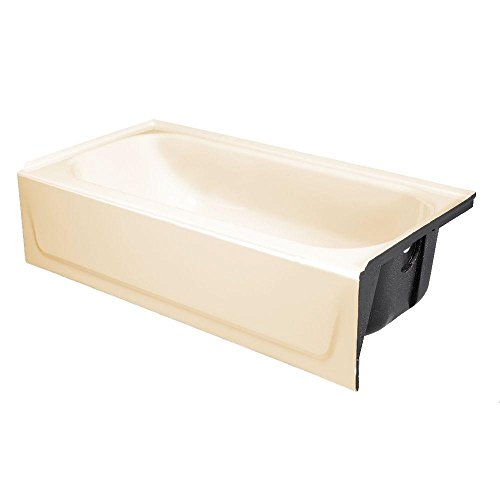
Bootz Industries Mauicast Soaking Tub, Right Hand Drain, Bone — Best Non-White Finish
Not every bathroom is white, and the replacement market punishes anyone renovating a bathroom in the almond and bone tones that were standard for decades: replace one fixture in bright white and the rest of the room looks dirty by comparison. The Mauicast’s verified title offers the increasingly rare alternative — a 5-foot right-hand-drain soaking tub in Bone. Mauicast is Bootz’s proprietary material name; as with Americast, we report it as named in the title and do not decode it into unverified composition claims. It suits renovators matching an existing bone/almond suite, and anyone who prefers a warmer tone. It is less suited to new white bathrooms, obviously, and the right-hand drain is a hard constraint.
Strengths
- Bone finish (per listing title) — matches existing almond/bone fixtures instead of fighting them
- 5 ft soaking format in the standard alcove length
- Bootz distribution means a widely available, mainstream product rather than a specialty order
Trade-offs
- Color-matching cuts both ways: if you later redo the room in white, the bone tub becomes the mismatch
- Material composition behind the Mauicast name is not stated in the verified title
- Right-hand drain only in this listing
| Spec | Detail (as verified) |
|---|---|
| Material | Mauicast (proprietary name, as listed) |
| Length | 5 ft (60 in) |
| Finish / color | Bone |
| Drain | Right hand |
The renovation logic here is about scope control. A tub-only replacement in a bone bathroom, done in bone, is a weekend project that refreshes the room. The same replacement in white is the first domino of a full gut renovation — toilet, sink, and tile all suddenly look wrong. Neither choice is incorrect, but they differ by an order of magnitude in cost and disruption, and the Mauicast exists to let you choose the smaller project honestly.
If you do match the bone, order any other replacement fixtures (toilet seat, sink) in the same project window, because dye lots and the definition of “bone” drift slightly between makers and years.
Best for: tub-only replacements in existing bone/almond bathrooms / Not suited for: new white bathrooms or left-drain rough-ins

Kingston Brass Cast Iron 3-Wall Alcove Tub, 60″ — Best Premium Cast Iron
Cast iron is where the porcelain-enamel tradition starts, and the Kingston Brass tub is the premium expression of it in this guide: a 60-inch cast iron body in a three-wall alcove format, in white. The verified title states the material plainly — cast iron — though, in keeping with this guide’s honesty rule, it does not use the word porcelain, so the enamel finish is reported as the product class’s defining characteristic rather than a title-verified claim; confirm the finish description on the listing if you need it in writing. What cast iron buys is substance: a tub that does not flex, does not drum, holds bathwater heat noticeably longer than steel, and can serve for generations — with refinishing, effectively indefinitely. It suits forever-home renovations. It demands, in return, a floor that can carry it and an installation plan that respects its weight.
Strengths
- Cast iron body (per listing title) — the most durable, quietest, most heat-retentive substrate in this guide
- Standard 60″ three-wall alcove format, so the premium is in the material, not in custom sizing
- The refinishable enamel-class surface gives this tub a multi-decade service horizon
Trade-offs
- Weight: cast iron tubs are extremely heavy — floor structure, carrying path, and installer count must be planned, especially above ground floor
- Premium tier by a wide margin (check price on Amazon)
- Right-drain configuration in this listing (model VCTAP603015R) — confirm drain side matches your rough-in
| Spec | Detail (as verified) |
|---|---|
| Material | Cast iron |
| Length | 60″ |
| Installation | 3-wall alcove |
| Color | White |
The structural conversation is not optional with cast iron. A filled cast iron tub with a bather concentrates several hundred pounds in a small footprint. On a slab, that is a non-issue. On a wood-framed upper floor — especially in an older home, and especially if the tub replaces a lightweight acrylic or steel unit the joists were sized around — a contractor or engineer should confirm the framing before the tub is carried upstairs, not after it is sitting in the hallway. Budget for the crew as well: this is a multi-person carry with no improvisation.
For the right house, though, this is the buy-once pick of the guide. Every other substrate is a compromise against cast iron’s feel and longevity, accepted for reasons of weight, budget, or schedule. If none of those constraints bind you, they should not decide for you either.
Best for: forever-home renovations on structure that can carry it / Not suited for: upper-floor installs with unverified framing, tight budgets, or fast timelines
Comparison Table
| Pick | Badge | Key spec (verified) | Best for |
|---|---|---|---|
| PROFLO Folsom | Best Overall | Enameled steel, 60 x 30, left drain | Standard alcove renovations |
| Bootz Steel Tub | Best Budget | Steel, 60 x 30 x 14¼”, left drain | Rentals and budget remodels |
| American Standard Princeton | Best Above-Floor Rough-In | Americast, 60 x 30, built-in overflow | Remodels with drain uncertainty |
| American Standard Cambridge | Best Wider Soak | Americast, 60 x 32, right drain | Bathers wanting width |
| Bootz Mauicast | Best Non-White Finish | Mauicast, 5 ft, Bone, right drain | Matching bone/almond suites |
| Kingston Brass Cast Iron | Best Premium | Cast iron, 60″, alcove | Forever-home renovations |
How to Choose a Porcelain Tub
Choose the substrate first — that is the real decision
Enameled steel (PROFLO, Bootz) is light, affordable, and chip-prone if abused. Cast iron (Kingston Brass) is the durability and feel benchmark at maximum weight and price. Engineered composites under proprietary names (Americast, Mauicast) sit between: more solid than steel, lighter than iron. Decide by your floor structure, your budget, and how long this bathroom must serve — the finish on top is similar across all three, which is why this guide reports materials so carefully.
Measure the alcove, then measure it again
Standard alcoves are built for 60-inch tubs, but “standard” is a claim to verify, not assume: measure stud-to-stud length, the width available for a 30- versus 32-inch tub, and the ceiling height for maneuvering the tub in. Older homes routinely hide a half-inch surprise. A tub that arrives and does not fit is an expensive sculpture.
Get the drain side right
Stand in front of the tub location facing it, as you would to step in. If the drain and plumbing wall are on your left, you need a left-drain (left-hand) tub; on your right, right-drain. This single detail invalidates more tub orders than any other — every pick in this guide states its drain side, and matching yours is a hard filter, not a preference.
Depth and water capacity are comfort and utility bills
A standard tub like the Bootz at 14¼ inches is a shower-bath: fine for kids and quick baths. Soaking wants more depth and, in the Cambridge’s case, more width — paid for in fill time and hot water. Match the tub to your actual bathing habits and your water heater’s recovery, not to the best bath you took once at a hotel.
Aprons, flanges, and the surround relationship
Two construction details decide how the tub meets the room. An integral apron (the Cambridge’s design) is the finished front face built into the tub — the standard alcove look, with nothing extra to frame or tile on the front. A tiling flange — the upturned edge around the tub’s wall sides — is what the surround’s waterproofing laps over; its presence and height determine how the tile or panels terminate. When comparing tubs, confirm both: an apron style that matches your design intent, and flange details compatible with the surround system you are installing. These are listing-detail checks rather than title claims, which is why this guide flags them as decisions instead of specifications — but skipping them is how a correct tub becomes an awkward installation.
Plan the installation before the purchase
Decide who installs, how the tub reaches the bathroom (door widths, stairs, turns), what supports it (level bedding per manufacturer instructions), and what the above-floor rough-in question is for your plumbing. The Princeton exists for one of those answers; the Kingston demands the most planning; the steel tubs forgive the most. The cheapest tub installed badly is the most expensive outcome in this guide.
Alcove, Drop-In, and Freestanding: Formats in the Enamel World
Every pick in this guide is an alcove tub — the three-wall format with an integral or applied apron front — because that is what the overwhelming majority of bathrooms are built for and what replacement shopping almost always means. But enamel-finished tubs exist in the other formats too, and renovators planning a full gut should know the trade-offs before defaulting. Drop-in enamel and cast iron tubs sit into a framed deck: they allow undermount looks and surround materials that wrap the rim, at the cost of building the deck itself and losing the apron’s simplicity. They suit primary bathrooms being rebuilt from the studs. Freestanding cast iron tubs — the classic slipper and roll-rim styles — are the aesthetic summit of this material class and its logistical summit too: the full weight of iron with none of the alcove’s wall support, floor-mounted or wall-mounted plumbing that must be planned to the inch, and a price tier above everything in this guide.
The honest advice for most readers is unglamorous: if your bathroom has an alcove, buy an alcove tub and spend the format savings on the valve, the waterproofing, and the tile. Format changes are architecture, not shopping. Choose one only when the renovation is already opening the room to the studs and the budget has absorbed the plumbing relocation — in which case, do the structural verification for cast iron at the design stage, while changing your mind is still free.
How to Install an Alcove Tub (Overview for Planning)
- Verify rough-in first: alcove dimensions, drain location and side, supply positions, and floor level and structure — before the old tub comes out, if possible.
- Remove and inspect: take out the old tub, then inspect the subfloor and framing for water damage. This is the only moment you can fix rot cheaply; never tub over it.
- Dry-fit the new tub: set it in place without fastening, confirm level in both directions, drain alignment, and apron contact with the floor.
- Bed and level: install the manufacturer’s specified support — many tubs call for a mortar bed or specific support feet. A level, fully supported base is what makes an enamel tub feel solid and stay quiet.
- Connect waste and overflow, then water-test: fill the tub, check every joint for leaks, and let it sit full — weight reveals marginal seals that an empty test misses.
- Secure and seal: fasten the flange to studs per instructions, then waterproof the surround system before tiling or paneling. The tub’s enamel will outlast everything around it; make the surroundings worthy of it.
This is an overview for planning and for talking to an installer, not a substitute for the manufacturer’s instructions or local code — and cast iron installs, in particular, are professional work. Two scheduling notes save real money: do the plumbing and structural work while the bathroom is open rather than in a second mobilization, and have the tub on site before the installer is booked, because a delayed delivery against a booked crew is the most common way a two-day job becomes a two-week one. Inspect the tub the day it arrives, too — enamel damage from shipping is a claim you want to file before the tub is installed, not after.
Caring for Porcelain Enamel: Keeping the Finish for Decades
Porcelain enamel is hard but not invulnerable, and its care rules are specific. Clean with non-abrasive cleaners and a soft cloth or sponge; abrasive powders and pads micro-scratch the gloss, and micro-scratches are where stains take hold over the years. Avoid leaving metal cans and bottles standing in the tub — rust rings from a shaving-cream can are the most common enamel stain, and they are entirely self-inflicted. Address chips the week they happen, not the year: a chip in enamel over steel is an open door for water to reach the substrate, and the rust that follows spreads under the surrounding enamel. Touch-up kits are inexpensive; refinishing is not.
For the tub’s surroundings, keep silicone seals and grout lines maintained. Enamel tubs routinely outlive two or three rounds of caulk, and failed caulk is how water reaches the wall structure behind a tub that itself is in perfect condition. Once a year, inspect the seal where tub meets surround, and renew anything cracked or lifting. Finally, be thoughtful with bath mats: suction-cup mats left permanently in place can trap moisture against the finish and leave marks; use them for the bath, then hang them to dry. None of this is burdensome — an enamel tub asks for perhaps an hour of attention a year, and repays it with decades of service.
Refinishing vs Replacing: The Decision Enamel Owners Eventually Face
Because enamel substrates — cast iron above all — outlast their finishes, owners eventually choose between refinishing the existing tub and replacing it. Refinishing (also called reglazing) applies a new coating in place: it costs a fraction of replacement, avoids demolition, and suits a structurally sound tub whose finish is stained, worn, or the wrong color. Its limits are real: a refinished surface is a coating, not fused enamel, and it typically serves years rather than decades before needing renewal, with stricter care requirements in the meantime. Replacement costs more and disrupts more, but resets every clock — finish, substrate, and the opportunity to correct drain, size, and installation sins from the original build.
The practical rule: refinish when the tub body is cast iron or quality composite, the size and drain suit the room, and only the surface is tired. Replace when the substrate itself is the problem (a flexing, rusting budget steel tub), when the format is wrong for the household, or when the surrounding renovation is already opening the walls. The picks in this guide are for the replacement side of that decision — and the Kingston Brass, notably, is the tub most likely to make refinishing the right answer for its next owner in thirty years.
Common Buying Mistakes
- Ordering the wrong drain side. The classic. Use the facing test in the buying guide and confirm against your existing tub before ordering.
- Assuming “porcelain” describes the whole tub. Porcelain enamel is a finish over steel, iron, or composite. Buy the substrate deliberately.
- Ignoring floor structure for cast iron. Weight is a specification. Verify framing and plan the carry before the tub ships.
- Skipping the bedding. An unsupported enamel tub flexes, drums, and stresses its finish. The base is part of the product.
- Trusting the word “standard” for your alcove. Measure stud to stud. Older bathrooms lie.
- Choosing the tub before the bather. Tubs are used by actual bodies: a tall bather in a 60-inch tub lives with knees bent, a small bather in a deep wide tub feels adrift. If the primary bather is at either end of the size range, let their comfort — tested by sitting in a showroom tub when possible — outrank every other criterion in this guide.
- Blowing the budget on the tub and starving the valve and waterproofing. Bathrooms fail at joints and valves, not at enamel. Fund the system.
- Ordering before checking the delivery path. A 60-inch tub — above all a cast iron one — must physically travel from the truck to the bathroom. Narrow doors, tight stair turns, and small landings have stranded many tubs in garages. Walk the route with a tape measure before the order, not after the delivery.
- Matching a color by screen. “Bone” and “white” vary by maker and dye lot, and a monitor will not tell you the truth. If you are matching existing fixtures, compare a physical sample or accept that a near-match under bathroom lighting is the realistic standard.
Final Recommendation
For the standard renovation, buy the PROFLO Folsom — explicitly enameled steel, standard format, no decoding required. On a tight budget, the Bootz steel tub installed properly is the honest workhorse. Remodelers unsure of their drain alignment should take the Princeton’s above-floor rough-in insurance; bathers who want room should take the Cambridge’s width; bone-bathroom owners should match with the Mauicast; and forever-home renovators with the structure for it should buy the Kingston Brass cast iron once and be done. In every case: measure twice, match the drain, and fund the installation like it matters — because with tubs, it is most of the outcome.
Related guides in this series: Best Affordable Tubs, Best 72 Bathtubs, Best Acrylic Freestanding Bathtubs, Best Undermount Bath Tubs, and Best Walkin Bath Tubs.
Frequently Asked Questions
Are porcelain tubs better than acrylic tubs?
They are different rather than simply better. Porcelain enamel surfaces are harder, more scratch- and stain-resistant, and feel more solid; acrylic is lighter, warmer to the touch, easier to install, and simpler to repair. Choose enamel for durability and feel, acrylic for weight, budget, and installation simplicity.
Can a chipped porcelain enamel tub be repaired?
Yes — chips are typically repaired with enamel touch-up or epoxy repair kits, and prompt repair matters because a chip exposes the substrate (steel especially) to rust. Deep or widespread damage can be professionally refinished, which is one of cast iron’s great advantages: the tub body outlasts several finishes.
How do I know if my floor can support a cast iron tub?
On a concrete slab, almost certainly yes. On a wood-framed floor, have a contractor or structural engineer check the joist size, span, and condition — particularly in older homes or where the previous tub was lightweight. Make the check before ordering; a filled cast iron tub with a bather is several hundred pounds on a small footprint.
What is the difference between left-hand and right-hand drain?
It describes which end of the tub the drain sits at, determined facing the tub as you step in. It must match your plumbing wall. It cannot be changed after the fact — the tub is molded for it — which is why this guide states the drain side for every pick.
Is a porcelain enamel tub a good choice for a kids’ bathroom?
Yes, with the care rules understood. Enamel’s hardness shrugs off the toy boats, dropped cups, and enthusiastic splashing of a family bathroom better than softer surfaces, and its cleanability suits the room’s hygiene demands. The two cautions are chips — teach the no-standing-metal-toys rule early and repair any chip promptly — and slipperiness: enamel is smooth when wet, so use a quality bath mat during kids’ baths and remove it to dry afterward rather than leaving it suctioned in place.
Do enameled steel tubs keep water warm?
Less well than cast iron or composite. Steel is thin and conductive, so bathwater loses heat faster. For shower-primary use it hardly matters; for long soaks, cast iron’s mass is a genuine comfort advantage, and an insulating mortar bed under a steel tub helps somewhat.
What should I budget beyond the tub itself?
Plan for the valve and trim, waste-and-overflow hardware if not included, bedding and leveling materials, surround waterproofing, and the labor — which for a tub swap commonly exceeds the price of a budget tub. Cast iron adds potential structural verification and a larger installation crew. A realistic total budget is usually a multiple of the tub’s sticker, which is why this guide keeps steering money toward the system rather than the fixture alone.
Can I replace just the tub and keep my existing tile surround?
Sometimes. If the surround and its waterproofing are sound and the new tub’s flange height and apron match the existing tile lines, a tub-only swap is possible — the Mauicast pick exists for exactly this kind of scoped project. If the tile or backer is damaged, or the flange geometry differs, the surround comes off, and the project grows. An installer can judge this in one visit; get that judgment before ordering.
Are wider tubs like the 32-inch Cambridge hard to clean?
No more than standard tubs — the cleaning reach across a 32-inch tub is comfortable for most adults. The real differences of width are water volume and fill time, not maintenance. What does make enamel harder to clean over time is abrasive damage to the gloss, which is a cleaner-choice issue, not a size issue.
Should I keep my old cast iron tub instead of replacing it?
Often, yes. If the existing tub is cast iron, correctly sized, and on the right drain, refinishing usually beats replacing it with anything short of another cast iron tub — you keep the best substrate in this guide and renew only its surface. Replacement makes sense when the old tub is steel or acrylic, the wrong size or drain, or when the surrounding renovation is already opening the floor and walls around it.
How long does a porcelain enamel tub last?
The substrate decides the ceiling: a cast iron body can serve for many decades and be refinished; enameled steel commonly serves one to two decades or more with care, its life shortened mainly by unrepaired chips; composites sit between. In practice, installation quality and chip care predict lifespan better than the material alone.


