Disclosure: airfryerkitchensupply.com is reader-supported. When you buy through links on our site, we may earn an affiliate commission at no extra cost to you.
Where to buy
Start with the KOHLER Villager if you want the definitive porcelain-enameled cast iron alcove tub, or the American Standard Cambridge if you want the classic apron-front porcelain-enamel design at a lighter weight. On a budget, the PROFLO Folsom and Bootz models deliver real porcelain enamel over steel. Every linked pick was verified against Amazon’s catalog before publication. Use the Check on Amazon buttons to check the current price on Amazon — and confirm left- versus right-hand drain before ordering, because a tub is the hardest item in any bathroom to exchange.
Introduction
When shoppers search for the best porcelain bathtubs, they are usually picturing the tubs that defined the twentieth-century bathroom: gleaming white, hard as stone, warm-looking and colder to the first touch, and heavy enough to outlive the house’s mortgage twice over. A clarification worth making up front: no modern bathtub is made of solid porcelain. “Porcelain bathtub” means a structural shell — cast iron or steel — coated in porcelain enamel, a glass-like layer fused to the metal at high temperature. That enamel is the surface you bathe against: glossy, non-porous, stain-resistant, and famously durable, which is why century-old enameled tubs are still in service while acrylic tubs from the 1990s have gone chalky and soft.
The six picks below are all alcove-format porcelain-enamel tubs — the three-wall installation most homes have — split between enameled cast iron (the heavyweight champion: KOHLER’s Villager and Bellwether) and enameled steel or engineered equivalents (American Standard’s Americast Cambridge, Bootz’s Mauicast and steel lines, and PROFLO’s Folsom). The badges separate them by what actually differs: weight and longevity, soaking depth, budget tier, and installation difficulty. If you want a tub your grandchildren could refinish rather than replace, you are shopping in the right category — read on for which one fits your floor, your plumbing, and your back.
In this guide
Quick Picks
- KOHLER K-714-0 Villager — Best Overall. The benchmark enameled cast iron alcove bath with a 4-inch ledge and right-hand drain. Check on Amazon
- American Standard Cambridge Americast — Best Apron-Front Classic. Porcelain-enamel finish over Americast construction: cast-iron looks at a fraction of the weight, with an integral apron. Check on Amazon
- Bootz Mauicast Soaking Tub — Best for Soaking on a Steel Budget. Porcelain-enameled steel soaking tub with a right-hand drain, in a warm bone finish option. Check on Amazon
- KOHLER Bellwether 66″ — Best Larger Cast Iron. A 66×32 enameled cast iron alcove bath with integral apron and slip-resistant surface for bigger bathrooms and taller bathers. Check on Amazon
- PROFLO Folsom 60×30 Enameled Steel — Best Value. A straightforward porcelain-enameled steel soaking tub for three-wall alcove installs, left-side drain. Check on Amazon
- Bootz Industries Steel Bathtub — Best Budget. The classic 60-inch enameled steel tub format that has anchored budget remodels for decades. Check on Amazon
How These Picks Were Chosen
We restricted the field to genuine porcelain-enamel surfaces — enameled cast iron and enameled steel (including American Standard’s Americast, which bonds a porcelain enamel finish to a lighter engineered shell) — because that surface is the entire point of the keyword. Acrylic and fiberglass tubs, however good, were excluded from the pick list; they are a different product with a different lifespan story. Within the enamel field we weighed: enamel quality and thickness reputation by maker; shell material and its consequences (cast iron’s heat retention, rigidity, and multi-decade life versus steel’s lighter weight and friendlier price); soaking depth and interior dimensions, because a 60-inch tub’s bathing well varies enormously by design; drain handing availability; and installation reality, including whether the floor structure in a typical home can carry a filled cast iron tub plus bather.
Every pick was verified, with product identity matched against Amazon’s catalog, before receiving a link. We also favored models with long production histories — in this category, a design that has been manufactured for decades has effectively completed the world’s longest durability test, and its replacement parts and refinishing knowledge are everywhere.
The 6 Best Porcelain Bathtubs

1. KOHLER K-714-0 Villager — Best Overall
The Villager is the tub other alcove tubs are measured against: KOHLER enameled cast iron, 60 inches, with a 4-inch ledge, an integral apron profile in the classic style, and — in this verified listing — a right-hand drain. Cast iron is the connoisseur’s shell for reasons you can feel: it does not flex underfoot, it holds bathwater heat noticeably longer than thin shells, and its enamel, properly kept, outlasts the careers of the people who install it. The ledge gives bottles and a folded towel a home. It suits a forever-home remodel and bathers who take long soaks. It is less suited to second-floor bathrooms with questionable joists and to solo DIY installs — a cast iron tub is a multi-person, plan-the-route undertaking, and the floor must be verified to carry tub, water, and bather together.
Strengths
- Enameled cast iron: maximum rigidity, heat retention, and lifespan.
- Classic ledge design suits traditional and transitional bathrooms alike.
- KOHLER’s enamel and parts support are the category’s reference standard.
Trade-offs
- Very heavy — professional install and floor verification strongly advised.
- Premium tier within the porcelain category.
- Standard 60-inch length; tall bathers wanting more room should see the Bellwether.
The Villager earns Best Overall because it is the complete expression of what a porcelain bathtub promises: buy it once, bathe in it for decades, and if the enamel ever tires, refinish it rather than landfill it. In a renovation culture of fifteen-year fixtures, that permanence is the actual luxury. Choose the drain handing carefully, hire the install out unless you have help and experience, and this tub will quietly become the oldest reliable thing in your house.
Best for: forever homes, long soaks, traditional remodels. / Not suited for: weak floors or solo DIY installs.
Check on Amazon — check the current price on Amazon and confirm drain side.
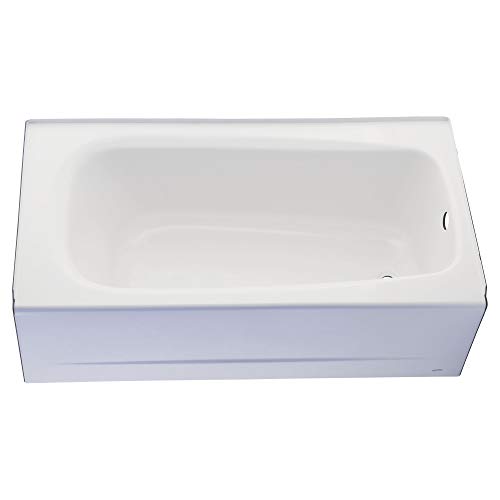
2. American Standard Cambridge Americast — Best Apron-Front Classic
The Cambridge pairs the porcelain-enamel bathing surface with American Standard’s Americast construction — an engineered shell that delivers much of cast iron’s rigidity and durability at substantially less weight — in a 60×32 apron-front soaking design with, in this listing, a left-hand drain. The integral apron gives the finished, furniture-front look that defines the classic alcove install. It suits remodelers who want the porcelain experience without reinforcing a floor or hiring a crane crew, and bathrooms where the wider 32-inch profile is welcome. It is less suited to purists who want true cast iron’s heat mass, and its apron-front format is specifically an alcove design.
Strengths
- Porcelain enamel surface with a much lighter shell than cast iron.
- Integral apron-front: clean finished look, classic proportions.
- 32-inch width gives a roomier bathing well than 30-inch tubs.
Trade-offs
- Less heat retention than solid cast iron.
- Apron-front only suits three-wall alcove installations.
- Americast is proprietary — repairs should follow American Standard guidance.
The Cambridge is the pragmatic classic: it looks like the porcelain tub in a heritage bathroom catalogue, bathes like one, and installs like a modern tub. For the huge number of remodels where cast iron’s weight is the single obstacle — older framing, second floors, a two-person DIY crew — Americast exists precisely to remove that obstacle while keeping the enamel surface that is the point of the exercise. It is the pick we would hand to most renovators who arrive asking for “a porcelain tub” without a structural engineer’s phone number.
Best for: classic looks without cast-iron weight, DIY-capable remodels. / Not suited for: cast-iron purists.
Check on Amazon — check the current price on Amazon and confirm drain side.
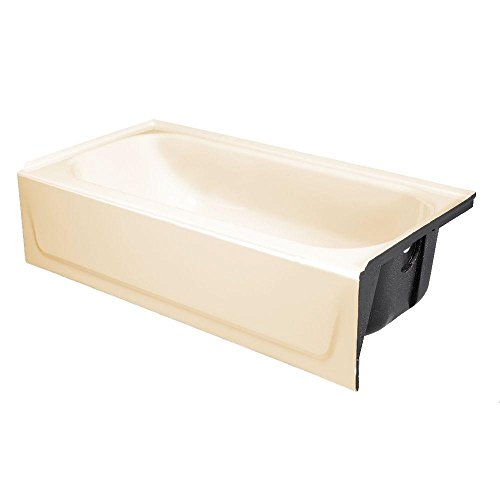
3. Bootz Mauicast Soaking Tub — Best for Soaking on a Steel Budget
Bootz is the name American plumbers have pulled out of the truck for generations, and the Mauicast is its soaking-oriented enameled steel design: a 5-foot, right-hand-drain tub in a bone finish, built around a porcelain enamel surface over a steel shell with a composition that aims for a warmer, less tinny bathing feel than basic steel. It suits bathers who prioritize soaking depth and enamel durability at a steel price, and remodels where the budget went to tile and needs the tub to be sensible. It is less suited to buyers who equate weight with quality — steel tubs feel different underfoot than iron — and its bone colorway, while warm, must be matched deliberately to the rest of the room’s whites.
Strengths
- Real porcelain enamel over steel at a working remodel budget.
- Soaking-oriented interior rather than a shallow builder-basic well.
- Bootz’s ubiquity means installers know it and parts are everywhere.
Trade-offs
- Steel shell retains less heat than cast iron; long soaks cool faster.
- Bone finish limits palette flexibility versus pure white.
- Enamel on steel can chip if struck hard — treat with reasonable care.
The Mauicast represents the honest middle of the porcelain market: the same glass-hard bathing surface as the premium tubs, on a shell that keeps the price and the installation within reach of an ordinary remodel. For a guest bath, a rental upgrade, or a family bathroom where the tub works daily and the budget is real, that trade is not a compromise — it is the correct engineering decision. Millions of American bathrooms run on exactly this formula because it works.
Best for: soaking on a budget, guest and family baths, rentals. / Not suited for: maximum heat retention.
Check on Amazon — check the current price on Amazon and confirm drain side and color.

4. KOHLER Bellwether 66″ — Best Larger Cast Iron
Six inches is a lifetime in bathtub ergonomics. The Bellwether stretches the enameled cast iron alcove format to 66×32 inches, with an integral apron and a slip-resistant surface, giving taller bathers a tub they can actually extend in. It suits primary bathrooms with a longer alcove — many older homes have them — and households where the main bather is tall enough that 60-inch tubs are a knees-up compromise. It is less suited to standard 60-inch alcoves, obviously, and it compounds cast iron’s weight with more of it; floor verification is not optional.
Strengths
- 66-inch length transforms soaking comfort for tall bathers.
- Enameled cast iron construction with integral apron.
- Slip-resistant floor surface is a genuine safety feature.
Trade-offs
- Requires a 66-inch alcove — measure before falling in love.
- The heaviest class of install on this list.
- Premium tier, plus likely professional installation cost.
Tall people endure standard tubs quietly for years, and the Bellwether is the correction: cast iron permanence at a length that fits an adult body. If your alcove measures long — and a surprising number of mid-century bathrooms do — this is the porcelain pick that turns the daily bath from a negotiation into a pleasure. Pair it with the floor check every cast iron tub deserves, and it becomes the room’s heirloom.
Best for: tall bathers, 66-inch alcoves, primary suites. / Not suited for: standard alcoves or weak floors.
Check on Amazon — check the current price on Amazon.

5. PROFLO Folsom 60×30 Enameled Steel — Best Value
PROFLO is the professional-channel brand many homeowners meet through their plumber, and the Folsom is its straightforward porcelain-enameled steel soaking tub: 60×30, three-wall alcove installation, left-side drain in this listing. There is no styling theater here — just the correct enamel surface, standard dimensions that fit the continent’s most common alcove, and a value tier that leaves budget for the rest of the bathroom. It suits landlords, flippers with a conscience, and homeowners who want real enamel without the premium brands’ pricing. It is less suited to design-led remodels wanting a wider or deeper well, and steel’s care rules apply: no dropped cast-iron skillets, no abrasive scouring.
Strengths
- Genuine porcelain enamel at a value tier.
- Standard 60×30 alcove dimensions fit most existing bathrooms.
- Plumber-channel brand: installers know the product.
Trade-offs
- Standard-depth well — a functional soak, not a deep one.
- Steel shell feel and heat retention trail cast iron.
- Plainer apron styling than the design-led picks.
The Folsom’s virtue is allocation: bathrooms have finite budgets, and a tub that delivers the durable enamel surface at a value price lets the tile, ventilation, and fixtures — the things you touch and see daily — get their share. For rental properties especially, enameled steel’s combination of low cost and long surface life beats acrylic’s replacement cycle handily. It is the professional’s quiet recommendation, and this guide is happy to repeat it.
Best for: value remodels, rentals, standard alcoves. / Not suited for: deep-soak or design-first projects.
Check on Amazon — check the current price on Amazon and confirm drain side.

6. Bootz Industries Steel Bathtub — Best Budget
The classic Bootz steel tub — 60 inches, 30 wide, right-hand drain in this listing — is quite possibly the most installed bathtub format in American history, and its survival at the budget tier is earned: porcelain enamel over steel, standard alcove dimensions, and a price that has launched a million bathroom refreshes. It suits first remodels, rental turnovers, and any project where the tub must be new, durable, and inexpensive simultaneously. It is less suited to soaking enthusiasts — the well is a standard bathing depth — and to anyone who will be bothered by steel’s lighter, cooler feel compared with iron.
Strengths
- The budget benchmark: real enamel, standard size, minimal cost.
- Light enough for straightforward two-person installation.
- Decades-long production history; universally understood by installers.
Trade-offs
- Standard depth — showers and quick baths yes, luxurious soaks no.
- Enamel chips if abused; budget steel is not the place for carelessness.
- Basic styling that disappears into the room rather than anchoring it.
Every category needs its honest floor, and this is the porcelain category’s: the least you can spend and still own a tub whose surface will outlast the mortgage if treated decently. For a rental refresh or a first home’s bathroom rescue, that is not settling — it is the smartest money in the room, freeing budget for the ventilation and waterproofing that actually protect the house. The Bootz steel tub has been the correct answer to “what tub for this budget?” for a very long time.
Best for: budget remodels, rentals, first homes. / Not suited for: deep soaking or luxury briefs.
Check on Amazon — check the current price on Amazon and confirm drain side.
Comparison Table
| Pick | Badge | Key spec | Best for |
|---|---|---|---|
| KOHLER Villager 60″ | Best Overall | Enameled cast iron, 4″ ledge | Forever homes, long soaks |
| American Standard Cambridge | Best Apron-Front Classic | Americast, 60×32, integral apron | Classic looks, lighter install |
| Bootz Mauicast | Best Soaking on a Budget | Enameled steel soaking tub | Family and guest baths |
| KOHLER Bellwether 66″ | Best Larger Cast Iron | 66×32 cast iron, slip-resistant | Tall bathers, long alcoves |
| PROFLO Folsom 60×30 | Best Value | Enameled steel, standard alcove | Rentals, value remodels |
| Bootz Steel Bathtub | Best Budget | Enameled steel, 60×30 | Budget remodels, first homes |
How to Choose a Porcelain Bathtub: Iron, Steel, and the Enamel Between Them
The first decision is the shell, because it sets weight, feel, heat, and price for the life of the tub. Enameled cast iron is the heirloom option: rigid underfoot, quiet, heat-retentive, and effectively permanent, at the cost of serious weight that demands floor verification and usually professional installation. Enameled steel delivers the same porcelain surface on a shell a fraction of the weight and price; it flexes and cools a little more, and its enamel — thinner substrate beneath — chips more readily under a hard dropped object. Americast-style engineered shells sit between: cast-iron manners at steel-adjacent weight, from a single maker. None of these is a wrong answer; they are answers to different houses. A ground-floor forever home argues iron. A second-floor rental argues steel. A classic remodel with a two-person crew argues Americast.
Second, measure the alcove and the bathing well separately. The alcove measurement is structural: length wall to wall, and the drain’s position and handing, which must match the tub you order — left and right drains are different products, and swapping one at install time is not a thing. The well measurement is experiential: interior length at the bottom, width, and soaking depth to the overflow. Two 60-inch tubs can differ by several inches of usable length and two inches of depth, which is the difference between a bath and a sit. Tall bathers should start at the Bellwether’s 66 inches and work down only if the alcove forbids it.
Third, think about the enamel’s life in your household. Porcelain enamel is glass: it resists stains, chemicals, and decades of cleaning, and it hates point impacts and abrasive powders. Homes that can keep a pumice-and-steel-wool habit away from the tub will get generations from it; homes that cannot should budget for eventual chip repair — which, to enamel’s credit, is repairable, unlike a gouged acrylic surface. Finally, plan the install honestly: who carries it, does the floor carry it filled, and does the doorway route admit it. More porcelain tub projects die in the hallway than in the bathroom.
How to Install an Alcove Porcelain Tub and Care for Its Enamel
Installation begins before the tub leaves its crate: verify the alcove dimensions and drain handing against the delivered unit, inspect the enamel under bright light for shipping chips (far easier to resolve now than after tiling), and confirm the floor structure — for cast iron, a filled tub plus bather concentrates several hundred pounds, and older joists deserve a professional opinion. Set the tub on a level ledger and mortar bed or the maker’s specified support; an enameled tub that rocks will eventually crack grout lines and stress its own enamel. Level it precisely, because a tub is its own water-level reference every time it fills.
Connect the drain and overflow with the tub accessible, test-fill to the overflow, and inspect every joint dry-eyed before the walls close. Then protect the enamel during the rest of the renovation like it is already finished — because it is: cover it with cardboard and a drop cloth, forbid tool storage in it, and keep gritty boots out. More new tubs are chipped by the renovation than by the following twenty years of bathing.
Care afterward is simple and specific. Clean with non-abrasive cleaners and a soft cloth or sponge; enamel’s gloss is its stain defense, and abrasive powders dull it microscopically until soil starts to cling. Address rust stains from dripping fixtures promptly, wipe the tub dry in hard-water homes to prevent mineral filming, and repair any chip quickly with a porcelain touch-up product matched to the tub — a sealed chip is cosmetic, while an open chip in steel can rust and spread under the enamel. Follow that modest discipline and the surface you installed is the surface your grandchildren will argue about refinishing versus keeping, which is the entire promise of porcelain.
Porcelain Enamel vs Acrylic vs Fiberglass: An Honest Comparison
Because many shoppers cross-shop porcelain tubs against acrylic and fiberglass, the comparison deserves plain treatment. Porcelain enamel — this guide’s field — is a glass surface fused to metal. It is the hardest, most stain-resistant, and longest-lived bathing surface in the residential market, and it can be refinished when it eventually tires. Its costs are weight, a colder first touch, and vulnerability to point-impact chips. Acrylic is a plastic sheet formed over a reinforcing shell: warm to the touch, light, available in sculptural shapes no metal tub can take, and repairable for scratches — but it flexes, can dull and stain over years, and its lifespan is measured in a decade or two rather than generations. Fiberglass (gelcoat) is the budget form of the same idea: lightest and cheapest, and the first to chalk, crack at stress points, and look tired.
The honest summary is that these materials answer different briefs. A freestanding sculptural soak demands acrylic — porcelain enamel does not do that shape at sane prices. A thirty-year alcove install in a family bathroom argues enamel, because the alcove format hides the shell and exposes only the surface, and enamel’s surface is simply better for longer. A quick rental flip argues fiberglass or enameled steel, and between those two, steel’s enamel outlasts gelcoat while costing little more. Shoppers who choose porcelain after this comparison choose it for the surface and the permanence, accepting weight as the toll — and it is a toll worth paying exactly once, at install, for a benefit collected at every bath for decades.
Refinishing and Resale: The Porcelain Tub’s Second Life
Porcelain tubs participate in an economy acrylic tubs mostly cannot: refinishing. When an enameled surface eventually dulls, stains at a worn spot, or clashes with a new design era, a professional refinisher can strip, repair, and recoat it in place for a fraction of replacement cost — no demolition, no plumbing disturbance, no landfill. A well-kept cast iron tub may go half a century between such events, and can accept several across its life. This changes the purchase mathematics fundamentally: the Villager and Bellwether are not fixtures with lifespans, they are infrastructure with maintenance intervals, more like a roof than a refrigerator.
It also changes resale conversations. Real estate professionals consistently treat a sound enameled cast iron tub as an asset in older homes — buyers read it as evidence of the house’s original quality — while a tired acrylic unit reads as a pending project. Even the steel picks participate modestly in this logic: an enameled steel tub in good order is a neutral-to-positive fixture, and its replacement, when the day comes, is a standard-size swap any plumber can execute in hours because the format has not changed in decades. Permanence, in the porcelain category, is not nostalgia. It is the total-cost and total-hassle minimum over any ownership horizon longer than a flip.
Common Buying Mistakes
Ordering the wrong drain handing. Left and right are determined by facing the tub as you would enter it, and they are not interchangeable at install time. Confirm against your plumbing before ordering — a tub is the worst item in the house to exchange.
Assuming the floor can carry cast iron. Tub plus water plus bather is a serious point load, especially in older second-floor bathrooms. Verify structure first; choose steel or Americast if the answer is no.
Judging tubs by exterior length alone. Interior well dimensions and soaking depth decide bathing comfort, and they vary widely within the same 60-inch class.
Cleaning enamel with abrasive powders. You are sanding glass. Non-abrasive cleaners only, or the gloss that makes enamel stain-resistant is polished away by your own hand.
Leaving chips unrepaired on steel tubs. A chip through enamel to steel invites rust that undermines surrounding enamel. Touch-up is cheap and quick; delay is neither.
Storing tools in the new tub during renovation. The classic self-inflicted wound. Cover the tub, declare it off-limits, and keep the ladder elsewhere.
Alcove Dimensions and Drain Handing: Getting the Order Right the First Time
More porcelain tub orders go wrong on dimensions than on any other detail, so the measurement protocol deserves its own section. Measure the alcove stud to stud, not finish to finish, at both the floor and the height of the tub’s rim — old walls lean, and a tub that fits at the base may bind at the top. Record the length in three places; use the smallest. Then establish the drain position: its distance from the back wall and from each end wall, and its handing, determined by standing at the front of the tub as you would to enter it — drain on your right is a right-hand tub. Photograph the existing drain and overflow with a tape measure in frame; that photo is worth a paragraph of description when confirming an order.
Account for the tub’s own geometry next. Apron height varies, and it decides whether your finished floor meets the apron cleanly; rim width decides how the surround’s bottom edge lands; and the tiling flange — the raised lip that tucks behind the wall finish — must be present and intact on an alcove install, because it is the waterproofing detail that keeps shower water out of the wall for the life of the tub. If you are replacing an existing tub, measure its rough dimensions after demolition if at all possible: finished-room measurements of the old tub understate the space the new one can use. Finally, walk the delivery route with a tape: doorway widths, the hallway turn, the stairwell’s ceiling at the turn. Cast iron forgives nothing in transit. An hour with a tape measure is the cheapest insurance in the entire renovation, and the porcelain category — heavy, rigid, unforgiving — is where it pays out most reliably.
Soaking Depth, Water Capacity, and the Bather’s Body: Reading Tub Specs Like a Bather
Tub specifications are written by engineers; baths are taken by bodies. Translating between the two prevents the most common porcelain disappointment — a beautiful tub that bathes badly. The three numbers that matter are soaking depth (floor of the well to the overflow), bottom length (the flat of the well where your body actually rests), and lumbar slope (the angle of the backrest end, which decides whether you recline or sit at attention). A standard builder tub’s soaking depth can be several inches shallower than a soaking design’s, and that difference is the difference between water at your ribs and water at your shoulders — the whole point of a bath. The Bootz Mauicast’s soaking orientation and the Bellwether’s length exist in this guide precisely because those interior numbers, not the shared 60-inch exterior class, separate a bath from a rinse.
Water capacity cuts both ways: a deeper, longer tub is a better bath and a larger water-heater demand. Households with modest tank heaters and a household queue for hot water should weigh the Bellwether-class volume honestly — the finest tub in the world disappoints at a lukewarm two-thirds fill. Body size completes the translation: bathers over six feet should start at 66 inches; smaller bathers in oversized tubs sometimes find they float and slide rather than settle, and prefer the standard well’s purchase. If a showroom is available, the sit test — dry, clothed, undignified — remains the most reliable specification ever devised, and every number in this section is a proxy for it. Buy the interior your body wants; the exterior is the room’s concern, and the room is more forgiving than your spine.
Alcove vs Drop-In vs Freestanding: Why This Guide Stays in the Alcove
Porcelain enamel tubs concentrate in the alcove format for structural reasons worth understanding before you wish otherwise. An alcove tub installs between three walls, which support its long rim and hide its unfinished sides — exactly the arrangement a heavy metal tub wants. Drop-in enameled tubs exist but are rarer: the tub drops into a framed deck, the deck carries the rim, and the enamel shows only inside the well. They suit remodels with the floor structure and budget for the deck build. Freestanding porcelain-enameled cast iron is the heritage format — the clawfoot tub — and it survives as a specialty and reproduction market rather than a mainstream one: magnificent, heavy beyond most floors’ casual capacity, and plumbed exposed, which is its charm and its complication.
For the overwhelming majority of homes replacing a tub in an existing bathroom, the alcove is not a limitation but the correct answer: the walls are already there, the plumbing is already roughed for it, and the format lets the money go into the enamel and the shell instead of into framing and deck carpentry. If your heart is set on freestanding, shop that category on its own terms — acrylic dominates it for weight reasons, with cast iron as the premium exception — and do not let anyone sell you an alcove tub as a freestanding substitute. Format honesty, like drain handing, is decided before the order, not during the install.
There is also a quieter environmental argument that belongs in a porcelain decision. A cast iron tub is, materially, a lump of recycled iron wearing a glass coat: it is manufactured substantially from recycled content, it serves for generations without replacement, and at the end of its very long life the iron returns to the scrap stream rather than a landfill — a fate no fiberglass tub, which is effectively unrecyclable, can claim. Enameled steel shares most of that story. In a renovation culture anxious about disposable everything, the porcelain tub is one of the few remaining buy-it-for-life objects a household can still purchase at an ordinary price, and for some buyers that fact alone settles the iron-versus-steel-versus-acrylic debate before the tape measure comes out.
The surrounding surround matters more to a porcelain tub’s life than most buyers realize. The tiling flange and the wall finish above it are the tub’s raincoat: shower water runs down the wall, meets the flange, and is directed into the tub — provided the surround is installed to the flange and the caulk line at the rim is maintained. A porcelain tub with a neglected surround fails from the wall inward, not from the enamel outward, which is why the install section of this guide spends its attention there. Inspect that caulk line yearly, renew it when it cracks or darkens, and the enamel beneath it will be bathing your grandchildren in a room whose walls are still sound. The tub is the permanent part; the sealant is the sacrificial part, and treating them in that order is the whole maintenance philosophy of this category in one sentence.
One more body-and-bath consideration: step-over height and entry. Alcove tubs ask the bather to lift a leg over the apron, and the apron heights across this list are broadly similar — but households planning to age in place should note the measurement now, because it interacts with grab-bar placement and with the day a shower seat enters the picture. Porcelain tubs pair well with that future: their rigid rims and walls accept properly anchored bars when installed into blocking, and the enamel’s slip profile can be managed with the Bellwether’s slip-resistant floor or a quality mat. A tub bought for permanence should be bought with the household’s whole timeline in view — the porcelain category, uniquely, will still be there for all of it, which is precisely its argument.
And if you inherit a porcelain tub rather than buying one — the common case in older homes — this guide’s care sections are your ownership manual: identify the shell by its weight and sound (cast iron rings dull and deep; steel is lighter and tinnier), repair chips promptly, clean without abrasives, and maintain the surround’s caulk. An inherited enameled tub in sound condition is not a renovation problem waiting to happen; it is the best fixture in the house, and it will accept refinishing decades from now that no other tub material in the home can match.
Finally, register the purchase in whatever way the maker offers and keep the enamel’s documentation with the house’s papers. Porcelain tubs outlive their paperwork by default, and the next owner — or the refinisher you hire in twenty years — will thank you for the model number, the drain handing, and the install date being findable in a drawer rather than guessable under a flashlight. That small act of record-keeping is the final, fitting ritual of buying a fixture designed to outlast everyone currently in the room: it treats the tub as what it is, a permanent part of the house’s story, documented like the roof and the foundation rather than discarded like an appliance.
Keep that documentation habit and the tub’s story stays legible for as long as the tub itself lasts — which, in this category, is the entire point of the purchase and the reason it rewards the small disciplines this guide has asked of you: measure carefully, install properly, clean gently, and record what you did.
Measure twice, order once, and the porcelain category will repay the care for as long as you own the house.
Final Recommendation
For the definitive porcelain bathtub, buy the KOHLER Villager and install it once, properly, for good. If cast iron’s weight rules your project out, the American Standard Cambridge keeps the porcelain surface and classic apron-front looks at a manageable weight. Tall bathers with a long alcove should stretch to the KOHLER Bellwether 66″. On real-world budgets, the Bootz Mauicast soaks best, the PROFLO Folsom balances value and provenance, and the Bootz steel tub remains the budget benchmark. Whichever you choose: verify the floor, confirm the drain, protect the enamel — and enjoy the rare modern purchase that is built to be permanent.
Related guides in this cluster: Best Bathtubs, Best Alcove Bathtubs, Best Cast Iron Bathtubs, and Best Soaking Tubs.
Frequently Asked Questions
Do porcelain tubs need special plumbing or drains?
No — alcove porcelain tubs use standard drain and overflow assemblies in standard positions, which is part of their renovation friendliness. What they do need is correct drain handing ordered in advance and, for cast iron, an installer who plans the set and support properly. If your existing tub is a standard alcove unit, a porcelain replacement in the same size and handing is among the most predictable swaps in bathroom remodeling.
How much does it cost to install a porcelain bathtub?
Costs vary widely by region and by whether plumbing moves, but the structure of the bill is consistent: the tub itself is often the smaller line; labor, surround repair, and any floor reinforcement make up the rest. Cast iron installs sit at the top of the range because of weight and crew size. The cheapest install is a same-size, same-drain steel or Americast swap into a sound alcove — one more reason accurate pre-measurement, covered in this guide, is where the money is saved.
Are porcelain bathtubs really made of porcelain?
The bathing surface is porcelain enamel — a glass-like coating fused at high temperature — over a cast iron or steel shell. No modern tub is solid porcelain; the enamel-over-metal construction is what gives the category its hardness, gloss, and longevity.
Cast iron or steel — which porcelain tub lasts longer?
Cast iron, decisively: its enamel sits on a rigid, massive substrate that resists flexing and impact, and century-old examples remain in service. Enameled steel is still far more durable than acrylic or fiberglass, but its thinner shell makes chips and eventual wear arrive sooner under hard use.
Can a chipped porcelain tub be repaired?
Yes. Small chips can be filled and color-matched with porcelain repair products, and a worn tub can be professionally refinished with a new enamel-like coating. Repair chips on steel tubs promptly, because exposed steel rusts and can spread damage beneath the surrounding enamel.
Will a cast iron tub crack my floor?
A properly framed bathroom floor in good condition generally handles it, but the combined load of tub, water, and bather is substantial. In older homes or second-floor installs, have the joists assessed first — or choose an enameled steel or Americast model and remove the question entirely.
How do I clean a porcelain enamel tub without damaging it?
Use non-abrasive liquid cleaners and a soft cloth or sponge. Avoid scouring powders, steel wool, and pumice except on the most stubborn mineral deposits with great care. The enamel’s gloss is functional — preserving it preserves the stain resistance.
Why are porcelain tubs colder than acrylic at first touch?
Metal conducts heat away from skin faster than plastic, so the initial contact feels cooler. The trade reverses in the bath itself: cast iron’s mass, once warmed by the water, holds bath temperature longer than thin acrylic or steel shells, which is why iron tubs are prized for long soaks.


