A pellet grill cover protects the controller, the hopper and the steel body from rain, sun, dust and snow. Pellets swell and clump if they get wet, and electronics do not like moisture, so a good cover is one of the cheapest ways to keep a smoker working for years.
The six covers below include brand-made options and popular universal covers. We have not used these covers ourselves, and fit depends on your exact grill model, so confirm the dimensions and compatibility on the current listing against your grill before you buy. Allow the grill to cool fully before covering.
As an Amazon Associate we earn from qualifying purchases. Links below are affiliate links, and they do not change the product information we give.
What to Look For
| Feature | Why it matters |
|---|---|
| Fit | Match the cover to your grill model or measured dimensions |
| Fabric | Thicker, coated fabric resists sun and rain longer |
| Ventilation | Vents help moisture escape instead of trapping it |
| Closures | Straps or drawcords keep covers on in wind |
| Handles | Pull handles make removal easier |
In this guide
Specs at a Glance
| Cover | Type | Standout feature | Notes |
|---|---|---|---|
| Traeger Full Length Grill Cover | Brand-made | Model-specific fit | Check the model name |
| Camp Chef Patio Cover | Brand-made | Model-specific fit | Designed for Camp Chef grills |
| Pit Boss Grill Cover | Brand-made | Model-specific fit | Check the model size |
| Z Grills Cover | Brand-made | Model-specific fit | Check the model name |
| Unicook Heavy Duty Waterproof Grill Cover | Universal | Water-resistant fabric | Several sizes sold |
| Classic Accessories Water-Resistant Grill Cover | Universal | Water-resistant fabric | Several sizes sold |
The 6 Best Pellet Grill Covers

Top pickBest for traeger owners
1. Traeger Full Length Grill Cover
A brand-made Traeger cover designed to fit specific Traeger pellet grills, covering the hopper, body and legs for full-length protection.
Suits: Traeger owners. Strengths: a model-specific fit. Weaknesses: only fits certain models. Skip it if you own a different brand.

Best for camp Chef owners
2. Camp Chef Patio Cover
A Camp Chef patio cover made to fit Camp Chef pellet grills, protecting the body and the controller from sun, rain and dust.
Suits: Camp Chef owners. Strengths: a tailored fit. Weaknesses: limited to certain models. Skip it if you own another brand.
View Camp Chef Patio Cover on Amazon

Best for pit Boss owners
3. Pit Boss Grill Cover
A Pit Boss cover designed for the brand’s pellet grills, with sizes that match specific models for a snug fit.
Suits: Pit Boss owners. Strengths: a model-matched fit. Weaknesses: check the exact size. Skip it if you own a different brand.


Best for z Grills owners
4. Z Grills Pellet Grill Cover
A cover made for Z Grills pellet grills, built to keep the hopper and body dry and shielded from sun and dust.
Suits: Z Grills owners. Strengths: a brand-specific fit. Weaknesses: check the model name. Skip it if you own another brand.


Best for cooks with unusual grills
5. Unicook Heavy Duty Waterproof Grill Cover
A popular universal grill cover with water-resistant fabric and fastening straps, sold in multiple sizes for different grill types.
Suits: cooks with unusual grills. Strengths: several sizes to choose from. Weaknesses: a universal fit is less tailored. Skip it if you need an exact-fit cover.

Best for cooks wanting a general-purpose cover
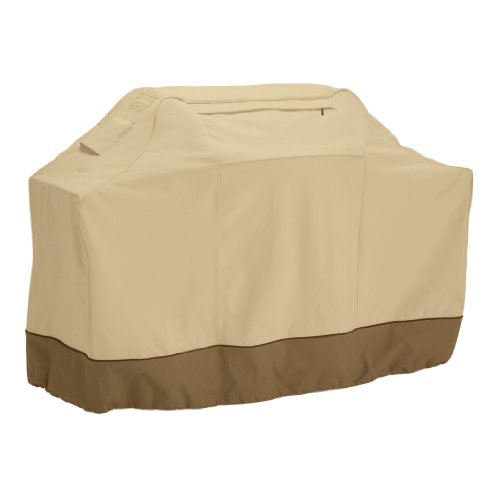
6. Classic Accessories Water-Resistant Grill Cover
A universal cover from a well-known outdoor furniture cover brand, available in multiple sizes and designed to guard against rain, dust and sun.
Suits: cooks wanting a general-purpose cover. Strengths: a trusted outdoor cover brand. Weaknesses: a looser fit than model-specific covers. Skip it if you need a tailored fit.

View Classic Accessories Water-Resistant Grill Cover on Amazon
Care and Setup
- Let the grill cool before covering it.
- Shake off water and debris before removal.
- Wipe the cover with mild soap if it gets dirty.
- Air-dry the cover fully before folding.
- Check straps and vents every season.
Mistakes to Avoid
- Covering a hot or damp grill.
- Buying a cover that is too small for the hopper.
- Ignoring the model name when ordering a brand-specific cover.
- Leaving the cover on in a storm without straps.
- Using a cover without vents in a humid climate.
- Forgetting to secure the cover in windy weather.
Measuring Your Grill for a Cover
Fit is the most common reason covers disappoint. A cover that is too small will not reach the ground, leaves the wheels or legs exposed and strains at the seams. One that is too large flaps in the wind and collects water in pools. Take your own measurements instead of relying on a general size description.
Measure the width from the farthest left point to the farthest right, including side shelves, handles and the chimney or stack. Measure depth from the back to the front, including the hopper and front shelf. Measure height from the ground to the highest part, which is usually the chimney cap or the lid handle. If the grill has a folding side shelf, measure with it up and down, and use the larger figure if you want to cover it with the shelf extended.
Compare these numbers with the cover’s listed dimensions, and allow a small margin for ease of fitting. Check whether the listing’s dimensions refer to the cover or to the grill it suits. If you own a brand-made grill, look for the exact model name, because a maker may offer several sizes within a line. Keep the measurements written down. If a cover is described as universal, the label may refer to the range of grill types and not to your specific shape, so measurements are your safeguard. Also think about accessories like a pellet bin or a side burner that you leave attached.
Fabrics, Coatings and Seams Compared
Covers are made from woven polyester, vinyl or similar fabrics, usually with a coating on the underside or both sides. The terms on listings can be confusing. Water-resistant fabric sheds light rain but can let water through in prolonged downpours. Waterproof usually refers to a coating or laminate, but it still depends on seam construction. Check the description of the seams, because stitched seams can leak at the needle holes unless they are taped or sealed.
Fabric weight matters for durability. Thicker fabric resists tears and wind abrasion better, but it is also heavier and stiffer to pull over a tall grill. Thin covers are easier to handle but wear faster in strong sun. UV resistance helps prevent fading and brittleness, which is important in sunny climates. A light color reflects heat, while a dark one absorbs it.
Look at the interior lining. A soft lining protects paint and finishes from scratches, while a rough one can scuff them. Check for reinforced corners, edge binding and strong stitching at stress points. If the cover has a PVC or vinyl coating, note that cold weather can make it stiff. Be cautious of marketing terms that do not mean anything specific. Look for the maker’s description of the material and coating. Reading the care instructions in the listing tells you whether the cover can be machine washed or only wiped.
Securing the Cover Against Wind and Moisture
A cover that blows off does little good. Good designs include a way to anchor it, such as straps with buckles, drawcords with toggles or elastic hems. Straps that cross under the grill body or around the legs hold best in strong wind. Check that buckles are sturdy and that straps are adjustable.
Ventilation is just as important. A cover that traps moist air can cause condensation inside, which encourages rust, mold and damp pellets in the hopper. Vents, often small flaps or mesh panels near the top, allow air to circulate. This is especially valuable in humid climates and where temperatures swing between day and night. A cover with no ventilation should be removed periodically to let the grill dry.
Think about water running down the cover. A cover that sags in the middle collects rain, and the weight can stress seams. Pulling it taut and using a smooth fit reduces pooling. Keep the grill’s lid closed, and consider placing the grill under an overhang when possible. Handles on the cover make it easier to remove in one motion. In snowy regions, brush off heavy snow before it compacts. After a storm, lift the cover, check underneath for moisture and wipe down the surface if needed. Make sure the controller and the power cord are protected, since electronics are sensitive to damp.
Protecting Pellets, the Controller and the Finish
The cover protects several parts differently. Pellets swell and turn to sawdust when wet, which can jam the auger and cause problems with ignition. A cover helps keep rain out of the hopper, but it is not a storage solution. Many owners empty the hopper if the grill will sit for a long time, or store pellets in a sealed container indoors or in a dry place.
The controller and wiring are the most weather-sensitive parts. Moisture can corrode contacts and damage electronic boards. Some controllers have a protective cover or a seal, but extended exposure to rain or heavy humidity is still a risk. Make sure the cover hangs over the controller area and does not rest in a way that traps water against it. If your grill has a removable control panel or a cord, follow the maker’s advice on storage.
Finish protection is the other benefit. Sun fades paint, and rain, dust and tree sap leave marks. Clean the grill before covering it for long periods, because grease attracts dirt and pests. Wipe the surfaces, empty the ash cup and drip bucket, and let everything dry. Covers can scratch paint if dust gets trapped, so shake off debris before putting them on. Wipe the rust spots as they appear and touch up with paint made for high heat. Check the manual for the maker’s recommendations on storage.
Cover Care and When to Replace It
A cover lasts longer with basic care. Let the grill cool completely before covering it, and shake off dirt, leaves and water before pulling the cover off. If the cover gets dirty, wipe it with mild soap and a soft cloth, and rinse with water. Many makers advise against machine washing and harsh detergents, which can damage coatings. Let the cover dry completely before folding or storing it, since a damp cover grows mildew.
Store the cover in a dry place when it is off the grill, for example during a long cleaning session or when you move the grill. Avoid folding it in the same creases every time, which can crack coatings. Keep it away from sharp edges, hot surfaces and chemicals. Check straps and buckles each season and replace worn parts if possible.
Signs it is time to replace the cover include fabric that is cracking, chalky or brittle from sun exposure, seams that leak, tears at the corners, a coating that peels off, and a fit that has shrunk or stretched out. A cover that lets water in does more harm than good by trapping moisture against the grill. When replacing, use your earlier experience to improve the choice: if wind was a problem, look for better straps; if mold formed, look for vents; if the cover was hard to pull on, choose a lighter fabric. Keep your measurements on hand for the next purchase.
How to Measure a Pellet Grill for a Cover That Fits
A cover only works if it matches the grill, and pellet models have awkward shapes. Hoppers, side shelves, chimneys and bull-horn handles all add to the footprint. Take measurements before ordering, because model names alone can mislead.
- Width: Measure from the outer edge of one side shelf to the other, including handles.
- Depth: Measure from the front handle to the back of the hopper or the rear wall of the grill.
- Height: Measure from the ground to the top of the chimney or the highest point of the lid.
- Add room for drape: A small allowance lets the cover fall down over the legs.
- Compare to the listing: Look at the stated dimensions and any model compatibility list.
If your grill sits between two sizes, a slightly larger cover with drawstrings or straps will usually serve better than one that strains at the seams.
Fabric, Seams and Coatings Compared
Covers look similar in photos, yet the material has a lot to do with how long they last. This table compares the common features.
| Feature | What it does | What to look for |
|---|---|---|
| Polyester fabric | Light and common, resists stretching | A thicker weave generally lasts longer |
| Vinyl or PVC backing | Adds water resistance | Check it does not crack in cold weather |
| UV-resistant coating | Slows fading and fabric breakdown | Helpful in sunny climates |
| Sealed or welded seams | Limits water getting through stitching | Better than plain stitching in rain |
| Vents | Let moisture escape | Reduces mildew from trapped damp air |
Water resistant and waterproof are not the same, so read what the maker actually claims.
Features That Make Daily Use Easier
Small design touches decide whether you actually use the cover every time.
- Straps or elastic hem: Keep the cover in place when wind picks up.
- Pull handles: Make it easier to lift the cover from the grill.
- Storage bag: Handy when you remove the cover for a long cook.
- Bright interior or reflective trim: Easier to see in low light.
- Fit around the chimney: A cover with a defined chimney area looks neater.
Heavy fabric is more durable but harder to handle, so think about who will be pulling it on and off.
When to Put the Cover On and Take It Off
Putting a cover on a hot grill is a common mistake. Always let the grill cool fully first, since hot metal can damage fabric and create hazards. The grill maker will state any cooling guidance in the manual.
Removing the cover before cooking is just as important. Never light or run the grill while the cover is in place. Fold the cover and store it where it stays dry. If the cover is wet, let it dry in the open air before returning it, since damp fabric over a closed grill can trap moisture and encourage rust and mildew.
Cleaning and Replacing a Worn Cover
Wipe the cover with a mild soap solution and a soft cloth, then rinse and air dry. Avoid harsh cleaners unless the label allows them. Replace the cover if it tears, fades heavily or no longer sheds water. A fresh cover is a small cost compared to repairing rust or weather damage on the grill.
Protecting the Grill in Wind, Snow and Strong Sun
Different climates test a cover in different ways. A cover that is fine on a calm porch may struggle on an exposed deck, so think about the conditions where you live.
- Windy areas: Look for straps, buckles or a drawstring hem to hold the cover down.
- Snowy winters: Brush heavy snow off the cover when it builds up, and check that the fabric is not stressed by the weight.
- Intense sun: A UV-resistant fabric slows fading and weakening.
- Rainy climates: Vented designs and sealed seams help keep moisture away from the grill and prevent condensation inside.
- Coastal air: Salt air speeds up corrosion, so rinse the cover and wipe the grill more often.
Whatever the weather, give the grill a quick check every few weeks and lift the cover for a look at the finish.
Before You Decide: The Ownership View
A cover is the cheapest insurance a pellet grill ever gets, and also the most commonly bought wrong: wrong size, wrong moment, wrong expectations. The sections below build on the picks above with the fitting, timing and care knowledge that makes a cover protect rather than quietly cause trouble.
How the Picks Above Compare When You Line Them Up
With six options on the table, the fastest way to a good decision is to compare the picks above in pairs rather than as a crowd. Start with the two that caught your eye and read their reviews back to back, asking the same three questions of each: what is it best at, what is its honest limitation, and whose home does it suit? The reviews above answer those questions in the same pattern for every pick, which makes the comparison fair. Cross off the one that loses on the question you care about most, then bring the next pick into the ring against the survivor.
The opening pair sets the tone for the list. The Traeger Full Length Grill Cover and the Camp Chef Patio Cover represent two of the clearest approaches in this category, and the difference between them — in style, in priorities and in the kind of owner they suit — is the difference that matters for most buyers. If one of them feels immediately right, that instinct is worth noting, because it usually reflects your real habits rather than the headline features. If neither appeals, the middle of the list is where your answer probably lives.
The Pit Boss Grill Cover and the Z Grills Pellet Grill Cover occupy that middle ground, and they reward close reading. Picks in the middle of a list like this tend to balance competing virtues rather than maximise one, which makes them the safest choice for households whose needs are mixed: two cooks with different priorities, a space that must serve several jobs, or a buyer who simply wants no drama. Compare their stated strengths against your own week and see which set of compromises you would rather live with daily.
At the end of the list, the Unicook Heavy Duty Waterproof Grill Cover and the Classic Accessories Water-Resistant Grill Cover are the specialists and the reminders that there is more than one way to solve the same problem. A specialist pick is the wrong choice for most people and the perfect choice for a few, and only an honest account of your own situation tells you which group you are in. Do not dismiss them for being different, and do not choose them for being interesting; choose them if their particular strength is the exact thing your current setup lacks.
Finish the comparison with a short written exercise. On paper, list your three non-negotiables — the size limit, the job it must do brilliantly, the habit you refuse to change — and score each surviving pick against them in a sentence each. The exercise takes ten minutes and it converts a fog of impressions into a decision you can explain. Owners who choose this way rarely look back, because the choice was made against their own criteria rather than against a stranger’s enthusiasm.
When to Cover, When to Wait
The golden rule is simple: never cover a warm or damp grill. Trapping heat and moisture under a cover cooks the finish, feeds rust and can grow mould on surfaces you will later cook on. Let the grill cool fully after cooking, and if rain has already caught it uncovered, let it dry — or dry it — before the cover goes on. A cover put on a dry, cold grill is protection; the same cover put on a wet one is a slow marinade.
Build the cover into the end of the cooking routine rather than treating it as a separate chore: cook, cool, brush the grates while they are still just warm enough to clean easily, deal with grease as your routine requires, then cover once everything is cold and dry. In settled dry spells some owners leave the grill uncovered for airflow between cooks, which is fine; it is the damp and the storms the cover exists to defeat.
Straps, Vents and the Cover in Real Weather
Wind tests every fastening a cover has. Use all the straps, ties or buckles the design provides, snugged as the maker intends, rather than relying on weight and hope. A cover that lifts and flaps in a gale does three kinds of damage: it can leave the grill exposed mid-storm, it can chafe paint where it rubs, and it can end up in a neighbour’s garden. After the first serious storm, check the cover’s position and the grill beneath it; that one inspection teaches you how your setup behaves in weather.
Vents exist to let the small amount of moisture that does gather escape rather than condensing on the metal. Keep them unobstructed and positioned as designed, and resist sealing a cover completely in the name of protection. If condensation is a recurring problem under your cover, the usual causes are covering a damp grill, a cover sitting in constant shade on wet ground, or vents blocked by how the cover has settled — all fixable without buying anything.
Cleaning and Storing the Cover Itself
A cover collects the weather so the grill does not have to, and it needs occasional washing to stay pleasant to handle and to stop grit on its inner surface scratching the grill each time it is dragged on and off. Clean it as the maker directs, usually with mild soapy water and a thorough dry before it goes back on or into storage. Shake out leaves, insects and the occasional nesting attempt whenever you remove it; the underside of a stored cover is prime real estate for spiders.
When the cover is off for a season, store it clean, dry and loosely folded or hung rather than crushed in a damp corner, where mildew will take it as a personal invitation. Check seams, straps and any coating at the start of each season, because a cover’s failure is gradual and then sudden: one split seam in the first autumn storm can soak a grill that trusted it.
Covers, Pellets and the Electronics They Share
A pellet grill is not just metal: it carries a controller, a fan, an auger and a hopper of fuel that hates moisture. The cover’s job therefore includes keeping driven rain away from vents, seams and the hopper lid, and keeping the whole machine dry enough that pellets in the hopper stay crisp. If your grill lives in a spot where weather finds it despite the cover, consider whether the spot itself can change — a small shift along a wall can be worth more than a heavier cover.
After storms, make a habit of a quick check under the cover: hopper lid seated, controller dry, no standing water in unexpected places. If you find the hopper’s pellets have taken on damp despite everything, deal with them before the next cook rather than discovering a jammed auger with guests coming. The cover, the spot and the checks are one system, and together they are what actually protects the grill.
Fit Is a Measurement, Not a Guess
Grills with the same nominal cooking size wear very different bodies: side shelves, chimneys, hoppers and handles all change the outline a cover must swallow. Measure your grill at its widest, deepest and tallest points with everything in its normal position, then compare those figures with the cover’s internal dimensions rather than its headline claim. A cover that strains over a hopper box will split at that seam; a cover swimming with spare fabric will flap, pool water and chafe the finish it was bought to protect.
Decide how you want the cover to handle the awkward parts before you buy. Some designs have shaped sections or pockets for chimneys and shelves; others rely on generous drape. Neither is automatically better, but the cover must go on and come off without a wrestling match, because a cover that fights you will be left off on exactly the wet, windy nights it exists for. Ease of use is a protective feature.
Measuring and Planning the Space Before Anything Arrives
Most disappointment with a pellet grill cover is really a measuring problem that showed up late. Measure the space where the product will live, then measure the path it travels to get there: doorways, gates, stairs, tight corners and the lift or hallway if you have one. A product that fits its final spot but cannot get through the door is a return waiting to happen. Allow room around the product for the way you actually work, not just the footprint on the page. You need space to open doors and lids fully, to stand comfortably while you use it, and to reach the back for cleaning without dragging the whole thing out of place.
Think about the surface underneath as part of the measurement. It should be level, stable and suited to the heat, weight or moisture the product brings with it. Then think about what sits nearby: curtains, fences, stored fuel, cleaning supplies and the things a busy household piles into corners. Planning the neighbourhood of a pellet grill cover, not only its footprint, is what separates a setup that feels easy every day from one you fight with every weekend. Sketch the layout on paper if it helps; five quiet minutes with a tape measure prevents most of the expensive mistakes.
A Cleaning and Maintenance Rhythm That Actually Sticks
A pellet grill cover rarely fails all at once; it drifts. Small deposits build up, moving parts get stiff, seals and surfaces pick up grime, and one day the performance you paid for is quietly gone. The fix is a rhythm rather than a heroic annual clean. Wipe down the surfaces you touch after use, while spills and splashes are still easy to move. On a regular cycle, do the deeper job the manual describes: the removable parts out, the hidden corners reached, the filters, trays, racks or drip paths dealt with, whichever your product has. Use the cleaners the maker allows for that surface, because the wrong chemical can mark a finish or damage a coating faster than the dirt would have.
Build the habit around an anchor you already keep, such as the end of a cookout, the weekly shop or the change of a season, so the job happens without willpower. While you clean, look at the product the way an inspector would: loose fixings, worn edges, cracked or perished flexible parts, and anything that has started to smell, stain or behave differently. Catching wear early usually means a small part or a good clean sorts it. Ignoring it usually means the same issue returns on the day you have guests, a full load or no spare time. A clean product is also simply nicer to use, and people look after things they enjoy using.
Repair or Replace: Judging the End of a Product’s Run
Every pellet grill cover eventually reaches the point where money spent keeping it going would be better spent on its replacement, and the honest signals are usually clear if you look for them. Performance that no longer recovers after a proper clean and the maker’s own troubleshooting steps is one signal. Repeated faults in the same system, parts that the maker no longer lists, and damage to the main body, frame or cooking or cooling chamber are others. Cosmetic wear, by contrast, is a poor reason to replace a product that still does its job safely and well; a faded finish or a scuffed handle costs nothing to live with.
When you do judge a product finished, use what it taught you. Your notes about what annoyed you, what you cleaned most and which feature you never touched are a better buying guide than any advertisement, because they describe your household rather than an average one. Carry those lessons back to the picks above: the right replacement is usually the one that fixes your old product’s specific weakness, not the one with the longest feature list. Dispose of the old product through the route your area provides for appliances or metal goods, remove anything the maker says to remove first, and keep the manual until the replacement is settled in, since measurements and habits often transfer.
Getting More Years Out of What You Buy
Longevity with a pellet grill cover is mostly decided by small, unglamorous choices. Protect the product from the conditions it was not built for: standing water, relentless weather, corrosive cleaners, knocks during moves and long neglect between seasons. Where the maker offers a cover, a storage position or a winter routine, use it; those recommendations are written from warranty claims, not from theory. Handle the parts that move, seal or bear weight with a little care, because those are the parts that wear first and are often the hardest to replace once a model is discontinued.
Keep a small kit for the product: the cleaner the maker approves, any specialist tool it shipped with, and the spare consumables you know you will need, stored together rather than scattered around the house. When you move house or rearrange the space, treat the product like the appliance it is: empty it, secure moving parts, lift with help and re-check it sits level in the new spot. Owners who think of a pellet grill cover as equipment to be kept, rather than a purchase to be consumed, routinely get years more service from the same product, and they spend the money they save on better ingredients, better gatherings and better weekends.
More Questions Before You Buy
Can I wash the cover in a machine?
Only if the maker says so; most covers are washed by hand with mild soapy water and air-dried. Machine washing can damage coatings and seams. Whatever the method, the cover must be completely dry before it goes back on the grill or into storage.
Can I put the cover on while the grill is still warm?
No. Let the grill cool completely and dry before covering. Trapped heat and moisture damage finishes, encourage rust and can create mould. Build cooling time into your cooking routine so the cover goes on cold and dry every time.
How do I stop the cover blowing off?
Use every strap and fastening the cover provides, fitted snugly as designed, and check the cover sits properly over shelves, hopper and chimney so wind cannot get under it. After the first big storm, inspect and adjust; setups usually need one lesson from real weather.
Why is there condensation under my cover?
Usually because the grill went under the cover damp, or the cover’s vents are blocked or badly positioned. Cover only a dry grill, keep vents clear and make sure the cover is not sitting in a puddle-prone spot where humid air is trapped.
How long should a grill cover last?
It depends on material quality, sun exposure and how it is handled, but a cover that is cleaned, stored dry when unused and not dragged over sharp edges will outlast a neglected one several times over. Splitting seams, cracked coating and straps that no longer hold are the replacement signals.
Should the cover reach the ground?
Most are designed to finish above the ground so air can move and the hem does not sit in puddles or trap moisture against the legs. Follow the fit guidance for the cover and your grill rather than forcing extra length down to the floor.
Final Practical Notes Before You Decide
Accessories deserve a cooler head than they usually get. Live with the pellet grill cover for a while before adding extras, and let real use tell you what is missing: the tool you reach for and do not have is a genuine need, while the gadget bought in the first flush of enthusiasm usually ends up in a drawer. When you do add something, choose the version made or approved for your model where the maker offers one, and keep the same discipline as the main purchase — it should solve a problem you actually have.
Seasonal changes are a useful prompt for a walk-around check of any pellet grill cover. At the turn of the year, look over the product and its surroundings: clearances still respected, surfaces clean, moving parts free, supplies stocked and nothing stored where it should not be. Households drift, and objects migrate into the spaces around appliances. A short seasonal reset keeps the setup you planned from quietly becoming the setup you would never have chosen.
One more habit separates satisfied owners from frustrated ones: keep the paperwork. The manual, the receipt and a note of the model details belong together, whether that means a folder, a drawer or a photograph stored with your other house documents. When a question arises in a year — a part, a setting, a warranty query — the answer is usually in those pages, and finding them in two minutes instead of twenty changes a small problem back into a small problem.
It is also worth setting a simple review date. A few months after a pellet grill cover arrives, once the novelty has worn off, look at it with fresh eyes: is it positioned where it works best, are the accessories you actually use the ones within reach, and is there one small change — a moved shelf, a different routine, a better storage spot — that would make daily use smoother? Products settle into a household over time, and a short review catches the improvements that were invisible on day one.
If you share the pellet grill cover with other people, share the knowledge too. The person who read the manual should not be the only person who knows the quirks: which setting behaves how, what the warning signs of a problem look like, and where the shut-off or the spare supplies live. Five minutes of showing beats a season of each person learning the same lessons separately, and it prevents the well-meant mistake made by someone who was never told.
Budget a little patience for the learning curve, whatever you choose from the list above. Almost every product in this category rewards its owner more in the third month than in the first week, because technique, placement and routine have had time to settle. Judging a purchase too early — or abandoning a sound product for a different one before learning it — is the most expensive habit in any kitchen. Give the choice a fair season before you grade it.
Finally, buy for the household you have, not the one in the advertisement. The right pellet grill cover is the one sized for your real gatherings, suited to your real space and matched to the maintenance you will honestly do. The picks above differ precisely because households differ, and the most satisfied owners are the ones who chose against their own habits and rooms rather than against a headline. Choose honestly, set it up carefully, keep the simple routines, and the product will repay you quietly for years.
Accessories deserve a cooler head than they usually get. Live with the pellet grill cover for a while before adding extras, and let real use tell you what is missing: the tool you reach for and do not have is a genuine need, while the gadget bought in the first flush of enthusiasm usually ends up in a drawer. When you do add something, choose the version made or approved for your model where the maker offers one, and keep the same discipline as the main purchase — it should solve a problem you actually have.
Seasonal changes are a useful prompt for a walk-around check of any pellet grill cover. At the turn of the year, look over the product and its surroundings: clearances still respected, surfaces clean, moving parts free, supplies stocked and nothing stored where it should not be. Households drift, and objects migrate into the spaces around appliances. A short seasonal reset keeps the setup you planned from quietly becoming the setup you would never have chosen.
One more habit separates satisfied owners from frustrated ones: keep the paperwork. The manual, the receipt and a note of the model details belong together, whether that means a folder, a drawer or a photograph stored with your other house documents. When a question arises in a year — a part, a setting, a warranty query — the answer is usually in those pages, and finding them in two minutes instead of twenty changes a small problem back into a small problem.
Pellet Grill Cover FAQ
Do I need a cover if the grill is in a garage?
A cover still helps with dust and moisture, especially if the garage is damp.
Should I buy a brand-made or universal cover?
Brand-made covers fit specific models, while universal covers work for many grills. Measure your grill if you go universal.
How do I choose the right size?
Measure the width, depth and height of your grill including the hopper and side shelf, then compare with the listing.
Will a cover stop pellets from getting wet?
A cover helps, but pellets are best stored in a dry sealed container, not left in the hopper in damp weather.
Can I use a cover while the grill is still warm?
No. Wait until the grill has cooled completely, since heat can damage the fabric and trapped warmth invites moisture and rust.
How often should I replace a cover?
Sun and weather wear covers down over time. Replace one when the fabric cracks, tears or stops shedding water.
Should the cover reach the ground?
A cover that reaches close to the ground protects wheels and legs, but it should not drag, which can cause wear. Check the listing's length against your grill's height.
Is waterproof better than water-resistant?
Waterproof suggests stronger protection, but seams and ventilation matter too. Read the description of coating and seam construction.
Can I leave pellets in the hopper under a cover?
It is risky in damp conditions because pellets swell when wet. Many owners empty the hopper or store pellets in a sealed container.
Why does the inside of my cover look damp?
Trapped humidity can condense. Choose a cover with vents and remove it occasionally to let the grill dry.
How do I keep the cover from blowing off?
Use straps, a drawcord or elastic hem and check that they are tightened. Pulling the cover taut also helps.
Can I wash my grill cover in a washing machine?
Many makers advise against it. Wipe it with mild soap and water and check the care instructions in the listing.
Will a cover protect against hail or falling branches?
Most covers are made for weather and dust, not impacts. Place the grill away from trees when you can.
The Short Version
For Traeger owners, the Traeger cover. For Camp Chef, the Camp Chef Patio Cover. For Pit Boss, the Pit Boss cover. For Z Grills, the Z Grills cover. For a universal fit, the Unicook. For a trusted brand, the Classic Accessories.


