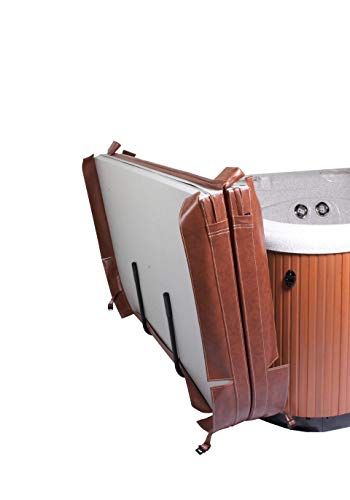
An outdoor hot tub sits on a patio, deck or lawn pad and faces sun, wind and cold, so a thick wall and a good cover matter. Shoppers searching for the best backyard, home, above ground, round or residential hot tubs often start with portable inflatables and move up to a hard shell later.
The six tubs below mix round and square inflatables with two hard-shell spas. We have not used these products ourselves. Details such as size, seat count, power needs and weather limits should be confirmed on the current listing before buying.
As an Amazon Associate we earn from qualifying purchases. Links below are affiliate links, and they do not change the product information we give.
What to Look For
| Feature | Why it matters |
|---|---|
| Wall | Multi-layer or ribbed walls cope with outdoor wear better |
| Cover | A tight cover keeps heat in and debris out |
| Base | A flat, firm pad protects the tub and the floor |
| Power | Check the outlet and cord reach before ordering |
| Cold weather | Heating slows in winter, so check the maker’s limits |
In this guide
Specs at a Glance
| Tub | Type | Size | Notes |
|---|---|---|---|
| Intex PureSpa Greywood Deluxe | Inflatable | 4-person class | Wood-look panel finish |
| Lay-Z-Spa Vegas AirJet | Inflatable | 4-6 person class | Ribbed wall |
| Coleman Palm Springs EnergySense AirJet | Inflatable | 77″ x 28″ per the title | Includes 2 covers, one thermal |
| MSpa 6-Person Round Spa | Inflatable | 6-person class | 138 air jets; drop-stitch wall |
| Aqualife Current | Hard shell | Fits 4 adults per the title | Plug and play; cover included |
| Jacuzzi J-235 | Hard shell | 5-6 person class | Dealer-sold |
The 6 Best Outdoor Hot Tubs

Top pickBest for a backyard that needs a tidy look
1. Intex PureSpa Greywood Deluxe Inflatable Hot Tub
A step-up Intex inflatable spa with a wood-look exterior, a built-in heater and a bubble massage system. Check the listing for the exact size and seat count.
Suits: a backyard that needs a tidy look. Strengths: a finished appearance. Weaknesses: a higher price than basic models. Skip it if you want the lowest price.
Best for a family backyard
2. Lay-Z-Spa Vegas AirJet Inflatable Hot Tub
A Bestway inflatable spa with a ribbed wall that holds its shape, an AirJet bubble system and a built-in heater pump. It is sold for roughly four to six people.
Suits: a family backyard. Strengths: a firm wall and roomy interior. Weaknesses: a large footprint. Skip it if you have a small patio.
View Lay-Z-Spa Vegas AirJet on Amazon
Best for a couple or a smaller deck
3. Coleman Palm Springs EnergySense AirJet Hot Tub
A portable inflatable hot tub spa from Coleman with an AirJet bubble system, listed at 77″ x 28″ and sold with two covers, one of them an energy-efficient thermal cover. Check the current listing for seat count and power details.
Suits: a couple or a smaller deck. Strengths: a compact size and a thermal cover in the box. Weaknesses: limited room for guests. Skip it if you host larger groups.
View Coleman Palm Springs EnergySense on Amazon

Best for a group that wants space
4. MSpa 6-Person Inflatable Hot Tub, Champagne Gold
A round MSpa inflatable spa in a champagne gold finish, listed for six people with 138 air jets, a 2200W PTC heater that heats to 104F, and a drop-stitch wall. Check the listing for the exact diameter.
Suits: a group that wants space. Strengths: a stiff drop-stitch wall and room for several. Weaknesses: a big footprint. Skip it if your yard is tight.

Best for a permanent outdoor spot
5. Aqualife Current Plug and Play Hot Tub
An outdoor plug-and-play spa from Aqualife by Strong Spas, listed as fitting four adults and sold with a cover and free extras. Jet counts and power details can differ by listing, so check them before ordering.
Suits: a permanent outdoor spot. Strengths: plug-and-play setup and an included cover. Weaknesses: a heavy tub that needs a firm base. Skip it if you may want to move it.
View Aqualife Current on Amazon

Best for a long-term backyard spa
6. Jacuzzi J-235 Hot Tub
A hard-shell spa from the Jacuzzi brand, usually sold through dealers. It needs a proper base and electrical hookup, so confirm delivery and installation.
Suits: a long-term backyard spa. Strengths: a known brand and strong jets. Weaknesses: a high cost and professional install. Skip it if you want a plug-and-play tub.

Care and Setup
- Choose a level spot with room to step in and out.
- Keep the cover on whenever the tub is not in use.
- Drain and store inflatables in cold climates unless the maker allows winter use.
- Test the water on a regular schedule.
- Check the cord reach and outlet type before the tub arrives.
Mistakes to Avoid
- Setting an inflatable on gravel or sharp stones.
- Running a long extension cord to the tub.
- Ignoring wind, trees and leaf drop around the spot.
- Skipping the cover, which raises heating cost.
Inflatable Versus Hard Shell: A Fuller Comparison
The biggest decision in this category is between an inflatable spa and a hard shell, and the choice affects almost everything that follows. An inflatable spa arrives in a box, inflates with a pump, fills from a hose and plugs into an outlet. It can be set up in an afternoon, deflated and stored, and moved to a new home. That portability and the lower cost of entry make inflatables a popular first step. Walls are made of layered material, with some designs using a ribbed or a drop-stitch construction to make the walls firm.
The trade-offs are insulation, durability and performance. Air-filled walls lose heat faster than the dense foam of a hard shell, so inflatables heat slowly and are more sensitive to weather. The material can be punctured or worn by sharp objects, sun and repeated folding, so a good base and cover are important. Massage in many inflatables is provided by air bubbles rather than strong water jets, as with the AirJet models in this guide.
A hard-shell spa has a rigid acrylic or similar shell, a frame and insulation, with a pump, heater and jets built in. It tends to hold heat better, is built for year-round use in many climates, and usually offers stronger jets and a fixed seating layout. It is heavy, requires a solid base and an electrical hookup, and is not designed to be moved easily. Some are called plug-and-play because they use a standard household circuit, while others need a dedicated circuit installed by an electrician.
Think about your plans. If you rent, are unsure how much you will use a tub or have a short season, an inflatable is a lower-commitment way to find out. If you want a permanent feature, cold-weather use and stronger massage, a hard shell is closer to what you have in mind. Weigh the effort of setup and upkeep along with the purchase, and read the listing carefully for what is and is not included.
Site Preparation, Base and Power
A good site makes everything easier, so plan it before the tub arrives. Choose a flat, firm area with good drainage, so that water does not collect underneath or run toward your house. Consider the distance to your back door, since you will walk back and forth in wet feet in all weather. Look up as well as down. Avoid placing the tub under branches that drop leaves and sap, or near power lines. Think about privacy and wind, and leave enough room to step in and out and to work around the tub.
The base matters, particularly for weight. A filled tub with people in it weighs a great deal, and the load is concentrated in a small area. For an inflatable, a level, smooth surface such as a concrete pad, a patio or a well-prepared deck that can bear the weight works best, with a ground mat or foam tiles underneath to protect the bottom. Avoid gravel, sharp stones, thorny ground and anything that could puncture the material. For a hard shell, the maker will specify the base needed, which is often a reinforced concrete pad or a purpose-built foundation. If you are putting a tub on a deck, have a professional check that it can bear the load.
Power needs vary. Inflatable spas typically plug into a standard outlet, but the heater and pump draw considerable power, so the outlet should be rated for outdoor use, protected by ground-fault protection and within reach of the cord without an extension. Extension cords are a common hazard, and many makers advise against them. If you do not have a suitable outlet, ask a licensed electrician to install one.
Hard-shell tubs usually need a dedicated circuit, and the work should be done by a qualified electrician who follows local codes. Check whether your town requires a permit, a barrier or inspection for a spa. Ask your insurer whether a hot tub changes your coverage, and check HOA or landlord rules before you order.
A Simple Water Care Routine
Hot water that sits for days or weeks is a good home for bacteria and algae unless it is kept clean. The details differ between products, so follow the maker’s instructions, but most routines share the same basic pieces. The first is a sanitizer, such as a chlorine or bromine product made for spas, used at the level the instructions give. The second is balance, which involves keeping the pH and alkalinity in the ranges recommended for spas so that the sanitizer works and the water does not damage the equipment or irritate skin.
Test the water often, using test strips or a kit, and adjust as needed. Many owners test before each use in the early weeks while they learn how the tub behaves, and then settle into a schedule. Shower before getting in, because body oils, lotions and sweat use up sanitizer. Keep the cover on whenever the tub is not in use to keep out dirt and debris and to reduce evaporation.
The filter needs attention. Rinse the filter cartridge regularly with a hose, and deep-clean or replace it as the maker advises. A clogged filter reduces flow and can strain the pump. Some spas also use a periodic shock treatment to oxidize built-up contaminants, which the maker may suggest on a schedule or after heavy use.
Plan to drain and refill the tub from time to time, since dissolved solids build up and make the water harder to balance. The interval depends on use, size and water quality, so check the manual. When draining, direct the water as local rules allow, and do not discharge chemically treated water into storm drains or natural waterways without checking the rules. Wipe the shell, clean the waterline and rinse the equipment before refilling.
Winter Use and Energy Habits
Hot tubs and cold weather are a classic combination, but cold air makes the heater work harder and slows heat-up time. A good cover that fits tightly makes the biggest difference. It traps heat, reduces evaporation and keeps out debris. Check that the cover has no tears, that the seal is snug and that the straps or locks work. Covers that become waterlogged lose insulating value and get heavy, so replace them if they absorb water.
Wind also takes heat, so a sheltered location helps. Placing the tub near a wall, a fence or a screen can reduce wind exposure, but keep clearance for air circulation and service access as the manual recommends. Avoid blocking vents on a hard shell. A base that insulates from cold ground, such as a mat or a pad, also reduces heat loss from the bottom of an inflatable tub.
Think about whether the tub is meant to run in freezing weather. Many inflatables are not designed for use in freezing conditions, and water that freezes inside pumps, hoses or the tub itself can cause damage. Check the maker’s temperature limits. If you plan to store an inflatable for the winter, drain it fully, clean and dry it before you fold it, and store it in a dry place away from rodents. Hard-shell spas often include freeze protection, but you should still check the manual and keep power on if the maker requires it.
For energy habits, keep the tub covered, set the temperature to the level you actually need rather than the maximum, and consider a lower standby temperature when you will not use the tub for a few days. Give the heater time to bring the water up to temperature, because inflatables heat slowly, and plan ahead for the evening. Compare the heater rating and the insulation on the listing, and note how the maker describes heat-up time for your climate.
Safety Rules and Questions to Ask Before Buying
Hot water brings real safety considerations. Follow the maker’s limits on water temperature and soak time, which are there to reduce the risk of overheating. Children, older adults, pregnant people and anyone with health conditions should check with a doctor before regular hot soaking. Never leave children unattended near a tub, and make sure the cover can be locked or secured. Many areas require a barrier or fence around a spa, so check local rules.
Keep electrical items away from the water. Do not use mains-powered radios, phones on charge or extension cords near the tub. Make sure the outlet is properly protected and rated for outdoor use. Avoid alcohol and heavy meals before soaking, because heat can affect how you feel. Keep the area around the tub clear of slippery surfaces, and use mats or non-slip steps.
Before you buy, ask a few questions. What is the exact size, and does it fit the space with room to enter and leave? How many people can sit comfortably, and does the listing refer to adults? What power does it need, and is a dedicated circuit required? What is included, such as the cover, filters, pump and base, and what must you buy separately? Where do replacement parts and filters come from, and how long does the warranty last?
Also ask about running costs and upkeep. Think about the electricity, the chemicals, the filters and the water, along with your time. Look at recent customer feedback for patterns, such as leaks, heater problems or slow shipping. Think about the future: where you will store or place the tub and how you will dispose of it when it wears out. A tub you actually use is worth more than a bigger one that sits idle.
Backyard Readiness Checklist for an Outdoor Spa
Most surprises with outdoor hot tubs happen before the tub arrives. A weekend of preparation turns the delivery into a smooth event. Work through these items.
- Foundation. Choose a firm, level surface. Hard shell tubs usually need a prepared pad able to carry the full weight of the tub, water and people. Ask the maker or a qualified contractor about requirements.
- Access path. Measure gates, side yards and stairs. A shell may need a clear route and sometimes a crane or extra helpers.
- Electrical supply. Many hard shell spas need a dedicated circuit with specific protection. This work must be done by a licensed electrician and follow local code. Plug-and-play models list their own power needs in the manual.
- Distance from the house. Leave room to walk around the tub and open the cover. Check rules about distance to property lines or buildings.
- Privacy and wind. A fence, screen or plants can make the area more comfortable. Make sure any structure does not block ventilation.
- Drainage. Plan where water will go when you drain the tub, away from neighbors and the house foundation.
Ask your local building office whether permits apply, and check with your insurer about coverage, safety fencing or cover requirements.
Cover, Care and Everyday Habits
The cover and the water routine decide how pleasant ownership feels. This table sums up a sensible pattern.
| Task | How often | Notes |
|---|---|---|
| Check water clarity and balance | Often, as the maker directs | Use only the products named in the manual. |
| Rinse or replace the filter | As the manual describes | Keep a spare so the tub does not sit idle. |
| Wipe the cover | Regularly | Brush off leaves and snow, and clean with gentle products. |
| Drain and refill | On the schedule the maker suggests | Use clean water and a safe drain route. |
| Check the cover seal and straps | Seasonally | Replace worn parts. |
| Inspect the pad and base | Seasonally | Look for shifting or pooling water. |
Keep the cover closed and locked when the tub is not in use, particularly where children or pets are around. Use handrails or steps for safe entry, and keep glass items away from the area. Hot water can be unsuitable for some people, such as those who are pregnant or have medical conditions, so talk with a doctor and follow the maker’s temperature and time guidance. Never use the spa alone when tired or after drinking alcohol. Treat these habits as part of the setup, not an afterthought.
How to Choose an Outdoor Hot tub: Criteria That Matter Most
An outdoor hot tub lives with weather, seasons and wildlife as well as with you. The picks above range from inflatables to a rigid spa, and the right choice depends on your climate and how permanent you want the installation to be. These criteria keep the decision grounded.
Weather resistance of shell and cabinet
Weather resistance of shell and cabinet. Sun, frost and rain all age a tub. Look at what the guide says about materials and covers, and think about your own garden’s exposure rather than an average garden in a photograph. When you compare options side by side, this is one of the first points to pin down, because it shapes how the hot tub feels in daily use rather than just how it looks in a listing photograph. Go back through the picks above and ask how each one answers this point in its own review section, and be cautious with any listing that leaves the question vague. Shoppers often skip this check when a headline feature catches their eye, then meet the compromise only after the hot tub is in regular use. A few minutes spent thinking it through now, in the context of your home, your routine and the people who will share it, is what turns a good-looking choice into one you stay pleased with season after season.
Insulation for your coldest month
Insulation for your coldest month. Judge insulation by the worst week of your winter, not by a mild evening in May. Covers, ground insulation and shell construction decide whether winter soaking is a pleasure or a bill. It helps to treat this as a practical test rather than a box-ticking exercise. Picture the hot tub in the exact spot where it will live, at the busiest time of day, being used by the person who will use it most. If the answer still works in that picture, the point is probably covered; if it raises doubts, look again at how the different picks in this guide handle it. The reviews above describe each option in its own terms, so use them as the reference instead of relying on a single headline claim. Small mismatches here are the ones that quietly decide whether a purchase feels easy or becomes a chore.
Base and siting requirements
Base and siting requirements. Every outdoor tub needs a level, load-bearing base and sensible access to power and drainage. The picks differ in how demanding they are, so match the tub to the site you can actually provide. This point matters more than it first appears, because it tends to affect every session rather than just the first one. A hot tub can impress on day one and still disappoint if this side of it does not suit your habits. As you read the individual reviews, note which picks speak directly to this concern and which leave you guessing, and let that guide your shortlist. Where the guide describes a trade-off, take it seriously rather than assuming you will adapt to it later. Most returns and regrets in this category come from exactly this kind of overlooked detail, not from the headline features people spend longest comparing.
Capacity against your real gathering size
Capacity against your real gathering size. Outdoor tubs host friends as well as family. Count the largest group you will genuinely soak with, then check the seating descriptions honestly, since stated capacity and comfortable capacity are different numbers. A useful way to judge this is to ask what happens on an ordinary, unremarkable day rather than on the best day. Routines are where a hot tub earns its keep, and this is the point that decides whether using it stays effortless. Compare the picks with your own routine in mind: who is involved, how much time is available, and how much patience there is for extra steps. If one option clearly fits that picture better than the others, that is a strong signal, even when the listings look similar at first glance. The sections above give you the material to make that call without guessing.
How permanent you want it to be
How permanent you want it to be. An inflatable can move house with you or vanish for winter; a rigid spa is a fixture. Decide which future you want before choosing, because it changes which pick is right more than any feature does. Finally, do not treat this point in isolation. It interacts with the other criteria in this section, and the right balance depends on your priorities rather than on any single winner. Read the pick reviews as a set, mark the option that handles this point in the way you prefer, and check whether it also holds up on the points you care about most. If two picks seem close, this is often the deciding factor that separates them in real use. Writing down your own answer before you order, even in a sentence or two, makes the final choice calmer and far less likely to be second-guessed later.
Hot tub in Real Life: Matching a Pick to Your Situation
Outdoor soaking has its own calendar. These are the patterns of use that should steer you between the inflatable and rigid picks above.
Winter soaking under cold skies
Winter soaking under cold skies. For winter devotees, insulation and a cover you can handle in gloves are the whole game. Favour the pick the guide describes as best sealed, and plan the shortest, best-lit path from door to tub. In this situation the priorities shift a little, and it is worth re-reading the pick reviews with this exact scenario in mind. Ask which option the guide presents as suiting this kind of use, and whether its described strengths line up with what the moment actually demands. It also helps to think about frequency: something used this way every week needs to be convenient enough that nobody starts avoiding it. The best choice here is rarely the most elaborate one; it is the one whose everyday behaviour matches the routine with the least friction, so the hot tub gets used as intended instead of becoming an occasional novelty.
Summer family afternoons
Summer family afternoons. In summer the tub becomes a family plunge and play space, so capacity and durability lead. A robust inflatable suits this well and can be stored when the season turns, if that is your pattern. For this kind of use, small practical details carry more weight than headline appeal. Think through where the hot tub will be, who else is around, and what happens immediately before and after. The reviews above are most useful when you read them against a concrete picture like this one, because a strength that sounds minor in a listing can become the thing you appreciate most in this setting. Equally, a limitation the guide mentions honestly may not matter here at all. Matching the pick to the situation, rather than chasing the option that tries to do everything, is what leads to a purchase that keeps making sense.
A permanent garden feature
A permanent garden feature. If the tub anchors a landscaped corner, a rigid spa’s cabinet and presence suit the job. Invest in the base and siting once, and choose the finish that belongs with your planting and paving. This scenario is a good stress test for any shortlist. If a pick still looks right when you imagine this use, week in and week out, it is probably a sound choice; if it only works when everything goes perfectly, keep looking. Pay attention to how much setup, supervision or tidying the situation involves, since those hidden minutes decide whether the hot tub fits your life. The guide’s per-pick sections describe who each option suits, so let those descriptions do the work here. Choosing for the life you actually lead, rather than an idealised version of it, is the simplest way to avoid disappointment.
Renting or planning to move
Renting or planning to move. Where the home is temporary, portability protects your money. An inflatable pick lets you take the habit with you, and the reviews note which models pack down most willingly. When this is your main reason for buying, let it lead the decision instead of treating it as an afterthought. Start from the pick whose review speaks most directly to this situation, then check it against the criteria earlier in this guide to make sure nothing important has been traded away. It is also worth planning the practical side in advance, from where things will be kept to who is responsible for upkeep, so the routine is settled before the hot tub arrives. A choice made this way tends to settle quickly, because every part of it has already been thought through against a real need.
How the Picks in This Guide Compare With Each Other
No two picks in this guide are trying to do exactly the same job, and that is deliberate. The reviews above present each hot tub in its own terms, with its own intended user, strengths and honest limitations. The fairest way to compare them is not to hunt for a single winner, but to hold each one against the criteria and situations set out in this guide and ask which description sounds most like your home, your routine and your priorities. The notes below walk through the shortlist in the same order as the reviews, to help you do exactly that.
Intex PureSpa Greywood Deluxe Inflatable Hot Tub. In its review section above you will find who it suits, where it is strongest and where its limits lie, and those are the points to weigh here. Set them against the criteria earlier in this guide: if this pick handles the points you care about most, and its stated limitations fall in areas you can live with, it deserves its place on your shortlist. If its strengths aim at a situation that is not yours, a simpler or different pick further down the list may serve you better, however impressive this one looks in isolation.
Lay-Z-Spa Vegas AirJet Inflatable Hot Tub. In its review section above you will find who it suits, where it is strongest and where its limits lie, and those are the points to weigh here. Set them against the criteria earlier in this guide: if this pick handles the points you care about most, and its stated limitations fall in areas you can live with, it deserves its place on your shortlist. If its strengths aim at a situation that is not yours, a simpler or different pick further down the list may serve you better, however impressive this one looks in isolation.
Coleman Palm Springs EnergySense AirJet Hot Tub. In its review section above you will find who it suits, where it is strongest and where its limits lie, and those are the points to weigh here. Set them against the criteria earlier in this guide: if this pick handles the points you care about most, and its stated limitations fall in areas you can live with, it deserves its place on your shortlist. If its strengths aim at a situation that is not yours, a simpler or different pick further down the list may serve you better, however impressive this one looks in isolation.
MSpa 6-Person Inflatable Hot Tub, Champagne Gold. In its review section above you will find who it suits, where it is strongest and where its limits lie, and those are the points to weigh here. Set them against the criteria earlier in this guide: if this pick handles the points you care about most, and its stated limitations fall in areas you can live with, it deserves its place on your shortlist. If its strengths aim at a situation that is not yours, a simpler or different pick further down the list may serve you better, however impressive this one looks in isolation.
Aqualife Current Plug and Play Hot Tub. In its review section above you will find who it suits, where it is strongest and where its limits lie, and those are the points to weigh here. Set them against the criteria earlier in this guide: if this pick handles the points you care about most, and its stated limitations fall in areas you can live with, it deserves its place on your shortlist. If its strengths aim at a situation that is not yours, a simpler or different pick further down the list may serve you better, however impressive this one looks in isolation.
Jacuzzi J-235 Hot Tub. In its review section above you will find who it suits, where it is strongest and where its limits lie, and those are the points to weigh here. Set them against the criteria earlier in this guide: if this pick handles the points you care about most, and its stated limitations fall in areas you can live with, it deserves its place on your shortlist. If its strengths aim at a situation that is not yours, a simpler or different pick further down the list may serve you better, however impressive this one looks in isolation.
Read as a set, the picks form a ladder of priorities rather than a ranking from best to worst. One end of the list will suit readers who want the straightforward option described at the top of the guide, while other picks trade simplicity for a particular strength the reviews call out. Your job is simply to find the rung that matches your situation. When two picks still seem close after that, choose the one whose limitations you mind least, because strengths are enjoyed occasionally while limitations are met every single time the hot tub is used.
Using, Cleaning and Looking After Your Hot tub
Outdoor care is about staying ahead of the weather. This routine keeps the tub ready in every season and protects it through the ones when it works hardest.
Keep the cover on, clean and snow-free
Keep the cover on, clean and snow-free. The cover is the tub’s roof. Brush off leaves and snow, clean it as the maker directs, and never let weight accumulate on it. A sound cover protects heat, water and the shell all at once. Build this into a short, repeatable routine rather than treating it as an occasional big job. Little and often is what keeps a hot tub pleasant to use and helps it last, and it is far easier to keep up than a rare deep session that everyone dreads. Follow the maker’s own instructions where they differ from general advice, since materials and mechanisms vary between models. If you share the hot tub with others, agree who does what, so the routine does not quietly fall to one person or get skipped altogether. A few steady minutes of care protect the money you spent far better than any accessory.
Balance water through every season
Balance water through every season. Test and adjust regularly all year, including the weeks you soak less. Neglected water in any season damages surfaces and equipment, and recovering it costs more effort than maintaining it. This step is easy to overlook because the hot tub usually keeps working while it is neglected, right up until it does not. Treat the guide’s care notes and the manufacturer’s manual as your starting point, and keep any products or tools the maker recommends within easy reach of where the hot tub lives. Convenience is what makes care happen. While you are at it, give the hot tub a quick visual once-over for wear, looseness or damage, because small issues are cheapest and simplest to deal with when they are caught early. That habit, repeated calmly over months, is what separates items that age gracefully from those that fail early.
Rinse filters and clear debris
Rinse filters and clear debris. Outdoor tubs collect what the garden offers: leaves, pollen and insects. Skim the surface, rinse filters on schedule and keep the area around the tub swept so debris is not tracked in on feet. Think of this as part of using the hot tub, not as a separate chore bolted onto it. The few minutes it takes are repaid in reliability, comfort and safety every time the hot tub is used afterwards. If several people share the job, a simple shared note of what was done and when prevents both duplication and neglect. Avoid improvised shortcuts that the manual does not sanction, however tempting they seem, because finishes, seals and moving parts often react badly to the wrong treatment. Gentle, regular attention in line with the maker’s guidance is almost always the approach that keeps things working as they should.
Prepare deliberately for freezing weather
Prepare deliberately for freezing weather. Follow the maker’s winter guidance exactly: either keep the tub running and protected through frost as instructed, or drain and store it properly. The dangerous option is the half-prepared one. Where you keep the hot tub between uses matters as much as how you treat it during use. A sensible, consistent home for it protects it from knocks, damp, dust and curious hands, and makes the next use quicker to start. The storage advice in the maker’s instructions is worth following closely here, particularly anything about position, covering or preparation before a longer break. Before putting the hot tub away after a longer gap in use, run through the same checks you would before its first use. That small discipline keeps surprises away and means the hot tub is ready whenever it is wanted.
Inspect the shell, cabinet and base each spring
Inspect the shell, cabinet and base each spring. Winter is the testing season. Each spring, look over surfaces, seals, steps and the base for movement or damage, and deal with small findings before the heavy soaking season begins. Finally, keep a light record of anything you notice: a change in sound, feel, fit or behaviour is often the earliest sign that something needs attention. Comparing what you notice with the troubleshooting notes in the manual usually tells you whether it is a simple fix or a job for the maker or a professional. Do not force anything that resists, and do not keep using the hot tub in a way that feels unsafe while you hope a problem will pass. Prompt, calm attention at this stage protects both the hot tub and the people using it, and it preserves any warranty options you may need.
Outdoor Hot Tubs FAQ
Can I leave a tub outside in winter?
Check the maker’s guidance. Many inflatables are not meant for freezing weather, while hard shells handle it better.
Do I need a permit?
Local rules differ, and hard-shell tubs may need an electrician, so check with your town.
Is a round tub better?
Round tubs seat people evenly, while square tubs fit corners. Pick by your space.
How long does it take to heat an outdoor tub?
Inflatable heaters are slow, often many hours from cold, and colder air makes it longer. Check the maker guidance for your climate.
How long does an inflatable hot tub last?
It depends on the materials, the care it gets and the climate. A firm base, a good cover, sensible water care and proper storage extend its life. Check the warranty terms on the listing.
Do I need a professional to install a hot tub?
Inflatables that plug into a standard outlet may not need one, though the outlet itself should be properly rated and protected. Hard-shell tubs often need an electrician, and sometimes delivery crews and a base. Check the listing and local rules.
Can I put a hot tub on my deck?
Only if the deck is built to carry the full weight of the tub, water and people. Have a professional check the structure. Many people choose a concrete pad instead.
How warm should the water be?
Follow the maker's limits for maximum temperature and soak time, and set it lower if you are sensitive to heat. People with health conditions should check with a doctor.
What happens if the power goes out in winter?
Water can cool and, in freezing weather, may freeze and damage equipment. Check the maker's guidance for freeze protection, keep the cover on and have a plan to drain the tub if necessary.
Is a thermal cover worth having?
A well-fitted cover reduces heat loss and keeps debris out, which helps with running costs and cleanliness. Check that it fits the tub and that its seals and locks work.
How often should I clean the filter?
Rinse the filter regularly and deep-clean or replace it as the maker advises. A clogged filter strains the pump and reduces water quality.
Can an outdoor hot tub stay out in winter?
Rigid spas are generally built to run through winter when installed and maintained as the maker directs, and many owners soak all year. Inflatable tubs vary: some have frost-protection features and some are meant to be stored in hard weather. Read the guidance for your pick, keep the cover sound, and never let a tub you are unsure about sit full and unheated through a hard freeze.
What is the best base for an outdoor hot tub?
The base must be flat, level and able to carry the filled tub plus its soakers without shifting. Paving, a purpose-made pad or a suitable deck structure are common answers, and many owners add insulation beneath the tub. Grass and bare soil are not enough, since they settle unevenly. The maker’s siting instructions for your model are the authority, and a level base also makes the water line sit correctly.
How do I keep leaves and insects out of an outdoor tub?
The cover, used every time the tub is empty, does most of the work. Skim the surface before soaking, keep nearby shrubs trimmed back where you can, and rinse feet in a small bowl beside the tub if the garden is muddy. Filters handle the rest, which is another reason to rinse them on schedule rather than waiting for the water to complain.
Does an outdoor hot tub need planning permission or building approval?
Rules vary by place and by installation, particularly where electrical work, decking or permanent structures are involved. Many simple plug-in installations need nothing, while hardwired spas and new structures can fall under local rules. Check with your local authority and use qualified trades for electrical work, so the question is settled before the tub arrives rather than after.
The Short Version
For a tidy look, the Intex PureSpa Greywood Deluxe. For a family tub, the Lay-Z-Spa Vegas. For a compact round tub, the Palm Springs. For extra room, the MSpa Camaro. For a fixed hard shell, the AquaRest Select 200. For a brand-name spa, the Jacuzzi J-235.
Related Guides
- 6 Best Hot Tubs: Inflatable and Rigid Portable Models (2026)
- 6 Best Inflatable Hot Tubs: Soft Sided and Framed (2026)
- 6 Best 2 Person Hot Tubs: Inflatable and Compact (2026)
- 6 Best 4 Person Hot Tubs: Inflatable and Portable (2026)
- 6 Best 6 Person Hot Tubs: Family Inflatable Spas (2026)