The right outdoor grill depends on how you like to cook. Gas grills light fast and suit weeknights. Charcoal gives the classic smoky sear. Pellet and kamado cookers add smoking and baking skills, but they cost more effort or more space.
The six below cover each style with long-running models from big names. We have not used these products ourselves, so confirm the details on the current listing before you buy. Because grills are sold in many configurations, check burner count, cooking area and cart details on the page.
As an Amazon Associate we earn from qualifying purchases. Links below are affiliate links, and they do not change the product information we give.
What to Look For
| Feature | Why it matters |
|---|---|
| Fuel type | Gas is the quickest; charcoal and pellets add flavor |
| Cooking area | Pick a size that fits your usual guest list |
| Build quality | Heavier lids, thick grates and solid carts last longer |
| Heat control | Good vents or burners make it easier to cook evenly |
| Accessory support | Popular grills have easy-to-find covers, grates and replacement parts |
In this guide
Specs at a Glance
| Grill | Material | Size | Notes |
|---|---|---|---|
| Weber Original Kettle Premium | Porcelain-enameled steel | 22-inch class | Charcoal; ash catcher |
| Weber Spirit II E-310 | Porcelain-enameled lid; cast iron grates | Mid-size | Three burners; side tables |
| Napoleon Rogue SE 425 | Stainless and cast iron | Mid-size | Multiple burners; side shelves |
| Traeger Pro 575 | Powder-coated steel | Mid-size | Digital controller; hopper |
| Kamado Joe Classic III | Ceramic body | Large kamado | Charcoal; stand included |
| Char-Broil Performance 4-Burner | Steel body; cast iron grates | Large | Four burners; side burner |
The 6 Best Outdoor Grills
Top pickBest for classic charcoal fans
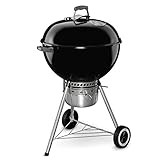
1. Weber Original Kettle Premium Charcoal Grill 22-Inch
The round kettle that many people picture when they think of charcoal grilling. It has a lid thermometer, an ash catcher and a simple vent system, and it works for direct and indirect cooking. Its lid and bottom vents give you precise control over heat, and a wide range of accessories is available.
Suits: classic charcoal fans. Strengths: a proven design with simple controls. Weaknesses: needs coals and time to heat. Skip it if you want instant start.
Best for everyday family cooking
2. Weber Spirit II E-310 Gas Grill
A three-burner propane grill with a cart, side tables and push-button ignition. It suits small families who want dependable weeknight grilling. It is popular as a first gas grill, and owners often keep it for many seasons.
Suits: everyday family cooking. Strengths: fast start and steady heat. Weaknesses: limited searing power compared to bigger grills. Skip it if you want a smoker too.
View Weber Spirit II E-310 on Amazon
Best for those who want a step up
3. Napoleon Rogue SE 425 Gas Grill
A gas grill from a well-regarded Canadian brand with several burners, a sizable grate area and a side burner on some versions. Confirm the exact configuration on the page. The sturdy build and extra burners make it a good fit for those who grill most weekends.
Suits: those who want a step up. Strengths: solid construction and good heat. Weaknesses: assembly takes time. Skip it if you want a simple, small grill.
View Napoleon Rogue SE 425 on Amazon
Best for set-and-forget cooks
4. Traeger Pro Series 575 Pellet Grill
A wood pellet grill with a digital controller that handles smoking, roasting and grilling. You set a temperature and the auger feeds pellets as needed. Pellet grills are especially good for ribs, chicken and roasts that benefit from low, steady heat.
Suits: set-and-forget cooks. Strengths: consistent smoke and heat. Weaknesses: needs power and a pellet supply. Skip it if you want a hot sear.
View Traeger Pro 575 on Amazon
Best for enthusiasts who like versatility
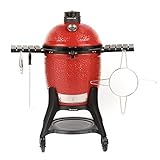
5. Kamado Joe Classic III Charcoal Kamado Grill
A heavy ceramic charcoal cooker that holds steady temperatures for hours, doubles as a smoker and can bake pizza or bread. Because the ceramic holds heat well, it can run for long cooks on a modest amount of fuel.
Suits: enthusiasts who like versatility. Strengths: great heat retention and range. Weaknesses: heavy and hard to move. Skip it if you want light, portable gear.
Best for family barbecues
6. Char-Broil Performance Series 4-Burner Gas Grill
A four-burner gas grill with a side burner and cabinet-style cart that is often chosen by buyers who want many features in a mainstream package. Extra burners and a side burner give flexibility for sauces and side dishes next to the main course.
Suits: family barbecues. Strengths: lots of cooking space. Weaknesses: lighter build than premium grills. Skip it if you want heavy-duty parts.
View Char-Broil Performance 4-Burner on Amazon
Care and Setup
- Brush the grates while still warm.
- Empty grease trays and ash catchers regularly.
- Check propane hoses and fittings for leaks each season.
- Use a cover to protect the finish from weather.
Mistakes to Avoid
- Cooking before the grates are hot.
- Closing the vents on a charcoal grill during startup.
- Overfilling a gas grill with grease-heavy food.
- Storing a grill uncovered all winter.
Matching Fuel to Your Cooking Routine
The fuel decides how a grill fits into your week. Gas lights with a button, reaches cooking temperature quickly and is easy to adjust, so it suits people who grill on weeknights and want little fuss. Charcoal takes longer to light and requires managing vents, but it rewards the effort with a classic smoky flavor and high heat for searing. Pellet grills feed wood pellets automatically and hold a set temperature, which makes them popular for smoking and long cooks. Kamado cookers use charcoal in a thick ceramic body that holds steady heat for hours.
Be honest about how you cook. If you want to start dinner in a few minutes and clean up quickly, gas is the practical choice. If you enjoy the process and cook mostly on weekends, charcoal or a kamado can be satisfying. If you smoke ribs, brisket or pork shoulder regularly, a pellet grill or a kamado is a better match than a basic gas grill.
Think about the supplies. Propane tanks need refilling or swapping, charcoal needs a dry storage spot, and pellets require protection from moisture. Pellet grills need an electrical outlet nearby, so check where you plan to put one. Consider the flavor you want too. Gas gives a cleaner taste, while charcoal and wood bring smoke. Many households end up owning more than one type over time. If you can only own one, pick the style that matches the meals you cook most often, not the one with the longest feature list.
Sizing by Guest List and Meal Type
The cooking area should fit your usual meal, not the biggest party you can imagine. A rough approach is to count the burgers, chicken pieces or steaks you want to cook at once, then leave a little space between pieces. A grill that is too small forces you to cook in batches, while one that is too large wastes fuel and takes longer to preheat. Compare the primary cooking area on the listing, not the total area including warming racks.
Different foods use space differently. Burgers and sausages are compact, while whole chickens, racks of ribs and large roasts need depth and a tall lid. Kettle and kamado grills can cook a surprising amount if you use indirect heat with a rack, but the grate area is round and limited. Gas grills with multiple burners allow zone cooking, with a hot side and a cooler side, which gives you more flexibility on the same grate.
Think about the whole footprint too. The cart, side tables and lid swing take space. Measure the area where the grill will go and add the clearance the maker requires. Consider storage if you have a small patio or balcony, and check local rules for grills in apartments and multi-family housing, since some forbid charcoal or propane. If you often cook for large groups, consider whether a second smaller grill or a griddle would be more useful than one very large machine.
Materials and Build Features That Last
Grills live outside, so materials matter. Porcelain-enameled steel resists rust when the finish is intact, but chips can expose the metal underneath. Stainless steel resists corrosion better in humid or coastal places, although quality varies by grade and thickness. Cast iron grates hold heat and sear well but need oiling to prevent rust. Thicker components tend to last longer and hold heat more evenly.
Look at the details. Check how the lid fits, since gaps leak heat and smoke. A lid thermometer is helpful, though not always accurate, so many cooks add a separate probe. Look at the vents on charcoal grills, since smooth, tight-fitting vents give better temperature control. On gas grills, check the burner material and the ignition system. On pellet grills, check the firepot, the auger and the controller.
Consider ease of cleaning. Grease trays, ash catchers and removable grates make maintenance easier. Wheels and handles help you move the grill, but check that the wheels are sturdy. Assembly can be complex for larger grills, so read the listing for estimated time and tools required. Look at the warranty details, but remember that coverage for burners, grates and the body may differ. Availability of replacement parts and covers also matters. Popular grills usually have wide aftermarket support, which makes keeping them running easier over the years.
Temperature Control and Basic Techniques
Learning how to manage heat matters more than any feature. On a gas grill, use burner knobs and the lid to control temperature. Preheat with the lid closed so the grates are hot, then clean them. Set up two zones, with one side hot for searing and one side lower for cooking through, so you can move food if flare-ups happen. Use the lid to hold heat and reduce flare-ups.
Charcoal grills depend on airflow. Open the vents for a hotter fire and close them partly to lower the temperature. For direct cooking, spread coals evenly; for indirect cooking, pile them to one side and place food on the other. Add charcoal as needed for long cooks. Wait until the coals are covered with gray ash before cooking, so the fire is steady. Close the lid to control airflow once the food is on.
Pellet grills do the work for you, but they take time to preheat and may not reach searing temperatures. Kamados hold temperature well, but they respond slowly to changes, so small vent adjustments go a long way. Use a food thermometer to judge doneness instead of cutting into meat. Let the meat rest after cooking so juices redistribute. Keep a spray bottle or a spot without fire for flare-ups, and avoid placing fatty food directly over flames. Practice with simple foods to learn how your grill behaves.
Seasonal Care, Covers and Storage
A little regular maintenance extends the life of any grill. Clean the grates after each use, and empty grease trays and ash catchers regularly. At the start of the season, give the grill a deep clean, scrubbing the interior, checking burners or firepots, and inspecting hoses and wires. For gas grills, test for leaks with soapy water on the connections, and follow the manual if bubbles appear. Replace damaged hoses and regulators.
Use a cover that fits your grill, and make sure the grill is cool and dry before you put it on. A cover protects against rain, sun and debris, though a cover that traps moisture can encourage rust, so choose a breathable one if possible. Store propane tanks upright and outdoors, away from heat sources. Keep charcoal and pellets in sealed, dry containers, because damp fuel burns poorly.
Before winter, clean thoroughly, remove food residue and grease, and protect cast iron with a light coat of oil. Empty the pellet hopper and store pellets indoors. For kamados, avoid sealing the lid tight while damp, since moisture can cause mold. Inspect the grill for rust, chipped enamel and loose bolts, and touch up as needed. If the grill will not be used for months, consider moving it to a sheltered location. When parts show serious rust, cracks or warping, or when burners no longer light evenly, replacement may be better than repair.
A Backyard Grill Checklist Before You Order
A grill is a big, visible purchase, and a poor match shows up every summer. Check these points before you commit.
- Decide on the fuel. Gas, charcoal, pellet and electric grills each suit different habits and spaces.
- Measure the cooking area. Compare the grate size with how many people you cook for.
- Check the footprint. Include side tables, a lid that opens fully and room around the grill.
- Look at the build. Thick steel, solid hinges and stable legs usually last longer.
- Check the burners or fire control. Multiple zones allow for direct and indirect cooking.
- Consider extras. Side burners, storage shelves and thermometers add convenience.
- Look at the assembly. Large grills can take hours to put together, and an extra pair of hands helps.
Gas, Charcoal, Pellet and Electric Compared
| Type | Strength | Consider |
|---|---|---|
| Gas | Quick to heat, easy temperature control | Needs a fuel supply and regular line checks |
| Charcoal | Classic smoky flavor, high heat | Takes longer to light and clean |
| Pellet | Steady heat and wood flavor with automation | Needs electricity and dry pellets |
| Electric | Clean and convenient for balconies where permitted | Needs an outlet and may offer less searing heat |
Check your building and local rules, since some apartments, balconies and housing associations limit certain fuels.
Siting and Safety: What the Manual and Professionals Say
Place the grill outdoors, on a level, non-combustible surface, and keep it well away from walls, eaves, railings and overhanging branches. Follow the clearance distances in the maker manual. Never use a grill in a garage, tent or enclosed porch.
Gas connections
Follow the manual to connect cylinders or hoses, check for leaks as directed and store cylinders upright and outdoors. For natural gas lines or permanent installation, hire a licensed gas professional.
Fire safety
Keep an extinguisher or a bucket of sand nearby, and never leave a hot grill unattended. Keep children and pets back from the cooking area.
Cleaning and Seasonal Care
Brush grates after each cook while they are warm, and empty grease trays regularly to reduce flare-ups. Do a deeper clean a few times a season, following the manual for the type of grill you own.
Protect the grill from weather with a fitted cover, and inspect hoses, burners and igniters before the season begins. Replace worn parts using components the maker approves. In winter, store propane cylinders outdoors in a safe place and not inside the house or garage.
Getting the most from your grill
Preheat, keep the lid closed as much as possible and use a food thermometer for meat. Follow official food safety guidance for temperatures and handling, and keep raw and cooked foods separate.
Which Grill for Which Cook: A Decision Guide
- Busy weeknight cooks: a gas grill that heats quickly and needs little tending suits fast meals.
- Weekend flavor chasers: charcoal gives that classic smoky taste if you enjoy tending a fire.
- Low and slow enthusiasts: a pellet grill holds steady heat for long cooks with less attention.
- Balcony or small yard cooks: a compact electric or portable model fits tight spaces, subject to building rules.
- Large gatherings: a bigger grate and multiple zones keep several dishes moving at once.
- Campers and tailgaters: a portable grill with a locking lid travels well.
Think about the time you are willing to spend on cleanup and maintenance. A grill that takes ten minutes to clean after a meal is used more often than one that takes an hour.
Reading the product page
Look at the cooking area, the number of burners or zones, the warranty and the included accessories. Ask the seller about delivery size and assembly time, since large grills arrive in big boxes. Keep the manual for lighting steps, cleaning advice and safety guidance, and read it again before each season. Check that the model number matches the cover and the replacement parts you may need later.
Fuel as a Flavour and Lifestyle Choice
Charcoal gives the classic grill flavour and high, direct heat, at the price of lighting time and ash. It suits cooks who enjoy the ritual and who sear often. Gas trades a measure of that flavour for push-button speed and fine, repeatable control, which is why gas grills dominate weeknight cooking; keeping the tank checked and the burners clean preserves that convenience. Pellets automate temperature and bring gentle wood smoke, asking in return for electricity, dry pellet storage and a little more mechanical care. Kamado grills burn lump charcoal with remarkable efficiency and range, from low smoking to fierce searing, in a heavy ceramic body that rewards a permanent home.
None of these fuels is simply best. The flavour differences are real but smaller than the lifestyle differences: how long lighting takes, how precisely temperature holds while you are doing something else, how much cleaning the system generates, and what fuel storage looks like in your space. Choose the fuel whose routine you will still enjoy in November, not only on the first sunny weekend.
Many experienced cooks end up bilingual — a fast grill for weekdays and a smoky one for weekends — but if one grill must do everything, the reviews above are frank about where each pick compromises, and those compromise notes deserve more attention than the headline strengths.
Two-Zone Cooking: The One Technique That Improves Every Grill
Whatever fuel you choose, setting up two heat zones transforms results. Bank charcoal to one side, light only some burners, or use the kamado’s deflectors as your model allows, and you create a fierce side for searing and a gentler side for finishing, holding and rescuing. Thick steaks sear over the heat then move across to come gently to temperature; chicken pieces crisp where it is hot and finish where they will not burn; vegetables start on the gentle side and take a final char at the end.
Two zones also forgive mistakes. Food colouring too fast has somewhere to go; a flare-up becomes a pause on the cool side rather than a burnt dinner. Sauces and glazes, which burn quickly over direct heat, go on during the final minutes on the gentler side, where they set glossy instead of scorching.
Learn your own grill’s map as you go: every grill has hotter and cooler corners even within a zone, and a few cooks with inexpensive test items — slices of bread toasted across the grate are the classic — will show you that map more honestly than any diagram. Once you know it, you will arrange food by thickness and tolerance without thinking about it.
Care Routines That Keep Any Grill Cooking Like New
Grill care divides into three rhythms. After every cook: brush the grates while they are warm, empty or check the grease management your model uses, and close everything down safely once the fire is out or the burners are off. Grease is the common thread in most grill fires and most off flavours, so the drip tray and its equivalents deserve more respect than they usually get.
Monthly in the season: check burner ports or air shutters on gas models for blockages, inspect charcoal grates and ash systems, look over kamado gaskets and bands, and clear pellet hoppers and augers of dust if that is your fuel. Spiders and insects nesting in gas tubes are a classic cause of weak or uneven flames, and a soft brush and a torch-lit inspection solve most of it.
Seasonally: a deeper clean, a check of ignition, hoses and connections — with a soapy-water leak test on gas fittings whenever a connection has been disturbed — and a decision about covers and storage. A cover on a clean, dry grill protects it; a cover over a greasy, damp grill traps the very conditions that corrode it, so clean first and cover second.
Hosting Around the Grill Without Spending the Party at It
The best grill hosts are rarely the ones with the most elaborate menu; they are the ones whose plan lets them talk to their guests. Choose a main that tolerates timing — thick cuts that rest well, chicken that holds on the gentle zone, or a pellet grill holding temperature while you are elsewhere — and keep one fast item for the inevitable late arrival. Prepare salads, sides and sauces in advance, and let the grill handle one course at a time rather than all of them at once.
Set up a landing zone before lighting: platters for raw and cooked food kept strictly separate, clean tongs for serving that never touch raw meat, a thermometer within reach, and a small table for seasoning and oil so the grill lid is not being opened while you fetch things. Most of the stress in grilling for a crowd is logistics, not cooking, and logistics can be solved in advance.
Finally, build the rest into the schedule and tell guests when food will actually be ready, allowing for it. A rested steak sliced at the table beats a rushed one every time, and a host who has planned the pause looks calm rather than late.
One Grill or a Specialists’ Line-Up? Deciding Your Outdoor Setup
The grills in this guide span charcoal kettles, gas models, pellet grills and kamados, and the first decision is philosophical: do you want one grill that does most things well, or a main grill chosen for your favourite style of cooking? A household that grills burgers twice a week and smokes twice a year is best served by speed and convenience; a household that lives for low-and-slow weekends should weight smoke flavour and temperature stability far more heavily. Neither answer is wrong, but buying against the wrong one is how capable grills end up under-used.
Weber Original Kettle Premium Charcoal Grill 22-Inch leads this guide because it answers the most common version of that question well, as its review sets out. Weber Spirit II E-310 Gas Grill and Napoleon Rogue SE 425 Gas Grill represent the neighbouring answers — different fuels, different rituals, different balances of weeknight ease against weekend craft. Read each review asking not which grill is most impressive, but which Tuesday evening and which Sunday afternoon it would improve.
Space and storage vote too. A grill that must live in the open all year, one that wheels into a garage, and one that shares a small balcony each face different weather, clearance and fuel-storage realities, and the care guidance in this guide assumes you will match the grill to the life it will actually lead.
Reading a Grill Review Like a Cook, Not a Collector
Reviews, including the ones in this guide, are most useful when read for behaviour rather than for specifications. What matters in daily life is how a grill preheats, how evenly it cooks across the grate, how it recovers after the lid opens, how honestly its temperature can be held at the low end, and how much of your evening cleaning it demands. Those behaviours are what the reviews above describe, and they predict your satisfaction far better than a list of features you may never touch.
Read the compromise notes twice. Every grill trades something — speed against flavour, capacity against footprint, automation against simplicity — and the right purchase is the one whose trade-offs fall on the things you care about least. A cook who never smokes should not pay, in money or in complexity, for championship smoking features; a cook who never grills on a weeknight should not sacrifice weekend capability for a faster ignition they will rarely use.
Finally, weigh the ownership ecosystem: availability of covers, grates and spare parts, the clarity of the manual, and the maker’s support. A grill is a multi-year appliance that lives outdoors; the company behind it is part of what you are buying.
Accessories That Earn Their Place Beside the Grill
Grilling accessories divide cleanly into the essential and the decorative. Essentials: long, sturdy tongs that lock, a wide spatula, a stiff grill brush or its modern equivalents suited to your grate material, an instant-read thermometer, and heat-resistant gloves. The thermometer deserves emphasis — it replaces guesswork, colour charts and the destructive habit of cutting meat open to check, and it improves results more than any other single purchase a griller can make.
Second tier, buy when your cooking asks: a chimney starter for charcoal, which lights faster and more evenly than any other method and needs no lighter fluid; a sturdy grill basket for small vegetables and seafood; a cast-iron plate or plancha for delicate items and smash burgers; and a good cover fitted to your grill. Each earns its storage by solving a problem you have actually met.
What to skip is the themed gift set: a dozen flimsy tools in a case, most of which duplicate the tongs and spatula you already own, at a quality that bends on the first thick steak. Two excellent tools used weekly beat a wardrobe of mediocre ones.
Grilling Through the Seasons
Spring is for recommissioning: a deep clean, a check of ignition, hoses, gaskets and grates, and a first simple cook to confirm everything behaves. Summer is volume season, when the hosting guidance in this guide earns its keep and when grease management matters most, because heavy use plus hot weather is the combination behind most flare-up stories. Keep the drip systems clean and the area around the grill clear when sessions are back to back.
Autumn may be the finest grilling season of all: cooler air, forgiving light, and food that suits slower cooking. It is the time for the longer, smokier cooks that feel oppressive in August heat. Winter grilling is entirely possible and quietly pleasurable, with adjusted expectations — longer preheats, more fuel, lids kept closed, and warm clothing for the cook. What winter forbids is only the shortcut of moving the grill under cover or into a garage; carbon monoxide makes that an absolute rule, not a preference.
A grill used all year stays in better condition than one abandoned for six months, because seals, burners and moving parts all prefer regular work, and because small problems are noticed while they are still small.
Vegetables, Fish and Other Delicate Work on the Grill
The grill’s reputation rests on meat, but its subtler skills are worth learning. Vegetables want direct heat and confidence: thick slices or whole pieces, oiled and seasoned, cooked until charred at the edges and tender within, and dressed after grilling rather than before, so herbs and acidic dressings stay bright. Corn in its husk, whole peppers blistered for peeling, and halved onions cooked cut-side down until sweet are the gateway dishes that convert sceptics.
Fish asks for preparation rather than bravery: a scrupulously clean, well-preheated, lightly oiled grate; fish dried and oiled itself; and the patience to leave it undisturbed until it releases naturally. Fillets with the skin on are the forgiving place to start, the skin protecting the flesh and crisping beautifully, while a grill basket or a cast-iron plate makes delicate or small items stress-free.
Fruit, improbably, is the finale: peaches, pineapple and figs caramelise in minutes over direct heat and need nothing more than ice cream or yoghurt to become a dessert that guests remember. A grill that cooks the whole meal, starter to sweet, is a grill that gets used.
A Short Pre-Purchase Conversation to Have With Your Household
The most underrated step in buying anything shared is a five-minute conversation with the people who will share it. Who will use it most? Who will clean it, honestly? Where will it live, and what gets moved to make room? Are there features one person loves that another will find fiddly every single day? Surfacing those answers before purchase prevents the quiet resentment of a product that suits one household member and burdens the rest.
Agree the care routine in the same conversation, while it is still theoretical and therefore easy to discuss. The routine in this guide is deliberately modest, but it only works if it belongs to everyone rather than to the person who happened to read the manual. Households that share the small tasks — the wipe-down, the check, the cover — keep equipment in better condition with less friction than households where care is one person’s invisible job.
And agree what success looks like: the meals, drinks or gatherings this purchase is really for. When the first of those happens and goes well, the purchase is justified; everything after that is dividend.
Long-Term Ownership: What Changes After the First Year With Your Choice
The first month with an outdoor grill is about novelty; the first year is about fit. By the end of it you will know which of the promises in the reviews above actually shaped your routine and which turned out to be decoration. Features that sounded minor at purchase — a handle that stays comfortable, a lid that is easy to store, a control that can be read at a glance — tend to become the reasons a product is still loved, while headline capabilities that did not match your habits quietly stop being mentioned. That is normal, and it is why this guide weighs everyday behaviour so heavily.
Year one is also when maintenance habits either settle or slip. The owners who are happiest at the two-year mark are rarely the most meticulous; they are the ones with a small routine attached to each use, so care never becomes a backlog. If your routine has slipped, the answer is a reset — one thorough clean and check, following the care guidance earlier in this guide — rather than guilt. Products recover remarkably well from a single honest reset, and the reset is a good moment to re-read the manual’s key pages with experienced eyes.
Finally, keep your proof of purchase and any registration details somewhere findable. Support, spare parts and warranty conversations all go faster with paperwork in hand, and the middle of a problem is the worst time to discover where yours went.
The Mistakes Experienced Owners Warn Beginners About
Ask experienced owners what they would tell their earlier selves and the same themes recur for an outdoor grill. The first is impatience at the start: rushing the first uses, skipping the setup and care steps in the manual, and judging the product on a debut performance that says more about the learning curve than about the equipment. The second is its opposite — neglect once the novelty fades, when small cleaning and checking tasks are postponed until they become big ones.
The third theme is buying twice: choosing on a single headline feature, discovering that everyday fit matters more, and replacing the product within a couple of years. The reviews in this guide are structured to prevent exactly that, by spending as much time on handling, care and honest limitations as on strengths. If you are wavering between two picks, re-read their limitation notes rather than their praise; the limitation you can live with happily is the better buy.
The fourth is ignoring the environment the product lives in — the space, the weather, the storage, the people who will also use it. Equipment does not fail in the abstract; it fails in a particular kitchen, garden or household, and most of those failures are visible in advance to a buyer who pictures real life honestly.
How Weber Original Kettle Premium Charcoal Grill 22-Inch Fits Into a Thoughtful Final Decision
If Weber Original Kettle Premium Charcoal Grill 22-Inch is on your shortlist, give it a fair final test on paper. Write down the three jobs you will ask of it most often, the space it will live in, and the care routine you are genuinely willing to keep. Then read its review above one more time, checking each of those points against what the review actually reports — its strengths, its handling, and its stated limitation. A pick that survives that exercise is rarely a disappointment, because the decision was made against your life rather than against an advertisement.
Do the same for one alternative — the pick whose limitation bothered you least or whose strengths matched your second priority — and compare the two written summaries rather than the two products in the abstract. If they still tie, decide on the practicalities: availability of parts and support, how the product fits your storage, and which one you would rather clean on a tired evening. Those tiebreakers sound mundane and decide real satisfaction.
Then commit. Endless comparison after a sound decision only manufactures doubt, and the cooks who enjoy their equipment most are the ones who buy carefully once and then get on with cooking.
Outdoor Grill FAQ
Is gas or charcoal better?
Gas is quicker and easier. Charcoal gives more smoke flavor and hotter sears when managed well.
Are pellet grills worth it?
They are a good choice if you like smoking and want steady results without tending a fire.
How big should my grill be?
Match the cooking area to the number of people you usually feed rather than the largest model you can find.
What should I check before buying?
Confirm the fuel type, cooking area and whether the cart, cover or tank are included.
Which grill is best for a beginner?
Gas is often easiest to learn because it lights quickly and is simple to control. Charcoal takes practice but is manageable. Choose the style that fits the meals you want to cook.
Do I need a thermometer?
A food thermometer is the most reliable way to judge doneness. A lid thermometer helps with grill temperature but may not be accurate, so many people add a probe.
Can I use a grill on a balcony?
Rules vary by building and location. Check your lease and local fire codes before using any grill on a balcony or in an apartment.
How do I prevent flare-ups?
Keep grease trays clean, trim excess fat and use zone cooking so you can move food away from flames. Keep the lid closed to limit oxygen when flames flare.
Is a pellet grill good for searing?
Many are designed for lower, steady heat. Some reach higher temperatures, so check the listing for the maximum, or consider searing on a separate grill.
Should I cover my grill all year?
A cover helps protect it from weather. Make sure the grill is cool and dry first, and use a breathable cover if you can.
How often should I replace grates?
Replace them when they rust through, crack, warp or lose their coating. Cleaning and oiling can extend their life.
What should I check on the listing?
Confirm the fuel type, cooking area, what is included such as the cart or cover, and the assembly requirements. Check whether propane or natural gas is supported.
Should I oil the grates or the food?
Oiling the food is usually the more reliable route: it seasons at the same time, uses less oil, and avoids the flare and smoke of oil burning off hot grates before food arrives. Very lean or delicate items benefit most. Whatever you choose, make sure the grill is fully preheated first, since a properly hot grate is the main defence against sticking.
Why do I get flare-ups, and how do I handle them?
Flare-ups are fat dripping onto a heat source. Trim excess fat where appropriate, keep a two-zone setup so food can move aside, and never spray water on a grease flare, which spreads it. Closing the lid briefly to cut oxygen, or moving food to the cool zone until flames settle, handles almost every case calmly.
Can I grill in the rain or in winter?
Yes, with patience and shelter that respects safe clearances. Expect longer preheats and more fuel use, keep lids closed as much as possible, and protect pellets, charcoal and yourself from the wet. Never move a grill into a garage or enclosed space to escape weather — grills belong outdoors, without exception, because of carbon monoxide.
How long should meat rest after grilling?
Resting lets juices redistribute so they stay in the meat rather than on the board. Small items need only a few minutes; thick steaks and roasts need longer, loosely covered in a warm place. Use the rest to finish sides and sauces — the schedule in the hosting section above builds it in so resting never feels like waiting.
How do I know when a grill is hot enough to cook on?
Use time and behaviour rather than guesswork: charcoal is ready when it is largely ashed over and glowing, gas grills need a proper preheat with the lid down until the grates are thoroughly hot, and a hand held carefully at grate height — or better, the grill’s thermometer plus a test item — confirms it. Food that sizzles decisively on contact, rather than sighing, is the real signal.
What is the most useful skill a new grill owner can learn first?
Fire control through zoning, practised deliberately on forgiving food. Set up a hot side and a gentle side, then cook something simple — sausages or chicken thighs — moving pieces between zones as they colour, and notice how much calmer the whole cook feels when there is always somewhere safe for food to go. That single habit prevents most burnt outsides and raw middles, teaches you your grill’s hot spots, and transfers to every fuel and every recipe. Master the map of your own grate before chasing advanced techniques, and everything else in this guide becomes easier.
The Short Version
For classic charcoal, the Weber Original Kettle. For easy gas, the Weber Spirit II. For a premium gas pick, the Napoleon Rogue. For set-and-forget smoking, the Traeger Pro 575. For versatility, the Kamado Joe. For many burners, the Char-Broil Performance.


