Disclosure: airfryerkitchensupply.com is reader-supported. When you buy through links on our site, we may earn an affiliate commission at no extra cost to you.
Where to buy
Every tub in this guide to the best outdoor bathtubs is sold through Amazon, and every model was verified against the live Amazon catalogue before it earned a place here. Start with the HIGEINE 63-inch concrete freestanding soaking tub if you want a permanent, spa-grade installation, or the SereneLife 59-inch foldable portable tub if you need something that packs away. We never print product prices — they move too often to stay honest — so use the check-price links throughout this page.
The Best Outdoor Bathtubs: What Actually Survives Outside
Shopping for the best outdoor bathtubs is a different exercise from shopping for a bathroom tub, and treating it the same way is how people end up with a cracked, algae-stained ornament in the corner of the yard. An outdoor bathtub lives in sun, rain, frost and leaf litter. It has no tiled surround to hide its plumbing, no bathroom fan to move moist air away, and no one wipes it down after every use. The six tubs in this guide were chosen because each one answers that reality in a different way: solid-surface concrete that shrugs off weather, cedar that has been used for outdoor soaking for centuries, and portable designs that come indoors when the season turns.
One honest note before the picks. The outdoor bathtub market on Amazon splits into three camps that barely overlap: permanent freestanding soaking tubs built from weatherproof materials, traditional wooden ofuro-style tubs, and portable fold-up or inflatable tubs that borrow the shape of a bathtub but live a very different life. A premium concrete tub and a foldable portable tub are not better and worse versions of the same thing — they are answers to different questions. This guide keeps all three camps in view, badges each pick for the job it actually does best, and tells you plainly where each one will disappoint you.
Every product below was cross-checked against the manufacturer’s own Amazon listing, and only listing-confirmed models carry a buying link. Where a listing gave us a verifiable dimension or material, you will find it in the mini spec box. Where it did not, we left the box out rather than invent numbers.
Budget framing for this category works in broad tiers rather than fixed numbers. Portable tubs sit in the accessible tier — real money, but comparable to other seasonal garden gear. Wooden tubs occupy the mid-to-premium tiers depending on size and included fittings. A concrete solid-surface tub is a premium, landscaping-grade purchase. Within each tier, the differences that matter are build quality and completeness of the package, not small gaps in ticket price, so shop the tier that matches the format you decided on rather than stretching across formats for a deal.
In this guide
Quick Picks
- Best Overall: HIGEINE 63-inch Premium Concrete Freestanding Outdoor Soaking Tub — a solid-surface terrazzo tub built to live outside permanently. Check the current price on Amazon
- Best Traditional Soak: 34-inch Japanese Cedar Wood Ofuro Soaking Tub — a handcrafted deep-seated cedar tub with seat and brass drain. Check the current price on Amazon
- Best for Couples: OGOLUOG Cedar Wood Soaking Tub, Double Person 55–63 inch — a long cedar tub with brass faucet and hand shower included. Check the current price on Amazon
- Best Compact Wooden Tub: Cedar Japanese Soaking Tub, 47.24 inch — with lid, armrests, bench and headrest for a small footprint. Check the current price on Amazon
- Best Portable: SereneLife 59-inch Portable Foldable Bathtub — folds flat for storage, works for hot soaks and cold plunges. Check the current price on Amazon
- Best Soak-and-Plunge Hybrid: CRYDIP XXL Oval Inflatable Bathtub, 200 Gallon — a drop-stitch inflatable with a reclined backrest for long sessions. Check the current price on Amazon
How These Picks Were Chosen
The first filter was survival. Any tub whose materials or construction clearly belonged indoors-only — thin acrylic shells with exposed fittings, painted finishes with no weather rating, electronics with no outdoor protection — was cut, however good it might look in a bathroom. What remained was judged on five criteria. Material honesty came first: we favoured tubs whose listings name a real, weather-tolerant material (solid surface, concrete composite, cedar) over vague “premium resin” language. Second was soak geometry — depth and seated posture matter more outdoors, where you are soaking for the experience rather than washing. Third was drainage and filling practicality, because an outdoor tub with no sensible drain plan becomes a mosquito farm. Fourth was footprint and siting flexibility. Fifth was what ownership actually involves: sealing schedules for wood, cover needs, winter behaviour.
We also weighted the difference between a tub you install once and a tub you manage weekly. Permanent tubs were scored on build and finish; portable tubs were scored on setup honesty — how long they really take to fill, how they drain, and whether they store as compactly as the marketing claims. Six tubs survived, and notably, no cheap no-name acrylic freestanding tub did: the outdoor category punishes thin shells faster than any other.
The 6 Best Outdoor Bathtubs

HIGEINE 63-inch Premium Concrete Freestanding Outdoor Soaking Tub — Best Overall
If your mental picture of an outdoor bathtub is a sculptural stone tub on a deck or beside a plunge pool — the kind you see at boutique hotels and high-end garden spas — this is the pick that matches it. The HIGEINE is a 63-inch freestanding tub in a concrete solid-surface material with a terrazzo-style finish, designed from the start to live outdoors rather than adapted from a bathroom model. It suits homeowners building a permanent outdoor bathing spot who want the tub to read as landscape architecture, not equipment. It does not suit renters, anyone who may move house soon, or anyone without a genuinely level, load-bearing surface to put it on.
Strengths
- Solid-surface concrete construction tolerates sun, rain and temperature swings that crack thin acrylic.
- The 63-inch length gives a true stretch-out soak rather than a knees-up sit.
- Terrazzo-style finish hides water spots and garden dust far better than glossy white gelcoat.
Trade-offs
- Extremely heavy — siting is a one-time decision, and delivery placement needs planning and help.
- No jets, heater or insulation system; water temperature management is entirely on your fill routine.
- Premium tier positioning — this is a landscaping purchase, not a casual add-on.
- Material: Concrete solid surface, terrazzo-style finish
- Length: 63 inches
- Format: Freestanding, permanent outdoor installation
The deep case for this tub is thermal and tactile as much as visual. Thick solid-surface walls hold heat in the water noticeably longer than a thin shell once the evening air cools, and the matte stone feel stays pleasant underfoot and underhand in direct sun, where glossy acrylic can get uncomfortably hot to touch. Because there are no jets or electronics, there is also almost nothing to fail: no pump seals to perish over winter, no control board to protect from condensation. The ownership routine is a rinse, an occasional wipe-down, and a cover if your garden drops a lot of leaf litter. Plan the fill and drain route before it arrives — a tub this size holds a lot of water, and “we will figure out drainage later” is the single most common regret with permanent outdoor tubs.
Best for: permanent garden spa installations and design-led outdoor bathrooms / Not suited for: renters, small patios, or anyone who wants jets and a heater

34-inch Japanese Cedar Wood Ofuro Soaking Tub — Best Traditional Soak
The ofuro is the oldest idea in this guide: a deep, compact wooden tub you sit in upright, immersed to the shoulders, in water kept hot precisely because the tub is small. This 34-inch handcrafted cedar version follows that pattern faithfully, with an integrated seat and a brass drain. It suits solo soakers who want the ritual — very hot water, deep immersion, a small footprint on a deck corner or balcony — and anyone drawn to natural materials. It does not suit people who want to stretch out full-length, couples hoping to share, or anyone unwilling to do basic wood care.
Strengths
- Deep upright soak immerses the torso in far less water than a long tub needs.
- Cedar is naturally suited to wet environments and gives the soak a distinct, pleasant aroma.
- Handcrafted build with seat and brass drain included — a complete, coherent design.
Trade-offs
- Wood needs periodic care and must not be left bone-dry for long stretches or the staves can shrink.
- 34-inch footprint is a one-person, seated soak — no stretching out.
- Round wooden tubs weep slightly until the wood swells and seals after the first fills; that is normal, but it surprises first-time owners.
- Material: Cedar wood, handcrafted
- Size: 34 inches, deep seated format
- Fittings: Integrated seat, brass drain
What makes the ofuro format worth its compromises is water discipline. A deep, narrow tub reaches a satisfying soak with a fraction of the water a long tub demands, which means faster fills, less strain on your water heater, and water that stays hot because there is less of it exposed to the air per bather. Outdoors, that matters twice: you will fill it more often because you should not leave water standing in it for days, and a quick fill makes that routine painless. Site it close to an outdoor tap, keep a simple cover over it between uses, and rinse the interior rather than scrubbing with harsh cleaners, which strip the wood. Treat it like the piece of joinery it is, and it will outlast several generations of plastic tubs.
Best for: solo deep-soak ritualists and small decks or balconies / Not suited for: couples, full-length soakers, or zero-maintenance buyers

OGOLUOG Cedar Wood Soaking Tub, Double Person 55–63 inch — Best for Couples
Most wooden soaking tubs are solo furniture. The OGOLUOG stretches the format to a double-person length in the 55–63 inch range and, unusually, includes a brass faucet and hand shower in the package, which removes the most annoying sourcing job in any outdoor tub project. It suits couples building a garden soak spot, and households that want one tub to serve both a shared soak and a practical outdoor rinse-down. It does not suit tiny spaces, and the two-person length makes its water and wood-care demands bigger than the compact cedar picks.
Strengths
- Genuine two-person length — rare in wooden soaking tubs.
- Brass faucet and hand shower included, matched to the tub.
- Cedar construction keeps the traditional look and aroma at family scale.
Trade-offs
- The largest wooden tub here: more water per fill, more surface to maintain.
- Freestanding filler placement and drainage need planning before it lands.
- As with all stave-built tubs, expect a break-in period of minor weeping while the wood swells.
- Material: Cedar wood
- Length: 55–63 inches (size options)
- Fittings: Brass faucet and hand shower included
The included faucet set deserves more credit than it usually gets. With most freestanding tubs, the filler is a separate hunt — matching finish, flow rate and mounting style to a wooden tub is fiddly, and a slow filler on a tub this size turns every fill into a chore. A bundled brass set sized for the tub sidesteps that. The hand shower is the sleeper feature outdoors: it rinses feet before entry (which keeps the water cleaner for longer), rinses the tub after draining, and doubles as a garden-side shower for muddy dogs and post-gardening wash-offs. If you buy this tub, spend your planning effort on the base — a level, drained platform, ideally gravel or decking with a clear runoff path — because a two-person cedar tub full of water is a serious static load.
Best for: couples and shared garden soaks with a proper platform / Not suited for: small yards, balconies, or anyone who dreads wood upkeep

Cedar Japanese Soaking Tub, 47.24 inch — Best Compact Wooden Tub
Sitting between the small ofuro and the big double tub, this 47.24-inch cedar soaking tub is the wooden pick for a single bather who wants room to settle in properly. The package is unusually complete: lid, armrests, bench seat and headrest are all part of the design. It suits one-person households with a modest deck or courtyard who want the cedar experience without giving up half the space. It does not suit couples, and taller bathers should check the seated depth against their torso length before committing.
Strengths
- Included lid keeps heat in between soaks and debris out — a real ownership advantage outdoors.
- Armrests, bench and headrest make the seated posture genuinely comfortable for long soaks.
- Mid-size footprint balances immersion depth against water use.
Trade-offs
- Still a seated soak format — no full-length recline.
- Same cedar care routine as the other wooden picks: keep it from drying out, rinse rather than scour.
- Accessory-rich package means more parts to store if you winterize the tub.
- Material: Natural cedar
- Length: 47.24 inches
- Included: Lid, armrests, bench, headrest, drain
The lid is the detail that changes daily life with this tub. Outdoor tubs without lids collect leaves, insects and rainwater, and lose heat so fast that a second soak in the same fill is rarely appealing. A fitted wooden lid turns the tub into something closer to a managed system: fill once, soak, lid on, and the water is still welcoming later — and the interior stays clean enough that a quick rinse is all a refill needs. The armrests and headrest matter more outdoors than in, because outdoor soaking sessions tend to run longer; you are out there for the sunset, not a ten-minute wash. If your space allows exactly one wooden tub and your household soaks one at a time, this is the balanced choice of the three cedar picks.
Best for: solo soakers wanting a complete, lidded cedar setup / Not suited for: couples or bathers who want to recline full-length
SereneLife 59-inch Portable Foldable Bathtub — Best Portable
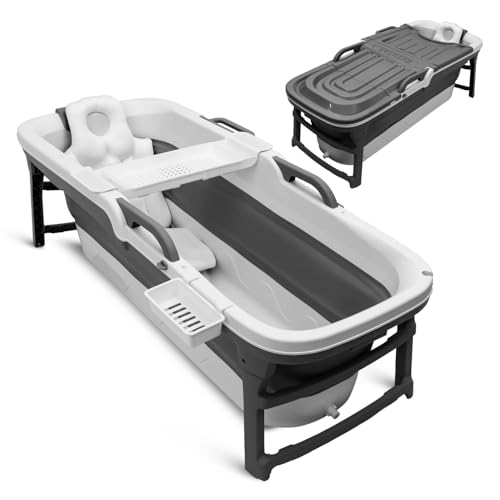
Not every outdoor bathtub needs to be a fixture. The SereneLife is a 59-inch foldable portable tub that sets up on a patio, lawn or deck, serves as a hot soak or a cold plunge, and folds away when the season or the tenancy ends. It suits renters, experimenters who want to test whether outdoor soaking fits their life before committing to a permanent tub, and cold-plunge users who also want the hot option. It does not suit anyone expecting the feel of a solid tub — the walls are a supported flexible structure, and it behaves like one.
Strengths
- Folds for storage — the only pick here that disappears when not in use.
- 59-inch length is a genuine adult soak size, not a token plunge bucket.
- Works for both hot soaking and cold plunge routines, widening its season.
Trade-offs
- Flexible walls and frame feel nothing like a rigid tub; leaning hard on the rim is not an option.
- No insulation to speak of — hot water cools at ambient speed on cold evenings.
- Fill and drain are hose-and-patience affairs; budget real time for both.
- Format: Foldable portable tub
- Length: 59 inches
- Uses: Hot soak and cold plunge
Judge this tub by the problem it solves: outdoor soaking with zero permanent footprint. For a renter with a patio, or a homeowner whose garden is still a work in progress, a season or two with a foldable tub teaches you exactly where you like to soak, at what times, and how much upkeep you tolerate — intelligence worth having before a permanent installation. The honest limits are comfort and heat. You sit on the floor of the tub rather than a contoured seat, and on a cold night the water temperature slides steadily. Mitigations are simple: a foam mat underneath for insulation and comfort, a floating cover while the water heats, and shorter, hotter fills. Within those expectations, it is a well-sized, genuinely useful tub at the accessible end of the category’s tiers.
Best for: renters, first-time outdoor soakers, and plunge-plus-soak users / Not suited for: anyone wanting rigid-tub feel or long, slow cooling soaks

CRYDIP XXL Oval Inflatable Bathtub, 200 Gallon — Best Soak-and-Plunge Hybrid
The CRYDIP takes the portable idea and builds it from drop-stitch material — the same construction that makes inflatable paddleboards rigid — in an XXL oval rated at 200 gallons, with a reclined backrest worked into the shape. It suits households split between cold plunging and hot soaking, and anyone who wants a big, comfortable portable tub that stores in a fraction of its working footprint. It does not suit buyers in thorn-and-pet-claw environments without a protective ground mat, and like all inflatables it carries a puncture risk rigid tubs do not.
Strengths
- Drop-stitch walls inflate firm — far more rigid and supportive than basic vinyl tubs.
- 200-gallon XXL oval with a reclined backrest supports a genuinely relaxed posture.
- Deflates and stores compactly; no permanent siting decision required.
Trade-offs
- Puncture risk is real — site it on a clean, smooth surface and keep sharp garden tools away.
- 200 gallons is a lot of water to fill, heat and drain; session planning matters.
- Air-filled walls insulate better than thin plastic but still trail a solid tub on cold nights.
- Construction: Drop-stitch inflatable
- Capacity: 200 gallons
- Shape: XXL oval with reclined backrest
The drop-stitch construction is what separates this from the toy-grade inflatable tubs that sour people on the format. Inflated properly, the walls hold their shape when you lean, the rim supports your arms, and the tub reads as furniture rather than a paddling pool. The reclined backrest is the other meaningful upgrade: most portable tubs force an upright, knees-bent sit, while this oval lets you settle back — which is the difference between a plunge you endure and a soak you linger in. Ownership is pump, mat, and patch kit discipline: inflate on a swept surface, store it dry and out of direct sun, and keep the repair kit where you can find it. Do that, and it is the most versatile portable option in this guide.
Best for: plunge-and-soak households wanting a big portable tub / Not suited for: rough surfaces, sharp-clawed chaos, or permanent installations
Comparison Table
| Pick | Badge | Key spec | Best for |
|---|---|---|---|
| HIGEINE 63-inch Concrete Freestanding Tub | Best Overall | Concrete solid surface, 63 in | Permanent garden spa installations |
| 34-inch Japanese Cedar Ofuro | Best Traditional Soak | Handcrafted cedar, seat + brass drain | Solo deep-soak ritual, small spaces |
| OGOLUOG Cedar Double Soaking Tub | Best for Couples | Cedar, 55–63 in, faucet + shower included | Shared soaks on a proper platform |
| Cedar Japanese Soaking Tub 47.24 in | Best Compact Wooden Tub | Cedar with lid, armrests, headrest | Solo soakers, modest decks |
| SereneLife 59-inch Foldable Tub | Best Portable | Foldable, 59 in, soak + plunge | Renters and first-time soakers |
| CRYDIP XXL Inflatable Bathtub | Best Soak-and-Plunge Hybrid | Drop-stitch, 200 gal, backrest | Big portable soaks, plunge users |
How to Choose an Outdoor Bathtub
Start with the question most listings avoid: is this tub a fixture or a guest? A permanent tub — concrete, or cedar on a built platform — commits a piece of your garden and rewards you with the best soak quality and the least weekly fuss. A portable tub commits nothing and asks for setup effort every session. Neither answer is wrong, but buying a portable tub while dreaming of a fixture, or installing a fixture while your life needs flexibility, guarantees disappointment. Decide the camp first; every later choice gets easier.
Material is the second decision, and outdoors it is mostly a weather question. Solid-surface and concrete composites are the set-and-forget option: UV-stable, frost-tolerant, and heavy enough to stay put in storms. Cedar is the traditional option and genuinely lovely to soak in, but it is a living material — it wants regular use or careful storage, periodic rinsing, and acceptance that the wood will silver and change over the years. Flexible portables trade material longevity for freedom: their lifespans are measured in seasons of careful use, which is fine if the price tier and your plans match that horizon.
Third, think in water. How much does the tub hold, where will that water come from, how hot will it get, and — the question everyone forgets — where does it go afterwards? A few hundred litres of bathwater needs a legal, sensible drain path: a garden bed that wants the water (only if you used no chemical additives), a drain point, or a slope that will not flood your neighbour. Small deep tubs like the ofuro win this category easily. Big tubs demand a plan. If your outdoor tap is far from your dream spot, price in the hose runs and fill times honestly before choosing a 200-gallon anything.
Finally, posture. Outdoor soaking is leisure, so the seated position matters more than the spec sheet. Upright ofuro-style soaking immerses you deeply with little water and suits meditators and small spaces. Reclined soaking needs length or a shaped backrest. Two-person soaking needs width and length together, plus a base that can carry the combined load. Match the geometry to how you actually relax, not to the photograph.
Sizing an Outdoor Bathtub to Your Space and Household
Length is the number buyers fixate on, but depth is the number that decides satisfaction. A 63-inch tub that is shallow delivers a disappointing sprawl; a 34-inch ofuro that is deep delivers total immersion. When you compare listings, read the interior depth and the seated water depth, not just the external footprint. For upright soakers, water at shoulder height while seated is the benchmark. For reclined soakers, interior length minus the slope of the backrest is your real legroom — a shaped backrest like the CRYDIP’s trades some of that length for posture, which most people find a good bargain.
Household size changes the maths in ways the listings never mention. A solo soaker in a two-person tub pays double water and double heating time for empty space, every single session. A couple sharing a solo tub pays in comfort instead. If your household will mostly soak alone with occasional shared sessions, the honest answer is usually the mid-size lidded cedar format: efficient alone, tolerable together for short soaks. If shared soaking is the main event — the Friday-night ritual — buy the double tub and accept the fill costs as part of the ritual’s price.
Space planning should include the invisible footprint: room to step in and out safely on wet feet, room to work a cover on and off, and a hose route that does not cross a walkway. Measure the site with the tub’s footprint plus a border on all sides, and check the access path too — a one-piece concrete tub that cannot pass your side gate is a delivery-day disaster. Portable tubs forgive all of this, which is precisely why they make such good first tubs: they let you learn your space before your space commits you.
Siting, Filling and Draining: The Practical Setup
Choose the site before the tub arrives. You want a surface that is level within a finger’s width, strong enough for the filled weight — water alone in a mid-size tub weighs as much as a small car — and close enough to a tap and a drain point that filling is a routine, not an expedition. Decking should be checked for joist capacity under permanent tubs; paving and gravel pads suit almost everything. Leave elbow room on at least one long side for entry, exit and cleaning.
Fill with a hose from the nearest tap, and if your household water heater feeds an outdoor hot tap, count yourself lucky — otherwise fill cold and accept longer heat-up, or fill hot from an indoor tap with a hose adapter for smaller tubs. While filling, check the drain path once with a short test discharge so the first full drain holds no surprises. For wooden tubs, the first fills are a curing ritual: fill, let the staves swell, expect minor weeping for a day or two, and only then judge the seals.
Draining should end with the tub dry or lidded, never standing full for days — standing water breeds mosquitoes, algae and, in wooden tubs, stale smells. Rinse the interior with clean water after draining, wipe the waterline, and cover or lid the tub. In freezing climates, portable tubs come indoors; wooden tubs are drained and stored under cover; solid permanent tubs are drained with their drain lines cleared. Fifteen minutes of routine per session is the true price of outdoor soaking, and it is worth paying.
Outdoor Bathtub Materials Compared: Concrete, Cedar and Flexible Walls
Because material decides almost everything about outdoor ownership, it is worth slowing down on the three families in this guide. Concrete and solid-surface tubs, represented here by the HIGEINE, are the closest thing to outdoor furniture that happens to hold water. The walls are thick, the surface is non-porous, and ultraviolet light — the silent killer of outdoor plastics — simply has nothing to attack. Their weaknesses are weight and permanence: you will not rearrange the garden around one on a whim, and if you move house, it effectively stays with the property. For a forever garden, that trade is usually worth it.
Cedar sits at the opposite philosophical pole: a natural material that ages visibly and asks for a relationship. New cedar is warm-toned and aromatic; weathered cedar silvers to grey, which many owners come to prefer. The wood’s natural resistance to rot is why it has been used for barrels, buckets and baths for centuries, but stave construction has rules. The tub seals by swelling, so it wants regular wetting; the interior wants rinsing rather than chemical scrubbing; and the exterior wants nothing more than an occasional wash. In exchange you get the lightest permanent tubs in this guide, a soak that smells faintly of the forest, and a piece that can be repaired by a competent woodworker decades from now — something no moulded tub can claim.
Flexible portables — foldable fabric tubs and drop-stitch inflatables — are honest about being temporary, and their materials should be judged on that basis. Look for multi-layer walls, reinforced seams, and a frame or inflation structure that keeps the rim stable when you climb in. Expect the surface to scuff, expect to patch eventually, and expect a lifespan of seasons rather than decades. What you get back is freedom: a soak on a rented patio, a plunge tub that winters in a closet, a trial run before real money. The mistake is not buying one; it is buying one while expecting concrete behaviour.
Heating an Outdoor Bathtub: Your Real Options
Soaking tubs in this guide have no built-in heaters, so the warmth question deserves a straight answer. The simplest method is filling from a hot water supply: an outdoor hot tap, or an indoor tap with a hose adapter for smaller tubs. Your water heater’s capacity becomes the limit — a big tub can drain a household tank and still end up lukewarm, which is why small, deep tubs are so much easier to run hot. Fill hot, fill fast, and get in promptly; an uncovered tub in evening air starts losing heat immediately, and a lid or floating cover between fill and soak preserves a surprising amount of it.
The second method is topping up: soak, and when the water cools, drain a little and add hot. This suits ofuro-style tubs especially well, since their small volume responds quickly. The third route, for committed outdoor bathers, is a separate water-heating appliance — a tankless heater plumbed to the outdoor spot, or a wood-fired heater of the kind sold for stock-tank pools. Those are projects in their own right, with venting and safety considerations that deserve professional input; this guide deliberately does not walk through installing them. What we will say is that the tubs here — particularly the cedar and concrete picks — are the usual partners for such setups, while portable tubs are generally used with plain hot fills and shorter sessions.
Cold water deserves a mention too. Every portable pick here doubles as a cold plunge, and even the permanent tubs can be filled cold in summer. If cold immersion is part of your routine, the practical questions are drainage speed and how you will chill the water — ambient overnight cooling, ice for smaller tubs — rather than anything about the tub itself. A tub that drains quickly and refills fast serves both rituals best.
A Season-by-Season Care Routine for Outdoor Bathtubs
Outdoor tubs do not ask for much, but they ask on a schedule, and owners who learn the rhythm in the first year rarely have trouble later. In spring, the job is recommissioning. Portable tubs come out of storage and get a full inflation or unfold test on a clean surface — find the slow leak now, not on the first warm evening. Wooden tubs that wintered dry need patient re-wetting: fill, top up as the level drops, and give the staves several days to swell before judging any weeping. Concrete and solid-surface tubs simply want a wash, a check of the drain, and a rinse of any winter debris. Spring is also when you replace worn covers, because a failed cover in leaf season creates more cleaning work than everything else combined.
Summer is the high season and the routine shrinks to per-session habits: rinse feet before entry to keep the water cleaner, drain after use rather than letting water stand, and give the waterline a wipe before it bakes into a ring in the sun. In hot climates, an uncovered tub in direct sun can grow algae on standing water within days — another argument for the drain-and-cover discipline. Cedar tubs in constant summer use are at their happiest; it is disuse, not use, that troubles them. If you go on holiday for more than a week or two, drain the tub, rinse it, and lid it rather than leaving a stagnant fill behind.
Autumn is about leaves and the first cold nights. Covers stop being optional: leaf tannins stain light surfaces, and organic debris in a drained tub still makes spring cleaning miserable. This is the season to check drainage paths before the ground gets saturated, and to move portable tubs indoors on your schedule rather than after the first frost surprises you. Wooden tubs should be drained before hard freezes — ice expansion in a stave tub is a genuine structural risk — and stored either indoors or under a breathable cover, never wrapped airtight in plastic where condensation can sit against the wood all winter.
Winter separates the permanent from the portable. Solid concrete and solid-surface tubs, drained with clear drain lines, can winter in place in most climates; in severe-freeze regions, follow the maker’s guidance to the letter, because trapped water in any fitting is the enemy. Some owners keep a cedar tub in gentle use through winter — hot soaking in cold air is the format’s finest hour — but that requires freeze-aware plumbing habits: drain after every use, never leave a fill standing overnight in a freeze. Whatever the material, a midwinter check after storms — cover intact, no standing water pooled where it should not be — takes five minutes and prevents most spring surprises.
Common Buying Mistakes
- Buying a bathroom tub for outdoor use. Indoor acrylic tubs are not UV- or frost-rated; a season outside can yellow, craze or crack them. Choose a tub designed or traditionally used outdoors.
- Ignoring the filled weight. Buyers check the tub’s weight and forget the water and bathers. Confirm your deck or base can carry the full working load.
- No drainage plan. A tub you cannot drain easily becomes a tub you stop using. Decide where hundreds of litres go before you buy.
- Leaving water standing. Days-old standing water is a mosquito nursery and an algae farm. Drain, rinse and cover after use.
- Neglecting wooden tub care. Cedar tubs left bone-dry for months can shrink and leak; keep to the maker’s wetting and storage guidance.
- Underestimating fill time. Big tubs on a standard hose take a long while. If your patience is short, a smaller deep tub soaks just as well.
Final Recommendation
For a permanent installation, the HIGEINE concrete tub is the confident buy: weatherproof, sculptural and nearly maintenance-free. For the traditional ritual, choose between the compact 34-inch cedar ofuro for pure solo soaking, the 47.24-inch lidded cedar tub for a complete one-person setup, and the OGOLUOG double cedar tub if two people will soak together. For flexibility, the SereneLife foldable keeps things simple, while the CRYDIP XXL inflatable is the portable to pick for long, reclined sessions. If your outdoor bathing plans lean toward heated, jetted water through winter, compare these with Best Cold Weather Hot Tubs and Best Hot Tubs. For more soaking formats, see Best Soaking Tubs, Best Freestanding Bathtubs, Best Japanese Soaking Tubs and Best Inflatable Hot Tubs.
Frequently Asked Questions
Can you leave an outdoor bathtub outside all year?
It depends on the material. Solid-surface and concrete tubs are built for year-round outdoor life, though draining them before hard freezes is still wise. Cedar tubs tolerate outdoor life but need their care routine and winter draining. Portable foldable and inflatable tubs should be drained, dried and stored under cover or indoors outside the season.
How do you keep an outdoor bathtub clean without a filtration system?
By treating it as a fill-use-drain tub rather than a standing pool: fill fresh, soak, drain, rinse, and cover. A lid or cover between uses does most of the work. Because the water is not stored, you avoid the chemical balancing a hot tub requires — but you also should not leave water standing for days.
Do wooden soaking tubs leak?
New stave-built wooden tubs commonly weep slightly during the first fills while the wood absorbs water and swells tight; that is the design working, not a defect. Persistent leaks after the swelling period, or leaks after a tub has been stored dry for months, usually mean the staves shrank and need gradual re-wetting per the maker’s guidance.
What surface should an outdoor bathtub sit on?
A level, load-bearing surface: a reinforced deck section, paving, a concrete pad, or a compacted gravel base for lighter portables. The filled weight — tub plus water plus bathers — is the number to design for, and permanent tubs deserve a deliberate base rather than bare ground.
How much water does an outdoor soaking tub use?
Deep, narrow ofuro-style tubs use the least, since immersion comes from depth rather than volume. Long two-person tubs and 200-gallon portables use the most. Your fill time on a standard garden hose scales with the same numbers, which is why small deep tubs suit frequent soakers.
How long does an outdoor bathtub last?
Material decides it. A concrete or solid-surface tub is effectively a permanent garden structure and should last as long as the garden design does. A cedar tub, kept to its wetting and draining routine, serves for many years and can be repaired rather than replaced when individual parts wear. Portable foldable and inflatable tubs are seasonal products: careful owners who store them dry, shaded and clean get several seasons, while a tub left inflated in the sun all summer ages fast. Match your expectation — and the price tier you are comfortable with — to the lifespan of the format you choose.
Is an outdoor bathtub better than a hot tub?
They serve different pleasures. A soaking tub offers simple, quiet, chemical-light bathing with minimal machinery and upkeep, but no jets and no always-hot water. A hot tub offers jets and constant readiness at the cost of power, chemicals and maintenance. Many households end up wanting the soak without the system — that is exactly the buyer an outdoor bathtub serves.


