Disclosure: airfryerkitchensupply.com is reader-supported. When you buy through links on our site, we may earn an affiliate commission at no extra cost to you.
Where to buy
Bath safety mats are sold on Amazon, in pharmacy home-safety aisles and through mobility retailers. Amazon is the practical comparison point for the verified mats below because listings state the grip method — suction cups, rubber backing or textured stone — in the title itself, and grip method is the decision that matters most for an elderly user. Match the mat to the surface it will sit on: in-tub mats and floor mats are different products doing different jobs.
Vive Non-Slip Bath Mat with Suction Cups, 28 x 16 — check price on Amazon
LuxStep PVC Loofah Shower and Bath Mat, 24 x 16 — check price on Amazon
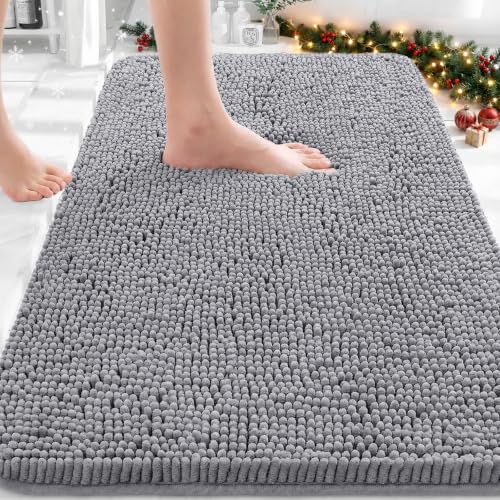
GORILLA GRIP Chenille Bathroom Rug, 24 x 17 — check price on Amazon
TOSORO Diatomaceous Earth Stone Bath Mat — check price on Amazon
OLANLY Memory Foam Bath Mat Rug, 30 x 20 — check price on Amazon
Yimobra Memory Foam Bath Mat, 31.5 x 20 — check price on Amazon
The best non skid bath mats elderly households can rely on solve two different problems that are often confused: slipping inside the tub or shower, and slipping on the wet floor while stepping out. This guide covers both, and labels each pick clearly, because an in-tub suction mat placed on the bathroom floor — or a plush floor rug placed inside a tub — can make things worse rather than safer. Every linked pick below was verified against the catalogue, and each review states exactly where the mat belongs.
For older users, the details that matter are unglamorous: suction cups that actually hold on smooth tub floors, drainage so water does not pool underfoot, a surface that stays grippy when soapy, and edges that do not curl into a trip hazard. Softness matters too, but comfort is secondary to a mat that stays exactly where it was put, every single shower.
One more distinction runs through this roundup. Loofah-textured and stone mats manage water differently from rubber suction mats and chenille rugs, and they suit different routines — daily showers, occasional baths, or a carer-assisted setup. Read the best-for line on each pick and match it to the actual bathing routine in your household rather than buying the most popular option.
In this guide
Quick Picks
Vive Non-Slip Bath Mat with Suction Cups, 28 x 16 — Best Overall In-Tub. An extra-large in-tub rubber mat with a patented suction grip, sized and marketed specifically with elderly users in mind. Check on Amazon
LuxStep PVC Loofah Shower and Bath Mat, 24 x 16 — Best for Textured Tubs. A loofah-textured PVC mat with drainage that grips without suction cups, suiting textured tub and shower floors. Check on Amazon
GORILLA GRIP Chenille Bathroom Rug, 24 x 17 — Best Floor Rug Grip. A floor rug — not an in-tub mat — whose strong rubber backing grips hard, covering the dangerous step-out moment. Check on Amazon
TOSORO Diatomaceous Earth Stone Bath Mat — Best Quick-Dry Floor Mat. A rigid diatomite stone mat that drinks step-out water in seconds and presents a flat, unmoving surface — no edges to curl. Check on Amazon
OLANLY Memory Foam Bath Mat Rug, 30 x 20 — Best Cushioned Floor Mat. A thick memory-foam floor rug with non-slip backing for users whose feet need cushioning at the basin and step-out zone. Check on Amazon
Yimobra Memory Foam Bath Mat, 31.5 x 20 — Best Large Cushioned Rug. A larger memory-foam floor rug marketed on softness and absorbency, with non-slip backing and machine washability. Check on Amazon
How These Picks Were Chosen
Each linked product was cross-checked through Amazon data, matching brand and model in the returned listing title to the mat described. That verification matters in this category because bath mats are sold under endless near-identical names, and the grip construction — the part that keeps an elderly person upright — is exactly what copycat listings misdescribe.
Selection then weighed four things. First, grip method and where it works: suction for smooth in-tub surfaces, rubber backing for floor use, texture and weight for stone. Second, water handling: drainage holes, quick drying and resistance to mildew in a steamy room. Third, maintenance an older person or carer can actually sustain — machine washable beats hand-scrubbing for most households. Fourth, size honesty: a mat too small for the tub leaves the most-used standing area uncovered.
Mats were excluded if the listing could not be verified, if the product was a decorative rug with no credible grip construction being sold as a safety mat, or if sizing was too small to cover a realistic standing zone. No prices are printed, since they change constantly; use the check-price links for current figures.
The 6 Best Non-Skid Bath Mats for Elderly Users

Vive Non-Slip Bath Mat with Suction Cups, 28 x 16 — Best Overall In-Tub
The Vive is the clearest match for this search in the whole roundup: an in-tub mat, extra-large at 28 by 16 inches, with suction-cup grip designed to prevent slips and falls, and elderly users named in its own listing. If the problem is a slippery tub floor during showers, this is the pick to start with.
Strengths
- Suction-cup grip engineered specifically to prevent slips and falls
- Extra-large footprint covers the main standing and turning zone in a standard tub
- Rubber construction rinses clean and tolerates daily shower use
Trade-offs
- Suction cups need a smooth, non-textured tub floor to hold properly
- In-tub only — it is not a floor mat for the step-out area
- Rubber feel underfoot is functional rather than luxurious
Key details
- Placement: inside tub or shower
- Grip: suction cups
- Size: 28 x 16 inches
Coverage is the Vive’s quiet advantage. Turning around mid-shower is when most in-tub slips happen, and a mat that spans the turning zone — rather than a small pad under the shower head — addresses the real risk. The suction system holds the mat flat so edges cannot ride up and become a trip lip, which matters for users with reduced foot clearance.
It is not a universal fit. Textured or refinished tub floors defeat suction cups, so run a hand over the tub surface before ordering; if it feels gritty, choose the loofah-textured LuxStep pick instead, which grips by texture and weight rather than suction. On a smooth tub, though, the Vive is the most purpose-built elderly safety mat verified for this guide.
Best for: elderly users showering in a smooth-floored tub who need maximum in-tub grip / Not suited for: textured tub floors where suction cups cannot seal

LuxStep PVC Loofah Shower and Bath Mat, 24 x 16 — Best for Textured Tubs
The LuxStep solves the problem the Vive cannot: floors where suction cups will not seal. Its loofah-style PVC texture provides grip through surface friction and the mat’s own conformity, while drainage channels let water escape instead of pooling on top — a combination that works in textured tubs and tiled shower trays alike.
Strengths
- Works on textured surfaces that defeat suction-cup mats
- Drainage design prevents water pooling underfoot
- Quick-drying PVC resists the mildew that plagues fabric mats
Trade-offs
- Loofah texture feels rougher under sensitive feet than rubber or foam
- Smaller footprint than the Vive pick
- PVC needs an initial rinse and airing before first use
Key details
- Placement: tub or shower floor
- Grip: loofah texture, no suction cups
- Material: PVC, phthalate-free, with drainage
Loofah mats earn their place in elderly bathrooms for a second reason beyond grip: they exfoliate lightly and, more importantly, they do not rely on a backing staying intact. Rubber-backed floor rugs become hazards when the backing perishes and the rug starts to skate; a one-piece textured PVC mat has no backing to fail. For a carer setting up a parent’s bathroom, that failure-mode simplicity is valuable.
Comfort is the honest compromise. Users with very sensitive or fragile skin on their feet may prefer a smoother surface for standing, using this mat in the shower tray where showers are short, rather than for long soaks. Rinse it after use and hang it over the tub edge weekly so the underside dries fully.
Best for: textured tubs and shower trays where suction mats will not hold / Not suited for: users who want a soft, cushioned feel underfoot

GORILLA GRIP Chenille Bathroom Rug, 24 x 17 — Best Floor Rug Grip
More falls happen stepping out of the bath than in it, which is why this floor rug belongs in an elderly-safety roundup. The Gorilla Grip chenille rug pairs an absorbent pile that catches drips with an unusually strong rubber backing that resists the slow creep across tile that makes ordinary rugs dangerous.
Strengths
- Strong rubber grip backing resists sliding on smooth tile
- Absorbent chenille catches step-out drips before they spread
- OEKO-TEX certified materials suit sensitive skin contact
Trade-offs
- Floor use only — never place a backed rug inside a tub
- Rubber backing degrades faster with frequent hot washing
- 24 x 17 is sized for a single step-out zone, not a whole bathroom
Key details
- Placement: bathroom floor, step-out zone
- Grip: rubber backing
- Surface: absorbent chenille
Place this rug where the first wet foot lands, tight against the tub side, and its two jobs — grip and absorption — happen in the same second. The backing is the headline: many chenille rugs share the same soft top while riding on thin, token grip layers. This one’s backing is the reason it is recommended here, and it should be checked monthly; once any backing cracks or powders, retire the rug rather than trusting it.
Washing discipline extends its safe life. Wash cool, dry flat or on low heat, and never use fabric softener, which coats both the pile’s absorbency and the backing’s grip. Treated that way, it is the strongest verified floor option for an elderly bathroom in this guide.
Best for: the step-out zone beside a tub or shower in an elderly household / Not suited for: in-tub use, or buyers needing a very large floor rug

TOSORO Diatomaceous Earth Stone Bath Mat — Best Quick-Dry Floor Mat
The TOSORO stone mat attacks the step-out problem from a completely different angle: instead of a flexible rug, a flat slab of diatomaceous earth that absorbs water almost on contact and never bunches, curls or creeps. For an elderly user whose risk includes tripping on a rucked rug edge, that rigidity is a safety feature in itself.
Strengths
- Absorbs step-out water rapidly, leaving the surface feeling dry
- Rigid slab cannot bunch or curl into a trip hazard
- Nothing to launder — occasional sanding refreshes absorption
Trade-offs
- Hard, cool surface will not suit users who want warmth or cushioning
- Stone can crack if dropped or placed on an uneven floor
- Smaller standing area than a full-size rug
Key details
- Placement: bathroom floor, step-out zone
- Material: diatomaceous earth stone
- Size: 23.5 x 15 inches
Stone mats suit a particular routine beautifully: a daily shower, a quick step out, and a bathroom that needs to be dry and clear for the next person, including a carer. There is no wet fabric sitting damp all day, which also helps in small bathrooms with weak ventilation where rugs turn musty. The mat’s own surface texture provides the non-skid quality on top, while its weight keeps it planted.
Set expectations honestly. It feels like standing on smooth stone, because it is. Users with cold-sensitive feet or who stand at the basin for long periods will prefer a cushioned rug there and the stone purely at the step-out point. It must also sit on a flat floor; on uneven tiles a rigid slab can rock, which defeats the purpose.
Best for: households wanting a dry, flat, zero-laundry step-out surface / Not suited for: users who need cushioning or warmth underfoot

OLANLY Memory Foam Bath Mat Rug, 30 x 20 — Best Cushioned Floor Mat
Standing on hard tile is genuinely painful for some older users — arthritic feet, thin natural padding, or long grooming routines at the basin. The OLANLY memory foam rug is the comfort-led floor pick: thick foam, an absorbent top, a non-slip backing, and a generous 30 by 20 inch footprint that covers both the step-out and the standing-at-the-sink zone in compact bathrooms.
Strengths
- Thick memory foam cushions sore or arthritic feet
- Non-slip backing keeps the rug planted on tile
- Machine washable for carer-friendly maintenance
Trade-offs
- Foam holds water longer than chenille or stone — needs proper drying
- Thick pile is a threshold consideration for users with very low foot clearance
- Floor rug only; the foam construction is not an in-tub safety mat
Key details
- Placement: bathroom floor
- Grip: non-slip backing
- Surface: memory foam, 30 x 20 inches
The safety conversation around foam mats cuts both ways, and this guide will not pretend otherwise. Cushioning helps users who would otherwise rush or lean because standing hurts — and hurried, leaning movement is itself a fall risk. But a thick mat is also a low obstacle, so place it fully flat, away from the doorway swing, and check that the user steps onto it rather than catching its edge.
Maintenance decides whether it stays hygienic. Shake it out daily, wash it on a gentle cycle, and let it dry completely — over the tub edge works — before it goes back down. A foam mat left damp underneath will smell within weeks and its backing grip will suffer.
Best for: elderly users with sore feet who stand at the basin or step out onto tile / Not suited for: in-tub use or homes that cannot manage regular washing and drying

Yimobra Memory Foam Bath Mat, 31.5 x 20 — Best Large Cushioned Rug
The Yimobra is the bigger sibling option in the cushioned category: 31.5 by 20 inches of memory foam with a quick-dry claim, non-slip backing and machine washability. For a wide step-out zone in front of a full-length tub, the extra length covers both the exit point and the towelling-off spot in one mat.
Strengths
- Longest floor-rug footprint in this roundup covers a full tub side
- Soft, absorbent foam suits users who towel off standing on the mat
- Machine washable with non-slip backing
Trade-offs
- Shares foam’s slower drying — needs airing between washes
- Large size will not fit small ensuite floors
- Cushion-first design; in-tub grip still requires a dedicated mat like the Vive
Key details
- Placement: bathroom floor, tub side
- Grip: non-slip backing
- Surface: memory foam, 31.5 x 20 inches
Length changes how a floor mat gets used. A short rug serves one wet footprint; a tub-length rug becomes the room’s dry standing platform, which for an elderly user means every post-shower movement — reaching for a towel, sitting on a stool, dressing — can happen on a grippy, cushioned surface instead of wet tile. That is a meaningful safety upgrade in a main bathroom.
Pair it correctly, though. This rug does nothing for grip inside the tub, and pairing a floor rug with a proper in-tub mat is the complete setup this search really calls for. The Vive plus the Yimobra, or the LuxStep plus the Gorilla Grip, are the two coherent combinations in this guide.
Best for: main bathrooms needing tub-length cushioned floor coverage / Not suited for: small bathrooms or as a substitute for an in-tub mat
Comparison Table
| Pick | Badge | Key spec | Best for |
|---|---|---|---|
| Vive Non-Slip Bath Mat with Suction Cups, 28 x 16 | Best Overall In-Tub | Suction cups, 28 x 16 in, in-tub | elderly users showering in a smooth-floored tub who need maximum in-tub grip |
| LuxStep PVC Loofah Shower and Bath Mat, 24 x 16 | Best for Textured Tubs | Loofah PVC texture, drainage, 24 x 16 in | textured tubs and shower trays where suction mats will not hold |
| GORILLA GRIP Chenille Bathroom Rug, 24 x 17 | Best Floor Rug Grip | Rubber grip backing, chenille, floor use | the step-out zone beside a tub or shower in an elderly household |
| TOSORO Diatomaceous Earth Stone Bath Mat | Best Quick-Dry Floor Mat | Diatomite stone, quick-dry, rigid | households wanting a dry, flat, zero-laundry step-out surface |
| OLANLY Memory Foam Bath Mat Rug, 30 x 20 | Best Cushioned Floor Mat | Memory foam, non-slip backing, 30 x 20 in | elderly users with sore feet who stand at the basin or step out onto tile |
| Yimobra Memory Foam Bath Mat, 31.5 x 20 | Best Large Cushioned Rug | Memory foam, 31.5 x 20 in, non-slip backing | main bathrooms needing tub-length cushioned floor coverage |
In-Tub Mats vs Floor Mats: The Distinction That Prevents Falls
Every mat in this guide does one of two jobs, and confusing them is the most common buying error in this category. In-tub mats sit inside the bath or shower, grip the tub floor with suction or texture, and protect during the shower itself. Floor mats sit outside, grip the tiles with a backing or their own weight, and protect during the step-out and while standing at the basin. An elderly bathroom generally needs both, because the risks at each location are different.
Construction follows the job. In-tub mats are waterproof rubber, PVC or textured materials that tolerate being soaked and soaped daily, and they must drain rather than trap water against the tub. Floor mats are absorbent — chenille, foam or stone — because their task is removing water from feet and floor. Putting an absorbent floor rug inside a tub creates a heavy, sliding, mildew-prone mess; putting a rubber in-tub mat on the floor gives you a non-absorbent trip edge. Buy for the location first and the brand second.
Sizing follows the job too. In-tub, cover the standing and turning zone — for most standard tubs that means a mat at least 28 inches long. On the floor, cover the first two steps out of the tub, placed flush against the tub side so no wet foot lands on bare tile between tub and mat.
Grip Methods Compared: Suction, Backing, Texture and Stone
Suction cups give the strongest hold of any in-tub method, but only on smooth, glossy tub floors. Press the mat down firmly when the tub is dry, check a corner before every shower, and expect to re-seat it weekly. On textured, matte or refinished surfaces the cups cannot seal, and a half-attached suction mat is worse than none because it moves unpredictably.
Rubber backings grip floor tiles by friction and work well until the backing ages. Heat, harsh detergents and fabric softener accelerate cracking; once a backing powders or flakes, the rug becomes a skating rink and must be replaced, however good the top still looks. Textured PVC loofah mats have no backing to fail and grip by surface texture, trading softness for that durability. Stone mats grip by weight and a naturally textured surface, and cannot bunch at all — the trade-off is a hard feel underfoot.
Whichever method you choose, test it the same way: wet the surface, step on with a wet foot, and deliberately try to shift the mat sideways. A safety mat should resist that test on day one and still resist it in six months.
Making the Whole Bathroom Safer, Not Just the Floor
A mat is one layer of a safe elderly bathroom, not the whole answer. Grab bars by the tub and shower matter more than any mat once balance is genuinely impaired, and a mat should never be used to postpone fitting them. Good lighting on the route from bed to bathroom, a night light in the bathroom itself, and clear floor space — no laundry baskets or scales in the walking line — remove the other common fall causes.
Water management is the mat’s supporting act. A shower head that sprays outside the curtain soaks the floor beyond any mat’s coverage, so check the spray pattern and curtain position. Towels within arm’s reach of the step-out point prevent the wet walk across the room that defeats a well-placed mat. These are five-minute fixes that multiply the value of the right mat.
How to Install and Maintain a Non-Skid Bath Mat Safely
Correct fitting matters as much as the mat you choose. Follow these steps for an in-tub suction mat, with floor-mat notes where they differ.
- Clean the tub floor thoroughly and let it dry; soap film is the main reason new suction mats fail to hold on day one.
- Run a palm over the tub surface. If it feels textured or gritty, do not rely on suction — switch to a textured loofah-style mat instead.
- Lay the mat over the standing and turning zone, then press each suction cup down firmly, working from the centre outward while the surface is dry.
- Test before the first shower: step in dry, shift your weight side to side, and tug a corner. The mat should not move at all.
- After each shower, rinse the mat and, at least weekly, lift it and hang it over the tub edge so the underside dries and mildew cannot establish.
- For floor rugs, position the mat flush against the tub side covering the first steps out, confirm the backing grips on your tile, and wash cool without fabric softener to protect the grip.
- Inspect monthly: cracked backings, perished suction cups or a stone mat that has stopped absorbing are retirement signals, not quirks to live with.
If a suction mat keeps releasing, the cause is almost always surface texture or soap residue rather than the mat itself. A thorough degreasing clean and full drying before re-fitting solves most cases; persistent failure on a textured tub means the mat type is wrong for that tub, and forcing it only creates a false sense of security.
Common Buying Mistakes
Using a floor rug inside the tub. Backed absorbent rugs become heavy, slippery and mildew-prone when soaked in the tub. In-tub safety requires a purpose-made suction or textured mat.
Fitting suction cups to a textured tub. Cups cannot seal on gritty or matte finishes, leaving a mat that shifts unpredictably — more dangerous than a bare, known surface. Match the grip method to the floor.
Buying too small. A mat that covers only the spot under the shower head leaves the turning zone bare, and turning is when slips happen. Cover the full standing and turning area.
Never lifting the mat. Mats left flat for months grow mildew underneath and their grip decays unnoticed. Weekly lifting, rinsing and drying is part of owning a safety mat.
Trusting a perished backing. A floor rug whose rubber backing has cracked will skate on wet tile. Inspect backings monthly and replace rugs on condition, not on how the top looks.
Treating a mat as a substitute for grab bars. Mats reduce slip risk; they do nothing for a loss of balance. Where balance is the issue, fit grab bars and use the mat as the second layer, not the only one.
Adapting the Setup for Walk-In Showers, Carers and Post-Surgery Recovery
Walk-in showers change the mat calculation in two ways. The standing zone is larger and defined by the shower head’s spray rather than by a tub’s walls, so a mat must cover where the user actually stands and turns under the water — often a bigger area than a standard tub mat provides, and a reason to consider the loofah-textured format, which can be cut or chosen in larger shower sizes and does not depend on suction sealing to a tray that may be textured by design. Drainage matters more, too: a walk-in floor is a wet-room floor, and a mat that traps water against it stays damp all day.
Where a carer assists with bathing, the mat setup serves two people’s footing. The user needs grip inside the shower or tub; the carer needs a dry, grippy floor zone exactly where they stand to help with transfers — usually beside the tub at its midpoint, not at the step-out end. That argues for two floor elements in assisted households: the step-out mat for the user and a second grippy surface, or one long rug like the Yimobra pick, covering the assist position. Carers should also own the maintenance routine in this guide — weekly lifting, rinsing and inspection — because the user may not be able to do it.
Post-surgery and post-hip-replacement recovery adds a temporary but strict layer: weight-bearing and movement restrictions make any mat edge a hazard to be engineered out. Rigid stone mats and fully-flat suction mats suit recovery periods better than thick foam, whose height complicates restricted stepping patterns. Treat the recovery setup as its own purchase decision with the surgical team’s guidance, even if it duplicates a mat you already own — the eight weeks after surgery are the highest-risk bathing period in most households’ lives.
In all three adaptations, the principle from the main guide holds: match the mat to the surface and the routine, test the grip wet before trusting it, and inspect on a schedule. The variations above change which mat and where — never whether the discipline applies.
Bath Mat Materials in Depth: Rubber, PVC, Chenille, Foam and Stone
Natural and synthetic rubber in-tub mats, like the Vive pick, remain the grip benchmark because rubber’s friction on wet enamel is intrinsically high and suction cups multiply it. Their weaknesses are ageing — rubber hardens and cups perish over years — and a functional appearance nobody would call luxurious. Rinse-and-hang care slows the ageing; storing the mat flat in the tub, permanently wet, accelerates it.
PVC loofah mats trade that softness for structure. The tangled filament surface gives grip, drainage and a mild exfoliating action in one material with no backing to fail, which is why the LuxStep suits textured floors and high-use showers. The honest costs are feel — some users find loofah texture harsh — and the need to shake and rinse the filament free of hair and soap regularly, since what drains well also collects debris visibly.
On the floor side, chenille’s advantage is absorption speed: its pile drinks step-out water before it spreads, and a serious rubber backing like the Gorilla Grip pick’s keeps that wet pile from becoming a sled. Memory foam trades absorption speed for pressure relief, holding water longer in exchange for the cushioned standing that sore feet need. Diatomaceous stone leaves the textile logic entirely: absorption by mineral porosity, a surface dry to the touch in moments, and maintenance by occasional sanding rather than laundering.
None of these materials is best in the abstract. The elderly bathroom that works is a deliberate pairing — an in-tub material chosen for its floor surface, a floor material chosen for the user’s feet and the household’s laundry reality — and that pairing logic, repeated across this guide, matters more than any single product in it.
Costs, Lifespans and When a Cheaper Mat Is a False Economy
Bath mats for elderly safety are one of the categories where price and protection genuinely correlate — up to a point. The cheapest suction mats use thin material and sparse, weak cups that release unpredictably within months; the cheapest floor rugs ride on token grip layers that perish in the first hot wash. In a young household those failures are annoyances. In an elderly household, a mat that fails mid-shower is an injury mechanism, which reframes the budget entirely: the correct comparison is not mat against mat, but mat against the cost — human and financial — of one fall.
That said, the premium end has its own waste. Designer floor rugs charge for pattern and brand while using ordinary backings; oversized stone mats charge for area a small bathroom cannot use. The picks in this guide were chosen at the points where construction, not branding, justifies the tier: a patented suction system, a backing with a genuine grip reputation, a stone slab whose material is its mechanism. Spend on the grip system and the size you need; save on everything decorative.
Lifespan planning makes the economics clearer. An in-tub rubber mat in daily elderly use should be inspected monthly and will typically serve a few years before cups or material tire; a quality backed rug serves until its backing does, which care — cool washes, no softener, flat drying — can extend substantially; a stone mat’s mineral surface lasts longest of all, refreshed by sanding. Budgeting a replacement cycle into the household calendar, rather than waiting for visible failure, is the mature approach to safety equipment of every kind.
Finally, buy the pair together when you can. The in-tub mat and the floor mat are one system covering one continuous journey from shower to dry floor, and purchasing them as a pair — as this guide’s final recommendation suggests — ensures the sizes and positions are planned together rather than accumulated by accident. Safety bought as a system outperforms safety bought as souvenirs.
What to Do When a Mat Fails the Wet Test
Every mat in an elderly bathroom should pass the deliberate wet test described in this guide — wet surface, wet foot, firm sideways push — and some mats, honestly fitted, will fail it. A failure is information, not a verdict on the household. Work through the causes in order: soap film under a suction mat, which a degreasing clean fixes; a textured floor defeating suction, which a change of mat type fixes; a rug backing that has perished, which only replacement fixes; a stone mat saturated after long disuse, which drying and sanding fixes. Each cause has a different remedy, and applying the wrong one — scrubbing a perished backing harder, say — wastes the effort and keeps the hazard.
If a mat fails repeatedly on a surface it should suit, believe the evidence over the listing. Floors vary within their categories: two ‘smooth’ tubs can differ enough in glaze for one to hold suction and the other to release it. The correct response is to move that mat to a location where it passes — a floor rug role, a second bathroom — and fit the problem location with the other grip technology. This guide deliberately includes both suction and texture-based in-tub options, and both backing and stone floor options, so that a household can solve a failed test from within the same shortlist.
Record what worked, especially in a household with carers or family helping. A note inside the bathroom cabinet — mat type, position, cleaning rhythm, purchase date — turns one person’s hard-won setup knowledge into household knowledge, and ensures a replacement bought in a hurry matches the specification that passed the test rather than starting the experiment again.
The One-Shopping-Trip Decision Checklist
Work through five questions and the shortlist chooses itself. Where does the danger live — inside the tub, at the step-out, or both? Both is the commonest honest answer, and it means a pair, not a product. What is the tub floor’s finish — smooth enough for suction, or textured enough to demand a loofah mat? Who will lift, rinse and inspect the mats weekly, and does the chosen format fit that person’s strength and time? Do the user’s feet need cushioning, or is a firm, flat surface safer for their balance and stepping pattern? And what is the replacement trigger — the visible condition at which this household will retire the mat without debating it?
Write the answers on the order notes if you are buying for a parent at a distance; the discipline matters more when you cannot stand in the bathroom yourself. Then buy the pair, fit them with the care in this guide’s installation section, and run the wet test before the first real shower. A mat setup chosen by checklist, fitted carefully and inspected monthly is as close to a solved problem as bathroom safety gets — and it stays solved only as long as the monthly inspection does.
One more environment deserves a specific word: the rented or care-setting bathroom, where permanent changes are limited and the mat setup may be the only safety intervention permitted. Mats are, fortunately, the most portable safety equipment in the bathroom — they arrive without tools, leave without trace, and move house with their owner. For an elderly parent moving between their own home, a child’s home and respite care, a familiar mat that travels is worth more than a superior mat fixed in one bathroom, because footing confidence is partly familiarity. If the household’s life involves more than one bathroom, standardise on the same mat types in each: the same grip underfoot, the same edges, the same routine, wherever the shower happens to be.
Accessibility auditors who review elderly homes informally — the occupational therapist, the district nurse, the experienced carer — tend to look at the bathroom floor before anything else, because they know the statistics live there. Their consistent advice matches this guide’s structure: secure the wettest square metre first, which is the step-out; secure the second wettest, which is the standing zone in the shower or tub; and only then spend on comfort. A household that follows that order, even gradually, mat by mat, is building safety in the sequence the risk itself dictates.
Keep one spare habit in reserve for the day any mat in the setup is in the wash or retired unexpectedly: a large, grippy bath towel laid flat on the floor is a safer temporary step-out surface than bare tile, and a mat-free shower is a shower to postpone in an elderly household rather than improvise. Safety systems fail gracefully when the household has already decided what the fallback is — decide yours before you need it, and write it on the same cabinet note that records the mat specification.
Final Recommendation
For most elderly households the complete answer is a pair: the Vive suction mat inside a smooth tub, plus the Gorilla Grip rug at the step-out. Swap the Vive for the LuxStep if your tub floor is textured, and swap the rug for the TOSORO stone if laundry is a burden or rug edges are a worry in your household.
Choose the OLANLY or the larger Yimobra where sore feet and long standing time at the basin are the real complaints — comfort that keeps someone steady and unhurried is a safety feature too. Whichever combination you pick, fit it carefully, test the grip wet, and inspect it monthly.
Best Stone Bath Mats
Best Grab Bars For Bathroom
Frequently Asked Questions
What is the safest type of bath mat for an elderly person?
Inside the tub, a suction-cup mat on a smooth floor or a textured loofah mat on a textured floor. Outside, a strong rubber-backed rug or a rigid stone mat. Most elderly bathrooms need one of each, because in-tub and step-out risks are different.
Why won’t my suction bath mat stick?
Usually soap film or a textured tub surface. Clean and fully dry the tub, press each cup down firmly, and test before showering. If the floor is textured, suction will never seal reliably — use a loofah-textured mat instead.
How often should a bath mat be replaced?
On condition rather than age: replace when suction cups perish, rubber backings crack or powder, or a stone mat stops absorbing after a refreshing sand. Inspect monthly in an elderly household.
Are memory foam bath mats safe for elderly users?
They can be, as floor mats, when the backing grips well and the mat lies fully flat — cushioning helps users with sore feet stay steady. They are not in-tub safety mats, and their thickness should be considered for users with very low foot clearance.
How do I stop mould under a bath mat?
Lift and hang the mat to dry at least weekly, rinse after use, and wash fabric mats regularly without fabric softener. Mildew grows in the permanently damp layer underneath a mat that is never lifted.
Do I still need grab bars if I have a non-skid mat?
Yes, if balance is a concern. Mats address slipping; grab bars address balance loss and give support entering and leaving the tub. They solve different problems and work best together.