A mini toaster oven is a small countertop oven that toasts bread, reheats leftovers and bakes small trays. It heats faster than a full oven and uses less counter room than a standard toaster oven, which suits dorms, studios and tiny kitchens. Most use heating elements above and below the rack, and a few add convection fans for more even cooking. The smaller interior limits tray size, so confirm what fits before ordering.
The six models below mix simple dial designs with a smarter digital oven. We have not used these products ourselves, so confirm the interior size, rack count and controls on the current listing before buying. Cooking performance claims are the makers’ own. Because the interior of a mini oven is tight, a standard sheet pan or large pizza may not fit. Measure the pan you use most, then compare it with the interior dimensions on the listing, and leave room for ventilation around the oven. Wattage also varies between models, so check that your circuit can handle the oven alongside other kitchen appliances, and think about whether you want a timer bell, a clear glass door and a pull-out rack. These small details decide whether a mini oven feels pleasant or fussy every single day.
As an Amazon Associate we earn from qualifying purchases. Links below are affiliate links, and they do not change the product information we give.
What to Look For
| Feature | Why it matters |
|---|---|
| Interior size | Check that your tray, pizza or loaf pan will actually fit |
| Controls | Dials are simple; digital panels add presets and precise timing |
| Heating | Convection or quartz elements can cook more evenly |
| Cleanup | A removable crumb tray saves effort |
In this guide
Specs at a Glance
| Model | Style | Size class | Notes |
|---|---|---|---|
| Breville Mini Smart Oven BOV450XL | Compact smart-element oven | Compact class; confirm interior | Element IQ cooking and presets |
| Panasonic FlashXpress NB-G110P | Infrared compact oven | Compact class; confirm interior | Fast heating |
| BLACK+DECKER TO1313SBD | Compact dial oven | Four-slice class; confirm listing | Includes a rack and baking pan |
| Dash Mini Toaster Oven Cooker | Small oven with a cooking surface | Very small class; confirm listing | Colorful finishes |
| Hamilton Beach 31401 | Compact dial oven | Four-slice class; confirm listing | Includes a baking pan |
| Oster Countertop Toaster Oven | Compact dial oven | Four-slice class; confirm listing | Several finishes |
The 6 Best Mini Toaster Ovens
Top pickBest for serious toast and reheating in tight spaces
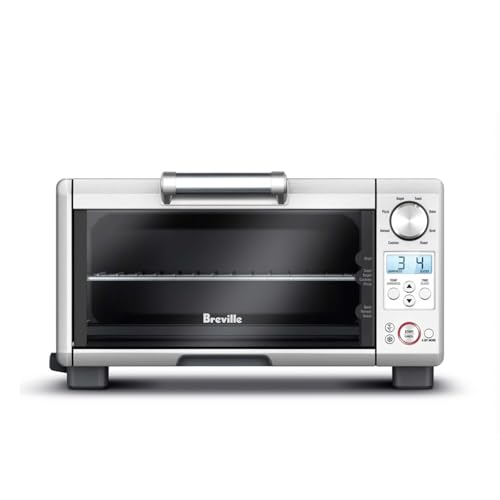
1. Breville Mini Smart Oven BOV450XL
A compact toaster oven that adjusts its heating elements for different foods. It has a reputation for even toasting from a small body.
Suits: serious toast and reheating in tight spaces. Strengths: even cooking features. Weaknesses: takes some counter room. Skip it if you want the simplest dial oven.

Best for fast toast and quick bakes
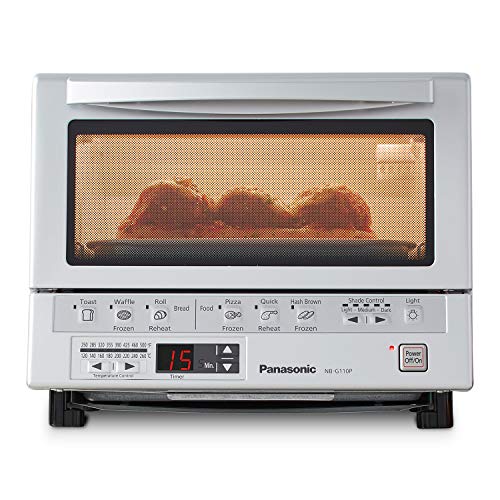
2. Panasonic FlashXpress NB-G110P
A small countertop oven with quick-heating infrared elements. It is made for toast, small pizzas and reheating.
Suits: fast toast and quick bakes. Strengths: quick heat-up. Weaknesses: a modest interior. Skip it if you need to bake big trays.
Best for first apartments
3. BLACK+DECKER TO1313SBD
A classic small toaster oven with straightforward dials and a basic pan. It handles simple toasting and warming duties.
Suits: first apartments. Strengths: simple controls and a known brand. Weaknesses: basic features. Skip it if you want convection cooking.
View BLACK+DECKER TO1313SBD on Amazon
Best for dorm rooms and desks
4. Dash Mini Toaster Oven Cooker
A tiny oven and cooker meant for one or two servings. The colors and small footprint appeal to dorm rooms.
Suits: dorm rooms and desks. Strengths: a very small footprint. Weaknesses: limited interior. Skip it if you cook for several people.
View Dash Mini Toaster Oven Cooker on Amazon

Best for everyday toast and snacks
5. Hamilton Beach 31401
A budget-friendly compact toaster oven with a simple design from a familiar kitchen brand. Check the listing for the current interior size.
Suits: everyday toast and snacks. Strengths: a known brand and plain controls. Weaknesses: few extras. Skip it if you want an air fry mode.

Best for small kitchens
6. Oster Countertop Toaster Oven
A basic Oster countertop oven in a compact size. Details vary by version, so compare the interior and rack count carefully.
Suits: small kitchens. Strengths: a familiar brand. Weaknesses: specs vary by version. Skip it if you want a particular model number.
View Oster Countertop Toaster Oven on Amazon
Care and Setup
- Empty the crumb tray often to cut smoke and fire risk.
- Let the oven cool before wiping the interior.
- Leave space above and behind it for ventilation.
- Use oven-safe dishes that fit the interior.
Mistakes to Avoid
- Assuming a full pizza or a sheet pan will fit.
- Placing it under a cabinet with no clearance.
- Using plastic or foil that touches the elements.
- Forgetting to preheat for baking tasks.
Interior Dimensions and Bakeware That Actually Fits
The word mini covers a wide range, and the interior is what counts. Slice counts and quart-style size labels are rough guides, but a pan that does not fit is useless. Look for the interior width, depth and height, then compare them with the dishes you own. Measure a quarter sheet pan, a loaf pan, a small square baking dish, a muffin tin and a pizza size you would like to cook, and remember that you need clearance on all sides so the pan can slide in and out without touching the elements or the door.
Height matters as much as footprint. A tall casserole or a loaf of bread may touch the top elements, and the distance between the rack and the elements changes with rack position. Check how many rack positions the oven offers and whether racks can flip or be removed. If the oven comes with a baking pan, check the size of that pan, since it tells you what the maker expects to fit.
- Pizza: check the interior width against your pizza diameter, including the crust edge.
- Baking: shallow pans cook more evenly in a small oven than tall dishes.
- Reheating: a flat plate that fits the interior is more useful than a bulky container.
Rather than guessing, write the interior dimensions down and test your bakeware with a tape measure before ordering.
Heating Elements, Preheat and Toast Evenness
Small ovens heat quickly, but uneven toast is a common complaint. Heating elements sit above and below the rack, and their layout, number and power affect how evenly the food browns. Quartz and infrared elements are described by makers as heating faster, while standard metal elements are slower but simple. Some digital ovens adjust element power for different foods, which the makers say improves evenness. These are the makers’ own claims, so judge by what you value: speed, evenness, or simplicity.
Because the cavity is small, the food is close to the elements. That makes it easy to scorch the top of a dish before the inside heats through. Use a lower rack position for thicker items, and cover foods that brown fast with foil, keeping the foil clear of the elements. Rotate trays halfway if you notice hot spots.
Preheating matters for baking, less so for toast and reheating. Many mini ovens have thermostats that cycle on and off, so the actual temperature swings around the set point. An inexpensive oven thermometer shows how accurate your oven is. If it runs hot or cold, adjust the setting or the time. A convection fan, where present, moves air to even out heat, but it also dries surfaces, so check recipes and reduce time as needed.
Controls, Timers and Presets
Dial ovens are simple: one dial for temperature, one for function and a timer. They are easy to understand and have fewer parts that can fail, but they offer less precision. Digital ovens allow exact temperatures and times, and may include presets for toast, bagels, pizza and reheating. Presets are convenient when they match what you cook, but they are only as good as their programming for your food.
Think about the timer. Some timers shut off the oven when they finish, while others only ring. A toast shade selector is helpful if you toast often, since it repeats the same result each time. A stay-on setting lets you bake longer than the timer allows, but you will need to watch it. An automatic shutoff provides a safety margin.
- Check whether the timer turns the heat off or only rings.
- Look for clear markings that you can read from your usual standing position.
- Consider the sound level of beeps if the oven sits near a bedroom or study area.
Choose the level of control that matches how you cook. If you mostly toast and reheat, dials are plenty. If you bake small batches or follow recipes with exact temperatures, a digital control is more helpful.
Counter Space, Ventilation and Safety
A small oven still gets hot on the outside. Place it on a stable, heat-tolerant surface, away from the wall and the edge of the counter. Leave space above and behind it as the manual directs, and do not tuck it under a cabinet with no clearance, since rising heat can damage cabinet finishes. Keep it away from curtains, paper towels and other flammable items.
Check the cord length and the outlet. Many toaster ovens draw a lot of power for their size, so plug them directly into a wall outlet and avoid sharing the circuit with other high-power appliances such as kettles or microwaves. Do not use a power strip or extension cord unless the manual allows it.
Handle with care: the glass door, handle and exterior can be hot, so use oven mitts and keep children and pets back. Never leave the oven on while you are out of the house. Keep plastic, wax paper and non-oven-safe containers away from the elements. Foil should be used carefully and never allowed to touch the heating elements. When the oven is not in use, unplug it if you want an extra safety margin.
For the tightest spaces, measure the footprint with the door open and the handle extended, since a door that opens down needs clearance below it.
Cleaning, Upkeep and When to Replace
Crumbs and grease build up fast in a small oven, and they cause smoke and odors. Empty the crumb tray after use once it is cool, and wipe the interior with a damp cloth or mild soap. Remove racks and trays to wash them. Avoid abrasive pads on nonstick interiors, and do not spray cleaners directly on heating elements or controls. For baked-on residue, a paste of baking soda and water or a cleaner made for ovens may help, as long as the manual allows.
Let the oven cool fully before cleaning. Wipe the glass door with a non-abrasive cleaner and dry it to prevent streaks. Check the power cord and plug for damage from time to time.
Signs the oven should be replaced:
- Elements that glow unevenly or fail to heat.
- Temperatures that are far off, even after adjusting.
- A door that does not close or has cracked glass.
- Controls that stick, fail or behave unpredictably.
- Persistent burning smell or smoke after cleaning.
- Damage to the cord, plug or housing.
Stop using the oven if you see sparking or smell burning plastic. Check the warranty period before paying for any repair, since small ovens are often cheaper to replace than to fix.
A Checklist Before You Buy a Mini Toaster Oven
Mini toaster ovens fit small spaces, but small does not mean simple. Work through this list before choosing among the six in the guide.
- Measure the counter space, including height. Toaster ovens get hot on top and sides, so the maker will list clearances on all sides and above.
- Check the interior size in inches and compare it with pans you own or plan to buy. A mini oven may not fit a standard quarter sheet pan.
- Look at the number of rack positions, since more positions mean more flexibility.
- Check the controls: dials are simple, while digital panels offer presets and more precise settings.
- Look at the crumb tray. A removable tray makes cleaning easier.
- Read the maximum temperature and the timer range.
- Consider the cord length and outlet position. Plug it into a wall outlet directly, not an extension cord, unless the maker says otherwise.
- Think about how often you will use it, and what you will cook.
Dial Controls and Digital Panels Compared
Controls change how the oven feels in daily use. The table sets out the broad differences.
| Point | Dial controls | Digital controls |
|---|---|---|
| Learning curve | Very short | Short to moderate |
| Precision | Approximate | Exact temperature and time |
| Presets | Few or none | Toast, bake, reheat and more |
| Cleaning | Knobs collect crumbs | Flat panel wipes clean |
| Failure points | Mechanical wear | Electronics |
Dial models suit people who want a simple appliance for toast and reheating. Digital models suit cooks who bake small batches and want repeat results.
Toaster Oven Vocabulary
- Element: the heating rod that glows to produce heat.
- Quartz element: a type of element that heats and responds quickly.
- Convection: a fan that circulates hot air for faster, more even cooking.
- Preheat: bringing the oven up to temperature before food goes in.
- Toast shade selector: a control for the darkness of toast.
- Broil: intense heat from the top element.
- Crumb tray: the removable pan at the bottom that catches crumbs.
- Interior cavity: the cooking space inside the oven.
Mistakes That Cause Burnt Toast and Uneven Baking
- Putting the oven against a wall or under a cabinet without the clearance in the manual.
- Overfilling the pan so that food touches the heating elements.
- Using bakeware that does not fit or is not suited for oven use.
- Covering the crumb tray with foil in a way the maker warns against.
- Skipping rotation of food for even browning.
- Letting crumbs and grease accumulate.
- Walking away while broiling.
Matching a Mini Oven to Your Space
A dorm or small apartment
A compact oven handles toast, bagels, frozen snacks and small meals. Keep the area around it clear.
A couple who wants a second oven
A mini oven saves energy and time for small portions, though it will not replace a full oven for large dishes.
A home baker
Check the pan fit and the temperature range. A digital panel may help with repeat recipes.
A camper or RV
Check the power draw against your supply, and follow the manual and the vehicle’s electrical guidance.
Clean the crumb tray regularly, wipe the exterior when cool, and follow the manual for cleaning the interior. Never immerse the oven in water, and unplug it before cleaning.
Measuring the Cavity Against Your Pans
The interior is the number that matters most in a mini oven. Measure width, depth and the clear height between the rack and the elements, then compare with your pans. Many small ovens fit a quarter sheet pan, a small loaf pan or a small round cake pan, but some do not. Choose bakeware with low sides so that air can move, and avoid dishes taller than the clearance given by the maker. Always keep food away from the heating elements.
- Measure the pans you own before ordering.
- Check whether the supplied tray is the right size for your favorite recipes.
- Choose dark metal pans for browning, and glass or ceramic dishes that the maker approves for oven use.
- Leave space around the pan for hot air to circulate.
Crumb Tray Habits and Retirement Signs
Empty the crumb tray often, and wipe the interior when it is cool using a damp cloth and mild soap. Do not spray cleaners on the elements, and never use abrasive pads on coated surfaces. Wipe the exterior and the door glass, and let everything dry fully. Replace the oven if the door no longer closes, the elements stop glowing evenly, the cord is damaged or you notice a burning smell that continues after cleaning. Contact the maker or a qualified technician rather than attempting electrical repairs.
Mini Toaster Oven FAQ
What is a mini toaster oven good for?
Toast, bagels, reheating leftovers and small bakes. It is not a replacement for a full oven.
Do mini toaster ovens use less energy?
They usually heat a smaller space, so they often use less than a full oven for small jobs.
Can I air fry in one?
Only if the listing says it has an air fry or convection mode. Basic models do not.
How do I clean one?
Unplug it, let it cool, empty the crumb tray and wipe with a damp cloth.
Will a standard quarter sheet pan fit in a mini toaster oven?
It depends on the interior size. Measure the pan and compare it with the oven's interior width and depth, leaving clearance on all sides.
Why does my toast come out uneven?
Element layout, rack position and hot spots can all affect evenness. Try a different rack level, rotate the food and check the manual for guidance.
Do I need to preheat?
For baking, yes, since the temperature affects the result. For toast and reheating, a preheat is often unnecessary, but check the manual.
Can I use foil in a toaster oven?
Often yes, if the manual allows it, but keep it from touching the heating elements and from blocking airflow. Never use it in ways the maker warns against.
Is it safe to leave it plugged in?
Many people do, but unplugging it when not in use adds a safety margin. Never leave it running unattended.
How can I tell whether the temperature is accurate?
Put an oven thermometer inside and compare it with the setting. Adjust the temperature or time to account for any difference.
Can a mini toaster oven replace my full oven?
For small meals, yes, but not for large pans or roasts. Check the interior size against what you usually cook.
The Short Version
For even toasting, the Breville. For quick heat, the Panasonic. For classic dials, the BLACK+DECKER. For the smallest oven, the Dash. For plain everyday use, the Hamilton Beach. For a basic Oster option, the Oster.
How the Picks in This Guide Compare, Buyer to Buyer
Specifications only take you so far with mini toaster ovens. What decides satisfaction is how each pick’s strengths line up with your routine, and how much its trade-offs matter in your home. The notes below revisit every pick already reviewed above — no new models, no new claims — and frame each one around the buyer it suits and the compromise it asks for, so you can shortlist with confidence before checking the current listing.
Breville Mini Smart Oven BOV450XL: who it really suits
As the review above describes, this pick suits serious toast and reheating in tight spaces. Its stated strength is even cooking features, and that is the quality to weigh first: if that strength answers your main frustration with your current setup, this is probably your pick. The honest limitation given above is takes some counter room, so consider whether that drawback touches your daily routine or only an edge case you rarely meet. The review’s own guidance is to skip it if you want the simplest dial oven. View Breville Mini Smart Oven BOV450XL on Amazon — in that case, one of the other picks in this guide almost certainly fits better, and the comparison notes here will point you to it.
Panasonic FlashXpress NB-G110P: who it really suits
As the review above describes, this pick suits fast toast and quick bakes. Its stated strength is quick heat-up, and that is the quality to weigh first: if that strength answers your main frustration with your current setup, this is probably your pick. The honest limitation given above is a modest interior, so consider whether that drawback touches your daily routine or only an edge case you rarely meet. The review’s own guidance is to skip it if you need to bake big trays. View Panasonic FlashXpress NB-G110P on Amazon — in that case, one of the other picks in this guide almost certainly fits better, and the comparison notes here will point you to it.
BLACK+DECKER TO1313SBD: who it really suits
As the review above describes, this pick suits first apartments. Its stated strength is simple controls and a known brand, and that is the quality to weigh first: if that strength answers your main frustration with your current setup, this is probably your pick. The honest limitation given above is basic features, so consider whether that drawback touches your daily routine or only an edge case you rarely meet. The review’s own guidance is to skip it if you want convection cooking. View BLACK+DECKER TO1313SBD on Amazon — in that case, one of the other picks in this guide almost certainly fits better, and the comparison notes here will point you to it.
Dash Mini Toaster Oven Cooker: who it really suits
As the review above describes, this pick suits dorm rooms and desks. Its stated strength is a very small footprint, and that is the quality to weigh first: if that strength answers your main frustration with your current setup, this is probably your pick. The honest limitation given above is limited interior, so consider whether that drawback touches your daily routine or only an edge case you rarely meet. The review’s own guidance is to skip it if you cook for several people. View Dash Mini Toaster Oven Cooker on Amazon — in that case, one of the other picks in this guide almost certainly fits better, and the comparison notes here will point you to it.
Hamilton Beach 31401: who it really suits
As the review above describes, this pick suits everyday toast and snacks. Its stated strength is a known brand and plain controls, and that is the quality to weigh first: if that strength answers your main frustration with your current setup, this is probably your pick. The honest limitation given above is few extras, so consider whether that drawback touches your daily routine or only an edge case you rarely meet. The review’s own guidance is to skip it if you want an air fry mode. View Hamilton Beach 31401 on Amazon — in that case, one of the other picks in this guide almost certainly fits better, and the comparison notes here will point you to it.
Oster Countertop Toaster Oven: who it really suits
As the review above describes, this pick suits small kitchens. Its stated strength is a familiar brand, and that is the quality to weigh first: if that strength answers your main frustration with your current setup, this is probably your pick. The honest limitation given above is specs vary by version, so consider whether that drawback touches your daily routine or only an edge case you rarely meet. The review’s own guidance is to skip it if you want a particular model number. View Oster Countertop Toaster Oven on Amazon — in that case, one of the other picks in this guide almost certainly fits better, and the comparison notes here will point you to it.
Read across the six notes and a pattern emerges: there is rarely a single best choice among mini toaster ovens, only a best match. Owners who stay satisfied are the ones who chose by their dominant use — the meal, drink, room or routine that happens every day — and accepted a weakness in an area they seldom touch. Choose the same way, and verify the current listing’s dimensions and features before ordering, because line-ups and details change over time.
Buying Criteria in Depth: Mini Toaster Ovens
The short feature table near the top of this guide is the summary; this section is the reasoning behind it. Each criterion below is one of the checks experienced buyers run before ordering mini toaster ovens, explained in the order that matters — fit and function first, features second, ownership costs last. Work through them against your own home and the right pick usually identifies itself.
Slots, cavity and the shape of your bread
Toaster ovens are chosen by what fits inside: slices of toast, a small pizza, a tray of vegetables, a whole chicken in the larger models. Measure the interior against your real dishes — the baking pan you use weekly, your favourite casserole — and check the rack positions, because height between racks decides whether a cheese-topped dish browns or burns. Wide, shallow cavities suit pizza and flatbreads; taller ones suit roasts and loaves. The picks in this guide span these shapes, and the right answer is the one your existing cookware already votes for.
Elements and evenness: how it browns
Quartz and metal elements heat differently, and convection fans — fitted to many models — move hot air to even out browning and speed cooking. For toast, what matters is element coverage across the slice and a crumb tray you can empty; for baking, steady temperature matters more. Expect any countertop oven to have a personality: a hotter back corner, a fiercer top element. Learn it with a tray of bread slices in the first week and rotate dishes accordingly afterwards. Evenness claims are a starting point; your test toast is the truth.
Controls and the timer question
Dials are simple and repairable; digital controls give precise temperatures and times. Either is fine — what matters is whether the timer can be set accurately for short jobs, because the difference between golden and burnt toast is under a minute. A stay-on mode is useful for longer baking but demands attention, and an auto shut-off is a genuine safety feature in a busy kitchen. Check that the temperature markings correspond to reality loosely — small ovens often run hot — and plan to verify with an oven thermometer if you bake seriously.
Air fry and special modes: bonus or headline?
Many toaster ovens now include an air fry mode with a mesh basket, plus dehydrate, proof or reheat settings. These are real capabilities in a compact box, but they share one cavity: the air fry basket holds less than a dedicated fryer, and dehydrating occupies the oven for hours. Buy the oven for its core jobs — toast, bake, roast, reheat — and treat special modes as bonuses that extend a tool you already use daily. If air frying is your main ambition, compare honestly with the dedicated fryers; if it is a weekly extra, the combined appliance saves real counter space.
Mini Toaster Ovens in Real Life: Common Situations
Guides are written in general terms, but buying decisions are personal. The situations below describe the households and routines that mini toaster ovens are actually bought for. Find the one closest to yours and borrow its priorities — it is a faster route to the right pick than comparing every feature on every model.
Breakfast and the toast routine
For households where toast, bagels and pastries start the day, a toaster oven beats a pop-up toaster on flexibility: cheese on toast, reheated croissants that crisp instead of toughening, a single tray of breakfast potatoes beside the eggs. Rack position and a reliable light-to-dark range decide satisfaction. Keep the crumb tray emptied and the interior wiped, because yesterday’s crumbs smoke under today’s toast. If breakfast for several people is the main event, prioritise width — four slices at once ends the queue at the counter.
Small households cooking real dinners
A toaster oven is a genuine oven for one or two people: a tray of chicken thighs and vegetables, a small lasagne, fish fillets with tomatoes, all without heating a full-size oven and the kitchen with it. It preheats in minutes, uses less energy for small loads and keeps the cook in the room rather than exiled to a hot kitchen in summer. The discipline is sizing: cook in dishes that fit with air space around them, and accept two batches for guests. For couples and singles, this is often the most-used appliance after the kettle.
Reheating and refreshing leftovers
Pizza, fried foods, roast potatoes and pastry all reheat better in dry oven heat than in a microwave. A moderate temperature, a few minutes and a watchful eye restore crispness that microwaves destroy. The reheat mode on smarter models automates this, but a simple oven and a timer do the same job. Place items on the rack or a small tray for airflow, and remember that reheating is warming and refreshing, not cooking again — pull food out the moment it is hot and crisp rather than leaving it to dry.
Baking small batches
Cookies by the half-dozen, a small loaf, brownies in a square pan: a toaster oven makes small-batch baking practical without a full oven’s preheat and heat load. Use pans that fit with clearance, expect slightly faster browning at the edges, and rotate the pan halfway for even results. An oven thermometer earns its place here, because compact ovens’ dials are approximate. For keen bakers this is a second oven for overflow and experiments; for occasional bakers it may be the only oven they ever need.
Setup, Care and Keeping It Working Well
Ownership is the longer half of any appliance purchase. The guidance below covers the setup habits, routine care and storage practices that keep mini toaster ovens performing as they did on the first week — all of it general practice for this type of product, with the maker’s manual for your exact model always taking precedence where the two differ.
(‘Crumbs, trays and the fire rule’, “The crumb tray is a safety component: empty it regularly, because accumulated crumbs near the elements can smoulder and smoke. Wipe the interior walls with a damp cloth once cool, wash the rack and pan in warm soapy water, and never line the oven floor with foil unless the maker explicitly allows it — foil can block airflow, reflect heat onto elements and void the design’s assumptions. If food flares or smokes heavily, switch off, keep the door closed and let it die down rather than opening the door to a rush of air.”)
(‘Glass door and exterior care’, ‘The door glass takes splashes of cheese and fat; clean it when cool with a non-abrasive cleaner so visibility stays good — being able to see browning is half the control system of a small oven. Wipe the exterior and the control panel with a soft cloth, keeping moisture out of dial shafts and buttons. Check the door seal and hinges for crumbs and damage, and make sure the door closes fully; a door held ajar by debris leaks heat and cooks unevenly. Treat the little oven with the same respect as the big one and it will serve for years.’)
(‘Placement and ventilation’, “Countertop ovens radiate serious heat from their top and sides. Follow the maker’s clearances, keep the top clear of storage, and pull the oven forward from under low cabinets during long cooks if the manual advises it. Place it on a stable, heat-resistant surface, keep the cable away from the hot casing, and never run it near curtains or paper. In small kitchens the temptation is to tuck it into a corner; resist — airflow is what keeps both the oven and the kitchen safe and the cooking even.”)
More Questions Buyers Ask About Mini Toaster Ovens
Can a toaster oven replace my main oven?
For many small households, effectively yes for everyday cooking: it roasts, bakes, toasts and reheats anything that fits its cavity, faster and with less energy than a full oven. Its limits are size — large turkeys, big sheet pans and multi-rack baking still belong to the main oven — and temperature precision for demanding baking. Most owners end up with a natural split: the countertop oven for daily jobs and small batches, the main oven for feasts and oversize items. Judge by your largest regular dish, not your largest imaginable one.
Why does my toaster oven cook unevenly?
Compact cavities place food close to the elements, so position matters: the back and top usually run hotter. Rotate dishes halfway, use the middle rack for baking, and avoid crowding so air can move. A convection model evens things out but does not abolish physics. If toast browns in stripes, the elements themselves dictate the pattern — learn it with a test batch and place items accordingly. Persistent severe unevenness on a new oven is worth raising with the maker while it is under warranty.
Do I need to preheat a toaster oven?
For toast and reheating, generally no — the elements are close and fast. For baking and roasting, a short preheat gives more predictable results, especially for items that rise or need an initial burst of heat. Many models signal readiness or include the preheat in their programs; otherwise allow a few minutes at temperature before loading. Consistency is the key: whatever you do, do the same each time for a given recipe, and your noted times stay meaningful.
Is the air fry mode as good as a dedicated air fryer?
It is genuinely capable — the same principle of fast, hot, moving air — but the basket is usually smaller and the cavity shape different, so batch sizes shrink and times can differ. For a household that air fries occasionally, the combined appliance is the sensible buy and saves a whole appliance’s worth of counter. For a household that air fries daily in family quantities, a dedicated fryer will be faster per batch and easier to clean. Honest frequency, not feature lists, decides this one.
What pans can I use in a toaster oven?
Any oven-safe pan that fits with clearance around it for airflow: metal, glass, ceramic and silicone all work if rated for the temperature. Measure before buying accessories, because standard sheet pans and some loaf pans are too wide for compact cavities. Dark pans brown faster than pale ones, which matters at this proximity to the elements. Never use pans with plastic handles not rated for oven heat, and keep parchment use within the maker’s guidance, away from direct element contact.
How do I stop toast burning on one side?
Check the rack position first — the middle position suits most bread — and confirm you are using the toast setting or a moderate temperature rather than a full grill blast. Bread type matters: sugary and enriched breads brown faster than plain loaves, and frozen bread needs the defrost setting or a gentler start. If one side consistently darkens more, rotate the slices halfway; if the problem is new, inspect the elements for one that glows unevenly or not at all, which suggests a fault to raise with the maker.
Keep a small set of pans that genuinely fit: a quarter sheet-style tray, a small casserole and a muffin or loaf pan sized to the cavity. Owning the right two or three pans transforms a toaster oven from a toast machine into your default oven, because every recipe stops beginning with a fitting problem.
An inexpensive oven thermometer, used for the first month, calibrates your trust in the dial. Note the offset — many compact ovens run hot — and write it inside a cupboard door. After that month you will cook by instinct, but instinct trained on real numbers rather than the dial’s optimism.
Use the oven’s speed for vegetables. A small tray of broccoli, green beans or cubed squash roasts in the time a main oven takes to preheat, which changes weeknight cooking: roasted vegetables stop being a project and become the default side. Season boldly, give the tray space, and shake it once halfway.
Finally, clean as you go at this scale. A toaster oven wiped weekly never needs a restoration project, and a clean interior browns food instead of perfuming it with last month’s cheese. Two minutes with a damp cloth while the oven cools is the whole maintenance philosophy in one habit.
A Practical Decision Framework for Mini Toaster Ovens
When several picks in a guide all look capable, decide in three passes. First, eliminate on fit: any model whose dimensions, capacity or installation style cannot work in your space is out, however attractive its features. Second, rank the survivors by your dominant use — the job this appliance will do most weeks — using the comparison notes above, because a pick that excels at your everyday task beats one that excels at a task you perform twice a year. Third, break any remaining tie with ownership factors: cleaning effort, availability of spare parts, control simplicity for everyone in the household and how the design will age in your kitchen or garden. Three passes, in that order, resolve most shortlists of mini toaster ovens without regret.
It also helps to write down, before you look at any listing, the three things your current setup does worst. Buyers shop most successfully when they shop against a named frustration — too small, too slow, too loud, too fiddly to clean — rather than against an abstract idea of the best. Hold each candidate among mini toaster ovens up against those three frustrations in turn. The right pick is the one that removes at least two of them without introducing a new one you will meet daily. If no pick removes any of them, the honest conclusion is that your current appliance is better than you thought, and the money is better kept.
Checking the Current Listing Before You Order
Models in any guide to mini toaster ovens are revised quietly over time: capacities are restated, accessories move in or out of the box, and control layouts change between production runs. Before ordering, read the current listing for the exact dimensions including handles and doors, the included accessories, the electrical or fuel requirements and the warranty terms for your region. Confirm that the version described matches the version reviewed here, and check what the maker’s own page says where the two differ — the maker is the authority on their current production. This five-minute check prevents the most common disappointment in appliance buying, which is not choosing the wrong model but receiving a different variant of the right one.
Delivery and installation deserve the same attention as the product itself. Measure the route the appliance must travel, confirm who is responsible for positioning and connecting it, and know the returns process before you need it. For anything involving gas, water or fixed electrical work, use qualified professionals and follow local rules; for plug-in and countertop items, confirm the socket, circuit and surface are suitable. Keep all packaging until the appliance has run through its first full cycle or cook successfully, because returns without packaging are a misery nobody needs.
Accessories and Extras: What Is Worth Having
Every category of appliance gathers an ecosystem of accessories, and the pattern is consistent: a small number prove genuinely useful, and the rest fill a drawer. With mini toaster ovens, buy the basics that protect the appliance and make its main job easier — the right cleaning tools, any cover or storage the setting demands, and the one or two working accessories your routine clearly calls for, such as a thermometer where temperature decides results. Add the rest only when a real task asks for it. An accessory bought for a named, recurring job earns its space; one bought for an imagined future usually becomes clutter that makes the appliance itself feel more complicated than it is.