Disclosure: airfryerkitchensupply.com is reader-supported. When you buy through links on our site, we may earn an affiliate commission at no extra cost to you.
Where to buy
Every vacuum below is a genuine Miele, confirmed — five listings verified fresh on 2026-11-22 and one re-confirmed from the verified cache of 2026-11-22. This is a brand guide: every pick is a Miele, because the search asks for Miele, and no other brand has been substituted into any slot. Accessories and compatible-brand attachments that appeared in the same searches were excluded — a floorhead is not a vacuum — and they are named in the notes so you can see what was filtered out.
- Miele Complete C3 Marin, Electrobrush — Check on Amazon
- Miele Complete C3 Kona, for Heavy Duty Carpets — Check on Amazon
- Miele Classic C1 Cat & Dog, for Deep Carpet Cleaning — Check on Amazon
- Miele Guard L1, for Deep Carpet Cleaning — Check on Amazon
- Miele Complete C3 Calima, Turbobrush — Check on Amazon
- Miele Classic C1 Turbo Team — Check on Amazon
Introduction: with Miele, the rug decision is a floorhead decision
Choosing the best Miele vacuum for rugs is a different exercise from choosing between vacuum brands, because inside the Miele range the canister bodies share a philosophy — bagged, sealed, built to be serviced rather than replaced — and what actually decides whether a given Miele loves your rug or merely tolerates it is the floorhead it ships with and the pile height that floorhead was designed for. An electrobrush, driven by its own motor, agitates medium and higher pile properly and is the correct tool for deep rugs. A turbobrush, driven by the vacuum’s own airflow, is a lighter instrument, right for low-to-medium pile and wrong for shag. A pure suction head is for hard floors and the flattest rugs only. Almost every disappointed Miele-for-rugs purchase in the world is a pile mismatch wearing a famous badge.
So this guide is organised by pile first and prestige second. The six picks span the rug spectrum honestly: two electrobrush-class machines for serious carpet, a deep-cleaning value model, the new-generation Guard line’s deep-carpet entry, and two turbobrush models that are excellent — for the low-to-medium pile they declare in their own listings and no higher. Each review states the pile range its listing claims, because Miele’s own titles are unusually candid about this, and a buyer who matches the claim to the rug in front of them will be happy with any machine here. A buyer who buys the famous name and ignores the pile line in the title is gambling against the manufacturer’s own labelling.
The other Miele constant worth understanding up front is the bagged system. Every pick in this guide is a bagged canister. For rug owners this is mostly good news — bags hold a great deal of the fibre, grit and pet hair that rugs surrender, and changing a bag is a cleaner event than emptying a dust cup over a bin — but it is a running-cost commitment, and the buying guide treats it as one: bags and filters are the subscription you agree to when you buy the machine, and they belong in the decision, not in the surprise after it.
In this guide
Quick Picks
| Pick | Badge | Key detail from the listing | Check price |
|---|---|---|---|
| Miele Complete C3 Marin | Best Overall | Electrobrush floorhead; listed as suitable for carpets and hard floors | Check on Amazon |
| Miele Complete C3 Kona | Best for Heavy-Duty Carpets | Powerline model listed for heavy duty carpets | Check on Amazon |
| Miele Classic C1 Cat & Dog | Best Value for Deep Carpet | Bagged canister listed for deep carpet cleaning | Check on Amazon |
| Miele Guard L1 (Deep Carpet) | Best New-Generation Pick | Guard L1 bagged canister listed for deep carpet cleaning | Check on Amazon |
| Miele Complete C3 Calima | Best for Low-Medium Pile | Turbobrush floorhead; listed for low-medium pile carpet and hard floors | Check on Amazon |
| Miele Classic C1 Turbo Team | Best Entry Point for Rugs | Listed for hard floors and low-med pile carpet | Check on Amazon |
How These Picks Were Chosen
Verification was brand-strict. Searches were run on the airfry site on 2026-11-22, and a listing qualified only if it was a complete Miele vacuum cleaner — confirmed by the Miele name in the Amazon title — whose listing addressed carpet or rug use. That filter excluded three kinds of impostor that the searches returned in quantity: Miele accessories such as the STB 305-3 turbo brush floorhead and genuine Miele filters, which are parts, not vacuums; third-party compatible attachments, which are not Miele products at all; and Miele models whose listings target hard floors exclusively, which would be a dishonest answer to a rugs keyword. The Classic C1 Cat & Dog was re-used from the verified API cache dated 2026-11-22; the other five were verified fresh the same day.
Within the qualifying set, picks were spread by pile range and by line — Complete C3 at the top, Classic C1 as the value line, Guard L1 as the new generation — so that a rug owner can find their pile and their budget tier without any pick pretending to cover a pile it does not claim. Where a listing title is brief, most notably the Guard L1 deep-carpet model, this guide reports what the title states and flags the rest as listing-page verification rather than borrowing specifications from other models in the line. Miele model families share design language, but a specification belongs to a model, not to a family, and this guide will not lend one machine another machine’s numbers.
The 6 Best Miele Vacuums for Rugs
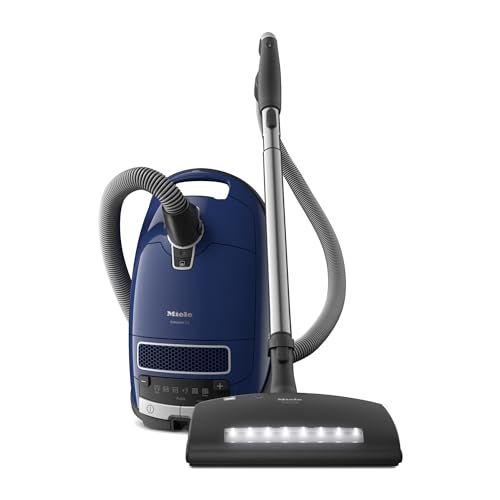
1. Miele Complete C3 Marin — Best Overall
The Marin is the Complete C3 configured the way rug owners should want it: a bagged canister with an electrobrush floorhead, listed as suitable for carpets and hard floors, in Marine Blue. The electrobrush is the point — a motor-driven brushroll agitates rug pile mechanically rather than relying on suction alone, working grit up from the base of the fibres where it does its slow, sandpaper damage to the rug itself. On a mixed-floor home — real rugs over real hard floors — the Marin’s configuration covers both surfaces at full strength instead of compromising one for the other, which is why it leads this guide: most rug homes are mixed homes, and this is the mixed home’s machine.
Strengths
- Electrobrush floorhead delivers true agitation for carpet and rug pile
- Complete C3 platform: bagged, sealed-system canister built for long service
- Equally at home on hard floors, so one machine covers a mixed-floor house
Trade-offs
- Premium positioning within the Miele range — check the current price on Amazon and budget for bags as a running cost
- An electrobrush head is heavier to push than a suction-only head
- Very high-pile or delicate antique rugs still need the gentle-technique conversation in the guide below
Key specs (from the listing)
- Line: Complete C3, bagged canister
- Floorhead: Electrobrush
- Stated surfaces: carpets and hard floors
- Colour: Marine Blue
Buy the Marin if your rugs are the kind that hold dirt — medium pile, family traffic, pets with opinions about the best rug in the house — and your floors are mixed. It is the configuration professional rug advice keeps converging on: motorised agitation for the rugs, a proper hard-floor tool for the boards, and a sealed bagged body keeping what the brush loosens out of the room’s air. Its cost is real, and this guide will not pretend otherwise; it is the price of the floorhead class that deep rugs actually require, in the line Miele builds to be serviced for the long term.
Best for: mixed-floor homes with medium-pile rugs that need real agitation. / Not suited for: hard-floor-only homes, or buyers who want the lightest possible push.

2. Miele Complete C3 Kona — Best for Heavy-Duty Carpets
The Kona’s listing makes one promise in plain language — this Complete C3 Powerline model is a vacuum cleaner for heavy duty carpets, in Obsidian Black — and for the household whose flooring is wall-to-wall carpet or whose rugs are dense, deep and heavily trafficked, that plain promise is the whole review. Heavy-duty carpet is where lesser floorheads go to be humbled: dense pile resists airflow, buries grit deep, and demands sustained agitation and suction working together. A Powerline C3 specified by its own maker for that duty is the conservative, correct purchase for it.
Strengths
- Listed explicitly for heavy duty carpets — the clearest duty claim in this guide
- Complete C3 Powerline platform: the range’s full-strength configuration
- Bagged canister handles the volume of debris heavy carpet surrenders
Trade-offs
- Over-specified for a mostly-hard-floor home with two flatweave rugs
- Premium tier pricing within the range; bags are an ongoing cost
- The listing title does not name its floorhead, so confirm the included head on the listing page before ordering
Key specs (from the listing)
- Line: Complete C3 Powerline, bagged canister
- Stated duty: heavy duty carpets
- Colour: Obsidian Black
- Floorhead: not named in the title — verify on the listing
That last spec line deserves its sentence of honesty: the Kona’s title sells the duty, not the hardware, and a careful buyer should confirm on the listing exactly which floorhead is in the box before paying C3 money. What can be said from the listing is that Miele positions this model at the heaviest carpet work in the range, and the C3 platform beneath it is the same sealed, bagged, serviceable foundation as the Marin’s. If your home is carpet-first — bedrooms, stairs, landing, the works — the Kona is the pick that was specified for your floors rather than adapted to them.
Best for: carpet-dominant homes and dense, heavily trafficked rugs. / Not suited for: hard-floor homes with incidental rugs, or buyers who will not verify the included floorhead.

3. Miele Classic C1 Cat & Dog — Best Value for Deep Carpet
The Classic C1 Cat & Dog is the value route to deep carpet in the Miele range: a bagged canister listed for deep carpet cleaning, from the Classic C1 line that serves as Miele’s entry platform. The Cat & Dog designation signals its intended household — one where the carpet’s main contaminant has four legs — but the underlying proposition is broader: deep-carpet capability without Complete C3 money. For a renter with serious rugs, a first Miele buyer, or a household whose carpet is deep but whose rooms are few, this is the machine that makes the brand’s rug performance accessible.
Strengths
- Deep carpet cleaning claim at the Classic C1 value tier
- Bagged canister contains the hair and dander load pet homes generate
- The natural first Miele for rug owners who do not need C3 scale
Trade-offs
- The C1 platform is the entry line — expect a simpler feature set than the Complete C3 picks
- The listing title is brief; confirm the included floorhead and accessories on the listing page
- Pet-heavy homes will cycle bags faster — budget the running cost honestly
Key specs (from the listing)
- Line: Classic C1, bagged canister
- Stated duty: deep carpet cleaning
- Model designation: Cat & Dog
- Verification: Amazon listing data cache, 2026-11-22
This pick was re-confirmed from the verified API cache of 2026-11-22 rather than a fresh search, and it holds its place on the strength of its listing’s own words: deep carpet cleaning, in the value line, with the pet household in mind. The technique note that belongs with it is about frequency — pet hair on deep pile is a volume problem, and two lighter passes a week will keep a C1 household ahead of it more comfortably than one heroic monthly excavation, with bags changed before they are packed solid, because a bagged machine’s suction is only ever as good as the bag’s remaining room.
Best for: pet homes with deep carpet, and first-time Miele buyers who need rug performance at the value tier. / Not suited for: buyers wanting the C3 feature set, or homes where the listing’s details cannot be verified to their satisfaction.
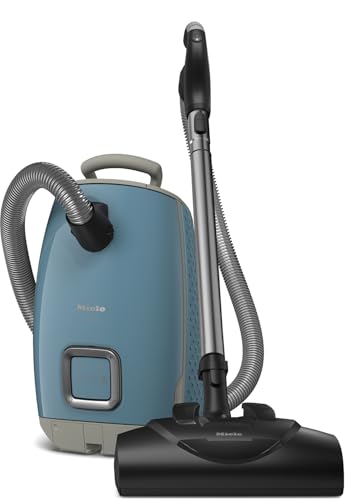
4. Miele Guard L1 (Deep Carpet Model) — Best New-Generation Pick
The Guard line is Miele’s new generation of bagged canisters, and this Guard L1 is the variant whose listing states its purpose directly: a bagged canister vacuum for deep carpet cleaning. It earns its slot as the modern-line option for rug owners who prefer to buy into the current platform — the line Miele will support longest into the future — rather than the long-established C-series. Its review comes with the guide’s clearest honesty flag: the listing title is minimal, stating the line, the bagged canister format and the deep-carpet purpose, and nothing more. Everything beyond that — floorhead specifics, filtration configuration, included tools — lives on the listing page, and this guide will not borrow numbers from other Guard variants to fill the space, because the Guard range includes hard-floor and low-pile variants whose specifications would be wrong for this model and wrong for your rug.
Strengths
- Current-generation Guard platform with the longest support horizon in the range
- Deep carpet cleaning stated as the model’s purpose in its own listing
- Bagged canister format consistent with the rest of the rug-capable range
Trade-offs
- Sparse listing title — the careful buyer must read the listing page in full
- Do not confuse this model with the Guard L1 variants listed for hard floors and low-pile carpet; they are different configurations
- New-line pricing should be compared against the proven C3 picks before committing
Key specs (from the listing)
- Line: Guard L1, bagged canister
- Stated duty: deep carpet cleaning
- All other specifications: not stated in the title — verify on the listing
Buy this model with your eyes open and it is a rational choice: the newest platform, aimed by its own listing at exactly your job. The discipline is in the variant-checking. The Guard L1 name covers several configurations in the current range, including ones for hard floors and low-pile carpet that would be wrong for a deep rug; the ASIN linked in this guide is the deep-carpet listing the listed under that description, and confirming the listing page still describes that configuration before you pay is a thirty-second check that protects the entire purchase.
Best for: buyers who want Miele’s current platform for deep carpet, and will verify the variant carefully. / Not suited for: buyers who dislike reading specification pages, or anyone likely to grab a same-named hard-floor variant by mistake.

5. Miele Complete C3 Calima — Best for Low-Medium Pile
The Calima is the Complete C3 in its turbobrush configuration: a bagged canister with a Turbobrush floorhead, listed as suitable for low-medium pile carpet and hard floors, in Curry Yellow. That pile statement is the review. For the enormous installed base of low and medium-low rugs — flatweaves, low-loop rugs, most modern area rugs — an air-driven turbobrush gives exactly the agitation the pile can use, in the full C3 platform, without the weight and cost of a motorised head the rug does not need. The Calima is not a lesser Marin; it is the correctly specified machine for a shallower class of rug, and buying it for that class is good engineering, not compromise.
Strengths
- Turbobrush matched honestly to low-medium pile — the most common rug class
- Full Complete C3 bagged platform beneath the lighter head
- Hard floors covered in the same configuration
Trade-offs
- Air-driven agitation fades as pile deepens — do not promote it to deep or shaggy rugs
- Turbobrush performance depends on suction, so bag discipline matters more
- A bundle variant of the Calima also exists in listings; the pick here is the standalone machine — confirm which listing you are on
Key specs (from the listing)
- Line: Complete C3, bagged canister
- Floorhead: Turbobrush
- Stated surfaces: low-medium pile carpet and hard floors
- Colour: Curry Yellow
The buyer this machine delights is the one with a house of modern low-pile rugs who was about to buy an electrobrush model on the theory that more motor is more clean. On low pile, the turbobrush’s lighter touch is not a downgrade — deep agitation on shallow pile mostly beats the rug up — and the C3 body behind it delivers the same sealed, bagged suction as its pricier siblings. Match the head to the pile and the Calima is the smart money in the C3 line for a very common kind of home.
Best for: low and medium-low pile rugs in mixed-floor homes. / Not suited for: deep pile, plush or shag rugs, where its own listing tells you not to use it.

6. Miele Classic C1 Turbo Team — Best Entry Point for Rugs
The Turbo Team is the Classic C1 line’s rug-capable configuration: a Miele canister listed for hard floors and low-med pile carpet. As the entry point to the brand for rug owners, its proposition is the Calima’s logic at the value tier — an air-driven turbo head matched to low and medium-low pile, on the simpler C1 platform, at the end of the range where a first Miele becomes a reasonable purchase rather than a capital decision. For flats and smaller homes whose rugs are uniformly low-pile, it covers the whole flooring brief in one machine.
Strengths
- The accessible entry to Miele rug cleaning for low-med pile
- One machine covers hard floors and the common rug classes
- Classic C1 simplicity: fewer systems, straightforward ownership
Trade-offs
- Its own listing caps it at low-med pile — deep rugs are another pick’s job
- Entry platform means a simpler specification than the C3 models
- Turbo head performance rides on suction, so keep bags fresh
Key specs (from the listing)
- Line: Classic C1, canister
- Stated surfaces: hard floors and low-med pile carpet
- Configuration: Turbo Team (turbo floorhead class)
Every range needs an honest floor, and the Turbo Team is this one’s: it will not deep-clean a plush rug, it says so in its own title, and for the large number of homes whose rugs never ask that question it is all the Miele those homes require. Buy it for the rugs you have, not the rugs in a showroom photograph, and it will be remembered as the machine that made the brand make sense — the sealed bagged suction, the build quality, the serviceability — at the price where sense is easiest to see.
Best for: smaller homes with uniformly low-to-medium pile rugs, and first Miele purchases. / Not suited for: deep pile or plush rugs, in line with its own listing.
Comparison Table
| Pick | Badge | Key spec | Best for |
|---|---|---|---|
| Miele Complete C3 Marin | Best Overall | Electrobrush; carpets and hard floors | Medium-pile rugs in mixed-floor homes |
| Miele Complete C3 Kona | Best for Heavy-Duty Carpets | Powerline; listed for heavy duty carpets | Carpet-dominant homes |
| Miele Classic C1 Cat & Dog | Best Value for Deep Carpet | Bagged canister for deep carpet cleaning | Pet homes, value tier |
| Miele Guard L1 (Deep Carpet) | Best New-Generation Pick | Guard L1 listed for deep carpet cleaning | Current-platform buyers — verify variant |
| Miele Complete C3 Calima | Best for Low-Medium Pile | Turbobrush; low-medium pile and hard floors | Modern low-pile rugs |
| Miele Classic C1 Turbo Team | Best Entry Point for Rugs | Hard floors and low-med pile carpet | Smaller homes, first Miele |
How to Choose a Miele for Your Rug: Pile Height Decides
Start with the rug, measured honestly. Press your fingers into the pile: if they disappear, you have deep pile and you need the electrobrush class or a model whose listing claims deep carpet — the Marin, the Kona, the C1 Cat & Dog, the Guard L1 deep-carpet model. If the pile is a short, dense nap you can barely pinch, you are in low-to-medium territory, and the turbobrush models — Calima, Turbo Team — are not the cheap option but the correct one. If your “rug” is a flatweave with no pile at all, nearly any configuration works, including suction-only heads that this guide excluded from its picks because they cannot serve pile — which tells you how completely pile runs this decision.
Then consider the rest of the floor. A rug specialist that cannot do your hard floors forces a second machine or a compromise on half your home; every pick here except the most carpet-focused covers hard floors in its listing, and mixed-floor households should weight that heavily. Then consider the household’s debris: pet hair and family traffic argue for bag capacity and for the deep-cleaning configurations, because rug debris is voluminous in a way hard-floor debris is not.
Budget the whole ownership, not the machine. A Miele is a bagged appliance: bags and filters are recurring purchases for the life of the machine, and that life is the point — these are serviceable appliances bought for the long term, so the honest comparison is machine plus a decade of bags against cheaper machines replaced outright. Buyers who flinch at the bag cost should flinch at the purchase, not at the first refill. And verify the variant before any money moves: Miele model names repeat across configurations — Guard L1 alone covers hard-floor, low-pile and deep-carpet variants — and the ASINs in this guide point at the configurations described, which a thirty-second check of the listing page will confirm.
One caution for special rugs: antique, hand-knotted, silk and very loosely woven rugs can be damaged by aggressive brush agitation of any brand. For those, the correct technique is suction-led, gentle, and often professional — no pick in this guide should be run at full agitation over a rug whose value is in its fibres, and a seller of fine rugs is a better adviser for those pieces than any vacuum guide, including this one.
How to Vacuum Rugs So They Last Longer
Technique decides whether vacuuming preserves a rug or slowly destroys it. Work in slow, overlapping passes — the brush needs dwell time to work grit loose from the pile base, and the fast skating passes most people use mostly groom the surface. Vacuum in two directions, across the pile and then along it, because each direction releases what the other leaves. Do the edges deliberately: grit migrates to rug edges and under furniture lines, and the crevice work around a rug’s border is where the damaging material concentrates. Empty the room’s traffic pattern into your schedule — high-traffic rugs want frequent lighter passes rather than rare deep ones, because embedded grit abrades fibres with every footstep between sessions, and removing it sooner is removing the abrasive, not just the dirt.
Maintain the machine like the system it is. Change the bag before it is packed solid — a full bag strangles suction, and turbobrush models, whose heads are driven by that suction, lose their agitation first and worst. Keep the brushroll clear of hair and thread, which wrap and bind until the head is polishing rather than brushing. And treat fringe and delicate edges as hand territory: keep powered heads off fringe, lift and shake small rugs outdoors when you can — the oldest rug-cleaning technology is still the most thorough for a rug you can carry — and let the machine do the field while you do the borders. A Miele bought for rugs will outlast several rugs; the technique above is how the rugs keep up their end of that arrangement.
Common Buying Mistakes
The first mistake is pile mismatch: buying a turbobrush model for a deep rug, or an electrobrush flagship for a flatweave, against the listings’ own stated ranges. The second is buying an accessory as if it were a machine — the searches for this guide returned Miele floorheads and filters prominently, and a turbo brush head without a canister is a paperweight. The third is variant confusion inside a model name, above all in the Guard line, where the same name covers hard-floor and deep-carpet machines. The fourth is ignoring the bag economy until the first refill, then resenting a machine for a cost structure that was knowable on day one. The fifth is assuming the brand exempts you from technique: a Miele run fast, on a full bag, with a hair-bound brushroll, cleans like any neglected vacuum. The sixth is running full agitation over antique or delicate rugs — the one case where the correct Miele setting is restraint, and sometimes the correct tool is not a vacuum at all.
Final Recommendation
Match the machine to the pile and any pick here will serve you well. For most mixed-floor homes with real rugs, the Complete C3 Marin is the complete answer — electrobrush agitation where the rugs are, proper hard-floor cleaning where they are not. Carpet-dominant homes should look at the Kona, pet homes on a value budget at the Classic C1 Cat & Dog, and buyers who want the current platform at the Guard L1 deep-carpet model — with the variant check this guide keeps insisting on. Low-to-medium pile homes are best served, honestly and economically, by the Calima or the entry-level Turbo Team. Check the current price on Amazon for each, confirm the configuration on the listing page, and budget for bags from the start.
Related guides in this series: Best And Lightest Miele Vacuums
Owning a Miele: Bags, Filters, and the Service Model
A Miele purchase is the beginning of a relationship with a consumables system, and rug owners should walk in with the system’s arithmetic understood. The bag is the primary consumable: it fills faster in rug homes than in hard-floor homes, because pile surrenders fibre and grit continuously, and a pet household will cycle bags at a rate that surprises owners arriving from bagless machines. Budget bags as a predictable annual cost, buy genuine bags rather than the compatibles whose fit compromises the seal the whole design depends on, and change on fullness rather than on the calendar — a bag changed at three-quarters keeps suction where the floorheads in this guide need it, which matters doubly for the turbobrush models whose agitation is suction-driven. Filters are the second consumable: exhaust filtration is part of how a sealed bagged system keeps rug dust out of the room’s air, and its replacement interval belongs in the same household calendar as the bags.
The other half of ownership is the service model, and it is the deepest difference between this brand and the disposable end of the vacuum market. These are appliances built to be repaired: motors, hoses, floorheads and cords are serviceable parts, and a Miele dealer network exists to service them. For a rug owner that changes the economics of a fault — a worn electrobrush is a repair, not a replacement machine — and it changes the buying advice too: the premium in these listings purchases not just first-year performance but a plausible second decade, which is why this guide keeps directing deep-pile households to buy the correct floorhead class once rather than a wrong machine cheaply twice. Keep the purchase documentation, register what can be registered, and treat the machine’s manual as part of the product: the floorhead height settings, bag indicators and filter schedules in it are written for the specific model you bought, and on a machine designed to be kept, they are worth the twenty minutes they take.
Rug Types and the Miele Approach to Each
Not all rugs ask the same question, and a Miele owner’s technique should vary by the rug in front of the machine. Wool rugs are the classic case: durable, dirt-hiding, and best served by thorough, regular agitation of the kind the electrobrush picks deliver — wool releases grit reluctantly and rewards the slow two-direction passes described earlier, while shedding some fibre of its own in its early life, which is normal and not a defect in rug or machine. Synthetic pile — nylon, polyester, polypropylene — is the forgiving majority: it tolerates the full range of floorheads in this guide matched to its pile height, and its main enemy is the embedded grit that any of these machines, maintained and bagged on schedule, will handle. Flatweaves and kilims have no pile to agitate; suction and a gentler head do the work, the rug should be secured against the machine’s pull — small flatweaves can be taken outside and shaken with a thoroughness no vacuum matches — and fringe, where present, is hand territory for every brand ever made.
Shag and high-pile rugs are the honest edge case, and this guide will not pretend the edge away: very deep pile can defeat turbobrushes entirely and challenge even electrobrush heads, which can bog, tangle and stress both rug and machine. If your home’s defining rug is a deep shag, the correct purchase conversation is the electrobrush class, used on its highest pile setting, tested gently on a corner first — and the correct expectation is that such rugs also need periodic lifting, airing and professional attention that no domestic machine replaces. Delicate and antique rugs sit beyond the edge entirely, as the buying guide noted: suction-led, minimal, often professional. The Miele range’s strength is that it covers the great middle of rug-owning life superbly — wool, synthetics, low to deep everyday pile — and a buyer whose rugs live in that middle can choose from this guide with confidence, while a buyer at the extremes should bring the rug, not the brand, to the centre of the decision.
Canister Living: Stairs, Storage, and Daily Handling
A word belongs in this guide for the canister form itself, because every pick here shares it and rug households feel its character daily. A canister follows rather than carries: on rugs this is an advantage that upright owners underestimate, because the heavy part of the machine stays on the floor while the working head — even a motorised electrobrush — stays comparatively light in the hand, which matters across a whole house of pile. Stairs are the canister’s examination: the body sits on a step while the hose and head work above and below, a technique that becomes second nature within a week and that makes a canister, counter-intuitively, one of the better stair tools in the vacuum world. Storage is the honest cost: a canister, its hose and its wand occupy a cupboard’s floor rather than a closet’s corner, and households should measure that cupboard before the machine arrives, not after.
Daily handling has its own small disciplines. Let the cord rewind rather than fighting it, and never let it snap home at full speed against the machine’s body. Park the floorhead flat rather than leaning the wand where it will slide and fall. Keep the hose unkinked in storage, because a hose’s memory is long and its kinks become permanent preferences. And when carrying the machine between floors, carry it by its handle with the hose secured, not dangling — most canister damage in real homes is transport damage, not cleaning damage. None of this is burdensome; it is the ordinary care of an appliance designed to be kept, and it is precisely because these machines are built for the long term that such habits compound: a Miele handled this way in year one is the same machine, working the same rugs, in year ten.
What to Check in the First Week with a New Miele
A premium machine deserves a deliberate first week, because that week is when configuration errors are free to fix. Begin with the floorhead on your actual rugs: work a small area of your deepest pile and watch how the head behaves — riding on top of the pile and grooming it, or settling in and agitating as it should. If the machine offers pile-height adjustment, this test area is where you find your setting, and the correct setting is the deepest agitation that still lets the head move without a wrestling match. Check the bag indicator’s behaviour so you know its language before you need it, and note the machine’s sound at your working suction level, because a change in that sound is the earliest diagnostic you will ever get — of a full bag, a wrapped brushroll, or a hose obstruction — for the life of the machine. Run the hard-floor tool across your boards and confirm the transition routine between surfaces is one you can sustain at cleaning speed; a configuration that is theoretically complete but practically fiddly will be half-used by March. Finally, store the documentation, note the bag and filter types your model takes in your household records, and order the first spare bag before the indicator asks for it. A rug household that does these five things in week one will not think about its vacuum’s configuration again for years — which is, in the end, the entire promise this brand makes and the one this guide has been at pains to help you collect on.
And one last word on expectations for the first deep clean. A rug that has been surface-cleaned for years holds more at its base than any single session will extract, and the first proper passes with a correctly matched Miele will keep producing grit long after the surface looks done. That is the machine working, not failing: work the room in sections, empty nothing in frustration, and judge the result after the third regular session, when the rug’s baseline has reset to what maintained actually means. From there, the rhythm in this guide — frequent, calm, bagged on schedule — is what keeps it there.
Frequently Asked Questions
Which Miele floorhead is best for deep pile rugs?
A motor-driven electrobrush. It agitates deep pile mechanically instead of relying on airflow alone, which is what buried grit requires. In this guide that is the Complete C3 Marin’s configuration. Air-driven turbobrushes are excellent on low-to-medium pile — their own listings say so — but their agitation fades exactly as pile deepens, which is why pile height, not price, should choose your floorhead.
Are bagged vacuums a drawback for rug owners?
They are a trade, and for rugs usually a good one. Rugs surrender a high volume of fibre, grit and hair; bags hold a lot of it, contain it cleanly at change time, and keep the machine’s suction consistent as they fill. The cost is literal — bags and filters are recurring purchases for the life of the machine — and this guide treats that as part of the purchase price to weigh up front, not a surprise to resent later.
Can a Miele damage a rug?
Any powered brush can damage the wrong rug. Antique, hand-knotted, silk and loosely woven rugs can lose fibres to aggressive agitation; for those, use gentle suction-led technique or professional care. For the ordinary wool and synthetic rugs most homes have, correct technique — slow passes, a maintained brushroll, bags changed before they are full — makes a Miele a preservative tool: the grit it removes is the grit that would otherwise abrade the pile from inside.
What is the difference between the Complete C3, Classic C1 and Guard lines?
Positioning and generation. Complete C3 is the established full-feature line, Classic C1 is the value platform with a simpler specification, and Guard is Miele’s new generation of bagged canisters. For rugs, the line matters less than the configuration within it: an electrobrush C1-class machine will out-clean a suction-only flagship on pile. Choose pile capability first, then the line your budget prefers.
Why does the same Miele model name appear at different prices?
Because the name covers multiple configurations. Guard L1, for example, is sold in hard-floor, low-pile and deep-carpet variants, and Complete C3 models differ by floorhead. The price differences are usually configuration differences, not discounts. Always confirm that the specific listing — the ASIN — matches the configuration you intend, especially when a deal looks unusually good.
How often should I vacuum a rug?
High-traffic rugs benefit from frequent lighter passes — the point is removing grit before footsteps grind it into the pile base. Weekly is a reasonable rhythm for living areas, more for pet homes and entryway rugs, less for guest-room rugs. Depth matters less than regularity: five calm minutes twice a week preserves a rug better than an hour once a month, whatever machine you own.


