Disclosure: As an Amazon Associate, airfryerkitchensupply.com earns from qualifying purchases. Links to Amazon on this page are affiliate links; they cost you nothing extra. Listing details such as price and availability change often, so check the current Amazon listing before you buy.
The best reading chairs for living room spaces are the ones that pair a deep, inviting seat with a shape that suits your layout: a barrel chair for tight corners, an oversized armchair for long afternoons, or a chair with an ottoman when you like to stretch out. Our short answer is the Garvee Mid-Century Chenille Accent Chair for most rooms, and the sections below explain who should pick something else.
This guide is written for readers who want one good chair by a window, a lamp or a bookshelf, and who would rather compare seven clear options than scroll through hundreds of near-identical listings. Every pick is a chair that is commonly sold online, and we describe each one using the maker’s own product information. We do not claim to have sat in them, so treat our notes as a shortlist and read the current listing before you order.
You will find a quick picks table, a profile of every chair with strengths, one honest limitation and a choose-it or skip-it line, a full comparison table, a buying checklist, advice on common mistakes, care notes, a final recommendation for each buyer type and a set of questions that people ask before they buy.



In this guide
Quick Picks: Which Reading Chair Fits You
| If you want | Pick | Link |
|---|---|---|
| Best overall for most living rooms | Garvee Mid-Century Chenille Accent Chair | Check on Amazon |
| Best for a roomy, relaxed seat | Howjoe Oversized Reading Armchair | Check on Amazon |
| Best with a built-in footrest | Tiita Modern Accent Chair with Ottoman | Check on Amazon |
| Best for small corners | Yaheetech Corduroy Barrel Chair | Check on Amazon |
| Best value-for-money look | DUMOS Mid Century Modern Accent Chair | Check on Amazon |
| Best premium-looking club chair | Christopher Knight Home Boaz Club Chair | Check on Amazon |
How These Seven Chairs Were Chosen
We began with chairs that shoppers regularly consider for a reading nook, then kept only those with a clear brand, a clear product name and enough published detail to compare. We looked at frame style, upholstery, seat shape, included extras and the sort of room each chair seems designed for.
We did not use these chairs ourselves, and we do not quote scores, costs or size limits, because those change and belong on the live listing. Think of the list as a map, and the listing as the final word. Where a feature is described by the maker, we say so. Where a detail matters for your decision, such as exact seat height or the room you can spare, we point you to the listing rather than guess.
The 7 Best Reading Chairs for a Living Room
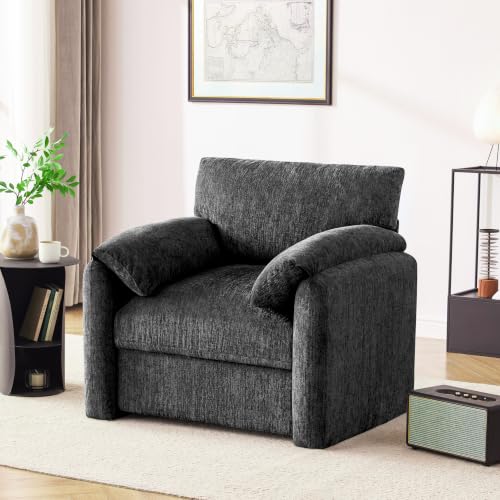
Garvee Mid-Century Chenille Accent Chair
Who it suits: readers who want a chair that looks deliberate in a living room, not like an afterthought in a corner.
- A solid wood frame is part of the maker’s description, which gives the chair a furniture-store look.
- Chenille upholstery has a soft, textured surface that suits a cozy reading spot.
- The mid-century outline, with slim lines and a tilted back, blends with both modern and traditional rooms.
Think of this as the dependable choice for a shared living room. It does not shout, yet it has enough shape to look chosen. Pair it with a small round side table and a warm lamp and the corner reads as a finished reading nook. Because the frame description mentions solid wood, it also fits households that prefer furniture with a traditional construction story.
Honest limitation: it is an accent-style chair, so the seat is more upright than a lounge chair, which may not suit people who like to curl up sideways.
Choose it if you want one chair that doubles as a style piece. Skip it if you want a deep, sink-in seat.

Howjoe Oversized Reading Armchair
Who it suits: people who read for long stretches and want room to shift, tuck a leg or hold a blanket.
- The oversized proportions are the headline feature, giving a wider seat than a typical accent chair.
- A reading-focused name and design mean the shape is aimed at lounging with a book rather than formal seating.
- The relaxed, rounded styling sits easily next to a sofa as a second seat.
Roomy chairs change how a living room is used. Instead of one person perched on the edge of a sofa, you get a second place to settle in with a book while others watch television. It is also a good fit for readers who like to switch between a book, a tablet and a cup of tea without feeling hemmed in by narrow arms.
Honest limitation: an oversized chair needs floor space and walking room, so measure before ordering if your living room is compact.
Choose it if you value space to move more than a slim silhouette. Skip it if your reading corner is narrow.

Tiita Modern Accent Chair with Ottoman
Who it suits: readers who like to put their feet up and want that included in a single purchase.
- The ottoman is part of the set, so you do not have to hunt for a matching footrest.
- The foldable ottoman design is intended to be tucked away when you need floor space.
- A side pocket gives you somewhere to rest a book, magazine or remote close to hand.
The set approach is its main selling point. Buying a chair and a matching footrest separately often leads to mismatched heights and fabrics, and a set removes that guesswork. It suits readers who build their evening around a long chapter and a cup of something warm, and who like a place to rest a drink or phone close by.
Honest limitation: two pieces take more room than one, so the footprint with the ottoman out is larger than the chair alone.
Choose it if a footrest is the thing you miss most in a normal accent chair. Skip it if you prefer a single compact piece.

Yaheetech Corduroy Barrel Chair
Who it suits: apartment dwellers and anyone fitting a chair into a tight angle between a wall and a window.
- The barrel shape wraps around the sitter, which gives a contained, nest-like feel.
- Corduroy upholstery brings texture and a relaxed, slightly retro mood.
- The listing mentions coil springs inside the seat, a detail some buyers look for in a seat that is meant to be used daily.
Barrel chairs work well when you want a piece that looks complete from every angle, since the back curves around rather than ending in a flat panel. That makes it easy to float the chair away from the wall, beside a bookcase or at the end of a sofa, without it looking unfinished from behind.
Honest limitation: a rounded barrel shape leaves less room to sit cross-legged than a wide armchair does.
Choose it if space is tight and you like a snug seat. Skip it if you want to stretch out in several positions.

DUMOS Mid Century Modern Accent Chair
Who it suits: first-time apartment furnishers who want a mid-century look without a large outlay of effort.
- A linen-blend fabric gives a light, airy appearance that works with neutral rooms.
- The listing describes memory foam in the seat, which is aimed at a softer first sit.
- An extra pillow is included, so you get an extra cushion to move around as you like.
This is a chair for people who like a tidy, uncluttered room. The slim outline keeps the floor visible, which makes a small living room look larger, and the included pillow means you can adjust the seat feel without shopping for another cushion. It is a sensible first chair for a rented home because the look is easy to live with.
Honest limitation: a light linen-blend fabric may show marks more easily than a darker upholstery, so think about pets and snacks.
Choose it if you want a clean, modern shape and an included pillow. Skip it if you need a very forgiving, dark fabric.


COLAMY Modern Upholstered Accent Chair
Who it suits: readers who love a soft, tactile fabric and a plush, cushioned look.
- The sherpa-like suede surface described in the listing feels warm to look at and invites a blanket-and-book evening.
- A back pillow is included, which adds a second cushion without a separate purchase.
- Upholstered styling keeps the chair visually calm next to a patterned rug or sofa.
In a living room with cool-toned walls, a warm, fuzzy chair can bring balance. It works nicely next to a smooth leather or linen sofa, where the contrast in texture becomes the main design idea. Readers who think about how a room feels in winter often gravitate toward this kind of fabric.
Honest limitation: soft, textured fabrics can collect lint and pet hair, so plan to brush it down now and then.
Choose it if texture is high on your list. Skip it if you want a smooth, wipe-friendly surface.

Christopher Knight Home Boaz Club Chair
Who it suits: buyers who prefer the classic club-chair profile and want it from a well-known home furnishings brand.
- The club-chair shape, with a lower, rounded body, gives the room a more traditional character.
- The brand sells many accent seats, so matching or complementing pieces are easy to find.
- It is a natural centerpiece for a reading corner because the silhouette is bold enough to stand alone.
Club chairs have a long history in libraries and studies, and this one brings that mood into a modern living room. It looks strongest with a rug underneath, a floor lamp behind one shoulder and a stack of books within reach. If your room already has clean modern lines, a club chair adds a welcome note of warmth and tradition.
Honest limitation: the club shape sits lower and deeper than a mid-century chair, which some people find harder to get out of.
Choose it if you want a statement chair with a classic outline. Skip it if you prefer an airy, leggy design.

Full Comparison Table
| Chair | Size feel | Material | Key feature | Best use | Link |
|---|---|---|---|---|---|
| Garvee Mid-Century | Medium | Chenille, solid wood frame | Mid-century lines | Style-led living room | Check on Amazon |
| Howjoe Oversized | Large | Upholstered | Oversized seat | Long reading sessions | Check on Amazon |
| Tiita with Ottoman | Medium plus footrest | Upholstered | Foldable ottoman, side pocket | Feet-up reading | Check on Amazon |
| Yaheetech Barrel | Compact | Corduroy | Barrel shape | Small corners | Check on Amazon |
| DUMOS Mid Century | Medium | Linen-blend | Extra pillow included | Neutral apartments | Check on Amazon |
| COLAMY Upholstered | Medium | Sherpa-like suede | Back pillow included | Cozy, tactile corner | Check on Amazon |
| Boaz Club Chair | Medium-large | Upholstered | Classic club shape | Traditional rooms | Check on Amazon |
How to Choose a Reading Chair for Your Living Room
Start with the room, not the chair. Measure the corner or wall where the chair will go, then add space for a side table and a floor lamp, because a reading chair without light and a surface for a cup rarely gets used. Tape the chair’s footprint on the floor with painter’s tape and walk around it for a day.
Next, think about how you read. If you sit upright with a paperback, a mid-century accent chair is plenty. If you sprawl with a tablet or a stack of magazines, a larger armchair or a chair with an ottoman makes more sense. Readers who sit for long sessions tend to favor a wider seat and arms at a useful height for resting a book.
Look at the fabric with your household in mind. Chenille, corduroy and suede-like finishes feel inviting but hold dust and fur. Linen blends look light but show marks. A dark, tight weave is the most forgiving if you have pets or children.
Check the frame description in the listing. A wood frame is common in this category, and the product page should say what the legs are made from and how the seat is built. Finally, check delivery details, assembly steps and the return window before you commit.
Best Reading Chairs for Living Rooms vs Bedroom Nooks
A living room chair has to look good from the sofa, from the doorway and from the dining area, so visual balance matters more than in a bedroom. Choose a color that links to your sofa, rug or curtains, and keep the chair’s height similar to nearby furniture. The Garvee and DUMOS chairs lean into this role with open, light shapes that do not block sightlines.
Best Reading Chairs for Living Rooms With Little Space
Small rooms reward compact shapes and legs you can see under. The Yaheetech barrel chair is the tightest of the seven, while the DUMOS chair keeps a slim profile that leaves the floor visible. If you also want a footrest, remember that the ottoman in the Tiita set can be put away when guests visit.
Reading Chairs With Ottomans and Extras
Extras change how a chair feels in daily use. An ottoman, a side pocket and an included pillow are all small conveniences that save a second purchase. Compare what each listing actually includes, since some sets sell the chair alone and others add cushions or footrests. A pillow you can remove is helpful if you like a clean look when guests arrive.
Matching a Reading Chair to Your Decor
Mid-century chairs pair with wood tables and simple rugs. Barrel and club shapes feel at home with patterned fabrics and warmer colors. Pick one dominant color and let the chair repeat it or contrast with it, rather than adding a third shade. A single bold chair beside a calm sofa often looks better than two competing statement pieces.
Setting Up the Perfect Reading Corner
A chair alone does not make a reading corner. Light comes first: a floor lamp with an adjustable arm, placed slightly behind and to the side of your shoulder, lights the page without glare. Add a small table within arm’s reach for a drink, a bookmark and your glasses, and keep a basket nearby for a throw blanket.
Next, consider the floor. A rug under the front legs of the chair defines the nook and softens the sound of moving the chair. If the chair has a visible wood frame, repeat that tone in a frame, shelf or table nearby so the corner looks planned. Finally, keep the view in mind. Facing a window gives daylight during the day, while a chair angled toward the room feels more social.
These small choices matter as much as the chair itself. A modest chair in a well-lit, tidy corner will be used more often than an impressive chair that is stuck in a dark spot where nobody wants to linger.
Common Buying Mistakes
Most disappointments with reading chairs come from a handful of repeat errors, and every one is easy to avoid with a few minutes of planning.
- Ordering without measuring the doorway and path. A chair that fits the corner but not the entrance causes more trouble than any other error.
- Choosing color from a thumbnail. Screens vary, so read the color name and compare it with fabric swatches you already have at home.
- Ignoring the seat depth. A deep seat and a short reader can be an awkward match, so check the listed dimensions against your own height and habits.
- Forgetting assembly. Many chairs arrive with legs to attach, so plan a few minutes and a clear floor.
- Skipping the return terms. Look at the seller’s policy before you buy, especially for larger furniture.
Care and Cleaning Basics
Always follow the care tag or the maker’s instructions. As a general habit, vacuum fabric chairs gently with a soft brush attachment, blot spills quickly instead of rubbing, and keep the chair away from strong direct sun that can fade color. Rotate loose pillows so they wear evenly. If a listing recommends a particular cleaner or says spot cleaning only, follow that advice.
Final Recommendation
- Best for most homes: Garvee Mid-Century Chenille Accent Chair.
- Best for long reading sessions: Howjoe Oversized Reading Armchair.
- Best for feet-up readers: Tiita Modern Accent Chair with Ottoman.
- Best for tight corners: Yaheetech Corduroy Barrel Chair.
- Best for neutral, modern rooms: DUMOS Mid Century Modern Accent Chair.
- Best classic statement: Christopher Knight Home Boaz Club Chair.
If you only want to check two listings today, start with the first two picks. Compare colors, dimensions and delivery notes, then pick the one that matches your room. A good reading chair pays you back every evening, so take the few minutes to choose well. Measure your corner, decide whether you want a footrest and pick a fabric that fits your household, and the rest of the decision becomes much easier.
Designing a Reading Corner That You Will Actually Use
A reading chair succeeds when the corner around it works. Start with light: position the chair so daylight falls over your shoulder rather than into your eyes, and plan a lamp for the evening that lights the page without glaring off it. The finest chair in this guide will sit empty if the light is wrong, while a modest chair in perfect light gets used daily.
Next, give the chair a surface. A small side table or even a stable stool within easy reach holds the book, a drink and your glasses, so you are not balancing everything on the chair’s arms or your lap. Measure that reach from your seated position, because a table a few inches too far becomes a constant small annoyance.
Sound shapes reading more than people admit. A corner away from the television’s direct line and the kitchen’s clatter protects your concentration, and a chair with a higher back or wings, like several picks in this list, creates a small sense of enclosure that helps you settle into a book even in a shared living room.
Finally, add the soft layers last: a throw for cool evenings, a cushion if the seat asks for one, and a place for the next book in the pile. Build the corner in that order — chair, light, surface, softness — and you will avoid the common trap of a beautiful corner that nobody reads in.
Backs, Wings and Arms: Support for Long Chapters
Reading posture is not one posture. You sit upright for a gripping chapter, curl sideways with your feet up, then slide down with the book resting on your chest. A good reading chair supports the whole repertoire. As you compare the chairs above, imagine each of those positions rather than judging the chair in a single showroom sit.
Back height decides how much of you the chair holds. A tall back with a headrest lets you lean your head back during reflective passages and supports tall readers fully. Winged designs add a place to rest your head sideways and a feeling of privacy. Lower backs suit readers who sit more upright and keep the chair’s profile light in a smaller room.
Arms carry more weight than they get credit for: they hold the book at a comfortable height through your forearons, take your weight as you shift, and give hardback books a resting ledge. Check the arm height against your natural reading position; arms that are too high shrug your shoulders, too low and they might as well not be there.
The seat itself should let you change position without a struggle. A seat wide enough for crossed legs or a tucked foot, with cushioning that supports rather than swallows, is what turns a one-chapter chair into a whole-afternoon chair. If you read with a partner or a child joining you, that width becomes the deciding feature.
Fabrics for Readers: Books, Drinks and Daily Life
Reading chairs live close to coffee cups, reading lamps’ warmth and the oils of hands resting on the same arm for an evening. Fabric choice decides how gracefully the chair ages under that affectionate use. The chenille, corduroy and upholstered picks in this guide each handle it differently, and the right one depends on your household’s habits.
Tightly woven fabrics resist snagging from book corners, zips and pet claws, and they release crumbs and dust with a quick brush. Textured weaves like corduroy feel wonderfully soft and hide minor marks in their pile, but they hold onto lint and pet hair more willingly and ask for regular attention with a fabric brush.
Colour is a practical decision disguised as a style one. Mid-tones hide the most life: the faint ring of a mug’s base, a child’s sticky fingerprint, a dog’s muddy inspection. Very pale chairs are beautiful and demanding; very dark chairs show every pale thread and crumb. Match the shade to the amount of upkeep you will honestly give.
Where the chair will sit matters too. A chair placed in strong window light will fade unevenly unless the fabric is rotated or the light is softened by curtains. Turn cushions and, if the design allows, rotate the chair’s position slightly through the year so wear and light spread evenly.
Reading Chairs for Different Kinds of Readers
The novel devourer reads in long, immersive stretches and needs full support: a back that holds the shoulders, a seat that does not numb, and ideally an ottoman or footrest so the legs can stretch. For this reader, the oversized and ottoman-paired picks in this guide are the natural shortlist, and lamp position matters as much as the chair.
The news-and-coffee reader sits in shorter, upright bursts, often with a tablet or newspaper. A firmer, more upright chair serves them better than a deep lounger, and arms at the right height for holding a device without hunching will be appreciated every morning.
The bedtime-story reader shares the chair. Width becomes the specification that matters, along with a fabric that forgives small shoes and a shape a child can climb into safely. A chair that becomes the story chair will be remembered long after its fabric fades, so choose the one that welcomes two.
The working reader annotates, studies or reads with a laptop nearby. They need a seat that supports an upright working posture, a surface within reach for notes and enough light to write by. For them, the reading corner doubles as a quiet study, and the chair should be chosen with the desk-like hours in mind.
Keeping a Reading Chair Comfortable for Years
Upholstered chairs age from the seat outward. Rotate and flip cushions where the design allows, on a monthly rhythm, so compression spreads evenly instead of carving a permanent hollow where you always sit. Plump cushions back into shape after long sessions; two minutes of this keeps the chair looking and feeling intentional.
Vacuum the chair weekly with an upholstery attachment, including under the cushions and along seams where dust, crumbs and pet hair gather. That hidden grit is abrasive: left in place, it works into the fabric every time you sit and shortens the chair’s good-looking years.
Treat the frame kindly. Lift the chair when moving it rather than dragging it by an arm, keep it out of radiators’ direct heat which dries fabrics and frames, and check leg glides so the chair neither scratches the floor nor wobbles itself loose.
Deal with spills immediately and gently, following the maker’s care guidance for that fabric: blot, never scrub, and test any cleaner in a hidden spot first. A chair cared for in these small, regular ways stays the favourite seat in the house instead of slowly becoming the one nobody chooses.
Reading Chair Placement: Angles, Rugs and Room Flow
Where the chair sits in the living room decides whether it is a retreat or an obstacle. Angle it slightly toward the room’s centre rather than square against a wall, and the chair becomes part of the room’s conversation while still feeling like a retreat. That small turn also lets light from a window or lamp fall more naturally across your lap and book.
A rug under a reading chair does quiet work: it defines the corner as a place apart, softens the sound of the chair’s feet and protects the floor beneath. Choose a size that contains the chair and your stretched feet, because a rug that ends mid-stretch looks and feels like an afterthought. Low pile keeps the chair stable and easy to shift.
Keep the walkways honest. A reading chair pulled into a traffic lane will be bumped, its lamp knocked and its reader irritated. Measure the room’s real paths, from door to sofa to kitchen, and place the chair in the calm water beside those currents rather than in the stream.
If the room is short on corners, borrow one: the end of a sofa run, the space beside a bookcase, the wide landing at a bay window. A reading chair needs a wall or a bookcase at its back more than it needs a literal corner, and that backing is what creates the feeling of being tucked away.
One Chair Through the Seasons: Adapting Your Corner
A reading corner that works in January can fail in July, because light, temperature and the household’s rhythms all move with the year. In winter, the chair wants to be near warmth but not in a radiator’s direct blast, with a throw in reach and the lamp doing most of the lighting work from early afternoon. In summer, the same chair wants the breeze path and the shade, away from the window’s afternoon glare.
Make the adaptations small and reversible: move the lamp, swap the heavy throw for a light one, rotate the chair a few degrees toward or away from the window. Owners who treat the corner as a living arrangement rather than a fixed installation keep it comfortable all year without buying anything new.
Your reading changes with the seasons too. Winter invites long novels and a chair set for hours; summer invites shorter, brighter reading, often with the window open and a cold drink on the side table. Let the corner follow: cushion in or out, footrest present or stored, according to the season’s actual habits.
Once a year, sit in the chair and audit the corner honestly. Is the lamp still right, the table still reachable, the cushion still supportive? A reading corner maintained in this light-touch way stays the best seat in the house indefinitely, instead of slowly becoming a chair where coats are thrown.
Reading Chairs and Wellbeing: The Case for a Daily Reading Habit
A dedicated reading chair is not really furniture; it is a habit given a place. Readers who have a settled corner read more, because the decision to read becomes the decision to sit in a favourite spot rather than a negotiation with the whole house. If you are choosing a chair from this guide partly to read more, you are thinking about it exactly right.
Build the ritual around the chair: the current book lives there, the lamp is set, the throw is folded on the arm. When everything waits ready, ten spare minutes become reading time instead of phone time, and the chair quietly pays for itself in finished books across a year. Protect the corner from becoming storage, because a chair buried under laundry stops issuing its invitation.
Comfort serves the habit in a specific way: the chair must be pleasant enough that you choose it, and supportive enough that a long session leaves you refreshed rather than stiff. That balance, more than any style label, is what the reviews above are really comparing, and it is why trying your full repertoire of reading positions matters when you choose.
Share the habit generously. A household where one person visibly reads for pleasure gives everyone else permission to do the same, and the chair often becomes the seed of a quieter, book-friendlier home. Few pieces of furniture can claim that effect; a reading chair, well chosen and well placed, genuinely can.
When a Reading Chair Needs Replacing: Reading the Signs
Reading chairs rarely fail dramatically; they fade. The seat that once supported a whole novel now bottoms out by chapter three, the back that held you now lets you slump, and you find yourself reading in bed or at the kitchen table instead without ever deciding to abandon the chair. Those drifts are the chair telling you its cushioning has given what it had.
Test honestly before replacing: sit with your current book for a full session and notice where discomfort arrives and whether a cushion or a footrest corrects it. Sometimes the chair is sound and the corner is at fault: the lamp has dimmed, the table has migrated, the room has grown noisier. Fix the corner first; it is cheaper and often sufficient.
If the chair itself is tired, let its years of service write the brief for its replacement. You know your seat depth, your preferred back height, the fabric that suited your household and the width your reading positions need. Measure the old chair’s successes, compare them against the picks above, and the new chair will feel like a reunion rather than a gamble.
Give the old chair an honourable next life if its frame is sound: a bedroom corner, a spare room, a family member’s first flat. A chair that has held a thousand chapters has earned a gentler retirement, and its replacement inherits a corner already perfectly arranged for reading.
The Reading Chair and the Rest of the Household
A reading chair belongs to its reader, but it lives among everyone else, and negotiating that kindly keeps the peace. Partners borrow it, children colonise it, cats claim it within the hour. A household that accepts this sharing, with the reader’s priority understood for the evening’s reading hour, keeps both the chair and the reader happy without turning furniture into territory.
Give the other residents their own claims: a second good seat nearby for conversation, a cushion the cat is officially allowed, a rule that whoever reads to the children owns the chair at story time. When everyone’s needs have a place in the arrangement, the reading chair stops being contested ground and becomes what it should be, the house’s shared symbol of slowing down.
Maintain it as shared equipment. The person who spills tells, the person who notices a wobble reports it, and the weekly vacuum does not care whose crumbs they were. Chairs that belong to a household’s routines rather than to one person’s vigilance stay comfortable far longer.
And when the reader finally gets the chair to themselves, lamp lit and house quiet, the corner delivers what all the choosing and placing was for. That moment, repeated across years, is the return on every measurement and comparison in this guide, and it is why the right reading chair is remembered long after other furniture is forgotten.
Borrowing From Libraries, Book Clubs and Reading Friends
A reading chair earns its keep in proportion to the books that pass through it, and the happiest readers keep the supply varied. If your reading has narrowed to a single genre or author, let your corner chair argue for range: keep one borrowed or book-club title beside it at all times, so the familiar comfort of the chair carries you into unfamiliar pages you might otherwise never open.
Book clubs and reading friends change what a chair must do. Discussion notes, a pencil, the group’s next title and your own current novel all compete for the side table, so give the corner a small basket or shelf that holds the whole reading life in one place. A chair whose surroundings are organised invites the habit; a chair buried in piles quietly discourages it.
Lending your own books from the chair’s shelf is part of the pleasure, but keep a simple note of what went where. Readers who lend generously and track lightly never lose a loved book, and the chair’s little library stays stocked with the titles that matter instead of the ones that merely accumulated.
Above all, protect the chair’s association with pleasure. Keep tax paperwork, mending and administrative chores in a different seat, however tempting the good light is. A corner reserved for reading alone keeps its invitation clear, and you will find yourself sitting down with a book at moments that would otherwise have dissolved into scrolling.
Frequently Asked Questions
How do I know if a reading chair will fit my living room?
Measure the floor space and the doorway, then compare both with the dimensions in the listing. Mark the footprint on the floor with tape before ordering.
Is an ottoman worth having with a reading chair?
It is useful if you like to put your feet up. A foldable or separate ottoman gives you the option without taking over the room all the time.
What fabric is best for a reading chair?
That depends on your household. Chenille and corduroy are soft, linen blends look light, and tight dark weaves hide wear. Check the care notes for any fabric you consider.
Will the chair arrive assembled?
Most chairs in this category need some assembly, often legs or a back. The listing and the box instructions will say what is needed.
Can I return a chair if it does not suit my room?
Return rules depend on the seller and the item. Read the return policy on the listing before buying, and keep packaging until you are happy.
Do these chairs match other furniture?
Choose a shape and color family that echoes your sofa or rug. Mid-century chairs pair with simple wood furniture, while club chairs suit traditional rooms.
How do I keep a fabric reading chair looking fresh?
Vacuum it regularly with a soft brush attachment, blot spills quickly and keep it out of strong sun. Rotate any loose pillows so they wear evenly.
Is a reading chair different from an accent chair?
The two overlap. A reading chair usually puts more emphasis on seat depth and arm placement, while an accent chair leads with style. Many chairs do both jobs.
Where should a reading lamp sit in relation to the chair?
Place the light slightly behind and to the side of your shoulder, so it falls on the page without shining into your eyes or casting your head’s shadow across the book. Test the position at night with an actual book before fixing anything in place. If two people share the corner at different times, an adjustable lamp arm solves both readers’ needs.
Is a barrel chair comfortable for long reading sessions?
Barrel chairs wrap around you and feel wonderfully enclosed for shorter and medium sessions, and many readers love them for an hour with a novel. For very long sessions, check that the curved back supports you when you shift position and that the seat depth suits your legs. Adding a small cushion behind your back adapts the curve to longer sits.
How do I choose a reading chair for a tall reader?
Prioritise back height that reaches and supports the head, a seat depth that supports the thighs without pressing behind the knees and enough width to shift position. Compare the listed dimensions with a chair the tall reader already enjoys. An ottoman also helps taller readers, because it lets them stretch out rather than folding long legs into a compact seat.
Can a reading chair double as extra guest seating?
Yes, and accent-style reading chairs are often bought with exactly that double duty in mind. In daily life it is your reading chair; when guests arrive it joins the conversation group. Choose a weight you can move easily and a style that sits happily both in its corner and pulled into a circle.
What cushion firmness is best for reading?
A medium firmness usually serves readers best: soft enough for a long sit, firm enough that you do not sink and lose back support or struggle to get up with a book in hand. Very soft seats feel luxurious for ten minutes and tiring for two hours. If you love softness, layer a throw or slim cushion over a supportive base seat.
How do I stop my reading corner feeling cluttered?
Give every item a single job and a home: the chair, the lamp, one surface, one basket or small shelf for current books. Return finished books to the main shelves weekly. A corner with few, well-chosen pieces feels calm and invites reading, while a corner buried in piles quietly discourages it.
How far should a reading chair be from the television?
Far enough that the screen sits outside your natural line of sight when you are settled with a book, and at an angle where its light does not flicker across your page. In most living rooms, a corner diagonal from the television achieves both. If space forces closeness, a higher-backed or winged chair creates a small visual shelter for the reader.
What should I look for in a reading chair if I read in bed as well?
Choose the chair for the chair’s own hours rather than trying to make it imitate a bed: upright support for proper reading sessions, a fabric that feels pleasant in the evening light of its corner, and a shape that welcomes you for the first chapter of the day as much as the last. Then let the bed keep its own role. Readers who give each place its own pleasure tend to read more in both, because neither spot is a compromise version of the other, and the chair stays associated with alert, comfortable, chosen reading time.