Disclosure: As an Amazon Associate, airfryerkitchensupply.com earns from qualifying purchases. Links to Amazon on this page are affiliate links; they cost you nothing extra. Listing details such as price and availability change often, so check the current Amazon listing before you buy.
The best outdoor swing chairs are the ones that match the spot where you plan to hang them, not simply the ones with the nicest photos. A porch beam, a strong tree limb and a freestanding frame all call for different seats, and the right choice also depends on whether you want a loose, cocoon-like hammock or something with a bit more shape. This guide is written for people who want a gentle place to sit and sway in the garden, on a deck or on a covered porch, and who would rather compare options calmly than guess.
We looked at seven hanging seats from well-known hammock and patio brands, based on their published listings. Below you will find a quick picks table, a section for each chair with strengths, one honest limitation and a plain “choose it if / skip it if” line, a side-by-side comparison, a buying checklist and answers to the questions shoppers ask most before they order.


In this guide
Quick Picks: Which Swing Chair Fits You
| Pick | Best for | Link |
|---|---|---|
| Best overall: Bliss Hammocks Hanging Hammock Chair | Porches and patios where you want a classic rope look | Check on Amazon |
| Best for small spaces: Yaheetech Hanging Hammock Chair | Balconies and corners with limited floor room | Check on Amazon |
| Best value for money: Best Choice Products Hanging Rope Hammock Chair | First-time buyers who want a simple, familiar design | Check on Amazon |
| Best premium look: Hammock Sky Hammock Chair Swing | Shoppers who care about a tidy, boutique appearance | Check on Amazon |
| Best for garden trees: Sorbus Hanging Hammock Chair Swing | Hanging from a branch or a beam you already have | Check on Amazon |
How These Swing Chairs Were Picked
We have not sat in or tried any of these chairs ourselves. Every note in this article comes from the maker listings, product pages and general knowledge of how hanging seats are built. We favored established hammock and patio brands, chairs that appear in the usual outdoor categories, and designs that differ enough from each other to give you a real choice. Where a detail varies between colors or bundles, we say so and suggest you read the current listing before ordering.
1. Bliss Hammocks Hanging Hammock Chair
Bliss Hammocks is a name many shoppers know from its rope and fabric hammocks, and this hanging chair follows the same relaxed style. It suits someone who wants a traditional swing chair for a covered porch or a shaded corner of the yard.
- A wide, hammock-style seat that lets you sit back and curl up
- Rope and fabric materials that give a familiar, casual look
- A design that pairs easily with cushions and throw pillows you already own
The honest limitation: a loose hammock seat gives no firm back support in the way a rigid frame does, so people who like to sit upright may find it too slouchy. Choose it if you like a soft, wrapped-around seat and have a solid hanging point. Skip it if you want a chair with a stiff frame.

2. Hammock Sky Hammock Chair Swing
Hammock Sky focuses on hammocks and hanging chairs, and this swing chair is aimed at buyers who want a neat, boutique appearance without moving up to a designer label. It fits a bedroom-style porch, a sunroom or a sheltered deck.
- A hanging chair design that comes with a spreader bar, as the maker lists it
- Color choices that make it easier to match outdoor decor
- A compact shape that does not take over a small porch
The honest limitation: hardware and hanging accessories can differ between listings, so you need to confirm what is in the box before you plan the installation. Choose it if appearance matters as much as comfort. Skip it if you would rather buy a bundle that includes a stand.
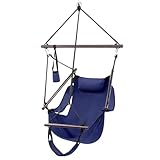
3. Sorbus Hanging Hammock Chair Swing
Sorbus sells a wide range of home and garden items, and its hanging chair is a practical pick for gardeners who already have a strong limb or beam in mind. It works well in a backyard with mature trees.
- A straightforward rope-and-fabric build in the classic hammock chair style
- Offered in several colors, so you can choose a calm neutral or a bright accent
- A familiar format that is easy to understand if this is your first hanging seat
The honest limitation: it relies entirely on your own hanging point, so the effort and cost of a proper ceiling or tree mount sit with you. Choose it if you already have a suitable anchor. Skip it if you rent and cannot drill into the porch ceiling.

4. Best Choice Products Hanging Rope Hammock Chair
Best Choice Products is a high-volume outdoor furniture seller, and its rope hammock chair is built for shoppers who want a simple swing without extra fuss. It suits a first purchase for a patio or a kids’ reading corner outdoors.
- A woven rope look that reads as classic and relaxed
- A wide, open seat shape that is easy to get in and out of
- Widely available in several finishes and sizes
The honest limitation: a plain rope seat feels less cushioned than designs with thicker fabric, so you may want a separate seat pad. Choose it if you want an uncomplicated, familiar option. Skip it if you want built-in padding.
5. Sunnydaze Hanging Rope Hammock Chair Swing
Sunnydaze is known for patio and garden accessories, and this hanging chair is a good match for people who like a slightly more finished look with a spreader bar. It suits a covered deck or a pergola.
- A spreader bar that keeps the seat opening neat, as the listing describes
- Rope styling that blends with natural wood and wicker outdoors
- Color options that help it fit different patio schemes
The honest limitation: like most hanging seats, it can swing and spin more than some people like, which feels playful to some and unsettled to others. Choose it if you enjoy gentle movement. Skip it if you want a seat that stays almost still.
6. Yaheetech Hanging Hammock Chair
Yaheetech makes home and garden furniture in many compact formats, and this hammock chair is a fit for balconies and small patios where a full frame would be too bulky. It can also work indoors in a sunroom.
- A compact hanging profile that suits tight corners
- A light, easy-to-store fabric and rope construction
- A look that stays simple, so it fits many outdoor themes
The honest limitation: because it is a lighter, simpler design, it will not feel as plush as seats with deeper fabric. Choose it if space is tight and you want something easy to put away for winter. Skip it if cushioning is your top priority.
7. Trademark Innovations Hanging Hammock Chair
Trademark Innovations offers hanging seats in several colors and fabrics, and this one is a sensible pick for gardens where you want an easy visual accent. It suits a lawn, a tree-lined yard or a covered veranda.
- A hammock-style seat that sits low and relaxed
- Fabric and rope pieces that are straightforward to wipe or brush off
- Several color choices to pick from
The honest limitation: details such as accessories and exact dimensions change between listings, so you should read the current page closely. Choose it if you want color and a casual look. Skip it if you need every part included in a single bundle.
Side-by-Side Comparison
| Chair | Size note | Material | Key feature | Best use | Link |
|---|---|---|---|---|---|
| Bliss Hammocks | Wide seat | Rope and fabric | Classic hammock look | Covered porch | Check on Amazon |
| Hammock Sky | Compact | Rope and fabric | Spreader bar | Sunroom or deck | Check on Amazon |
| Sorbus | Standard | Rope and fabric | Several colors | Garden tree | Check on Amazon |
| Best Choice Products | Standard | Woven rope | Simple, familiar | First purchase | Check on Amazon |
| Sunnydaze | Standard | Rope | Spreader bar | Pergola or deck | Check on Amazon |
| Yaheetech | Compact | Fabric and rope | Easy to store | Balcony | Check on Amazon |
| Trademark Innovations | Standard | Fabric and rope | Color range | Lawn or veranda | Check on Amazon |
Another way to compare these seven is by how much of the work they leave to you. The Bliss Hammocks, Sorbus and Trademark Innovations chairs are the most traditional, which means you supply or choose your own hanging solution and any cushion. The Hammock Sky and Sunnydaze options add a spreader bar for a more defined seat opening. The Yaheetech chair is the easiest to take down and pack away. The Best Choice Products rope chair is the most familiar and the simplest to understand if you have never owned a hanging seat.
When two chairs look alike in the photos, let the listing details decide. Compare the stated dimensions, the materials named in the description and what is included with the order. Those three facts will tell you more than any amount of styling in the product pictures, and they take only a minute to check.
Best Swing Chairs for Garden Spaces
A garden gives you the most freedom, because a mature tree can act as the hanging point and the grass beneath gives the swing room to move. Look for a branch that is thick, sound and level, and keep the seat well away from fences, walls and flower beds so a swing does not catch on anything. If your garden has no tree, a freestanding stand, sold separately for many of these seats, can do the job.
Shade matters as much as the chair. A swing in full afternoon sun fades faster and can feel too warm to enjoy, so a spot under leaves or a pergola often works better. If you plan to leave the chair out for the season, a cover or a quick trip indoors when rain arrives will help the rope and fabric look fresh for longer.
It also helps to picture how the chair will be used day to day. A reading chair that sees an hour of use each evening has different needs from a seat the children climb into after school. If the main user is a reader, pick a wider seat and add a cushion. If several people will take turns, choose a design with simple lines that is easy to climb into and that does not tangle when it is left swinging.
Think about the view as well. A swing facing the garden, a pond or a quiet street is a place people end up using often, while one turned toward a blank wall tends to be forgotten. Placing the seat where morning or evening light falls, but not where afternoon sun is harshest, is a small decision that makes a big difference to how often you reach for it.
How to Choose a Swing Chair
Use this short checklist before you add anything to your cart.
- Decide where it hangs. Porch beam, tree limb or freestanding stand each need different hardware and different amounts of clearance.
- Read what is included. Some listings include a hanging kit and some do not, so confirm whether you need to buy rope, a carabiner or a swivel separately.
- Think about the seat shape. A wide hammock seat is relaxed and slouchy, while a chair with a spreader bar holds a more open, defined shape.
- Check the materials. Cotton rope looks natural but needs more care outdoors, while synthetic rope and polyester fabric tend to be easier to wipe clean.
- Measure the space around the swing. Allow room on every side so you can sit down and move without bumping into anything.
- Plan for cushions. A seat pad or pillow adds a lot of comfort to simple rope designs.
- Check the return window. Hanging chairs are bulky, so know the seller’s policy before you open the box.
Rope Versus Fabric Seats
Hanging chairs fall into two broad camps, and knowing which one you lean toward narrows the field quickly. Rope seats, such as the classic woven designs from Best Choice Products and Sunnydaze, have an open, airy look and dry quickly after a shower. They suit warm climates and people who like a traditional hammock feel. The trade-off is that bare rope can leave patterns on your clothing and feels firmer than padded fabric.
Fabric-forward designs, like those from Bliss Hammocks, Trademark Innovations and Hammock Sky, wrap around you more and tend to feel softer from the first sit. They also come in more colors. The trade-off is that fabric holds moisture longer and should be brought indoors or covered when rain is forecast. If you cannot decide, a rope chair with a cushion added on top gives you the best of both.
Setup, Hardware and Care
Hanging Hardware and Setup Basics
A swing chair is only as good as the point it hangs from, so plan this part first. For a porch or pergola, the hanging point should be a solid structural beam, not decorative trim. For a tree, pick a thick, level limb and use a wide strap instead of thin cord that can bite into the bark. For a freestanding setup, buy a stand that is designed for hanging chairs and make sure it matches the height listed for your seat.
Many hanging chairs ship without the ceiling hook, swivel or carabiner, because the right hardware depends on where you hang them. Read each listing for what is in the box, follow the maker’s instructions, and hire a licensed professional if you are drilling into a ceiling or any structural element. Also leave generous empty space around the seat so it can move freely without touching walls or railings.
Care and Storage Through the Seasons
A little routine care keeps a hanging chair looking good for many seasons. Shake out leaves and dust every week or two, spot clean marks with mild soap and water, and let the whole seat dry in the shade rather than leaving it damp in a heap. If the chair will not be used for several months, take it down, make sure it is dry, and store it in a breathable bag or box in a dry cupboard.
Check the rope and stitching occasionally. Fraying, faded patches and loose knots are all signs that a seat has had its time outdoors and may need replacing. Rotating which side faces the sun, when the design allows, also helps the color fade more evenly.
Common Buying Mistakes
The most common mistake is buying the chair first and thinking about the hanging point afterward. Check the beam, the branch or the stand before you order, and use a licensed professional for any ceiling or structural mounting. Follow the maker’s instructions for installation and for any limits it lists.
The second mistake is ignoring the climate. A chair left out in constant rain or hot sun will age faster than one that is covered or stored. The third is assuming all hammock chairs feel alike: they differ in seat width, fabric thickness and how much they spin. Finally, many buyers forget to check accessories, then find they need extra hardware on installation day.
Final Recommendation
If you want the most dependable all-round choice for a porch, the Bliss Hammocks chair is the most classic option here. For a small balcony, go with the Yaheetech chair. For a first-time buyer who wants an easy, familiar design, the Best Choice Products rope chair is a simple fit. For a more polished look, the Hammock Sky swing stands out, and for a garden with trees, the Sorbus chair is a natural companion.
Whichever you choose, remember that the chair is only half of the purchase: the hanging point, a cushion and a little shade turn a decent swing into a favorite spot that gets used all summer long. Take a few minutes to measure your space, confirm what is included and read the return terms, and you will be in a good position to enjoy it.
Ready to pick? Begin with these two and check the current listing for what is included.
Choosing Your Hang Point: Beam, Branch, Stand or Porch Roof
Every swing chair begins with the question of what it hangs from, and the honest answer shapes everything else. A porch roof or pergola beam gives the classic installation, provided the structure is sound and built to carry a person’s moving weight. Timber should be solid, fixings should bite into structure rather than surface boards, and if you have any doubt about a beam’s strength, that doubt is your answer: use a stand or choose another spot.
A tree branch is the romantic option and the one needing most care. The branch should be healthy, thick and roughly horizontal, inspected for cracks and dieback, and the hanging strap should protect the bark. Remember that a living branch moves and grows; check the setup through the season rather than assuming last spring’s inspection still holds.
A dedicated stand removes all structural questions and lets you place the chair anywhere flat: a patio corner, a lawn with a suitable base, even indoors. The cost is footprint and a different look. For renters and for anyone whose porch structure is uncertain, the stand is not a compromise but the correct engineering answer.
Whichever support you choose, plan the swing space as carefully as the support itself. The chair needs an unobstructed arc in every direction it can travel, including the extra movement of an enthusiastic child or a gust of wind. Clear that space of planters, railings and furniture before the first sit, not after the first collision.
Rope, Fabric and Weave: How Each Seat Ages Outdoors
The seats in this guide hang outdoors and age outdoors, and their materials age in characteristically different ways. Cotton rope feels soft and traditional, breathes beautifully on hot days and asks the most in return: it should be brought in during prolonged wet weather, because natural fibres hold moisture and can mildew if they never fully dry.
Synthetic ropes and fabrics trade a little of that softness for resilience. They shed water faster, resist fading longer and forgive the forgotten rainy weekend that would punish cotton. For a chair that will live outside all season with minimal fuss, the synthetic picks in this list are the pragmatic choice, and modern versions feel far better than their plasticky ancestors.
Woven and macrame-style seats spread your weight across many contact points and flex with you as you swing, which many sitters find the most comfortable of all. Their care is mostly about keeping the weave clean: brush off debris, wash gently when needed and let the seat dry completely in moving air before the next use.
Whichever material you choose, ultraviolet light is the constant tax. Rotating the chair so the same section does not face the midday sun all season, and storing the seat under cover during the harshest months, will add years to any of these materials.
Comfort Tuning: Cushions, Spreader Bars and Sitting Angle
A hammock chair’s comfort is adjustable in ways a rigid chair’s is not, and small changes transform the sit. The hanging height sets the sitting angle: hang the chair lower and you recline more deeply; raise it and you sit more upright, better for reading or conversation. Experiment across a few chain links or rope lengths before deciding a chair feels wrong.
Spreader bars hold the seat open and define its width. A chair with a bar feels more like a seat you sit on; a chair without one wraps and cocoons. Neither is better, but they suit different moods and different bodies, and the reviews above note which style each pick follows so you can match the chair to the sitting you imagine.
Cushions change both comfort and geometry. A seat cushion lifts you slightly and softens the rope’s texture; a back cushion supports longer sits but pushes you forward, so re-check your hanging height after adding one. Choose cushions made for outdoor use, and bring them in during wet weather even if the chair itself stays out.
Foot position completes the tuning. Your feet should be able to touch the ground lightly to push off, slow down or steady the chair. If you are floating, lower the hang; if your knees are uncomfortably high, raise it. The perfect setup feels obvious the moment you find it: you stop noticing the chair entirely.
Safety Habits for a Shared Family Swing Chair
Swing chairs invite play, and a few household habits keep that play safe. Agree that the chair is for sitting, not standing, jumping or swinging to extremes, and that one person rides at a time unless the maker states otherwise. Most damage and most accidents come from use the chair was never designed for, not from defects.
Inspect the system regularly: the hanging point, every connector, the ropes or fabric where they meet the hardware and the spreader bar ends. Wear concentrates at contact points, and a frayed section spotted early is a simple fix, while the same wear found late can be a failure. A monthly once-over during the season takes five minutes.
Teach children the calm routine: walk to the chair, hold the sides, sit in the centre, and slow the swing with a foot before getting out. Supervise young children on any hanging seat, and position the chair so its swing path never crosses a walkway where someone could step into its arc.
Weather deserves a household rule too. In high winds, take the chair down or secure it, because a swinging empty chair batters itself, its hardware and anything nearby. The habit of bringing the seat in during storms also keeps it cleaner and drier for the next sunny day.
Seasonal Care: Keeping the Chair Ready Year After Year
Clean the seat before it needs it. Brush off leaves, pollen and dust weekly during the season, because ground-in dirt is what turns a gentle wash into a scrubbing project. When washing is needed, use mild soapy water, rinse well and hang the chair where air moves freely until it is completely dry, including inside the weave.
Store the chair dry. That single rule prevents most off-season damage. A breathable storage bag or a clean, dry cupboard shelf serves better than a sealed plastic container that traps residual moisture. Store cushions separately indoors where they will stay fresh.
Hardware benefits from the same seasonal attention: check carabiners and hooks for wear or corrosion, confirm straps have not frayed where they wrap a beam or branch, and replace any doubtful component before the new season’s first sit rather than after it.
At the season’s start, rehang the chair and test it gradually: sit gently, swing small, listen for new sounds and look for anything that changed over winter. That careful first sit takes two minutes and confirms the whole system is ready for another summer of use.
Pairing Two Swing Chairs: Conversation and Shared Spaces
Two swing chairs side by side create one of outdoor life’s great pleasures: a conversation that sways. Planning a pair asks for more than double the space of one, because the chairs must never swing into each other even when both riders are moving and the wind joins in. Space them generously, angle them slightly toward each other, and test the arcs with both chairs occupied before fixing anything permanent.
Match the pair’s hanging heights so the sitters’ eye levels agree; a conversation between someone floating high and someone sitting low feels oddly formal. If the chairs are different models from this guide, adjust their drops until the seats settle at the same height under load, remembering that rope and fabric seats give differently.
Shared hardware is a false economy. Each chair deserves its own hanging point, its own connectors and its own inspection routine, so that a problem with one never involves the other. Keep a small side table between them, placed outside both swing paths, for the drinks and books that shared swinging generates.
A pair also changes care: cushions stored together, both chairs brought in for storms, both inspected on the same seasonal round. Build the pair into your routines from the start and they will feel like one well-kept installation rather than two separate responsibilities.
Quiet Swinging: Reducing Creaks, Knocks and Neighbour Friction
A swing chair should sound like a summer afternoon, not like a gate. Most noises come from metal-on-metal contact at the hanging point, a spreader bar tapping a stand or frame, or hardware that has worked slightly loose. Work through the connections in order, snugging what the maker allows and separating metal parts that rub, and the chair will usually return to near silence.
Swivel and spring connectors earn their keep here: they let the chair move the way it wants to move, smoothly, instead of grinding through its rotations at a fixed hook. If your chair creaks when it turns, that connector is the first place to look, and it also reduces wear on the ropes and fabric at the top of the chair.
Placement solves the knocks. A chair that can reach a wall, railing or post at the end of its arc will eventually reach it, usually during the liveliest swing of the season. Extend your clearance beyond what a gentle test swing suggests, because real use is always more energetic than testing.
In close-set gardens and balconies, quiet is also courtesy. A well-maintained, silently swinging chair lets you enjoy early mornings and late evenings without sharing every creak with the neighbours, and that consideration keeps the peace that outdoor living is supposed to create.
Swing Chairs Indoors: Sunrooms, Bedrooms and Winter Use
A swing chair need not hibernate when summer ends. In a sunroom, a bright bedroom corner or a wide hallway, the same chair gives a house a gentle seat through the dark months, and many owners find they use it more indoors than out. The stand-based setups in this guide make the move simple: no new fixings, just a level floor, a rug beneath and the same swing clearance you planned outside.
Indoor air is kinder to every material in this list, so a chair that summers outdoors and winters indoors lives the easiest life of all. Give it a proper clean before it comes in, check the hardware while it is disassembled or moved, and let any outdoor damp dry completely before the chair takes up its winter corner.
Choose the indoor spot with the same care as the outdoor one: away from door swings and traffic, near light for reading, with a view worth swaying in front of. A chair placed by a winter window, with a throw over its back and a book on the seat, becomes the house’s most contested seat by December.
If the chair stays outside year-round instead, follow the seasonal care in this guide faithfully and accept that materials will age faster. Either life is legitimate; what matters is choosing deliberately rather than letting October decide by default.
Choosing a Swing Chair as a Gift
A swing chair is a generous, memorable gift, and also a logistical one, so it rewards planning. Start with the recipient’s space rather than your enthusiasm: a chair that needs a beam, a branch or a stand footprint they do not have will spend its life in a box. If you are unsure of their setup, choose a chair and stand combination that asks nothing of their house at all.
Match the style to their outdoor life. The relaxed rope and fabric seats suit loungers and readers; the more structured woven designs suit people who host and sit socially. Think about who will actually sit in it most, including partners and grandchildren, and let that honest picture guide the choice from the picks above.
Include the unglamorous essentials with the gift: the hanging hardware the chair needs, a storage bag if it will live seasonally, and your help with the first installation. A swing chair given with an afternoon of setup help is a gift that is used the same weekend; a chair given as a box alone may wait a season for its first swing.
Finally, write the care basics on the card. A recipient who knows to bring the seat in during storms and check the hardware each spring will enjoy the chair for years, and your gift will still be swinging long after more conventional presents are forgotten.
A Buyer’s Walkthrough: Testing a Swing Chair Properly
If you get the chance to sit in a swing chair before buying, test it the way you will use it, not the way a showroom invites. Sit in the centre, settle your full weight, and stay for several minutes rather than several seconds. The first impression of a hammock chair is all softness; the truth arrives at minute five, when you learn whether the seat supports you or slowly folds you into an uncomfortable bundle.
Swing gently and then a little more, and notice the chair’s manners: does it track straight, does the hardware stay silent, does the seat stay where your body expects it? Get up and sit down again twice, because entry and exit are where awkward chairs reveal themselves, and you will perform that movement thousands of times across the chair’s life.
Test the adjustments the chair offers. Change the hanging height if the display allows, try it with and without its cushion, and check how the seat feels in the posture you actually relax in, whether that is upright with a book or reclined with your feet up. A chair that only works in one narrow position will eventually disappoint a real household.
Finally, examine the materials with your hands: the rope or fabric’s texture against skin, the spreader bar’s finish, the hardware’s weight and smoothness. Your hands will tell you in seconds what photographs cannot, and a chair that feels well made in the hand almost always proves well made across its summers of service.
Swing Chairs for Small Gardens and Courtyards
A small garden does not exclude a swing chair; it simply demands honesty about the swing. Measure the space the chair truly has, including the arc it travels when a real person, not a careful tester, is enjoying it, and choose the chair and hanging arrangement that fit that measured truth. A chair that can swing six honest inches in a courtyard corner gives more pleasure than a grand chair imprisoned against a fence.
Courtyards have gifts of their own: walls that shelter the chair from wind, surfaces that stay level, and an enclosed feeling that makes a hanging seat feel like a private room outdoors. Use those gifts. Place the chair where the walls protect it, where the sun arrives at your favourite hour, and where the view, even if it is only of your own planting, rewards sitting still.
Vertical thinking helps in small spaces. A chair hung from a neat stand in the corner leaves the centre of the courtyard free for pots, a small table or the path to the door, and its footprint, planned once, never needs renegotiating. Keep the swing path sacred and the rest of the little garden can be as full as you like.
Small spaces also reward tidiness in care: a chair brushed down, cushions stored in one box, hardware checked on schedule. In a courtyard, everything is close to everything else, and a well-kept chair lifts the whole space, just as a neglected one quietly lowers it.
Frequently Asked Questions
Do I need a stand for an outdoor swing chair?
Only if you do not have a suitable overhead point. A stand is sold separately for many hammock chairs, so check that it matches the chair you choose.
Can these chairs stay outside all year?
Most makers suggest bringing fabric items indoors or covering them in harsh weather. Read the care notes in the listing.
How do I clean a rope hammock chair?
Brush off dust and spot clean with mild soap and water as the care label suggests, then let it dry fully in the shade.
Will it fit on a small balcony?
Compact styles like the Yaheetech are a better match. Measure the clearance around the swing and read the listing dimensions.
Are cushions included?
Often they are not. Treat a seat pad as a separate purchase unless the listing clearly says otherwise.
What if it does not suit my space?
Check the seller’s return policy on the listing before you buy, since bulky items can have different return terms, and keep the original packaging until you are sure the chair suits your space and your hanging point.
Which of these is the easiest to move or store?
The lighter fabric and rope designs, such as the Yaheetech chair, fold down small and are simple to carry. Check the listing for the packed size if storage space is tight.
Do I need a cushion or can I sit directly on the seat?
You can sit on the seat as it comes, but many owners add a pad or a few pillows for extra softness, especially on the rope designs that have no built-in padding.
How high should I hang a swing chair above the ground?
Hang it so that, when you sit, your feet can rest lightly on the ground to steady and push off. That usually means the seat sits at a comfortable chair-like height once your weight settles into it, remembering that rope and fabric seats drop a little under load. Adjust in small steps and test with the actual sitter before fixing the final height.
Can I hang a swing chair from a pergola?
A pergola can work if its beams are structural, sound and able to carry a moving person’s load, and if the chair’s swing arc clears the posts and any furniture beneath. Many decorative pergolas are built for shade plants, not people, so judge the structure honestly. If there is any doubt, a stand placed under the pergola gives the same setting without the structural risk.
What is the best way to keep a rope chair from twisting?
A swivel connector at the hanging point lets the chair rotate smoothly instead of winding the ropes up, which reduces both twisting frustration and wear. Some twist is inherent to a single-point hanging chair. Set the chair straight when you sit down, and avoid wrapping or knotting ropes to fight rotation, which creates uneven loads.
How do I protect a tree branch when hanging a chair?
Use a wide strap designed for hanging, which spreads the load and protects the bark, rather than a rope or chain directly on the branch. Check the strap and branch through the season for wear and movement, and choose a healthy, sturdy branch well away from any signs of disease or cracking. Remove the setup at the season’s end so the tree rests.
Are swing chairs suitable for older users?
Many older users love them, with the right setup: a chair hung at an easy sitting height, placed on a stand or secure point with clear, level ground in front for a steady entry and exit, and a seat style that supports getting up without a struggle. A cushion for support and a side table for belongings complete a setup that feels safe and welcoming.
How much space does a swing chair need on a small patio?
Plan for the chair’s footprint plus a clear swing allowance in front and behind, and some side room for drift. On a small patio, a stand in the corner often works best because the chair’s arc angles into the open space. Measure your patio and compare honestly; a chair that can only swing a few inches will disappoint, however pretty it is.
Can two people sit in one swing chair together?
Only if the chair and its hanging system are explicitly rated by their makers for that combined weight, and most single swing chairs in this guide are designed for one sitter. Squeezing two into a one-person chair overloads the ropes and hardware and makes swinging awkward. For shared time, hang a pair of chairs side by side instead.
How do I choose between a rope chair and a fabric sling chair?
Start with your climate and your habits. Rope chairs breathe beautifully, dry in the open weave’s own time and suit owners who enjoy a little seasonal care and a traditional feel. Fabric sling chairs dry faster after rain, feel smoother against skin from the first sit and forgive a wetter climate with less attention. Then consider the sitting itself: rope spreads and flexes with you in small movements, while a sling holds you in one smooth curve. Neither wins in general; the winner is the one that matches your weather, your care habits and the way your body likes to be held while the world sways gently.
What is the best first upgrade for a basic swing chair setup?
Improve the connection point before anything decorative. A smooth swivel or spring connector where the chair meets its support transforms the chair’s manners, letting it turn and settle without grinding or winding its ropes, and it reduces wear at exactly the place the whole system depends on. After that, look at the seat itself: a well-chosen outdoor cushion that suits the chair’s shape adds more daily comfort than any other single purchase. Upgrade in that order, connection first and comfort second, and even the simplest chair in this guide will feel noticeably more settled, quieter in use and kinder to its own materials through the whole season.