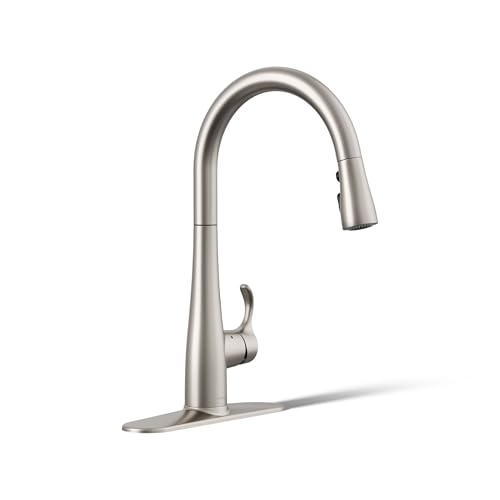
Many shoppers check a trusted review publication before buying a kitchen faucet, and the best kitchen faucets CNET readers end up comparing are usually the same handful of names: solid brass bodies, ceramic disc cartridges, pull-down sprayers with more than one mode, and finishes that survive daily use without spotting. A faucet is the most-touched fixture in the kitchen, turned on and off dozens of times a day, so the difference between a good one and a cheap one shows up fast in drips, stiff handles and sprayers that stop retracting. The six faucets in this guide are widely available models from established brands, chosen on the features review coverage weighs most heavily: build quality, spray performance, ease of installation and how the finish holds up.
Below we compare the six picks side by side, explain what each one does well and where it compromises, and finish with a buying guide on faucet types, hole counts and finishes, so you can choose the faucet that fits your sink and your plumbing. Every pick below is a real, currently listed product with a clear identity: a brand, a model and a set of features you can check on its listing before you buy. We have not fitted or run water through these faucets ourselves; the guide compares what each listing and its specifications actually offer, so you can judge them on the same ground a review editor would.
In this guide
Quick picks: best kitchen faucets cnet
| # | Product | Where to buy |
|---|---|---|
| 1 | Moen Arbor Pulldown Faucet | Check on Amazon |
| 2 | Delta Lenta Pull-Down Faucet | Check on Amazon |
| 3 | Kohler Simplice 596-VS Faucet | Check on Amazon |
| 4 | Pfister Talega Pull-Down Faucet | Check on Amazon |
| 5 | Kraus KPF-2820SFS Faucet | Check on Amazon |
| 6 | WEWE High-Arc Pull-Down Faucet | Check on Amazon |
How the Picks Were Chosen
The six picks below were chosen from the kitchen faucets available on Amazon, looking for models that cover the main styles, spray types and budgets rather than six versions of the same faucet. Each one is a real, currently listed product with a clear identity: a brand, a model and a set of features you can check on its listing. We looked for faucets with a ceramic disc cartridge, which is the part that most often decides whether a faucet drips after a year, a sprayer that retracts cleanly, a finish applied over a solid body rather than thin plating, and standard connections that fit common North American plumbing. The comparison table that follows gives the headline detail for each pick, and the individual sections explain the strengths and the trade-offs honestly, so a model that is wrong for your sink is easy to spot before you spend money on it.
Quick Comparison
The table below gives the headline detail for each of the six kitchen faucets, so you can shortlist by style and spray before reading the full reviews.
| Product | Key Detail | Best For |
|---|---|---|
| Moen Arbor Pulldown Faucet | Pulldown, Reflex docking, Spot Resist stainless | daily heavy use |
| Delta Lenta Pull-Down Faucet | Single-hole pulldown, brushed nickel, Touch-Clean | modern single-hole sinks |
| Kohler Simplice 596-VS Faucet | 596-VS, 3-spray head, magnetic docking | versatile spraying |
| Pfister Talega Pull-Down Faucet | Pulldown, Spot Defense steel, 3 settings | spot-free finish |
| Kraus KPF-2820SFS Faucet | KPF-2820SFS, brass body, 360 swivel | solid commercial build |
| WEWE High-Arc Pull-Down Faucet | High-arc pulldown, 3-mode sprayer, SUS 304 | best budget value |

1. Moen Arbor Spot Resist Stainless One-Handle Pulldown Kitchen Faucet with Sprayer and Reflex Docking System
The Moen Arbor is the faucet that other pull-down faucets are measured against, and it earns that place with details that show up in daily use rather than on a spec sheet. The Reflex docking system pulls the spray head back into place with a smooth, positive action, so the head never dangles or droops after a year of use. Power Clean spray technology gives a wider, stronger spray that rinses the sink faster, and the Spot Resist stainless finish shrugs off fingerprints and water spots that would mark a plain chrome faucet.
Arbor is a single-handle, high-arc design that clears tall pots, and the handle turns smoothly thanks to the ceramic disc cartridge inside. Installation uses Moen’s Duralock quick-connect system, which makes the under-sink connections faster and less fiddly than threaded fittings. For a kitchen that gets used hard every day, the Arbor is the safe, long-lived choice: it does the basics better than most faucets do anything.
Key specs: One-handle pulldown, Spot Resist stainless, Reflex docking, Power Clean spray, ceramic disc cartridge
Strengths:
- Reflex docking: the spray head retracts and docks firmly every time, with no droop.
- Power Clean spray: a wider, stronger spray rinses the sink and washes vegetables faster.
- Spot Resist finish: resists fingerprints and water spots better than plain chrome.
Trade-offs:
- High arc needs clearance: measure the space under cabinets and windows before choosing it.
- Single handle only: temperature control is one lever, with no separate hot and cold handles.
- Premium brand, premium care: the finish needs a soft cloth and mild cleaner to stay spot-free.
Best for: a busy family kitchen that wants a pull-down faucet that docks cleanly and lasts for years.
Not suited for: a sink with low clearance above it, or a traditional two-handle look.
Check price on Amazon: Moen Arbor Pulldown Faucet

2. Delta Lenta Brushed Nickel Kitchen Faucet with Pull Down Sprayer, Single Hole, Single Handle
The Delta Lenta is a modern single-hole faucet that suits a clean, uncluttered sink. Its brushed nickel finish hides water spots well and matches most stainless appliances, while the high-arc spout gives room for tall pots and the pull-down sprayer reaches every corner of the sink. Delta’s ShieldSpray and Touch-Clean spray holes are the practical touches: the spray holes wipe clean with a fingertip, so mineral build-up does not choke the spray over time.
Lenta uses a single lever for temperature and flow, which keeps the deck tidy and the operation simple. The ceramic disc cartridge turns smoothly and seals tightly, and the single-hole mount fits most modern sinks without a deck plate. For a renovated kitchen or a new build where the look matters as much as the function, the Lenta gives a contemporary profile with Delta’s long warranty behind it.
Key specs: Single-hole, single-handle pulldown, brushed nickel, Touch-Clean spray holes, ceramic disc cartridge
Strengths:
- Touch-Clean spray holes: mineral build-up wipes away with a fingertip, keeping the spray strong.
- Brushed nickel finish: hides water spots and matches stainless appliances.
- Clean single-hole design: a tidy deck with one lever and no clutter.
Trade-offs:
- Single-hole only: needs a deck plate or a different model for a three-hole sink.
- No soap dispenser included: a dispenser must be bought separately if the sink has a spare hole.
- High arc needs clearance: check the space above the sink before ordering.
Best for: a modern kitchen with a single-hole sink that wants a clean look and easy-clean spray holes.
Not suited for: a three-hole sink without a deck plate, or a cook who wants a separate side sprayer.
Check price on Amazon: Delta Lenta Pull-Down Faucet

3. KOHLER Simplice Kitchen Sink Faucet with Pull Down Sprayer, Vibrant Stainless, 596-VS, 3-Spray Design
The Kohler Simplice 596-VS is the versatile pick in this guide, with a three-spray head that covers more jobs than a standard two-mode sprayer. The three modes are a steady aerated stream for filling pots, a spray for rinsing, and a boost mode that adds extra flow for stubborn food, and switching between them is a simple toggle on the head. The high-arch spout swivels, the Vibrant Stainless finish resists corrosion, and the DockNetik docking system holds the spray head in place with a magnet.
Simplice is built around Kohler’s ceramic disc cartridge, which is the part that decides whether a faucet drips after a few years, and the 1.5-gallon-per-minute flow is a good balance between filling speed and water saving. The faucet fits one- or three-hole sinks with the included deck plate. For a cook who rinses, fills and scrubs in the same sink all day, the third spray mode is a genuine help rather than a gimmick.
Key specs: 596-VS, three-spray pull-down head, Vibrant Stainless, DockNetik magnetic docking, 1.5 GPM
Strengths:
- Three spray modes: stream, spray and boost cover filling, rinsing and scrubbing.
- Magnetic DockNetik docking: the spray head locks in place and stays put.
- Vibrant Stainless finish: resists corrosion and keeps its colour over years of use.
Trade-offs:
- Boost mode uses more water: the extra flow is for stubborn jobs, not everyday rinsing.
- High arch needs clearance: measure above the sink before choosing a tall spout.
- Deck plate included: the plate covers extra holes but adds a visible edge on the deck.
Best for: a cook who wants three spray modes and magnetic docking in a versatile pull-down faucet.
Not suited for: a low-clearance sink, or a minimalist who wants the simplest possible faucet.
Check price on Amazon: Kohler Simplice 596-VS Faucet

4. Pfister Talega Kitchen Sink Faucet with Pull Down Sprayer, Single Handle, High Arc Spout, Spot Defense Stainless Steel
The Pfister Talega is the faucet for a household that hates water spots. Its Spot Defense stainless steel finish is treated to resist spots and fingerprints, which keeps the faucet looking clean between wipe-downs, and the high-arc spout gives plenty of room for tall pots. The pull-down sprayer offers three water settings, so it covers a gentle stream, a rinse spray and a stronger jet, and the single handle keeps the deck simple.
Talega is NSF certified, which means it meets standards for drinking-water safety and flow, and the ceramic disc cartridge inside should give years of drip-free use. Installation is a single-hole mount with a deck plate for three-hole sinks. For a family that cooks daily and cleans weekly, the Talega’s spot-resistant finish and three spray settings make it one of the easiest faucets in this guide to live with.
Key specs: Single-handle pulldown, high arc, Spot Defense stainless steel, 3 water settings, NSF certified
Strengths:
- Spot Defense finish: resists water spots and fingerprints between cleanings.
- Three water settings: stream, spray and jet cover filling, rinsing and scrubbing.
- NSF certified: meets drinking-water safety and flow standards.
Trade-offs:
- Single-handle control: one lever for temperature and flow, with no separate handles.
- High arc needs clearance: check the space above the sink first.
- Deck plate for 3-hole sinks: the plate is included but adds a visible edge.
Best for: a family that wants a spot-resistant finish and three spray settings in one faucet.
Not suited for: a traditional two-handle kitchen, or a sink with very low overhead clearance.
Check price on Amazon: Pfister Talega Pull-Down Faucet

5. KRAUS Spot Free Stainless Steel Pull Down Kitchen Faucet KPF-2820SFS
The Kraus KPF-2820SFS is the commercial-look pick with a solid brass body underneath its Spot Free stainless finish. The 360-degree swivel spout reaches every corner of a wide sink, and the pull-down sprayer gives a steady stream and a spray for rinsing. Kraus builds this faucet around a ceramic cartridge and a heavy-duty metal body, which is why it feels noticeably heavier and more solid than budget faucets when you lift it out of the box.
The Spot Free finish is the everyday benefit: it resists fingerprints and water spots, so the faucet looks clean with a quick wipe rather than a polish. The KPF-2820SFS fits a single-hole sink and comes with the supply lines and mounting hardware needed for a standard install. For a cook who wants a solid, commercial-style faucet without a commercial-style outlay, the Kraus is the strongest value in the brass-body group.
Key specs: KPF-2820SFS, brass body, Spot Free stainless steel, 360-degree swivel, ceramic cartridge
Strengths:
- Solid brass body: heavy, durable construction that feels solid and lasts.
- 360-degree swivel: reaches every corner of a wide or double sink.
- Spot Free finish: resists fingerprints and water spots with a quick wipe.
Trade-offs:
- Single-hole mount: needs a deck plate for a three-hole sink.
- Commercial styling: the tall spout and heavy body suit a modern kitchen more than a traditional one.
- High arc needs clearance: measure above the sink before ordering.
Best for: a cook who wants a solid brass-body faucet with a commercial look at a fair outlay.
Not suited for: a traditional kitchen, or a sink with low clearance above it.
Check price on Amazon: Kraus KPF-2820SFS Faucet
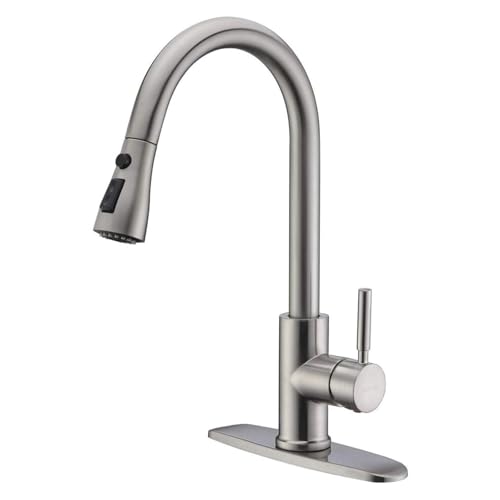
6. WEWE High-Arc Pull-Down Kitchen Faucet, Brushed Nickel, 3-Mode Sprayer
The WEWE high-arc pull-down faucet is the budget pick that still covers the essentials: a 3-mode sprayer, a 360-degree swivel spout, soft silicone nozzles that rub clean, and a SUS 304 stainless steel body with a ceramic cartridge. The brushed nickel finish suits most kitchens, and the faucet fits a one-hole sink with a deck plate for three-hole installations. For a rental, a first home or a kitchen refresh on a tight budget, it delivers the pull-down experience without the premium brand outlay.
WEWE’s sprayer switches between stream, spray and a pause mode, and the silicone nozzles resist limescale build-up, which is the part that usually chokes a budget sprayer first. The ceramic cartridge gives smooth handle action, and the high arc clears tall pots. It will not feel as heavy as the Kraus or carry the warranty of the Moen, but for the money it is a capable, honest faucet that does the daily job well.
Key specs: High-arc pulldown, brushed nickel, 3-mode sprayer, SUS 304 body, ceramic cartridge, 360-degree swivel
Strengths:
- Strong budget value: pull-down spraying and a steel body at a fraction of the premium brands.
- 3-mode sprayer: stream, spray and pause cover everyday sink jobs.
- Silicone nozzles: rub clean easily and resist limescale build-up.
Trade-offs:
- Lighter build: not as heavy or solid as the brass-body picks.
- Shorter track record: a newer value brand without the decades of service history of Moen or Kohler.
- High arc needs clearance: check the space above the sink before ordering.
Best for: a rental, a first home or a budget refresh that needs a capable pull-down faucet.
Not suited for: a forever kitchen where a premium brand and a long warranty matter most.
Check price on Amazon: WEWE High-Arc Pull-Down Faucet
Buying Guide: How to Choose a Kitchen Faucet
Faucet style and hole count
Start by counting the holes in your sink or countertop, because that decides which faucets fit without drilling. A single-hole faucet needs one hole and suits most modern sinks; a three-hole faucet covers a faucet plus a soap dispenser or a side spray, and a four-hole setup adds a second accessory. Pull-down faucets, where the spray head pulls out of the spout, suit deep sinks and big pots, while pull-out models suit shallower sinks. A high-arc spout clears tall stockpots but needs clearance under cabinets and windows, so measure the space above the sink before you fall in love with a tall design. A bridge faucet suits a farmhouse look but needs two holes spaced to match.
Cartridge and build
The cartridge is the heart of the faucet, and a ceramic disc cartridge is the standard to look for: it turns smoothly, seals tightly and resists the mineral build-up that makes older faucets drip. Brass bodies last longer than zinc or plastic ones and hold their threads better over years of use. Check the weight of the faucet in the specifications: a heavier faucet usually means more metal and less plastic inside. The spray hose should be braided nylon or stainless steel rather than plain rubber, and the counterweight that pulls the spray head back should be adjustable or at least heavy enough to retract the head fully every time.
Spray modes
A good sprayer does at least two jobs: a steady aerated stream for filling pots and a spray for rinsing the sink and washing vegetables. Some heads add a pause button, which stops the water while you move a pot without turning the handle off, and a few add a boosted spray for stuck-on food. Test the switching in your head against your habits: if you rinse the sink often, the spray mode matters more than the stream; if you fill pasta pots, flow rate matters more. A spray head that docks with a magnet holds its position better than one that relies on friction alone, and a head that swivels makes it easier to reach the corners of a wide sink.
Finish
Finish is where a faucet shows its age. Chrome is the easiest to keep clean and the most forgiving of hard water, though it shows fingerprints. Brushed nickel hides water spots and suits most kitchens. Matte black looks sharp but shows limescale in hard-water areas, and oil-rubbed bronze varies from batch to batch, so check that the finish on the listing matches what you expect. Stainless steel finishes resist corrosion well, while gold and brass tones need a gentler cleaner to keep their colour. Whatever the finish, avoid abrasive cleaners and scouring pads, which wear through the coating and expose the metal underneath.
Installation
Most modern faucets are designed for a homeowner install with basic tools, but a few details decide whether the job takes twenty minutes or two hours. Look for a faucet with long supply lines included, a mounting system that tightens from above the sink, and clear instructions with the parts labelled. If your sink is top-mounted, you will work from below, so check the space under the sink for the mounting nuts and the counterweight. If you are replacing an old faucet, measure the distance between the existing holes and check the deck thickness, since some faucets need an extension kit for thick countertops. When in doubt, a plumber can fit a faucet in under an hour, and a bad DIY install costs more to fix than the fitting.
How to Use and Care for Kitchen Faucets
A kitchen faucet stays smooth and spot-free with a little routine care. Wipe the spout and handle dry after heavy use, especially in hard-water areas, so mineral deposits do not build up around the aerator and the base. Clean the aerator every few months by unscrewing it, rinsing out any grit and soaking it in vinegar if the flow has slowed. Use a soft cloth and a mild cleaner on the finish, and never use abrasive pads or bleach-based cleaners, which strip coatings and dull the surface. If the handle stiffens, the cartridge may need cleaning or replacing, which is a straightforward job on most models with the water shut off at the valves below the sink. Check the connections under the sink once a year for slow drips, and replace a worn spray hose before it leaks rather than after.
Common Mistakes to Avoid
The most common mistake is buying a faucet without counting the sink holes, then discovering it does not fit without drilling or a cover plate. The second is choosing a high-arc spout that hits the window or the cabinet above the sink. The third is ignoring flow rate: a faucet with a very low flow saves water but takes noticeably longer to fill a pot, which frustrates daily cooking. A fourth is picking a finish for looks alone in a hard-water home, where matte black and dark bronze show every spot. Finally, many buyers forget the spray head docking: a head that does not retract and dock cleanly will dangle, drip and annoy you every single day. Check the docking design in the specifications and in buyer photos before you order.
Single-Handle vs Two-Handle Kitchen Faucets
The first choice in faucet layout is between a single handle and two handles, and it shapes how the faucet feels every day. A single-handle faucet puts temperature and flow on one lever: push it up for more water, swing it left or right for hot and cold, and you can run it with the back of your hand when your fingers are covered in dough. It needs only one hole in the sink, keeps the deck tidy, and is the default in most modern kitchens. Its weakness is fine control: finding exactly the right temperature takes a small adjustment, and the lever can be knocked by accident.
A two-handle faucet gives each temperature its own handle, which means finer control and a traditional look that suits a farmhouse or classic kitchen. It needs two or three holes, takes two hands to adjust, and costs more to install, but many cooks prefer the precision and the symmetry. Two-handle faucets also suit a household where one person likes the water hotter than the other, since each side can be set independently. The cartridges in a two-handle faucet are usually the same ceramic disc type as a single-handle model, so durability is similar.
A third layout, the bridge faucet, joins two handles with a horizontal bar and a high spout, and it is chosen for looks rather than convenience. It needs two holes spaced to match the bridge, and it suits a period kitchen or a farmhouse sink. For most buyers, the practical choice is between single-handle and two-handle: choose single-handle for ease and a clean deck, two-handle for fine temperature control and a traditional style. Whichever you choose, check the hole count on your sink first, since that decides the layout more than taste does.
There is also the question of touch and touchless models, which are becoming common in the mid-range. A touch faucet turns on with a tap on the spout or handle, which is handy with messy hands, and a touchless model uses a sensor. Both need batteries or a power supply under the sink, and both add parts that can fail. For a household that values simplicity, a standard manual faucet with a good cartridge is the more reliable choice. For a household that cooks with raw meat often and wants to avoid touching the handle, a touch model is worth considering, but check the battery life and the manual override before you buy.
Flow rate is the last detail worth checking, and it is measured in gallons per minute. Most kitchen faucets run at 1.5 to 1.8 gallons per minute, which fills a pasta pot in a reasonable time without wasting water. A faucet with a much lower flow saves water but takes noticeably longer to fill a large pot, which frustrates daily cooking, while a very high flow can splash out of a shallow sink. The aerator on the end of the spout shapes the stream: a good aerator mixes air into the water for a soft, splash-free flow, and it unscrews for cleaning when mineral deposits slow it down. Check the flow rate on the listing and match it to your sink depth and your patience.
Frequently Asked Questions
What is the best type of kitchen faucet for everyday use?
A single-handle pull-down faucet suits most kitchens: one lever controls temperature and flow, and the pull-down sprayer reaches every corner of the sink. Two-handle models give finer temperature control and suit a traditional look, but they need more holes and more hand movements.
How long should a good kitchen faucet last?
A well-built faucet with a ceramic disc cartridge should last ten years or more in normal use, and many carry long warranties on the cartridge and finish. Cheap cartridges and thin plating are what fail first, which is why build quality matters more than the number of features.
Can I install a kitchen faucet myself?
Most single-hole and three-hole faucets are designed for a homeowner install with a basin wrench and basic tools, and the job usually takes under an hour. Thick countertops, corroded old fittings and tight under-sink spaces are the cases where a plumber earns the fee.
Why does my faucet sprayer not retract fully?
Usually the counterweight has slipped, the hose is tangled with pipes or cleaning supplies under the sink, or the hose is too short. Clear the space under the sink, check the weight position on the hose, and make sure nothing is snagging it.
Which faucet finish is easiest to keep clean?
Chrome is the easiest: it wipes clean, resists corrosion and hides less grime than dark finishes. Brushed nickel is a close second and hides water spots well. Matte black and oil-rubbed bronze look striking but show limescale fastest in hard-water homes.
What is the standard hole spacing for a kitchen faucet?
Most three-hole sinks use 8-inch spacing between the outer holes, and most single-hole sinks need no spacing at all. Measure the distance between your existing holes before ordering, and check whether the faucet includes a deck plate to cover holes you do not use.
Do I need a plumber to replace a kitchen faucet?
Most replacements are a homeowner job with a basin wrench and basic tools, usually under an hour. Call a plumber if the old fittings are corroded, the space under the sink is too tight to work in, or the countertop is thick enough to need an extension kit.
Related Reading
If this guide helped, these companion guides on the same site go deeper on neighbouring topics: the best 14-inch kitchen faucets the best two-handle kitchen faucets the best high-arc two-handle kitchen faucets kitchen faucets for farmhouse sinks.
Final Recommendation
For most kitchens, the pick to start with is a single-handle pull-down faucet with a ceramic disc cartridge, a magnetic docking spray head and a finish that suits your water hardness. If your sink has three holes, check whether the faucet includes a deck plate or a soap dispenser before you order, and if you have a window above the sink, measure the clearance before choosing a high arc. Whichever you choose, buy the exact model named in its section, confirm the hole count and the included parts on the listing, and give the spray docking a hard look: the faucet you touch fifty times a day should feel right on the fiftieth touch as well as the first.
Conclusion
The best kitchen faucets CNET readers compare are the ones with a solid body, a ceramic disc cartridge, a sprayer that retracts and docks cleanly, and a finish that survives daily use. The six picks in this guide cover the main styles and budgets, and the buying guide above gives you the checks that matter before you order. Count your holes, measure your clearance, check the cartridge and the docking, and choose the model that fits your sink and your water.