Kamado Joe makes ceramic kamado grills in several sizes, from a small portable model to large cookers for gatherings. They are known for features such as a hinged lid, easy-open latches and flexible grate systems that make grilling and smoking more convenient. Because the line has several generations and sizes, the names can be confusing, so we sort them out below.
The six grills below span the main Kamado Joe lines. We have not used these products ourselves, and generations and packages change over time, so confirm the model, size and included parts on the current listing before buying.
As an Amazon Associate we earn from qualifying purchases. Links below are affiliate links, and they do not change the product information we give.
What to Look For
| Feature | Why it matters |
|---|---|
| Size class | Joe Jr. is portable, Classic is mid-size and Big Joe is the large option |
| Generation | Newer models carry updated lid, grate and airflow designs |
| Stand | Check whether a cart or shelves are included or sold separately |
| Airflow | Look for the vent design and any smoke chamber features |
| Smart features | Some models add fan-assisted control or app monitoring |
In this guide
Specs at a Glance
| Model | Size | Class | Notes |
|---|---|---|---|
| Kamado Joe Classic III | 18 inch class | Mid-size | Newer generation |
| Kamado Joe Classic II | 18 inch class | Mid-size | Earlier generation |
| Kamado Joe Big Joe III | 24 inch class | Large | Newer generation |
| Kamado Joe Big Joe II | 24 inch class | Large | Earlier generation |
| Kamado Joe Konnected Joe | 18 inch class | Mid-size | Fan-assisted, app control |
| Kamado Joe Joe Jr. | Small | Portable | Fits tailgating and small spaces |
The 6 Best Kamado Joe Grills
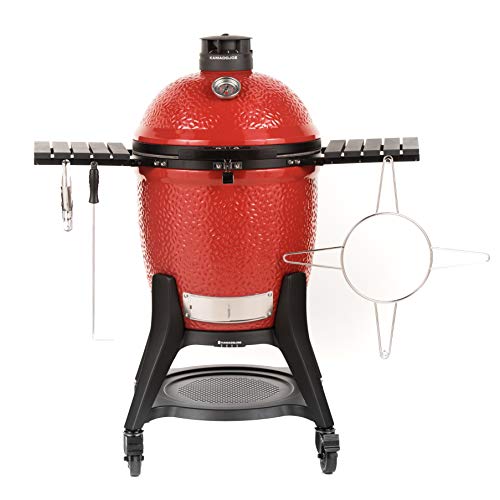
Top pickBest for most households
1. Kamado Joe Classic Joe III
The newer Classic Joe in the 18 inch class, with updated airflow and grate features according to the maker. Check the listing for the stand and the included accessories. It is the model most buyers start with.
Suits: most households. Strengths: a popular size with improved features. Weaknesses: packages differ. Skip it if you need a very large grill.

Best for those who prefer the earlier design
2. Kamado Joe Classic Joe II
The earlier Classic Joe generation, still found in some listings, with a similar mid-size body and Kamado Joe’s flexible cooking features. Check which generation the seller offers, and compare the feature list with the newer Classic.
Suits: those who prefer the earlier design. Strengths: proven features and a familiar size. Weaknesses: fewer updates than the newer one. Skip it if you want the latest design.


Best for big families
3. Kamado Joe Big Joe III
The large Kamado Joe in the 24 inch class, with updated features for larger gatherings. It needs a heavier stand and more space, so measure the patio and plan how you will move it.
Suits: big families. Strengths: a spacious cooking surface. Weaknesses: heavy and large. Skip it if you have limited space.


Best for entertaining
4. Kamado Joe Big Joe II
An earlier generation of the large Big Joe with a roomy chamber for large cuts. Confirm the version the seller lists, along with the stand and any shelves included.
Suits: entertaining. Strengths: a large cooking area. Weaknesses: earlier generation features. Skip it if you want the latest model.


Best for tech-friendly smokers
5. Kamado Joe Konnected Joe
A Kamado Joe with a fan-assisted control system and app connection, as described by the maker. It needs power, so check the listing for setup details, including how the app and fan work together.
Suits: tech-friendly smokers. Strengths: hands-off control. Weaknesses: needs electricity. Skip it if you want a manual grill.


Best for small patios and tailgating
6. Kamado Joe Joe Jr.
The small, portable Kamado Joe with a ceramic body in a compact size. Check the listing for the cart and accessories, which vary. It makes sense as a second grill for trips.
Suits: small patios and tailgating. Strengths: a small ceramic footprint. Weaknesses: limited cooking area. Skip it if you cook for a crowd.

Care and Setup
- Wipe the exterior with mild soap and a soft cloth.
- Check the gasket and latch for wear each season.
- Empty ash before each cook.
- Let the grill cool before closing the vents.
- Cover the grill when it is not in use.
Mistakes to Avoid
- Buying a generation without checking the features.
- Ignoring the weight of the large models.
- Assuming every package includes a cart.
- Using too much charcoal for a short cook.
- Opening the lid fast when hot.
Decoding the Kamado Joe Lineup
The Kamado Joe range is easier to follow once you separate three things: size, generation and extras. Size is the most important choice. The post lists a small portable model, mid-size Classic grills and larger Big Joe grills, and each step up adds cooking area, weight and fuel use. Generation, shown by a Roman numeral in the name, tells you which design revision you are looking at. The extras are things such as a fan-assisted controller, app connectivity, a cart, side shelves and accessories.
When a listing says Classic II or Classic III, do not assume the differences are cosmetic. Newer generations are described by the maker as carrying updated lid, grate or airflow designs, and the exact differences are in the product pages and manuals. Compare the feature lists side by side rather than relying on the number alone. Also check whether the seller is offering a current production model or older stock, since packages and included parts can differ.
A useful way to narrow the field is to start with how many people you cook for most weeks. Households of two to five are commonly served by a mid-size model. Frequent hosts and cooks who smoke large cuts may want the larger size. If you only need a grill for trips or a balcony, the portable model fits. Write down your size, your budget tier and your must-have extras, then use the model names as a checklist rather than as a ranking.
Ceramic Body, Gasket and Lid Seal
All the grills in this guide share a ceramic body, and that shapes how you use and protect them. Ceramic holds heat well and is thick enough to cook gently, but it can crack if it is hit, dropped or heated or cooled too fast. Let the grill warm up gradually, avoid dousing a hot grill with water, and do not slam the lid. Moving the grill without a plan is one of the most common ways owners damage a body, so ask for help and use the cart or base the maker specifies.
The felt or fiber gasket around the lid and base creates the seal that lets you control airflow. When it wears, flattens or gets greasy, air leaks in and the grill is harder to hold at a low temperature. Look at the gasket at the start of each season and after heavy use. If it is frayed, loose or compressed, check the manual for the replacement method and the correct adhesive, since the wrong one may not stand up to heat.
Hardware matters too. The metal bands and hinge should be snug and rust-free, and the lid should open and close smoothly. If you live near the coast or in damp conditions, a cover and a dry storage routine help protect metal parts. Ask the seller about warranty terms and how to reach parts support before you buy, because replacement parts are easier to source when you know the exact model and generation.
Cooking Zones and Accessory Systems
One reason people buy this brand is its flexible grate setup, so it helps to understand what that means in practice. Many kamado-style cookers allow you to place the cooking grate at different heights or divide the fire into zones, so one side is hot for searing while the other side stays gentler. The names and parts differ by generation, so confirm what your model includes and which parts are optional.
- Direct cooking: food sits over the coals. This suits burgers, steaks and vegetables.
- Indirect cooking: a heat deflector or similar plate sits between the fire and the food, which suits roasts, whole chickens and baked items.
- Low-and-slow smoking: a small fire, partly closed vents and wood chunks for flavor. Expect a long cook and plan fuel accordingly.
- Two-zone setup: one side direct and the other indirect, so you can sear and then finish.
Before buying extras, check whether the package contains the heat deflector, the grate extender or the rack system you want. Some listings bundle a starter set, while others sell the grill alone. If you plan to bake pizza or smoke often, look up the accessories the maker offers for your size, and confirm that they fit the generation you are considering. Parts that suit one size or generation may not suit another.
Connected and Fan-Assisted Models
The fan-assisted model in this guide is aimed at people who want help holding a steady temperature. A controller reads the temperature and adjusts a small fan to feed the fire. That can make long cooks less demanding, and it appeals to people who do not want to tend vents. The trade-offs are simple: it needs power, adds electronics that must stay dry, and ties part of the experience to an app and a wireless network.
If you are considering it, check a few things on the listing and in the manual. Find out what power source it uses and how the cord reaches your outlet. Look at what the app does, what phone systems it supports, and whether the grill still works if the signal drops. Ask whether the controller is part of the base package or sold separately, and whether any parts are retrofittable to non-connected models.
Plan for weather. Place the controller away from rain and splashing, and use the cover when the grill is idle. Electronics and a very hot ceramic shell do not always mix well with careless handling, so follow the maker’s guidance on cleaning and storage. A connected model suits someone who values convenience and is comfortable with updates and apps. If you prefer a purely mechanical approach, a standard model with good vents and a separate thermometer remains a fully capable way to cook.
Space, Stand and Delivery Checks
Ceramic grills are heavy, bulky and often arrive in more than one box, so do some planning before you order. Measure the spot where it will sit, including the clearance around the lid when it opens. Check the distance to walls, railings and overhead cover. The lid opens upward and the surface gets very hot, so the area needs to be open and non-combustible.
Next, think about the route. A large model may need two people and a clear path with no steps, or a ramp and a hand truck. Ask whether the product ships assembled, and what you will have to build. If you have a small vehicle or limited storage, confirm that the box dimensions suit how you will transport it.
Finally, consider the stand. A cart with wheels makes the grill movable, while a fixed table or built-in setup is better for permanent outdoor kitchens. If you plan to place it in a table, check the maker’s cutout and clearance guidance, since heat has to escape and the base needs proper support. Where a listing does not state what the package includes, treat the stand, shelves and accessories as separate costs until the seller confirms otherwise. Keep the manual, the order details and the model name together so that parts support and warranty requests are straightforward later.
Kamado Cooking Terms Explained
Ceramic cookers have their own language. Here is a short glossary for new owners.
- Kamado: a thick-walled, egg-shaped cooker, traditionally ceramic, that holds heat very well.
- Firebox: the inner chamber that holds the charcoal.
- Divide and conquer system: a multi-level cooking arrangement that lets you set different heat zones.
- Heat deflector: a plate that blocks direct heat for indirect cooking.
- Gasket: the felt or similar seal between the lid and base.
- Air vents: openings at the bottom and top that control airflow.
- Lump charcoal: a type of natural charcoal used in many ceramic cookers.
- Burp: opening the lid slightly before fully lifting it to release hot air gradually.
The maker’s manual explains the correct way to use each part on your model.
Choosing a Size and Style
| Your situation | What to consider | Planning note |
|---|---|---|
| Small household | Compact or portable model | Check weight and storage |
| Family cooking | Mid-size cooker with a stand | Check cooking area |
| Frequent hosting | Large model and extra racks | Check space and delivery |
| Interested in convenience | Models with fan-assisted features | Check power needs |
| Limited patio space | Compact unit and table | Check clearance rules |
Ceramic cookers are heavy, so think about where the cooker will live and how it will be moved.
A Delivery and Setup Checklist
- Measure the delivery path, including doors, gates and steps.
- Plan a stable, level, non-flammable spot for the cooker.
- Arrange help for lifting, since ceramic parts are heavy and can break.
- Read the maker’s assembly instructions before you begin.
- Check that the stand or cart is secure.
- Season or burn in the cooker as the maker recommends.
- Keep the manual and registration details.
Careful setup helps protect the ceramic and ensures the cooker stands level.
Reading a Listing Closely
Look at the cooking diameter and the number of grates or levels. Check the materials of the body, stand and hardware, and read about the gasket and latches. See what comes in the box, such as grates, a deflector and an ash tool.
Read the maker’s warranty, and check how replacement parts are supplied. Note the weight and the stand or cart style, and look at available accessories.
Safety, Fuel and Heat Handling
Ceramic cookers get very hot and hold heat for a long time. Use them outdoors on a stable, non-combustible surface, away from walls and overhangs. Follow the maker’s instructions for lighting, airflow control and shutdown. Open the lid carefully to avoid a rush of hot air, using gloves and keeping your face back.
Keep children and pets away, and let the cooker cool fully before moving or covering it. Dispose of ash only when completely cold. Use only the fuels the maker approves.
Learning to Control Temperature
A ceramic cooker rewards patience. Light the charcoal as the maker describes, and open the vents gradually, since heat builds slowly and is hard to bring down once it overshoots. Aim to approach your target temperature from below, then set the vents to hold it. Small changes make a difference, so adjust a little and wait before touching them again.
Use a reliable thermometer at grate level, because the dome gauge may read differently from the temperature where food sits. Keep notes on vent positions that gave steady results, and record weather conditions, which affect airflow.
The insulation of a kamado means it can run for hours on little fuel, and it also means it can hold heat long after cooking. Plan for a slow shutdown by closing the vents as the manual directs. Begin with simple cooks such as burgers, chicken pieces and vegetables before moving on to long smokes, and enjoy learning how your cooker behaves.
Care, Cleaning and Long-Term Ownership
Clean ash and residue as the manual describes, and check the gasket and hardware from time to time. Keep the cooker covered and dry when not in use, and avoid sudden temperature changes that might stress the ceramic. Contact the maker if you notice cracks or loose parts.
Choosing Kamado joe grills: The Criteria That Matter Most in Daily Use
Listings for kamado joe grills tend to lead with headline features, but the details that decide whether you stay happy with a purchase are usually quieter ones. Start with fit. Measure the space where the product will live, including the room needed to open doors, lift lids, pull out parts, or stand in front of it comfortably, and compare those measurements with the dimensions on the listing before anything else. A model that looks perfect on a product page can become a daily irritation if it crowds a walkway, blocks a cabinet, or leaves no sensible place for the accessories you use with it.
Next, think honestly about capacity and workload. Households tend to buy for the biggest gathering they can imagine rather than the meals and routines they repeat every week, and that mismatch cuts both ways. Too small, and you end up working in batches, reheating, or improvising workarounds that erase the convenience you paid for. Too large, and you give up storage, counter room, or yard space to a product that runs half empty most of the time and takes longer to clean. The right size for kamado joe grills is the one that handles your ordinary week with a little headroom, not the one built for a once-a-year event.
Materials and construction deserve a slower look than they usually get. Where listings describe the body, finish, hinges, handles, seals, or cooking and contact surfaces, read those notes as clues about cleaning and longevity rather than as decoration. Surfaces you touch every day should wipe down easily and tolerate the cleaners you already own. Parts that move, fold, latch, or bear weight should feel like the maker’s priority, because those are the points that loosen, stain, or wear first. If a listing is vague about a part you know you will handle constantly, treat that vagueness as information and compare it with a listing that explains the same part clearly.
Controls and everyday ergonomics matter just as much. Ask yourself how the product behaves in imperfect real conditions: wet or greasy hands, low light, a crowded room, a rushed weeknight. Controls you can understand at a glance, markings you can read without leaning in, and parts that go back together in only one obvious way all reduce small mistakes. For kamado joe grills, the best choice is rarely the one with the longest feature list. It is the one whose way of working matches your habits so closely that using it correctly feels like the path of least resistance.
Kamado joe grills in Real Life: Four Situations Worth Picturing Before You Buy
Picture an ordinary weeknight first. You are tired, time is short, and the product has to earn its place without a long setup ritual or a complicated cleanup afterward. In that moment, the qualities that matter are fast readiness, predictable results, and parts that can be dealt with in a few minutes at the sink or with a cloth. When you compare the picks in this guide, ask which one you would still choose on your most tired evening, because that answer usually predicts long-term satisfaction better than any feature comparison made in a relaxed weekend mood.
Now picture the bigger occasion: guests, a family gathering, or a weekend project where the product runs longer, gets used back to back, or has to handle more than usual. This is where headroom, stability, and heat or airflow management show their value. A model that is perfectly adequate for two people can feel stretched when the pace picks up and there is no pause between rounds. You do not need to buy purely for this scenario, but it is worth knowing which pick in the list gives you the most graceful step up when the workload grows, and which one is really a smaller-scale specialist.
A third situation is the small or shared space: a compact kitchen, a narrow patio, an apartment balcony, or a room that has to serve several purposes. Here, footprint, storage, noise, and how the product behaves around other people matter as much as raw performance. Think about where it will sit when it is not in use, whether it can be moved by one person, and how much clearance it needs around it to work safely and comfortably. Many returns and regrets with kamado joe grills come not from poor quality but from a product that never had a natural home in the space it was bought for.
Finally, picture the routine a few months from now, when the novelty has worn off. The filters, seals, trays, grates, baskets, or surfaces that needed attention will have needed it several times. The storage spot you chose will have been used dozens of times. The shortcut you discovered will have become your habit. Buying well means choosing the model whose maintenance rhythm and everyday handling you can live with on that ordinary future day, not just the one that excites you on delivery day. A product that stays pleasant to live with is the one that keeps getting used, and regular use is what turns a purchase into value.
Setup and First Use: Getting Kamado joe grills Off to a Good Start
When your choice arrives, resist the urge to put it straight to work. Unpack it where you have room to lay everything out, check each part against the maker’s parts list, and look over seams, edges, and fittings before anything gets hot, wet, plugged in, or filled. Small shipping damage and missing accessories are far easier to sort out before first use than after. Keep the packaging until you have run the product once and confirmed that everything works as described, and photograph the unboxing if anything looks questionable, so you have a clear record if you need to contact the seller.
Placement is the next decision, and it deserves more care than it usually gets. Follow the maker’s guidance on clearance, ventilation, level surfaces, and distance from walls, curtains, cabinets, or other heat and moisture sources, because those instructions are written around how the product actually behaves. Check that cords, hoses, vents, or doors can move the way they need to without being pinched or forced. If the product will live somewhere different from where it is used, walk that route once with your hands full in mind, and make sure the move is realistic rather than a chore you will start avoiding.
Most kamado joe grills benefit from a gentle first run before you rely on them for an important meal or occasion. Read the manual’s first-use steps, wash or wipe the parts the maker says to prepare, and run the product through a simple, low-stakes task so you can learn its sounds, smells, timing, and handling without pressure. This is also the moment to note the small things: how the display or markings read in your light, how parts align when you reassemble them, and where drips, steam, crumbs, or ash tend to collect in your particular setup. Ten unhurried minutes now prevent most first-week frustrations.
Keep a simple note of what works during your first few uses: settings you chose, quantities, timing, and the result. It sounds old-fashioned, but a short record on your phone turns guesswork into a pattern surprisingly quickly, especially with products where small adjustments change the outcome. Within a few sessions you will know your own defaults instead of relearning them each time. You will also have a useful baseline if performance ever changes later, because you can compare what the product does now with what it did when it was new and working exactly as expected.
Cleaning, Care and Storage for Kamado joe grills
Regular light cleaning beats occasional heroic cleaning with almost every product in this category. After each use, once things have cooled or settled as the maker directs, remove loose residue, wipe the surfaces that collected splashes or dust, and let parts dry fully before you close, cover, or put anything away. Trapped moisture is a quiet cause of odors, staining, and corrosion, and it usually comes from storing a product that looked dry on the outside while seams, seals, and undersides were still damp. A few extra minutes of air drying protects both hygiene and finish.
Schedule a deeper clean around how often you actually use the product rather than by the calendar alone. Heavy users may need to descale, degrease, empty, brush out, or wash removable parts far more often than occasional users, and the maker’s manual is the right guide for which cleaners and tools are safe. Avoid abrasive pads, harsh chemicals, or soaking any part the maker does not clearly describe as washable, and never use water around electrical parts beyond what the instructions allow. When in doubt, a soft cloth, warm water, and patience will handle most jobs without risking the finish or the seals.
Storage is part of care, not an afterthought. Keep kamado joe grills in a dry place where air can circulate, with cords loosely coiled rather than tightly wound, small accessories kept together so they are not lost, and covers or cases used only on a clean, fully dry product. If the product lives outdoors or in a garage, check it after long gaps: look for pests, dust buildup, stiff or cracked seals, and anything that has shifted since you last used it. A quick inspection before a busy cooking day is far better than discovering a problem with guests already on their way.
Learn the early signs that something needs attention. New noises, slower performance, uneven results, lingering odors, loose fittings, or controls that feel different from before are all messages, and they are cheapest to act on early. Start with the simple checks the manual lists: correct assembly, clean filters or vents where fitted, clear passages, and parts seated properly. Many apparent faults are really maintenance asking to be done. If a problem persists after those checks, contact the maker with your notes about when it started and what changed, because that detail helps support teams help you faster.
How the Picks Above Compare When You Live With Them
The picks in this guide are not ranked by a single score, because the differences that matter most only appear in use. Take Kamado Joe Classic Joe III and Kamado Joe Classic Joe II, the first two options above. On paper they may look close, but the descriptions point to different priorities: one leans toward buyers who want the most established or fully featured route, while the other suits people who prefer a simpler or more focused tool for the same job. Neither reading is wrong. The useful question is which set of strengths you will actually exercise every week, and which weaknesses you are genuinely willing to live with rather than hoping you will not notice.
Move down the list and the pattern continues. Kamado Joe Big Joe III makes its case in the guide through a particular strength described in its section above, and that strength matters most if your cooking or routine regularly creates the situation it is built for. Kamado Joe Big Joe II, by contrast, is the kind of pick whose appeal grows on buyers who value straightforward day-to-day handling over standout features. When two descriptions sound similar, reread the suits and skip-it notes in each section: those short lines are the most honest summary in the whole guide of who each product is really for.
If your shortlist includes Kamado Joe Konnected Joe or Kamado Joe Joe Jr., compare them on ownership rather than on first impressions. Think about the size of load each will usually carry in your home, the space each needs, and how much cleaning each design implies after a typical session. A pick that looks like the exciting option today can become the one you avoid if its upkeep does not fit your routine, while a plainer pick that is quick to clean and easy to store quietly becomes the household favorite. The guide’s per-product notes on strengths and limitations are written to help exactly this comparison, so weigh them more heavily than the order the products happen to appear in.
A practical way to decide is to score your own priorities before you look at the list again. Write down your top three: perhaps capacity, easy cleaning, compact storage, simple controls, or suitability for a particular kind of cooking. Then read only the sections of the two or three picks that match those priorities and see which description sounds most like your household. Buyers who decide this way rarely regret the choice, because the product was selected against their real life rather than against an abstract idea of the best. If two picks still tie, choose the one whose everyday handling you prefer, since you will repeat that handling hundreds of times.
Buying Mistakes That Lead to Returns and Regrets
The most common mistake with kamado joe grills is measuring once, casually, or not at all. Doorways, counter depth, cabinet height, patio gates, and storage cupboards all have a say in whether a product works in your home, and listings cannot know any of them. Measure the space, measure the route the product takes to reach it, and leave honest clearance rather than planning for a perfect squeeze. The second most common mistake is buying for features instead of habits: paying for capacity, programs, or accessories that sound appealing in a listing and then go untouched for the life of the product.
A third mistake is ignoring the unglamorous requirements. Some products in this category need ventilation, a particular kind of outlet or fuel, a level surface, drainage, headroom, or a safe distance from things that heat, steam, or splashes can damage. These requirements are in the manual and usually hinted at in the listing, but they are easy to skim past when you are focused on the headline features. Check them before you order, not while the box is open on your floor. Discovering a basic mismatch after delivery turns a good product into a bad purchase through no fault of its own.
- Skipping the manual’s setup and first-use steps, then judging the product on a poor first result.
- Choosing by headline features alone instead of by cleaning, storage, and daily handling.
- Forgetting to check what is included in the box, and assuming accessories from photos are standard.
- Placing the product somewhere convenient rather than somewhere that meets its clearance and ventilation needs.
- Waiting until a special occasion to use a new product for the first time.
None of these mistakes is about intelligence; they are about pace. Listings are designed to move you quickly, while good ownership decisions are made slowly, with a tape measure, the manual, and an honest picture of your own routine. Give this purchase that slower half hour. With kamado joe grills, the difference between a product you recommend to friends and one you quietly stop using is almost always decided before the order is placed, in the fit between the product and the life it is about to join.
Living With Kamado joe grills Over the Long Term
Ownership changes character after the first few months. Routines settle, shortcuts appear, and you learn which of the product’s qualities you lean on and which you barely touch. That knowledge is useful beyond this one purchase: it tells you what to prioritize if you ever replace or add to what you own, and it helps you advise friends honestly instead of repeating listing language. If a feature you paid for has gone unused all season, note it without regret and let it sharpen the next decision rather than souring this one.
Seasons also change what you ask of kamado joe grills. Heavy-use periods reward the preparation habits described earlier in this guide: a clean, inspected, correctly placed product at the start of a busy stretch prevents most mid-season problems. Quieter periods are the right time for the deeper clean, the accessory sort-out, and the honest check of seals, fittings, and surfaces while there is no pressure to use the product that day. Treating the off-season as maintenance time, rather than forgetting the product entirely, is one of the simplest ways owners extend useful life without spending anything.
Finally, keep the paperwork and your own notes together: the manual, proof of purchase, and the short record of settings and routines that worked for you. If you ever contact the maker, sell the product on, or hand it to someone else in the household, that small bundle answers most questions immediately. Good ownership of kamado joe grills is mostly this kind of quiet administration: nothing dramatic, just a product that is ready when you reach for it, season after season, because someone paid attention at the unglamorous moments.
Kamado Joe FAQ
What is the difference between Classic and Big Joe?
Classic is the mid-size model, while Big Joe is the larger one with more cooking area.
Do all Kamado Joe grills include a stand?
Not always. Check each package listing.
Is Joe Jr. a real grill?
Yes. It is a small ceramic kamado meant for portability.
Which is best for smoking?
Any of them can smoke, so choose by size and features.
Are older generations still worth considering?
They can be, if the feature list fits your cooking and the seller clearly states which generation it is. Compare the differences on the product pages and check that parts and accessories are still available.
Can I use wood chunks in a Kamado Joe?
Many owners add wood chunks for smoke flavor, but start small because a closed ceramic body concentrates smoke. Check the manual for the maker's guidance on fuel and wood.
How often should I replace the gasket?
There is no fixed schedule. Replace it when it looks flattened, frayed or loose, or when the grill struggles to hold low heat. Follow the maker's steps for removal and adhesive.
Does a ceramic grill need to be covered?
A cover protects the metal parts, hinge and finish from weather and is a good idea for outdoor use. Make sure the grill is fully cool before you cover it.
Can I cook pizza on one?
Many kamado owners do, using accessories made for that purpose. Check what the maker offers for your size and whether those parts fit your generation.
How do I put the fire out?
Close the vents fully to starve the fire of air, keep the lid shut, and let it cool on its own. Never use water on a hot ceramic body.
Is the portable model enough for a full meal?
It can handle small meals for a couple, but the grate is limited. Check the cooking area on the listing against the dishes you want to cook.
More Questions About Kamado joe grills
How long should kamado joe grills last with normal home use?
Longevity depends far more on care and frequency of use than on any single feature. Products in this category that are cleaned regularly, stored dry, and used within the maker’s guidance generally serve a household for many seasons, while neglected seals, vents, and surfaces shorten that life considerably. Follow the manual’s maintenance schedule, deal with small issues early, and check the listing and maker’s pages for the current warranty terms, since those details can change and are the authoritative source if you ever need support.
What should I check first if results are disappointing?
Start with setup rather than assuming the product is at fault. Confirm that everything is assembled and seated as the manual describes, that vents, filters, or passages are clean, and that placement gives the product the clearance it needs. Then repeat a simple task you know well, changing only one variable at a time, and note the result. Many disappointing first results trace back to a rushed first use, an overloaded load, or a skipped preparation step, and they improve quickly once the routine settles.
Are accessories and replacement parts easy to get?
It varies by maker, so check before you buy if accessories matter to you. Established brands usually list compatible accessories and common replacement parts on their own pages, while lesser-known models may rely on generic alternatives. Look at what is included in the box as described on the listing, note which extras the photos show that are sold separately, and factor the accessories you genuinely need into your comparison rather than discovering the extra purchases after delivery.
Can I use kamado joe grills in a small home or apartment?
Often yes, provided you choose with the space in mind. Measure carefully, consider where the product will be stored as well as where it will be used, and pay attention to noise, steam, heat, or odors if you share walls or live in an open-plan layout. Smaller or simpler picks in this guide may suit compact homes better than the largest options. Also check any building or lease rules that apply to the kind of product you are considering, since those rules, not the product itself, occasionally decide the question.
What is the best way to clean kamado joe grills after a messy session?
Let everything cool or settle as the maker directs, remove loose residue first, then wash or wipe parts in the order the manual recommends, working from the least soiled areas to the dirtiest. Use only cleaners and tools the maker approves for the surfaces involved, rinse or wipe away cleaner residue, and dry every part fully before reassembly or storage. If a stain or odor survives a normal clean, repeat a gentle clean rather than reaching for something abrasive that could damage the finish and make the next mess stick harder.
How do I decide between two very similar picks in this guide?
Reread the two sections and list the differences that would still matter after a month of ownership: size in your space, how each is cleaned, how each is stored, and the specific strength each description claims. Ignore differences you would only notice on the first day. Then choose based on your most common routine rather than your most ambitious one. If the tie persists, the pick whose handling, controls, or upkeep sounds simpler in its description is usually the one that gets used more, and used more is what makes it the better buy.
The Short Version
For the newest mid-size Classic, the Kamado Joe Classic III. For an earlier Classic, the Kamado Joe Classic II. For the large newer model, the Kamado Joe Big Joe III. For an earlier large model, the Kamado Joe Big Joe II. For a fan-assisted connected model, the Kamado Joe Konnected Joe. For a portable ceramic, the Kamado Joe Joe Jr..


