An undercounter ice maker is built to sit beneath a countertop, with a front-breathing design that lets you slide it between cabinets. It makes and stores a large supply of ice, which suits wet bars, basements, outdoor kitchens and busy family homes. Planning matters more here than with a portable unit, because the installation affects how the machine breathes, drains and performs.
The six machines below cover residential and commercial-grade undercounter models from well-known makers. We have not used these products ourselves, so confirm the ice shape, daily output, drain needs and installation clearances on the current listing before buying. Most need water and drain connections, and some also need a nearby outlet and a level floor.
As an Amazon Associate we earn from qualifying purchases. Links below are affiliate links, and they do not change the product information we give.
What to Look For
| Feature | Why it matters |
|---|---|
| Ice shape | Full cube ice is clear and slow melting; half cubes are common |
| Drain and water | Gravity drain or pump models change where you can install |
| Ventilation | Front-breathing models fit between cabinets |
| Output and bin | Daily output and bin size decide how much ice stays ready |
| Finish | Stainless doors match most appliances |
In this guide
Specs at a Glance
| Machine | Style | Standout feature | Notes |
|---|---|---|---|
| Ice-O-Matic ICEU150 | Commercial undercounter | Heavy-duty build | Needs water and drain |
| Manitowoc UDF0140A | Commercial undercounter | Self-contained ice and storage | Needs water and drain |
| Hoshizaki AM-50BAE | Commercial undercounter | Crescent-style ice | Needs water and drain |
| NewAir ClearIce40 | Undercounter | Clear ice focus | Check the listing for details |
| Summit BIM44G | Built-in | Residential built-in style | Check the listing for details |
| VEVOR undercounter ice machine | Undercounter | Commercial-style build | Check the listing for output |
The 6 Best Undercounter Ice Makers
Top pickBest for homes with big ice demand
1. Ice-O-Matic ICEU150 Undercounter Ice Machine
A heavy-duty undercounter ice machine from a brand with a long record in foodservice. It stores ice in an integrated bin and is designed for steady, repeat use, so it is a natural pick for people who host often.
Suits: homes with big ice demand. Strengths: a durable commercial build. Weaknesses: plumbing is required. Skip it if you want a plug-and-play unit.
View Ice-O-Matic ICEU150 Undercounter Ice Machine on Amazon
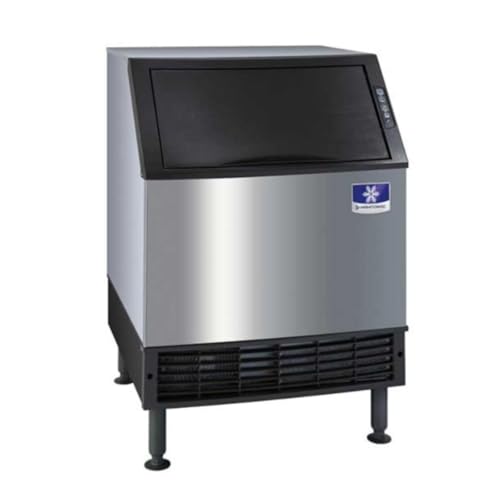
Best for entertaining homes
2. Manitowoc UDF0140A Undercounter Ice Machine
A self-contained undercounter ice machine from Manitowoc, a name widely recognized in commercial ice. It makes and stores cube ice in one cabinet, so you only need one appliance to keep drinks stocked.
Suits: entertaining homes. Strengths: a trusted commercial brand. Weaknesses: installation requirements. Skip it if you rent and cannot plumb.

Best for serious home bars
3. Hoshizaki AM-50BAE Undercounter Ice Maker
A Hoshizaki undercounter machine that makes crescent-shaped ice and holds it in an integrated bin. The brand is respected in restaurants and bars.
Suits: serious home bars. Strengths: a respected maker and reliable operation. Weaknesses: crescent ice differs from cubes. Skip it if you want a budget-friendly pick.
View Hoshizaki AM-50BAE Undercounter Ice Maker on Amazon
Best for home bars with clear ice
4. NewAir ClearIce40 Undercounter Ice Maker
A residential undercounter ice maker from Newair marketed around clear ice. It suits home bars where appearance matters in the glass, and the clear cubes look good in a short pour.
Suits: home bars with clear ice. Strengths: a bar-minded design. Weaknesses: check output and drain needs. Skip it if you want a commercial machine.
View NewAir ClearIce40 Undercounter Ice Maker on Amazon
Best for residential kitchens
5. Summit BIM44G Built-In Ice Maker
A Summit built-in ice maker designed for residential kitchens and bars. Summit makes many compact and specialty appliances for homes and small spaces, and this model fits that tradition.
Suits: residential kitchens. Strengths: a built-in style. Weaknesses: check the listing for exact details. Skip it if you need very high output.
View Summit BIM44G Built-In Ice Maker on Amazon

Best for busy cafes and big gatherings
6. VEVOR Undercounter Ice Machine
A commercial-style undercounter ice machine from VEVOR, aimed at cafes and busy homes. It produces and stores a large supply of ice for gatherings, so refills are rarely a worry.
Suits: busy cafes and big gatherings. Strengths: commercial-style output. Weaknesses: check the model and drain details. Skip it if you want a premium brand.

Care and Setup
- Clean and sanitize the machine on the maker’s schedule.
- Replace water filters as advised.
- Check the drain line for clogs.
- Keep the front vent clear, because a blocked vent makes the compressor work harder and shortens its life.
- Wipe the bin and scoop regularly, and keep the scoop outside the bin so it stays clean.
Mistakes to Avoid
- Skipping installation planning for water and drain.
- Blocking the front vent.
- Ignoring filter changes.
- Buying more output than needed, which adds cost and bulk without improving your drinks.
- Running the unit without leveling it, which can cause uneven ice and drain trouble.
Ice Shape and How It Affects Your Drinks
The shape of the ice decides how a drink looks, how fast it dilutes and how well it packs into a glass. Full cube ice is dense and clear, and it tends to melt slowly, so it suits cocktails, whiskey and tall drinks that sit for a while. Half cubes are common in commercial machines and pack tightly into cups, which is helpful for soda service and big pitchers. Crescent-shaped pieces also stack well and move through a scoop easily.
Clear ice has a different appeal. Machines marketed around clear ice aim to make cubes with fewer cloudy areas, which looks better in a short pour and tends to melt more slowly than cloudy ice. If appearance in the glass matters to you, check the listing for the ice type and how the machine produces it. If you mostly fill coolers and pitchers, the shape matters less than the quantity and the cost of ownership.
Think about how you will use the ice before you choose. For a home bar, a dense cube that holds up in a drink may be the priority. For entertaining large groups, packing efficiency and bin capacity may matter more. Some shapes are better at chilling beverages quickly, while others are better for display or for a more refined drink. Look at the dimensions of the ice on the listing, because a very large cube may not fit a narrow glass. Also check whether the machine makes one ice type only or offers any adjustment, as that varies by model.
Output and Bin Size Explained
Two numbers shape how much ice you will have on hand: daily output and bin capacity. Output is how much ice the machine can make over a day under the maker’s test conditions. Bin capacity is how much it can store at once. They answer different questions. A high output with a small bin means the machine keeps making ice but cannot hold much for a big evening. A large bin with modest output means a full supply at the start of a party but slow refills.
Real-world production depends on conditions. Warm rooms, warm incoming water and a dirty condenser all reduce output compared with the listed figure, so treat the number as a best case. If you host often, estimate how much ice you use during a typical gathering and compare it with the bin size, not just the daily output. An ice maker works through the night, so the bin usually refills between events if you plan ahead.
Buying more output than you need adds cost, bulk and a larger plumbing demand without improving your drinks. For a home with a bar and occasional guests, a modest machine is often enough. A busy household with a large outdoor kitchen or frequent crowds may want more. Remember that stored ice slowly melts, so a bin is not a freezer; most machines hold ice for a limited time. Read the manual to learn whether the bin is insulated and whether melted water drains away or recirculates.
Drain Type and Water Supply Planning
Before you shop, look at the spot where the machine will go and decide how water will arrive and leave. Every undercounter ice maker needs a water supply line. Most also need a drain for the melt water and for the water that is flushed during the freezing cycle. A gravity drain relies on the outlet sitting above a floor drain or sink drain line, so the water simply flows away. This works well when there is a suitable drain nearby and the plumbing is arranged for it.
If there is no drain at the right height, a drain pump can lift the water to a sink line or standpipe. A pump adds a component that can fail and make noise, so factor that into your choice and check whether it is built in or sold separately. Some residential units are designed with the pump included; others are not. The listing should say which one applies.
Plan the water side carefully. A dedicated shutoff valve, a properly sized line and a filter all help. Filtered water often improves clarity and reduces scale, and many makers recommend a filter for better ice. Check the maker’s guidance on water pressure and temperature. Allow room behind or beside the unit for the connections, and leave slack in the lines so you can pull the machine out for service. If you are not comfortable with plumbing, hire a licensed professional, and confirm local code requirements for drains and backflow protection before the machine arrives.
Clearances and Built-In Fit
Front-breathing machines draw air in and push it out through the front grille, which is why they can sit flush between cabinets. This is the feature that lets you place them under a counter. Machines that vent from the back or sides need open space and will overheat if enclosed. Check the listing to confirm the venting type, and do not guess. Putting a rear-venting unit into a closed cabinet cutout can cause poor performance and shorten its life.
Measure the opening carefully, including height under the counter, width between the cabinets and depth to the wall. Remember that the machine needs room for the water and drain lines and for the electrical plug. Check the door swing as well. A door that opens into a dishwasher, a cabinet door or a wall can be awkward, and some models allow the hinge to be reversed. If you will build the unit into custom cabinetry, ask whether it accepts a panel front or whether it comes only with a stainless door.
The floor also matters. The machine should sit level and stable, and the floor must support the weight when the bin is full. Leave the clearance the maker specifies, even on units meant to be flush. If you plan an outdoor kitchen, confirm that the model is rated for outdoor use, and think about heat, dust, rain and temperature swings. An indoor machine placed outdoors can fail early and may void the warranty.
Cleaning Schedule and Signs of Trouble
Ice touches your drinks, so cleanliness matters. Plan on regular cleaning according to the manual. Most makers describe a cycle that runs a food-safe cleaner through the water system, followed by rinsing, and they also advise wiping the bin and removing the scoop. Frequency depends on your water and usage, and hard water usually calls for more attention. Use only the cleaning products the maker recommends, and never mix chemicals.
The condenser needs attention too. Dust and grease buildup block airflow and make the compressor work harder. Check the front grille and clean it with a soft brush or vacuum as the manual advises. Replace the water filter on schedule, since a clogged filter can lower output and affect taste. Keep an eye on the drain line; slow draining or standing water can point to a clog.
Know the signs that something is wrong. Cloudy or bad-tasting ice, falling output, ice that is small or hollow, odd noises and water around the base are all cues to check the filter, the supply and the drain. Persistent problems after cleaning can mean a failing component, and the warranty may cover it. If a machine becomes costly to maintain or no longer keeps up with your needs, replacement may be the sensible choice. Keep the model and serial numbers handy, since they help when you contact the maker or a service technician.
Built-In, Freestanding or Commercial: A Decision Guide
Undercounter ice makers vary a lot in how they vent and where they can be installed. Some are designed for built-in installation with front ventilation, while others need open space around them. Commercial-style units are made for heavy use and may have different requirements.
| Setting | Fit |
|---|---|
| Kitchen cabinetry | Built-in with front vent |
| Basement bar | Built-in or freestanding |
| Busy party host | Higher production and bin size |
| Small business space | Commercial model, per maker guidance |
Check the listing for ventilation notes and the clearances the maker requires. Placing a unit in a closed cabinet when it needs front venting can cause problems.
Production, Storage and Ice Type
Two numbers matter: how much ice the unit makes in a day and how much the bin holds. These are not the same. A machine may make a lot of ice over time but hold only a small amount at once. Think about how you will use the ice, such as for a big gathering or for daily drinks.
- Clear ice looks attractive in cocktails and melts slowly.
- Nugget ice is soft and chewable.
- Crescent or cube ice suits most everyday drinks.
Water Supply and Drain Planning
Most undercounter ice makers need a water line and a drain, though some use a pump. Read the installation manual before buying, because plumbing details can affect where the unit goes. A licensed plumber should handle the water supply and drain connections if you are not confident, and local codes may apply. Some models use gravity drains, and these need a drain location lower than the machine.
Cleaning and Maintenance
Ice makers need regular cleaning to keep ice tasting fresh. Follow the maker schedule for cleaning cycles and use only approved cleaning solutions. Replace water filters as the manual advises. Wipe the bin, check the door gasket and keep the area around the unit clear and dry. If the ice looks cloudy, smells odd or the unit slows down, check the manual and contact the maker or a qualified technician.
Mistakes to Avoid With Undercounter Ice Makers
These machines look like small refrigerators, and that leads to some wrong assumptions. Avoid these slips.
- Assuming the bin keeps ice frozen like a freezer, when many bins melt slowly and drain.
- Placing a freestanding unit in a snug cutout.
- Ignoring the water quality in your area, which affects clarity and taste.
- Skipping the first cleaning cycle after installation.
- Forgetting that the first batches may be discarded as the manual advises.
Think about noise too. A compressor, a water pump and falling ice all make sound, and a unit placed beside a living area may be noticeable. Read the listing for any description of sound level, and check the placement guidance for the door swing and the access to the drain. Plan the location so that you can reach the filter and the cleaning ports without moving the unit, and keep the manual stored nearby for reference.
Finally, consider how you will use the ice in practice. If you host often, a larger bin and faster production are valuable, while a household that uses ice only for daily drinks can choose a smaller unit and save floor space and running effort.
Undercounter Ice: A Fitted Appliance, Planned Like One
An undercounter ice maker is not a bigger countertop machine; it is a fitted appliance in the same family as a dishwasher or a wine fridge, and it should be bought with the same seriousness. It will be plumbed, drained, levelled and expected to serve for years in a cabinet opening that must fit it precisely. The reward for that seriousness is a quiet, continuous supply of ice that asks almost nothing day to day, which is why these machines anchor serious home bars, busy family kitchens and guest spaces where a host cannot be seen nursing a countertop unit.
The planning starts with the opening: width, height and depth measured honestly, with the door swing and any adjacent handles considered, and the ventilation route the maker specifies respected rather than approximated. Many of these machines breathe through the front precisely so they can live in joinery, but that grille must stay unobstructed by kick plates, rugs or stored clutter. Then the services: a water supply of the right quality, a drain that will actually drain by the route planned, and a socket positioned as the instructions require. Each is simple alone; together they are a small project that rewards being designed before anything is ordered.
Drainage is the decision buyers most often under-think. Some installations can rely on gravity, which is simple and silent; others need a pump, which adds a component, a sound and a maintenance point. Neither is wrong, but the choice must follow the room, not the preference, and it should be made with the installer before the machine arrives. Water quality is the second under-thought: a filter where the maker recommends one protects the machine from scale and the ice from off-flavours, and it needs a change rhythm that someone in the household actually owns.
Once installed, these machines ask for rhythm rather than effort: filters changed, the bin and scoop kept clean, the condenser area kept free of dust, and the deep clean and descale done at the maker’s intervals. Households that schedule those tasks get a decade of unremarkable, generous ice. Households that fit and forget get a slow decline in quality and quantity that is usually blamed on the machine. Read this guide’s picks as long-term residents of your cabinetry, and choose the one whose care you can genuinely sustain.
Choosing an Ice Maker Around Shape, Output and Storage
Ice is not one thing. Bullet ice is fast and soft-centred, good for blended drinks and coolers; nugget ice is chewable and soaks up flavour, loved in soft drinks; clear cubes melt slowly and suit spirits and cocktails where dilution should be gentle; crescent and full cubes from plumbed machines are the all-rounders of everyday home use. Start by naming the drinks and jobs you actually serve most weeks, because shape decides more about satisfaction than any other specification. A machine that makes the wrong shape quickly is still the wrong machine, however impressive its daily output figure sounds in a listing.
Output figures need translating into your life. Makers are described by how much ice they can produce across a full day of continuous running, but households use ice in bursts: a morning smoothie, drinks with dinner, a bag’s worth for a party cooler. What matters is how fast the first batch arrives, how much the bin holds at once, and whether the machine keeps up during your busiest hour. A modest maker with a bin you empty into the freezer through the day can serve a party better than a large maker nobody started until guests arrived. Plan the rhythm, not just the number.
Storage behaviour surprises many first-time owners. Most countertop machines do not keep ice frozen; the bin is insulated, not refrigerated, so ice slowly melts and the meltwater is recycled into new batches. That is normal, not a fault, but it means ice left overnight will be smaller and wetter by morning, and the freshest ice is always the ice made closest to serving. Plumbed and undercounter machines vary, so read how a given model stores ice before assuming it behaves like a freezer. If you like to stockpile, plan to bag finished ice into the freezer, where it keeps properly.
Water is the ingredient nobody lists. Ice tastes of the water it came from and of the machine it sat in, so fill with water you would happily drink, and expect hard water to leave scale that clouds ice and slows the machine. Some owners prefer filtered water for clearer, cleaner-tasting ice; others are content with tap water and a stricter cleaning rhythm. Either can work. What does not work is neglecting the water side entirely and then blaming the machine for cloudy, odd-tasting cubes that were predictable from the first fill.
Using an Ice Maker Well: A Daily and Weekly Routine
Set the machine on a level, ventilated surface with the clearances the manual specifies, away from ovens and direct sun, because a maker that breathes hot air makes ice slowly. Fill the reservoir to its line with fresh water, switch on, and discard the first batch or two from a new or freshly cleaned machine, since those batches flush the system. During use, scoop with the scoop provided or a clean utensil kept outside the bin, never with hands or with the glass you are filling, which can chip, contaminate the ice and crack in the cold.
Through the day, move finished ice to the freezer in a clean bag or box if you are building a store for the evening, and let the machine keep cycling. Top up the reservoir before it runs dry rather than after, and wipe splashes around the lid and bin as you notice them; the area around an ice maker is permanently damp, and a quick wipe is the difference between a fresh-smelling corner and a musty one. At the end of the day, if you will not use the machine for a while, drain it as the manual directs rather than leaving water standing in the reservoir.
For gatherings, start early and think in batches. Begin the machine well before guests arrive, transfer ice to the freezer as the bin fills, and keep back-up plans simple: a bag of bought ice in the freezer is not a defeat, it is how hosts avoid serving drinks with three cubes each. Serve ice from a bowl or bucket with tongs or a scoop, set on a tray to catch melt, and refresh it rather than topping a stale bowl. Drinks taste of the last hour’s ice, so small, fresh servings beat a grand bowl slowly turning to water.
Cleaning, Descaling and Keeping Ice Tasting Clean
An ice maker is a food appliance, and it needs the cleaning rhythm of one. Follow the manual’s cleaning cycle and interval, using the solution it specifies, and run clean water through afterwards as directed, discarding the first ice after cleaning. Between deep cleans, empty and wash the bin and scoop in warm soapy water, rinse and dry them, and wipe the exterior and the seals around the lid or door. The reservoir, the water lines you can reach and the surfaces ice touches are the priority; neglect shows up first as a faint odour, then as flavour in the ice itself.
Descaling matters wherever water is hard. Scale coats the evaporator and pump parts, slowing production, shrinking cubes and eventually stopping the machine. Signs include longer cycles, thinner or hollow ice, new noises and a machine that seems to work harder for less. Descale with the maker’s recommended solution at the interval your water demands, which may be more often than the manual’s general guidance if your kettle furs up quickly. Keep a note of the date; scale returns silently, and a calendar note beats a breakdown.
Drainage and idle care protect the machine between uses. Plumbed and undercounter models need their drain arrangements kept clear and their filters, where fitted, changed on schedule. Any model left unused should be drained, cleaned, dried with the lid or door ajar, and stored or left open so the interior cannot turn musty. Before returning it to service, run a cleaning cycle and discard the first batches. If ice develops a persistent chemical or plastic taste after thorough cleaning, or the machine leaks, trips power or stops mid-cycle repeatedly, stop and contact the maker rather than serving ice from a machine you no longer trust.
Mistakes That Make Ice Makers Disappoint
The most common mistake is buying by headline output alone, then discovering the bin is small, the shape is wrong for the drinks served, or the machine is louder than a kitchen or bar corner tolerates. The second is siting: a maker wedged under a low cabinet with its vents blocked, beside a hot oven, will always underperform its listing. The third is hygiene drift: scooping with glasses, leaving water standing for weeks, skipping descaling until the machine slows, and then concluding the model was poor when the routine was.
Owners also expect countertop ice to keep like freezer ice, and are disappointed by melting bins that are working exactly as designed. Bag ice into the freezer if you want a store. Finally, many people run a new machine and serve the very first batch, plastic taste and all, to guests. Flush, discard early batches, clean on schedule and match the shape to the glass, and an ice maker becomes one of those appliances a household quietly reorganises itself around.
Putting the Picks Side by Side
With six options in this guide, the fastest way to narrow the field is to match each pick to the job described in its review above, rather than chasing the longest feature list. Every pick here earned its place for a different kind of buyer, and the review sections spell out who each one suits, what it does well and where its limits sit. The notes below simply restate that positioning in one place, so you can compare the ice makers undercounter options without scrolling back and forth. Nothing here adds new claims about any model; it is a map of what the guide already says, organised around the decision you are actually making.
The Ice-O-Matic ICEU150 Undercounter Ice Machine is positioned in this guide for homes with big ice demand. If that description sounds like your household, it deserves a close look; if it does not, its strengths are unlikely to matter much in daily use, however appealing they look on a listing. Re-check its review above for the stated strengths and the honest limitation, and confirm the current details on the listing itself, because included accessories and exact configurations can change over time.
The Manitowoc UDF0140A Undercounter Ice Machine is positioned in this guide for entertaining homes. If that description sounds like your household, it deserves a close look; if it does not, its strengths are unlikely to matter much in daily use, however appealing they look on a listing. Re-check its review above for the stated strengths and the honest limitation, and confirm the current details on the listing itself, because included accessories and exact configurations can change over time.
The Hoshizaki AM-50BAE Undercounter Ice Maker is positioned in this guide for serious home bars. If that description sounds like your household, it deserves a close look; if it does not, its strengths are unlikely to matter much in daily use, however appealing they look on a listing. Re-check its review above for the stated strengths and the honest limitation, and confirm the current details on the listing itself, because included accessories and exact configurations can change over time.
The NewAir ClearIce40 Undercounter Ice Maker is positioned in this guide for home bars with clear ice. If that description sounds like your household, it deserves a close look; if it does not, its strengths are unlikely to matter much in daily use, however appealing they look on a listing. Re-check its review above for the stated strengths and the honest limitation, and confirm the current details on the listing itself, because included accessories and exact configurations can change over time.
The Summit BIM44G Built-In Ice Maker is positioned in this guide for residential kitchens. If that description sounds like your household, it deserves a close look; if it does not, its strengths are unlikely to matter much in daily use, however appealing they look on a listing. Re-check its review above for the stated strengths and the honest limitation, and confirm the current details on the listing itself, because included accessories and exact configurations can change over time.
The VEVOR Undercounter Ice Machine is positioned in this guide for busy cafes and big gatherings. If that description sounds like your household, it deserves a close look; if it does not, its strengths are unlikely to matter much in daily use, however appealing they look on a listing. Re-check its review above for the stated strengths and the honest limitation, and confirm the current details on the listing itself, because included accessories and exact configurations can change over time.
Two habits help when you compare the ice makers undercounter picks. First, decide your non-negotiables before you compare anything else: the space you have, the people you cook for and the one job this appliance must do well. Second, treat every other feature as a bonus rather than a reason to buy. A pick that fits your space, your habits and your cleaning tolerance will serve you better than a more elaborate model that fights your routine. When two picks both fit, choose the one whose stated limitation bothers you least, because limitations are what you live with every day, while strengths are what you notice in the first week.
More Practical Notes Before You Decide
Think about the second location your ice supply serves. Many households discover the machine they bought for the kitchen becomes the hero of a garden party, a garage workshop’s drinks fridge corner, or a holiday rental’s busiest appliance. If that roaming life sounds familiar, weight portability, a robust handle arrangement and a drain that is easy to use away from your own sink. A machine that travels well and sets up in minutes multiplies its value across the year without costing anything at the shelf.
Ice etiquette in a shared home is a small system worth setting once: the scoop lives in or beside the bin, never loose in the ice; hands stay out; the bag in the freezer is sealed and dated in spirit if not in writing; and the person who finishes the stored ice starts the machine. These micro-rules take a week to become automatic and they are the difference between ice everyone trusts and ice that guests quietly avoid. Print them on a card if the household includes teenagers.
When you compare the picks in this guide, give a vote to the unglamorous details: how the lid opens in your space, whether the reservoir lifts out or fills in place, how the drain plug is reached, and whether the bin slides or tips. You will perform those actions thousands of times, while the headline production figure will be tested perhaps twice a year. Ownership is made of repeated small actions, and the machine that makes them pleasant is the machine that is still in daily use in its third summer.
Whatever you choose from this guide, give the unboxing and first setup the same care as the purchase. Check the appliance over before anything is plugged in, read the manual’s safety and setup pages properly rather than skimming for the quick-start, and keep the packaging until the first successful uses are behind you, in case a return is needed. Register the product if the maker offers it, and keep the receipt and the model details together in one place. These small acts take minutes and are the difference between a smooth first week and an avoidable argument with a retailer.
Measure your space one final time before ordering, and measure the route as well as the destination: doorways, cupboard openings, the turn into the kitchen and the shelf or counter where the appliance will live. More good purchases are defeated by a centimetre at a doorway than by any flaw in the product. If the appliance will share a circuit with other heavy loads, note that too, and plan which appliances will take turns. A purchase that arrives to a prepared home starts its life being used; one that arrives to surprises starts its life in a corner.
Build the appliance’s care into an existing routine rather than inventing a new one. The wipe that happens while the kettle boils, the check that happens when the bins go out, the descale or filter change tied to a date you already mark: habits attached to habits survive, while special rituals fade by the second month. Decide now which existing moment will carry this appliance’s small regular tasks, and write the first occurrence on the calendar before the appliance arrives. Ownership is mostly this: tiny attentions, reliably repeated.
Keep expectations in their proper order across the first month. The first uses teach you the appliance; the next uses teach you your own routine with it; only after that does it become the effortless background help you bought. Judging any appliance in this guide by its first outing is like judging a pan by its first egg. Give the learning curve its few sessions, keep notes where the cooking has variables, and let the verdict form over weeks. Most disappointments in this category are premature verdicts, not poor products.
Finally, remember that the best appliance in any of these guides is the one that fits the household that actually exists: its space, its habits, its patience for cleaning and its real menu. Specifications are a way of describing fit, not a substitute for it. If a pick’s described strengths match your life and its stated limitation does not touch anything you care about, you have found your appliance, whatever its position in the running order. Buy it, set it up carefully, learn it properly, and let it get on with the quiet work of feeding the household well.
Undercounter Ice Maker FAQ
Do undercounter ice makers need a drain?
Many do, though some use a pump. Check the listing for the drain type.
Can I install one outdoors?
Only if the maker lists it as outdoor rated. Weather, dust and heat can harm an indoor unit.
Is a commercial machine too much for a home?
Not if you entertain often. It just needs plumbing, space and a bit of planning before delivery.
How often should I clean it?
Follow the maker’s schedule, which is often every few months, and sooner in hard-water areas.
What is the difference between output and bin capacity?
Output is how much ice the machine can make in a day, while bin capacity is how much it can store at once. A busy party depends on the bin, and ongoing use depends on output. Check both on the listing.
Do I need a water filter?
Many makers recommend one because it can improve taste and reduce scale. Check your manual and your local water quality, and replace the filter on the schedule given.
Will it fit under a standard counter?
Measure the opening and compare it with the listed dimensions, then add room for the water and drain lines. Confirm the machine is front-breathing if it will be enclosed on the sides.
Can I use a drain pump?
Yes, where a gravity drain is not possible. Check whether the pump is included or sold separately, and consider the noise and extra part.
How long does ice stay in the bin?
Stored ice slowly melts, since most bins are not freezers. Read the manual to see how the bin handles melt water and how long you can expect the ice to last.
Why is my ice cloudy?
Dissolved minerals, a dirty system or a dirty filter can cloud ice. Cleaning the machine and using filtered water often helps, but some machine types always make cloudier ice.
Is it noisy?
Compressor hum, ice dropping into the bin and a drain pump can all make noise. Check the listing and reviews for sound comments, especially if it will be near living areas.
Do I need a professional to install it?
Not always, but plumbing and electrical work should follow local code. If you are unsure about water or drain connections, hire a licensed professional.
Why does my ice taste of the freezer or the machine?
Ice absorbs odours from the air and water around it, and it picks up flavours from a machine that needs cleaning. Store finished ice covered in the freezer, away from strong-smelling foods, fill the machine with water you would happily drink, and keep the cleaning and descaling rhythm the manual sets. If a taste survives a thorough clean and fresh water, run and discard a few batches; a taste that still survives is a reason to contact the maker.
Is it normal for ice in the bin to melt and shrink?
On most countertop machines, yes. The bin is insulated rather than refrigerated, so ice melts slowly and the water is reused for new batches. Ice is therefore at its best made close to when it is served. If you want a store, move finished ice into the freezer in a covered bag or box, where it keeps properly. Plumbed and undercounter models vary, so check how your own machine stores ice before judging it against freezer behaviour.
How often should I clean and descale an ice maker?
Follow the manual’s stated rhythm as the minimum, and shorten it if your water is hard or the machine works daily. Kettles are a useful guide: if yours furs up within weeks, your ice maker is scaling on a similar clock. Visible clues include slower cycles, smaller or hollow ice and new noises. Cleaning the bin, scoop and water-contact parts matters as much as descaling, because ice is food and should be made in a food-clean machine.
Can I leave the machine running all the time?
Many households do, and plumbed machines are built for it, but a countertop machine left running needs its reservoir kept filled and its bin managed, and it will keep recycling meltwater into new ice whether anyone is home or not. For most homes, running the machine for the hours it is wanted, then draining and resting it, is the better pattern. If you leave it running through an absence, follow the manual and return to a clean-and-discard-first-batches routine.
Why has production slowed down even though the machine runs?
Heat and scale are the usual culprits. Check that the vents have their clearance and the room is not unusually hot, that the water is at the right level, and that the machine is level. Then descale and clean as the manual directs, because scale on the working surfaces slows every cycle. If production does not recover after cleaning, ventilation and a level surface, the machine needs the maker’s attention rather than longer hours.
The Short Version
For heavy duty, the Ice-O-Matic ICEU150. For a trusted commercial name, the Manitowoc UDF0140A. For bar reliability, the Hoshizaki AM-50BAE. For clear ice, the NewAir ClearIce40. For a built-in look, the Summit BIM44G. For big gatherings, the VEVOR.

