Disclosure: airfryerkitchensupply.com is reader-supported. When you buy through links on our site, we may earn an affiliate commission at no extra cost to you.
Power in a flush comes from two physical sources, and the best high power flush toilets in this guide divide cleanly between them. The first is stored pressure: a vessel inside the tank that turns your home’s water-line pressure into a sharp, jet-like discharge no gravity system can imitate. The second is engineered velocity: tornado and siphonic gravity designs, certified at the maximum 1000g MaP score, that convert water into speed and bowl coverage. This guide includes both schools, with the pressure-assist models leading for households whose drains are old, flat or simply unforgiving, and the certified gravity models answering for buyers who want power without a pressure vessel to maintain. Every claim here traces to a verified listing — a pressure-assist system or a published maximum MaP score — because power, like capacity, should be a document and not an adjective.
Key Takeaways
- Power here has two verified sources: pressure-assist systems, or a published maximum 1000g MaP score.
- Pressure assist leads for old, flat or long drain lines; engineered gravity leads for healthy modern plumbing.
- The strongest pick in the guide flushes at just 1.0 GPF — power is energy conversion, not volume.
- Measure your water pressure before choosing pressure-assist or tankless models; it is their fuel.
Where to buy
Power-flush models reward exact listing checks: confirm whether the system is pressure assist or gravity, the stated GPF, and for pressure models, that your home’s water pressure suits a vessel system. All picks below are the verified configurations reviewed. Inspect ceramic on delivery and test-flush before the installer leaves — power faults are install-day discoveries, not month-three ones.
- Los Flexi Pressure Assisted Two-Piece Toilet — Best Overall Power Flush: Check the current price on Amazon
- Kohler Wellworth Pressure Lite Toilet — Best Serviceable Power: Check the current price on Amazon
- TOTO Drake Two-Piece Toilet, 1.6 GPF — Best Gravity Power, Full Volume: Check the current price on Amazon
- TOTO Drake Two-Piece Toilet, 1.28 GPF — Best Balanced Power: Check the current price on Amazon
- HOROW T30 Tankless Bidet Toilet — Best Tankless Power: Check the current price on Amazon
- EPLO E18MAX Smart Toilet — Best Smart Power Flush: Check the current price on Amazon
Always re-check the listing for the exact configuration you intend to order. Toilets in the same family often share a name across different rough-ins, bowl shapes, seat inclusions and flush volumes, and the wrong variant is a heavy, expensive mistake to return. Confirm the rough-in measurement, whether a seat is included, and whether the model needs an electrical outlet before you order.
In this guide
Quick Picks
- Best Overall Power Flush: Los Flexi Pressure Assisted Two-Piece Toilet — True pressure assist at 1.0 GPF in an 18.8-inch comfort-tall ADA elongated body — force and efficiency together — Check the current price on Amazon
- Best Serviceable Power: Kohler Wellworth Pressure Lite Toilet — Kohler Pressure Lite assist at 1.1 GPF on the Wellworth platform — pressure power with decades of parts support — Check the current price on Amazon
- Best Gravity Power, Full Volume: TOTO Drake Two-Piece Toilet, 1.6 GPF — TORNADO FLUSH at a full 1.6 GPF with CEFIONTECT and SoftClose seat — TOTO’s maximum-energy gravity configuration — Check the current price on Amazon
- Best Balanced Power: TOTO Drake Two-Piece Toilet, 1.28 GPF — TORNADO FLUSH at an efficient 1.28 GPF with CEFIONTECT and SoftClose seat — the power pick for most homes — Check the current price on Amazon
- Best Tankless Power: HOROW T30 Tankless Bidet Toilet — MaP 1000g powerful flush from a tankless one-piece body with a non-electric bidet — power without storage — Check the current price on Amazon
- Best Smart Power Flush: EPLO E18MAX Smart Toilet — 1000G MaP flush with auto open/close, foam shield, heated seat and built-in tank — power joins the smart category — Check the current price on Amazon
Pressure leads: Los Flexi at 1.0 GPF and Kohler’s Pressure Lite at 1.1 GPF. Gravity power answers: TOTO Drake in 1.6 and 1.28 GPF TORNADO form, HOROW T30 tankless, and EPLO E18MAX with a 1000G MaP smart flush.
How These Picks Were Chosen
Admission required one of two verifiable power credentials from the model’s confirmed listing: a pressure-assist flush system, or a published MaP score of 1000g — the standardized clearance ceiling. ‘Powerful’ as a bare adjective qualified nothing. That rule produced a guide with two honest schools of power rather than six shades of marketing.
We balanced the schools deliberately. Pressure assist earns its places on physics: stored energy, decisive bowl clearance and superior drain-line carry, which matters in older housing stock. The gravity power picks earn theirs on certification and refinement: maximum MaP scores, TOTO’s TORNADO bowl action, a tankless pressure-fed design, and a smart toilet whose 1000G flush removes the category’s traditional weakness.
Costs are stated as plainly as credentials: pressure systems are louder and carry a vessel that will need service; the 1.6 GPF Drake spends more water for its power; the smart pick needs electricity. All ASINs were matched through this site’the Amazon catalogue before writing, and unverifiable ‘power’ models were excluded.
The 6 Best high power flush toilets
Reviews are grouped by school — pressure first, then certified gravity power — and each states the mechanism before the merits, because in this category the mechanism is the merit. Read the school that matches your plumbing before comparing within it.

Los Flexi Pressure Assisted Two-Piece Toilet — Best Overall Power Flush
This is the category’s thesis in one fixture: a genuine pressure-assist system — a sealed vessel storing line pressure and releasing it as a jet — delivering the most forceful flush in this guide at an almost paradoxical 1.0 GPF, in an 18.8-inch comfort-tall ADA elongated body. It suits chronic-clog households, homes with long or flat drain runs, and tall users, simultaneously. If one pick defines high power flush for a home, it is this one.
Strengths
- Pressure-assist discharge is the strongest clearing and drain-carrying force in residential plumbing
- 1.0 GPF pairs that force with top-tier water efficiency
- 18.8-inch height is the most accommodating in this guide for tall and larger users
Trade-offs
- Pressure flushes are distinctly louder — the whole house knows
- The vessel is a service component with a finite life, unlike a flapper
- Two-piece format carries a tank seam to clean
Key specs
- Flush: pressure assisted, 1.0 GPF
- Height: 18.8 inch comfort tall
- Bowl: elongated, ADA configuration
- Rough-in: 12 inch
Pressure assist changes what a flush can promise. Gravity moves water; a vessel weaponizes it, and the practical difference appears two places: the bowl clears loads that defeat swirl systems, and the waste slug travels further into the drain line before losing energy — which is where repeat clogs in older homes actually form. For problem plumbing, this is not an upgrade, it is the correction.
The efficiency figure deserves its own sentence: 1.0 GPF from a pressure system refutes the assumption that power costs water. Add the tallest, most accommodating body in the guide and the Los Flexi is the rare pick that wins its category on force, economy and ergonomics at once. Accept the noise; it is the sound of the problem ending.
Ownership, in practice, is where this pick earns or loses its badge over time. Its defining specification — Pressure assist, 1.0 GPF, 18.8in tall, ADA elongated — is not a showroom detail; it shapes the daily pattern of use, the cleaning routine and the parts conversation years from now. Buyers who match that specification to their household, their drain lines and their maintenance appetite tend to rate purchases like this highly for a decade. Buyers who buy the badge and ignore the specification tend to blame the toilet for a mismatch that was visible in the listing all along. Read the configuration once more before ordering, and this pick will behave exactly as this review describes.
Best for: chronic clogs, older drain lines, and tall users — the complete power answer / Not suited for: noise-sensitive homes where the bathroom adjoins a bedroom
Check the current price on Amazon

Kohler Wellworth Pressure Lite Toilet — Best Serviceable Power
The Wellworth Pressure Lite brings pressure-assist power to the most serviceable platform in American plumbing. Kohler’s Pressure Lite trims the vessel flush to 1.1 GPF, and the Wellworth name guarantees the parts pipeline, documentation and plumber familiarity that a pressure system — with its extra component — genuinely needs over a long life. Sold less seat, it suits rentals, multi-bath properties and owners who think in decades. Fit a quality duty seat and the system is complete.
Strengths
- Pressure-assist force with Kohler’s unmatched US parts depth behind it
- 1.1 GPF Pressure Lite is the efficient branch of vessel flushing
- Wellworth platform is familiar to essentially every working plumber
Trade-offs
- Seat sold separately — part of the real purchase price
- Pressure-assist noise is inherent to the technology
- Utilitarian styling; this is infrastructure, not design
Key specs
- Flush: Pressure Lite pressure assist, 1.1 GPF
- Bowl: elongated
- Configuration: left-hand trip lever, less seat
- Platform: Kohler Wellworth
Pressure systems ask a fair ownership question: when the vessel or cartridge needs service in year eight, who answers? With Kohler, the answer is everyone — parts on shelves, documentation online, and a platform plumbers have serviced for years. That infrastructure is why this pick, rather than a stronger-on-paper rival, is the guide’s recommendation for properties that cannot afford downtime.
The flush itself needs no apology: a sharp, vessel-driven discharge at 1.1 GPF that clears decisively and carries well into the line. For a landlord standardizing bathrooms or a homeowner who keeps houses for thirty years, serviceable power beats exotic power every time.
Ownership, in practice, is where this pick earns or loses its badge over time. Its defining specification — Pressure Lite assist, 1.1 GPF, elongated, less seat — is not a showroom detail; it shapes the daily pattern of use, the cleaning routine and the parts conversation years from now. Buyers who match that specification to their household, their drain lines and their maintenance appetite tend to rate purchases like this highly for a decade. Buyers who buy the badge and ignore the specification tend to blame the toilet for a mismatch that was visible in the listing all along. Read the configuration once more before ordering, and this pick will behave exactly as this review describes.
Best for: rentals, multi-bath homes and long-hold owners who need power plus parts support / Not suited for: buyers wanting a styled, complete package with seat included
Check the current price on Amazon

TOTO Drake Two-Piece Toilet, 1.6 GPF — Best Gravity Power, Full Volume
The 1.6 GPF Drake is TOTO’s power configuration: the TORNADO FLUSH system — a rimless-style vortex that scrubs the bowl while it clears — fed with the full federal-standard volume for maximum energy per flush. With CEFIONTECT glaze keeping waste from bonding to the bowl and a SoftClose seat included, it suits households that want gravity power with mainstream serviceability and are willing to spend water to get it. No vessel, no electronics: just TOTO’s flush engineering at full throttle.
Strengths
- TORNADO FLUSH at 1.6 GPF is the most energetic gravity flush in this guide
- CEFIONTECT glaze means the bowl releases waste more completely between flushes
- TOTO service depth and a complete in-box package, seat included
Trade-offs
- 1.6 GPF is the thirstiest rating here — power is bought with volume
- No light-flush option; every visit costs the full figure
- Two-piece seam to clean, as with any conventional format
Key specs
- Flush: TORNADO FLUSH, 1.6 GPF
- Glaze: CEFIONTECT
- Seat: SoftClose seat included
- Format: two-piece elongated, universal height, WASHLET+ ready
There is a clarity to this configuration’s bargain: it declines the efficiency contest and spends its volume on certainty. The TORNADO system’s vortex converts that volume into bowl-scrubbing velocity, so the flush finishes both jobs — evacuation and wash — in one decisive cycle that households with clog histories learn to trust completely.
Choose it with the water bill in view. In a low-flush-count household, or where water is inexpensive, the arithmetic is painless and the reliability is total. In a busy, water-priced home, its 1.28 GPF sibling below — or a dual-flush certified pick — is the wiser power. The guide’s job is to make that a conscious choice, and this Drake makes it honestly.
Ownership, in practice, is where this pick earns or loses its badge over time. Its defining specification — 1.6 GPF TORNADO FLUSH, CEFIONTECT, SoftClose seat — is not a showroom detail; it shapes the daily pattern of use, the cleaning routine and the parts conversation years from now. Buyers who match that specification to their household, their drain lines and their maintenance appetite tend to rate purchases like this highly for a decade. Buyers who buy the badge and ignore the specification tend to blame the toilet for a mismatch that was visible in the listing all along. Read the configuration once more before ordering, and this pick will behave exactly as this review describes.
Best for: households prioritizing absolute gravity-flush certainty over water economy / Not suited for: high-flush-count or water-priced homes — take the 1.28 GPF Drake instead
Check the current price on Amazon

TOTO Drake Two-Piece Toilet, 1.28 GPF — Best Balanced Power
The 1.28 GPF Drake is the balanced-power default: the same TORNADO FLUSH vortex and CEFIONTECT glaze as its full-volume sibling, tuned to the efficiency standard most homes should actually run. It clears and scrubs in one flush, includes its SoftClose seat, carries TOTO’s service story, and stays WASHLET+ ready for a future bidet upgrade. For the majority of power shoppers — real clog concerns, real water bills — this is the pick the guide expects to send home.
Strengths
- TORNADO bowl action delivers power as velocity and wash, not just volume
- 1.28 GPF keeps the water schedule at the modern efficiency standard
- Complete package with TOTO parts depth behind it
Trade-offs
- Single volume — no dual-flush light option for liquid waste
- Gravity power, however good, does not match pressure assist for drain-line carry
- Premium over builder-grade fixtures
Key specs
- Flush: TORNADO FLUSH, 1.28 GPF
- Glaze: CEFIONTECT
- Seat: SoftClose seat included
- Format: two-piece elongated, universal height, WASHLET+ ready
The engineering story is efficiency of conversion: the TORNADO system spends 1.28 gallons as a directed vortex rather than a passive swirl, so more of the water’s energy reaches the bowl surface and the trapway entrance. Paired with a glaze that refuses to let waste bond, the result is the one-flush cleanliness households describe as power, achieved at the regulated volume.
It is also the safest long-term buy in this guide: a flagship-brand platform, universal parts culture, and an upgrade path to a concealed-routing bidet seat. Power shoppers who do not have problem drains should start — and usually finish — here.
Ownership, in practice, is where this pick earns or loses its badge over time. Its defining specification — 1.28 GPF TORNADO FLUSH, CEFIONTECT, SoftClose seat — is not a showroom detail; it shapes the daily pattern of use, the cleaning routine and the parts conversation years from now. Buyers who match that specification to their household, their drain lines and their maintenance appetite tend to rate purchases like this highly for a decade. Buyers who buy the badge and ignore the specification tend to blame the toilet for a mismatch that was visible in the listing all along. Read the configuration once more before ordering, and this pick will behave exactly as this review describes.
Best for: most homes wanting proven power at the standard efficient volume / Not suited for: homes with difficult drain lines that need pressure-assist carry
Check the current price on Amazon
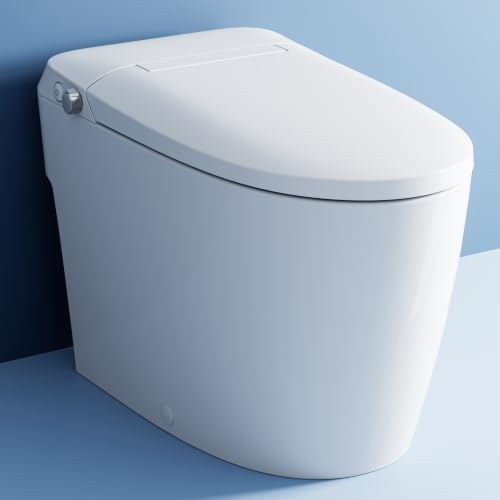
HOROW T30 Tankless Bidet Toilet — Best Tankless Power
The T30 generates its power without a tank or a vessel: a tankless one-piece design whose flush posts the maximum MaP 1000g score, fed directly by line supply. It suits modern bathrooms with healthy water pressure, design-led renovations that want the tank gone, and buyers who like the non-electric bidet’s wash function without smart-toilet infrastructure. Its qualification is printed on your plumbing: line pressure is its fuel.
Strengths
- Certified maximum MaP power in the sleekest form factor here
- No tank, no vessel — fewer stored-water components to service
- Non-electric bidet adds wash function with zero power draw
Trade-offs
- Depends on adequate household water pressure — measure before ordering
- No heated or powered features; the bidet is ambient-temperature
- Newer format with a thinner installer experience base
Key specs
- Flush: MaP 1000g powerful flush
- Format: one-piece tankless toilet
- Function: non-electric bidet
- Rough-in: 12 inch
Tankless power is an efficiency of architecture: instead of storing water or pressure, the T30 meters line supply through a precision flush engine, and its maximum MaP certificate proves the arrangement loses nothing in translation. In a strong-pressure home, the result is flagship clearance from the guide’s most minimal silhouette.
Treat the pressure check as part of the purchase ritual — a gauge on an outdoor spigot, compared against the maker’s requirement on the listing. Pass it, and the T30 delivers power with the fewest mechanical intermediaries of any pick here. Fail it, and the tank models above are your honest route.
Ownership, in practice, is where this pick earns or loses its badge over time. Its defining specification — MaP 1000g, tankless, non-electric bidet — is not a showroom detail; it shapes the daily pattern of use, the cleaning routine and the parts conversation years from now. Buyers who match that specification to their household, their drain lines and their maintenance appetite tend to rate purchases like this highly for a decade. Buyers who buy the badge and ignore the specification tend to blame the toilet for a mismatch that was visible in the listing all along. Read the configuration once more before ordering, and this pick will behave exactly as this review describes.
Best for: strong-pressure homes wanting certified power in a tankless design / Not suited for: low-pressure homes, or buyers wanting heated smart features
Check the current price on Amazon

EPLO E18MAX Smart Toilet — Best Smart Power Flush
Smart toilets were the power category’s weak students — until models like the E18MAX posted a 1000G MaP flush alongside the full automation suite: auto open and close, foam shield, heated seat, moving dryer, built-in tank and auto flush at ADA comfort height. It suits a primary bathroom that wants the heated, hands-free experience and refuses the historical compromise on clearance. The qualification is electrical: this power needs a GFCI outlet as surely as it needs a flange.
Strengths
- 1000G MaP rating removes the smart category’s traditional flush weakness
- Foam shield plus auto-everything delivers the most managed visit in this guide
- ADA comfort height suits the primary bathroom’s widest user range
Trade-offs
- Requires a GFCI outlet and a powered installation
- The most complex system here — the longest eventual service list
- Emerging brand support network versus TOTO and Kohler depth
Key specs
- Flush: 1000G MaP flush
- Height: ADA comfort height
- Features from listing: auto open/close, foam shield, men’s auto urinal flush, moving dryer, built-in tank, auto flush
- Seat: heated seat
The E18MAX’s argument is that power and intelligence have stopped being alternatives. Its built-in tank and flush engine post the maximum standardized score, while the foam shield manages splash and odor, the seat heats, and the lid and flush automate the contact points. For a household that shares one primary bathroom intensively, that is power expressed as total management, not just force.
Buy it as the flagship it is: register it, keep its documentation, and confirm support channels on the listing. Households that want the smart life without the old flush apology finally have their pick — this is it.
Ownership, in practice, is where this pick earns or loses its badge over time. Its defining specification — 1000G MaP, smart, heated seat, foam shield, ADA height — is not a showroom detail; it shapes the daily pattern of use, the cleaning routine and the parts conversation years from now. Buyers who match that specification to their household, their drain lines and their maintenance appetite tend to rate purchases like this highly for a decade. Buyers who buy the badge and ignore the specification tend to blame the toilet for a mismatch that was visible in the listing all along. Read the configuration once more before ordering, and this pick will behave exactly as this review describes.
Best for: primary bathrooms wanting smart automation without surrendering certified power / Not suited for: simplicity-first owners or bathrooms with no outlet path
Check the current price on Amazon
Comparison Table
| Pick | Badge | Key spec | Best for |
|---|---|---|---|
| Los Flexi Pressure Assisted Two-Piece Toilet | Best Overall Power Flush | Pressure assist, 1.0 GPF, 18.8in tall, ADA elongated | chronic clogs, older drain lines, and tall users — the complete power answer |
| Kohler Wellworth Pressure Lite Toilet | Best Serviceable Power | Pressure Lite assist, 1.1 GPF, elongated, less seat | rentals, multi-bath homes and long-hold owners who need power plus parts support |
| TOTO Drake Two-Piece Toilet, 1.6 GPF | Best Gravity Power, Full Volume | 1.6 GPF TORNADO FLUSH, CEFIONTECT, SoftClose seat | households prioritizing absolute gravity-flush certainty over water economy |
| TOTO Drake Two-Piece Toilet, 1.28 GPF | Best Balanced Power | 1.28 GPF TORNADO FLUSH, CEFIONTECT, SoftClose seat | most homes wanting proven power at the standard efficient volume |
| HOROW T30 Tankless Bidet Toilet | Best Tankless Power | MaP 1000g, tankless, non-electric bidet | strong-pressure homes wanting certified power in a tankless design |
| EPLO E18MAX Smart Toilet | Best Smart Power Flush | 1000G MaP, smart, heated seat, foam shield, ADA height | primary bathrooms wanting smart automation without surrendering certified power |
Read the table as a map, not a ranking: the badges mark the job each pick does best, and the key spec is the verified figure from its listing that supports the badge. Where two picks share a headline figure, the reviews explain the difference that the table cannot hold.
How to Choose the Best High Power Flush Toilets
Choose your power source before comparing models. Pressure assist stores your water line’s energy in a vessel and releases the most forceful, far-carrying flush in residential plumbing — the correct medicine for chronic clogs and old, flat or long drain runs. Engineered gravity — TOTO’s TORNADO systems and the maximum-MaP designs here — converts water into velocity and bowl coverage, runs quieter, services with universal parts, and suffices for the large majority of homes whose drains are healthy.
Then interrogate your plumbing honestly. Pressure assist needs adequate line pressure and gives you noise in exchange for force. Tankless power needs pressure too, and rewards it with minimalism. Ultra-efficient power is real — the Los Flexi posts its force at 1.0 GPF — while the full-volume Drake in this guide spends 1.6 GPF openly for certainty. Your water pressure, drain condition and water price pick the school; the reviews pick within it.
Finally, verify the credential behind any power claim: a pressure-assist system you can identify, or a published MaP score. Power that cannot be documented should be priced as ordinary, because in the month after installation, it will be.
Pressure Assist vs Engineered Gravity: The Physics of Power
A gravity flush spends potential energy: water raised into a tank falls through a flush valve, and the bowl and trapway shape that fall into a siphon. Great gravity design — large valves, glazed trapways, tornado rim delivery — converts more of the fall into useful velocity, which is how the Drake and the certified models here achieve their results quietly, with parts any plumber stocks.
Pressure assist stores a different energy: line pressure compresses air in a sealed vessel as it fills, and at the flush that air drives water into the bowl as a jet. The discharge is shorter, sharper and more forceful, scouring the bowl and — critically — pushing the waste slug further into the drain line before it slows. Homes whose clogs recur mid-line, not at the bowl, are describing a carry problem, and carry is pressure assist’s home ground.
The costs are symmetric. Pressure brings noise and a vessel with a service life; gravity brings gentleness and a dependence on volume or velocity engineering. Neither is the ‘real’ power — they are two physics answers to two different houses, and this guide’s structure exists to keep you from buying the wrong one confidently.
Drain-Line Carry: The Hidden Half of Flush Power
A flush succeeds in two acts: clearing the bowl, then carrying waste through the drain line to the main. Bowl clearance is what MaP measures and what showrooms demonstrate. Carry depends on the flush’s exit energy meeting your line’s slope, smoothness and length — which is why the same toilet can be a hero in one house and a disappointment in another.
Older homes concentrate the risk: cast iron lines roughen with age, slopes settle, and long horizontal runs ask more of every flush. In those houses, pressure assist’s energetic discharge and, secondarily, higher-volume gravity flushes earn their keep, while ultra-low volumes deserve skepticism until the line is proven. A camera inspection is cheaper than a wrong flagship.
Newer homes invert the advice: smooth plastic lines at correct slope carry efficiently, and engineered 1.28 GPF power — the Drake’s home ground — performs exactly as certified. Match the machine to the infrastructure you actually own, and power stops being a gamble in either direction.
Power Flush Toilets in Older Homes: A Field Guide
Older housing stock is where power flush earns its premium, and also where it is most often mis-specified. Cast iron drain lines roughen over decades, joints settle, and slopes that began marginal become honest problems. The symptoms — one toilet that clogs at the line rather than the bowl, flushes that clear the bowl and return an hour later — describe a carry failure, and carry is precisely what pressure assist’s energetic discharge improves.
The specification order for an old home is diagnostic before decorative. Establish that the line is obstructed by age rather than by a fixable blockage or root intrusion; a camera inspection divides those worlds for less than a flagship toilet costs. Then choose the school: pressure assist for compromised-but-serviceable lines, fuller-volume gravity where the line is sound but the household’s loads are not.
What older homes should not do is chase ultra-low volumes on faith. A 0.8 GPF flush into a rough, flat line is a clog scheduled at leisure. The power picks in this guide exist to match force to infrastructure — use the match, and an old house’s plumbing stops being its apology.
The Sound of Power: Managing Flush Noise
Every power technology has an acoustic signature, and pretending otherwise sets households up for a preventable disappointment. Pressure assist is the loudest: a brief, firm discharge that announces itself through a door. Tornado gravity systems run livelier than a conventional swirl. Tankless designs carry the sound of line pressure at work. Standard gravity dual-flush remains the quiet benchmark.
Context decides whether any of this matters. In a hall bathroom serving a busy house, flush noise is beneath notice. In an en-suite adjoining a light sleeper, it is a nightly event with a cumulative cost no MaP score repays. Honest specification means picturing the 2 a.m. use case before admiring the daytime one — the reviews in this guide flag noise wherever the mechanism makes it predictable.
Mitigations exist at the margins: solid-core bathroom doors, soft-close seats that end the other midnight noise, and scheduling the loudest fixture away from the quietest room when a house has several bathrooms. But the primary mitigation is selection. Buy the quiet school for the quiet room and the powerful school for the problem line, and let each toilet be right where it stands.
Maintaining Power: Vessels, Valves, and Valves Again
Power is a maintained condition in both schools. Pressure-assist systems center on the vessel and its cartridge: seals age, and a vessel that hisses, cycles on its own or loses its punch is announcing a service interval, not a death. The owners who fare best treat the first change in flush character as a prompt to consult the manual — pressure systems telegraph their needs early and reward those who listen.
Gravity power maintains differently. TORNADO and siphonic designs depend on clean rim passages, a flapper or seal that holds the tank’s full energy until the flush, and a fill valve keeping the waterline at its engineered mark. Mineral scale is the slow enemy in hard-water homes; a softener or periodic descaling defends the velocity the design was built around.
Both schools share one rule: change nothing casually. Universal replacement parts are not always universal in performance, and a generic flapper with the wrong buoyancy can quietly detune a certified flush. Buy the maker’s specified wear parts, keep the model code in your phone, and a power toilet will still be powerful when the bathroom around it is renovated again.
Pre-Purchase Checklist for a Power Flush Toilet
Power purchases fail on unmeasured houses, so measure first. One: gauge your water pressure, static and under demand, and keep the numbers with the listing requirements for the model you want. Two: assess the drain line’s age and behavior — recurring mid-line clogs argue pressure assist; healthy modern lines open the whole guide. Three: place the noise honestly: walk to the nearest bedroom, close the bathroom door, and decide whether a pressure flush belongs behind it.
Four: verify the credential on the exact listing configuration — an identifiable pressure-assist system or a published MaP score — because power variants hide inside ordinary model families. Five: basket the complete installation: seal, bolts, supply line, a duty seat for less-seat models, and for smart picks, the electrician’s visit booked before delivery. Six: agree the service story now — whose parts, which manual, what the first sign of trouble looks like — while the purchase is still a choice rather than a repair.
A power toilet chosen against measurements is infrastructure. Chosen against adjectives, it is a louder or quieter version of the problem you already own. This checklist is the difference, and it takes less time than one clog.
How to Check Your Home’s Water Pressure Before Buying a Power Flush Toilet
Step 1: Get a gauge. A simple hose-bib pressure gauge from any hardware store screws onto an outdoor spigot or a washing-machine tap. This five-minute measurement governs pressure-assist and tankless decisions, so do not guess it.
Step 2: Measure static pressure. With no water running anywhere in the house, open the spigot fully and record the reading. Typical homes sit in a broad middle band; very low readings warn against pressure-dependent designs, and very high readings suggest a regulator conversation with a plumber.
Step 3: Measure working pressure. Flush a toilet and open a tap while watching the gauge. The drop under demand shows how your supply behaves in real use — the condition a tankless flush actually experiences.
Step 4: Compare with the listing requirement. Check the figure the maker states for the model you want, on its listing, against your working reading — not the static one. Buy inside the requirement with margin, not at its edge.
Step 5: Decide the school. Strong pressure opens every door in this guide. Marginal pressure points you to the tank-fed gravity power picks. Weak pressure is a plumbing project first and a toilet purchase second — fix the supply, then enjoy the full menu.
Common Buying Mistakes
- Buying pressure assist for a quiet house. Vessel flushes are unmistakably loud. If the bathroom adjoins a bedroom and your drains are healthy, certified gravity power is the correct school.
- Ignoring your drain line’s age. Ultra-low and standard flushes assume the line can carry. Old, rough or flat lines argue for pressure assist or fuller volumes — diagnose before you specify.
- Believing ‘power’ without a credential. No identifiable pressure system and no published MaP score means no verified power. This guide admitted nothing else.
- Skipping the pressure measurement for tankless. Tankless power runs on your line pressure directly. A gauge reading takes five minutes; a return takes weeks.
- Forgetting the vessel’s service life. Pressure-assist vessels and cartridges are wear components. Buy the platform — like Kohler’s — whose parts you can actually obtain in year eight.
Final Recommendation
The Los Flexi Pressure Assisted is this guide’s pinnacle: the strongest flush school at 1.0 GPF in the tallest, most accommodating body. The Kohler Wellworth Pressure Lite delivers the same physics with the deepest service network in plumbing. For gravity power, the TOTO Drake at 1.28 GPF is the balanced default and its 1.6 GPF sibling the maximum-certainty variant, while the HOROW T30 takes certified power tankless and the EPLO E18MAX brings it, at last, to a fully automated smart toilet.
Measure your pressure, judge your drains, choose your school, and verify the credential. Power bought that way is not a hope — it is a specification your household will feel at every flush.
Start your shortlist with Los Flexi Pressure Assisted Two-Piece Toilet, Kohler Wellworth Pressure Lite Toilet, TOTO Drake Two-Piece Toilet, 1.6 GPF — then confirm the configuration on the listing before you order.
Related guides in this series: Best High Flush Toilets Best Heavy Duty Toilets Best High Capacity Toilets Best Toilets Best Pressure Assist Toilets Best Toilets For Clogging
Frequently Asked Questions
What is the most powerful type of toilet flush?
Pressure assist delivers the most forceful discharge in residential plumbing by releasing line pressure stored in a vessel, and it carries waste furthest into the drain line. The best engineered gravity toilets — maximum MaP scores, tornado delivery — clear bowls just as decisively in healthy plumbing, more quietly and with simpler parts.
Are pressure-assist toilets worth it?
For chronic clogs, older homes and difficult drain runs, yes — they solve a physics problem gravity cannot always reach. For healthy modern plumbing, their noise and vessel maintenance buy little over a certified gravity power toilet. The house decides, not the brochure.
Do powerful flush toilets use more water?
Not inherently. The leading pressure pick here flushes at 1.0 GPF and the balanced Drake at 1.28 GPF. One pick — the full-volume Drake — spends 1.6 GPF deliberately for maximum gravity energy, and its review says so openly. Power is about energy conversion, not just volume.
How loud is a pressure-assist flush?
Noticeably louder and sharper than a gravity flush — a brief, firm whoosh rather than a swirl. In a hall bathroom it is a non-issue; adjoining a light sleeper’s bedroom, it is a genuine selection factor, and this guide flags it in every pressure review.
Can a smart toilet have a powerful flush?
Yes, finally. The EPLO E18MAX in this guide posts a 1000G MaP rating alongside its automation suite. Historically smart toilets flushed gently, which is why the credential matters: buy the published score, not the category’s new confidence.
What water pressure does a pressure-assist or tankless toilet need?
Requirements vary by model and are stated on the listing. Measure your home’s working pressure with an inexpensive hose-bib gauge — under demand, not just static — and buy with margin inside the maker’s stated range. Very low pressure is a supply problem to fix before any power purchase.
Will a power flush toilet raise my water bill?
Only if you choose the one configuration that spends volume for power — the full-volume Drake in this guide — and even then only in proportion to your flush count. The pressure-assist leaders flush at 1.0 and 1.1 GPF, below the standard efficiency ceiling, because their power comes from stored pressure rather than water quantity. The gravity power picks at 1.28 GPF sit exactly at the modern standard. In most households a power toilet that ends double-flushing lowers the bill it was accused of raising, which is the category’s favorite irony and, on the evidence here, a true one.

