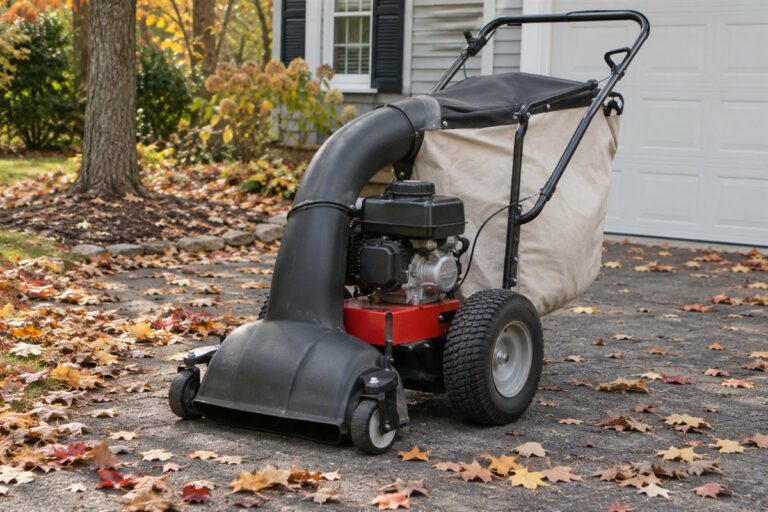
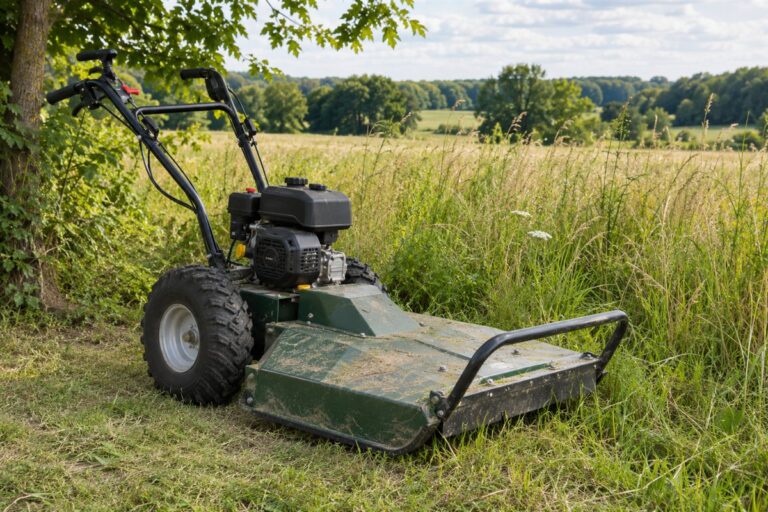
A gas leaf vacuum pulls leaves into a bag and shreds them on the way, which cuts down on trips to the curb. We have not used these products ourselves, so this page does not rank anything by personal experience. It sets out the features worth comparing so you can read a listing with a clear checklist.
Most models switch between blowing and vacuum modes, and the details that matter are the shredding claim, the bag, the impeller and the weight you carry. Read the maker’s manual for fuel and protective gear advice, and use this guide as a comparison aid rather than a promise about any single model.
As an Amazon Associate we earn from qualifying purchases. Links on this site are affiliate links, and they do not change the information we give.
In this guide
Quick Picks
| Pick | Product | Best For |
|---|---|---|
| Best all-round 3-in-1 | Husqvarna 125BVx Gas Blower Vacuum | Blowing, vacuuming and 16:1 mulching |
| Best for fine shredding | ECHO ES-250 Shred ‘N’ Vac | Metal 4-blade shredder, 2-bushel bag |
| Best for easy starting | Troy-Bilt TB2BV EC Gas Blower/Vac | SpringAssist and JumpStart capable |
| Best air speed | Remington RM2BV Ambush Gas Blower Vacuum | Up to 205 MPH listed air speed |
| Best for a big bag | PROYAMA 26cc 3-in-1 Gas Blower Vacuum Mulcher | 10 gallon collection bag |
Our Picks
1. Husqvarna 125BVx Gas Blower Vacuum — Best all-round 3-in-1
The 125BVx is the reference point for this category: a 28 cc, 1.1 hp 2-cycle handheld that blows, vacuums and mulches with the kit included in the box. Husqvarna lists up to 470 CFM of air volume, 425 CFM at the round nozzle, and air speeds up to 170 MPH with the flat nozzle. In vacuum mode the mulching blades reduce debris volume by up to 16 to 1, one of the higher ratios the mulch-ratio section tells you to compare, and the shredded leaves collect in the included bag. At 9.6 pounds it is light for a gas unit, and a harness is included for vacuum work. Starting is helped by an air purge and an auto-return stop switch, and cruise control holds a set speed. It runs on a 50:1 gas and oil mix, and the maker recommends hearing protection, as with any gas blower.
View Husqvarna 125BVx Gas Blower Vacuum on Amazon

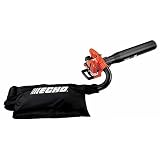
2. ECHO ES-250 Shred ‘N’ Vac — Best for fine shredding
The ES-250 is built around the impeller question in the guide. ECHO’s patented 4-blade shredding mechanism is the part that does the work, and the maker rates the reduction at 12 to 1, turning leaves and light debris into a fine mulch that packs down well. Power comes from a 25.4 cc professional-grade 2-stroke engine, with performance listed at 391 CFM and 165 MPH. The collection bag holds 2 bushels, larger than the 1 to 1.5 bushel bags on several rivals here, and it empties through a rear zipper, which addresses the bag-design point in the guide. A 35 inch intake tube with a positive locking collar reduces stooping and keeps the tube secure, and all pipes are included to convert between shredder and blower. The listing gives a noise level of 70 dB(A), and ECHO includes a curved blower tube for rotational control when blowing.

3. Troy-Bilt TB2BV EC Gas Blower/Vac — Best for easy starting
The TB2BV EC is the lighter-duty option in this list, aimed at smaller yards. Its 27 cc 2-cycle engine produces up to 450 CFM and 150 MPH, and the manual lists a mulching ratio up to 10 to 1 with a 1 bushel vacuum bag, so expect to empty it more often than the ECHO above on big cleanups. Starting is its strength: SpringAssist technology reduces the pull effort, and the unit is also capable of using Troy-Bilt’s JumpStart electric starter, sold separately, if pull starting is a barrier. At about 12 pounds dry it is manageable handheld, and the variable speed lets you soften the airflow around beds and gravel. The vacuum kit is included in the box. Fuel is a standard 2-cycle mix, and the maker limits vacuum use to light, dry debris, which matches the guide’s advice on wet leaves.

4. Remington RM2BV Ambush Gas Blower Vacuum — Best air speed in this group
The Ambush pairs a 27 cc 2-cycle engine with listed performance of up to 450 CFM and 205 MPH, the highest air speed figure in this selection, which helps move leaves stuck to wet grass and pavement edges. In vacuum mode it shreds at a 10 to 1 debris reduction ratio into the included collection bag. Remington fits QuickStart technology to reduce starting effort, a variable throttle with cruise control so you are not holding the trigger at one fixed squeeze, and an anti-vibration handle, a comfort point that matters because the guide flags carried weight and vibration over a full cleanup. It weighs about 12.6 pounds. Conversion between blower and vacuum is a tube swap, removing the blower tube and fitting the intake tube and bag. MTD backs it with a 2-year limited warranty.
View Remington RM2BV Ambush Gas Blower Vacuum on Amazon
5. PROYAMA 26cc 3-in-1 Gas Blower Vacuum Mulcher — Best for a big collection bag
The PROYAMA’s headline figure is bag size: a 10 gallon collection bag, mounted on the vacuum tube, which means fewer emptying stops than the 1 to 2 bushel bags above on long runs. Its 26 cc 2-cycle engine is rated at 1 HP, with listed performance of 412 CFM and 200 MPH, and the maker claims a 16 to 1 mulching ratio, matching the Husqvarna’s figure, helped by a metal impeller, the construction the guide favors for wear. Variable speed control lets you match airflow to the surface, and the kit converts between blower, vacuum and mulcher roles. As a newer, value-positioned brand its dealer network is thinner than Husqvarna’s or ECHO’s, so weigh parts availability in your area, and budget for hearing protection, since gas handhelds of this class are loud in vacuum mode.
View PROYAMA 26cc 3-in-1 Gas Blower Vacuum Mulcher on Amazon
What to Look For
| Factor | Why it matters | What to check |
|---|---|---|
| Mulch ratio | Shows how much the maker says leaf volume is reduced | The stated ratio and the conditions behind it, since dry leaves behave differently from wet |
| Impeller | Does the shredding and takes the wear | Metal or plastic construction and the maker’s notes on replacing it |
| Bag | Decides how often you stop to empty | Listed bag capacity, zipper design and how easily it detaches |
| Style | Sets how the unit is carried or moved | Handheld or wheeled, and how each suits your yard size |
| Tube and intake | Affects how easily leaves feed in and clogs clear | Intake diameter, tube length and how quickly it detaches for clearing |
| Weight and engine | Determines comfort and upkeep | Listed weight with the bag attached, engine type and fuel mix needs |
Setup and Care Tips
- Follow the manual for fuel mix, and store fuel in a clean container made for it.
- Wear eye and ear protection, and shut the engine off before clearing a clog.
- Empty the bag often so airflow stays strong and the unit stays easier to carry.
- Check the impeller for wear or damage at the intervals the maker lists.
- Let the engine cool, clean the housing and store the unit dry for the off season.
Mistakes to Avoid
- Trusting a mulch ratio figure without checking the conditions behind it.
- Vacuuming sticks, stones or wet leaves in bulk when the maker advises against it.
- Choosing a handheld model for a large property where a wheeled unit would carry the load.
- Letting the bag fill completely, which reduces suction.
- Skipping filter and spark plug checks listed in the manual.
Matching a Leaf Vacuum to Your Yard Size and Leaf Type
Before comparing engines, picture the job. A small town lot with a few maples is a very different task from a wooded acre where leaves fall for weeks. Compact handheld units suit tidy yards, patios and flower beds. Wheeled or backpack-style machines make more sense when you collect large volumes and want to avoid carrying weight on your shoulder for long periods.
Leaf type matters too. Dry, light leaves lift easily, while wet, matted leaves tend to clump and can clog the intake. Oak and sycamore leaves are tougher and bulkier than birch. Twigs, acorns and small debris add wear to the impeller. Check whether the listing says the machine is meant for light residential leaf collection or for heavier outdoor chores.
Engine Basics: Two-Stroke, Four-Stroke and Displacement
Most handheld gas blower vacuums use a small two-stroke engine, which runs on a fuel and oil mix. Some larger machines use four-stroke engines, which hold oil separately and run on plain fuel. Displacement, shown in cubic centimeters, gives a rough sense of engine size, although it does not tell you how well the machine moves air on its own.
Always follow the maker’s manual for fuel type, oil ratio and mixing steps. Using the wrong ratio can damage the engine, and mixing should be done in an approved container outdoors, away from ignition sources. Fuel handling carries real risks, so follow the maker’s instructions and local guidance every time.
Air Speed, Air Volume and Why Both Matter
Listings often quote air speed in miles per hour and air volume in cubic feet per minute. Speed helps lift stuck debris off the ground, while volume moves a large pile of leaves along. A machine with high speed but modest volume can feel strong on a small patch yet slow across a wide lawn. A balance of the two is usually more helpful than one big headline number.
Treat these figures as maker claims and note how they are measured in the product details. When two machines look alike, favor the one that explains its specifications clearly.
Mulch Ratio and Bag Capacity
The shredding action reduces leaves into smaller pieces so the bag holds more. Makers often quote a reduction ratio, such as a number of bags of leaves shrinking into one. The real result depends on leaf dryness, leaf type and how fast you feed the machine. A larger bag means fewer pauses to empty it, but a full large bag also weighs more to carry, so look at bag size alongside the machine’s weight.
Questions About the Bag
- Does it zip open at the bottom for easy emptying?
- Is the strap padded and adjustable?
- Does the fabric look tough enough for twigs and damp leaves?
- Can you buy a replacement bag if one tears?
Weight, Balance and Comfort
Gas machines are heavier than they look in photos, particularly with a loaded bag and a full tank. A shoulder strap or harness spreads the load, and a good handle position helps keep your wrist neutral. Read the listed weight and check whether it includes the bag and the tubes. If you have back or shoulder concerns, speak with a professional about what is sensible for you, and consider a wheeled design.
Vibration and noise also affect comfort. Ear protection and eye protection are standard practice with this kind of equipment, and the manual will describe the protective gear it advises.
Switching Between Blow and Vacuum Modes
Modes are changed by swapping tubes or moving a lever. A tool-free change is quicker and encourages you to use each mode as needed. Some designs need you to remove several parts and refit a nozzle, which is awkward in the middle of a job. Check the listing for how the conversion works and whether the intake tube clips on firmly.
Comparing Features at a Glance
| Feature | Helps when | Check |
|---|---|---|
| Variable speed control | Working near beds and fragile plants | Dial or trigger style |
| Cruise or lock setting | Long blowing sessions | How easily it releases |
| Wheeled frame | Large or sloped yards | Wheel size and storage space |
| Metal impeller | Mulching twigs and tougher leaves | Replacement availability |
| Easier ignition features | Cold mornings or frequent use | Primer bulb, choke type |
A Sensible Order of Work in the Yard
How you tackle the yard changes how long it takes. Many people use the blower mode first to bring scattered leaves into rows or piles, working with the wind rather than against it, and then switch to vacuum mode to gather and shred the piles. Doing it the other way around, vacuuming spread-out leaves one patch at a time, wastes effort and fills the bag unevenly.
- Walk the area and pick up sticks, stones, toys and other items the machine should not swallow.
- Clear gutters and beds by hand where needed so debris does not fall again.
- Blow leaves toward an open spot, keeping the nozzle low and moving in sweeping passes.
- Switch modes following the manual, with the engine stopped as the maker directs.
- Vacuum the piles with slow, steady passes and empty the bag before it gets too heavy.
Shredded leaves can often be spread as mulch around trees and shrubs or added to a compost heap, which saves hauling them away. Check local guidance on yard waste if you plan to leave bags at the curb.
What to Look For in the Manual Before You Buy
A downloadable manual is one of the most useful pieces of information on a product page. It tells you about fuel mixes, maintenance schedules, spare parts and warning labels. If you cannot find one, ask the seller. A machine with a thin or vague manual can be harder to keep running well, especially when it comes to carburetor settings and air filter replacement.
Dealing With Wet Leaves
Wet leaves are the hardest case for any leaf vacuum. They stick together, weigh more and pack the shredding chamber, which can lead to repeated clogs. If you must work after rain, feed smaller amounts and allow the machine to clear itself between passes. Many owners simply wait for a drier day, since forcing damp material through the intake adds wear. Check the maker’s guidance on wet material before you try.
Fuel Storage and Seasonal Care
Old fuel is a leading reason small engines refuse to run in the spring. Use only fresh fuel mixed as the maker specifies, store it in approved containers, and keep it away from heat, flame and living spaces. At the end of the season, follow the manual on whether to run the tank dry or use a fuel stabilizer. Clean the air filter, check the spark plug and wipe down the housing before putting the machine away.
Do not store a machine with a hot engine, and do not store it near a water heater or a furnace pilot. If you are unsure about servicing, a local small engine technician can handle it.
Noise Rules and Neighborly Habits
Many towns restrict leaf blower use by hour, season or noise level. Check local rules before you buy and before you operate the machine. Working at reasonable hours, avoiding blowing debris onto neighbors’ property and keeping the machine well maintained are simple ways to avoid disputes.
Common Problems and First Checks
- Hard to turn over: check that the fuel is fresh and that the switch is on, then consult the manual.
- Loses power: inspect the air filter and look for a blocked intake.
- Bag fills too quickly: feed leaves more slowly and empty before it overloads.
- Clogs: switch off the engine and wait for all parts to stop before clearing the intake, as the manual advises.
- Excess smoke: recheck the oil mix and the filter.
Who Should Skip a Gas Model
Owners of very small yards, those who dislike engine noise and anyone who cannot handle fuel storage may be happier with a different power type. Residents of areas with strict noise limits should look at rules first. Someone who only clears a patio twice a season might prefer a lighter tool. If you need frequent long sessions on a large property, a gas machine may remain a solid fit.
Short Glossary
- Impeller: the spinning part that draws in and shreds leaves.
- Displacement: engine size, measured in cubic centimeters.
- Mulch ratio: how much the volume of leaves is reduced.
- Primer bulb: a small bulb pressed to ease engine ignition.
- Choke: a control that eases cold engine ignition.
Pre-Purchase Checklist
- Note the size of your yard and the leaf types.
- Decide on a handheld or wheeled design.
- Read the fuel instructions and confirm you can store fuel safely.
- Check weight, bag size and mode conversion steps.
- Look up local noise rules.
Comparing Two Models Side by Side
When two machines look alike on paper, a simple grid keeps you honest. Copy the figures from each listing into the same rows, and leave a cell blank when the page does not say. A blank is information too, because a maker that hides a detail may be telling you it is not a strength.
| Feature | Model A | Model B | Why it matters |
|---|---|---|---|
| Engine size | Note it | Note it | Affects power and fuel use |
| Dry weight | Note it | Note it | Decides how tired your arms feel |
| Bag volume | Note it | Note it | Sets how often you empty it |
| Mulch ratio | Note it | Note it | Shows how much the pile shrinks |
| Warranty length | Note it | Note it | Tells you how the maker stands behind it |
After filling the grid, circle the one row that matters most for your yard. For a small lot that is often weight. For a large lot with many trees it is usually bag volume.
Thinking About Storage and Transport
A gas machine takes up real room, and people often forget this until it arrives. Measure the shelf or corner of the garage where it will live, and compare that with the length of the tube and the bag when attached. Many units come apart for storage, but the parts still need a dry spot.
- Check whether the bag folds flat or stays bulky.
- Look at whether the tubes detach without tools.
- Plan a level surface so a fuel tank is never tipped on its side.
- If you carry it in a vehicle, confirm the maker allows moving it with fuel inside, and follow their wording.
When the Maker’s Manual Should Win
Buying guides, including this one, can only describe general patterns. Fuel mixing ratios, oil type, spark plug gaps, and the correct way to change from blowing to vacuuming all differ by model. If anything online disagrees with the manual that ships with your machine, follow the manual.
The same goes for protective gear and operating limits. Read the safety pages before the first use, and keep the booklet where you store the machine. If a part looks worn or an engine behaves oddly, a qualified small engine repair shop is a better source of help than a forum thread.
Judging Whether a Listing Is Clear Enough
A good product page answers your questions without making you hunt. Look for the engine size, the fuel type and mix, the dry weight, the bag capacity and the length of the warranty. If several of these are missing, treat that as a reason to compare more carefully, or to look at the maker’s own site for a full specification sheet.
Pay attention to how the page words its claims. Phrases about power or speed are only useful when a number comes with them and a unit. When in doubt, write the numbers next to each other in your grid and note which ones are missing.
Choosing a gas leaf vacuum in More Depth
The shortlists and tables earlier in this guide narrow the field, but the final choice between similar gas leaf vacuums usually comes down to a handful of practical details that listings present unevenly. The points below dig into those details one at a time. None of them requires specialist knowledge; they require an honest look at your space, your routine and the people who will share the purchase with you. Work through them in order and you will usually find that one of the picks above separates itself from the rest for reasons that have nothing to do with marketing.
Three Jobs in One Machine: Judge All Three
A blower-vacuum must blow well, vacuum without clogging every minute, and shred effectively. Machines differ in which job they favour. If your real need is mostly blowing with occasional vacuuming of a patio, weight the blowing; if you collect and mulch leaves for beds and compost, the vacuum and shredder are the product. Read each pick’s review with your dominant job in mind. Treat this as a deciding factor only when it matches how you will actually use the purchase week after week, not just on the first day. A feature that solves a problem you genuinely have is worth prioritising, while the same feature is wasted money and extra bulk when your routine never calls on it. Compare the picks above on this point before you look at anything else on the listing.
Mulch Ratio and What It Means in the Bag
The mulch ratio describes how much the shredder reduces leaf volume, which translates directly into how often you empty the bag and how much leaf mould or mulch you haul away. Metal shredding components generally outlast and out-cut plastic ones on twiggy material. Remember the ratio is measured on dry leaves; wet material shreds worse and clogs more, whatever the badge says. It helps to decide your position on this before you start comparing models, because listings are written to make every version sound essential. Write down what your space, your routine and your household actually demand, then check each pick against that short list. Anything that fails a genuine requirement can be crossed off early, which makes the remaining choice much simpler.
Bag Capacity and Emptying Manners
The bag decides your working rhythm. A larger bag means fewer stops and more weight on your shoulder as it fills; a smaller one keeps loads manageable but interrupts constantly. Check how the bag attaches, empties and cleans, because a bag that is a fight to empty will make you avoid the vacuum mode entirely. Zips and openings clog with dust over time, so access matters. Shoppers often notice this detail only after the first week of use, when returning or exchanging is at its most inconvenient. Reading the product description and the manual-style information on the listing with this one point in mind takes a few minutes and prevents the most common source of disappointment. When two picks look equal elsewhere, let this be the tie-breaker.
Conversion Between Modes
Switching from blower to vacuum involves tubes, impeller covers and the bag, and designs vary from tool-free and quick to a small workshop session. If you plan to switch often within one session, conversion ease is a headline feature. If you dedicate whole sessions to one mode, it matters less. Be honest about your pattern before paying for, or forgiving, complexity. There is usually a trade-off hiding here, and the honest version of it is that you cannot maximise everything at once. Decide which side of the trade-off suits your home and accept the compromise on the other side deliberately rather than discovering it later. The picks in this guide differ from each other on exactly this kind of point, which is what makes the comparison table worth a second look.
Weight, Balance and the Shoulder Strap
In vacuum mode you carry the machine plus a growing weight of shredded leaves, often for the whole session. Balance, handle position and a decent shoulder strap decide whether that is exercise or punishment. Smaller users and anyone with shoulder issues should weight this heavily, because the vacuum that hurts will be left in the shed while leaves win. A practical way to judge this is to picture the busiest, least convenient day on which you will still want the product to work well. If it copes with that day, it will cope with ordinary days easily. If it only works when everything is calm, tidy and unhurried, it will frustrate you in real life no matter how good it looks in photographs.
A gas leaf vacuum in Real Life: Situations Worth Planning For
Specifications and feature lists only tell half the story. The other half is how a gas leaf vacuum fits the situations your household actually creates, including the awkward ones that never appear in product photographs. These are the scenarios readers most often say they wish they had thought about before ordering.
Leaves on Patios, Decks and Paths
Hard surfaces are the vacuum’s home ground: leaves collect cleanly, shredding works well, and the bag fills with satisfying mulch. This is the scenario the category was invented for. Work when leaves are dry for the best shredding and fewest clogs, and empty the bag into beds or the compost as you go. In this situation the differences between the picks stop being abstract and become easy to rank, because one or two features suddenly matter more than everything else on the list.
A Whole Lawn of Fallen Leaves
On grass, blowing into piles and then vacuuming the piles is usually faster than vacuuming the lawn directly, which is slow and hard on the machine. Some households will honestly be better served by a blower plus a mower with a bag for lawn leaves. The vacuum earns its place on the hard surfaces and the piles; plan your system around that truth. Planning for this case in advance usually costs nothing, but discovering the mismatch after purchase is what leads to returns, workarounds and money spent twice.
Mulch Production for Beds and Compost
If shredded leaves are a resource you actively want, the shredder quality and bag workflow become the purchase. Metal-bladed shredding and a bag that empties cleanly into the compost make the difference between a satisfying system and a dusty chore. Dry leaves shred best, so timing sessions after dry weather is part of the craft. If this sounds like your household, weight the buying criteria above toward durability and ease of everyday handling rather than toward the longest feature list.
Twigs, Acorns and Messy Debris
Real gardens drop more than leaves. Check what the machine tolerates: small twigs are normal fare, but stones, large acorns in quantity and wet clumps clog and can damage impellers. A quick rake or hand-clear of the worst debris before vacuuming protects the machine and speeds the job. No blower-vac is a street sweeper, and using it as one shortens its life. In this situation the differences between the picks stop being abstract and become easy to rank, because one or two features suddenly matter more than everything else on the list.
Getting Set Up and Using It Well, Step by Step
The order below follows the sequence most owners settle into after the first few uses. It avoids the two classic beginner errors: rushing the first setup, and only reading the instructions after something has already gone wrong.
Step 1: Choose the session’s main mode first. Decide whether today is a blowing day, a vacuuming day or both, and set the machine up once, properly, rather than converting repeatedly on impulse.
Step 2: Clear the area of hazards. Pick up stones, large sticks, wire and toys from the vacuuming area. What the tube swallows, the impeller meets, and it should meet only leaves and light debris.
Step 3: Start and warm the engine. Start on clear ground per the manual, check it runs cleanly in blower mode, then convert to vacuum if that is the plan, confirming the bag is seated and zipped.
Step 4: Vacuum in slow passes when dry. Move the tube slowly over dry leaves, letting the machine ingest at its own pace rather than ramming it into piles, which is how clogs are made.
Step 5: Manage the bag before it manages you. Empty at three-quarters full: suction falls, weight climbs and zips strain beyond that point. Shake dust from the bag outdoors, away from your face.
Step 6: Finish in blower mode for detail. A final blow clears corners and the area around the collection point, and leaves the machine’s tubes clear before storage.
Care, Cleaning and Long-Term Ownership
The impeller and shredder area need regular clearing: leaf dust and sap build a cement that unbalances the impeller and dulls shredding. With the machine off and the plug lead removed for safety, clear the housing as the manual directs, and check the shredding components for wear or damage, especially after any session involving twiggy debris or an ingested stone.
The collection bag is a wear item and a filter: shake it out after sessions, wash it occasionally as the maker allows, and let it dry fully before storage, since damp leaf dust mildews and rots fabric. Check zips and seams at season’s start. A bag that leaks dust over the operator is telling you its fabric is tired, and replacements are cheaper than the resentment of using it.
Fuel and storage follow the small-engine rules: fresh correctly mixed fuel, clean air filter, and an end-of-season routine that does not leave stale fuel in the carburettor. Store the machine with tubes attached or stored alongside, bag clean and dry, in a spot where the plastic tubes will not be crushed. A spring service of plug, filter and impeller inspection sets up the whole autumn.
How the Picks Compare With Each Other
Readers often ask for the picks to be set directly against one another rather than described one at a time. The comparison below uses only what this guide has already said about each model: its position in the Quick Picks table, the job it is listed as best for, and the strengths and limits covered in its review above. It is a way of double-checking a shortlist, not a new ranking.
Husqvarna 125BVx Gas Blower Vacuum appears in the Quick Picks table as the choice for blowing, vacuuming and 16:1 mulching. The three-in-one balance with strong mulching makes it the generalist choice for mixed blowing and collecting. If that description matches the job you described for yourself in the criteria sections above, it is the natural starting point; if it does not, the honest answer is that a neighbouring pick will serve you better even if this one caught your eye first. Re-read its full review above with your own situation in mind before deciding, because the limitation noted there matters more to some households than to others.
ECHO ES-250 Shred ‘N’ Vac appears in the Quick Picks table as the choice for metal 4-blade shredder, 2-bushel bag. The metal shredder is the differentiator, for gardeners whose leaf fall comes with twigs and who mulch seriously. If that description matches the job you described for yourself in the criteria sections above, it is the natural starting point; if it does not, the honest answer is that a neighbouring pick will serve you better even if this one caught your eye first. Re-read its full review above with your own situation in mind before deciding, because the limitation noted there matters more to some households than to others.
Troy-Bilt TB2BV EC Gas Blower/Vac appears in the Quick Picks table as the choice for springAssist and JumpStart capable. Starting assistance features mark it for users who value an easy pull over ultimate shredding hardware. If that description matches the job you described for yourself in the criteria sections above, it is the natural starting point; if it does not, the honest answer is that a neighbouring pick will serve you better even if this one caught your eye first. Re-read its full review above with your own situation in mind before deciding, because the limitation noted there matters more to some households than to others.
Remington RM2BV Ambush Gas Blower Vacuum appears in the Quick Picks table as the choice for up to 205 MPH listed air speed. Listed air speed is its headline, favouring buyers whose first job is blowing with vacuuming as the second act. If that description matches the job you described for yourself in the criteria sections above, it is the natural starting point; if it does not, the honest answer is that a neighbouring pick will serve you better even if this one caught your eye first. Re-read its full review above with your own situation in mind before deciding, because the limitation noted there matters more to some households than to others.
PROYAMA 26cc 3-in-1 Gas Blower Vacuum Mulcher appears in the Quick Picks table as the choice for 10 gallon collection bag. The large collection bag suits long vacuuming sessions where stopping to empty is the main annoyance. If that description matches the job you described for yourself in the criteria sections above, it is the natural starting point; if it does not, the honest answer is that a neighbouring pick will serve you better even if this one caught your eye first. Re-read its full review above with your own situation in mind before deciding, because the limitation noted there matters more to some households than to others.
Ownership Details Worth Settling Early
Build the autumn system around the machine rather than expecting the machine to be the system. Leaves are blown or raked to the hard surfaces, vacuumed and shredded there, and the mulch goes straight to beds or compost in the same session. Each stage uses the tool that does it best, and the vacuum’s strengths, shredding and collecting, are used where they shine instead of being diluted across a whole lawn.
Track what your trees actually drop and when. Different species fall at different times and shred differently, and a household that knows its own leaf calendar can plan sessions after dry spells for the heavy falls. The first autumn with a new machine is reconnaissance; the second is a system. This knowledge also settles buying questions for any future machine better than any review, including this one.
One last ownership habit separates satisfied buyers from frustrated ones in this category: keep the manual, the receipt and a note of the exact model name together from day one. A gas leaf vacuum ownership involves small questions over the years, about a replacement part, a setting, a cleaning product or a warranty term, and every one of them is answered faster when the paperwork is findable. Photograph the specification label with your phone as a backup. It takes two minutes on the first day and saves an afternoon of searching at some point in the product’s life, usually the afternoon when something has just gone wrong and patience is shortest.
It is also worth deciding, before the purchase arrives, where its accessories and consumables will live. A gas leaf vacuum ownership always accumulates small companions: tools, spares, cleaning items, attachments or paperwork, and when they have a home the routine stays tidy and the product stays easy to use. When they do not, they migrate into drawers and boxes and are effectively lost. A single labelled box or shelf section near where the product is used is the whole system, and setting it up on delivery day is far easier than retrofitting order onto a year of drift.
FAQ
Are gas leaf vacuums good for wet leaves?
Makers often advise that wet leaves clog the intake and bag more easily than dry ones. Check the manual, wait for dry conditions where you can, and expect to clear clogs more often if you work damp.
Handheld or wheeled?
A handheld unit is lighter to store and easy to take on stairs or tight beds, but you carry its weight. A wheeled unit rolls across lawns and holds bigger bags, which suits larger yards. Choose by property size and how much weight you want to handle.
Why does my leaf vacuum keep clogging?
Usually wet leaves, overfeeding, or both. Vacuum dry material, move the tube slowly, and let the shredder keep up rather than burying the nozzle in a pile. Check the bag is not overfull and the tubes and impeller housing are clear of built-up residue. A machine that clogs on dry leaves at a sensible pace may have worn shredding parts worth inspecting.
Are shredded leaves good for the garden?
Yes, genuinely valuable: shredded leaves make a weed-suppressing mulch and rot down into leaf mould that improves soil structure. Shredding matters because whole leaves mat into a soggy blanket. Use them on beds, around shrubs and in compost, keeping thick layers away from delicate crowns. It is one of the few garden wastes that is pure asset.
Can I vacuum leaves off the lawn?
You can, slowly, but it is rarely the best method: grass slows the work, the machine ingests thatch and damp material, and coverage is poor. Blowing or mowing with a collector for the lawn, then vacuuming hard surfaces and the resulting piles, is the system most owners settle on. The vacuum is a specialist in a team of tools, not the whole team.
How fine does the shredder actually cut?
Fine enough to reduce bag volume dramatically on dry leaves, less impressively on wet or leathery leaves and twiggy loads. The stated mulch ratio is a best-case guide, not a guarantee for every material. If your trees are mostly large, leathery leaves, expect coarser results and more bag trips, and weight that honestly when choosing.
Is a gas blower-vac better than an electric one?
Gas offers run time, power and freedom from cords for larger gardens and long sessions, at the cost of noise, fuel handling and maintenance. Electric and cordless models are quieter and simpler for small spaces. The deciding factors are garden size, session length and how much leaf you truly move, not a general verdict on the technologies.
What should I never vacuum up?
Stones, metal, glass, large sticks, wire and anything wet and heavy in quantity. The impeller spins fast and is built for leaves and light garden debris; hard objects can damage it and the housing and can be ejected dangerously. A two-minute hand-clear of the area before starting is the cheapest protection the machine will ever get.
Can I vacuum up acorns and pine cones?
Small quantities of acorns among leaves are usually tolerated, but cones and heavy nut falls are hard, bulky objects that can damage the impeller and clog the tube. Rake or pick up concentrated falls of cones and nuts first, then vacuum the leaves. The machine is built for material that shreds; treating it as a general debris vacuum is the fastest route to a repair.
How do I store the collection bag over winter?
Empty it, shake and brush it clean, wash it if the maker allows, and dry it completely before storing it loosely in a dry place, not crushed under the machine. Check zips and seams while you handle it. A bag stored damp with leaf dust will mildew and weaken, and discovering that in October, mid-leaf-fall, is the wrong time.
The Short Version
Compare the mulch ratio claim with care, favor sturdy impeller construction and a bag size that suits your yard, and match the style to your property. Follow the manual on fuel and protective gear, and judge listings by their stated details.
Related Guides
- How to Choose the Best Cordless Leaf Vacuums: A Buyer's Guide
- How to Choose the Best Leaf Vacuums: Buyer's Guide (2026)
- How to Choose the Best Walk Behind Leaf Vacuums: A Buyer's Guide
- How to Choose the Best Gas Leaf Blowers: Buyer's Guide (2026)
- How to Choose the Best Handheld Leaf Blowers: A Buyer's Guide