Gas leaf blowers are chosen for large yards, heavy leaf fall and jobs where a cord or a small battery would be a limit. We have not used these products ourselves, so this page does not rank anything by personal experience. It lays out the features that separate one blower from another, so you can read a listing with a clear checklist.
The biggest decision is the carrying style, followed by how much air the maker says the unit moves and how heavy it is to hold. Local rules on noise and allowed hours also matter, so check them before you buy. Use this guide to compare features, not as a promise about any single model.
As an Amazon Associate we earn from qualifying purchases. Links on this site are affiliate links, and they do not change the information we give.
In this guide
Quick Picks
| Pick | Product | Best For |
|---|---|---|
| 1 | Husqvarna 125B Handheld Gas Leaf Blower | Best lightweight handheld for most yards |
| 2 | ECHO PB-2520 Handheld Gas Leaf Blower | Best handheld value from ECHO |
| 3 | ECHO PB-2620 Handheld Gas Leaf Blower | Best professional-grade handheld |
| 4 | Husqvarna 150BT Backpack Gas Leaf Blower | Best backpack for large yards |
| 5 | ECHO PB-9010H Backpack Gas Leaf Blower | Most powerful backpack for acreage and pros |
Our Picks

1. Husqvarna 125B Handheld Gas Leaf Blower — Best lightweight handheld for most yards
The 125B is the classic homeowner handheld: a 28 cc, 1.1 horsepower two-cycle engine in a unit that weighs only about 9.4 pounds, so it is easy to grab for driveways and patios. Husqvarna rates it at 470 CFM of air volume and up to 170 MPH air speed with the flat nozzle, which is enough for dry leaves and grass clippings on hard surfaces and small lawns. The tube length adjusts, letting you set the reach for the job, and the controls sit in line with the body for a balanced feel. Like every two-stroke here it runs on a gas and oil mix, so budget for mixing fuel correctly as the care tips describe. Pick the 125B if your yard is small to medium and you want the lightest gas option from a major brand.

2. ECHO PB-2520 Handheld Gas Leaf Blower — Best handheld value from ECHO
ECHO’s PB-2520 puts a professional-grade 25.4 cc two-stroke engine in a homeowner handheld. The maker rates it at 453 CFM and 170 MPH, with 15.8 newtons of blowing force, figures that edge close to the step-up PB-2620 for routine yard work. It is a straightforward machine: variable-speed trigger control, a translucent fuel tank so you can see the level at a glance, and tubes that lock together for transport and storage. That simplicity is the appeal for buyers who want gas power without paying for the X Series trim. Expect the usual two-stroke routine of mixing fuel at the ratio in the manual and cleaning the air filter on schedule. Choose the PB-2520 if you want ECHO build quality for weekly cleanup on a small or medium lot and do not need the extra output of the pro handheld.
View ECHO PB-2520 Handheld Gas Leaf Blower on Amazon

3. ECHO PB-2620 Handheld Gas Leaf Blower — Best professional-grade handheld
The PB-2620 is ECHO’s strongest handheld in this class, built in the X Series line for people who clear leaves for hours at a time. Its 25.4 cc professional-grade two-stroke engine is rated at 456 CFM and up to 172 MPH, and the dry weight is about 9.7 pounds, so the extra performance does not come with a heavy penalty. Details aim at long sessions: a rubber grip, a cruise-control style throttle setting for steady blowing, and a metal wear ring where the tube meets the ground. It runs a 50:1 fuel mix like the other two-strokes here. This is more blower than a small yard needs, but for large driveways, heavy fall leaf drop and users who simply want the top handheld in the range, the PB-2620 is the one to shortlist first.


4. Husqvarna 150BT Backpack Gas Leaf Blower — Best backpack for large yards
Moving up to a backpack changes the whole job: the 150BT carries its 51 cc X-Torq two-cycle engine on your back with an ergonomic harness, so long sessions stop being an arm workout. Husqvarna’s current listing rates it at 765 CFM and 270 MPH with 22 newtons of blowing force, output that handles wet, matted leaves a handheld struggles with. X-Torq tuning is designed to cut emissions and improve fuel economy compared with older two-strokes. Cruise control lets you hold a steady speed without squeezing the trigger the whole time. The trade-off is size and noise, so check local rules before early-morning use. For half-acre to two-acre properties with real leaf season, the 150BT is the sweet spot between homeowner handhelds and full commercial backpacks, and the most popular step up in this category.
5. ECHO PB-9010H Backpack Gas Leaf Blower — Most powerful backpack for acreage and pros
At the top of the range sits the PB-9010H, ECHO’s largest backpack blower, with a 79.9 cc two-stroke engine rated at 1,110 CFM and 220 MPH. That is commercial territory, aimed at crews and owners of large, wooded properties where leaf fall is measured in truckloads. This H version mounts the throttle on the hip rather than the tube, which some operators prefer because the tube stays lighter in the hand. A padded harness and backrest spread the load, and the fan intake is designed to draw air across the operator’s back. It is heavy, loud and more machine than most yards justify, and it drinks from a large fuel tank to match its output. Buy it only if the 150BT class genuinely leaves work undone on your property; otherwise the smaller backpack above is the smarter spend.
View ECHO PB-9010H Backpack Gas Leaf Blower on Amazon
What to Look For
| Factor | Why it matters | What to check |
|---|---|---|
| Style | Sets how the unit is carried and how long you can work | Handheld, backpack or wheeled walk-behind, matched to your yard size |
| Air output | Shows how much debris the unit can shift | The maker’s stated air volume and air speed, and how each is measured |
| Engine type | Decides fuel handling and upkeep | Two stroke with mixed fuel or four stroke, as the maker describes it |
| Weight and harness | Determines comfort over a long session | Listed weight, padded straps, back panel and balance |
| Controls | Changes ease of use during a long job | Throttle lock or cruise control, trigger shape and nozzle options |
| Sound | Affects you, your neighbors and local compliance | The maker’s sound statement and any local limits on use |
Setup and Care Tips
- Mix and store fuel as the manual directs, in a clean container made for the purpose.
- Wear the eye and ear protection the maker recommends, and check local hours before working.
- Adjust the harness before each session so the weight sits on your hips and back.
- Clean the air filter on the schedule in the manual.
- Empty or stabilize the fuel before storing the blower for the off season.
Mistakes to Avoid
- Buying a handheld unit for a very large yard where a backpack would be less tiring.
- Comparing air volume numbers without noting how each maker measures them.
- Using the wrong fuel mix for a two stroke engine.
- Ignoring local noise rules and permitted hours.
- Letting the filter clog, which changes how the engine runs.
Which Style Fits Which Yard and Job
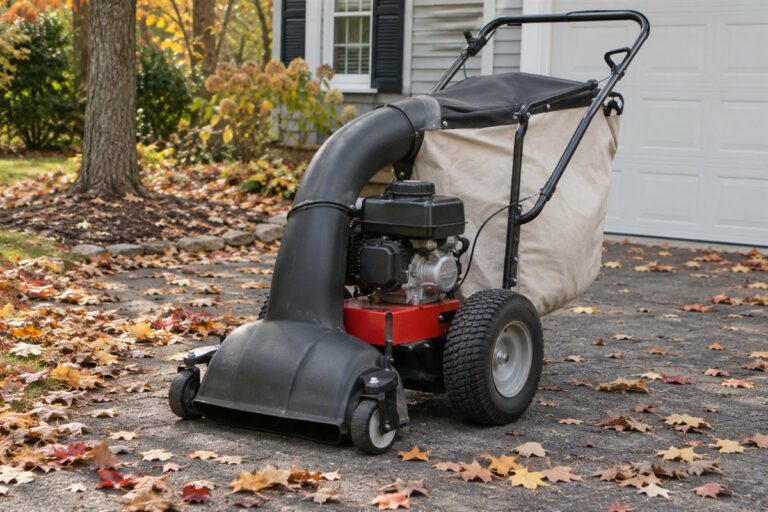
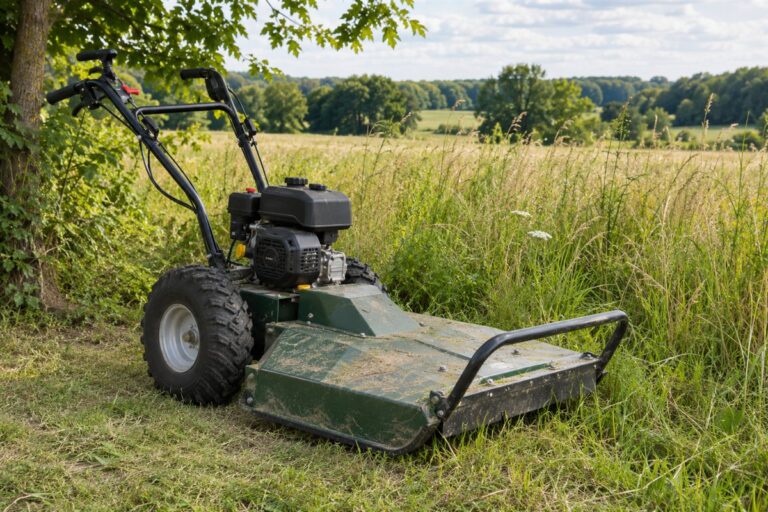
Gas leaf blowers come in handheld, backpack and wheeled forms, and the best match depends on the size of the area and the length of your sessions. A handheld unit is the simplest to grab, store and use around patios, driveways and small lawns. It puts the full weight on your arm, though, so long jobs can tire you quickly. A backpack unit shifts weight to your hips and shoulders, which makes longer sessions more comfortable and often supports a larger engine and nozzle. Wheeled walk behind units suit big open properties, where pushing is easier than carrying, but they need room to turn and storage space.
Think about what you clear. Dry leaves on a flat lawn are easy work for almost any style. Wet, matted leaves, pine needles or debris pressed into gravel call for more airflow and sometimes a different nozzle. Clearing around beds, fences and shrubs favors a lighter handheld with good control, while sweeping a long driveway may favor a backpack. If you also want to clear snow dust, light mulch or grass clippings from hard surfaces, read the maker’s notes on suitable use.
Also weigh your own strength and any back, wrist or shoulder concerns. A lighter machine that you can use comfortably is often more useful than a powerful one that you avoid. If you are unsure, hold a similar weight for the duration of a typical job, or ask someone who owns one how long they work with it. Match style to space, task and physical comfort before comparing numbers.
Two Stroke and Four Stroke Engines: What Changes for the Owner
Gas blowers use small engines, and the type determines fueling and upkeep. Two stroke engines run on a mix of gasoline and two stroke oil, are generally light for their power and work at any angle. They need accurate mixing, fresh fuel and attention to the spark arrestor and air filter. Four stroke engines use plain gasoline with a separate oil sump, which removes the need to mix fuel, but they are often heavier and must be kept in the orientation the manual allows. Some makers describe engines that combine features of both, and you should read those details.
Fuel handling is where owners most often slip up. Follow the manual’s mix ratio and use the oil type it lists. Mix in a clean, approved container and label it. Gasoline degrades over time, so avoid stockpiling large amounts, and check whether the manual warns about fuel containing alcohol. Use fresh fuel after storage and do not refill a hot engine.
- Check the starting system, such as a primer bulb or assisted start, as listed by the maker.
- Look at how easy it is to reach the spark plug, air filter and fuel filter.
- Find out how the maker describes cold starting and idling.
- Ask where service and parts are available nearby.
Easy access to service points tends to matter more than small differences in engine specifications.
Ergonomics, Vibration and Comfort on Long Jobs
Comfort is the difference between a tool you use and a tool that sits in the shed. Weight is the first factor, but balance, handle shape and vibration also matter. Backpack models should have padded straps, a chest strap or waist belt, and a back panel that lets air circulate. Adjustable straps help different body sizes. Handheld units should have a grip that fits your hand and a position for your fingers on the throttle that does not strain your wrist.
Vibration can tire the hands and arms. Some makers describe anti vibration mounts or isolation systems in the listing, but read these as the maker’s description and not as a guarantee. A throttle lock or cruise control lets you ease your grip during long runs. A tube length that adjusts and a nozzle that can be changed give more control for different jobs. Look at where the controls sit and whether you can reach them with the harness on.
Consider noise exposure as well. Gas engines are loud, and ear protection is advisable for most users; maker manuals commonly recommend it, along with eye protection and sturdy footwear. A dust mask can help when clearing dry, dusty debris. Take breaks, especially in hot weather, and keep bystanders and pets away. Check your local rules on permitted hours and noise before choosing and using any gas machine, since some places restrict or ban gas blowers.
Reading Air Output Claims and Choosing Nozzles
Air volume and air speed are the two main output measures, and listings do not always explain them in the same way. Volume describes how much air moves through the nozzle, and speed describes how fast it exits. Big piles of dry leaves respond mostly to volume, while stuck, wet or pressed debris benefits from speed. Because makers may measure at different points, with or without nozzle attachments, it is hard to compare numbers across brands unless they use the same method. Look for how the figures are described, and treat them as indicators rather than exact results.
Nozzles shape the airflow. A round nozzle spreads air widely, while a flat or narrowed nozzle concentrates it for stubborn debris. Extensions help you stand upright and reach farther. Some models include several nozzles, and others sell them separately. Check the diameter and how nozzles attach so they stay secure during use.
Think about the tasks that stress output the most: wet leaves, debris in gravel, damp lawns or corners. If you rarely face these, a moderate output machine can do the job and save weight and cost. If you manage a large property or heavy leaf fall, stronger output might save time. Combine the stated output with weight, controls and sound before deciding. Where the listing leaves details unclear, check the manual or ask the seller before purchase.
Storage, Seasonal Readiness and Signs of Wear
Gas engines reward good off season habits. Before storing for winter, follow the manual: some recommend running the engine until the fuel is used up, others advise adding a stabilizer, and others suggest draining the tank. Do not leave old fuel inside for months. Clean the exterior, wipe the air intake, check the air filter and replace it if it is dirty, and examine the spark plug. Store the machine in a dry, ventilated place away from heat sources and out of reach of children, keeping fuel in approved containers in a safe spot.
At the start of the season, use fresh fuel, check hoses and lines for cracks, inspect the harness stitching and buckles, and make sure screws and tubes are tight. Run the engine for a short time and check that it idles, accelerates and stops normally.
Warning signs of wear include:
- Hard starting that does not improve with fresh fuel and a clean filter.
- Loss of power, smoke or uneven running.
- Fuel leaks, brittle fuel lines or a loose tank cap.
- Cracked housings, damaged impellers or excessive vibration.
- A throttle that sticks or does not return.
Some issues are simple maintenance, and others need a service shop. Ask about warranty terms, parts supply and service availability before purchase, because a blower that cannot be serviced locally may spend more time waiting than working.
Handheld or Backpack: Choosing the Carry Style
Gas leaf blowers come in handheld and backpack versions, and the choice affects comfort more than almost anything else. Handheld models are lighter, lower in fuel use, and easier to store, so they suit average yards. Backpack models move the weight to your back and shoulders, and they usually offer more airflow and longer run time, which makes sense on large lots, steep terrain or heavy leaf fall. Try to hold or lift a model before you buy it if you can, or read the weight figure on the listing and imagine carrying it for twenty minutes.
| Yard | Style to consider |
|---|---|
| Small to average lot, light leaf fall | Handheld |
| Large lot with many trees | Backpack |
| Frequent use for work | Backpack with comfortable harness |
| Occasional cleanup | Lightweight handheld |
Two-Stroke Fuel, Mixing and Storage Notes
Many gas blowers use two-stroke engines, which need a fuel and oil mixture. The maker’s manual states the correct ratio and the type of oil, and following it exactly matters for engine life. Use fresh fuel, mix only the amount you expect to use, and store it in an approved container, away from heat and open flames. Do not leave mixed fuel in the tank for long periods, because it can degrade and make the engine hard to light. Some blowers use four-stroke engines, which do not need mixed fuel, so check the listing. Follow local regulations on fuel storage and disposal.
Airflow, Noise and Neighborhood Rules
Airflow is shown in cubic feet per minute, and air speed in miles per hour. Both matter, since speed moves wet leaves and volume covers wide areas. Gas blowers tend to be loud, so wear hearing protection and eye protection, and consider the time of day. Many towns have rules that limit gas blower use, and some ban them in certain seasons or neighborhoods, so check your local ordinances before you buy.
Safe Use and Maintenance
Keep bystanders and pets away, aim the nozzle away from windows and cars, and avoid blowing dust in dry weather. Clean or replace the air filter and spark plug as the manual advises, and let the engine cool before refueling. Store the blower empty or with fuel stabilizer if the maker permits.
Choosing Nozzles and Controls
Look at the throttle control, the cruise lock and the nozzle shape. A round nozzle spreads air, while a flattened tip focuses it for stubborn leaves. Some blowers have adjustable tubes, which let you change the length for comfort. A good handle with a soft grip reduces vibration, and an easy pull on the pull cord helps on cold mornings. Check that the engine has a primer bulb and a clear choke setting, and learn the stop switch location before you begin.
Choosing a gas leaf blower in More Depth
The shortlists and tables earlier in this guide narrow the field, but the final choice between similar gas leaf blowers usually comes down to a handful of practical details that listings present unevenly. The points below dig into those details one at a time. None of them requires specialist knowledge; they require an honest look at your space, your routine and the people who will share the purchase with you. Work through them in order and you will usually find that one of the picks above separates itself from the rest for reasons that have nothing to do with marketing.
Handheld or Backpack: Carry the Work Your Way
Handheld blowers are lighter, cheaper to store and perfect for typical suburban sessions, but your arm carries the engine and the reaction of the jet for the whole job. Backpacks put the weight on your hips and shoulders properly supported, and come into their own past the half-hour mark or on large plots. The honest test is your longest autumn session, not your average quick tidy. Treat this as a deciding factor only when it matches how you will actually use the purchase week after week, not just on the first day. A feature that solves a problem you genuinely have is worth prioritising, while the same feature is wasted money and extra bulk when your routine never calls on it. Compare the picks above on this point before you look at anything else on the listing.
Air Volume Versus Air Speed
Moving leaves is about volume of air to lift and roll them, and speed to scour stuck, wet debris from corners and gravel. A blower strong in volume and modest in speed clears lawns beautifully and disappoints on wet patios; the reverse is also true. Look at both figures together, and match them to your surfaces: lawns and drives want volume, corners and steps want speed and a concentrator nozzle. It helps to decide your position on this before you start comparing models, because listings are written to make every version sound essential. Write down what your space, your routine and your household actually demand, then check each pick against that short list. Anything that fails a genuine requirement can be crossed off early, which makes the remaining choice much simpler.
Two-Stroke Fuel Discipline
Nearly all gas blowers are two-stroke, living on correctly mixed fuel and dying slowly on stale or wrongly mixed fuel. If you already run other two-stroke tools, one fuel can serve all if ratios match; check before assuming. Buyers new to mixing should know it is a five-minute skill with a measuring bottle, and that pre-mixed fuel removes the risk at a higher cost per litre. Shoppers often notice this detail only after the first week of use, when returning or exchanging is at its most inconvenient. Reading the product description and the manual-style information on the listing with this one point in mind takes a few minutes and prevents the most common source of disappointment. When two picks look equal elsewhere, let this be the tie-breaker.
Noise and Your Neighbours
Gas blowers are loud, for the operator and the street. Ear protection is not optional for the user. Beyond that, many areas restrict blower hours or noise, and a courteous schedule, weekend mornings avoided, is part of ownership. Lower-noise designs and sensible throttle use, rather than full blast everywhere, make a real difference to how your clearing sessions are received. There is usually a trade-off hiding here, and the honest version of it is that you cannot maximise everything at once. Decide which side of the trade-off suits your home and accept the compromise on the other side deliberately rather than discovering it later. The picks in this guide differ from each other on exactly this kind of point, which is what makes the comparison table worth a second look.
Controls, Cruise and Starting
Variable throttle with a cruise or lock setting saves your trigger finger on long runs, and controls that fall to hand with gloves matter in cold autumn work. Starting temperament is a season-long quality: a blower that starts second pull in November is worth more than a stronger one that fights you. Anti-vibration mounting decides how your hands feel after an hour. A practical way to judge this is to picture the busiest, least convenient day on which you will still want the product to work well. If it copes with that day, it will cope with ordinary days easily. If it only works when everything is calm, tidy and unhurried, it will frustrate you in real life no matter how good it looks in photographs.
A gas leaf blower in Real Life: Situations Worth Planning For
Specifications and feature lists only tell half the story. The other half is how a gas leaf blower fits the situations your household actually creates, including the awkward ones that never appear in product photographs. These are the scenarios readers most often say they wish they had thought about before ordering.
A Typical Suburban Garden in Autumn
Weekly sessions of moderate length on lawns, paths and a drive: the lightweight handheld is the proportionate tool, quick out of the shed and quick away. This is the scenario most buyers actually live in, and it is why the lightest competent handheld is so often the right answer despite the backpacks’ glamour. In this situation the differences between the picks stop being abstract and become easy to rank, because one or two features suddenly matter more than everything else on the list.
A Large Plot With Many Trees
Volume of leaves and length of session change the maths completely. A backpack blower turns a weekend of work into a morning, and its fuel capacity and comfort over hours are the features that matter. Plan your clearing in windrows toward collection points, and size the blower for the worst fortnight of leaf fall, not the average week. Planning for this case in advance usually costs nothing, but discovering the mismatch after purchase is what leads to returns, workarounds and money spent twice.
Professional or Semi-Professional Use
Daily use demands the professional tier: stronger build, better anti-vibration, parts availability and the power to move wet, compacted debris. The most powerful backpacks exist for this work. Homeowners tempted by them should weigh the weight and cost honestly; pros buy them because time is money, which is a different equation. If this sounds like your household, weight the buying criteria above toward durability and ease of everyday handling rather than toward the longest feature list.
Clearing More Than Leaves
Blowers earn their keep all year on grass clippings, light snow, dust, gutters at ground level and workshop floors. If your use is mostly these lighter duties with occasional leaves, a mid handheld covers everything. If wet leaves matted into gravel are your annual nemesis, prioritise speed and nozzle options over raw volume. In this situation the differences between the picks stop being abstract and become easy to rank, because one or two features suddenly matter more than everything else on the list.
Getting Set Up and Using It Well, Step by Step
The order below follows the sequence most owners settle into after the first few uses. It avoids the two classic beginner errors: rushing the first setup, and only reading the instructions after something has already gone wrong.
Step 1: Plan the clearing pattern first. Decide where the leaves are going before starting: onto beds as mulch, into piles for bagging, or toward a collection corner. Work with any breeze, not against it.
Step 2: Dress and protect. Ear protection, eye protection and gloves, every session. Check fuel, and start the blower on clear ground as the maker directs, letting it warm briefly.
Step 3: Work in sections with low throttle first. Use the lowest power that moves the material; full throttle is for wet and stuck patches. Sweep in arcs, walking leaves forward in a windrow rather than blasting them into the air.
Step 4: Use speed for detail work. Switch technique at edges, steps and gravel: short, angled bursts with a concentrator approach loosen stuck debris without scattering the whole area.
Step 5: Clear collection points as you go. Bag, barrow or mulch leaves in stages rather than building one mountain that blows back. A tarp dragged to the compost area beats repeated trips.
Step 6: Shut down and check over. Let the engine idle briefly, switch off, and check the intake and tube for debris before storing. Note any starting or running oddity while it is fresh in your mind.
Care, Cleaning and Long-Term Ownership
The small-engine routine rules here: fresh fuel mixed exactly to the maker’s ratio, used within a sensible period or stabilised, and never left sitting in the machine across winter unless the manual’s storage method is followed. Most blower starting problems in spring are fuel problems wearing a disguise. Clean or replace the air filter on schedule, since blowers work in the dustiest air in the garden.
Keep the intake screen and fan area clear of the very debris the machine moves; a blower slowly eating its own leaves loses power and overheats. Inspect tubes and nozzles for cracks and secure fit, because air leaks at joints are silent power thieves. Check the spark plug and cooling fins during the annual service rhythm, and keep the exhaust area free of leaf dust, which is both a performance and a fire-sense issue.
Store the blower dry, fuel dealt with, in a spot where the tube is not crushed and the machine cannot fall. Backpack harnesses should be hung so straps dry and keep their shape. Before the autumn season, do the full rehearsal: fresh fuel, filter, plug check, harness adjustment and a test run, so the first big leaf fall meets a machine that is ready rather than a project.
How the Picks Compare With Each Other
Readers often ask for the picks to be set directly against one another rather than described one at a time. The comparison below uses only what this guide has already said about each model: its position in the Quick Picks table, the job it is listed as best for, and the strengths and limits covered in its review above. It is a way of double-checking a shortlist, not a new ranking.
Husqvarna 125B Handheld Gas Leaf Blower appears in the Quick Picks table as the choice for best lightweight handheld for most yards. The lightweight handheld for most yards is the balanced recommendation: enough power, least burden, easiest storage. If that description matches the job you described for yourself in the criteria sections above, it is the natural starting point; if it does not, the honest answer is that a neighbouring pick will serve you better even if this one caught your eye first. Re-read its full review above with your own situation in mind before deciding, because the limitation noted there matters more to some households than to others.
ECHO PB-2520 Handheld Gas Leaf Blower appears in the Quick Picks table as the choice for best handheld value from ECHO. The value handheld from a pro-leaning maker suits buyers who want the brand’s build without stepping up a tier. If that description matches the job you described for yourself in the criteria sections above, it is the natural starting point; if it does not, the honest answer is that a neighbouring pick will serve you better even if this one caught your eye first. Re-read its full review above with your own situation in mind before deciding, because the limitation noted there matters more to some households than to others.
ECHO PB-2620 Handheld Gas Leaf Blower appears in the Quick Picks table as the choice for best professional-grade handheld. The professional-grade handheld is for users who clear daily or demand the strongest hand-carried performance. If that description matches the job you described for yourself in the criteria sections above, it is the natural starting point; if it does not, the honest answer is that a neighbouring pick will serve you better even if this one caught your eye first. Re-read its full review above with your own situation in mind before deciding, because the limitation noted there matters more to some households than to others.
Husqvarna 150BT Backpack Gas Leaf Blower appears in the Quick Picks table as the choice for best backpack for large yards. The backpack for large yards trades storage size and cost for hours of supported, powerful clearing. If that description matches the job you described for yourself in the criteria sections above, it is the natural starting point; if it does not, the honest answer is that a neighbouring pick will serve you better even if this one caught your eye first. Re-read its full review above with your own situation in mind before deciding, because the limitation noted there matters more to some households than to others.
ECHO PB-9010H Backpack Gas Leaf Blower appears in the Quick Picks table as the choice for most powerful backpack for acreage and pros. The most powerful backpack is acreage and professional territory, bought for output above all else. If that description matches the job you described for yourself in the criteria sections above, it is the natural starting point; if it does not, the honest answer is that a neighbouring pick will serve you better even if this one caught your eye first. Re-read its full review above with your own situation in mind before deciding, because the limitation noted there matters more to some households than to others.
Ownership Details Worth Settling Early
Technique matters more than power for the quality of the result. Leaves moved in a planned pattern, at the lowest effective throttle, end up in tidy windrows; leaves blasted at full power end up in the neighbour’s garden, the flowerbeds and back on the lawn by evening. Spend one session practising throttle control and sweeping arcs and every future session gets shorter, quieter and more effective, whatever blower you own.
Coordinate with the mower and the rake rather than treating the blower as the whole system. A mower with a collector handles lawn leaves faster than any blower; a rake beats a blower for leaves in gravel and beds where air scatters more than it gathers. The blower is the best tool for hard surfaces, corners and moving piles, and a garden system that assigns each tool its strength finishes autumn with the least total effort.
It is also worth deciding, before the purchase arrives, where its accessories and consumables will live. A gas leaf blower ownership always accumulates small companions: tools, spares, cleaning items, attachments or paperwork, and when they have a home the routine stays tidy and the product stays easy to use. When they do not, they migrate into drawers and boxes and are effectively lost. A single labelled box or shelf section near where the product is used is the whole system, and setting it up on delivery day is far easier than retrofitting order onto a year of drift.
Finally, give any new purchase a fair settling-in period before judging it. The first uses of a gas leaf blower involve unfamiliar routines, and many early irritations turn out to be habits that adjust within a fortnight, while genuine faults show a consistent pattern that does not improve. Use that period deliberately: follow the manual’s routine exactly, note what actually bothers you and when, and you will know by the end of it whether you are looking at a learning curve, a setup error you can fix, or a real problem to raise with the seller while the paperwork is still fresh.
FAQ
Handheld or backpack?
Handheld models are lighter to store and easy to grab for quick jobs. Backpack models move the weight to your back and usually give more air, which many owners of bigger yards find more comfortable over time. Choose by yard size and how long you work.
What do air volume and air speed mean?
Air volume describes how much air the blower moves, while air speed describes how fast it leaves the nozzle. Volume tends to matter for moving piles, and speed for loosening wet or stuck leaves. Makers measure them differently, so compare with care.
Do I need to mix fuel for every gas blower?
No. Two stroke engines need mixed fuel and oil, while four stroke engines use plain gasoline with separate oil. The manual states which applies and what ratio or oil to use.
How loud is a gas leaf blower?
They are generally loud, and makers give sound information in their own terms. Wear ear protection and check local rules on noise and allowed hours.
Can I use the blower for wet leaves?
Many can move them, but it takes more effort than dry leaves. Higher air speed and a concentrated nozzle can help, and results depend on the machine and debris.
How often should I replace the spark plug and air filter?
Follow the manual schedule, which depends on use. Inspect them regularly and replace them when they look worn or dirty.
Is a backpack blower always better for big yards?
It is usually more comfortable for longer jobs because weight sits on your back, but it is heavier to store and more costly. Consider your yard size and how long you work.
What should I do with leftover fuel at the end of the season?
Follow the manual and local rules. Many makers advise using a stabilizer or emptying the tank, and fuel should be kept only in approved containers.
Are gas blowers allowed everywhere?
Not always. Some communities restrict or ban gas equipment or limit hours, so check local rules before buying.
What is more important, MPH or CFM?
They measure different things: MPH is the speed of the air at the nozzle, CFM is the volume it moves. Volume does the bulk work of rolling leaves across a lawn; speed scours stuck debris loose. For general leaf clearing, weight volume more; for wet leaves, gravel and corners, speed earns its place. The best choice balances both for your surfaces rather than winning one number.
Why will my blower not start?
Work the order of likelihood: old or wrongly mixed fuel, a fouled plug, a clogged filter, or a flooded engine from enthusiastic priming and pulling. Fresh fuel and a clean plug cure most cases. If it still refuses, a service is the economical next step. Next season, the storage fuel routine in this guide is what prevents the repeat performance.
Can I use a leaf blower for wet leaves?
Yes, with technique and expectations adjusted: wet leaves are heavier, stick to surfaces, and need more speed and closer nozzle work. Clear them in smaller sections, lift edges with angled bursts, and accept it takes longer. Letting leaves dry for a day after rain, when the calendar allows, makes the job dramatically easier for any blower.
How loud are gas blowers, really?
Loud enough that ear protection is essential for the operator and the noise carries well beyond your fence. Many communities regulate hours and some regulate equipment, so check local rules. Courteous timing, using the lowest effective throttle, and keeping sessions efficient are the marks of a good neighbour with a gas blower. Backpack models are not quieter; they are just farther from your ears, which is not the same thing.
Is a backpack blower overkill for a normal garden?
For most single suburban gardens, honestly yes: the handheld covers the work at less cost, weight and storage. The backpack earns itself when sessions regularly pass half an hour, the plot is large, or leaf volume is heavy. Buying for your longest typical session rather than your most ambitious one keeps the tool proportionate and used willingly.
What fuel should I keep for a two-stroke blower?
Fresh petrol mixed with the correct two-stroke oil at the ratio the maker specifies, in a clearly labelled can, bought in quantities you will use within a couple of months. Pre-mixed fuel in a can is a convenient, stable alternative that removes mixing errors. Never use straight petrol, and never borrow fuel of unknown mix from another can; both are engine-ending mistakes.
Can I use a leaf blower to clear light snow?
For dry, powdery snow on paths and cars, a blower works surprisingly well and is a genuine winter bonus of ownership. Wet, heavy snow defeats it completely and risks forcing moisture where it should not go. Clear snow early while it is light, keep the machine’s intake dry, and never use it as a substitute for clearing ice, which it cannot touch.
How do I reduce dust when blowing?
Work when surfaces are slightly damp where you can, keep the nozzle angled to roll debris rather than launch it, and use the lowest throttle that moves the material. Dust is worst on dry drives in still air; a light sprinkle from a hose beforehand settles it. Eye protection matters here for the operator most of all, because the dust cloud is centred exactly where you stand.
The Short Version
Match the carrying style to your yard, compare air output on the same terms, and give weight, harness and sound real attention. Follow the manual on fuel and protective gear, and respect local rules.
Related Guides
- How to Choose the Best Handheld Leaf Blowers: A Buyer's Guide
- How to Choose the Best Gas Leaf Vacuums: Buyer's Guide (2026)
- How to Choose the Best Cordless Leaf Vacuums: A Buyer's Guide
- How to Choose the Best Leaf Vacuums: Buyer's Guide (2026)
- How to Choose the Best Walk Behind Leaf Vacuums: A Buyer's Guide