A garden tub is a wide, deep drop-in style bathtub with a roomy bowl, often set in a deck or platform. Roman tubs are a related style, where the faucet fills the tub from a deck mount instead of the wall. Because the tub and the filler are sold separately, this guide mixes both: three drop-in tubs and three Roman tub faucets that pair with them.
The six products below are named models from major bath brands. We have not used them ourselves, so confirm the size, deck cut-out and drain details on the current listing before buying. Drop-in tubs vary in length and depth by version, so match the exact model to your platform. Faucets also need the right hole count for your deck.
As an Amazon Associate we earn from qualifying purchases. Links below are affiliate links, and they do not change the product information we give.
What to Look For
| Feature | Why it matters |
|---|---|
| Deck cut-out | A drop-in tub must match the platform opening |
| Depth | Deeper bowls suit soaking but use more water |
| Faucet holes | Roman tub faucets need the right deck hole layout |
| Material | Acrylic and cast iron differ in weight and heat retention |
In this guide
Specs at a Glance
| Product | Type | Style | Notes |
|---|---|---|---|
| Kohler Villager | Drop-in tub | Classic bowl | Cast iron, per the maker |
| Kohler Archer | Drop-in tub | Soft rectangle | Check material and size |
| Kohler Bellwether | Drop-in tub | Rounded rectangle | Check material and size |
| Delta Trinsic Roman tub faucet | Deck faucet | Modern | Check valve and trim needs |
| Moen Align Roman tub faucet | Deck faucet | Clean lines | Check valve and trim needs |
| Kohler Devonshire Roman tub faucet | Deck faucet | Traditional | Check valve and trim needs |
The 6 Best Garden Tubs

Top pickBest for a standard drop-in deck
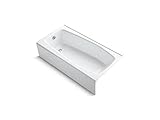
1. Kohler Villager Drop-In Bathtub
A long-running Kohler bathtub line, sold in alcove and drop-in versions. It is a reasonable pick when you want a simple, familiar tub that fits a standard platform.
Suits: a standard drop-in deck. Strengths: a well-known maker. Weaknesses: plain looks. Skip it if you want a sculpted bowl.

Best for a drop-in bath that looks current
2. Kohler Archer Drop-In Bathtub
A Kohler tub with softly rounded corners and a modern profile. The Archer comes in several versions, so check the listing for length and mounting style.
Suits: a drop-in bath that looks current. Strengths: comfortable, rounded interior. Weaknesses: versions differ. Skip it if you need a deep garden soaking tub.


Best for a platform tub
3. Kohler Bellwether Drop-In Bathtub
A drop-in bath with a roomy, rounded-rectangle bowl. It is a good fit for shoppers comparing the best drop in tubs for a platform build.
Suits: a platform tub. Strengths: a roomy bowl. Weaknesses: check cut-out dimensions. Skip it if you prefer a freestanding tub.


Best for a best Roman tub setup with a modern look
4. Delta Trinsic Roman Tub Faucet
A deck-mounted Roman tub faucet from Delta in the Trinsic line, with a modern look. Check the listing for whether the valve is included or sold separately.
Suits: a best Roman tub setup with a modern look. Strengths: a trusted faucet brand. Weaknesses: valve may be separate. Skip it if your deck has the wrong hole count.


Best for a minimalist bath
5. Moen Align Roman Tub Faucet
A Moen deck-mounted Roman tub faucet with clean, geometric lines. As with most Roman faucets, confirm the valve and hole layout before buying.
Suits: a minimalist bath. Strengths: a crisp design. Weaknesses: trim and valve may be sold apart. Skip it if you want a traditional style.

Best for a traditional bathroom
6. Kohler Devonshire Roman Tub Faucet
A traditional deck-mounted Roman tub faucet in the Devonshire line. It suits a classic bath and pairs with a roomy deep garden soaking tub.
Suits: a traditional bathroom. Strengths: a classic look. Weaknesses: finishes and valve needs vary. Skip it if you want modern lines.
View Kohler Devonshire Roman Tub Faucet on Amazon
Care and Setup
- Check the platform and floor support before installation.
- Test fit the tub before fixing the deck in place.
- Clean with a non-abrasive cleaner.
- Plan a water heater size that suits a large bowl.
- Seal the tub edge where it meets the deck with a bath-rated caulk.
- Keep the faucet manual and valve details together for later repairs.
Mistakes to Avoid
- Buying the tub before measuring the cut-out.
- Forgetting the faucet valve.
- Ignoring the water heater capacity.
- Skipping a plumber for deck work.
Planning the Platform and Floor Support
A drop-in tub needs a surround to hold it, and the surround is often the largest part of the project. The tub rests on a supporting frame or a bed of material, and its rim sits on the deck around it. Before you pick a model, decide how big the platform can be in your room and how high you want the rim. Standard step heights are easier to climb, and a platform that is too high feels awkward, while one that is too low looks unfinished.
Weight is the part many buyers overlook. A tub full of water plus a bather is very heavy, and cast iron adds a lot more on top of that. Check the listing or the maker’s installation guide for the empty weight, then compare it with the floor structure. Joist size, spacing and span all matter, and an older house or a second-floor bath may need reinforcement. If you are unsure, have a builder or structural professional check before you order.
Plan access too. A tub set in a finished deck is hard to reach for repairs, so think about an access panel to the drain and supply lines. Run plumbing rough-ins to the right locations before the platform is closed in.
- Match the cut-out dimensions on the listing to the opening in your deck.
- Confirm the floor can carry the tub, water and bather.
- Decide the rim height you want and how users will step in.
- Leave a panel for future access to the drain and trap.
Material Choices and How They Feel in Use
Drop-in tubs come in a handful of materials, and each behaves differently in daily use. Cast iron has a thick enamel finish and is heavy, which holds heat well and feels solid. Its weight raises installation demands and the need to check the floor. Acrylic and similar molded materials are lighter, warm quickly to the touch and are easier to carry and install, though they can scratch more readily if cleaned with the wrong products. Other options like steel with enamel coating sit between the two. The post lists the Villager as cast iron per the maker, while for other models you should check the material on the listing.
Consider how you plan to use the tub. If you take long soaks and want the water to stay warm, heat retention matters more. If you want a lighter install or have a limited floor, a lighter material may be the safer choice. Also think about surface texture: some bottoms are slightly textured for grip, while others are smooth and easier to clean.
- Cast iron: heavy, durable feel, strong heat retention, harder to install.
- Acrylic: lighter, warm to the touch, easier handling, may mark with abrasive cleaners.
- Enameled steel: generally lighter than cast iron, with a hard surface.
Whichever you choose, ask for the care instructions in advance, because the cleaning rules differ and some products can dull or scratch the surface.
Water Volume, Heating and Fill Time
A wide, deep tub holds a great deal of water, and that has practical effects. A large bowl takes longer to fill, uses more hot water and takes longer to reheat if you top it up. Check the capacity on the listing, then compare it with your water heater’s tank size and recovery speed. A small heater may run out before the tub is full, leaving you with a lukewarm soak.
Faucet flow rate affects fill time too. Roman tub faucets are designed to deliver a generous flow, but the actual rate depends on the model and on your supply pipes and pressure. Check the faucet listing for flow details if they are given, and ask a plumber whether your lines can feed it well. Narrow supply pipes can make even a high-flow faucet slow.
Ways to make the experience better:
- Run hot water through the faucet for a moment before you start so the line is not cold.
- Fill the tub partway before you step in and top up with hot water as needed.
- Consider a larger water heater or a higher setting only if it is safe and allowed by the manual; never set water temperatures higher than the heater’s maker recommends.
- Think about water use if you live where supply is limited.
Deep tubs also lose heat from the surface, so a lower overall depth may feel warmer for a given amount of water.
Roman Faucet Holes, Valves and Reach
A Roman tub faucet is mounted on the deck, and the installation has several fit checks. First is the hole layout. Deck-mounted faucets use a set pattern of holes, often a spout and two handles, and the spacing between them differs by model. The deck must be drilled to match, so read the listing’s installation notes and cut-out template. Do not drill until you have the faucet in hand.
Second is the valve. Many Roman faucets need a rough-in valve that may be sold apart from the trim, as the post notes for several models here. The valve sits in the deck, connected to the supply lines, and the trim goes over it. If you pick a trim that does not match the valve brand or type, it may not work. Read the compatibility lists and ask the maker or a plumber if unsure.
Third is reach and height. The spout has to extend far enough to deliver water into the bowl, not onto the rim, and it needs to clear the deck. Check the spout’s reach and height on the listing and compare it with the distance from your deck holes to the middle of the tub. A tall spout on a low deck can splash.
- Check hole count and spacing against your deck cut-outs.
- Confirm whether the valve is included.
- Verify spout reach and clearance above the tub rim.
- Keep the manual and valve information for future repairs.
Drain, Overflow and Day-to-Day Upkeep
The drain assembly often arrives separately from a drop-in tub, so confirm what the listing includes. A tub needs a drain, an overflow and a trap, and the positions of those fittings depend on the model. Whether the drain is on the left or right, or in the center, affects your plumbing layout, so check the model details before roughing in. A shallow or wide tub may need a long overflow connection, and some assemblies are available in different finishes.
Once installed, simple upkeep keeps the tub looking good and working well. Use a non-abrasive cleaner and soft cloths, and follow the maker’s directions for the material. Wipe away soap film and mineral deposits before they harden. Clean the drain stopper and strainer regularly so hair does not build up. Keep the caulk line where the tub meets the deck in good shape, since a gap lets water seep under the rim and can lead to mold or rot in the platform.
- Check caulk at the rim twice a year and replace any that has cracked or lifted.
- Do not use harsh scouring pads or strong solvents on the finish.
- Look under the access panel for drips at the trap and supply connections.
- Test the overflow and the stopper occasionally.
Signs of trouble include soft spots in the deck near the rim, a drain that slows down despite cleaning and leaks showing up in the ceiling below. Deal with those quickly before damage spreads.
A Planning Checklist for a Tub Project
A drop-in tub touches the floor, the walls and the plumbing, so planning matters more than with most home products.
- Measure the opening or the area where the platform will sit, and note door and hallway widths for delivery.
- Check the tub’s listed length, width and depth against that space.
- Decide whether the faucet mounts on the deck, the wall or the tub rim.
- Confirm whether the drain and overflow are included with the tub or sold apart.
- Ask your contractor to check floor support before you buy anything heavy.
- Keep the maker’s installation guide and the template drawings in one folder.
Drop-In Tub Versus Roman Faucet Setup
| Question | Drop-in tub | Roman tub faucet |
|---|---|---|
| What it is | The bathing vessel set into a deck | The filler mounted on the deck |
| Main concern | Fit and support | Hole spacing and reach |
| Who installs | Usually a contractor | Usually a plumber |
| Sold with the other | Not always | Not always |
Because both parts are chosen together, compare their specs side by side before ordering either.
How to Read a Tub Listing
Begin with the exterior dimensions, then look for the interior bathing length and the depth to the overflow. Those numbers tell you more about comfort than the outside size does. Check the material description and the finish color name, since colors can look different on screen. Note whether the page shows a template or a cutout guide, and whether faucet holes are drilled in the tub or in the deck. Product photos often show a finished room with extras that are not part of the sale, so read the included items line carefully.
Short Glossary for Tub Shopping
- Deck: the platform that surrounds a drop-in tub.
- Apron: a finished front panel found on some styles.
- Overflow: an opening that carries excess water to the drain.
- Rough-in: the plumbing set up before fixtures are finished.
- Valve: the hidden part that controls water flow and temperature.
- Spout reach: the distance the faucet extends over the tub.
Choosing by Situation
- Full bathroom remodel: a drop-in model gives freedom to design a custom deck.
- Replacing an older tub: measure the existing opening before you consider any new size.
- Adding a Roman faucet only: check that the deck has the right hole layout.
- Small bathroom: a more compact tub may leave better room to move.
- Older home: ask a professional about floor strength and old pipes.
When to Follow the Manual or Call a Licensed Professional
Plumbing, water supply and floor loading are not casual weekend topics. Follow the installation instructions from the manufacturer, and local building codes where you live. Have a licensed plumber handle valves, supply lines and drains, and ask a contractor or structural professional whether the floor can carry the finished tub with water in it. If you smell gas or notice a leak, stop and call a qualified professional right away.
Delivery and First Use Notes
Inspect the tub when it arrives and note any chips before signing for the delivery. Store it in a protected place until the platform is ready. After installation, follow the maker’s advice on the first fill and on cleaning products, since some finishes do not tolerate harsh abrasives.
A Calm Way to Compare Options
Write the fit, the faucet type and the install needs for each model on one page. Seeing them together makes the decision much simpler.
Thinking Through the Deck Design
The platform around a drop-in tub shapes how the bathroom looks and works every day. Decide how wide the ledge should be, since it holds candles, towels and bath items. Think about the step height, because a tall platform needs a comfortable way to climb in and out. Choose deck materials that tolerate moisture, and talk with your installer about sealing and support under the tub. Sketch two or three layouts on paper and share them with the professional who will build the platform, so any problems appear before materials are ordered.
Cleaning Habits That Protect the Finish
Use only the cleaners the maker lists for your tub material. Rinse after each use, wipe dry when you can and avoid scouring pads unless the instructions allow them.
How to Choose a Garden tub: Criteria That Matter Most
A garden tub project involves two purchases that must agree with each other: the tub itself and the faucet and fittings that serve it. This guide mixes both, so the criteria below help you judge the tubs on soaking comfort and structure, and the faucets on fit and finish, before the two ever meet.
Tub material and how it holds heat
Tub material and how it holds heat. The tubs above are built from different materials, and the guide describes how each feels and performs. Heavier materials tend to feel solid and hold warmth, while lighter ones ease installation; choose with your floor and your soaking habits in mind. When you compare options side by side, this is one of the first points to pin down, because it shapes how the garden tub feels in daily use rather than just how it looks in a listing photograph. Go back through the picks above and ask how each one answers this point in its own review section, and be cautious with any listing that leaves the question vague. Shoppers often skip this check when a headline feature catches their eye, then meet the compromise only after the garden tub is in regular use. A few minutes spent thinking it through now, in the context of your home, your routine and the people who will share it, is what turns a good-looking choice into one you stay pleased with season after season.
Deck and platform requirements
Deck and platform requirements. A drop-in tub lives inside a platform you build, so its rim, flange and dimensions decide the carpentry. Read the planning notes in each review and picture the finished deck before committing to a shape. It helps to treat this as a practical test rather than a box-ticking exercise. Picture the garden tub in the exact spot where it will live, at the busiest time of day, being used by the person who will use it most. If the answer still works in that picture, the point is probably covered; if it raises doubts, look again at how the different picks in this guide handle it. The reviews above describe each option in its own terms, so use them as the reference instead of relying on a single headline claim. Small mismatches here are the ones that quietly decide whether a purchase feels easy or becomes a chore.
Water capacity against your heater
Water capacity against your heater. A deep soaking tub is only relaxing if your water heater can actually fill it with hot water. Compare the capacity described for each tub with your heater’s ability, or plan the upgrade at the same time. This point matters more than it first appears, because it tends to affect every session rather than just the first one. A garden tub can impress on day one and still disappoint if this side of it does not suit your habits. As you read the individual reviews, note which picks speak directly to this concern and which leave you guessing, and let that guide your shortlist. Where the guide describes a trade-off, take it seriously rather than assuming you will adapt to it later. Most returns and regrets in this category come from exactly this kind of overlooked detail, not from the headline features people spend longest comparing.
Faucet reach, holes and valves
Faucet reach, holes and valves. For the faucet picks, the spout must reach the tub’s water line and the deck holes and valve arrangement must match your platform. These are geometry questions, and getting them wrong is the most common garden tub frustration. A useful way to judge this is to ask what happens on an ordinary, unremarkable day rather than on the best day. Routines are where a garden tub earns its keep, and this is the point that decides whether using it stays effortless. Compare the picks with your own routine in mind: who is involved, how much time is available, and how much patience there is for extra steps. If one option clearly fits that picture better than the others, that is a strong signal, even when the listings look similar at first glance. The sections above give you the material to make that call without guessing.
Finish coordination across the room
Finish coordination across the room. Tubs and faucets are seen together every day, so finishes and lines should feel like one decision. The guide’s classic and modern options let you keep the whole bathroom speaking the same design language. Finally, do not treat this point in isolation. It interacts with the other criteria in this section, and the right balance depends on your priorities rather than on any single winner. Read the pick reviews as a set, mark the option that handles this point in the way you prefer, and check whether it also holds up on the points you care about most. If two picks seem close, this is often the deciding factor that separates them in real use. Writing down your own answer before you order, even in a sentence or two, makes the final choice calmer and far less likely to be second-guessed later.
Garden tub in Real Life: Matching a Pick to Your Situation
Garden tubs anchor very different bathrooms. These situations show how to read the tub and faucet picks together for the room you are actually building.
A primary bathroom built around long soaks
A primary bathroom built around long soaks. If soaking is the point of the room, start from the tub whose bowl shape and depth the guide describes as most generous, then choose the faucet that fills it comfortably and matches its style. In this situation the priorities shift a little, and it is worth re-reading the pick reviews with this exact scenario in mind. Ask which option the guide presents as suiting this kind of use, and whether its described strengths line up with what the moment actually demands. It also helps to think about frequency: something used this way every week needs to be convenient enough that nobody starts avoiding it. The best choice here is rarely the most elaborate one; it is the one whose everyday behaviour matches the routine with the least friction, so the garden tub gets used as intended instead of becoming an occasional novelty.
Replacing a dated deck tub in an existing platform
Replacing a dated deck tub in an existing platform. When the platform stays, your measurements rule. Shortlist tubs whose dimensions suit the existing cut-out and deck, and faucets whose hole pattern matches what is already drilled, before falling for any particular look. For this kind of use, small practical details carry more weight than headline appeal. Think through where the garden tub will be, who else is around, and what happens immediately before and after. The reviews above are most useful when you read them against a concrete picture like this one, because a strength that sounds minor in a listing can become the thing you appreciate most in this setting. Equally, a limitation the guide mentions honestly may not matter here at all. Matching the pick to the situation, rather than chasing the option that tries to do everything, is what leads to a purchase that keeps making sense.
A classic, traditional scheme
A classic, traditional scheme. For a traditional room, the classically styled faucet pick and a tub with softer lines will sit naturally together. Consistency of finish across taps, handles and other fittings completes the effect. This scenario is a good stress test for any shortlist. If a pick still looks right when you imagine this use, week in and week out, it is probably a sound choice; if it only works when everything goes perfectly, keep looking. Pay attention to how much setup, supervision or tidying the situation involves, since those hidden minutes decide whether the garden tub fits your life. The guide’s per-pick sections describe who each option suits, so let those descriptions do the work here. Choosing for the life you actually lead, rather than an idealised version of it, is the simplest way to avoid disappointment.
A clean, modern scheme
A clean, modern scheme. For a modern room, the more architectural tub shapes and the streamlined faucet pick keep the deck looking calm and uncluttered. Fewer, larger forms suit this style better than ornate detail. When this is your main reason for buying, let it lead the decision instead of treating it as an afterthought. Start from the pick whose review speaks most directly to this situation, then check it against the criteria earlier in this guide to make sure nothing important has been traded away. It is also worth planning the practical side in advance, from where things will be kept to who is responsible for upkeep, so the routine is settled before the garden tub arrives. A choice made this way tends to settle quickly, because every part of it has already been thought through against a real need.
How the Picks in This Guide Compare With Each Other
No two picks in this guide are trying to do exactly the same job, and that is deliberate. The reviews above present each garden tub in its own terms, with its own intended user, strengths and honest limitations. The fairest way to compare them is not to hunt for a single winner, but to hold each one against the criteria and situations set out in this guide and ask which description sounds most like your home, your routine and your priorities. The notes below walk through the shortlist in the same order as the reviews, to help you do exactly that.
Kohler Villager Drop-In Bathtub. In its review section above you will find who it suits, where it is strongest and where its limits lie, and those are the points to weigh here. Set them against the criteria earlier in this guide: if this pick handles the points you care about most, and its stated limitations fall in areas you can live with, it deserves its place on your shortlist. If its strengths aim at a situation that is not yours, a simpler or different pick further down the list may serve you better, however impressive this one looks in isolation.
Kohler Archer Drop-In Bathtub. In its review section above you will find who it suits, where it is strongest and where its limits lie, and those are the points to weigh here. Set them against the criteria earlier in this guide: if this pick handles the points you care about most, and its stated limitations fall in areas you can live with, it deserves its place on your shortlist. If its strengths aim at a situation that is not yours, a simpler or different pick further down the list may serve you better, however impressive this one looks in isolation.
Kohler Bellwether Drop-In Bathtub. In its review section above you will find who it suits, where it is strongest and where its limits lie, and those are the points to weigh here. Set them against the criteria earlier in this guide: if this pick handles the points you care about most, and its stated limitations fall in areas you can live with, it deserves its place on your shortlist. If its strengths aim at a situation that is not yours, a simpler or different pick further down the list may serve you better, however impressive this one looks in isolation.
Delta Trinsic Roman Tub Faucet. In its review section above you will find who it suits, where it is strongest and where its limits lie, and those are the points to weigh here. Set them against the criteria earlier in this guide: if this pick handles the points you care about most, and its stated limitations fall in areas you can live with, it deserves its place on your shortlist. If its strengths aim at a situation that is not yours, a simpler or different pick further down the list may serve you better, however impressive this one looks in isolation.
Moen Align Roman Tub Faucet. In its review section above you will find who it suits, where it is strongest and where its limits lie, and those are the points to weigh here. Set them against the criteria earlier in this guide: if this pick handles the points you care about most, and its stated limitations fall in areas you can live with, it deserves its place on your shortlist. If its strengths aim at a situation that is not yours, a simpler or different pick further down the list may serve you better, however impressive this one looks in isolation.
Kohler Devonshire Roman Tub Faucet. In its review section above you will find who it suits, where it is strongest and where its limits lie, and those are the points to weigh here. Set them against the criteria earlier in this guide: if this pick handles the points you care about most, and its stated limitations fall in areas you can live with, it deserves its place on your shortlist. If its strengths aim at a situation that is not yours, a simpler or different pick further down the list may serve you better, however impressive this one looks in isolation.
Read as a set, the picks form a ladder of priorities rather than a ranking from best to worst. One end of the list will suit readers who want the straightforward option described at the top of the guide, while other picks trade simplicity for a particular strength the reviews call out. Your job is simply to find the rung that matches your situation. When two picks still seem close after that, choose the one whose limitations you mind least, because strengths are enjoyed occasionally while limitations are met every single time the garden tub is used.
Using, Cleaning and Looking After Your Garden tub
A garden tub and its Roman faucet ask for gentle, regular care rather than heroic cleaning days. The routine below protects finishes, keeps valves moving freely and spots leaks while they are still small.
Clean the tub with non-abrasive products
Clean the tub with non-abrasive products. Use a soft cloth and a cleaner suited to your tub’s material, as the maker directs. Abrasive powders and pads dull glossy finishes and can scratch, and the damage only shows when the light catches it at bath time. Build this into a short, repeatable routine rather than treating it as an occasional big job. Little and often is what keeps a garden tub pleasant to use and helps it last, and it is far easier to keep up than a rare deep session that everyone dreads. Follow the maker’s own instructions where they differ from general advice, since materials and mechanisms vary between models. If you share the garden tub with others, agree who does what, so the routine does not quietly fall to one person or get skipped altogether. A few steady minutes of care protect the money you spent far better than any accessory.
Wipe and dry the faucet after use
Wipe and dry the faucet after use. Water spots and mineral marks build quietly on deck-mounted faucets. A quick wipe with a soft cloth keeps the finish bright and makes the occasional deeper clean far easier. This step is easy to overlook because the garden tub usually keeps working while it is neglected, right up until it does not. Treat the guide’s care notes and the manufacturer’s manual as your starting point, and keep any products or tools the maker recommends within easy reach of where the garden tub lives. Convenience is what makes care happen. While you are at it, give the garden tub a quick visual once-over for wear, looseness or damage, because small issues are cheapest and simplest to deal with when they are caught early. That habit, repeated calmly over months, is what separates items that age gracefully from those that fail early.
Run and move handles and valves regularly
Run and move handles and valves regularly. Valves that sit unmoved for months can stiffen. Using every function of the faucet now and then, and turning handles through their full travel, keeps things moving as they should. Think of this as part of using the garden tub, not as a separate chore bolted onto it. The few minutes it takes are repaid in reliability, comfort and safety every time the garden tub is used afterwards. If several people share the job, a simple shared note of what was done and when prevents both duplication and neglect. Avoid improvised shortcuts that the manual does not sanction, however tempting they seem, because finishes, seals and moving parts often react badly to the wrong treatment. Gentle, regular attention in line with the maker’s guidance is almost always the approach that keeps things working as they should.
Watch the deck, caulk and access panel
Watch the deck, caulk and access panel. Check the seal where tub meets deck, look inside the access panel for damp, and glance at the ceiling below. Catching a slow drip at this stage is a small job; missing it becomes a building repair. Where you keep the garden tub between uses matters as much as how you treat it during use. A sensible, consistent home for it protects it from knocks, damp, dust and curious hands, and makes the next use quicker to start. The storage advice in the maker’s instructions is worth following closely here, particularly anything about position, covering or preparation before a longer break. Before putting the garden tub away after a longer gap in use, run through the same checks you would before its first use. That small discipline keeps surprises away and means the garden tub is ready whenever it is wanted.
Descale gently where water is hard
Descale gently where water is hard. In hard-water areas, mineral crust gathers at the spout and around handles. Treat it with a method the faucet maker approves for the finish, and never chip or scrape at plating with tools. Finally, keep a light record of anything you notice: a change in sound, feel, fit or behaviour is often the earliest sign that something needs attention. Comparing what you notice with the troubleshooting notes in the manual usually tells you whether it is a simple fix or a job for the maker or a professional. Do not force anything that resists, and do not keep using the garden tub in a way that feels unsafe while you hope a problem will pass. Prompt, calm attention at this stage protects both the garden tub and the people using it, and it preserves any warranty options you may need.
Garden Tub FAQ
What is the difference between a garden tub and a Roman tub?
Garden tubs are wide, deep drop-in tubs. Roman tubs describe deck-mounted filling, often in the same kind of tub.
Do these tubs fit a standard alcove?
Not always. Drop-in tubs need a platform or surround, so check the dimensions.
Are faucets included with tubs?
Usually not. Faucets and valves are typically bought separately.
Can I use a Roman tub faucet on any tub?
Only if the tub or deck has space for deck-mounted fittings. Check the hole layout and the reach of the spout before buying.
How much space does a garden tub need?
It needs room for the tub, the platform around it and space for the faucet and for stepping in. Check the cut-out dimensions on the listing and plan the deck around them.
Is a cast iron tub too heavy for my floor?
It can be, especially on upper floors or older framing. Look up the weight in the maker's documents and have a builder check the support before you order.
Do I need a plumber to install a Roman tub faucet?
Usually yes, because the valve goes into the deck and connects to supply lines before the deck is finished. A plumber also helps confirm hole layout and valve compatibility.
Will my water heater fill a large tub?
It may not. Compare the tub's capacity with your heater's tank size and recovery rate, and ask a plumber if the heater is small.
Is the drain included with the tub?
Often not. Check the listing to see whether the drain, overflow and trap are included or sold as separate items.
What is the best way to clean a tub finish?
Use a non-abrasive cleaner and a soft cloth, and follow the maker's instructions for your tub's material. Harsh scrubbers can dull or scratch the surface.
How can I tell if the deck is leaking?
Look for soft spots near the rim, stained or cracked caulk, damp ceilings below and drips under the access panel. Fix any gaps promptly.
Can a garden tub be installed where a standard bath was?
Sometimes, but a garden tub is usually wider and deeper than a standard alcove bath and sits in its own platform, so the space, floor support and plumbing positions all need checking. Many projects involve building or altering the deck. A plumber or bathroom installer can confirm what your room allows before you order, which is far cheaper than discovering a mismatch mid-project.
Do Roman tub faucets include the valve?
Listings differ: some faucet trims are sold with the rough-in valve and some assume a valve already in the deck. Read the description of the faucet pick you choose carefully and confirm what is in the box, because the valve is not an optional extra. If you are replacing an existing faucet, check compatibility with the valve already installed before assuming a straight swap.
How long does a garden tub take to fill?
Fill time depends on the tub’s capacity and your water pressure and faucet flow, so a large soaking tub will always take a while. That is normal for this style of bath and part of the ritual for most owners. What matters is that your heater can supply enough hot water for the fill, which is why the capacity check in this guide is worth doing before you buy.
Can I add a hand shower to a Roman tub setup?
Some Roman faucet arrangements include or accept a hand shower, and others do not. If a hand shower matters to you for rinsing hair or cleaning the tub, look for it in the faucet’s description before ordering rather than planning to improvise later. Deck space for the extra hole and a place for the hose to sit are part of the same decision.
The Short Version
For a simple drop-in, the Kohler Villager. For a rounded look, the Kohler Archer. For a roomy bowl, the Kohler Bellwether. For a modern faucet, the Delta Trinsic or Moen Align. For a classic faucet, the Kohler Devonshire.


