Disclosure: airfryerkitchensupply.com is reader-supported. When you buy through links on our site, we may earn an affiliate commission at no extra cost to you.
Where to buy
The safest place to buy best foam rubber pillows is Amazon, where the exact size, print, pack count and material wording can be checked on the live product page before you pay. Use the links below to check price on Amazon for each verified pick; prices are never printed in this guide because they change too often to stay honest.
- Turmerry Organic Latex Pillow (Queen, High Loft 5 Inch, Soft) (Best Overall): Check on Amazon
- Naturepedic Organic Solid Latex Pillow (Standard) (Best Solid Latex Simplicity): Check on Amazon
- ORGANIC TEXTILES Natural Latex Bed Pillow (Queen, Firm) (Best Firm Option): Check on Amazon
- Saatva Latex Pillow (Shredded Latex Core, High Loft) (Best Adjustable Latex): Check on Amazon
- Avocado Organic Green Pillow (Adjustable Latex & Kapok) (Best Certified Adjustable): Check on Amazon
- Purple Harmony Pillow (Medium Loft, Standard) (Best Hybrid Cooling Design): Check on Amazon
The best foam rubber pillows are, in modern listings, natural latex pillows — because latex foam is foam rubber, made by foaming rubber latex into the resilient, springy foam that older shoppers remember simply as a foam rubber pillow. Memory foam is a different material entirely: it is polyurethane foam that softens with body heat and holds an impression, while foam rubber bounces back the moment you lift your head. This guide is deliberately strict about that distinction, so every pick below is a latex or latex-core pillow confirmed, and the one hybrid pick is labelled as a hybrid in its review.
That strictness cuts the field hard. Most pillows marketed as foam pillows today are memory foam or shredded foam blends, and they were excluded even when they were excellent pillows, because a shopper typing foam rubber is usually trying to escape exactly that slow, heat-holding memory foam feel. What remains is a smaller, better field: solid Dunlop latex, Talalay latex, shredded latex you can adjust, and latex wrapped in engineered cooling structures.
Foam rubber’s virtues are consistency and life. A solid latex pillow keeps the same loft for years instead of packing down like polyester or going lumpy like shredded polyurethane, it sleeps cooler than dense memory foam because its cell structure is open and springy, and it responds instantly when you change position. Its honest costs are weight, a distinctive bouncy feel some sleepers dislike, and a price tier above basic foam. The reviews below take those trade-offs one pillow at a time.
In this guide
Quick Picks
Turmerry Organic Latex Pillow (Queen, High Loft 5 Inch, Soft) — Best Overall. GOLS certified Dunlop latex in a 5-inch high-loft soft build with a zippered organic cotton cover and pinhole ventilation, aimed at side sleepers. Check on Amazon
Naturepedic Organic Solid Latex Pillow (Standard) — Best Solid Latex Simplicity. A solid organic latex pillow from a specialist organic bedding maker, positioned in its own listing as cooler and more supportive than memory foam. Check on Amazon
ORGANIC TEXTILES Natural Latex Bed Pillow (Queen, Firm) — Best Firm Option. The firm end of the roundup: natural latex in a queen firm build wearing a GOTS certified organic cotton cover. Check on Amazon
Saatva Latex Pillow (Shredded Latex Core, High Loft) — Best Adjustable Latex. Shredded latex in a high-loft build — the mouldable, scrunchable answer for sleepers who found solid foam rubber too unyielding. Check on Amazon
Avocado Organic Green Pillow (Adjustable Latex & Kapok) — Best Certified Adjustable. An adjustable blend of Dunlop latex and kapok fibre with the deepest certification list in the roundup, in the maker’s own title. Check on Amazon
Purple Harmony Pillow (Medium Loft, Standard) — Best Hybrid Cooling Design. The hybrid: a Talalay latex core wrapped in Purple’s GelFlex Grid, included with its hybrid nature stated plainly rather than hidden. Check on Amazon
How These Picks Were Chosen
Each pick was confirmed through the airfry site’s Amazon listing data cache of verified listings, and the Amazon title had to name latex — Dunlop, Talalay, solid, shredded or a latex core — for the pillow to qualify as foam rubber. Pure memory foam pillows, however highly regarded, were excluded on material grounds and that exclusion is stated openly rather than disguised.
Within the latex field, the six picks were spread across the decisions buyers actually face: high loft versus standard loft, solid versus adjustable shredded fill, certified organic versus conventional latex, and one hybrid where latex is paired with a gel grid structure. Where a listing claims certifications such as GOLS or CertiPUR-US, the claim is reported as the listing’s own statement, and pain-related wording in listing titles is treated as the maker’s positioning, not as a medical promise by this guide.
The 6 Best Foam Rubber Pillows
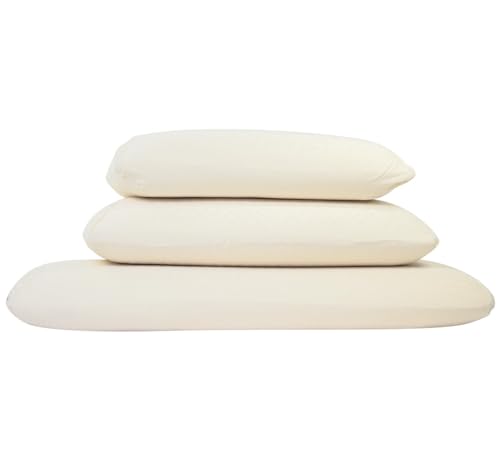
Turmerry Organic Latex Pillow (Queen, High Loft 5 Inch, Soft) — Best Overall
The Turmerry is the default recommendation for side sleepers who want real foam rubber. Its verified title states the full brief in one line: GOLS certified Dunlop latex, a high 5-inch loft in a soft feel, a zippered organic cotton cover, and a pinhole design that vents the core. That combination — certified latex, honest loft, removable cover — is what the whole category should look like.
Strengths
- GOLS certified Dunlop latex stated in the Amazon title, the strongest material claim in this roundup
- 5-inch high loft in a soft density suits side sleeping without a second pillow
- Zippered organic cotton cover removes for washing, extending the pillow’s hygienic life
Trade-offs
- High loft will feel too tall for dedicated stomach sleepers
- Soft density may under-support heavier heads that prefer a firmer cradle
- Solid latex is heavy to move and will not compress for travel
| Size | Queen (per Amazon title) |
| Loft | 5 inches, high loft, soft feel (per Amazon title) |
| Material | GOLS certified Dunlop latex (per Amazon title) |
| Cover | Zippered organic cotton (per Amazon title) |
Dunlop latex is the denser, more traditional foam rubber process, and in a soft density at five inches it gives side sleepers shoulder clearance without the plank-like feel of firm Dunlop. The pinhole pattern matters more than it sounds: latex is naturally springy rather than breathable in the airflow sense, and moulded pinholes are how solid latex pillows move air and avoid the warm, sealed sensation of a solid foam block.
The zippered organic cotton cover completes the ownership story. Foam rubber pillows live for years, far longer than their covers stay fresh, and a removable, washable cover in a natural fibre keeps the whole product consistent with why a buyer chose latex and organic materials in the first place.
If you sleep between side and back, this soft high-loft build is forgiving in both positions; pure back sleepers who like a low profile should look at the standard-loft Naturepedic below instead.
Best for: side sleepers wanting certified organic foam rubber with real loft / Not suited for: stomach sleepers and anyone who wants an adjustable fill
Check on Amazon — check the current price on Amazon before you buy, because sizes, prints and pack options change the total.

Naturepedic Organic Solid Latex Pillow (Standard) — Best Solid Latex Simplicity
Choose the Naturepedic solid latex pillow if you want foam rubber in its simplest, most durable form: one solid piece of organic latex, no shredding, no adjustment, no layered gimmicks. The listing’s own contrast with memory foam — cooler and more supportive, in the maker’s words — captures exactly why foam rubber loyalists buy solid latex.
Strengths
- Solid latex construction is the longest-lived format in the foam rubber family
- Organic positioning from a brand whose entire range is organic bedding
- Standard size fits the pillowcases you already own
Trade-offs
- Solid means non-adjustable; the loft you buy is the loft you keep
- The listing’s support and pain-relief wording is maker positioning, not a medical claim this guide endorses
- Premium tier within the latex category
| Size | Standard (per Amazon title) |
| Material | Organic solid latex (per Amazon title) |
| Format | Solid, non-adjustable |
A solid latex pillow is the closest modern product to the classic foam rubber pillow this search remembers: one resilient slab that springs back instantly, night after night, for years. There is nothing to fluff, redistribute or top up, and nothing to go lumpy. For sleepers exhausted by adjustable pillows that never feel the same two nights running, that consistency is the entire point.
Naturepedic’s organic focus also simplifies the materials question. Rather than auditing a blend, the buyer gets a single-material story from a maker whose reputation rests on organic bedding. The support language in the title should be read as comfort positioning — this guide makes no medical claims for any pillow — but as a firm, cool, durable foam rubber pillow, the product’s logic is sound.
Solid latex is also the easiest format to keep clean at the core level: the pillow itself should not be soaked, but the smooth surface under a washable protector stays hygienic far longer than shredded fills that trap dust deep inside.
Best for: sleepers who want set-and-forget solid foam rubber durability / Not suited for: anyone who needs to fine-tune loft after purchase
Check on Amazon — check the current price on Amazon before you buy, because sizes, prints and pack options change the total.

ORGANIC TEXTILES Natural Latex Bed Pillow (Queen, Firm) — Best Firm Option
Firm foam rubber is a specific taste, and this is its pick. The verified title states natural latex in a firm queen build with a GOTS certified organic cotton cover. Back sleepers who dislike sinking, and side sleepers with broad shoulders who need the pillow to hold its height under load, are the audience.
Strengths
- Firm density holds loft under heavier heads where soft latex bottoms out
- GOTS certified organic cotton cover stated in the Amazon title
- Queen size in a single-pack, so pairs can be bought matched
Trade-offs
- Firm latex can feel unyielding to lighter sleepers and dedicated side sleepers with narrow shoulders
- The GOTS claim in the title attaches to the cotton cover; the title does not claim GOLS certification for the latex itself, and this guide does not upgrade it
- Solid format, so no loft adjustment
| Size | Queen, pack of 1 (per Amazon title) |
| Firmness | Firm (per Amazon title) |
| Cover | GOTS certified organic cotton (per Amazon title) |
| Core | Natural latex (per Amazon title; latex certification not stated) |
Read the certification placement carefully, because this listing is a good lesson in honest labelling. The GOTS certification named in the title belongs to the organic cotton cover. The latex is described as natural, without a GOLS claim in the title, so this guide reports exactly that and no more. The pillow is still a genuine foam rubber pillow with an audited-organic cover — just know which component carries which claim.
On the bed, firm Dunlop-style latex does one job superbly: it does not collapse at 3 a.m. Sleepers who have rejected soft pillows for gradually sinking through the night will recognise the appeal immediately, while smaller sleepers should honestly steer toward the Turmerry’s soft build instead.
Firm latex pairs well with a thinner pillowcase; thick quilted cases mute the surface feel and add warmth the latex itself avoids.
Best for: back sleepers and broad-shouldered side sleepers who want firm foam rubber / Not suited for: lightweight sleepers and anyone who likes a soft, sinking pillow
Check on Amazon — check the current price on Amazon before you buy, because sizes, prints and pack options change the total.

Saatva Latex Pillow (Shredded Latex Core, High Loft) — Best Adjustable Latex
The Saatva answers the most common foam rubber complaint: solid latex cannot be shaped. Its verified title confirms a shredded latex core, which keeps the material honest — real latex foam rubber — while letting the sleeper push fill into the neck, flatten the middle, or build up an edge, habits solid pillows simply forbid.
Strengths
- Shredded latex core keeps the foam rubber material while adding mouldability
- High loft format suits side sleepers who also like to shape their pillow
- Latex shreds spring back better than shredded memory foam, which tends to pack and clump
Trade-offs
- The cached Amazon title is truncated mid-phrase, so specifications beyond the shredded core and high loft are not stated here and should be confirmed on the product page
- Shredded fills shift during the night and need re-fluffing
- Mouldable pillows feel different night to night, which consistency-seekers may dislike
| Core | Shredded latex (per Amazon title) |
| Loft | High loft (per Amazon title; exact figure truncated in cached title) |
| Positioning | Hypoallergenic (maker’s term in Amazon title) |
Shredded latex is the compromise candidate of the foam rubber world, and it compromises in the right direction. You lose the monolithic durability of a solid slab and gain the one thing solid latex cannot do — shape. For combination sleepers who start on their side and end on their back, that trade usually wins, because one fixed loft rarely serves both positions.
A note on sourcing honesty: the cached Amazon title for this listing is cut off mid-specification, so this review claims only what the visible title confirms — shredded latex core and high loft — and directs buyers to the product page for the rest. That restraint is deliberate; a specification this guide cannot see is a specification it will not print.
If you try shredded latex, give it a week of reshaping experiments before judging; most owners find a personal fill distribution — more at the edges, less in the centre, or the reverse — that a solid pillow could never offer them.
Best for: combination sleepers who want latex they can shape / Not suited for: sleepers who want identical feel every night with zero fluffing
Check on Amazon — check the current price on Amazon before you buy, because sizes, prints and pack options change the total.
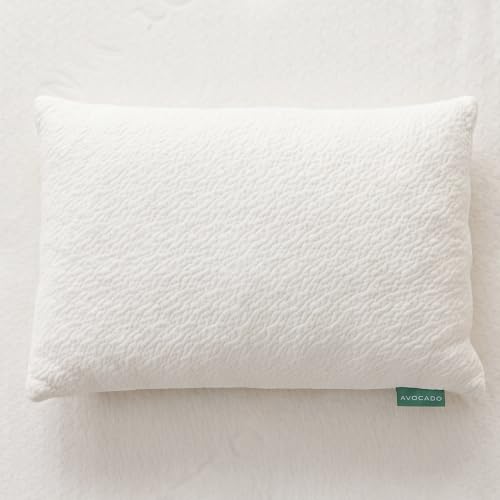
Avocado Organic Green Pillow (Adjustable Latex & Kapok) — Best Certified Adjustable
The Avocado Green Pillow is for the buyer who reads certification lists. Its verified title names GOTS, GOLS and GREENGUARD Gold, and describes an adjustable fill of Dunlop latex and kapok that can be added or removed to set the loft. Honesty requires one clarification: this is a latex-and-kapok blend, not a pure latex pillow, and the kapok is there to soften and lighten the feel.
Strengths
- Certification list — GOTS, GOLS and GREENGUARD Gold — stated directly in the Amazon title
- Truly adjustable loft: fill can be added or removed, unlike token zipper pillows
- Medium firm positioning spans back, side and stomach sleeping per the listing
Trade-offs
- Kapok blend means the fill is not 100% foam rubber; purists should choose a solid latex pick
- Adjustable pillows need an evening of experimentation to dial in
- Certified organic adjustable pillows sit at the premium tier of this category
| Size | Standard (per Amazon title) |
| Fill | Dunlop latex and kapok, adjustable (per Amazon title) |
| Certifications | GOTS, GOLS, GREENGUARD Gold (per Amazon title) |
| Firmness | Medium firm (per Amazon title) |
Kapok is a silky natural fibre that behaves almost opposite to latex: soft, light and compressible. Blending it with Dunlop latex shreds produces a pillow that keeps latex’s spring while losing its bouncy insistence, and for sleepers who found pure latex too lively, that mellowing is exactly the improvement they wanted. The blend is a design choice, not a dilution scandal — provided the buyer knows, which this review ensures.
The adjustable format also solves foam rubber’s oldest problem, which is that loft is destiny. Here loft is a setting. Remove fill for stomach sleeping, keep it high for side sleeping, and the same certified pillow serves a couple with different habits if each buys their own and tunes it privately.
Keep the removed fill in a sealed bag rather than discarding it; sleep preferences change with mattresses and seasons, and re-adding fill you kept is free, while replacing fill you threw away is not.
Best for: certification-focused buyers and couples who need different lofts from the same pillow model / Not suited for: foam rubber purists who want latex and only latex
Check on Amazon — check the current price on Amazon before you buy, because sizes, prints and pack options change the total.

Purple Harmony Pillow (Medium Loft, Standard) — Best Hybrid Cooling Design
The Purple Harmony is included as the engineered outlier, and its review is explicit about what it is: a Talalay latex pillow — genuine foam rubber — combined with a GelFlex Grid layer that gives it a weightless, floating feel unlike any plain latex pillow. Buy it if that engineered feel intrigues you, not if you want traditional foam rubber simplicity.
Strengths
- Talalay latex core is genuine foam rubber, softer and more consistent in feel than Dunlop
- GelFlex Grid adds a distinctive buoyant surface and airflow paths
- Medium loft standard size targets side sleepers per the listing
Trade-offs
- It is a hybrid construction, not a pure latex pillow, and feels noticeably different from classic foam rubber
- Grid materials and latex age differently, so long-term feel may change unevenly
- Premium tier pricing for the engineering
| Size | Standard, medium loft (per Amazon title) |
| Core | Talalay latex (per Amazon title) |
| Layer | GelFlex Grid (per Amazon title) |
Talalay is the other great latex process: lighter, airier and more uniform than Dunlop, and the classic choice for sleepers who find Dunlop dense. Using it as the Harmony’s core keeps this pillow honestly inside the foam rubber family, while the grid exterior is responsible for the floating sensation in the listing’s description. The two materials divide the labour — latex supports, grid floats.
This is also the coolest-feeling design in the roundup on paper, because the grid’s open geometry moves air in a way no solid foam can. Hot sleepers who like latex’s spring but not its surface warmth are the natural audience, and they should accept the trade that the pillow’s feel is modern-engineered rather than traditional.
Try this pillow with the thinnest pillowcase you own first; thick cases damp the grid’s distinctive surface, which is the feature you paid for.
Best for: hot sleepers who want latex support with an engineered cooling surface / Not suited for: traditionalists who want a plain solid foam rubber pillow
Check on Amazon — check the current price on Amazon before you buy, because sizes, prints and pack options change the total.
Comparison Table
| Pick | Badge | Key spec | Best for |
|---|---|---|---|
| Turmerry Organic Latex Pillow (Queen, High Loft 5 Inch, Soft) | Best Overall | Queen, 5-inch high loft, GOLS Dunlop latex, organic cotton cover | side sleepers wanting certified organic foam rubber with real loft |
| Naturepedic Organic Solid Latex Pillow (Standard) | Best Solid Latex Simplicity | Standard size, solid organic latex | sleepers who want set-and-forget solid foam rubber durability |
| ORGANIC TEXTILES Natural Latex Bed Pillow (Queen, Firm) | Best Firm Option | Queen, firm, natural latex, GOTS organic cotton cover | back sleepers and broad-shouldered side sleepers who want firm foam rubber |
| Saatva Latex Pillow (Shredded Latex Core, High Loft) | Best Adjustable Latex | Shredded latex core, high loft | combination sleepers who want latex they can shape |
| Avocado Organic Green Pillow (Adjustable Latex & Kapok) | Best Certified Adjustable | Adjustable Dunlop latex + kapok fill, GOTS/GOLS/GREENGUARD Gold per title | certification-focused buyers and couples who need different lofts from the same pillow model |
| Purple Harmony Pillow (Medium Loft, Standard) | Best Hybrid Cooling Design | Talalay latex core with GelFlex Grid, medium loft | hot sleepers who want latex support with an engineered cooling surface |
Foam Rubber vs Memory Foam: The Distinction This search Depends On
Foam rubber — latex foam — is made by whipping rubber latex into a foam and setting it, producing an open, springy material that pushes back instantly and evenly. Memory foam is a polyurethane formulation engineered to soften at body temperature and hold a shape. The sleeping difference is immediate: latex feels buoyant and responsive, memory foam feels slow and enclosing. Neither is objectively better, but they are not interchangeable, and a guide that quietly substitutes one for the other has failed its reader.
Durability separates them further. Quality latex holds its loft and resilience for many years, while memory foam gradually softens and takes permanent impressions, especially in warm bedrooms. Latex also has no break-in period and no temperature sensitivity — the pillow that arrives in winter feels the same in summer — where memory foam can arrive board-hard in a cold house and soften over days. Buyers returning to foam rubber after a disappointing memory foam purchase usually cite exactly these three traits: spring, consistency and life.
Dunlop vs Talalay: The Two Foam Rubbers
Every latex pillow in this guide is one of two processes, and the difference is feel. Dunlop latex is the older method: liquid latex is frothed, poured, and set, producing a denser foam that is slightly firmer toward the bottom of the mould. It is the workhorse of organic pillows — the Turmerry and the Avocado’s latex are Dunlop — and it suits sleepers who want support with substance. Talalay adds a vacuum and flash-freeze step before setting, producing a lighter, airier, more uniform foam; the Purple Harmony’s core is Talalay, and sleepers who find Dunlop dense usually prefer it.
Neither process is the premium one in any absolute sense, despite marketing that argues both ways. Dunlop tends to be denser and often carries the organic certifications, because its simpler process suits certified production. Talalay tends to feel softer at the same nominal firmness and breathes a little more freely. The practical rule: choose Dunlop for firm, grounded support and certified-organic briefs; choose Talalay for a lighter, plusher surface feel.
Shredded latex, as in the Saatva pick, is usually Dunlop or mixed latex cut into pieces, and its feel depends as much on the cut and the fill volume as on the process. That is why adjustable pillows ask for experimentation: you are not just choosing a material, you are finishing the manufacturer’s design in your own bedroom.
Latex Allergies, Scents and Certifications, Plainly
Three questions follow latex pillows everywhere, and each deserves a straight answer. First, allergy: a genuine latex allergy is a real medical condition, and anyone who has one should not sleep on latex of any kind, full stop — choose a different fill entirely. Second, scent: natural latex smells faintly of rubber when new, a smell most owners stop noticing within days as it airs; it is not the chemical odour of synthetic foams, and airing the pillow uncovered for a day handles most of it. Third, certifications: GOLS certifies organic latex, GOTS certifies organic textiles such as covers, and GREENGUARD addresses emissions — three different promises that listings, including the Avocado’s, sometimes stack together.
This guide reports each certification exactly where its verified title places it — on the latex, on the cover, or on the product — because the placement is the information. A buyer paying for certified latex should confirm the GOLS claim attaches to the latex itself; a buyer paying for an organic cover should not be charged, in money or in belief, for latex certification the listing never claimed.
None of these cautions diminishes the material. Latex remains the most durable, consistent and honestly describable pillow fill in this guide’s judgement — which is precisely why its claims deserve to be read as carefully as its pillows deserve to be slept on.
Pairing a Foam Rubber Pillow With Your Mattress
A pillow does not sleep alone; it completes a mattress. On a soft mattress, your shoulders sink deeper, the gap a side sleeper’s pillow must fill grows smaller, and a high-loft latex pillow can push the neck upward into a kink. On a firm mattress the same sleeper needs every inch of that loft. This is why the same Turmerry delights one household and puzzles another — the pillow did not change, the foundation did. When you change mattresses, expect to re-judge your pillow, and when you change pillows, judge them after several nights, because the pairing settles as your body does.
Adjustable latex earns a special mention here: it is the insurance policy against mattress uncertainty. Moving house, a new bed, a partner’s different mattress on holiday — the pillow whose loft travels with a zip and a handful of fill adapts where a solid pillow simply is what it is. Households in transition, students, and anyone between mattresses should weight the Saatva and Avocado formats accordingly.
The pillowcase is the final interface and not a neutral one. Thick quilted cases add warmth and mute latex’s surface; smooth cotton percale keeps the feel honest and cool. If a latex pillow feels almost right, change the case before you condemn the pillow — it is the cheapest experiment in sleep.
When to Replace a Pillow — and Why Latex Changes the Rhythm
The standard advice to replace pillows every year or two was written for polyester and down alternatives that clump, flatten and harbour their history. Solid latex plays by different rules: a quality Dunlop or Talalay pillow should feel essentially itself for many years, and replacing it on the polyester schedule wastes both money and a perfectly good pillow. The honest replacement signals for latex are physical — visible cracking or crumbling at the edges, a permanent loss of spring, a smell that airing no longer clears — not the calendar.
Shredded latex sits between the worlds: the fill lasts, but it gradually breaks into finer pieces and the loft softens, which the owner can compensate by adding fill long before replacement is honest. Avocado-style adjustable owners should keep their removed fill for exactly this top-up future.
Hygiene sets the floor under all of this. Protectors washed regularly keep the core out of the conversation for years; a pillow whose protector was never used lives a shorter, less pleasant life whatever it is made of. Buy the protector with the pillow, as one purchase, and the foam rubber you chose will repay the discipline.
A Short Buyer’s Checklist for Foam Rubber
Before paying for any latex pillow, run five checks against its listing. One: the title names latex — Dunlop, Talalay, solid or shredded — and not merely foam. Two: the loft is stated in inches or the format is honestly described, and it matches your sleep position. Three: certifications are placed where you think they are — on the latex, the cover, or the whole product. Four: the cover removes for washing, or you have accepted that it does not. Five: blends and hybrids are labelled to your satisfaction, with kapok, grids or other partners named rather than discovered.
Those five checks take two minutes and prevent every common disappointment in this category: the memory foam impostor, the wrong loft, the misread certificate, the un washable cover, the surprise blend.
And keep the receipt’s return window in mind without abusing it: latex feels different from whatever you slept on before, and a fair trial is a week of nights, not a nap. Judge it on the seventh morning, not the first.
Foam Rubber for Guest Rooms, Children and Travel
The guest room is foam rubber’s quiet triumph: a latex pillow waits months between sleepers and greets each one with exactly the loft it had for the last, where a polyester pillow slowly subsides in the cupboard of good intentions. Households that host often should move their best latex into the guest room when they upgrade their own, rather than buying fresh mediocrity for guests — the hand-me-down is the better pillow by a distance.
Children old enough for a full pillow inherit the same logic at smaller scale: a durable, washable-covered latex pillow outlasts the churn of childhood bedding, though loft should be modest and parents should follow age guidance for pillow use as with any bedding decision. Travel is the honest exception — solid latex is heavy and incompressible, and the traveller’s choice is a small shredded or compressible alternative accepted as a compromise, not a solid pillow forced into a suitcase it was never designed to enter.
The First Week With a Latex Pillow
Expect the first nights to feel foreign in a specific way: latex pushes back. Sleepers arriving from polyester or down alternatives are used to a pillow that yields and stays yielded, and the foam rubber conversation — you press, it answers — can feel lively to the point of distraction on night one. By night four or five, most converts stop noticing the spring and start noticing what it replaced: the 3 a.m. pillow-fluffing, the folded-pillow doubling, the slow sink into a hollow that used to be a pillow. Judge the material on the week’s evidence, and let the return window, not the first impression, have the final word.
A Closing Note on Expectations
Foam rubber will not fix a bad mattress, a noisy room or a racing mind, and this guide has not asked it to. What it does — reliably, for years, with a consistency no other fill matches — is present your head with the same honest surface every night and let everything else in the sleep equation be judged against a constant. Sleepers who understand that bargain tend to keep their latex pillows longer than any other bedding they own, and to replace them, eventually, with another latex pillow bought with the same five checks this guide ends on.
How to Choose a Foam Rubber Pillow by Sleep Position and Loft
Side sleepers need loft that fills the shoulder gap: look for high-loft builds around five inches, in soft to medium densities for average frames or firm for broad shoulders. The Turmerry and the shredded Saatva serve this group from opposite directions — solid consistency versus mouldable fill. Back sleepers need less height and more neck cradle, which is standard-loft solid latex territory. Stomach sleepers are foam rubber’s hardest customers, because even soft latex pushes back; the adjustable Avocado with fill removed is the honest recommendation, since a fixed latex pillow low enough for stomach sleeping barely exists.
Then decide your relationship with adjustment. Solid latex asks nothing of you for years and gives you the same pillow every night. Shredded and blended adjustable fills ask for an evening of tuning and occasional refluffing, and repay you with a loft matched to your body rather than to a product manager’s average. Neither answer is wrong; buying the wrong one for your temperament is the only real mistake in this category.
Finally, weigh the pillow when the listing allows and expect latex to be heavy. That weight is density, and density is lifespan — a feather-light foam pillow is telling you something about how much material is actually inside it.
How to Set Up and Care for a Latex Foam Rubber Pillow
Foam rubber rewards minimal, correct care. It does not need the washing, fluffing rituals or freezer tricks of other fills, and several popular pillow habits actively harm it.
- Unpack and let the pillow rest unrolled for a few hours; latex recovers its shape quickly and needs no multi-day off-gassing routine, though a faint natural rubber scent at first is normal and fades.
- Fit a washable pillow protector before the pillowcase; the protector is the washable layer that keeps oils and moisture away from the latex core for years.
- For adjustable models, set the loft on the first night by removing or adding fill in small handfuls, sleeping a full night between changes rather than judging by a five-minute lie-down.
- Wash the cover and protector regularly; never soak or machine-wash the solid latex core itself, which absorbs water and degrades — spot-clean the core only and dry it away from direct sun.
- Keep latex out of prolonged direct sunlight and away from heat sources, both of which oxidise rubber and shorten its life.
- Rotate the pillow head-to-foot weekly; latex does not need fluffing, but rotation evens the very gradual compression where your head rests.
A quality foam rubber pillow should feel essentially unchanged after its first year. If a latex pillow develops a permanent hollow early, that is a product defect story, not normal latex behaviour — contact the maker while the purchase is still recent.
Common Buying Mistakes
Buying memory foam while shopping for foam rubber. The two materials feel opposite. If the listing says memory foam, it is not the foam rubber pillow you searched for, however the search results are arranged.
Choosing loft by habit instead of by position. Your old polyester pillow compressed to half its loft; a latex pillow keeps its stated loft, so a five-inch latex pillow sleeps much taller than a five-inch poly pillow did.
Washing the latex core. Soaking solid latex damages it. Wash covers and protectors, spot-clean the core, and let the protector do the defensive work.
Expecting shredded latex to feel like solid latex. Shredded fills are mouldable and shifting by design. Buy them for shapeability, not for the monolithic consistency that defines solid foam rubber.
Ignoring the blend label. Latex-and-kapok and latex-and-grid pillows are legitimate designs, but they are blends and hybrids. Buy them for what they are, with the difference understood before the box arrives.
Final Recommendation
Start with the Turmerry if you side-sleep and want certified Dunlop latex with a proper cover; start with the Naturepedic if you want solid foam rubber at its simplest and most durable. Firm sleepers should go straight to the ORGANIC TEXTILES pillow, shape-shifters to the shredded Saatva, certification maximalists to the adjustable Avocado, and hot sleepers curious about engineering to the Purple Harmony — with its hybrid nature understood. Every route keeps you inside genuine foam rubber, which is the promise this search makes.
Check price on Amazon on the live listing, confirm size and loft in the variant selector, and remember that a latex pillow is a multi-year purchase: the cheapest night of ownership is the one where you bought the right loft once. Related pillow and sleep topics from this programme follow below.
Best Eco Friendly Hypoallergenic Pillows Best Duck Feather And Down Pillows Best Faux Down Pillows Best Extra Firm Extra Thick Gusset King Pillows Best First Pillows For Toddlers
Related guides
Frequently Asked Questions
Is foam rubber the same as latex in pillows?
Yes, in pillow terms foam rubber is latex foam: rubber latex whipped into a foam and set, either by the Dunlop or Talalay process. When a modern listing says natural latex pillow, it is describing the product older catalogues called a foam rubber pillow.
How is a foam rubber pillow different from memory foam?
Foam rubber springs back instantly, feels buoyant, sleeps comparatively cool and keeps its loft for years. Memory foam softens with body heat, holds an impression, responds slowly and gradually softens with age. They suit different sleepers and should never be substituted silently for one another.
How long does a latex foam rubber pillow last?
A quality solid latex pillow typically outlasts polyester and memory foam pillows by a wide margin, holding its shape for years of nightly use. Shredded latex lasts well too, though it needs refluffing. Lifespan depends on care: keep the core dry, protected and out of direct sun.
Can I wash a foam rubber pillow?
Wash the removable cover and a pillow protector, not the latex core. Solid latex should never be soaked or machine-washed; spot-clean it and air it away from sunlight. Adjustable fills should be kept dry as well, with the cover doing the washable work.
Which foam rubber pillow is best for side sleepers?
Side sleepers generally need the tallest loft in this roundup: the Turmerry’s 5-inch soft Dunlop build for a solid pillow, or the high-loft shredded Saatva if you like to shape the pillow. Broad-shouldered sleepers may prefer the firm ORGANIC TEXTILES build so the pillow holds height under load.
Does latex smell, and is it a problem for allergies?
New latex has a mild natural rubber scent that fades with airing and is distinct from chemical off-gassing. People with a known latex allergy should avoid latex pillows entirely and choose a different fill; everyone else should simply follow the maker’s material disclosures, and note that this guide makes no medical claims for any pick.

