Disclosure: airfryerkitchensupply.com is reader-supported. When you buy through links on our site, we may earn an affiliate commission at no extra cost to you.
Where to buy
Shopping for the best firm japanese futon pillows? Every pillow linked below was verified, so each link lands on the exact listing described. Buckwheat pillows are often sold with extra hulls or spare cases under the same product name, so confirm the size and bundle on the listing page before ordering — and check the current price on Amazon, as these small-batch products move in and out of promotion.
- ZENURAH Natural Buckwheat Pillow, Japanese Style Sobakawa, 28 x 17 — Check the current price on Amazon
- EMOOR Japanese Futon Set with Pillow, Compact-Twin — Check the current price on Amazon
- LOFE Buckwheat Pillow 20 x 26 with Organic Cotton Pillowcase — Check the current price on Amazon
- MIOTO Organic Buckwheat Pillow with Extra Hulls and Case — Check the current price on Amazon
- APOBUY Organic Buckwheat Pillow 20 x 26 — Check the current price on Amazon
- Beans72 Organic Buckwheat Pillow, Queen 20 x 30 — Check the current price on Amazon
The best firm Japanese futon pillows are, almost without exception, buckwheat hull pillows — the sobakawa style that has accompanied futon sleeping in Japan for centuries. The logic is inseparable from the futon itself: a firm, thin floor mattress offers no sink, so the pillow’s job is not to cradle like a hotel pillow but to fill the exact space between head, neck, and floor with something that holds its shape all night. Buckwheat hulls do that job uniquely well. They pour like a liquid when you move, then lock into a stable, sculpted mound that does not spring back, compress flat, or warm up against your head.
That is also the honest boundary of this category, stated up front: if you want plush, this is the wrong page. A firm Japanese futon pillow feels closer to a shaped sandbag than to down. It rustles softly when you turn. It asks a week of adjustment from anyone arriving from foam. In exchange it offers the two things its devotees swear by — a loft you can tune by adding or removing hulls, and a cool, airy sleep surface, because air circulates between hulls in a way it never can through a solid foam block.
The six picks below were all verified: a true sobakawa that names the style in its listing, a made-in-Japan futon set whose pillow follows the same tradition, and four adjustable buckwheat pillows in the Japanese style across the useful sizes, from a compact 14 x 20 to a full queen 20 x 30. This guide talks about firmness, fit, and comfort preferences only — a pillow is a comfort product, and we make no medical claims for any of them.
In this guide
Quick Picks
Six verified buckwheat pillows in the Japanese futon tradition — adjustable, cool, and unapologetically firm.
- ZENURAH Natural Buckwheat Pillow, Japanese Style Sobakawa, 28 x 17 — Best True Sobakawa: The only pick that names the sobakawa style outright: extra firm, 28 x 17 inches, breathable and cooling by construction. — check price on Amazon
- EMOOR Japanese Futon Set with Pillow, Compact-Twin — Best Authentic Set: A made-in-Japan shikibuton set — mattress, comforter, and pillow — for the buyer whose real project is the whole floor-sleeping setup. — check price on Amazon
- LOFE Buckwheat Pillow 20 x 26 with Organic Cotton Pillowcase — Best Adjustable Standard: A Japanese-style 20 x 26 buckwheat pillow with an organic cotton case and add-or-remove hull adjustability — the adaptable standard size. — check price on Amazon
- MIOTO Organic Buckwheat Pillow with Extra Hulls and Case — Best for Fine-Tuning: Ships with extra Tartary hulls and an extra cotton case, so the loft can go up as well as down — the tuner’s kit. — check price on Amazon
- APOBUY Organic Buckwheat Pillow 20 x 26 — Best Firm Neck Support Format: A firm 20 x 26 buckwheat pillow with extra hulls and case included, positioned for back and side sleepers who like a cool surface. — check price on Amazon
- Beans72 Organic Buckwheat Pillow, Queen 20 x 30 — Best Large Size: The queen-size buckwheat option at 20 x 30 inches from a long-running specialist maker — for bigger beds and broader shoulders. — check price on Amazon
How These Picks Were Chosen
We defined the category by construction, not by marketing accent. A qualifying pick had to be a buckwheat hull pillow — the authentic sobakawa fill — or, in the EMOOR set’s case, the pillow component of a genuine made-in-Japan shikibuton set. Foam ‘Japanese style’ pillows and generic firm pillows with a wave at the theme were excluded; the futon tradition this search names is a fill, not a font on the packaging.
Each candidate was verified by brand and product search, with the listed title matched to the pillow we intended to describe — size, fill, and case details all come from those titles, and where a title does not state a detail, the review says so rather than borrowing it from another listing. Adjustability was weighted heavily in the ranking: the ability to add or remove hulls is what makes a firm pillow survivable for a new user, because the correct loft is personal and usually discovered across the first week.
We also spread the sizes deliberately. Futon sleepers are disproportionately back and side sleepers on the floor or a low platform, and pillow footprint interacts with a narrow shikibuton differently than with a wide bed: the 14 x 20 compact, the 20 x 26 standards, the 28 x 17 sobakawa format, and the 20 x 30 queen each serve a real sleeping arrangement, and the reviews say which.
The 6 Best Firm Japanese Futon Pillows
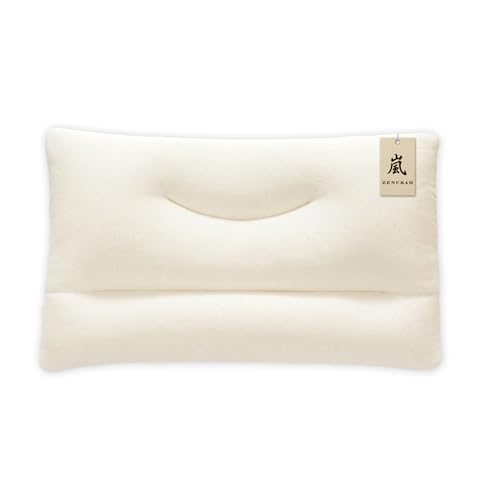
ZENURAH Natural Buckwheat Pillow, Japanese Style Sobakawa, 28 x 17 — Best True Sobakawa
If the keyword has a literal answer, it is this pillow. The ZENURAH’s listing names the Japanese sobakawa style directly, states its extra firm character, gives its 28 x 17 inch dimensions, and describes breathable, cooling performance that follows naturally from hull construction — air moves between hulls, so the pillow sleeps at room temperature instead of storing your head’s heat the way foam does.
The 28 x 17 format is itself a piece of tradition: longer and narrower than a Western standard pillow, shaped for a futon sleeper who stays mostly in one position and wants the pillow to fill the neck-to-floor gap precisely, with the ends available to fold or bunch for side sleeping. On a shikibuton or a low platform, that footprint simply makes sense in a way a plump queen rectangle does not.
Strengths
- Authentic sobakawa brief, named in the listing — style, firmness, and size all stated
- Extra firm hull fill that molds once and then holds its shape all night
- Breathable, cooling sleep surface by construction, not by gel additives
Trade-offs
- Extra firm is a commitment: foam converts should expect an adjustment week
- The 28 x 17 shape is futon-first and may feel narrow on a wide Western bed
- Hull rustle is real — very light sleepers notice it through the first nights
| Style | Japanese sobakawa (per listing) |
| Dimensions | 28 x 17 inches (per listing) |
| Fill | Buckwheat hulls, described as 100% mountain grown (per listing) |
| Firmness | Extra firm (per listing) |
Use it as the tradition intends: on your back, push a shallow valley into the hulls with your fist where your head will rest, and build the ridge under your neck with your hands. The pillow will keep that sculpture until you remake it — that is the entire technology, and once it clicks, sleepers tend to become evangelists. Side sleepers should bunch extra hulls toward the lower edge to raise the loft for the shoulder gap.
Between this and the adjustable pillows below, the choice is temperament: the ZENURAH is the purist’s format with the style’s name on it, while the LOFE, MIOTO, and APOBUY trade a little tradition for zipper-adjustable loft in Western sizes. Neither is a compromise — they are the same idea wearing its original and its adapted clothing.
Best for: Futon and floor sleepers who want the authentic sobakawa format, extra firm and cool / Not suited for: Plush-pillow loyalists, or anyone unwilling to spend a week adapting to hull fill
Check on Amazon — check the current price on Amazon before you buy, because sizes and color options change often.

EMOOR Japanese Futon Set with Pillow, Compact-Twin — Best Authentic Set
This pick answers a slightly different question, and we include it with its framing on its sleeve: many people searching for a firm Japanese futon pillow are actually building a futon setup, and the pillow cannot be judged apart from the mattress it pairs with. EMOOR’s set is the genuine article — a space-saving Japanese futon set, made in Japan, comprising the shikibuton mattress, a comforter, and the pillow, in a compact-twin size that folds away.
Buying the pillow inside its native system has a real advantage: the loft and firmness were specified by the maker to work with that mattress’s firmness and thickness, removing the guesswork of matching a third-party pillow to a floor bed. For guest rooms, small apartments, and tatami spaces where the bed must disappear by day, the matched set is the tidy solution.
Strengths
- Made in Japan, per the listing — the tradition sourced, not imitated
- Pillow loft and firmness matched by the maker to its own shikibuton
- Complete foldable system: guest bed, small-space bed, or camp setup in one purchase
Trade-offs
- It is a set: buyers who only need a pillow are buying a mattress and comforter too
- The listing title does not state the pillow’s fill — check the product page if buckwheat specifically is your requirement
- Compact-twin sizing suits one sleeper and smaller rooms only
| Contents | Futon mattress, comforter, and pillow (per listing) |
| Origin | Made in Japan (per listing) |
| Size | Compact-twin (per listing) |
| Pillow fill | Not stated in the listing title |
Judge this purchase as furniture, not bedding: it replaces a guest bed, folds into a closet, and carries the whole floor-sleeping proposition in one box. The pillow inside that proposition is firm in the futon manner — a shaped support rather than a cushion — which is exactly the feel this search is hunting.
If you already own a shikibuton you love, buy one of the standalone pillows and skip the set. If your futon project is still a bare floor and a search history, the set is the honest shortcut, and its pillow is the reference point the other five picks are variations on.
Best for: Buyers building a complete, authentic Japanese floor-sleeping setup for guests or small spaces / Not suited for: Anyone who only needs a pillow, or who requires a confirmed buckwheat fill without opening the product page
Check on Amazon — check the current price on Amazon before you buy, because sizes and color options change often.

LOFE Buckwheat Pillow 20 x 26 with Organic Cotton Pillowcase — Best Adjustable Standard
LOFE’s standard-size pillow is where most Western futon-curious sleepers should start, and its listing confirms why: 20 x 26 inches (the familiar standard footprint), Tartary buckwheat hulls, an organic cotton pillowcase, Japanese style named outright, and the crucial feature — you can add or remove fill to set the loft. Adjustability converts the firm-pillow gamble into a fitting process: start slightly overfull, remove a cup of hulls every second night, and stop when your head and shoulders say stop.
The listing markets the pillow toward neck comfort for side and back sleepers; we frame it the way this guide frames everything — as a firmness and fit preference. What is objectively true is the mechanism: a moldable fill that holds a chosen shape gives a sleeper control over their head and neck position that a fixed foam pillow cannot, and many people simply sleep more comfortably with that control.
Strengths
- Add-or-remove hull adjustability — the firm pillow you can tune instead of endure
- Standard 20 x 26 size fits the pillowcases you already own
- Organic cotton pillowcase included, per the listing
Trade-offs
- Tartary hulls have a faint natural scent at first that airs out over days
- Tuning takes a week of small experiments — impatient sleepers may under-adjust and blame the pillow
- Heavier than any foam pillow of its size; not a travel pillow
| Dimensions | 20 x 26 inches (per listing) |
| Fill | Tartary buckwheat hulls, adjustable (per listing) |
| Case | Organic cotton pillowcase included (per listing) |
| Style | Japanese style (per listing) |
Set it up on the floor or platform first, even if it will eventually live on a bed: the futon context is what its firmness was designed around, and judging it atop a soft mattress muddies the experiment. Side sleepers should keep the loft higher — the shoulder gap on a firm surface is real — while back sleepers usually land lower than they expect.
Between the two LOFE sizes in this roundup, this 20 x 26 is the default: full coverage for turning, standard cases, and enough hull volume to sculpt. The 14 x 20 below is the specialist — for travel, for smaller frames, and for sleepers who use a pillow only under the neck.
Best for: First-time buckwheat buyers who want Japanese-style firmness with an adjustable safety net / Not suited for: Anyone wanting a set-and-forget pillow with no tuning week
Check on Amazon — check the current price on Amazon before you buy, because sizes and color options change often.

MIOTO Organic Buckwheat Pillow with Extra Hulls and Case — Best for Fine-Tuning
Every adjustable pillow lets you remove hulls; the MIOTO’s listing confirms it also ships with extra Tartary buckwheat hulls, which means the adjustment runs both directions. That matters more than it sounds: the most common buckwheat mistake is over-removing in week one, chasing softness, and landing on a flat pillow with no way back. A bag of spare hulls makes the experiment reversible, and reversible experiments are the ones people actually finish.
The second extra is a spare cotton pillowcase, included per the listing — a small thing that doubles the pillow’s practical life, because the case is the washable surface and the part that wears. The pillow is positioned for back and side sleepers, and its off-white case keeps the traditional, unbleached look of the category.
Strengths
- Extra hulls included — loft adjusts up and down, not just down
- Extra cotton pillowcase included per the listing
- Adjustable height and firmness stated by the manufacturer
Trade-offs
- Exact dimensions are not stated in the listing title — confirm the size on the product page
- More parts to store: the spare hulls need a dry home
- Like all hull pillows, it is firm, rustly, and heavier than foam
| Fill | Tartary buckwheat hulls, with extra hulls included (per listing) |
| Case | Extra cotton pillowcase included (per listing) |
| Adjustability | Height and firmness adjustable (per listing) |
| Dimensions | Not stated in the listing title |
The tuning protocol this pillow invites: sleep three nights as shipped, then adjust by half-cups, keeping a note of what you changed. Because extra hulls are in the box, you can also build asymmetry — more fill on the side you favor — a trick fixed pillows cannot perform at any price.
Against the LOFE standard, the MIOTO trades the published dimension for the fuller kit. If knowing the exact 20 x 26 footprint up front matters most, take the LOFE; if the freedom to tune in both directions matters most, take the MIOTO and spend thirty seconds confirming its size on the listing page.
Best for: Methodical tuners and side sleepers who expect to dial loft up as well as down / Not suited for: Buyers who want every spec, including dimensions, stated before they click
Check on Amazon — check the current price on Amazon before you buy, because sizes and color options change often.

APOBUY Organic Buckwheat Pillow 20 x 26 — Best Firm Neck Support Format
APOBUY’s pillow lands in the same well-specified territory as the LOFE and MIOTO — 20 x 26 inches, Tartary buckwheat hulls, extras in the box — with its listing leaning hardest on the word ‘firm.’ It describes a firm neck support pillow for back and side sleepers with a cooling character, and in this category those are construction claims before they are comfort ones: hulls are firm, hulls do sleep cool, and a 20 x 26 footprint is the standard stage for both.
We present the ‘neck support’ language as the manufacturer’s positioning, in line with this guide’s comfort-only framing. The verifiable substance beneath it is the same mechanism described throughout: a moldable, stable fill that holds the head and neck at a height you choose, on a surface that does not store heat.
Strengths
- Firm positioning stated plainly — no ambiguity about what feel you are buying
- Extras included per the listing: spare hulls and an extra cotton case
- Standard 20 x 26 size with adjustable height and firmness
Trade-offs
- Overlaps heavily with the LOFE and MIOTO — the choice among them is kit and nuance, not concept
- Firm is firm: stomach sleepers should look at the compact LOFE or leave the category
- New-hull scent and rustle require the usual first-week patience
| Dimensions | 20 x 26 inches (per listing) |
| Fill | Tartary buckwheat hulls; extra hulls included (per listing) |
| Case | Extra cotton pillowcase included (per listing) |
| Character | Firm; cooling (per listing) |
Why carry three similar 20 x 26 adjustable pillows in one roundup? Because this is the category’s center of gravity, and the differences that remain — what is in the box, how the maker describes firmness, small construction choices — are exactly what a buyer choosing among near-identical listings needs compared honestly, rather than a false variety of unrelated products.
Pick the APOBUY if its kit and firm-first description match your intent and its current listing terms suit you; pick the LOFE for its organic-case emphasis, the MIOTO for its off-white traditional presentation. All three are verified, all three tune the same way, and all three will out-firm any foam pillow you have owned.
Best for: Back and side sleepers who want the firmest-described adjustable in the standard size / Not suited for: Stomach sleepers, or anyone seeking a meaningfully different concept from the other hull pillows
Check on Amazon — check the current price on Amazon before you buy, because sizes and color options change often.
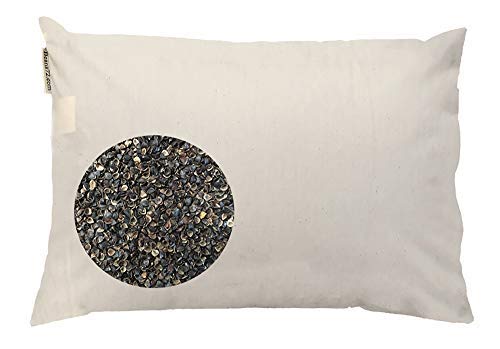
Beans72 Organic Buckwheat Pillow, Queen 20 x 30 — Best Large Size
Beans72 is one of the names that built the buckwheat category outside Japan, and its queen pillow is the size answer in this roundup: an organic buckwheat pillow at 20 x 30 inches, confirmed plainly in its listing title. That extra four inches of length over a standard matters for restless sleepers and broad shoulders, and it makes this the pick for using a Japanese-style firm pillow on a Western bed without the pillow feeling lost in the sheets.
The listing is admirably bare — name, fill, size — which in this category usually signals a maker selling to repeat buyers who know the product. What the title does not state, we do not invent: adjustability and case details should be confirmed on the product page, where this maker’s options are laid out.
Strengths
- True queen footprint, 20 x 30 inches, stated in the listing
- Organic buckwheat fill from a specialist, long-running maker
- The bridge pick: futon firmness at a Western bed’s scale
Trade-offs
- Adjustability and case inclusions are not stated in the title — verify on the product page
- A queen of hulls is heavy; this pillow commutes between rooms reluctantly
- Bare-bones presentation means doing a little more reading before purchase
| Dimensions | 20 x 30 inches, queen (per listing) |
| Fill | Organic buckwheat (per listing) |
| Adjustability | Not stated in the listing title |
| Case | Not stated in the listing title |
On a futon, a queen pillow is a luxury of width; on a bed, it is simply correct sizing. Side sleepers who travel across the pillow at night will feel the difference most — the sculpture you shape at lights-out is still under you at 3 a.m., instead of ending at the standard pillow’s edge.
Close the roundup here if your search began with a big bed and a firm preference: this is the verified intersection of the two. Everyone else should start with the adjustable standards and discover their loft before committing to the queen’s full hull volume.
Best for: Queen-bed owners and broad-shouldered sleepers who want buckwheat firmness at full size / Not suited for: First-time hull buyers who should learn their loft on an adjustable standard first
Check on Amazon — check the current price on Amazon before you buy, because sizes and color options change often.
Comparison Table
| Pick | Badge | Key spec | Best for |
|---|---|---|---|
| ZENURAH Natural Buckwheat Pillow, Japanese Style Sobakawa, 28 x 17 | Best True Sobakawa | Sobakawa 28 x 17, extra firm buckwheat hulls | Futon and floor sleepers who want the authentic sobakawa format, extra firm and cool |
| EMOOR Japanese Futon Set with Pillow, Compact-Twin | Best Authentic Set | Made-in-Japan shikibuton set incl. pillow, compact-twin | Buyers building a complete, authentic Japanese floor-sleeping setup for guests or small spaces |
| LOFE Buckwheat Pillow 20 x 26 with Organic Cotton Pillowcase | Best Adjustable Standard | 20 x 26, adjustable Tartary hulls, organic cotton case | First-time buckwheat buyers who want Japanese-style firmness with an adjustable safety net |
| MIOTO Organic Buckwheat Pillow with Extra Hulls and Case | Best for Fine-Tuning | Adjustable hulls + extras included, spare case | Methodical tuners and side sleepers who expect to dial loft up as well as down |
| APOBUY Organic Buckwheat Pillow 20 x 26 | Best Firm Neck Support Format | 20 x 26, firm, adjustable, extras included | Back and side sleepers who want the firmest-described adjustable in the standard size |
| Beans72 Organic Buckwheat Pillow, Queen 20 x 30 | Best Large Size | Queen 20 x 30, organic buckwheat, specialist maker | Queen-bed owners and broad-shouldered sleepers who want buckwheat firmness at full size |
The honest structure of this category: one authentic format (the ZENURAH sobakawa), one authentic system (the EMOOR set), and four adjustable buckwheat pillows that adapt the tradition to Western sizes and habits. If your futon is a real shikibuton on the floor, the first two speak your language natively; if your futon is a sofa bed or a low platform in a Western bedroom, the adjustable four will fit your cases and your expectations better.
Adjustability is the table’s most important column in practice. A fixed firm pillow is a bet; an adjustable one is a fitting. Only the listings that state add-or-remove fill were credited with it — where a title is silent, the table says so, and the product page becomes part of the purchase.
How to Choose a Firm Japanese Futon Pillow
Choose by sleeping surface first. On a true floor futon, the pillow works against a firm, thin base, and the traditional formats — the sobakawa’s 28 x 17, the EMOOR set’s matched pillow — are proportioned for it. On a platform bed or a futon sofa with a thicker mattress, the Western-sized adjustable pillows integrate better with your bedding and your habits.
Choose by position second. Back sleepers on firm surfaces generally land at a lower loft than they expect — the floor is already doing the support work, and the pillow mostly fills the neck curve. Side sleepers need the loft that spans ear to shoulder, which on a futon means more hulls than a back sleeper uses, and is the strongest argument for the adjustable models. Stomach sleepers and firm pillows are natural enemies; the compact 14 x 20 LOFE format (a sibling size in the same verified line as our standard pick) or a different category entirely will serve them better.
- Floor futon, traditionalist: ZENURAH sobakawa, or the EMOOR set if building the whole setup.
- First buckwheat pillow: LOFE or APOBUY 20 x 26 adjustable — learn your loft.
- Fine-tuner: MIOTO, for its included extra hulls and case.
- Queen bed, firm preference: Beans72 20 x 30.
Buckwheat Hulls Explained: Why the Fill Feels Like That
A buckwheat pillow is thousands of hulls — the hard outer husks of the buckwheat seed, each a small three-sided shell. Poured together they behave like a granular solid: they flow under pressure, interlock at rest, and let air pass between them. Every property devotees cite follows from that structure. The moldability, the shape-holding, the coolness, the slight rustle, the weight — none of it is a feature added by a manufacturer; it is what hulls are.
Hulls also age gracefully in a way foams do not. They do not off-gas, they do not take a permanent compression set in a season, and a pillow can be refreshed by airing the fill in the sun and topping up from a bag of spare hulls — one reason the picks that include extra hulls earned their places. The fill is a plant material, so it wants dry storage and an occasional airing; treated that way, a buckwheat pillow’s service life is measured in many years, with the case, not the fill, as the wear part.
The honest costs are the mirror of the virtues: hulls are heavy, they make a soft sound when you move, and the firmness is unyielding in a way that divides sleepers absolutely. Nobody is neutral about a buckwheat pillow after a week — which is why the adjustable models, with their week-long fitting process, are the sensible front door to the category.
Getting the Loft Right: A Fitting Method for Hull Pillows
Loft is the whole game, and it is personal: it depends on your shoulder width, your position, and your surface’s firmness. The method that works: start with the pillow as shipped for two nights. Then adjust by half a cup of hulls at a time — never more — sleeping at least one full night between changes. Keep the removed hulls in a sealed bag; you may want them back, and the MIOTO and APOBUY buyers have their spares already in the box.
Judge each setting by the morning, not the first minute: a new loft can feel strange at lights-out and right by 3 a.m. Back sleepers usually remove more than they expect; side sleepers usually add. When you find the setting where you stop noticing the pillow, stop adjusting — that invisibility is the destination, and chasing further is how good lofts get ruined.
Futon Pillow Care: Cases, Airing, and Hull Refresh
Care for a hull pillow is mostly care for its case. The case is the washable interface — wash it on your normal bedding rhythm, which is why the models that include a spare case hold an advantage: the pillow is never out of service waiting for laundry. The inner pillow itself should not be soaked; hulls and water are enemies, and a wet hull fill must be spread and dried completely before it goes back into service.
Airing is the traditional maintenance: on a dry, sunny day, pour the hulls into a wide tray or onto a clean sheet outdoors for a few hours. Sun and moving air freshen the fill, drive off absorbed moisture, and let you inspect for any broken hull dust to sift out. Once or twice a year is plenty for most homes.
Top up rather than replace. Hulls compact very slowly, and a cup or two of fresh hulls restores a pillow that has settled over years. Between the spare-hull kits in this roundup and the fill’s own longevity, a buckwheat pillow is one of the few bedding purchases whose tenth year can feel like its second — provided it was the right firmness for you in the first place, which is what the fitting method above is for.
Pairing a Firm Pillow With a Futon: The System View
A futon pillow cannot be chosen in isolation, because its loft is measured against the surface beneath it. The same pillow that is perfect on a thin shikibuton over tatami will feel tall on a thick platform mattress, because the mattress’s own give has already absorbed part of the head-and-shoulder geometry. This is why floor sleepers consistently land at lower lofts than bed sleepers using the identical pillow — the floor contributes nothing, so the pillow must contribute everything, precisely shaped.
It is also why the EMOOR set earns its place in a pillow roundup: a maker specifying the pillow and the mattress together removes the interaction variable entirely. Everyone else is solving a two-part equation with one purchase, and the adjustable pillows are the practical tool for that — they let the pillow’s half of the equation change until the system balances.
If you change your surface — futon to platform, platform to floor — expect to re-fit the pillow. Keep the removed hulls. The pillow you tuned for one bed is a starting point for the next, not a finished answer, and the thirty seconds of re-shaping described in this guide’s how-to is the cheapest sleep upgrade in the whole system.
How to Shape a Buckwheat Pillow for Your Sleeping Position
A hull pillow is not laid on; it is built, nightly, in about twenty seconds. These steps build it for the two positions it serves best.
- Start with the pillow flat and evenly filled. Give it a shake and a pat so the hulls distribute evenly. Every shaping starts from level — sculpting a lopsided pillow produces a lopsided night.
- For back sleeping, press the valley. Lie the pillow down and press a shallow depression with your fist where your head will rest, then use your hands to raise a gentle ridge along the lower edge, where your neck will sit. Head in the valley, neck on the ridge: that is the classic sobakawa shape.
- For side sleeping, build the shoulder wall. Push hulls toward the edge nearest your shoulder to raise that side’s loft, so your head sits level above the shoulder gap rather than tilting down into it. On a firm futon this wall needs to be taller than you expect.
- Test with a full minute, not a glance. Lie down in position for a slow count of sixty. Your head should feel held rather than propped, and your neck should feel filled rather than stretched. Adjust by handfuls, not cupfuls, from here.
- Remake it when you change position. Hull pillows hold the shape you give them — including the wrong one for a new position. A quick re-sculpt when you roll from back to side is normal use, not a defect, and takes seconds once it is a habit.
- In the morning, flatten it. Pat the pillow back to level and stand it to air while the futon airs. The daily flatten-and-air rhythm keeps the fill fresh and the next night’s shaping honest.
A week of this and the shaping becomes as automatic as fluffing a down pillow ever was — except the shape you make is still there when you wake up, which is the entire point.
Common Buying Mistakes
Expecting plush. A firm Japanese futon pillow is firm the way a tatami is firm. Buyers seeking a soft cradle should leave this category entirely rather than leave a disappointed review on a pillow doing its job correctly.
Judging it on night one. Foam converts need most of a week: the fill is unfamiliar, the loft is uncalibrated, and the rustle is new. Adjust in small steps and judge by mornings at the end of the week.
Removing too many hulls at once. Over-removal is the classic self-inflicted wound — a flat pillow and a bag of hulls you now have to pour back. Half-cup steps, one night apart, every time.
Washing the hull fill. Water and hulls do not mix. Wash the removable case; air the fill; keep the inner pillow dry. A soaked fill must be fully dried before use, a process measured in days, not hours.
Using a thick pillowcase stack. Two cases and a protector muffle the hulls’ moldability — the feature you bought. One good cotton case, ideally the maker’s own, is the correct interface.
Final Recommendation
Start where the tradition starts: the ZENURAH sobakawa is the authentic format with its name on it, extra firm and cool, and the EMOOR set is the authentic system for anyone building the whole floor bed. For the majority arriving from Western pillows, the adjustable standards are the wise door — the LOFE for its organic case and clean spec sheet, the APOBUY for its firm-first brief and included extras, the MIOTO for the tuner who wants spare hulls and a spare case in the box.
Size up with the Beans72 queen when the bed is big and the preference is settled. Whichever you choose, give it the fitting week, shape it nightly, and judge it by your mornings. Firm Japanese futon pillows reward exactly the sleepers who meet them halfway — and for those sleepers, nothing else on the pillow shelf feels like coming home.
A final word about value in this small, honest category: a buckwheat pillow has no electronics to fail, no foam to yellow and crumble, and no loft to lose that a cup of hulls cannot restore. Bought at the right size and tuned with a week’s patience, it is among the longest-lived objects in the bedroom — the rare purchase that asks more of its owner at the start and less of them every year after.
Rounding out a floor-sleeping or low-bed setup? These related guides from the same program cover the neighboring pieces:
Best Floor Pillows For Adults Best Medium Pillows For Side Sleepers Best Flat And Fluffy Pillows Best Foam Pillows For Neck
Frequently Asked Questions
Are Japanese futon pillows really that firm?
Yes — genuinely, structurally firm. Buckwheat hulls interlock under your head and hold a shape rather than cushioning like foam or down. The ZENURAH in this roundup is described by its maker as extra firm, and the adjustable models exist precisely so new users can approach that firmness gradually by removing hulls.
How long does it take to get used to a buckwheat pillow?
Most converts report the better part of a week: a few nights of noticing the fill and the faint rustle, while adjusting the loft in small steps, and then a morning where the pillow has simply disappeared from their attention. Judge the pillow at the end of that week, not on night one.
Do buckwheat pillows sleep cool?
By construction, yes — air circulates between the hulls, so the pillow rests near room temperature instead of storing body heat the way a solid foam block does. Several listings in this roundup describe their pillows as cooling or cool to sleep on, and the mechanism is the fill itself, not an added gel.
Can I wash a buckwheat pillow?
Wash the removable case as often as you like — several picks include a spare for exactly this rotation. Do not soak the hull fill. Air the hulls in the sun a couple of times a year to freshen them, and top up with spare hulls if the loft settles over the years.
What size should I choose?
Match the pillow to the bed and your build: the sobakawa’s 28 x 17 suits a floor futon; the 20 x 26 standards suit most sleepers and the cases you own; the 20 x 30 queen (Beans72) suits big beds and broad shoulders; and compact 14 x 20 formats, like the LOFE line’s smaller size, suit travel and smaller frames. Side sleepers should prioritize adjustable loft over footprint.
Is a buckwheat pillow a medical treatment for neck problems?
No, and this guide makes no such claim for any pick. These are comfort products chosen for firmness, fit, and feel; some manufacturers market them toward neck support, which we report as their positioning. Anyone with a medical condition should follow their clinician’s advice about pillows and sleep position.

