Disclosure: airfryerkitchensupply.com is reader-supported. When you buy through links on our site, we may earn an affiliate commission at no extra cost to you.
Where to buy
With well water, buy the faucet and the maintenance plan together: choose a finish and internal construction that tolerate your water’s iron, sulfur, or hardness, and confirm your sink’s hole configuration before ordering anything. No faucet in this guide carries a purchase link — no bathroom-sink faucet listing could be confirmed through this site’s API verification for this batch — so each pick is a clearly labelled specification to shop, with the exact features to verify on the listing.
Brushed-nickel single-handle faucet with ceramic disc cartridge — unlinked pick in this guide; check price on Amazon by searching the exact product name, because we could not confirm a listing through our verification pass for this batch.
Widespread two-handle faucet with replaceable ceramic cartridges — unlinked pick in this guide; check price on Amazon by searching the exact product name, because we could not confirm a listing through our verification pass for this batch.
Centerset faucet in a spot-resistant finish — unlinked pick in this guide; check price on Amazon by searching the exact product name, because we could not confirm a listing through our verification pass for this batch.
Solid stainless steel or brass single-hole faucet — unlinked pick in this guide; check price on Amazon by searching the exact product name, because we could not confirm a listing through our verification pass for this batch.
Touchless or sensor bathroom faucet with accessible aerator — unlinked pick in this guide; check price on Amazon by searching the exact product name, because we could not confirm a listing through our verification pass for this batch.
Wall-mounted faucet specification for vessel sinks on well water — unlinked pick in this guide; check price on Amazon by searching the exact product name, because we could not confirm a listing through our verification pass for this batch.
The best faucets for bathroom sinks having well water are not simply the best bathroom faucets with a different label, because well water changes the ownership equation: iron stains finishes and aerators, sulfur attacks some metals, hardness scales cartridges and spots surfaces, and sediment from the well clogs screens and wears seals. A faucet that is flawless on treated city water can look ten years old in eighteen months on a hard, iron-rich well. This guide is therefore written as a set of honest specifications — finishes, materials, and designs that experienced well owners favour — with the water-testing and maintenance routine that matters as much as the faucet itself. No model is linked, because none could be verified for this batch, and this guide will not invent listings to fill the slots.
In this guide
Quick Picks
Brushed-nickel single-handle faucet with ceramic disc cartridge — Best Overall Specification. The default specification for well water: a brushed finish that hides mineral spotting, one handle for simple control, and a ceramic disc cartridge that tolerates hardness better than older washer designs.
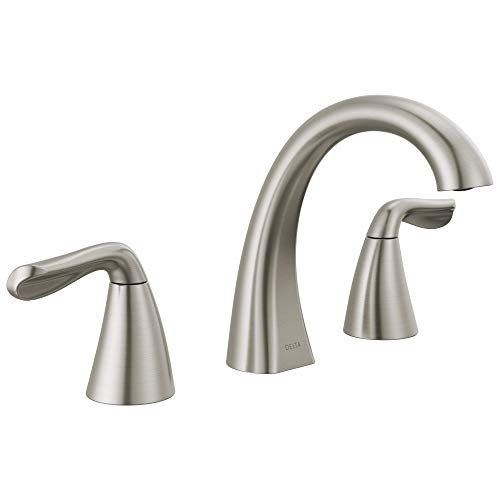
Widespread two-handle faucet with replaceable ceramic cartridges — Best Traditional Specification. For sinks drilled for widespread fittings and owners who prefer separate hot and cold handles — specified here with replaceable cartridges and metal construction throughout.
Centerset faucet in a spot-resistant finish — Best for Small Sinks. The compact specification for standard 4-inch centreset sinks, in one of the spot-resistant finishes the major makers offer for exactly this hard-water problem.
Solid stainless steel or brass single-hole faucet — Best Corrosion Resistance. For acidic or sulfur-bearing well water, the specification is the metal itself: a solid stainless or brass body with no plated zinc internals to corrode from inside.
Touchless or sensor bathroom faucet with accessible aerator — Best for Hygiene and Hard Use. A sensor specification for the well-water bathroom that also serves kids, guests, or anyone with limited grip — with the well-water caveat that its aerator and solenoid screens must be easy to service.
Wall-mounted faucet specification for vessel sinks on well water — Best for Vessel Sinks. For a vessel sink, a wall-mounted spout keeps the faucet body off the wettest surface in the bathroom — with the well-water warning that its rough-in must be right the first time.
How These Picks Were Chosen
We chose specifications by failure mode. Against iron: finishes and aerators that clean easily and hide staining gracefully. Against hardness: ceramic disc cartridges, accessible aerators, and designs whose parts can be descaled or replaced without replacing the faucet. Against sulfur and acidity: solid, corrosion-resistant internal materials rather than plated pot metal. Against sediment: aerators and supply screens a homeowner can service in minutes.
The 6 Best Faucets for Bathroom Sinks Having Well Water
Brushed-nickel single-handle faucet with ceramic disc cartridge — Best Overall Specification
Brushed nickel’s mottled surface is the well owner’s friend — the white haze of dried hard-water droplets that glares on polished chrome all but disappears on it. A single handle means one cartridge to descale or replace, and ceramic discs, kept clean of grit by an inlet screen, are the longest-lived valving a homeowner can service.
Strengths
- Brushed finish camouflages hard-water spotting between cleans
- Ceramic disc cartridge is the most hardness-tolerant common valving
- Single-handle layout halves the cartridge maintenance of a two-handle set
Trade-offs
- Brushed finishes vary between brands — a replacement part years later may not match exactly
- Single-handle style does not suit every sink or every traditional bathroom
- No confirmed listing in this guide; verify cartridge type and finish on the listing, not the headline
Shop this specification by asking three questions of any listing: is the cartridge ceramic disc, is the finish a true brushed nickel over a solid body rather than a thin plated plastic shell, and is the aerator a standard threaded size you can remove with fingers or a simple key? Those three answers decide five years of ownership more than the silhouette does. Install it with the aerator removed for the first flush, so installation debris never reaches the screen, and keep the aerator key — tape it inside the cabinet door, where future you will actually find it.
Best for: most well-water bathrooms wanting one durable, forgiving, easy-clean faucet / Not suited for: period bathrooms that demand a two-handle traditional look
Unlinked pick — no confirmed Amazon listing was available through our verification pass for this batch, so no purchase link is included. Search the exact name on Amazon and compare the listing carefully before buying.
Widespread two-handle faucet with replaceable ceramic cartridges — Best Traditional Specification
A widespread set suits larger vanities and traditional rooms, and on well water it has one underappreciated virtue: each side’s cartridge is independent, so a grit-damaged hot side can be serviced without touching the cold. Specify metal bodies and pop-up assemblies; the plastic drain parts bundled with cheap sets are where well-water installations fail first and smell worst.
Strengths
- Independent cartridges make well-water servicing cheaper and simpler
- Widespread layout fits larger, traditionally drilled vanities
- Metal construction throughout resists the corrosion cheap internals suffer
Trade-offs
- Two cartridges and more joints mean more eventual maintenance points
- Installation is the most involved of any specification here
- No confirmed listing in this guide — verify hole spacing against your sink before ordering anything
Measure before you fall in love: widespread means the handles sit separately, typically on 8-inch centres or wider, and a sink drilled for a centreset will not accept this specification at any price. On well water, add inlet screens or a small sediment filter on the supplies if your well sends grit — cartridges of any quality die young when they are asked to chew sand. Keep the removed cartridges when you replace them; the old part in hand is the surest way to buy the right new one at a merchant’s counter.
Best for: larger traditional vanities on sinks drilled for widespread fittings / Not suited for: centreset-drilled sinks or anyone wanting the simplest possible install
Unlinked pick — no confirmed Amazon listing was available through our verification pass for this batch, so no purchase link is included. Search the exact name on Amazon and compare the listing carefully before buying.
Centerset faucet in a spot-resistant finish — Best for Small Sinks
Most bathroom sinks are centreset-drilled, and most well-water complaints are cosmetic before they are mechanical: spotting, haze, and crust at the aerator. Spot-resistant finishes — offered under various brand names — genuinely reduce the visible spotting between cleans, which in a guest bathroom or a busy family bathroom is the difference between a faucet that looks kept and one that looks neglected.
Strengths
- Fits the standard 4-inch centreset drilling most sinks already have
- Spot-resistant finish reduces visible hard-water marking
- Compact footprint suits small vanities and cloakroom sinks
Trade-offs
- Spot-resistant is not spot-proof — the aerator and base still need regular descaling
- Centerset handles are close together, which some users find fiddly
- No confirmed listing here; confirm your sink’s drilling before choosing this specification
This is the specification to buy when the bathroom is small and the water is hard but not extreme. Pair it with a monthly aerator habit — unscrew, soak in vinegar while you shower, rinse, refit — and the faucet will look new for years on water that would crust a lesser finish in a season. If your well water also carries noticeable iron, step up to the brushed-nickel specification instead: spot resistance handles hardness haze, but iron’s orange staining needs the camouflage of a mottled finish and, ideally, treatment at the source.
Best for: standard centreset sinks and small bathrooms on hard but not extreme well water / Not suited for: iron-heavy water, where staining needs a brushed finish and source treatment
Unlinked pick — no confirmed Amazon listing was available through our verification pass for this batch, so no purchase link is included. Search the exact name on Amazon and compare the listing carefully before buying.
Solid stainless steel or brass single-hole faucet — Best Corrosion Resistance
Sulfur water and low-pH water attack faucets from within, and the victims are usually cheap internal alloys that pit, weep, and finally seize. A solid stainless steel or solid brass body costs more and shrugs off chemistry that destroys lesser construction — the right specification when your water test shows acidity or your current faucet died young and green-stained.
Strengths
- Solid metal construction resists acidic and sulfur water corrosion
- Single-hole design minimises joints and crevices where corrosion starts
- A lifetime-class body justifies keeping through several cartridge changes
Trade-offs
- The highest-cost specification in this guide, by a clear margin
- Modern single-hole styling does not suit every bathroom
- No confirmed listing in this guide; verify ‘solid’ construction claims carefully — plated is not solid
Read listings for this specification with a lawyer’s eye: ‘brass finish’, ‘metallic finish’, and ‘durable construction’ are not solid brass. Look for the body material named plainly, a weight that matches the claim when the box arrives, and a cartridge you can source by name. If your water is acidic enough to need this faucet, also test what it is doing to your home’s copper and fixtures generally — the faucet may be the messenger, and a neutraliser at the well head protects everything downstream at once.
Best for: acidic or sulfur well water and owners replacing a faucet that corroded early / Not suited for: neutral, soft well water, where this construction is more than the job needs
Unlinked pick — no confirmed Amazon listing was available through our verification pass for this batch, so no purchase link is included. Search the exact name on Amazon and compare the listing carefully before buying.
Touchless or sensor bathroom faucet with accessible aerator — Best for Hygiene and Hard Use
Handles are where hard water announces itself: crust builds at the bases, and gritty hands grind it in. A sensor faucet removes handle contact, keeps the spout cleaner, and helps users who cannot grip a lever. On well water, though, its small internal screens clog faster than a standard faucet’s, so serviceability is the specification within the specification.
Strengths
- No handles to crust, grip, or leave running
- Helps children, guests, and users with limited hand strength
- A cleaner spout line in a bathroom that spots easily
Trade-offs
- Internal screens and solenoids dislike sediment — a supply filter becomes close to mandatory
- Batteries or a power supply add a maintenance item other faucets do not have
- No confirmed listing in this guide; check screen access on the listing before choosing this route
Buy this specification only with a sediment plan: a simple filter on the bathroom supply or a whole-house sediment stage at the well, serviced on schedule. Without it, a sensor faucet on a gritty well becomes a monthly frustration of weak flow and dismantled aerators. With it, the sensor design is genuinely kind — to the finish, to small hands, and to anyone who has watched a child leave a manual faucet running. Keep spare batteries with the aerator key in the cabinet, and note the manual override, if any, before the first flat battery teaches you why it matters.
Best for: family and guest bathrooms, and users with limited grip, on wells with sediment under control / Not suited for: gritty, unfiltered wells or anyone who wants zero electronics in the plumbing
Unlinked pick — no confirmed Amazon listing was available through our verification pass for this batch, so no purchase link is included. Search the exact name on Amazon and compare the listing carefully before buying.
Wall-mounted faucet specification for vessel sinks on well water — Best for Vessel Sinks
A vessel sink’s deck area is a shallow lake after every use, and a deck-mounted faucet sits in it, crusting at the base. Wall-mounting lifts the body out of the standing water entirely, leaving only a spout to wipe — a real advantage on hard well water. The trade is commitment: the valve lives in the wall, so quality and cartridge access matter more, not less.
Strengths
- Body sits clear of the standing water that crusts deck-mounted bases
- A clean, wipeable spout is all the well water can mark
- Frees the small deck area a vessel sink leaves
Trade-offs
- Installation is a renovation job, not a swap — the rough-in must be placed precisely
- In-wall servicing is harder if the cartridge ever needs attention
- No confirmed listing here; this specification belongs in a planned remodel, not a weekend fix
Choose this specification during a remodel, with the vessel’s height and the spout’s reach drawn on the wall before anything is closed up — a spout that lands water on the vessel’s rim will splash a hard-water bathroom into permanent spotting. Specify a cartridge that can be changed from the front without opening the wall, and keep the trim plate’s access screws unpainted. On well water, the wall-mount’s reward compounds quietly: no base to descale, no deck seal to fail, and a sink area that wipes clean in seconds.
Best for: planned remodels with vessel sinks on hard well water / Not suited for: quick replacements or renters — this is permanent plumbing
Unlinked pick — no confirmed Amazon listing was available through our verification pass for this batch, so no purchase link is included. Search the exact name on Amazon and compare the listing carefully before buying.
Comparison Table
| Pick | Badge | Key detail | Best for |
|---|---|---|---|
| Brushed-nickel single-handle faucet with ceramic disc cartridge | Best Overall Specification | Brushed nickel, ceramic disc, single handle | most well-water bathrooms wanting one durable, forgiving, easy-clean faucet |
| Widespread two-handle faucet with replaceable ceramic cartridges | Best Traditional Specification | Widespread, twin ceramic cartridges, metal body | larger traditional vanities on sinks drilled for widespread fittings |
| Centerset faucet in a spot-resistant finish | Best for Small Sinks | Centerset, spot-resistant finish | standard centreset sinks and small bathrooms on hard but not extreme well water |
| Solid stainless steel or brass single-hole faucet | Best Corrosion Resistance | Solid stainless/brass, single hole | acidic or sulfur well water and owners replacing a faucet that corroded early |
| Touchless or sensor bathroom faucet with accessible aerator | Best for Hygiene and Hard Use | Sensor operation, serviceable screens | family and guest bathrooms, and users with limited grip, on wells with sediment under control |
| Wall-mounted faucet specification for vessel sinks on well water | Best for Vessel Sinks | Wall-mounted, vessel-sink pairing | planned remodels with vessel sinks on hard well water |
How to Choose a Bathroom Faucet When You Have Well Water
Test the water before you shop for the faucet. A basic well-water test — hardness, iron, pH, and sulfur — tells you which enemy you are actually fighting, and each enemy has a different answer. Hardness alone: almost any good faucet in a brushed or spot-resistant finish, plus descaling habits. Iron: brushed finishes for camouflage and, above a modest level, treatment at the source, because no faucet finish outruns heavy iron staining. Low pH or sulfur: solid metal construction and a conversation about neutralising the water itself. Shopping before testing is how owners buy three faucets in five years.
Choose the finish for the water, not the photograph. Polished chrome is the hardest finish and the least forgiving visually — every dried droplet prints on it. Brushed nickel hides the most. Matte black shows hard-water haze almost as clearly as chrome and should be chosen knowingly on a well. Spot-resistant proprietary finishes sit helpfully in between. In a showroom all four look identical; on your water, in your light, they will not, and the faucet is the one fixture you look at every single day.
Specify the insides: ceramic disc cartridges, metal bodies and waterways where the budget allows, standard aerators you can remove without special tools, and inlet screens if your well sends sediment. Ask of every candidate listing: what is the cartridge, what is the body made of, and can I buy the cartridge again in five years by name? A faucet whose wear parts are unobtainable is a disposable faucet at a permanent price.
Match the configuration to the sink you own — centreset, widespread, or single-hole are drilled facts, not style choices — and if a remodel is coming anyway, that is the moment to consider wall-mounting or a solid-metal upgrade, when the wall and the deck are already open. Finally, be honest about treatment: a softener or iron filter at the well head protects every faucet, appliance, and water heater in the house. The best faucet for bad well water is often a good faucet installed downstream of treated water.
Living With Well Water: the Faucet Maintenance Rhythm
Monthly, remove the aerator and soak it in vinegar while you do something else; rinse, check its screen for grit, and refit. Quarterly, wipe the faucet down with a vinegar-dampened cloth and dry it — the drying is what stops the next layer of scale from seeding. Yearly, exercise the shut-off valves under the sink and check the supply lines and the faucet’s base seal, because well-water installations fail at seals and supplies as often as at finishes. Keep the aerator key, a spare cartridge’s part number, and the water test results together in the cabinet; the next person to service this faucet — possibly a plumber you are paying by the hour — will thank you.
How to Install and Protect a New Bathroom Faucet on Well Water
Flush before you fit. With the old faucet removed and the new one not yet connected, open each supply briefly into a bucket to clear sediment stirred up by the work — well systems carry more of it than city supplies, and a new cartridge should never meet it.
Fit inlet screens or a sediment stage if your well is gritty, and remove the new faucet’s aerator for the first minute of running water after installation, so debris passes through instead of lodging in the screen.
Seal the base properly. A faucet base that lets splash water creep underneath will crust and stain at the deck line within a season on hard water; follow the maker’s gasket or sealant guidance exactly rather than adding extra product.
Set the maintenance rhythm the same day: aerator soak monthly, vinegar wipe quarterly, and the water test repeated every year or two, because wells change — a new neighbour’s usage, a drought, or a failing treatment system can shift your water faster than your fixtures can tell you.
If staining outpaces cleaning, treat the source. Iron and hardness are whole-house inputs; a softener, iron filter, or neutraliser sized from your test results protects every fixture at once and turns any good faucet into a long-lived one.
Common Buying Mistakes
Choosing polished chrome or matte black for hard well water. Both finishes print every mineral deposit. Owners then blame the faucet’s quality for what is actually a finish-to-water mismatch that a brushed or spot-resistant finish would have hidden.
Ignoring the water test and treating symptoms. Descaling a faucet monthly while untreated iron flows through the house is mopping with the tap running. Test, treat the source if the numbers justify it, and let the faucet be the last line, not the only one.
Buying a faucet with an unobtainable cartridge. On well water, cartridges are consumables. If the listing cannot name the cartridge or the maker does not sell it separately, the faucet’s service life is one grit incident long.
Skipping the first flush and clogging the new aerator. Installation stirs up sediment, especially in well plumbing. Fitting the aerator before flushing guarantees a weak, sputtering first impression and a screen to clean on day one.
Letting scale build until the handle stiffens. A stiffening handle is a cartridge being ground by mineral and grit. Early descaling and a screen check cost minutes; a seized cartridge costs a faucet.
Final Recommendation
For most well-water bathrooms, shop the brushed-nickel, ceramic-disc, single-handle specification first — it forgives the most and asks the least. Choose the widespread specification for a traditional vanity drilled for it, the spot-resistant centreset for a small standard sink, the solid-metal specification if your water is acidic or sulfur-bearing, the sensor specification only with sediment under control, and the wall-mounted specification inside a planned vessel-sink remodel. Test your water, keep the aerator habit, and treat the source if the numbers demand it — that combination outlasts any single faucet. Because no listing for this category could be verified in this batch, take these specifications to the listing and check each claim there before buying. Related reading in this programme:
Best Bathroom Storage For Small Apartment Best Antifungal Bath Towels Best Non-slip Bath Mats For Seniors Best Faucets For Bathroom Sinks
Diagnosing Your Well Water From What the Faucet Shows You
Your current faucet is a water-quality instrument you have been reading for years without a legend. White, chalky crust at the aerator and around the base is hardness — calcium and magnesium precipitating as water evaporates — and it answers to vinegar, brushed finishes, and, at high levels, softening. Orange or rusty staining on the sink and at the drain is iron, and it answers to source treatment far more than to scrubbing. A blue-green tint on fixtures or a metallic taste suggests acidity at work on metal, and that reading deserves a proper pH test promptly, because what it does to a faucet it is also doing to pipes.
Black staining or a rotten-egg smell points to sulfur or manganese, which argue for solid-metal faucet construction and, again, treatment at the source — aeration or filtration at the well head transforms every fixture downstream. Cloudy water that clears from the bottom up is usually air; sediment that settles in a glass is grit that will find your cartridges, and it argues for a sediment filter before any faucet upgrade. None of this replaces a laboratory test, but it tells you which test results to expect and which specifications in this guide are really about your water.
Keep the actual test results with the faucet paperwork. Wells drift over years — treatment media exhaust, aquifers change with seasons and neighbours — and the owner who can compare this year’s numbers with the installation year’s numbers can see a problem arriving while it is still a filter change rather than a plumbing bill. If you have never tested, the faucet purchase is the perfect prompt: the test costs little, and it converts this entire category from guesswork into specification.
One more diagnostic habit: when a faucet problem appears, ask whether its siblings agree. One stiff handle is a cartridge. Every faucet in the house spotting faster, the kettle furring sooner, and the water heater rumbling are a system telling you the water changed — and systems are answered at the source, not one fixture at a time. The faucet specifications in this guide are the last line of defence; the test, and treatment where it is justified, are the first.
What to Ask at the Merchant’s Counter
Bring three things to any faucet purchase: your sink’s hole configuration and spacing, your water test results, and the name of the cartridge in any faucet you are considering. Ask the merchant the questions listings dodge: is the body solid or plated, is the cartridge ceramic disc and sold separately under what part number, is the aerator a standard size, and does the finish range include a brushed or spot-resistant option. A merchant who can answer all four is selling you a serviceable product; evasiveness on any of them is information.
Ask also about the drain assembly and the supply lines in the box, because on well water the bundled extras are where cheap sets fail first — plastic pop-ups crack and smell, and thin supplies corrode at their fittings. Replacing those two items with metal at installation, while the sink is already apart, is the cheapest longevity upgrade in the whole job. And keep every part number, forever, in the cabinet under the sink: the future repair — yours or a plumber’s — begins with identifying what is installed, and the box it came in left the house years ago.
Questions to Ask Before You Spend Anything
Ask what is in your water, and get the answer from a test rather than from folklore. Hardness, iron, pH, manganese, and sediment each steer this purchase differently, and a county extension or a mail-in laboratory test costs less than the aerator replacements on a mis-specified faucet over five years. If the house has a softener or filter already, test after it as well as at the well — the faucet drinks the treated water, and its specification should be written for what actually reaches it.
Ask what killed the last faucet, if there was one, and perform the small autopsy before discarding it: was it the finish, the cartridge, the handles seizing, the drain rotting, or the supplies weeping? The answer is the most personal specification sheet you own. A finish failure argues for brushed or spot-resistant. A cartridge failure argues for ceramic discs and screens. A drain failure argues for metal assemblies. Replacing a faucet without learning from its predecessor is how the same five-year story gets bought twice.
Ask what your sink actually is: count the holes, measure their spacing, and photograph the underside before shopping. Configuration is a fact, and the prettiest specification in this guide is worthless on the wrong drilling. If a new sink or counter is anywhere in the plan, sequence the purchases so the faucet is chosen for the sink that is coming, not the one that is leaving — or wait, and buy the pair together.
Ask who will service it in year four: you, a handy relative, or a plumber by the hour. The self-servicer should weight standard aerators, named cartridges, and front-accessible parts above all styling. The plumber-dependent household should weight durability and treat the source, because every avoided call-out is a saving larger than any price difference between the specifications here. There is no universally right faucet; there is a right faucet for a maintenance reality.
Ask whether the bathroom is the problem or the messenger. One bathroom’s faucet crusting while the kitchen’s stays clean points at local habits — a dripping aerator, a base seal letting water sit. Every fixture in the house deteriorating together points at the water. The distinction decides whether this purchase is a faucet or a treatment system with a faucet as its finishing touch, and it is worth a walk around the house with a cloth and a notebook before any money moves.
And ask what ‘done’ looks like for the next decade: a faucet whose finish you wipe quarterly, whose aerator you soak while the kettle boils, whose cartridge you can name and source, installed on water you have tested and, where the numbers demanded it, treated. That unglamorous picture is the actual product being sold in this category — not the silhouette in the photograph, but ten years of mornings on which the faucet simply works and wipes clean.
Key Takeaways for Faucets on Well Water
Test first, specify second, buy third. The water test converts this entire category from folklore into engineering: hardness argues for finishes and descaling, iron argues for treatment and camouflage, acidity argues for solid metal, and sediment argues for screens and filters. A faucet bought against known numbers lasts; a faucet bought against hopes gets replaced on a five-year cycle of déjà vu.
The insides outlast the silhouette in importance: ceramic disc cartridges obtainable by name, metal where the budget reaches, standard aerators removable by hand. On well water, serviceability is not a feature — it is the product, because every faucet on a well will be serviced, and the only question is whether that servicing takes minutes with a vinegar soak or a weekend with a plumber.
Finishes are camouflage strategy. Brushed and spot-resistant surfaces hide the daily evidence of hard water; polished chrome and matte black publish it. Choose the finish for the water in your pipes and the wiping rhythm in your life, and the faucet will look kept for a decade instead of neglected by spring.
And when the numbers justify it, treat the source. A softener, iron filter, or neutraliser at the well head protects every fixture, appliance, and pipe in the house at once — the faucet specifications in this guide are the last line of that defence, and they work best, and longest, when they are not asked to be the only one.
A Final Word on Value in This Category
Value in a well-water faucet is measured in years between interventions, and by that measure the test, the treatment decision, and the cartridge’s part number are worth more than any finish. A modest faucet, correctly specified for tested water and serviced in minutes, will out-serve a flagship installed blind on iron-rich water — and the difference will show in every morning’s mirror, in the literal sense.
Spend in the order the water dictates: the test first, treatment at the source if the numbers demand it, solid construction if the chemistry is aggressive, and styling last, with what remains. That ordering offends the showroom instinct and satisfies the decade. The faucet is the most-touched fixture in the house; its value compounds daily in both directions.
Resist the two false economies: the plated bargain whose cartridge cannot be bought separately, which is a disposable product at a permanent price; and the design-led premium whose matte finish will publish your hard water’s diary to every guest. The middle — brushed or spot-resistant, ceramic-disc, metal-bodied, serviceable — is where this category’s value has always lived.
Buy against your test results, flush before you fit, keep the part numbers in the cabinet, and soak the aerator while the kettle boils. Ten years of mornings on which the faucet works, wipes clean, and asks for nothing is the return — and it is available at almost every price in this guide when the water, not the photograph, wrote the specification.
One last practical note before the questions below: photograph everything during installation — the shut-off valves, the supply connections, the faucet’s underside and its model plate, the aerator’s size next to a coin for scale. Wells and their faucets are serviced in cramped, dark cabinets by people working from memory, and a set of installation photographs on your phone turns a future repair from archaeology into plumbing. Add the water test results and the cartridge’s part number to the same album, and you have built the maintenance file that this category quietly runs on. It takes four minutes while the cabinet is already empty and the light is already good, and it will be worth those minutes the first time anything under that sink needs attention — which, on well water, is a question of when, not if. Future you, kneeling on a bath mat with a torch in your teeth, sends thanks in advance.
A closing thought on patience: a well-water faucet reveals its quality across seasons, not weekends — through the first scale cycle, the first cartridge year, the first winter of closed windows and long showers. Judge the purchase at its first annual aerator-and-wipe inspection, when the finish wipes clean, the handle turns as it did on day one, and the part numbers in the cabinet match the parts in the faucet. That quiet anniversary, repeated, is the entire promise of this category kept.
In short: test the water, learn from the last faucet, specify ceramic discs and serviceable metal, choose a finish that forgives, flush before you fit, and treat the source when the numbers say so. Follow that order and the faucet stops being a recurring problem in a well-water house and becomes what it should always have been — the most reliable fixture in the bathroom, noticed only when a guest compliments it on a visit.
Related guides
Frequently Asked Questions
What finish is best for well water?
Brushed nickel is the most forgiving, because its mottled surface hides the white haze of dried hard-water droplets. Spot-resistant proprietary finishes are a good second. Polished chrome and matte black show mineral marking the most and need the most wiping on hard water.
Does well water damage faucets?
It can: hardness scales cartridges and aerators, iron stains finishes and fixtures, acidic water corrodes cheap internal alloys, and sediment clogs screens and wears seals. Good construction, serviceable parts, and — where the test justifies it — water treatment at the source are the defences.
How do I stop orange iron stains around my faucet?
Wipe and dry the area regularly, descale with vinegar, and clean the aerator monthly — but if staining returns within days, the iron level needs treating at the well head with an iron filter. No faucet finish outruns heavy iron in the supply.
Are ceramic disc cartridges better for hard water?
Generally yes: they are the most durable common valving and tolerate hardness well, provided grit is kept out of them by inlet screens or sediment filtration. They are also widely replaceable by name, which matters on a well.
Should I get a water softener before replacing the faucet?
If your test shows significant hardness or iron, treating the water first — or at least planning it — protects the new faucet and every other fixture. If the water is only mildly hard, a well-chosen finish and a descaling rhythm are usually enough on their own.
Why does my new faucet already have weak flow on well water?
Most often the aerator screen has caught sediment — either installation debris that was never flushed, or grit from the well itself. Remove and rinse the aerator; if it clogs again quickly, the supply needs a sediment filter, not another faucet.

