A refrigerator runs around the clock, so the yearly energy estimate matters more than almost any other feature. Top-freezer models are often the most efficient full-size layout, while compact fridges suit apartments and offices. Look for an Energy Star mention and compare the kWh figure on the yellow guide.
The six refrigerators below are well-known models and lines sold on Amazon. We have not used these products ourselves, and our notes are general. Please confirm the size, door layout and energy rating on the current listing before buying.
As an Amazon Associate we earn from qualifying purchases. Links below are affiliate links, and they do not change the product information we give.
What to Look For
| Feature | Why it matters |
|---|---|
| Energy estimate | Compare the yearly kWh figure and any Energy Star mention |
| Layout | Top-freezer is often efficient; French door adds features and cost |
| Capacity | Match the cubic feet to your household, not more |
| Door swing | Reversible doors help in tight kitchens |
| Interior | Adjustable shelves and crisper drawers keep food organized |
In this guide
Specs at a Glance
| Refrigerator | Layout | Size class | Notes |
|---|---|---|---|
| Whirlpool top freezer | Top freezer | Full size | Common efficient layout |
| GE top freezer | Top freezer | Full size | Several widths |
| Frigidaire top freezer | Top freezer | Full size | Known brand |
| Hisense refrigerator | Top freezer or compact | Compact to full | Value focus |
| Midea compact refrigerator | Compact | Compact | Reversible door on some units |
| Galanz retro refrigerator | Compact retro | Compact | Colorful retro styling |
The 6 Best Energy Efficient Refrigerators
Top pickBest for families that want a simple efficient layout
1. Whirlpool Top Freezer Refrigerator
Whirlpool offers top-freezer refrigerators in several widths, a layout that tends to use less power than side-by-side designs. Check the listing for the cubic feet, the finish and the energy estimate.
Suits: families that want a simple efficient layout. Strengths: a proven layout and a trusted name. Weaknesses: fewer features than premium models. Skip it if you want an ice and water dispenser.
View Whirlpool Top Freezer Refrigerator on Amazon

Best for everyday family use
2. GE Top Freezer Refrigerator
GE sells top-freezer refrigerators in different widths and finishes. They typically have adjustable shelves and crisper drawers. Verify the capacity and the energy estimate for the exact model on the listing.
Suits: everyday family use. Strengths: adjustable shelving and a familiar brand. Weaknesses: finish choices vary. Skip it if you need a counter-depth fit.


Best for apartments and small kitchens
3. Frigidaire Top Freezer Refrigerator
Frigidaire offers top-freezer refrigerators with simple controls and a range of widths. Confirm the size, door swing and the energy guide details on the current listing.
Suits: apartments and small kitchens. Strengths: plain controls and a known name. Weaknesses: limited extras. Skip it if you want a built-in look.

Best for budget-minded buyers
4. Hisense Refrigerator
Hisense sells compact and full-size refrigerators with an emphasis on value. The range includes top-freezer and compact models. Read the listing to confirm the size and efficiency for the one you choose.
Suits: budget-minded buyers. Strengths: good value and choice of sizes. Weaknesses: features differ across the range. Skip it if you want a high-end finish.
View Hisense Refrigerator on Amazon
Best for dorms and offices
5. Midea Compact Refrigerator
Midea makes compact refrigerators that suit dorms, offices and bedrooms. Some include a reversible door and a small freezer compartment. Verify these on the listing for the exact version.
Suits: dorms and offices. Strengths: a small footprint and a reversible door on some units. Weaknesses: limited capacity. Skip it if you need a full-size fridge.
View Midea Compact Refrigerator on Amazon
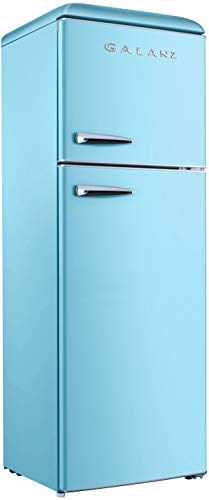
Best for stylish small spaces
6. Galanz Retro Refrigerator
Galanz makes compact refrigerators with a retro look in several colors. They serve as a stylish second fridge for a den or a studio. Check the listing for the size and the freezer compartment details.
Suits: stylish small spaces. Strengths: retro looks and a compact size. Weaknesses: small interior. Skip it if you shop for a family kitchen.

Care and Setup
- Clean the condenser coils on a regular schedule to keep the compressor from working hard.
- Keep the thermostat at a steady setting for food safety, and avoid cranking it colder because the fridge then runs longer.
- Check the door seals and replace them if they feel loose.
- Leave a gap between the back of the unit and the wall so heat from the compressor can escape, and check the manual for the exact clearance.
Mistakes to Avoid
- Buying a fridge much larger than you need.
- Setting the temperature colder than necessary.
- Keeping a second old fridge running in the garage just for a few drinks, since older units can waste a lot of power.
- Putting hot leftovers in before they cool, which makes the compressor run harder for a while.
Reading the Energy Label
The yellow energy guide on many refrigerators gives an estimated yearly electricity use and an estimated annual operating cost based on assumed rates. Use the usage figure, expressed in kilowatt-hours, to compare models because your own electricity rate may differ. A lower figure means lower use, but only compare models of similar size and layout, since a larger or more feature-rich fridge naturally draws more power.
Look at the details on the listing or the label. Note the capacity, the style and the stated yearly use. Some listings mention certification programs for efficiency. Verify that claim on the product page or the program’s database instead of relying on a general statement. If the listing does not provide numbers, check the manual or the maker’s specification sheet.
Understand what the number includes. Laboratory tests are performed under set conditions, such as a fixed room temperature and door-opening pattern, which may not match your kitchen. A fridge in a hot garage or a kitchen with a stove next to it will use more than the label suggests. Still, the figure is a useful way to compare models on equal terms. When two models are close, consider other differences such as shelving, noise, warranty and reliability. Efficiency is just one part of the decision, but it is a part that you pay for every month for the life of the appliance.
Layout and Features That Raise or Lower Use
Design choices change how much electricity a refrigerator draws. Top-freezer models are often among the more efficient full-size layouts because of their simple design. Bottom-freezer models place the freezer below and can also be efficient, though features differ. Side-by-side and French-door units tend to have more features, such as through-the-door dispensers, which can raise energy use.
Ice makers, water dispensers, extra drawers and special compartments add convenience but can add consumption, and sometimes more parts that may need service. Frost-free systems use heaters to melt ice, which uses some energy, but they save you from manual defrosting. Manual defrost models can be efficient but require attention to keep frost from building.
Door seals, insulation thickness and compressor design all play a role, although these details are not always listed. Variable-speed compressors adjust output instead of switching fully on and off, and some makers say this can reduce energy use and noise, though you should verify claims on the listing. Ask yourself which features you really use. A simple model with fewer extras often costs less to run and fewer things can go wrong. Choose the layout that fits your habits, not just the one that looks modern.
Right-Sizing Capacity for Your Household
A bigger fridge is not automatically better. A half-empty refrigerator wastes energy cooling empty space, while an overstuffed one blocks airflow and leads to uneven cooling. Match capacity to the number of people in your home and your shopping habits. Households that shop weekly need more room than those who shop several times a week.
Consider the freezer as well. If you rely on a large freezer for bulk food, make sure the compartment fits your needs. If you rarely use frozen food, a smaller freezer section will do. Compare the interior capacity in cubic feet on the listing, but also look at the shelf layout, because wasted space is easy to miss. Door bins, adjustable shelves and deep drawers affect how well you can use the space.
Measure the space before you order: width, depth and height, plus clearance for doors to open. Check the doorways and stairs on the way to the kitchen. A fridge that barely fits can have restricted airflow around it, which makes the compressor work harder and shortens its life. Leave the gap the maker suggests at the back, sides and top. If you are replacing an older model, compare dimensions carefully because newer designs can differ in depth and door swing.
Placement and Room Conditions
Where the refrigerator sits affects how much power it uses. Heat from ovens, dishwashers, direct sun and radiators makes the compressor run longer. Keep the fridge away from those sources when possible. If it must sit next to a heat source, a thin insulating panel or spacing may help, but follow the maker’s guidance.
Ventilation is crucial. Refrigerators release heat from the condenser, and without room to dissipate it, the system struggles. Leave the clearance specified in the manual, and avoid putting the fridge in a closed cabinet unless it is designed for that. Keep the area around the unit clear of clutter.
Level the fridge so the doors close properly and the cabinet does not strain. Most have adjustable feet at the front. A slight tilt toward the back often helps the doors close on their own, but follow the instructions. A garage or unheated room can be a problem, since many fridges are tested for conditions within a certain temperature range, and may not work well or may use more energy outside it. Check the listing for any garage-ready claims. A good location lets your appliance work at the efficiency it was built for.
Day-to-Day Habits That Cut Running Time
Small habits add up. Set the temperature to the recommended range for food safety and avoid going colder than needed. Let hot food cool a bit before putting it in, and cover liquids to reduce moisture, which adds load. Open the door as briefly as possible, and decide what you want before you reach in.
Keep the fridge reasonably full but not packed. Cold items hold temperature and reduce how often the compressor cycles. In a nearly empty fridge, containers of water can help. Make sure air can flow around items, especially near vents.
Maintain it. Vacuum the condenser coils when the manual recommends it, check the door gaskets for tears and gaps, and clean spills. A simple test is to close the door on a piece of paper: if it pulls out easily, the seal may be weak. Replace worn gaskets. Defrost manual-defrost models before frost gets thick. If you move or rearrange, do not leave the door ajar. When an old fridge is replaced, recycle it properly instead of keeping it running as a spare. Together, these habits keep the refrigerator running as efficiently as its design allows.
A Shopping Checklist for a Refrigerator
A fridge is a long-term purchase, so a clear list helps you compare models calmly. Begin with the space, then work through the features.
- Measure the opening where the refrigerator will stand: height, width and depth, plus the route through doors and stairs.
- Leave clearance for ventilation around the sides, back and top, as stated in the maker’s manual.
- Check which way the door swings and whether it can be reversed.
- Compare the capacity in litres or cubic feet against the number of people in your household.
- Read the yearly energy figure on the guide label and compare it between models of similar size.
- Look at shelving: adjustable glass shelves and door bins make storage easier.
- Find out the noise level if the fridge will sit in an open-plan room.
- Confirm delivery, set-up and old-appliance removal options with the seller.
Having this list beside you stops attractive features from distracting you from the basics.
Top Freezer, Compact or Retro: Comparing Styles
| Style | Suits | Think about |
|---|---|---|
| Top freezer | Families and general kitchens | Bending to reach the lower shelves |
| Compact | Offices, dorms, small flats | Limited capacity and a small freezer area |
| Retro design | Kitchens where looks matter | Often smaller inside than the outside suggests |
The models in this guide include examples of each style, from the Whirlpool, GE and Frigidaire top freezers to the Midea compact and the Galanz retro. Interior volume matters more than outside size, so always compare the stated capacity rather than the footprint.
Think about how you shop and cook. A household that buys groceries once a week needs more fresh-food space, while one that shops often can manage with less. If you freeze bulk meals, give extra attention to the freezer compartment and its drawers.
Mistakes That Make a Fridge Work Harder
- Pushing it flush against the wall. Heat needs room to escape, and the manual tells you how much space to leave.
- Placing it near an oven, a window with direct sun or a heating vent. A warm location makes the compressor run longer.
- Choosing a size far larger than you need. Empty space still has to be kept cool.
- Ignoring the door seal. A seal that is dirty or worn lets warm air in.
- Putting hot dishes inside straight away. Let food cool a little first, within food safety guidance.
- Forgetting to level the unit. The doors may not close properly if it tilts.
Most of these errors are easy to avoid at set-up, and fixing them costs nothing. Read the installation section of the manual, and if you notice a persistent problem, such as frost buildup or constant running, contact the maker or a qualified technician.
When the Manual or a Technician Should Lead
Refrigerators contain sealed cooling systems and electrical parts, so do not try to open panels or repair them yourself. The manual explains what you can safely do, such as cleaning the condenser coils, changing a light bulb or adjusting the temperature dial. Anything beyond that belongs to a licensed technician.
Follow the maker’s instructions on connecting the fridge to power. In many homes a dedicated outlet is suggested, and extension cords are often discouraged. If you are unsure about wiring or the condition of an outlet, ask a licensed electrician.
For storage temperatures and food safety, rely on official guidance from your local food safety authority and the figures in the manual. If the fridge stops cooling, check the power and the dial, then call for service rather than guessing.
Disposal of an old refrigerator is also regulated in many regions because of the refrigerant inside. Ask the seller or your local council about approved collection options.
Fridge Words You Will Meet in Listings
| Term | Meaning |
|---|---|
| Capacity | The usable storage volume inside. |
| Compressor | The motor that circulates refrigerant to cool the cabinet. |
| Defrost | The process that clears frost from the cooling parts. |
| Condenser coils | The coils that release heat, usually at the back or underneath. |
| Reversible door | A door whose hinge side can be changed. |
Moving Day: Delivery and First Use
How a refrigerator is handled in its first few days can affect how well it works. Many makers advise keeping the unit upright during transport and letting it stand for a period before switching it on, so that the internal fluids settle. The exact wait differs by model, which is why the manual matters.
Once the fridge is in place, clean the inside with mild soap and warm water, wipe it dry, and plug it in. Set the temperature control as the manual suggests, then give the unit time to cool fully before loading it with food.
- Check that the doors close and seal evenly.
- Level the feet so the cabinet does not rock.
- Note the model and serial numbers inside the door or on the back.
Small Habits That Keep Running Time Down
Daily behaviour shapes how often the compressor runs. Decide what you need before you open the door, so it stays open only briefly.
Once every few months, vacuum dust from the condenser coils if the manual says it is safe, and wipe the door seal with a damp cloth. These quick jobs help the fridge shed heat and close firmly, and they take only a few minutes.
Choosing a Energy efficient refrigerators Around Your Real Routine
Specifications only tell half the story with energy efficient refrigerators. The other half is your routine: what you actually cook, how often you cook it, and who else uses the kitchen. A model that suits a household storing fresh produce, dairy, cooked leftovers, drinks and the weekly shop in a way that keeps everything visible and easy to reach several times a week can be the wrong shape entirely for someone who only reaches for it at weekends. Before you compare the picks above any further, spend ten minutes being honest about your patterns, because the right refrigerator is the one that removes friction from the cooking you already do, not the cooking you imagine doing once a year.
Start With Your Three Most Common Jobs
Write down the three jobs you will ask of this refrigerator most often. For most households that list centres on storing fresh produce, dairy, cooked leftovers, drinks and the weekly shop in a way that keeps everything visible and easy to reach. Now judge every candidate against those three jobs first and treat everything else as a bonus. Features that serve your top three jobs earn their place in the budget; features aimed at jobs you do twice a year rarely do. This simple test also explains why two reviewers can disagree about the same product: they are quietly scoring it against different lists. Your list is the only one that matters, and it should drive which of the reviews above you read most closely.
Household Size Is Only Part of the Capacity Question
Capacity advice is usually given per person, but appetite, batch cooking and entertaining habits matter just as much. A couple who batch-cooks on Sundays may need more usable space than a family of four who cook fresh each evening. Think about your biggest realistic load rather than your average one, then check it against the honest discussion of usable space in the reviews above. Remember that headline capacity and usable capacity are different things: shape, layout and the way items are arranged decide how much of the stated volume you can genuinely use on a busy day.
Who Else Will Use It?
If teenagers, older relatives or housemates will also use this refrigerator, controls and access matter more than the brochure suggests. Clear labelling, predictable behaviour and a layout that does not demand strength or reach will decide whether everyone uses it confidently or one person becomes the only operator. Think about height, grip, visibility of markings and how forgiving the controls are when someone is in a hurry. A slightly simpler model that the whole household uses well will outperform a sophisticated one that only one person understands.
A Pre-Purchase Checklist That Catches Expensive Surprises
Most returns and regrets with energy efficient refrigerators come from a short list of avoidable surprises rather than from the product itself. Work through these checks before you order, while changing your mind is still free.
- Measure the space, then measure the route. Check the door swing, the ventilation gap, the route through doorways and halls for delivery, and the levelling of the cabinet, and also the doorways, corners and stairs the unit must pass through to reach its home.
- Confirm the services it needs. Power, water, drainage, fuel or ventilation, whichever apply, should be verified in your kitchen rather than assumed from the listing.
- Read the manual before the box arrives. Most manufacturers publish it online. The installation and care pages reveal clearances, restrictions and upkeep that listings gloss over.
- Plan where the accessories live. Think through clear containers, labelled leftovers and a system that keeps older food at the front where it gets used first before the new arrival creates a storage problem elsewhere.
- Check what is included. Racks, trays, hoses, fittings and starter accessories vary between models, and the extras you must buy separately change the real cost of ownership.
- Keep the paperwork. Photograph the serial plate, save the receipt and register the warranty in the first week, while it is still at the front of your mind.
None of these checks takes long, and together they prevent the classic pattern of a good product installed badly, in the wrong place, missing a part, and blamed for all three. If a check raises a question you cannot answer, the manufacturer’s support line or a local installer will usually answer it in minutes, and that call is far cheaper than a return collection.
Getting the Best From It Day to Day
The first fortnight with a new refrigerator sets the habits that decide how well it serves you for years. Resist the urge to test it with your most ambitious recipe first. Start with familiar food you already know how to chill and store, so the only new variable is the equipment. Note what you changed, what worked and what you would adjust, because those early notes become your personal settings guide long after the novelty fades. Most owners find their results improve steadily over the first month simply because they learn how their particular unit behaves, and that learning curve is normal rather than a sign of a bad purchase.
Build a small rotation of reliable everyday uses before experimenting. In practice that means leaning on the refrigerator for storing fresh produce, dairy, cooked leftovers, drinks and the weekly shop in a way that keeps everything visible and easy to reach, and paying attention to timing, arrangement and portion size as you go. Crowding, rushing and guessing are the three habits that spoil results most often, whatever the category. Give items room, let the unit do its work without constant interference, and change one variable at a time when you are troubleshooting, so you actually learn what fixed the problem.
Finally, think in terms of workflow rather than single tasks. Decide where ingredients wait before cooking, where hot or finished items land afterwards, and what gets washed as you go. A refrigerator that fits your workflow feels effortless; the same unit fighting your workflow feels disappointing, even when it performs exactly as designed.
Cleaning and Care: A Routine That Actually Sticks
Care advice fails when it asks for too much at once. Split it into three rhythms. After each use, deal with the obvious: spills, splashes and crumbs are always easier now than next week. Weekly, wipe down the shelves, the salad drawers, the door seals and the drip channel at the back of the cavity, and check for the early signs of build-up that a deep clean will later have to fight. Monthly or seasonally, do the slower jobs the manual describes, the ones involving soaking, descaling, deep degreasing or a thorough inspection, as they apply to this type of refrigerator.
Use gentle tools first. Soft cloths, non-scratch sponges and warm soapy water handle most kitchen soil, and they do not damage the finishes, seals and coatings that keep the unit working properly. Harsh abrasives and improvised chemicals cause a surprising share of the damage owners later blame on build quality. Where the manufacturer names a specific product or method, follow it: warranty support is much easier when you can honestly say the care instructions were followed.
Keep a small care kit together near the unit: a cloth, a soft brush, your chosen cleaner and a note of when the last deep clean happened. That tiny bit of organisation turns maintenance from a project into a five-minute habit, and a well-kept refrigerator not only lasts longer, it performs more consistently, because seals seal, surfaces heat or cool evenly, and moving parts move as they should.
Comparing the Picks in This Guide Against Each Other
The shortlist above — Whirlpool Top Freezer Refrigerator, GE Top Freezer Refrigerator, Frigidaire Top Freezer Refrigerator, Hisense Refrigerator, Midea Compact Refrigerator, Galanz Retro Refrigerator — was chosen because each model earns its place for a slightly different buyer. Comparing them well means resisting the urge to find a single winner and instead matching each pick to the household it suits. Re-read the individual reviews with your own top three jobs in mind, and notice which strengths keep mattering to you and which you can honestly live without.
Whirlpool Top Freezer Refrigerator is the opening pick, which sets the benchmark the rest are judged against. The fairest way to judge it is against the job list you wrote earlier: if its strengths line up with the tasks you do weekly, it deserves to be on your final two; if its appeal rests on capabilities you would rarely use, the reviews above give you permission to pass it by, however impressive it looks in isolation. Pay particular attention in its review to the honest limitation noted there, because limitations matter only when they collide with your routine.
GE Top Freezer Refrigerator is a strong alternative whose appeal lies in a different balance of strengths. The fairest way to judge it is against the job list you wrote earlier: if its strengths line up with the tasks you do weekly, it deserves to be on your final two; if its appeal rests on capabilities you would rarely use, the reviews above give you permission to pass it by, however impressive it looks in isolation. Pay particular attention in its review to the honest limitation noted there, because limitations matter only when they collide with your routine.
Frigidaire Top Freezer Refrigerator is a mid-shortlist option that suits buyers who prioritise everyday ease. The fairest way to judge it is against the job list you wrote earlier: if its strengths line up with the tasks you do weekly, it deserves to be on your final two; if its appeal rests on capabilities you would rarely use, the reviews above give you permission to pass it by, however impressive it looks in isolation. Pay particular attention in its review to the honest limitation noted there, because limitations matter only when they collide with your routine.
Hisense Refrigerator is a pick that makes most sense for a specific style of cooking or household. The fairest way to judge it is against the job list you wrote earlier: if its strengths line up with the tasks you do weekly, it deserves to be on your final two; if its appeal rests on capabilities you would rarely use, the reviews above give you permission to pass it by, however impressive it looks in isolation. Pay particular attention in its review to the honest limitation noted there, because limitations matter only when they collide with your routine.
Midea Compact Refrigerator is an option worth serious attention if the earlier picks do not fit your space or routine. The fairest way to judge it is against the job list you wrote earlier: if its strengths line up with the tasks you do weekly, it deserves to be on your final two; if its appeal rests on capabilities you would rarely use, the reviews above give you permission to pass it by, however impressive it looks in isolation. Pay particular attention in its review to the honest limitation noted there, because limitations matter only when they collide with your routine.
Galanz Retro Refrigerator is the closing pick, which rounds out the shortlist for buyers with different priorities. The fairest way to judge it is against the job list you wrote earlier: if its strengths line up with the tasks you do weekly, it deserves to be on your final two; if its appeal rests on capabilities you would rarely use, the reviews above give you permission to pass it by, however impressive it looks in isolation. Pay particular attention in its review to the honest limitation noted there, because limitations matter only when they collide with your routine.
A useful final exercise is to reduce the shortlist to two and then ask a single question of each: what would I notice about this refrigerator on an ordinary Tuesday evening, six months from now? The answer is rarely a headline feature. It is the loading, the cleaning, the controls, the noise, the fit in the room. Those everyday qualities are where satisfaction is won, and the reviews above give you the material to judge them if you read for them deliberately.
More Mistakes Worth Avoiding
Beyond the mistakes covered earlier in this guide, a few patterns catch out even experienced buyers of energy efficient refrigerators. The first is buying for the biggest day of the year. Sizing everything for a holiday feast or a once-a-year gathering leaves you with a unit that is awkward, hungry for space and harder to clean for the other fifty weeks. Buy for your heavy-but-normal week, and borrow, batch or improvise for the exceptional day.
The second is ignoring running costs and consumables. Filters, fuel, specialist cleaners, replacement parts and accessories add up across years of ownership, and they differ between models in ways listings rarely highlight. The third is skipping the first-use steps: the initial cleaning, seasoning, calibration or test run the manual describes exists because it affects both performance and flavour or hygiene from day one. The fourth is judging too quickly. Almost every refrigerator has a learning curve, and verdicts delivered after a single rushed use say more about the cook’s evening than the equipment.
The last pattern is letting the purchase end the thinking. The owners who get the most from equipment like this review their setup after a month: what lives where, what gets used, what annoys them. Small changes to arrangement, accessories or routine at that point pay back for years, and they cost almost nothing compared with replacing a unit that was never quite set up properly.
Safety, Efficiency and Considerate Use
Safe use of a refrigerator is mostly about respect for the obvious risks: heavy doors, food stored past its best, and overloaded shelves that stop cold air circulating. Build the small habits that neutralise them. Keep the area around the unit clear while it works, use the right protective equipment for hot or heavy items, supervise children and pets around it, and never defeat a safety feature because it slows you down. If anything about the unit’s behaviour changes suddenly — a new noise, a smell, a seal that no longer sits right — stop, check the manual’s troubleshooting section, and treat the change as information rather than an annoyance to ignore.
Efficiency follows a similar pattern of small habits. Use the refrigerator at sensible loads rather than nearly empty or hopelessly overfilled, keep seals, filters and surfaces clean so it does not work harder than it should, and match the size of the job to the size of the equipment where you have a choice. None of this requires specialist knowledge; it requires only the decision to treat efficiency as part of everyday use rather than a separate project, and over years of ownership those habits are worth real money and a longer working life.
Long-Term Ownership: Repairs, Parts and Knowing When to Replace
A refrigerator should be judged across its whole life, not its first month. Keep the manual, the receipt and a note of the model and serial details somewhere findable, because every future conversation about parts, service or warranty starts with them. Consumable and wear parts — seals, filters, racks, trays and similar items depending on the type — are worth replacing promptly: a tired wear part can make a healthy unit perform badly and tempt you towards a replacement you do not need.
When something does go wrong, describe the symptom precisely before you book help: when it happens, what you were doing, and what has changed. That detail saves diagnostic time and money. Weigh repair against replacement honestly, considering the unit’s age, the cost and availability of parts, and how well it still suits your household. Replacement makes sense when repairs repeat, parts disappear, or your needs have genuinely outgrown the unit; repair makes sense when the fault is isolated and the rest of the machine is sound. Either way, the decision is easier when the unit has been maintained, because its history is known rather than guessed.
Living With a Energy efficient refrigerators: Practical Notes
One underrated skill with any new kitchen equipment is learning to read results instead of instructions alone. When something comes out better or worse than expected, ask what actually changed: the load, the arrangement, the timing, the temperature of the ingredients at the start, or simply how long the door stayed open while you decided. Keeping those variables in mind turns every ordinary meal into useful information, and within a few weeks you will be adjusting by instinct rather than by guesswork. That instinct, more than any single feature, is what separates owners who love their equipment from owners who tolerate it.
It also helps to give the new arrival a defined home and a defined job in the kitchen’s geography. Equipment that lives in the right place gets used; equipment that must be fetched, assembled or cleared around gets quietly avoided. Walk the route from storage to preparation to cooking to serving and notice where the friction sits. Moving one shelf, clearing one stretch of worktop or relocating one rarely used gadget can change how often the new unit earns its keep, and those changes cost nothing but a few minutes of honest observation.
More Energy efficient refrigerators Questions, Answered
How long should a unit like this realistically last?
Longevity depends far more on use and care than on the badge. A unit that is loaded sensibly, cleaned on the simple rhythm described above and given prompt attention when a wear part tires will serve for many years, while a neglected unit can feel old quickly. Keep the paperwork, follow the manual’s care schedule, and treat small changes in behaviour as early warnings; that combination does more for lifespan than any single buying decision.
What should I do in the first week of ownership?
Start with the manual’s first-use steps, then cook familiar food rather than ambitious projects. Note the settings, timings and arrangements that work for your household, check that the installation is level, sealed and ventilated as required, and register the warranty while the receipt is still to hand. By the end of the first week you should know how the unit behaves on your everyday jobs, which is the knowledge everything else builds on.
How do I know whether a problem is mine or the product’s?
Change one variable at a time and retest with a simple, familiar job. If results improve, the issue was technique or setup, which is good news because it is free to fix. If the same fault appears regardless of load, arrangement and settings, consult the troubleshooting section of the manual and then the manufacturer’s support, describing the symptom precisely. Keeping a brief note of what you tried makes that conversation far more productive.
Are extended warranties and service plans worth it?
They are worth judging case by case rather than by habit. Consider the unit’s complexity, the availability of local repair, and whether you would genuinely claim or simply replace. Read what is excluded as carefully as what is covered, especially around consumables and cosmetic damage. A plan that covers the parts most likely to fail, from a provider who actually answers, can be sensible; a vague plan bought under pressure at the checkout rarely is.
What is the single best habit for getting value from this purchase?
Use it for your real routine, consistently, and keep it clean as you go. Equipment earns its cost through hundreds of ordinary uses, not a handful of special occasions. The owners who report the highest satisfaction are rarely those who bought the most features; they are the ones whose unit fits their space, whose household all use it confidently, and whose care routine is light enough to survive busy weeks.
When is it time to stop repairing and replace instead?
Replace when faults start repeating, when parts become hard to source, when running it has become noticeably less efficient or less safe, or when your household’s needs have genuinely changed. Repair when the fault is isolated, the rest of the unit is sound and the cost is modest relative to a replacement you would actually want. Decide with the unit’s full history in front of you, which is another reason the simple ownership notes recommended above are worth keeping.
Refrigerator FAQ
Which layout is the most efficient?
Top-freezer models are often the most efficient full-size layout, though results vary by model. Check the energy estimate on each listing.
What does Energy Star mean?
It signals the model meets the program’s efficiency guidelines. Confirm it on the listing.
How often should I clean the coils?
A couple of times a year is a common recommendation, but follow the maker’s manual.
Should I keep an old fridge as a spare?
Older units can use much more power, so a newer, smaller model may cost less to run.
Does a bigger refrigerator always use more energy?
Generally yes, but design and features matter. Compare the yearly kWh figures of similar models before deciding.
Is the yearly cost on the energy label accurate for my home?
It is based on assumed electricity rates and test conditions. Your actual cost depends on local rates, room temperature and how you use the fridge.
Do ice makers increase energy use?
They can, since they add components and freezing load. If you rarely use ice, a model without one may be simpler and cheaper to run.
What temperature should I set my fridge to?
Food safety guidance typically recommends keeping the fridge section around 40 F (4 C) or below. Use a thermometer to verify.
How can I tell if the door seal is weak?
Close the door on a sheet of paper. If it slides out easily, the seal may be loose and need cleaning or replacement.
Is it worth replacing an old refrigerator?
Older units can use significantly more power than newer ones. Compare the energy figures and consider the age and condition of the old unit.
Should I keep my fridge full?
A reasonably full fridge holds temperature better, but leave space for air to circulate. Avoid packing items against vents.
The Short Version
For a simple layout, the Whirlpool. For adjustable shelves, the GE. For plain controls, the Frigidaire. For value, the Hisense. For dorms, the Midea. For style, the Galanz. Confirm the energy estimate, the cubic feet and the door swing on each listing before you decide.

