Disclosure: airfryerkitchensupply.com is reader-supported. When you buy through links on our site, we may earn an affiliate commission at no extra cost to you.
The best dual flush toilet conversion kit for syphon toilets starts with a fact most conversion guides gloss over: a syphon cistern does not have a flapper valve, so the popular flapper-style dual flush kits physically cannot convert it. A syphon toilet flushes by lifting water over an inverted U-tube until the siphon starts — a mechanism common in UK-style and older lever cisterns — and converting one to dual flush means replacing the syphon unit itself with a dual flush syphon. Every pick below is a genuine syphon-type unit, confirmed.
That honesty shapes this roundup. The US market for dual flush syphons is small, and this guide will not pretend otherwise: the six picks span one premium branded dual flush syphon from Fluidmaster, and a set of adjustable-height cistern syphon units at keener tiers, each verified as a syphon product rather than a valve kit wearing syphon keywords. If your cistern has a lever and a syphon, measure its height and outlet arrangement first — those two facts, covered in the buying guide, decide which of these units can serve you.
A word about who this guide serves, because it is a specific household: the owner of a well-made older toilet — often close-coupled, sometimes high-level, frequently in a UK-influenced or heritage bathroom — whose cistern works on the syphon principle and whose water use belongs to another era. That toilet does not need replacing. It needs its syphon renewed in dual flush form, and the household needs honest guidance about a market too thin for the usual ten-product roundup. Six verified units, plainly graded, is what this page offers.
Where to buy
Every confirmed pick in this guide is sold through Amazon, where you can check the current price on Amazon for each unit, confirm cistern height range, inlet position and outlet diameter on the listing, and arrange delivery. Start with these confirmed options:
- Fluidmaster 19464 Universal Dual Flush Syphon for Lever Cisterns — Best Overall: Check the current price on Amazon
- Haofy Universal Dual Flush Cistern Syphon with Adjustable Height — Best Adjustable Syphon: Check the current price on Amazon
- LiebeWH Dual Flush Fill Valve and Syphon Kit with Push Button — Best Push-Button Syphon Kit: Check the current price on Amazon
- RDEXP Bottom Inlet Dual Flush Cistern Syphon, 21 cm — Best for Bottom-Inlet Cisterns: Check the current price on Amazon
- Generic ABS Bottom Entry Dual Flush Cistern Syphon, Adjustable 21–34 cm — Best for Tall Cisterns: Check the current price on Amazon
- Cryspearl Adjustable Dual Flush Cistern Syphon, 20–35 cm — Best Budget Syphon: Check the current price on Amazon
Always re-check the listing against your cistern’s measurements: internal height, whether the fill inlet is bottom or side entry, and the syphon outlet diameter. Syphon units are measurement-critical in a way flapper kits are not, and the wrong height range cannot be improvised away.
In this guide
Quick Picks
- Best Overall: Fluidmaster 19464 Universal Dual Flush Syphon for Lever Cisterns — The branded answer: a certified dual flush syphon with height adjustment and adaptable volumes, made for lever cisterns — Check the current price on Amazon
- Best Adjustable Syphon: Haofy Universal Dual Flush Cistern Syphon with Adjustable Height — An adjustable-height dual flush syphon spanning 20 to 30.5 cm of cistern height, positioned for hard-water areas — Check the current price on Amazon
- Best Push-Button Syphon Kit: LiebeWH Dual Flush Fill Valve and Syphon Kit with Push Button — A combined kit that renews the fill valve alongside the syphon, with a push-button control for button cisterns — Check the current price on Amazon
- Best for Bottom-Inlet Cisterns: RDEXP Bottom Inlet Dual Flush Cistern Syphon, 21 cm — A bottom-inlet syphon unit with a split push button and a stated outlet diameter range to measure against — Check the current price on Amazon
- Best for Tall Cisterns: Generic ABS Bottom Entry Dual Flush Cistern Syphon, Adjustable 21–34 cm — The tall-cistern option: a bottom-entry dual flush syphon adjusting from 21 to 34 cm — Check the current price on Amazon
- Best Budget Syphon: Cryspearl Adjustable Dual Flush Cistern Syphon, 20–35 cm — The widest-fit budget option: a bottom-entry syphon spanning 20 to 35 cm of tank height — Check the current price on Amazon
How These Picks Were Chosen
The first filter was mechanical truth: a pick had to be a syphon — a unit that flushes by siphon action for a lever or button cistern — because substituting a flapper-valve conversion kit would be a category error that leaves the buyer with parts that cannot fit. Within genuine syphons, picks were chosen for dual flush function, height adjustability (the specification that decides fit across cisterns), and the credibility of the listing’s stated details.
The guide is explicit about the market’s thinness: one pick is a fully branded, certified dual flush syphon, and the remaining picks are verified syphon units at lower tiers whose listings state their dimensions and ranges — quoted in the spec boxes exactly as verified, and nowhere embellished.
Availability shaped this selection in a way worth disclosing: syphon listings on the US marketplace include units whose titles borrow the word while describing valve mechanisms, and several attractive-looking results were rejected on exactly that ground after reading their verified titles closely. What remains is smaller and truer — units whose own listings describe syphon operation, cistern fit dimensions, or both. In a niche this thin, a short honest list is worth more than a long padded one, and the grading between the branded pick and the unbranded tier is stated in each review rather than smoothed over.
The 6 Best Options for Best Dual Flush Toilet Conversion Kit for Syphon Toilets

Fluidmaster 19464 Universal Dual Flush Syphon for Lever Cisterns — Best Overall
The Fluidmaster 19464 is the pick for the syphon cistern you intend to keep for years. It is a true dual flush syphon — the siphon mechanism itself delivers two volumes — designed for lever cisterns, with rapid height adjustment to fit the cistern and adaptable flush volumes so the installer can tune the light and full flush to the bowl. The Kiwa certification stated in the listing and Fluidmaster’s support depth separate it from every other unit here.
Strengths
- A genuine dual flush syphon from the category’s reference brand, not a valve kit
- Height adjustment and adaptable volumes make it tunable to your specific cistern and bowl
- Kiwa certification stated in the listing — third-party validation rare in this niche
Trade-offs
- Premium tier within this small category
- Made for lever cisterns; button cisterns should look at the push-button picks below
- Availability in the US market can be intermittent — order when listed rather than assuming stock
| Type | Dual flush syphon for lever cisterns (per Amazon title) |
| Adjustment | Rapid height adjustment; adaptable flush volumes (per Amazon title) |
| Certification | Kiwa certified (per Amazon title) |
| Brand | Fluidmaster |
This is the unit the rest of the roundup is measured against, because it treats the syphon conversion as engineering rather than approximation. Adaptable flush volumes matter in a syphon: the light flush must still establish a reliable siphon, and a unit designed to be tuned will start its siphon cleanly at both volumes where a crude unit falters at the light setting. If your cistern is a lever type and the toilet beneath it is worth keeping, this is the conversion it deserves.
Certification is worth one more paragraph in this niche, because it is doing real work. Kiwa is a European testing and certification body for water fittings; a Kiwa-certified syphon has demonstrated its flush behaviour and durability to a third-party standard, in a market segment where most competitors offer no external validation at all. Combined with the warranty stated in the listing, it converts this purchase from an experiment into a specification. Heritage-bathroom owners, whose alternative is disturbing a period installation, should weight that assurance heavily — the cost of a failed unit here is not the unit, it is the disturbance.
Best for: Lever syphon cisterns in toilets worth keeping long-term / Not suited for: Push-button cisterns or buyers wanting the lowest-cost unit
Check the current price on Amazon

Haofy Universal Dual Flush Cistern Syphon with Adjustable Height — Best Adjustable Syphon
The Haofy unit suits the buyer whose cistern height is the uncertainty: its stated adjustment range of 20–30.5 cm covers the common run of cistern depths, so one unit can be tuned to fit rather than exchanged. Its listing also positions it for hard-water toilets, a relevant detail where mineral build-up is what killed the original syphon’s diaphragm in the first place.
Strengths
- Wide stated height adjustment range fits a broad span of cisterns
- Dual flush function in a true syphon format at an accessible tier
- Hard-water positioning acknowledges the conditions syphons actually serve in
Trade-offs
- Unbranded unit — documentation and support will be thinner than Fluidmaster’s
- Plastic construction throughout; handle and install with appropriate care
- Verify outlet diameter and lever linkage compatibility against your cistern before ordering
| Type | Dual flush cistern syphon (per Amazon title) |
| Height range | Adjustable 20–30.5 cm (per Amazon title) |
| Interface | Standard 1/2 interface (per Amazon title) |
| Positioning | Stated for hard water toilets (per Amazon title) |
Most syphon replacements fail on fit, not concept: the unit is right and the height is wrong. A genuinely adjustable syphon converts that gamble into a setting. The Haofy is the pragmatic middle of this roundup — real dual flush siphon action, a published height range to measure against, and a tier that makes it a sensible experiment for a cistern you are reviving rather than restoring. Measure your cistern’s internal height, confirm it lands in the stated range, and proceed.
Hard water is the quiet context of this pick, so let it be explicit: syphon diaphragms and seals stiffen and scale in hard-water areas, and a unit positioned for those conditions at least acknowledges the environment it will live in. Pair the Haofy with a maintenance habit — a periodic inspection of the diaphragm when the cistern lid is off for any reason — and its service life should reflect the care. Owners in very hard water districts might also treat the syphon as a planned consumable on a multi-year cycle; at this tier, that arithmetic still beats replacing the toilet by a wide margin.
Best for: Cisterns of uncertain or mid-range height, and hard-water homes / Not suited for: Buyers wanting branded support and certification
Check the current price on Amazon
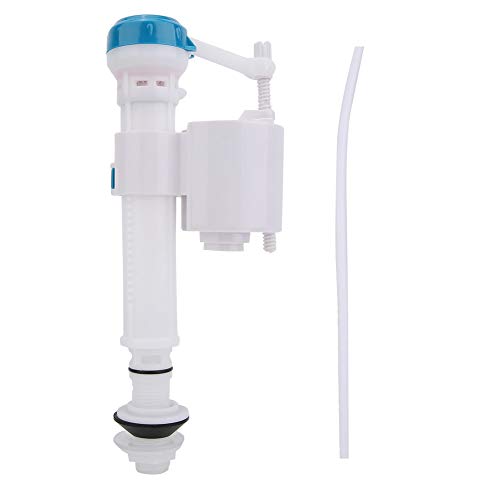
LiebeWH Dual Flush Fill Valve and Syphon Kit with Push Button — Best Push-Button Syphon Kit
Some syphon cisterns are button-operated, and some conversions are really whole-cistern renewals. The LiebeWH kit addresses both: it pairs the dual flush syphon with a fill valve in one package, controlled by a push button. Choose it when your cistern’s fill valve is as tired as its syphon — a common pairing in older installations — and you want one intervention to renew the pair.
Strengths
- Fill valve included, so the cistern’s two working systems are renewed together
- Push-button control suits button cisterns the lever-focused picks cannot serve
- G1/2 universal connection stated in the listing
Trade-offs
- Combined kits mean more parts to fit and set up in one session
- Unbranded support and documentation, as with most of this niche
- Confirm button arrangement and inlet position against your cistern lid and body
| Type | Fill valve and syphon kit (per Amazon title) |
| Control | Push button (per Amazon title) |
| Connection | Universal G1/2 (per Amazon title) |
| Function | Cistern repair and water-saving conversion (per Amazon title) |
Replacing a syphon while leaving a wheezing fill valve in place is half a repair, and the second half usually announces itself within the year. This kit’s logic is to finish the cistern in one draining. The push-button control is its second virtue: it gives button cisterns — common on more modern syphon installations — a genuine dual flush path instead of a lever-only market. Verify the physical details against your cistern, then fit both halves methodically.
The combined-kit logic of the LiebeWH has a sequencing benefit worth noting: fitting a fill valve and syphon together lets you set their interaction — fill rate, water level, flush volumes — in one tuning session, rather than marrying a new syphon to an old valve’s habits and diagnosing the mismatch later. For a cistern being revived after years of decline, that single-session coherence is the difference between a system that feels new and a collection of new parts. Take the extra half hour the combined job asks for; it returns the time in fault-finding you will never have to do.
Best for: Button-operated syphon cisterns needing fill valve renewal too / Not suited for: Lever cisterns, or owners wanting to replace the syphon alone
Check the current price on Amazon

RDEXP Bottom Inlet Dual Flush Cistern Syphon, 21 cm — Best for Bottom-Inlet Cisterns
Cistern plumbing enters from the bottom or the side, and the wrong assumption strands a conversion. The RDEXP unit is specified for bottom-inlet arrangements at a 21 cm height, with a split push button — the two-section button that makes dual flush self-explanatory — and, usefully, a stated outlet diameter range in its listing so you can verify the syphon’s fit against your cistern’s outlet before ordering.
Strengths
- Bottom-inlet specification serves cisterns the side-entry units cannot
- Stated outlet diameter range allows a genuine pre-purchase fit check
- Split push button gives the clearest two-volume interface
Trade-offs
- Fixed 21 cm height — measure your cistern, because this one does not adjust to meet you
- Unbranded unit with listing-level documentation only
- Bottom-inlet specificity means it is simply wrong for side-inlet cisterns
| Height | 21 cm (per Amazon title) |
| Inlet | Bottom inlet fill arrangement (per Amazon title) |
| Outlet | For diameter 2.36–2.95 in (per Amazon title) |
| Control | Split push button (per Amazon title) |
This pick’s value is its specificity. In a niche full of vague ‘universal’ claims, a unit that states its inlet position, its height and its outlet range lets a careful buyer confirm fit on paper — the only place fit should be discovered. If your cistern is bottom-inlet, stands at the stated height, and its outlet falls in the published range, the RDEXP is a rational, economical conversion. If any of those three checks fails, it is not, and the guide would rather tell you that than sell you a return.
The RDEXP’s stated outlet range is a small model of how this whole category should be bought, so it deserves the emphasis: the listing publishes the dimension, the buyer measures the cistern, and fit is a fact before money moves. Extend that discipline to every dimension of your installation — height, inlet, linkage — whether or not a given listing volunteers the figures. Where a figure is not stated, the honest options are to ask, to measure the unit on arrival before disturbing the old syphon, or to choose the pick whose listing does state it. In syphon work, patience is a specification.
Best for: Bottom-inlet syphon cisterns matching the stated height and outlet range / Not suited for: Side-inlet cisterns or heights outside the stated specification
Check the current price on Amazon

Generic ABS Bottom Entry Dual Flush Cistern Syphon, Adjustable 21–34 cm — Best for Tall Cisterns
Tall cisterns — including older high-level and deep-bodied designs — defeat standard-height syphons, whose lift tubes simply cannot reach. This unit’s stated 21–34 cm adjustment is the tallest range in the roundup, in a bottom-entry ABS format. It is the pick to measure against when your cistern’s internal height has excluded everything else.
Strengths
- Tallest stated height range here, serving deep and high cisterns
- Bottom-entry format matches a common older-cistern arrangement
- ABS construction is light, corrosion-proof and easy to handle during fitting
Trade-offs
- Generic unbranded unit — expect listing-level documentation only
- Tall-range adjustability is wasted on standard cisterns, which are better served above
- Confirm outlet and linkage details against your cistern before ordering
| Height range | Adjustable 21–34 cm (per Amazon title) |
| Inlet | Bottom entry (per Amazon title) |
| Material | ABS (per Amazon title) |
| Type | Dual flush cistern syphon repair kit (per Amazon title) |
Every niche has its orphan dimension, and in syphon cisterns it is height at the tall end. This unit exists for the cisterns the mainstream forgot: deep bodies where a standard syphon’s geometry cannot establish a proper flush. The adjustable range means you set the unit to your cistern rather than shimming and hoping. Treat it as a specialist tool — exactly right for its case, unnecessary for ordinary ones — and verify every interface dimension before it ships.
Tall cisterns are often old cisterns, and old cisterns deserve a gentle warning alongside this pick: check the cistern’s own condition before investing in its mechanism. Hairline-crazed ceramic, a perished cistern-to-pan seal or corroded fixings can turn a syphon swap into a cistern replacement, and it is kinder to discover that in inspection than mid-job. Where the cistern is sound — as most quality older cisterns are — this tall-range unit gives it a modern dual flush heart, and the combination of heritage porcelain with contemporary water discipline is exactly what this guide exists to achieve.
Best for: Tall and deep syphon cisterns needing bottom-entry fit / Not suited for: Standard-height cisterns served by the adjustable picks above
Check the current price on Amazon

Cryspearl Adjustable Dual Flush Cistern Syphon, 20–35 cm — Best Budget Syphon
The Cryspearl closes the roundup as the economical generalist: a bottom-entry dual flush syphon whose stated 20–35 cm span is the widest here, covering standard and tall cisterns in one unit. For a buyer reviving a secondary bathroom’s syphon toilet, or testing whether a dual flush syphon suits the household before investing in the branded unit, it is the low-commitment route.
Strengths
- Widest stated height span in the roundup — one unit covers most cisterns
- Budget tier makes it a rational first conversion or spare
- Bottom-entry ABS format is straightforward to handle and fit
Trade-offs
- Unbranded, with the thinnest documentation in the roundup
- Long-term durability is unproven against the branded pick
- As ever in this niche, every interface dimension needs verifying against your cistern
| Height range | 20–35 cm tank height (per Amazon title) |
| Inlet | Bottom entry (per Amazon title) |
| Material | ABS (per Amazon title) |
| Type | Dual flush cistern syphon replacement (per Amazon title) |
There is an honest role for the budget unit in a niche like this: syphon conversions are fit-critical and unfamiliar to most buyers, and a low-cost adjustable unit lets you prove the concept in your own cistern. If it serves for years, the value is obvious; if the household loves dual flush and wants the certified, supported version later, the Fluidmaster above is the upgrade path and this unit becomes the spare. Buy it with measured expectations and measured cistern dimensions.
Treat the Cryspearl as this niche’s sampler, and judge it by sampler standards: does dual flush behaviour suit your household, does a modern syphon start reliably in your cistern, do the savings appear on the bill? A season with this unit answers all three for the price of a takeaway dinner, and its wide height span means the answer arrives without fit drama. If the season converts the household, the branded Fluidmaster is waiting as the permanent installation, and the Cryspearl retires to the spares shelf as the known-fitting backup every syphon owner should keep.
Best for: Budget conversions, second bathrooms and first-time syphon converters / Not suited for: Buyers wanting certification, documentation and brand support
Check the current price on Amazon
Comparison Table
| Pick | Badge | Key spec | Best for |
|---|---|---|---|
| Fluidmaster 19464 Universal Dual Flush Syphon for Lever Cisterns Check the current price on Amazon |
Best Overall | Branded dual flush syphon for lever cisterns; height adjustment and adaptable volumes per listing | Lever syphon cisterns in toilets worth keeping long-term |
| Haofy Universal Dual Flush Cistern Syphon with Adjustable Height Check the current price on Amazon |
Best Adjustable Syphon | Dual flush cistern syphon, adjustable height 20–30.5 cm, standard 1/2 interface | Cisterns of uncertain or mid-range height, and hard-water homes |
| LiebeWH Dual Flush Fill Valve and Syphon Kit with Push Button Check the current price on Amazon |
Best Push-Button Syphon Kit | Combined fill valve and syphon kit with push-button control, G1/2 connection | Button-operated syphon cisterns needing fill valve renewal too |
| RDEXP Bottom Inlet Dual Flush Cistern Syphon, 21 cm Check the current price on Amazon |
Best for Bottom-Inlet Cisterns | 21 cm syphon for bottom-inlet cisterns; outlet diameter range stated in listing | Bottom-inlet syphon cisterns matching the stated height and outlet range |
| Generic ABS Bottom Entry Dual Flush Cistern Syphon, Adjustable 21–34 cm Check the current price on Amazon |
Best for Tall Cisterns | Bottom-entry syphon with the tallest stated adjustment range, 21–34 cm | Tall and deep syphon cisterns needing bottom-entry fit |
| Cryspearl Adjustable Dual Flush Cistern Syphon, 20–35 cm Check the current price on Amazon |
Best Budget Syphon | Widest stated height span, 20–35 cm, in a bottom-entry ABS syphon at a budget tier | Budget conversions, second bathrooms and first-time syphon converters |
How to Choose the Right Option Among Best Dual Flush Toilet Conversion Kit for Syphon Toilets
First, confirm you actually have a syphon
Lift the cistern lid. A syphon unit is a bell- or canister-shaped body sitting in the cistern, connected to the lever or button by a linkage; when you flush, it lifts water internally until the siphon starts. There is no flapper on a chain and no flush-valve tower of the modern type. If you find a flapper, you do not have a syphon toilet — you need the standard conversion kits in the companion guide linked at the end of this article, and nothing in this roundup will fit.
The three measurements that decide fit
Syphon shopping is measurement shopping. Record all three before ordering anything:
- Internal cistern height: from the cistern floor to the underside of the lid, matched against the unit’s stated height or adjustment range
- Inlet position: whether the water supply enters from the bottom or the side of the cistern
- Outlet diameter: the syphon’s outlet must match the cistern’s outlet to the flush pipe — several listings here state their range, so use it
Lever versus button cisterns
Traditional syphon cisterns are lever-operated, and the branded pick in this guide is built for them. Newer syphon installations may use a push button, including split buttons with two sections for the two volumes. The control is part of the mechanism, not a cosmetic choice: match the unit to your cistern’s control type, or budget for the control change the kit describes.
Set expectations for a thin market
Dual flush syphons are a specialist niche in the US, dominated by one branded unit and a tier of unbranded adjustable units. That is not a reason to avoid the conversion — the water saving on a legacy syphon cistern is as real as on any toilet — but it is a reason to buy on measurements and stated specifications rather than on reviews of a different product type, and to keep the old syphon until the new one is proven in place.
Spares strategy for a thin market
Thin markets reward owners who plan like maintainers rather than shoppers. When your chosen unit is fitted and proven, consider buying its wearing companion parts — or a second unit at the unbranded tier — while the listing is live, because niche listings come and go in ways mainstream plumbing parts do not. A syphon diaphragm on the shelf converts a future failure from a research project into a twenty-minute repair. This is not hoarding; it is the standard practice of everyone who maintains equipment the mass market has moved on from.
What to do while the listing is on its way
The days between ordering and delivery are useful: photograph the existing syphon and its linkage from several angles, measure and record the three critical dimensions a second time, and confirm the shut-off valve fully closes the supply. If the old syphon’s diaphragm is accessible, inspect it — a perished diaphragm explains most weak syphon flushes and confirms the conversion is treating the right disease. Arrive at installation day with the cistern understood, and the swap becomes the mechanical exercise it should be rather than an exploration conducted with the water off.
How a Syphon Flush Works — and How Dual Flush Syphons Split the Volume
A syphon flush begins when the lever or button lifts a piston or diaphragm inside the syphon body, drawing water up and over the inverted U-bend. Once water flows over the bend, gravity and the siphon’s pull empty the cistern through the flush pipe until air enters and breaks the siphon. The mechanism has no seal sitting permanently underwater in the manner of a flapper, which is why syphons are famously resistant to the slow leaks that plague flapper valves — and why they remained standard in British cisterns long after flappers dominated elsewhere.
Two volumes from one siphon
A dual flush syphon creates its light flush by breaking the siphon early or by limiting the water admitted to it — designs vary, but the effect is the same: a partial cistern discharge for liquid waste, and the full discharge when the control is fully engaged. The engineering subtlety is that the light flush must still start the siphon reliably; a siphon that fails to start is worse than no light flush at all. This is why the branded pick’s adaptable volumes are a real feature: they let the installer tune the light flush to the point where it starts cleanly in your specific cistern.
Why syphon owners convert rather than replace
Syphon cisterns are often fitted to well-made older toilets, including close-coupled and high-level designs with decades of life in the porcelain. The cistern’s mechanism is the only thirsty part. Replacing the syphon unit renews that mechanism in an hour, keeps the fixture, and avoids disturbing a floor seal that may be older than the household. For this installed base, conversion is not the budget option — it is the correct one.
Syphon Versus Flapper: Two Philosophies of the Flush
Why syphons refuse to leak
The flapper valve seals the cistern with a rubber disc resting on an outlet — a seal that lives underwater, flexes at every flush, and perishes on a schedule measured in years, announcing its decline with phantom refills. The syphon has no such seal: its outlet is an air-locked bend, and water cannot leave until the mechanism lifts it over. That single design fact is why syphon cisterns can run for decades without the leak-based waste that quietly dominates the water footprint of flapper toilets, and why their owners are loyal.
Why flappers won the volume war anyway
Flapper and tower valves are cheaper to make, easier to miniaturise into low-profile tanks, and simpler to render in dual flush form — which is why the North American market standardised on them and why dual flush conversion choice is so much wider for valve toilets. The syphon owner’s thinner market is the price of the mechanism’s virtues. This guide’s position is that the price is worth paying in kind: convert the syphon, keep the leak-resistance, and accept a shorter shortlist as the cost of the better mechanism.
Heritage bathrooms: the case for keeping the cistern
In period bathrooms, the cistern may be part of the room’s architecture — a high-level cistern with a pull, a close-coupled suite in a discontinued colour, fittings matched across a century-old set. Replacement ‘equivalents’ rarely match, and the room’s coherence is a real asset, in value and in pleasure. A dual flush syphon preserves all of it while quietly modernising the one thing nobody sees: the water use. Conservation of bathrooms, like conservation of buildings, works best when the intervention is reversible and invisible — and a syphon swap is both.
Troubleshooting a Dual Flush Syphon: The Short Diagnostic List
The light flush will not start
The signature fault of a dual flush syphon is a light flush that stirs and dies without establishing the siphon. The causes are few and ordered: the water level is below the unit’s mark, so the light lift cannot prime the bend; the light-flush setting is tuned too short for this cistern’s geometry; or the diaphragm is stiff, scaled or torn and cannot lift cleanly. Work them in that order — level, setting, diaphragm — because the first two cost nothing and the third is the only one that needs a part. A branded unit’s adaptable volumes exist precisely to solve the second cause properly rather than by compromise.
The cistern refills slowly or noisily after conversion
Refill behaviour belongs to the fill valve, not the syphon, but conversions disturb the partnership and owners blame the newcomer. If the fill valve was renewed with the syphon, set its height and flow as directed and confirm the float moves freely through the cistern’s full travel. If the old valve was kept, a conversion is often the moment its wear becomes audible — seals and washers that coped with the old rhythm complain in the new one. Renewing a tired fill valve alongside the syphon, as the combined kit in this guide does, exists to prevent exactly this diagnostic confusion.
Water trickling into the bowl between flushes
A syphon cistern that passes water continuously usually has its level set above the syphon’s internal overflow path, or a syphon seated imperfectly on its outlet washer. Check the level first — it should sit at the unit’s mark, not at the cistern’s maximum — then the seating. Unlike a flapper leak, this fault does not worsen by the week, but it wastes steadily and stains the bowl’s waterline in hard districts. Both causes are fitting issues, not product failures, and both yield to an unhurried half hour with the lid off.
How to Replace a Syphon with a Dual Flush Syphon
Syphon replacement is a contained cistern job. The sequence below is the common spine; your unit’s instructions govern the details, and in this niche they deserve close reading.
- Record the cistern’s measurements first. Internal height, inlet position and outlet diameter, checked against the new unit’s stated ranges before the old syphon is disturbed.
- Isolate, drain and disconnect. Close the supply, flush the cistern empty, sponge the remainder, and disconnect the water inlet and the lever or button linkage from the old syphon.
- Remove the old syphon. Syphons are typically held by a backnut beneath the cistern or a coupling at the outlet. On older cisterns, expect stiffness; steady the cistern body while you work the fitting free.
- Fit the new dual flush syphon. Seat the unit on its washers, secure the outlet connection, set the unit’s height within its adjustment range for your cistern, and reconnect the linkage or button so both flush actions engage positively.
- Reconnect, refill and tune. Restore the supply, set the water level to the unit’s mark, and test both volumes repeatedly. Adjust the light-flush setting until the siphon starts reliably every time — this tuning step is the conversion.
- Soak-test before closing up. Run a dozen flushes across an hour and check every joint you touched with a dry tissue. Only then refit the lid and call it done.
Keep the old syphon in a box in the garage until the new unit has a month of service behind it. In a thin market, a known-fitting spare is worth its shelf space.
Common Buying Mistakes
Buying a flapper-style conversion kit for a syphon cistern.
The most common and most total mistake in this niche: the parts cannot fit, at any price or brand. Confirm the mechanism under your cistern lid before shopping at all.
Guessing the cistern height.
A syphon outside its height range will not flush correctly, and near-misses fail as surely as wild ones. Measure the internal height and buy inside a stated range.
Ignoring the inlet position.
Bottom-entry and side-entry cisterns need different unit arrangements. It is a thirty-second check that prevents a completely stranded installation.
Skipping the light-flush tuning.
A dual flush syphon’s light setting needs to start the siphon reliably. Fitted-and-forgotten units that dribble on the light flush get blamed on the concept; the setup was the issue.
Discarding the old syphon immediately.
Until the new unit has proven itself in your cistern, the old one is your insurance policy. Shelf it first, recycle it later.
Assuming ‘universal’ on a listing means universal in your cistern.
In this niche, ‘universal’ usually means ‘adjustable across a range’ — and the range is the truth. A unit universal between 20 and 30 cm is not universal at 34. Read the range, measure the cistern, and let those two numbers decide, whatever the headline word promises.
Final Recommendation
If your lever cistern deserves the best, fit the Fluidmaster 19464 and tune it once, properly. Button cisterns and tired fill valves point to the LiebeWH kit; bottom-inlet cisterns to the RDEXP at its stated height, or to the tall-range generic unit for deep cisterns. The Haofy is the adjustable middle, and the Cryspearl the budget proof-of-concept. Every one of them respects the mechanism you actually have — which is the entire secret of this niche.
For the other half of the conversion world, read Best Dual Flush Toilet Conversion Kit For Older Toilets if your toilet uses a flapper valve, and browse replacement fixtures in Best Dual Flow Toilets, Best Dual Toilets and Best Dual Flush High Efficiency Toilets if the porcelain itself is due for retirement. Best Duravit Toilets covers the European design route, where syphon-style thinking never really left.
Close with the measurement ritual, because everything in this niche descends from it: lid off, tape measure out, three numbers written down — height, inlet, outlet — before a single listing is opened. Buyers who start there find this category small but navigable. Buyers who start with the listings find it a swamp of almost-fits. The syphon toilet in your bathroom has served without leaking for years; thirty seconds of measuring is the respect its conversion deserves.
Frequently Asked Questions
Why can’t I use a normal dual flush conversion kit in my syphon toilet?
Because the mechanisms are different in kind. A standard kit replaces or modifies a flapper flush valve; a syphon cistern has no flapper valve to modify — it flushes by siphon action from a sealed unit. Converting it means replacing that unit with a dual flush syphon, which is what every pick in this guide is.
How do I know if my toilet is a syphon type?
Lift the cistern lid and look: a syphon is a bell- or canister-shaped body linked to the lever or button, with no flapper and chain. Syphon cisterns are common in UK-style installations and many older lever cisterns. If you see a flapper on a chain, yours is a valve toilet.
Does a dual flush syphon really save water?
Yes — the light flush discharges a partial cistern for liquid waste, which is most trips. On a legacy syphon cistern with a generous full volume, the per-trip saving on liquid flushes is substantial, and it repeats thousands of times a year.
Are syphons better than flapper valves?
They have one famous virtue: no submerged rubber seal, so the slow phantom leaks of perished flappers are largely designed out. Their historical weakness was single-volume thirst — which is precisely what a dual flush syphon corrects.
Can I fit a dual flush syphon myself?
A careful DIYer can: the work is inside the cistern, with the supply isolated, and no floor seal is disturbed. The skills that matter are measuring accurately beforehand and tuning the light flush patiently afterwards.
What if my cistern is high-level or unusually tall?
Measure its internal height and shop the stated ranges: this roundup includes units adjusting up to 34 and 35 cm specifically for deep and tall cisterns. If your cistern exceeds even those ranges, a plumbing merchant’s syphon catalogue is the next stop.


