Disclosure: airfryerkitchensupply.com is reader-supported. When you buy through links on our site, we may earn an affiliate commission at no extra cost to you.
Where to buy
Every pick in this guide to the best diy composting toilets is sold through Amazon, which keeps ordering, delivery and returns in one place and lets you check price on Amazon before you commit. Use the short list below to jump straight to a product page, or read the full reviews further down before you decide.
Composting units are bulky and bought for cabins, boats and off-grid builds where a failed delivery wastes a trip. Ordering through Amazon lets you check price on Amazon and time delivery to a build weekend, with a returns route if a unit arrives damaged.
- Nature’s Head Self-Contained Composting Toilet with Spider Handle (Best Overall): Check the current price on Amazon
- Separett Villa Urine-Separating Compost Toilet (Best Urine-Separating Design): Check the current price on Amazon
- OGOGO Origin Compact Composting Toilet (Best Compact): Check the current price on Amazon
- Compo Closet Cuddy Composting Toilet (Best for DIY Conversions): Check the current price on Amazon
- TROBOLO WandaGO Composting Toilet (Best Portable DIY): Check the current price on Amazon
- The Humanure Handbook, 4th Edition (Book) (Best Build-It-Yourself Resource): Check the current price on Amazon
The best diy composting toilets sit on a spectrum, and knowing where you stand on it saves real money. At one end is the true build: a urine diverter, a bucket or chamber, a vent, and a seat you assemble yourself for the price of parts, guided by the classic composting literature. At the other end are the self-contained units you install yourself in an afternoon, no plumber, no water line, no septic, which most people mean when they say DIY. This guide covers the whole spectrum honestly, with verified manufactured units for the install-it-yourself crowd and the essential build resources for the make-it-from-scratch crowd.
What unites every pick is the composting principle: separate the liquids from the solids, keep the solids dry, aerated and covered with a carbon medium like peat moss or coco coir, vent the moisture and gases outside, and time does the rest. Done right, the result is startlingly odor-free, uses no water, and produces a finished material that can be handled safely under the rules that apply where you live. Done carelessly, it is a smelly bucket, which is why the details in this guide matter.
Every manufactured unit below was verified through this site’s Amazon data before it earned a link, and the two classic build guides are here because no DIY list is complete without them. Health note, kept simple: composting toilets are a sanitation system, and local rules about handling and disposal of the end product vary, so treat the how-to section’s guidance as a starting point and check your local requirements.
In this guide
Quick Picks
If you are short on time, these are the six best diy composting toilets we would buy with our own money, each chosen for a different kind of buyer. The badge next to each name is the same badge used in its full review below, so you can jump between the summary and the detail without losing your place.
- Best Overall — Nature’s Head Self-Contained Composting Toilet with Spider Handle: The benchmark self-contained composting toilet: urine diverting, hand-cranked composting chamber, marine-grade build, and a decade of off-grid reputation. — Check on Amazon
- Best Urine-Separating Design — Separett Villa Urine-Separating Compost Toilet: The Swedish urine-separating approach: no churning, no additives, solids collected dry in compostable bags, in a unit that looks like a normal toilet. — Check on Amazon
- Best Compact — OGOGO Origin Compact Composting Toilet: A composting toilet with a genuinely small footprint, built for vans, small RVs and boats where every inch is negotiated. — Check on Amazon
- Best for DIY Conversions — Compo Closet Cuddy Composting Toilet: A self-contained unit designed by and for the DIY conversion crowd, with a 12V fan, carbon filter and waterless operation. — Check on Amazon
- Best Portable DIY — TROBOLO WandaGO Composting Toilet: A portable urine-diverting dry toilet with height adjustment: the closest manufactured step to a true DIY build, and movable wherever it is needed. — Check on Amazon
- Best Build-It-Yourself Resource — The Humanure Handbook, 4th Edition (Book): The classic text of DIY composting sanitation: how to build a simple, safe composting toilet system and manage the full cycle yourself. — Check on Amazon
How These Picks Were Chosen
We defined DIY the way buyers actually use the word: systems a competent owner can build or install without a plumber, a water connection or a septic tie-in. Manufactured picks had to be genuinely self-contained or urine-separating designs with the composting principles intact, and every one was verified through this site’s Amazon data, searching brand and model and matching the returned listing before a link was attached. Specs in the boxes come only from those verified listings.
We deliberately spanned the spectrum: two full composting architectures (churned chamber and bag-based separation), two conversion-sized units, a portable, and the classic build literature. A guide that only sold appliances would betray the keyword; a guide that only romanticised buckets would betray the readers whose cabins need something better.
The 6 Best DIY Composting Toilets
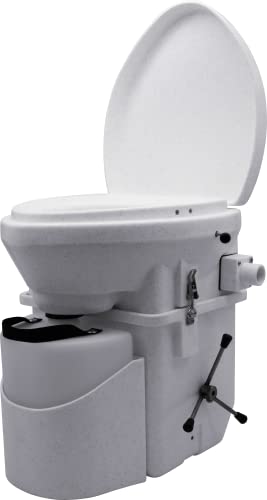
Nature’s Head Self-Contained Composting Toilet with Spider Handle — Best Overall
Nature’s Head is the unit that converted a generation of boaters, RVers and cabin owners to composting, and it remains the benchmark. The design separates urine at the bowl into a front bottle, while solids drop into a chamber with peat moss or coir that you turn with a hand crank after use, the spider-handle version here being shaped for tight installations. A small vent fan runs continuously, drying the chamber and exhausting any trace of odor outside.
It suits full-time and serious part-time off-grid use where reliability justifies a premium purchase. It is more toilet, and more money, than a weekend hunting shack needs, and the urine bottle needs emptying every few days with two users.
Strengths
- Proven urine-diverting design keeps the solids chamber dry, which is the whole secret of odor-free composting
- Hand-crank agitator mixes cover material through the solids for real composting action
- Rugged marine-grade construction survives boats, RVs and cabins for years
Trade-offs
- Premium pricing, several times a basic dry toilet
- Urine bottle is modest in size and needs regular emptying
- Needs a vent run and a small continuous power draw for the fan
| Type | Self-contained composting toilet, urine diverting |
| Agitation | Hand crank, spider handle (close quarters) |
| Vent | Fan-vented (per design) |
| Brand | Nature’s Head |
The genius of the Nature’s Head is that it respects the chemistry. Urine is what makes a mixed waste system smell and turn anaerobic; divert it, and the solids chamber stays a dry, aerobic compost pile that mostly smells like the peat it is covered with. The crank is not a gimmick: two turns after each use bury the deposit in cover material and keep the pile mixed, which is exactly the job a gardener does with a fork, miniaturised.
Ownership rhythm settles quickly: empty the urine bottle every two to three days for a couple, add a handful of medium when the chamber looks wet, empty the chamber every few weeks to a finishing bin. Owners routinely report guests refusing to believe it is a composting toilet until shown, which is the category’s highest compliment.
Best for: Full-time off-grid, marine and RV use wanting the proven best / Not suited for: Occasional-use shacks where a simple dry toilet suffices
Check on Amazon to check price on Amazon and confirm the current configuration before ordering.

Separett Villa Urine-Separating Compost Toilet — Best Urine-Separating Design
Separett takes the other great composting philosophy: do not churn at all. The Villa diverts urine away, and solids fall into a compostable bag inside the unit, kept dry and odor-managed by a fan that vents moisture and air. When the container fills, the bag lifts out for composting or disposal per local rules. The listing highlights that no additives or mixing are needed, and the seat and housing look like an ordinary toilet, which helps households where one member is compost-sceptical.
It suits cottages, homesteads and converted buses, the uses the listing names, where a simple, bag-based rhythm is preferred over a churning chamber. High-volume households will cycle bags more often.
Strengths
- No crank or mixing: the simplest operating routine in composting
- Urine separation plus fan venting keeps the unit genuinely low-odor
- Conventional toilet appearance eases adoption by sceptical users
Trade-offs
- Consumable compostable bags are an ongoing purchase
- Solids are collected, not composted in place, so a finishing plan is required
- Fan requires continuous small power supply
| Type | Urine-separating dry toilet |
| Medium | No additives or mixing needed (per Amazon listing) |
| Use | Homestead, skoolie, cottage (per Amazon listing) |
| Brand | Separett |
The Villa’s bet is that the best composting system is the one people actually maintain, and nothing is easier to maintain than a bag swap. Because urine never joins the solids and the fan keeps air moving, the contents dry rather than ferment, and the bathroom smells like a bathroom. The composting then happens where it arguably belongs: in a proper outdoor finishing pile or bin, with time and volume on its side.
For a DIY installer, the Villa is also the gentlest build: mount the unit, run the urine line to a soakaway or container where rules allow, vent the fan duct outside, and the job is done in an afternoon. It is the pick we give households negotiating between one enthusiast and one sceptic.
Best for: Cottages and homesteads wanting the simplest composting routine / Not suited for: Users wanting in-unit composting with no consumables
Check on Amazon to check price on Amazon and confirm the current configuration before ordering.
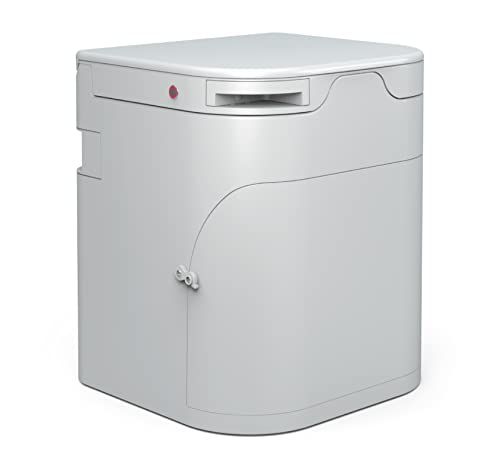
OGOGO Origin Compact Composting Toilet — Best Compact
Space is the currency of van and boat life, and the OGO Origin spends it carefully: the listing leads with its compact footprint, sized for the conversions where a Nature’s Head simply will not fit the cabinet. It keeps the essential composting architecture, urine separation and an agitated solids chamber, in a smaller, modern-styled housing that suits the current generation of DIY van builds.
It suits vanlifers, small-boat owners and tiny-house builders working to tight dimensions. The smaller chamber means more frequent emptying than the full-size units, the honest price of the footprint.
Strengths
- Compact footprint fits vans, boats and tiny bathrooms that exclude larger units
- Retains urine diversion and agitation rather than shrinking to a plain bucket
- Modern housing suits finished DIY conversions
Trade-offs
- Smaller solids capacity means a shorter emptying interval
- Premium pricing for its size class
- Newer entrant than Nature’s Head, with a shorter track record
| Type | Compact composting toilet |
| Footprint | Compact, van/RV/boat sizing (per Amazon listing) |
| Brand | OGO |
Every van builder knows the moment: the floor plan works until the toilet goes in. The Origin exists for that moment, trimming the housing to the smallest envelope that still allows true separation and mixing. In practice that means a couple in a van gets a workable multi-day interval between chamber services, with the urine side emptied more often, a rhythm van dwellers already accept for water and waste generally.
If your build has the room, the full-size Nature’s Head buys capacity and track record. If it does not, the OGO is not a compromise so much as the enabling choice: a real composting toilet where the alternative was a cassette or a bucket.
Best for: Vans, small RVs and boats with tight installation space / Not suited for: Cabins with room where capacity matters more than inches
Check on Amazon to check price on Amazon and confirm the current configuration before ordering.

Compo Closet Cuddy Composting Toilet — Best for DIY Conversions
The Cuddy comes from the conversion community itself, and it shows in the checklist: self-contained, waterless, a 12V fan that plugs straight into a van or boat electrical system, a carbon filter for venting flexibility, and sizing aimed at RVs, vans, boats and tiny homes, exactly as the listing describes. For a DIY builder wiring a van anyway, a native 12V unit removes the little frictions that make other units feel adapted rather than intended.
It suits self-builders who want a designed unit that fits a conversion’s systems. Buyers wanting the longest-proven design should weigh the Nature’s Head’s track record against the Cuddy’s conversion-friendly details.
Strengths
- 12V fan and carbon filter integrate cleanly with van and boat electrical systems
- Waterless, chemical-free operation suits off-grid builds
- Self-contained format keeps installation to mounting and venting
Trade-offs
- Capacity is conversion-sized, so emptying is a regular rhythm
- Smaller brand, with support centred on the conversion community
- Carbon filter is a consumable to keep in the spares kit
| Type | Self-contained composting toilet |
| Capacity | 3.9 gallon (per Amazon listing) |
| Vent | 12V fan with carbon filter (per Amazon listing) |
| Use | RV, van, boat, tiny home, off-grid |
DIY conversions run on 12 volts, and every appliance that does not is a small project. The Cuddy’s native 12V fan, plus a carbon filter that widens where the vent can terminate, removes two of those projects at once. The unit’s community origins also mean its documentation speaks the builder’s language: clearances, vent runs and service access are treated as first-class concerns.
In use it follows the family pattern: separation keeps things dry, the fan keeps air moving the right way, and the chamber empties to a finishing bin on a schedule set by how many people are aboard. For a self-built van or skoolie, it is the most native-feeling choice in this guide.
Best for: DIY van, skoolie and boat conversions on 12V systems / Not suited for: Buyers who rank decades of brand history first
Check on Amazon to check price on Amazon and confirm the current configuration before ordering.

TROBOLO WandaGO Composting Toilet — Best Portable DIY
The WandaGO is the bridge between buying and building. It is a urine-diverting dry toilet, portable, with height adjustment, that needs no installation at all: set it where it is needed, at a camp, a build site, a garden allotment or a cabin under renovation, and it works on the same separation principle as the fixed units. For the DIY-minded, it is also a working prototype: live with it for a season and you will know exactly what your permanent build needs.
It suits temporary, mobile and trial use. It is not a finished-bathroom fixture, and its dry-collection system asks for the bag-and-medium discipline described in the guide below.
Strengths
- Zero installation: portable urine diversion anywhere it is set down
- Height adjustment suits different users and improvised settings
- Teaches the separation system before you commit to a permanent build
Trade-offs
- Portable format lacks the sealed, finished feel of installed units
- No powered vent, so siting and medium discipline carry the odor control
- Dry collection needs a finishing or disposal plan like all bag systems
| Type | Portable urine-diverting dry toilet |
| Feature | Height adjustment (per Amazon listing) |
| Use | Camping and outdoor (per Amazon listing) |
| Brand | TROBOLO |
There is a long tradition of the camp toilet as furniture you move to the problem, and the WandaGO modernises it with proper urine diversion, the feature that separates a tolerable dry toilet from a bad one. Height adjustment is a thoughtful touch in a category of fixed buckets: children, elders and temporary setups all sit differently.
For the true DIYer, we recommend it as the research phase. A season with the WandaGO teaches your household’s real usage rates, medium preferences and emptying tolerance, the three numbers that decide whether your permanent build should be a chamber system, a bag system, or a manufactured unit after all.
Best for: Camps, build sites and trial runs before a permanent install / Not suited for: Finished bathrooms wanting an installed fixture
Check on Amazon to check price on Amazon and confirm the current configuration before ordering.

The Humanure Handbook, 4th Edition (Book) — Best Build-It-Yourself Resource
Every true DIY composting build stands on this book. Joseph Jenkins’ Humanure Handbook, now in its fourth edition, lays out the complete system: a simple collection toilet you can build from basic materials, and, more importantly, the outdoor composting process that makes the system safe and effective, managed with temperature, time and cover material. It is a book in a product list because for the build-it-yourself reader, it is the most important purchase on this page.
It suits committed DIYers building for a homestead or off-grid property who will manage a full compost cycle. It is not for anyone wanting a product that works out of the box, and its system must be run within your local rules.
Strengths
- Complete system thinking: collection, composting, safety and soil, not just a toilet plan
- The build itself uses simple, inexpensive materials and tools
- Decades of practice and revision behind the method
Trade-offs
- It is a book: the toilet, the bins and the discipline are yours to supply
- The full-cycle system needs outdoor space for compost bins
- Local regulations on composting human waste vary and must be checked
| Type | Book, 4th edition |
| Subject | DIY composting toilet systems and humanure composting |
| Author | Joseph Jenkins |
The Handbook’s central insight is that the toilet is the easy part. A seat, a diverter or a simple collection bucket, and cover material will collect safely; the compost pile is where sanitation actually happens, through thermophilic composting managed over time. Jenkins writes like a practitioner, because he is one, and the book’s mixture of microbiology, carpentry and plain encouragement is why it has remained the field’s reference across four editions.
Budget-wise, a Jenkins-style build undercuts every manufactured unit in this guide by a wide margin, and repays the difference in reading and in honest outdoor work. If that trade sounds appealing rather than daunting, this is your pick, and the manufactured units above are your fallback if the season teaches you otherwise.
Best for: Homesteaders building a complete DIY composting system / Not suited for: Anyone wanting an appliance that works out of the box
Check on Amazon to check price on Amazon and confirm the current configuration before ordering.
Comparison Table
| Pick | Badge | Key spec | Best for |
|---|---|---|---|
| Nature’s Head Self-Contained Composting Toilet with Spider Handle | Best Overall | Urine-diverting, crank agitator, self-contained | Full-time off-grid, marine and RV use wanting the proven best |
| Separett Villa Urine-Separating Compost Toilet | Best Urine-Separating Design | Urine-separating, bag system, fan vented | Cottages and homesteads wanting the simplest composting routine |
| OGOGO Origin Compact Composting Toilet | Best Compact | Compact footprint, urine diverting | Vans, small RVs and boats with tight installation space |
| Compo Closet Cuddy Composting Toilet | Best for DIY Conversions | 12V fan, carbon filter, 3.9 gal, waterless | DIY van, skoolie and boat conversions on 12V systems |
| TROBOLO WandaGO Composting Toilet | Best Portable DIY | Portable, urine diverting, height adjustable | Camps, build sites and trial runs before a permanent install |
| The Humanure Handbook, 4th Edition (Book) | Best Build-It-Yourself Resource | Book: full DIY system guide, 4th edition | Homesteaders building a complete DIY composting system |
Read the table as a map, not a ranking: the best diy composting toilets differ less in raw quality than in which trade-off they ask you to accept, and the right row is the one whose trade-offs match your space, your users and your habits.
How to Choose the Best DIY Composting Toilets for Your Situation
Choose by three numbers: how many users, how many days between services you will tolerate, and how much space and power the site offers. The architecture follows from those answers.
The two architectures: churned chamber versus separation and bags
Chamber systems like the Nature’s Head compost in the unit: solids collect with cover medium and are mixed by a crank, so servicing means emptying finished or finishing material every few weeks. Separation-and-bag systems like the Separett collect solids dry in a bag and move the composting outdoors to a pile or bin. Chambers minimise consumables; bags minimise mechanism and effort per service. Both rely on the same foundation, urine diversion, because mixed waste is what smells, leaks and fails.
The true DIY build from the Humanure Handbook is a third pattern: simple collection at the toilet, all composting done in managed outdoor bins. It is the cheapest in money and the richest in required knowledge, which is why the book is a pick and not a footnote.
Venting and power
Every successful composting toilet moves air: a small fan drawing from the chamber and exhausting outside keeps pressure negative, moisture leaving, and the bathroom smelling like nothing. Budget for the vent run in your build, through a wall or roof with a rain cap, and for the fan’s tiny continuous draw, from mains, a 12V system like the Cuddy’s, or a small solar setup. A composting toilet without a working vent is a complaint waiting for its first warm day.
Cover medium and the finishing plan
Peat moss and coco coir are the standard cover media: a scoop after each solid use keeps deposits covered, dry and aerobic. Decide before installation where emptied material goes: a dedicated finishing compost bin on your own land where rules allow, or bagged disposal where they do not. The finishing plan is not an afterthought; it is half the system, and local regulations are the first thing to check, not the last.
What Does a Composting Toilet Actually Smell Like?
A correctly run composting toilet smells like its cover material, faintly earthy in the chamber itself and like nothing at all in the room, because the vent fan keeps air flowing into the unit, not out of it. Odor is diagnostic, not inevitable: ammonia means urine is reaching the solids or the urine bottle is overdue; a sour smell means the chamber is too wet and needs medium and air; a sewage smell means the vent has failed or the separation has been bypassed.
This is why we weight user discipline honestly in the reviews. The technology works, demonstrably, across marinas and homesteads worldwide. It works for owners who keep the rhythm: divert, cover, vent, empty on schedule. If a household will not keep any rhythm at all, a cassette toilet with chemicals is the kinder recommendation, and there is no shame in that match either.
The Science Under the Seat: How Composting Actually Works
A composting toilet is a managed ecosystem, and understanding its three rules explains every success and failure in this category. Rule one is separation: urine carries most of the nitrogen and nearly all of the immediate odour potential, so diverting it keeps the solids chamber aerobic and mild. Rule two is carbon balance: cover medium gives the microbes processing the solids the dry, carbon-rich environment they need, the same browns-versus-greens balance a gardener strikes in a compost pile. Rule three is air: aerobic microbes do the work without producing the gases anaerobic decay does, which is why the vent fan, drawing a constant gentle draft through the chamber, is the difference between a system that smells like a forest floor and one that smells like a mistake.
Time is the silent fourth ingredient. Pathogens are not sterilised by enthusiasm; they are reduced by the combination of heat in a well-run pile, competition from the compost community, and, above all, duration. That is why every responsible system, from the Nature’s Head’s chamber to the Handbook’s bins, finishes material over an extended period before any return to the soil, and why local rules, which encode this caution, deserve respect rather than eye-rolling.
Troubleshooting by smell and sight
Learn the diagnostics and the system becomes legible. Ammonia sharpness means urine intrusion or an overdue bottle. Sourness means excess moisture: add medium, check the vent, consider whether a user is adding water. Fruit flies mean a breach in screening or a chamber left open; they are cured with a vinegar trap, a cleaned vent screen and discipline about the lid. A chamber that looks like dry garden compost is the picture of health. None of this requires expertise, only attention, which is the true operating cost of composting, and the reason honest guides name it.
Composting Toilets in Cabins, Boats and Vans: Three Different Worlds
The same technology lives three different lives. In a cabin, space and permanence favour the full-size chamber units or a Handbook-style build with outdoor bins, serviced on a monthly rhythm and winterised by simply letting the system rest. On a boat, the marine heritage of units like the Nature’s Head shows: compactness, security in a seaway, and freedom from pump-out stations and holding-tank chemistry, with the urine bottle’s rhythm fitted to harbour stops. In a van, inches rule, 12-volt systems rule, and the OGO and Cuddy exist because the conversion community demanded toilets designed for its electrical and spatial reality rather than adapted to it.
Choosing among the picks is therefore mostly choosing your world honestly. The cabin owner who buys a van-sized unit will service it too often; the van builder who insists on a cabin unit will lose the cabinet that made the kitchen work. The guide’s badges map to those worlds deliberately, and the finishing plan, where the compost goes, differs by world too: bins on owned land, marina and campground rules afloat, and Leave No Trace discipline on the road.
Building the Outdoor Half: Finishing Bins and the Full Cycle
Every DIY composting system has an outdoor half, and it deserves the same care as the seat indoors. The classic arrangement from the Humanure tradition is a dedicated compost bin, pallet-built or framed, sited on level ground away from water sources and property lines as local rules require, where collected material is layered with cover material and left to the slow work of the compost community. A second bin lets one rest and mature while the other receives, and a simple roof or cover keeps rain from waterlogging the pile. The rhythm is seasonal, unhurried, and almost entirely odour-free when the carbon balance is kept, because a compost pile managed like a garden compost pile behaves like one.
Chamber-unit owners run a smaller version of the same cycle: the chamber’s contents, already part-composted, go to the finishing bin to complete their time before any use, and bag-system owners tip their bags into the same arrangement where rules allow, or into approved disposal where they do not. The bin is therefore the shared back-end of every pick in this guide, the manufactured and the hand-built alike, and planning it is not optional homework. It is the system.
What the finished material may be used for is a question for your jurisdiction, not for a buying guide, and the range of answers is wide. What is universal is the principle that makes all of them safe to contemplate: time, separation, carbon and air, applied consistently. The DIY in this search is not really about building a toilet. It is about taking responsibility for a whole cycle, and the people who embrace that find, to their own surprise, that the cycle is the satisfying part.
If that paragraph energised you, start with the Handbook and a WandaGO season to learn your numbers. If it exhausted you, buy the Nature’s Head, keep its simpler rhythm, and know that choosing the appliance over the project is also a legitimate DIY decision: you installed it yourself, after all.
Safety, Hygiene and Honest Limits of Composting Systems
A buying guide owes its readers the limits as plainly as the benefits. Composting toilets handle waste safely when the full system is run as designed, but they are not sterilisation machines, and the material they produce should be treated with the respect due to anything that began as human waste: gloves for servicing, handwashing after, finishing time before any return to the land, and no use around food crops unless your local rules and your own knowledge genuinely support it. Households with immunocompromised members should take advice specific to their situation rather than a guide’s general reassurance.
There are also settings where composting is simply the wrong tool: a high-turnover rental with strangers on a learning curve, a venue whose local rules prohibit it, a household that knows it will not keep any maintenance rhythm at all. In those settings the honest recommendation is a cassette toilet or a plumbed fixture, and choosing them is not a failure of environmental virtue. The best diy composting toilets are the ones matched to owners who will run them well; the rest of this guide exists so that everyone else is served honestly too.
Your First Season: A Realistic Diary
Month one is learning: the diverter’s aim, the medium’s measure, the fan’s hum becoming furniture for the ear. There will be one mistake, usually a wet chamber or an overdue bottle, and it will teach the rhythm faster than any manual. Month two is the quiet surprise that there is nothing to report. By month three the system has become what its owners promised: a toilet, unremarkable, which in sanitation is the highest available praise. Keep the service kit stocked, glance at the chamber when you add medium, and let the seasons turn. The compost, outdoors, is doing its slow work whether you watch it or not, and that patience, yours and its, is the whole technology.
How to Build and Install a DIY Composting Toilet Setup
Whether you are installing a self-contained unit or building a collection toilet from plans, the installation logic is the same: a stable seat at the right height, separation or collection underneath, a vent that truly vents, and a service routine you can sustain.
Step 1: Plan the site and the rules
Choose a spot with a feasible vent route to the outside and room to service the unit. Check local rules on composting toilets and on handling the end product before you build; requirements differ widely between jurisdictions and between owned land and leased or marina settings.
Step 2: Build or set the base
For a manufactured unit, mount it per its instructions on a solid, level floor. For a scratch build, construct a sturdy box at comfortable seat height housing the collection container, with a urine diverter fitted under the seat and a hinged top for servicing, following the plans in your chosen guide.
Step 3: Fit the urine path
Route the diverter outlet to its destination: the unit’s bottle, a container, or a soakaway where permitted. Keep runs short, sloped and accessible; the urine path is the part you will clean most, so design it to come apart easily.
Step 4: Run the vent properly
Duct from the chamber to the outside with the fan drawing air out of the unit, joints sealed, exterior termination capped against rain and screened against insects. Test with a tissue at the seat: it should pull gently inward. This step decides whether the system smells like nothing.
Step 5: Charge the system
Add cover medium to the chamber or the first bag and container, a scoop of medium ready beside the seat, and clear instructions for users: sit to use (diverters depend on it), cover solids every time, no water, no chemicals, nothing but paper designed for the system.
Step 6: Run the first month deliberately
Check moisture weekly: the chamber should look like wrung-out compost, not soup and not dust. Adjust medium amounts, confirm the fan runs continuously, and set your emptying calendar from real usage rather than the brochure. By the second month the rhythm is habit.
Keep a service kit with the toilet: spare medium, gloves, a spare fan or filter where applicable, and the manual or handbook. Composting toilets reward the prepared and expose the improviser, gently but reliably.
Common Buying Mistakes
Skipping or skimping the vent
An unvented or badly vented composting toilet will smell, and the design will be blamed for the installer’s shortcut. The vent is not an accessory; it is the system’s lungs.
Letting urine reach the solids
Standing to urinate, a misaligned diverter, or an overfilled urine bottle all wet the chamber, and wet chambers are where odor and flies begin. Divert faithfully and empty the bottle on schedule.
Using the wrong cover medium
Soil, ash or sawdust from treated timber are poor substitutes for peat or coir: they lack the structure and absorption the system is tuned for. Stock the right medium before the toilet is needed.
Ignoring local rules
Composting toilets are legal in many places and regulated in most. Building first and asking later can mean removing a working system. One call to the local authority is the cheapest step in the whole project.
Expecting zero maintenance
These systems trade plumbing for rhythm: covering, cranking, emptying, checking. Buyers who want a flush-and-forget appliance should choose a cassette or a plumbed toilet instead, and be happier.
Final Recommendation
For most buyers, the Nature’s Head remains the answer: the most proven composting chamber, genuinely odor-free in disciplined use, and built for a decade of service. The Separett Villa is the gentler routine for cottages and sceptical households, the OGO Origin and Compo Closet Cuddy serve the van and conversion world at its own scale, the TROBOLO WandaGO covers portable and trial use, and the Humanure Handbook equips the true builder to construct the whole system for the price of parts and knowledge.
Decide which kind of DIY you are, builder, installer, or somewhere between, and this list has a pick that respects the choice. Then vent it properly, keep the rhythm, and enjoy the strange satisfaction of a toilet that needs no water, no sewer, and no apology.
Start your shortlist with the picks readers choose most often: Nature’s Head Self-Contained Composting Toilet with Spider Handle, Separett Villa Urine-Separating Compost Toilet, OGOGO Origin Compact Composting Toilet. Each links to its listing so you can check price on Amazon and confirm the configuration before ordering.
Keep exploring the range with our related guides: Best Composting Toilets Best Portable Toilets Best Rv Toilets
Frequently Asked Questions
Do composting toilets really not smell?
A properly installed and maintained one does not smell in the room, because urine is diverted, solids stay dry and covered, and a fan vents the chamber outside continuously. Odor appears when one of those three fails, and it is a useful diagnostic rather than a fact of the technology.
How often do you empty a composting toilet?
The urine side is the frequent task: every two to three days for two full-time users on bottle systems. The solids chamber of a unit like the Nature’s Head typically goes several weeks between services for a couple, while bag systems are swapped when the container fills. Usage, not the calendar, sets the real interval.
What do you do with the compost?
Material from the chamber is usually finished in a dedicated outdoor compost bin for an extended period before any use, and many owners simply bag and dispose of it. Rules vary by jurisdiction and setting, so confirm what is permitted where you live and never use unfinished material around food plants.
Can a composting toilet work in winter?
Yes. The composting process slows in deep cold but the separation and venting keep working, and units in cabins and boats serve through winter routinely. Protect vent terminations from ice blockage and keep medium stocked; the system is dormant-season tolerant.
Do you need electricity for a composting toilet?
Most self-contained units use a small fan, a tiny continuous draw supplied by mains, a 12V system or a small solar panel. Fully manual dry systems and the classic Handbook build need none. If your site has no power at all, choose a design whose venting works passively or by solar fan.
Can you put toilet paper in a composting toilet?
Yes, ordinary toilet paper in reasonable amounts composts along with the solids in chamber systems and is collected in bag systems. Avoid wipes of any kind, including those labelled flushable; they do not break down on the system’s timescale.
Related reading on this site: Best Toilets For Cabins Best Off Grid Toilets Best Deer Camp Toilets


