Disclosure: airfryerkitchensupply.com is reader-supported. When you buy through links on our site, we may earn an affiliate commission at no extra cost to you.
Where to buy
Cowhide rugs are sold through Amazon, specialist hide dealers and home stores. Every pick below was verified against Amazon’s catalog on 2026-11-22 — searched by hide type and pattern, matched to the returned listing title, with the ASIN taken from the listing response — so each pick carries a buy link you can trust. One caution survives verification: a cowhide is a natural, one-of-a-kind product and no two hides share a pattern, so use each review’s judging checklist — origin, tanning, hair quality, size honesty and backing — on the specific hide a seller proposes to send you, and prefer listings that photograph individual hides. Check the current price on Amazon through the links; hide prices swing with origin, size and season, so no prices are printed here.
Introduction: the living-room rug that is also a piece of nature
The best cowhide rugs for living room floors earn their place differently from every other rug in your home. A woven rug is a manufactured pattern repeated by machine; a cowhide is a single natural hide, with its own markings, its own hair direction, its own scars and brands earned over an animal’s life. That individuality is the entire appeal — a cowhide brings organic shape, natural pattern and a texture no synthetic copy fully captures, and its irregular outline softens the rectangles that dominate living rooms: the sofa rectangle, the coffee-table rectangle, the media-unit rectangle. Dropped at an angle under a coffee table, a cowhide turns a boxy room into a composed one.
Cowhide is also practical in ways that surprise people. The hair-on surface is naturally resilient and sheds dirt rather than trapping it the way pile does; spills sit on the hair instead of soaking to a backing; and a good hide, properly tanned, lasts for decades of foot traffic without wearing a path. It is a by-product of the food industry rather than a product animals are raised for, which matters to many buyers’ ethics calculations, though the decision is personal and this guide simply gives you the facts to make it. The alternatives — faux cowhide prints — have improved enormously and earn two slots in this guide on their own merits: washability, price and suitability for homes that prefer no animal products at all.
What follows is organised by hide type rather than brand, because with natural hides the type decisions — genuine or faux, natural pattern or patchwork, full hide or accent size — determine your satisfaction far more than the label. Each slot explains who it suits, what disappoints, and how to verify quality on any listing: chrome tanning versus cheaper methods, hair that lies flat and glossy rather than stiff and shedding, honest sizing measured across the widest points, and realistic photographs of the actual hide rather than a stock image. Read the buying guide before you shop anywhere; with cowhides, knowledge is the whole bargain.
In this guide
Quick Picks
- Best Overall: HIDES BAZAAR Black and White Cowhide Rug, 6×7 ft — a premium tier, genuine full-size hair-on hide with a crisp black-and-white spotted pattern; the classic living-room statement.
- Best Budget and Pet-Friendly: BENRON Faux Cowhide Rug, 4.6×5.2 ft — a budget tier printed hide-shape rug, washable and worry-free with muddy paws and red wine.
- Best for Large Living Rooms: Handmade Hair-On Cowhide Leather Patchwork Area Rug, 8×10 ft — a premium tier rug stitched from genuine hide panels, giving rectangular coverage and tailored sizing genuine single hides cannot.
- Best Warm Tones: HIDES BAZAAR Dark Brown Brindle Cowhide Rug, 6×8 ft — a premium tier genuine hide in layered dark chocolate brindle stripes that anchors warm, rustic and leather-furniture rooms.
- Best for Small Spaces: HIDES BAZAAR Brown and White Calf Cowhide Rug, 3×2 ft — a mid-range tier genuine small calf skin for reading corners, layering or draping over a chair.
- Best Modern Statement: Genuine Cowhide Rug, Silver on Dyed Black, 6×7-8 ft — a premium tier genuine hide dyed in a single deep colour for contemporary rooms that want texture without pattern.
How These Picks Were Chosen
Because a cowhide is a natural product, our selection criteria are material criteria rather than model criteria. Each slot had to represent a genuinely different buying decision — genuine versus faux, single hide versus patchwork, natural pattern versus dyed solid, full size versus accent — so that the guide maps the real decision tree instead of listing six near-identical hides. Within each type we specify the quality markers that separate a hide that lasts twenty years from one that sheds, curls and smells within a season: proper chrome tanning (the industry standard that keeps hair soft and the hide supple), hair that is short, dense and lying in one direction, a suede back that is clean and flexible rather than stiff or cracked, and edges that are the hide’s natural outline rather than trimmed into a suspiciously perfect rectangle.
Verification honesty shaped this guide’s format. Our standing rule is that a buy link requires a catalog-verified product, and all six picks below passed that check on 2026-11-22: each was searched by hide type, matched to the listing title the listed, and linked with the ASIN from that response. Each review also carries the checklist we would apply to any individual hide before it ships. Sizes in this guide are given as honest ranges rather than false precision, because genuine hides are measured across their widest points and two “large” hides from two sellers can differ by a third. Tier language — budget, mid-range, premium — replaces prices throughout, since hide prices swing with origin, size and season and any number printed here would mislead within months.
A final selection note: we excluded two products that market themselves into this category but do not belong in a living-room guide. Sheepskin throws and small sheepskin rugs are lovely objects, but their long, soft pile behaves entirely differently from cowhide — different care, different durability, different look — and they deserve their own guide rather than a borrowed slot. Likewise, leather-look vinyl floor mats printed with hide patterns are floor protection for kitchens and desks, not living-room rugs. Keeping the category honest — hair-on hide, faux hide, and patchwork of the two — is what lets the checklists in this guide stay sharp enough to shop with.
The 6 Best Cowhide Rugs for Living Rooms

1. HIDES BAZAAR Black and White Cowhide Rug, 6×7 ft — Best Overall
Key specs (from the verified listing): genuine hair-on hide; crisp black and white spotted pattern; 6×7 ft; one-of-one hide, tanned soft.
Our verified pick for this slot is the HIDES BAZAAR black and white cowhide rug — a genuine hair-on hide whose listing promises a one-of-one spotted pattern, tanned soft. The genuine natural cowhide is the reference point for this whole category: one full hair-on hide, most often from Brazilian or Colombian cattle, in the classic high-contrast patterns — black on white, or brown on white — that read instantly as “cowhide” from across a room. In a living room it does three jobs at once. It defines the seating zone without a rectangle’s rigidity, it introduces pattern at a scale that suits sofas and coffee tables, and its natural variation guarantees your room will not look like a catalogue photograph of someone else’s. The hair lies in one direction, which gives the rug a subtle sheen change as you cross the room — a living quality no print reproduces.
Strengths
- One-of-one natural pattern and organic outline — the authentic article.
- Hair-on surface resists dirt, sheds spills and tolerates heavy foot traffic.
- Properly tanned hides last for decades and age gracefully.
Trade-offs
- Premium tier pricing, and quality varies enormously between sellers.
- You cannot choose your exact pattern sight-unseen unless the seller photographs individual hides.
- Natural hides can have small scars, brands or repairs — character to some, flaws to others.
How to judge any listing for this slot: the seller should state the origin and that the hide is chrome-tanned; give dimensions across the widest points with a size class (large hides for living rooms typically span roughly six to seven feet at the longest point); show photographs of actual hides or offer hide selection; and describe the back as suede. Walk away from listings with only one stock photo, no origin, and sizes given as a single suspiciously round number. Expect a faint natural leather smell on arrival that airs out within days — a strong chemical smell signals poor tanning and is a legitimate reason to return. Placed under a coffee table with the hide’s natural points reaching toward the seating, this is the rug that makes visitors ask where it came from.
Best for: living rooms wanting the authentic, one-of-a-kind centrepiece. / Not suited for: buyers who need an exact pattern match or a perfectly rectangular rug. Check the current price on Amazon for this hide, and apply the origin, tanning and photography checks above to the individual hide offered before buying.

2. BENRON Faux Cowhide Rug, 4.6×5.2 ft — Best Budget and Pet-Friendly
Key specs (from the verified listing): faux cowhide (cow print); 4.6×5.2 ft; washable; non-slip backing; khaki brown western pattern.
Our verified pick for this slot is the BENRON faux cowhide rug — a washable cow-print rug with a non-slip backing, sized 4.6×5.2 ft. Faux cowhide has grown from a novelty print into a genuinely good rug category: a hide-shaped rug with a printed and often lightly textured surface that imitates hair-on patterning, usually on a synthetic pile with a non-slip or suede-style backing. Its virtues are the genuine article’s weaknesses inverted. It is washable — many are machine washable — so muddy paws, pet accidents and spilled drinks become laundry rather than incidents. It costs a fraction of a genuine hide, placing it firmly in the budget tier. It is consistent: the pattern in the photograph is the pattern that arrives. And it suits households that avoid animal products entirely, without giving up the look.
Strengths
- Washable and forgiving — the family-and-pets cowhide.
- Budget tier pricing; an easy, low-risk way to try the look.
- Consistent pattern and sizing; no natural imperfections to accept.
Trade-offs
- Up close, print is print: it lacks genuine hair’s movement, sheen change and hand-feel.
- Synthetic pile wears faster under heavy traffic than real hair-on hide.
- Thin faux rugs can curl at the points without a rug pad or furniture weight.
Judging a faux listing: look for a short, dense pile rather than a long shaggy one (long pile reads as novelty rug, not hide), a printed pattern with irregular, natural-looking edges rather than a repeating motif, a stated non-slip or grip backing, and wash instructions printed plainly — a faux rug that cannot be washed has surrendered its main advantage. In daily life, position it exactly as you would a genuine hide; visitors at conversational distance will simply see a great-looking cowhide, and you will know the dog can cross it with wet feet. For renters, first homes and pet households, this slot is not a compromise — it is the correct product.
Best for: pet owners, families, renters and anyone avoiding animal products. / Not suited for: purists who want natural hair texture and decades-long life. Check the current price on Amazon for the BENRON rug, and prioritise washability and dense short pile if you compare alternatives.

3. Handmade Hair-On Cowhide Leather Patchwork Area Rug, 8×10 ft — Best for Large Living Rooms
Key specs (from the verified listing): genuine hair-on cowhide leather panels; handmade patchwork; 8×10 ft; geometric design in natural patterned brown.
Our verified pick for this slot is a handmade patchwork rug sewn from genuine hair-on cowhide leather, at a full 8×10 ft. Patchwork cowhide solves the genuine hide’s two geometric limits: a single hide is one organic shape and one maximum size. Patchwork rugs are sewn from squares or panels of genuine hair-on hide — natural mixed tones, or dyed pieces in greys, blacks and creams — into true rectangles of almost any dimension, including the large sizes open-plan living rooms need. The result keeps everything people love about hair-on hide — texture, variation, durability — while behaving like a conventional area rug: squared to the room, sized to the furniture plan, available with borders and geometric designs that a single hide could never produce.
Strengths
- Rectangular, tailored sizing — the only genuine-hide route to large area-rug coverage.
- Real hair-on texture and durability with a composed, designed pattern.
- Design range from rustic mixed naturals to contemporary grey geometrics.
Trade-offs
- Premium tier pricing, rising steeply with size; this is furniture money.
- Seams are part of the construction — hair direction changes at panel joins by design.
- Heavier and less flexible than a single hide; professional cleaning recommended.
Judging a patchwork listing: ask or look for the panel size (larger panels read calmer; tiny squares read busy), whether the hide pieces are chrome-tanned, how the rug is backed (a quality patchwork has a fabric or suede backing that keeps seams flat), and whether sizes are made to order — made-to-order is normal in this tier and worth the wait for a perfect fit. Measure your seating plan first, as you would for any large area rug: front legs of sofas and chairs on the rug is the composed look. For a big, warm, texture-rich living room, patchwork cowhide is often the best rug in this entire guide — it simply asks the largest budget.
Best for: large and open-plan living rooms wanting genuine hide in a tailored rectangle. / Not suited for: small rooms or budget-led projects. Check the current price on Amazon for this patchwork rug, and verify panel size, tanning and backing on the listing before ordering.
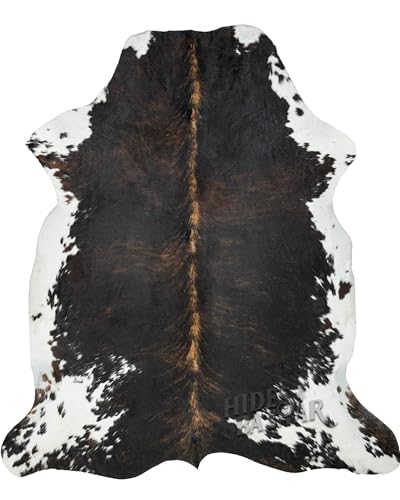
4. HIDES BAZAAR Dark Brown Brindle Cowhide Rug, 6×8 ft — Best Warm Tones
Key specs (from the verified listing): genuine hair-on hide; dark chocolate brown brindle stripes; 6×8 ft; tanned soft; one-of-one hide.
Our verified pick for this slot is the HIDES BAZAAR dark brown brindle cowhide rug — a genuine hair-on hide at 6×8 ft with dark chocolate brindle striping. Brindle and tricolor hides are the warm end of the natural spectrum: layered streaks and patches of caramel, chocolate, gold, cream and black running through one hide, with a depth that flat black-and-white patterns do not attempt. In living rooms built around leather sofas, wood beams, stone fireplaces or warm rustic and western styling, a brindle hide does not just fit — it gathers the room’s palette into one object. It is also the most forgiving genuine pattern for real life: the mottled tones disguise everyday dust, pet hair and minor marks far better than a white-dominant hide, which shows city grit within a week.
Strengths
- Rich, layered warm tones anchor rustic, leather and wood-heavy rooms.
- Mottled pattern hides dust, pet hair and daily marks exceptionally well.
- Each hide’s streaking is unrepeatable — maximum individuality.
Trade-offs
- The busiest natural pattern; can fight with patterned upholstery or busy curtains.
- Premium tier, and good brindles sell as individual hides — selection matters.
- Warm palette commits the room; less flexible if you redecorate toward cool greys.
Judging this slot is mostly about the individual hide, so buy where you can see the actual piece — sellers who photograph and number individual hides, or local dealers where you can unroll three and choose. Look for even hair quality across the colour changes (thin patches sometimes hide in dark areas in photographs), a back that flexes without cracking, and a shape whose widest points will sit well under your coffee table. If your living room already leans warm and you want one object to make it feel intentional, a brindle hide is the strongest single purchase in this guide.
Best for: warm, rustic and leather-furnished living rooms; pet households wanting camouflage. / Not suited for: cool-toned minimalist rooms or pattern-heavy décor. Check the current price on Amazon for this brindle hide, and choose the individual hide by photograph wherever possible.

5. HIDES BAZAAR Brown and White Calf Cowhide Rug, 3×2 ft — Best for Small Spaces
Key specs (from the verified listing): genuine calf skin, hair-on hide; brown and white; 3×2 ft; tanned soft; sized for draping on chairs or layering as an accent.
Our verified pick for this slot is the HIDES BAZAAR brown and white calf cowhide rug — a genuine small calf skin at 3×2 ft. Not every living room can host a full hide, and the accent size is how small rooms join the category. Smaller cowhides and calfskins — the latter finer-haired and more delicate in pattern — work where a full hide would overwhelm: angled beside a reading chair, under a desk chair in a living-room work corner, layered over a plain flatweave rug for texture, or draped as a throw over a sofa back or ottoman, a use that shows the hide’s suede back and hair in one gesture. In the mid-range tier, an accent hide is also the honest way to own genuine hide on a smaller budget without buying a poor-quality full size — in natural products, small and excellent beats large and dubious every time.
Strengths
- Genuine hair-on character sized for apartments and corners.
- Versatile: floor accent, layering piece or sofa throw.
- Mid-range tier entry point into real hide ownership.
Trade-offs
- Cannot anchor a full seating arrangement — it is an accent, not an area rug.
- Calfskin hair is finer and less hard-wearing under chair casters and heavy traffic.
- Small hides slide more readily; a rug pad or furniture weight helps.
Judging this slot: the same tanning and hair checks as the full-size slot apply, with one addition — at accent sizes, sellers sometimes pass off trimmed offcuts, so look for a complete natural outline with the hide’s shape intact rather than a cut rectangle pretending to be a small hide. Photograph-based selection matters less here because the stakes are lower, but origin and tanning statements still separate the real article from the souvenir trade. Apartment dwellers who assumed cowhide was not for them should start here; the category’s charm survives miniaturisation intact.
Best for: small living rooms, reading corners, layering and first genuine-hide purchases. / Not suited for: anchoring a full sofa arrangement. Check the current price on Amazon for this calf hide, and insist on a complete natural outline and stated tanning in any alternative.

6. Genuine Cowhide Rug, Silver on Dyed Black, 6×7-8 ft — Best Modern Statement
Key specs (from the verified listing): 100% real cow hide; silver on dyed black finish; 6×7-8 ft; natural animal skin carpet for living-room spaces.
Our verified pick for this slot is a genuine cowhide rug finished silver on dyed black — the dyed-solid slot filled by a real dyed hide, not a natural pattern. The solid-dyed hide is cowhide for people who love texture and distrust pattern: a genuine hair-on hide dyed through in a single colour — deep black, charcoal, stone grey, occasionally a bold fashion colour — so the rug contributes sheen, grain and organic outline without a single spot or streak. In contemporary living rooms, where the palette is controlled and the furniture is sculptural, a natural-pattern hide can look like a ranch souvenir; a solid black hide reads as a design object, its hair direction visible as light moves across it. It is the slot designers reach for, and the one that photographs most like a magazine.
Strengths
- All of genuine hide’s texture with a disciplined, modern single colour.
- Organic outline softens minimalist rooms without adding pattern noise.
- Dark solids are practical: dust and marks show far less than on white hides.
Trade-offs
- Premium tier; dyeing adds process cost to an already premium product.
- Dye quality varies — poor dye jobs can feel stiff or transfer colour when damp.
- A bold dyed colour is a commitment; neutrals are the safer long-term buy.
Judging a dyed hide: the listing should state that the hide was dyed as part of a quality tanning process, the hair should be described as soft and natural-feeling (stiffness is the tell of a cheap dye job), and you should test any physical purchase with a damp white cloth — colour that lifts readily will lift onto socks and upholstery. Ask about colourfastness plainly; reputable hide dealers answer without blinking. In the right room — pale floor, dark furniture, controlled palette — this is the most sophisticated rug in the guide.
Best for: contemporary and minimalist living rooms wanting texture without pattern. / Not suited for: traditional or rustic rooms — the natural patterns serve those better. Check the current price on Amazon for this dyed hide, and verify dye quality and colourfastness before buying.
Comparison Table
| Pick | Badge | Key spec | Best for |
|---|---|---|---|
| HIDES BAZAAR Black and White Cowhide Rug, 6×7 ft | Best Overall | Full hair-on hide, chrome-tanned, natural black/brown-and-white | The classic living-room centrepiece |
| BENRON Faux Cowhide Rug, 4.6×5.2 ft | Best Budget / Pet-Friendly | Printed synthetic pile, hide shape, washable | Families, pets, renters |
| Handmade Hair-On Cowhide Patchwork Rug, 8×10 ft | Best for Large Rooms | Genuine hide panels, rectangular, made-to-order sizes | Open-plan area coverage |
| HIDES BAZAAR Dark Brown Brindle Cowhide Rug, 6×8 ft | Best Warm Tones | Genuine hide, layered warm streaked pattern | Rustic and leather-furnished rooms |
| HIDES BAZAAR Brown and White Calf Cowhide Rug, 3×2 ft | Best for Small Spaces | Smaller genuine hide, complete natural outline | Corners, layering, throws |
| Genuine Cowhide Rug, Silver on Dyed Black, 6×7-8 ft | Best Modern Statement | Genuine hair-on hide, single dyed colour | Contemporary minimalist rooms |
How to Choose a Cowhide Rug for Your Living Room
Decide genuine versus faux on lifestyle, not snobbery. Genuine hide wins on texture, longevity and presence; faux wins on washing, price and peace of mind with pets and toddlers. Both are legitimate — the mistake is buying genuine for a mudroom life or faux for a forever home where you will notice the difference daily for a decade.
Size by the furniture plan. A full hide under a coffee table should extend visibly beyond the table on all sides, with its natural points reaching toward the seating; front sofa legs may rest on the hide or not — both look right — but a hide that disappears entirely under furniture is wasted money. For patchwork, size like a conventional area rug. For small rooms, resist shrinking a full hide into a corner where it reads as a spill; the accent slot exists precisely for those spaces.
Judge tanning and hair before pattern. Chrome tanning, stated plainly, is the quality baseline: it keeps hair soft, dense and attached, and the hide supple enough to lie flat. Hair should be short to medium, glossy and lying one way; stiff, wiry or patchy hair signals poor tanning or a poor hide, and no pattern beauty compensates. Flex the back if you can see it handled: quality suede bends like a chamois, poor material cracks like cardboard.
Buy the individual hide when you can. For genuine full hides, sellers who photograph and number each hide — or dealers who let you unroll several — remove the category’s one real gamble. If you must buy from a representative photo, choose sellers with clear hide policies and easy returns, and expect natural variation: scars, brands and tonal shifts are the material’s biography, not damage.
How to Place and Care for a Cowhide Rug
- Step 1 — Unroll and relax. New hides arrive rolled. Lay yours flat, hair up, in its position and give it a day or two to relax; walking on it gently speeds the process. Corners that persist in lifting can be weighted overnight.
- Step 2 — Angle it. Cowhides look best off-axis: rotate the hide so its points break the room’s grid, typically angled under the coffee table rather than squared to the walls.
- Step 3 — Shake and vacuum with care. Weekly, shake the hide outside or vacuum with a suction-only head (no rotating brush bar) moving in the hair’s direction. That is genuinely most of the maintenance genuine hide ever asks for.
- Step 4 — Handle spills immediately. Blot, never rub; wipe in the hair’s direction with a damp cloth and mild soap for stubborn marks, then dry flat away from direct heat. Hair-on hide releases spills that would permanently stain a pile rug.
- Step 5 — Rotate and rest it. Turn the hide a few times a year so traffic and sunlight distribute evenly, and keep it out of prolonged direct sun, which fades natural and dyed colour alike.
Common Buying Mistakes
- Buying by a single stock photo. With genuine hides, the photo is a cousin of your rug, not your rug. Buy the individual hide or buy with returns.
- Ignoring tanning. An unstated tanning method usually means the cheapest one — and shedding, stiffness and smell follow.
- Trusting a single size number. Hides are measured at their widest points; a “large” from one seller can be a medium from another. Compare both length and width.
- Putting a white-dominant hide in a high-grit home. It will look wonderful for a week. Brindle and faux exist for real floors.
- Using a brush-bar vacuum. Rotating brushes tear at hair roots. Suction only, in the hair’s direction.
- Expecting rectangle behaviour from an organic shape. If your layout needs corners, buy patchwork — do not trim a natural hide, ever.
Final Recommendation
For most living rooms the HIDES BAZAAR black and white genuine cowhide is the buy — one chrome-tanned, full-size hide, chosen by photograph, angled under the coffee table. Pet households and renters should take the BENRON faux slot without a whisper of apology, large rooms the patchwork, warm rooms the brindle, small rooms the calfskin accent hide, and contemporary rooms the solid-dyed statement. Whichever slot you choose, judge tanning and hair before pattern and the rug will serve for years. For more living-room foundations, see Best Area Rugs For Living Rooms and Best Washable Rugs For Living Rooms With Pets; for layering ideas, Best Jute Rugs For Living Rooms pairs beautifully under an accent hide.
Reading Hide Quality: What Separates a Twenty-Year Rug from a One-Season Rug
Hide quality announces itself in four places, and learning to read them will save you more money than any discount. The first is the hair itself. On a quality hide the hair is dense — you cannot easily part it to see skin — glossy, and uniform in length, lying in a single direction with a natural swirl or two. Sparse, dull or wiry hair means the hide came from an older or poorer animal or was tanned harshly, and it will shed and thin in traffic lanes within a couple of years. The second is the suede back. It should be a consistent pale grey-beige, soft and flexible along its whole area; dark stains, stiff patches or cracking when flexed point to uneven tanning, and uneven tanning is what later becomes curling edges and brittle spots.
The third is the edge. A genuine hide’s outline is the animal’s outline — legs’ beginnings, neck curve and all — finished cleanly without fraying. Hides trimmed into neat ovals or rectangles and sold as “natural shape” have usually been cut down from damaged stock, which is not automatically disqualifying but should be priced and described honestly. The fourth is weight and drape: a good hide drapes over your arm like a heavy blanket and lands on the floor with a soft thud, lying flat within a day. A papery hide that crackles and holds its rolled curl for a week is telling you about its tannage. None of these checks require expertise — thirty seconds of looking, touching and flexing, in a shop or on your doorstep within the returns window, separates the decades-long purchases from the disappointments, and reputable sellers expect you to make them.
Cowhide Across Living-Room Styles: From Scandinavian to Western
Few rugs travel across as many styles as cowhide, because its pattern is drawn by nature rather than by a design era. In Scandinavian and minimalist rooms, a black-and-white or solid-dyed hide provides the single organic note in a pale, controlled palette — the rug is the room’s one wild thing, and it works because everything around it is calm. In bohemian rooms, natural and brindle hides layer over jute or vintage woven rugs, adding the texture stack those rooms are built from. In industrial spaces, a dark hide softens concrete and steel without introducing colour. In western, ranch and lodge rooms, brindle and natural hides are practically native language, pairing with leather and timber as if designed together — which, historically, they were.
The styling mistakes are consistent across all of these: competing pattern is the first, so if your sofa wears a bold print, choose the solid-dyed or the calmest natural you can find; scale is the second, because a small hide adrift in a large seating plan looks like a dropped towel rather than a decision; and orientation is the third — a hide squared primly to the walls loses its organic point, while a hide angled with confidence looks styled in every idiom. When in doubt, angle it, size it generously, and let it be the only animal in the room: one hide is a statement, three is a theme park.
Cowhide with Pets and Children: The Honest Version
Cowhide’s reputation with pets is deserved but needs its footnotes. On the credit side: hair-on hide does not trap pet hair the way pile does — it sheds it to the edges where a vacuum finds it — claw traffic that would shred a woven rug’s loops slides over hair harmlessly, and most spills and muddy prints blot away without staining. Dogs, in particular, often adopt the hide as a favourite lying spot, which owners read as approval. On the debit side: a determined chewer can damage an edge, cat scratching can thin a favourite corner over years, and pet accidents left to soak through to the suede back can mark it permanently — prompt blotting is not optional, it is the whole maintenance contract.
With children the picture is similar: the hide is a forgiving play surface that hides a multitude of crumbs and craft glitter in its pattern, it lies flat without the trip edges of thick pile, and it wipes clean after the incidents that would retire a pale woven rug. Households in the thick of the toddler-and-puppy years, however, may still rationally choose the faux slot — not because genuine hide cannot cope, but because a washable budget rug removes the vigilance entirely, and vigilance is a resource new parents are short of. Choose by the life you are actually living this year; both slots will still be there when the season changes.
Storing, Moving and Living with a Hide for the Long Term
A genuine cowhide is one of the easiest rugs to store and move, which matters more than buyers expect — hides get rolled up for redecorating, lent to photo shoots, moved between homes and inherited. To store one, clean it first with the shake-and-vacuum routine, let it dry completely, then roll it hair-side out around a wide tube or rolled blanket so the suede never creases sharply; a hide folded flat for months can keep its fold lines for weeks afterwards. Store it in a breathable cotton bag or wrapped in a sheet — never sealed in plastic, which traps moisture against a natural material — in a dry place away from direct heat. Moth and carpet beetle are the natural-fibre enemies in long storage; a clean hide stored dry is rarely troubled, but check it once a season in storage longer than a few months.
In daily long-term life, the hide asks for almost nothing beyond the care steps already described, and it repays that neglect-tolerance with a quality few rugs share: it looks better at year five than a synthetic rug does, because hair does not crush into traffic lanes and the natural pattern distracts the eye from the minor marks of a lived-in room. If an edge ever begins to lift persistently — usually where a door swings or feet pivot — a slightly larger rug pad beneath, or rotating the hide so the lifting point rests under furniture, settles it without adhesives. And if the day comes to pass the rug on, know that a quality hide holds real second-hand value: the same one-of-one quality that made you choose an individual hide makes it sellable in a way a worn machine-made rug never is. Buy the good hide once, and it is furniture; buy the cheap one twice, and it was expensive flooring.
Cowhide on Hardwood, Tile and Carpet: Floor Pairings
The floor beneath changes how a hide behaves. On hardwood, the suede back grips reasonably but a thin pad is still the professional choice: it stops the slow creep that angled hides develop in traffic, protects the wood’s finish from any grit that works underneath, and adds the slight cushion that makes bare feet linger. On polished tile or stone, a pad is not optional — smooth suede on smooth tile is a skating arrangement, and the pad also bridges grout lines so the hide lies perfectly flat instead of telegraphing the tile grid through the hair. On existing carpet, a hide layers beautifully over low, tight pile and fights with deep plush pile, where it will wrinkle and travel; if your living room carpet is plush, either commit the hide to a furniture-anchored position or choose the patchwork slot, whose backed construction sits heavier and calmer. In every case, vacuum under the hide monthly — grit beneath any rug is sandpaper with patience — and the floor you are protecting will outlast the trend cycles the hide will watch from above it.
Related guides
Frequently Asked Questions
Are cowhide rugs durable enough for a busy living room?
Genuine hair-on cowhide is one of the most durable rug materials in existence — hair resists crushing, dirt sits on the surface rather than grinding into a pile, and a quality chrome-tanned hide tolerates decades of traffic. It was, after all, engineered by nature as a protective outer layer. Faux versions are less immortal but compensate by being washable.
Do cowhide rugs smell?
A properly tanned hide has a mild natural leather scent that fades within days of airing. A strong chemical or sour smell indicates poor tanning and is grounds to return the rug — do not try to live with it or mask it, because it does not improve. This is one more reason the tanning statement in a listing matters.
Are cowhide rugs ethical?
Cowhides are a by-product of the meat and dairy industries — the animals are not raised for their hides, and using the hide arguably wastes less of the animal. Buyers who avoid animal products on principle should choose the faux slot, which this guide recommends on its own merits. We present the facts; the values call is yours.
Can a cowhide go over carpet or heated floors?
Over low-pile carpet, yes — the combination layers well, though the hide may creep and benefits from a grip layer beneath. Over underfloor heating, genuine hide is fine at normal floor temperatures; avoid prolonged high heat directly under any natural hide, and never dry a wet hide on a radiator or with a hairdryer, which cracks the suede back.
How do I stop a cowhide sliding on hard floors?
The suede back grips better than most rug backings, but on polished floors a thin non-slip rug pad cut slightly smaller than the hide solves movement completely and adds a whisper of cushion. Furniture weight on one edge — a coffee table leg zone — also anchors it in practice.
Are cowhide rugs slippery to walk on?
Less than visitors expect. The hair’s natural direction gives socks and bare feet a gentle grip in one direction, and the hide’s weight keeps it planted; the sliding risk lives underneath, between suede and polished floor, which the rug pad in our placement section solves. In socks on a freshly polished floor, walk the first crossings with respect — as you would on any rug — and the hide will feel as secure as it looks.
Do cowhide rugs shed?
A quality chrome-tanned hide sheds very little — some loose hairs in the first weeks are normal, especially along cut or high-friction edges, and then it settles. Persistent, heavy shedding months in is a tanning or quality problem, not a cowhide trait, and it is one of the clearest signs a hide was cheaply processed. Faux rugs can shed their printed pile’s loose fibres early on; a wash before first use usually ends it.
Can I put a cowhide in a sunny room?
Yes, with one management habit: rotate it a few times a year. Prolonged direct sun fades natural pigments and dyed colour unevenly, exactly as it fades upholstery and wood, and the part of the hide under a coffee table will stay darker than the exposed points if the rug never moves. Rotation evens the exposure, and sheer curtains or UV film on the glass reduce the effect at the source. A hide in a bright room that gets rotated will look even and rich for years. The same rotation habit also evens out foot-traffic wear, distributes the pressure of furniture legs, and gives you a natural moment, four times a year, to shake the hide out and vacuum beneath it — the entire long-term care programme for this material, compressed into a habit that takes ten minutes a season.
What size cowhide do I need under a coffee table?
Choose a hide whose widest span extends visibly beyond the table on all sides — the points should reach toward the surrounding seats. For most living rooms that means a full large hide; if your table is large or your seating spread wide, patchwork in a tailored rectangle is the honest answer rather than a stretched single hide.


