A coverlet is a light, quilted bed cover that sits between a sheet and a heavy comforter, or on its own in warmer months. It also works as a layer at the foot of the bed, over a bedspread or on a guest room mattress. Fabric, stitching and size vary a lot, so two coverlets that look alike online can feel quite different at home.
We have not used these products ourselves, so this guide makes no claims about comfort or results. It describes how to choose: which features matter, what to look for on a listing and the mistakes that lead to returns. Use it to narrow your options before you compare the coverlets below, and remember that bedding is personal, so weigh each feature against your own preferences and laundry habits.
As an Amazon Associate we earn from qualifying purchases. Links on this site are affiliate links, and they do not change the information we give.
In this guide
Quick Picks
| Pick | Product | Best For |
|---|---|---|
| 1 | Bedsure Cotton Quilt Set (Queen, Vintage Blue) | Best cotton coverlet set |
| 2 | Madison Park Jacquard Coverlet Set (Full/Queen, Chevron Grey/Taupe) | Best dressed-up look |
| 3 | Mellanni Bedspread Coverlet Set (King, Spa Blue) | Best oversized easy-care set |
| 4 | Great Bay Home Vintage Floral Quilt Coverlet Set (Full/Queen) | Best reversible floral |
| 5 | Bedsure Basket Weave Quilt Set (Queen, Grey) | Best textured weave |
Our Picks

1. Bedsure Cotton Quilt Set (Queen, Vintage Blue) — Best cotton coverlet set
If you prefer a natural fabric, this three-piece set is built around a cotton quilt, sized 90 by 96 inches in queen and supplied with two matching pillow shams. The striped face gives it a relaxed, vintage look in the Vintage Blue colourway, and cotton answers the fabric question in this guide directly: it is the natural-fibre option beside the microfiber sets that dominate this category. As an all-season layer it works on its own in warm months and over a comforter when nights cool down, which is exactly the layering role the guide describes for a coverlet. Match the stated dimensions to your mattress depth before ordering, since queen quilts vary in how much drop they leave at the sides. It suits anyone who wants the feel of cotton with a complete matched set, rather than a single loose coverlet that leaves the pillows to sort out separately.

View Bedsure Cotton Quilt Set (Queen, Vintage Blue) on Amazon
2. Madison Park Jacquard Coverlet Set (Full/Queen, Chevron Grey/Taupe) — Best dressed-up look
This set leans decorative: a lustrous jacquard face with a chevron pattern and glitter accents in grey and taupe, bundled with matching shams and a decorative pillow, so the bed looks finished without extra shopping. Madison Park presents it as a reversible, lightweight coverlet set for all-season use, which covers two of the checks in this guide at once. The woven jacquard surface has more texture and sheen than a plain printed microfiber quilt, which makes it the pick for a guest room, or a main bedroom where the coverlet is the visible top layer every day rather than a hidden layer under a duvet. It is a Full/Queen size, so confirm the drop against your mattress depth as the guide advises, especially on a taller mattress with a topper. Follow the care label closely, because decorative weaves and glitter accents generally ask for gentler washing than plain everyday bedding.
View Madison Park Jacquard Coverlet Set (Full/Queen, Chevron Grey/Taupe) on Amazon
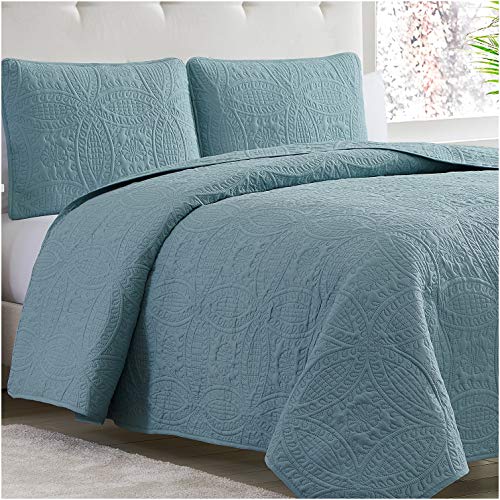
3. Mellanni Bedspread Coverlet Set (King, Spa Blue) — Best oversized easy-care set
Mellanni’s set is made from brushed microfiber with ultrasonic quilting, meaning the pattern is bonded rather than stitched through, and the maker cuts it oversized, so the king size drops further down the sides of the bed than a standard cut. The three pieces are the coverlet and two shams. Microfiber sits at the easy-care end of the fabric range in this guide: Mellanni describes the fabric as wrinkle, fade and stain resistant, and the set goes through a home washing machine without special handling, which matters for a king-size item that not every machine swallows easily. The smooth, plain face in Spa Blue suits a calm, uncluttered look and layers neatly at the foot of the bed over other bedding. Choose it if generous sizing and simple laundry matter more to you than natural fibres, and compare the listed measurements with your own mattress, because oversized cuts vary between brands.
View Mellanni Bedspread Coverlet Set (King, Spa Blue) on Amazon
4. Great Bay Home Vintage Floral Quilt Coverlet Set (Full/Queen) — Best reversible floral
This three-piece set carries a vintage floral stripe in blue, and it is reversible, so you can flip between the patterned face and its reverse side for a quick change of look, which the guide counts as a genuine styling plus. It is a lightweight quilt set aimed at summer use or at layering over warmer bedding, in a Full/Queen size with pillow shams included, so the pillows match without a separate purchase. The cottage-style print suits spare rooms and anyone who prefers pattern to a solid block of colour on the bed. As with every set here, match the listed size to your mattress and read the care label before the first wash. It will not replace a winter comforter on its own, and it is not meant to; as the visible top layer over other bedding it earns its place, and the shams keep the whole arrangement looking deliberate rather than improvised.
View Great Bay Home Vintage Floral Quilt Coverlet Set (Full/Queen) on Amazon

5. Bedsure Basket Weave Quilt Set (Queen, Grey) — Best textured weave
The basket weave pattern is the point of this set: the quilting is worked in a woven-look texture that gives a plain grey quilt more depth than a flat solid colour, without introducing a print you have to match to the room. The queen quilt measures 90 by 96 inches and comes with two pillow shams, and Bedsure positions it as a lightweight, all-season coverlet, usable on its own in summer or layered over other bedding in winter. The fabric is microfiber, so it follows the easy-care pattern in this guide and is machine washable in a home laundry. It suits anyone who wants a neutral, textured top layer that keeps working as sheets and throws change around it across the year. Compare the stated dimensions with your mattress depth before buying, and remember the guide’s warning that a colour can read differently in daylight than it does on a screen.

What to Look For
| Factor | Why it matters | What to check |
|---|---|---|
| Size | A cover that is too small leaves the mattress sides bare. | Match the listed dimensions to your mattress depth, with some drop on each side. |
| Fabric | Cotton, microfiber and blends differ in feel, weight and look. | Read the fabric description as the maker states it. |
| Fill and weight | A thin fill gives a flat, tidy look while thicker fills feel plush. | Check the stated fill and any weight or thickness details. |
| Stitching pattern | It shapes the look and keeps the fill in place. | Look for channel, box or floral stitching and well finished edges. |
| Reversibility | Two faces give more styling options. | Check whether both sides are described and whether shams are bundled. |
| Care label | Large items may not fit a home machine. | Check washing, drying and any size limits listed on the label. |
Setup and Care Tips
- Wash a new coverlet before first use if the care label allows it.
- Smooth it over the bed with the stitching pattern centred for a tidy look.
- Fold it at the foot of the bed for an extra layer when you need one.
- Dry on a low setting and remove it promptly to limit wrinkles.
- Store spare coverlets in a breathable bag rather than sealed plastic.
Mistakes to Avoid
- Ordering by bed name without checking mattress depth.
- Expecting a coverlet to offer the warmth of a thick comforter.
- Ignoring the care label and shrinking the fabric.
- Assuming shams are included in every listing.
- Choosing a colour without checking how it looks in daylight.
Coverlet, Quilt, Bedspread and Duvet: Sorting Out the Terms
Bedding names overlap in stores, so a little vocabulary helps you shop. A coverlet is a lightweight quilted layer, usually with modest fill and a flat profile. A quilt is often a similar item, sometimes with more elaborate patchwork or heavier stitching, and the two words are frequently used interchangeably. A bedspread is traditionally a larger, decorative cover that extends to the floor and may include a flounce or skirt. A comforter has thick fill and a puffier look. A duvet is a soft insert placed inside a removable cover, which you launder separately.
The practical point is that the label alone will not tell you how an item looks or feels. Check the listing for stated fill, thickness and weight, and compare photos on a bed rather than a flat studio shot. A coverlet suits people who like a tailored, slim profile or who want a layer that can be added or removed as the temperature changes. If you want a fluffy, cloud-like bed, a comforter or duvet may suit you better.
- Coverlet: light, flat, tidy, easy to layer.
- Quilt: similar, sometimes heavier or more decorative.
- Comforter: thick and plush, warmer feel.
- Duvet: insert plus removable cover for easy washing.
Fabric, Fill and Seasonal Use
Fabric makes a large difference in how a coverlet feels against your skin. Cotton is a common choice, prized for breathability and a familiar feel, though it can wrinkle. Microfiber is often soft and resistant to wrinkling, and it may dry quickly. Blends combine features. Linen-style or washed fabrics have a relaxed, textured look. Read the description to see what the maker says about the content and weave, and check any claims about softness as the maker’s view rather than a guarantee.
The fill is usually modest, but it does vary. Lighter fills suit warm bedrooms and summer layering, while heavier fills add some warmth in cooler seasons. If you sleep warm, look for breathable fabric and a thin fill. If you tend to feel cold, plan to layer the coverlet over a blanket or under a comforter instead of expecting it to do all the work.
Think about seasonal rotation. Many households keep a light coverlet on the bed for most of the year and add a blanket or throw in winter. Others swap to a heavier cover in cold months and store the coverlet. Choose a color and pattern that work with both arrangements. Neutral shades are easier to mix and match, while bold patterns suit a guest room or a bed where the coverlet is the main decorative element.
Size, Drop and Mattress Depth
Size mistakes are the most common reason for returns. Bed names such as queen or king describe the mattress, but coverlet dimensions vary between makers, so always compare the listed width and length. Measure your own mattress width, length and depth, including any topper, and decide how much drop you want. A modest drop of several inches shows the top edge of the mattress and works with a bed skirt or a tailored look. A deeper drop that reaches the floor looks more traditional and hides a box spring or storage underneath.
Deep mattresses and thick toppers use up some of the cover’s width, so a coverlet that fits a standard mattress may fall short on yours. Consider whether you want the cover to tuck under pillows. If you do, you will need extra length. If your partner tends to pull the covers, a slightly larger size can help.
- Measure the bed with the bedding you normally use.
- Look at the stated finished size, not the size name.
- Check if the listing includes matching shams, and their sizes.
- Allow for a small amount of shrinkage if the care label mentions it.
If you are between sizes, reading the maker’s notes on drop can help you decide.
Stitching, Edges and Construction Quality
The way a coverlet is stitched affects both appearance and durability. Channel stitching runs in parallel lines, box stitching forms squares, and other patterns create floral or geometric designs. Stitching holds the fill in place, so look for even, closely spaced lines in photos. Loose stitching can allow the fill to shift or bunch in the wash. The edges are another clue to quality. Look for bound or piped edges and neat corners. Raw or unfinished edges may fray with repeated laundering.
Check whether both sides are finished attractively if the coverlet is reversible. Reversible designs give you two looks and can hide wear on one side, but both faces should have the same finish quality. Some coverlets have a flat, almost tailored profile, while others have a puffy look created by thicker stitching.
When reading reviews or descriptions, look for details on how the item holds up after washing, such as whether the stitching stays flat and the edges remain tidy, while remembering these are individual opinions. Keep the packaging and tags until you have tried the coverlet on your bed. If something looks off, such as crooked seams or loose threads, check the retailer’s return terms before using or washing it.
Washing, Storage and Lifespan
Read the care label before the first wash. Many coverlets are machine washable, but a large item can strain a small machine. Wash it alone or with a few similar items, using a gentle cycle and mild detergent if the label suggests it. Avoid high heat unless allowed, since it can shrink cotton and damage synthetic fibers. Dry on low or air dry, and remove the coverlet promptly to cut down on wrinkles. If your machine is too small, a laundromat with larger washers may be worth considering.
Rotate between two coverlets if you can, which spreads the wear. Shake or air the cover regularly and spot clean small marks as the label advises. Keep it away from direct sun for long periods, since colors can fade.
For storage, fold it loosely and place it in a breathable cotton bag or on a shelf. Avoid sealing it in plastic for months, which can trap moisture. Signs it is time to replace a coverlet include thinning fabric, stitching coming undone, fill clumping or flattening so much that the cover feels uneven, persistent odors that do not wash out, and faded or pilled surfaces that no longer look good. Once the cover stops doing its job, whether decorative or practical, a new one is justified.
Coverlet, Quilt, Comforter and Bedspread: Telling Them Apart
Bedding names overlap, and listings use them loosely. A short glossary makes shopping easier.
- Coverlet: A lightweight, thin bed cover that is often quilted or woven. It sits on top of the sheets and works as a layer, not a heavy blanket.
- Quilt: A stitched layered cover with fill between two sheets of fabric. Some are heavier than a coverlet.
- Comforter: A thicker, puffier cover that often goes inside a duvet cover or on its own.
- Bedspread: A larger, decorative cover that reaches near the floor.
- Sham: A decorative pillow cover that often comes with a set.
Read the listing description instead of relying only on the title, and look at the stated weight or fill.
Sizing, Drop and Mattress Depth
Coverlets differ in how far they hang over the side of the bed. Measure your mattress width, length and depth, then add the drop you prefer. A shallow drop gives a tailored look, while a deep drop covers the box spring. Thick mattresses and toppers may need an oversized cover. Compare the stated dimensions with your measurements, and note whether a set includes shams and what sizes they are.
Queen and king covers can vary between makers, so use the numbers in the listing, not the size name alone.
Fabric, Washing and Seasonal Layering
Cotton coverlets feel breathable and suit warm months. Microfiber options often resist wrinkles and are easy to wash. Read the care label for temperature, drying instructions and whether the cover can be washed at home or needs a larger machine. A coverlet pairs well with a blanket or throw at the foot of the bed during colder months, and you can swap layers as the seasons change. Wash new bedding before use if the label suggests it, and store spare covers in a breathable bag instead of a sealed plastic one.
Styling the Bed With a Coverlet
A coverlet works well as a clean top layer. Fold it down a third of the way to show the sheets, or smooth it up to the pillows for a tailored look. Add shams or a throw pillow set to complete the look, and place a folded blanket at the foot for cooler nights. Light colors suit small rooms, while deeper shades add warmth. If you share the bed, a layered arrangement lets each person adjust the covers. Choose a pattern that works with your wall color and rugs, and keep the arrangement simple so making the bed takes only a minute each morning.
One last point: if you share a bed with a partner or pets, choose a fabric that handles frequent washing, and keep a spare cover in the closet for laundry day.
How to Choose a Coverlet: Criteria That Matter Most
A coverlet is the layer that decides how a bed looks at noon and how it sleeps at midnight, and the picks above range from cotton quilts to jacquard sets. Judge them on fabric, weight and how the whole set behaves in the wash, because a bed layer is used and laundered more than almost any textile at home.
Fabric and how it feels against skin
Fabric and how it feels against skin. Cotton breathes and softens with washing; woven jacquards bring pattern in the weave itself; easy-care blends prioritise convenience. The reviews describe each set’s fabric honestly, so match it to whether you sleep hot, cold or somewhere between. When you compare options side by side, this is one of the first points to pin down, because it shapes how the coverlet feels in daily use rather than just how it looks in a listing photograph. Go back through the picks above and ask how each one answers this point in its own review section, and be cautious with any listing that leaves the question vague. Shoppers often skip this check when a headline feature catches their eye, then meet the compromise only after the coverlet is in regular use. A few minutes spent thinking it through now, in the context of your home, your routine and the people who will share it, is what turns a good-looking choice into one you stay pleased with season after season.
Weight and season
Weight and season. A coverlet’s charm is its middleweight nature: enough for summer alone, right as a layer in winter. Think about your bedroom’s temperature across the year and whether this will be your only layer or one of several. It helps to treat this as a practical test rather than a box-ticking exercise. Picture the coverlet in the exact spot where it will live, at the busiest time of day, being used by the person who will use it most. If the answer still works in that picture, the point is probably covered; if it raises doubts, look again at how the different picks in this guide handle it. The reviews above describe each option in its own terms, so use them as the reference instead of relying on a single headline claim. Small mismatches here are the ones that quietly decide whether a purchase feels easy or becomes a chore.
Size and drop on your bed
Size and drop on your bed. Coverlets and bedspread-style sets differ in how much they drape. Measure your mattress depth and decide the look you want, from a neat top layer to a generous fall at the sides, before comparing sizes by name alone. This point matters more than it first appears, because it tends to affect every session rather than just the first one. A coverlet can impress on day one and still disappoint if this side of it does not suit your habits. As you read the individual reviews, note which picks speak directly to this concern and which leave you guessing, and let that guide your shortlist. Where the guide describes a trade-off, take it seriously rather than assuming you will adapt to it later. Most returns and regrets in this category come from exactly this kind of overlooked detail, not from the headline features people spend longest comparing.
The set as a whole: shams and coordination
The set as a whole: shams and coordination. Most picks are sets, so judge the shams and the overall look together. A set that dresses the whole bed in one purchase suits guest rooms and quick makeovers; a single beautiful layer suits a bed you style your own way. A useful way to judge this is to ask what happens on an ordinary, unremarkable day rather than on the best day. Routines are where a coverlet earns its keep, and this is the point that decides whether using it stays effortless. Compare the picks with your own routine in mind: who is involved, how much time is available, and how much patience there is for extra steps. If one option clearly fits that picture better than the others, that is a strong signal, even when the listings look similar at first glance. The sections above give you the material to make that call without guessing.
Washing and day-to-day care
Washing and day-to-day care. This layer will be washed often, so the care label is a feature. Sets that machine wash and dry without ceremony will be used and loved; anything demanding will slowly migrate to the linen cupboard. Finally, do not treat this point in isolation. It interacts with the other criteria in this section, and the right balance depends on your priorities rather than on any single winner. Read the pick reviews as a set, mark the option that handles this point in the way you prefer, and check whether it also holds up on the points you care about most. If two picks seem close, this is often the deciding factor that separates them in real use. Writing down your own answer before you order, even in a sentence or two, makes the final choice calmer and far less likely to be second-guessed later.
Coverlet in Real Life: Matching a Pick to Your Situation
Coverlets work differently in different bedrooms. These are the beds readers are dressing, and the kind of set each one calls for.
A master bedroom refresh without redecorating
A master bedroom refresh without redecorating. A dressed-up jacquard set changes the whole room’s feel in an afternoon. Choose the pattern and colour that carry the room you have, and let the shams complete the hotel-bed effect. In this situation the priorities shift a little, and it is worth re-reading the pick reviews with this exact scenario in mind. Ask which option the guide presents as suiting this kind of use, and whether its described strengths line up with what the moment actually demands. It also helps to think about frequency: something used this way every week needs to be convenient enough that nobody starts avoiding it. The best choice here is rarely the most elaborate one; it is the one whose everyday behaviour matches the routine with the least friction, so the coverlet gets used as intended instead of becoming an occasional novelty.
A guest bed that must always look ready
A guest bed that must always look ready. For guests, a reversible or generously sized set that washes easily and looks made even when quickly laid is the practical luxury. Favour the pick whose care routine is simplest. For this kind of use, small practical details carry more weight than headline appeal. Think through where the coverlet will be, who else is around, and what happens immediately before and after. The reviews above are most useful when you read them against a concrete picture like this one, because a strength that sounds minor in a listing can become the thing you appreciate most in this setting. Equally, a limitation the guide mentions honestly may not matter here at all. Matching the pick to the situation, rather than chasing the option that tries to do everything, is what leads to a purchase that keeps making sense.
Hot sleepers and warm climates
Hot sleepers and warm climates. For warm nights, a breathable cotton coverlet as the single layer is the classic answer. Look for the picks described as lighter and natural-fibred, and skip heavy layering you will kick off by two in the morning. This scenario is a good stress test for any shortlist. If a pick still looks right when you imagine this use, week in and week out, it is probably a sound choice; if it only works when everything goes perfectly, keep looking. Pay attention to how much setup, supervision or tidying the situation involves, since those hidden minutes decide whether the coverlet fits your life. The guide’s per-pick sections describe who each option suits, so let those descriptions do the work here. Choosing for the life you actually lead, rather than an idealised version of it, is the simplest way to avoid disappointment.
Layering over a duvet in winter
Layering over a duvet in winter. As a top layer, a coverlet adds pattern, weight at the feet and a finished look over a plain duvet. In this role the fabric’s appearance matters more than its warmth, so choose with your eyes. When this is your main reason for buying, let it lead the decision instead of treating it as an afterthought. Start from the pick whose review speaks most directly to this situation, then check it against the criteria earlier in this guide to make sure nothing important has been traded away. It is also worth planning the practical side in advance, from where things will be kept to who is responsible for upkeep, so the routine is settled before the coverlet arrives. A choice made this way tends to settle quickly, because every part of it has already been thought through against a real need.
How the Picks in This Guide Compare With Each Other
No two picks in this guide are trying to do exactly the same job, and that is deliberate. The reviews above present each coverlet in its own terms, with its own intended user, strengths and honest limitations. The fairest way to compare them is not to hunt for a single winner, but to hold each one against the criteria and situations set out in this guide and ask which description sounds most like your home, your routine and your priorities. The notes below walk through the shortlist in the same order as the reviews, to help you do exactly that.
Bedsure Cotton Quilt Set (Queen, Vintage Blue). The guide positions it as the choice for best cotton coverlet set. In its review section above you will find who it suits, where it is strongest and where its limits lie, and those are the points to weigh here. Set them against the criteria earlier in this guide: if this pick handles the points you care about most, and its stated limitations fall in areas you can live with, it deserves its place on your shortlist. If its strengths aim at a situation that is not yours, a simpler or different pick further down the list may serve you better, however impressive this one looks in isolation.
Madison Park Jacquard Coverlet Set (Full/Queen, Chevron Grey/Taupe). The guide positions it as the choice for best dressed-up look. In its review section above you will find who it suits, where it is strongest and where its limits lie, and those are the points to weigh here. Set them against the criteria earlier in this guide: if this pick handles the points you care about most, and its stated limitations fall in areas you can live with, it deserves its place on your shortlist. If its strengths aim at a situation that is not yours, a simpler or different pick further down the list may serve you better, however impressive this one looks in isolation.
Mellanni Bedspread Coverlet Set (King, Spa Blue). The guide positions it as the choice for best oversized easy-care set. In its review section above you will find who it suits, where it is strongest and where its limits lie, and those are the points to weigh here. Set them against the criteria earlier in this guide: if this pick handles the points you care about most, and its stated limitations fall in areas you can live with, it deserves its place on your shortlist. If its strengths aim at a situation that is not yours, a simpler or different pick further down the list may serve you better, however impressive this one looks in isolation.
Great Bay Home Vintage Floral Quilt Coverlet Set (Full/Queen). The guide positions it as the choice for best reversible floral. In its review section above you will find who it suits, where it is strongest and where its limits lie, and those are the points to weigh here. Set them against the criteria earlier in this guide: if this pick handles the points you care about most, and its stated limitations fall in areas you can live with, it deserves its place on your shortlist. If its strengths aim at a situation that is not yours, a simpler or different pick further down the list may serve you better, however impressive this one looks in isolation.
Bedsure Basket Weave Quilt Set (Queen, Grey). The guide positions it as the choice for best textured weave. In its review section above you will find who it suits, where it is strongest and where its limits lie, and those are the points to weigh here. Set them against the criteria earlier in this guide: if this pick handles the points you care about most, and its stated limitations fall in areas you can live with, it deserves its place on your shortlist. If its strengths aim at a situation that is not yours, a simpler or different pick further down the list may serve you better, however impressive this one looks in isolation.
Read as a set, the picks form a ladder of priorities rather than a ranking from best to worst. One end of the list will suit readers who want the straightforward option described at the top of the guide, while other picks trade simplicity for a particular strength the reviews call out. Your job is simply to find the rung that matches your situation. When two picks still seem close after that, choose the one whose limitations you mind least, because strengths are enjoyed occasionally while limitations are met every single time the coverlet is used.
Using, Cleaning and Looking After Your Coverlet
A coverlet’s life is measured in washes. This routine keeps colours, stitching and texture looking like the photographs for as long as possible.
Wash as the label directs, gently
Wash as the label directs, gently. Follow the set’s own care label for temperature and cycle. Quilted and woven layers appreciate a gentle cycle and not being crammed into an overloaded drum, where stitching and filling suffer. Build this into a short, repeatable routine rather than treating it as an occasional big job. Little and often is what keeps a coverlet pleasant to use and helps it last, and it is far easier to keep up than a rare deep session that everyone dreads. Follow the maker’s own instructions where they differ from general advice, since materials and mechanisms vary between models. If you share the coverlet with others, agree who does what, so the routine does not quietly fall to one person or get skipped altogether. A few steady minutes of care protect the money you spent far better than any accessory.
Dry with room to tumble or air
Dry with room to tumble or air. Whether you tumble or line dry, give the coverlet space. A layer dried in a ball dries unevenly and wrinkles hard; shaken out and dried flat or with room, it comes back smooth and ready. This step is easy to overlook because the coverlet usually keeps working while it is neglected, right up until it does not. Treat the guide’s care notes and the manufacturer’s manual as your starting point, and keep any products or tools the maker recommends within easy reach of where the coverlet lives. Convenience is what makes care happen. While you are at it, give the coverlet a quick visual once-over for wear, looseness or damage, because small issues are cheapest and simplest to deal with when they are caught early. That habit, repeated calmly over months, is what separates items that age gracefully from those that fail early.
Rotate and rest the layer
Rotate and rest the layer. If the bed is made daily, the same folds and the same sun stripe fall in the same places. Turning the coverlet and varying the fold spreads wear and light evenly across the whole piece. Think of this as part of using the coverlet, not as a separate chore bolted onto it. The few minutes it takes are repaid in reliability, comfort and safety every time the coverlet is used afterwards. If several people share the job, a simple shared note of what was done and when prevents both duplication and neglect. Avoid improvised shortcuts that the manual does not sanction, however tempting they seem, because finishes, seals and moving parts often react badly to the wrong treatment. Gentle, regular attention in line with the maker’s guidance is almost always the approach that keeps things working as they should.
Store clean, dry and breathable
Store clean, dry and breathable. Put a coverlet away washed and completely dry, in a breathable bag or shelf rather than sealed plastic, so it smells of the cupboard’s freshness rather than of storage when it returns to the bed. Where you keep the coverlet between uses matters as much as how you treat it during use. A sensible, consistent home for it protects it from knocks, damp, dust and curious hands, and makes the next use quicker to start. The storage advice in the maker’s instructions is worth following closely here, particularly anything about position, covering or preparation before a longer break. Before putting the coverlet away after a longer gap in use, run through the same checks you would before its first use. That small discipline keeps surprises away and means the coverlet is ready whenever it is wanted.
Deal with pulls and loose threads properly
Deal with pulls and loose threads properly. On woven and quilted pieces, snip a loose thread rather than pulling it, and ease a pulled loop back rather than tugging. Small textile kindnesses stop a minor snag becoming a run across the pattern. Finally, keep a light record of anything you notice: a change in sound, feel, fit or behaviour is often the earliest sign that something needs attention. Comparing what you notice with the troubleshooting notes in the manual usually tells you whether it is a simple fix or a job for the maker or a professional. Do not force anything that resists, and do not keep using the coverlet in a way that feels unsafe while you hope a problem will pass. Prompt, calm attention at this stage protects both the coverlet and the people using it, and it preserves any warranty options you may need.
FAQ
What is the difference between a coverlet and a comforter?
A coverlet is thinner and lighter, with simple quilting, and is often used as a layer or a top cover. A comforter is thicker and fuller, and is usually chosen for warmth.
Can a coverlet be used year round?
Many people use one alone in warm months and layer it with other bedding in cooler ones. Your own room and preferences decide what works.
Do I need a top sheet with a coverlet?
Many people use one to keep the coverlet cleaner and to wash it less often. It is a matter of preference and comfort.
Can a coverlet go over a comforter?
Yes, it can be used as a decorative top layer or folded at the foot of the bed. Check that the size suits the combined bedding.
Will a coverlet keep me warm enough in winter?
It depends on the fill and your room. Many people layer it with blankets or a comforter in cold weather.
How do I stop a coverlet from shrinking?
Follow the care label, use cool or warm water as allowed and dry on low or air dry.
Should I buy shams with the coverlet?
Shams are optional. Matching ones create a coordinated look, but check whether they are included and what sizes they come in.
How do I choose between cotton and microfiber?
Cotton is known for breathability and a natural feel, while microfiber tends to resist wrinkles. Consider your climate and laundry habits.
Is a coverlet suitable for a child's bed?
Many are, since they are light and easy to wash. Check the care label and size, and follow safety guidance for young children.
What is the difference between a coverlet, a quilt and a bedspread?
The words overlap, but in practice a coverlet is a lightweight decorative top layer, often quilted or woven, sized to sit on top of the bed with a modest drop. A quilt emphasises its stitched layers and filling, and a bedspread is traditionally larger, falling further towards the floor. This guide’s picks sit in the coverlet family, and the reviews describe each set’s size and weight so you can judge the drop on your own bed.
Can a coverlet be used without a duvet?
Yes, and in warm weather that is its classic role: a single breathable layer over a sheet. In cooler months most people layer it over a duvet or blanket for warmth and looks. Which way you will use it decides the weight to choose, so think about your bedroom in August and in January before ordering, and pick the fabric that serves the harder season.
How do I stop a coverlet sliding off the bed?
A coverlet slides when the layers beneath are slippery or the size is skimpy for the mattress. A cotton or textured underside grips better, tucking the foot end helps, and choosing a size with enough drop gives the layer weight to stay put. If your duvet cover is very smooth, placing the coverlet’s textured side down, where the design allows, settles it noticeably.
Will a coverlet set fit a deep mattress?
It depends on the set’s dimensions against your mattress depth, which is why this guide urges measuring rather than trusting size names. Deep mattresses eat into the drop at the sides, so a set that looks generous on a standard bed may sit short on yours. Compare the stated width with your mattress width plus twice the drop you want, and size up if the numbers are close.
The Short Version
Begin with the right size, then compare fabric, stitching and care instructions. A coverlet that fits your mattress and your laundry routine will be easy to live with. Check the care label before you commit, and keep your layering plans in mind when you compare the models.