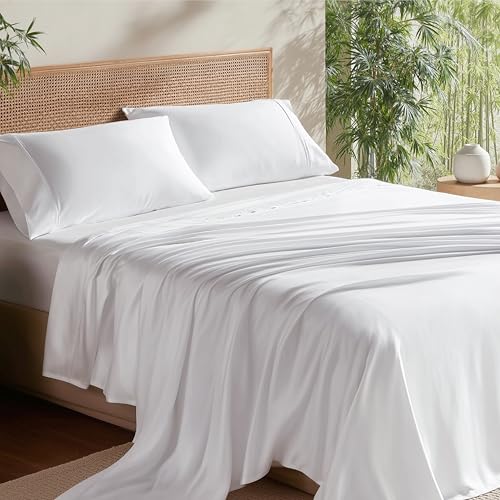
A duvet insert is the plain, soft layer that lives inside a decorative cover. It does the work of keeping the bed cozy, while the cover handles the look and is easy to wash. Because the insert is hidden and rarely cleaned, it pays to choose one with construction you trust.
We have not used these products ourselves, so this guide does not describe how any insert feels in daily use. It sets out the features worth comparing, including fill, shell, stitching and size, so you can read listings with a clear idea of what each term means.
As an Amazon Associate we earn from qualifying purchases. Links on this site are affiliate links, and they do not change the information we give.
In this guide
Quick Picks
| Pick | Product | Best For |
|---|---|---|
| Best Overall | Utopia Bedding Queen Comforter Duvet Insert | A box-stitched all-season insert that ticks the whole checklist |
| Best Soft Shell | Bedsure Comforter Duvet Insert, Queen (White) | A GentleSoft finish and eight tabs for a flatter fit in the cover |
| Best for Allergy-Conscious Sleepers | Linenspa Down Alternative Comforter and Duvet Insert, Queen | Hypoallergenic microfiber fill with eight built-in loops |
| Best Lightweight All-Season | EASELAND Queen Down Alternative Comforter (White, 88 x 88 in) | Whole-piece fill that has less loose material to shift |
| Best for Hot Sleepers | Buffy Breeze Comforter, Full/Queen | Eucalyptus lyocell shell and fill for warm rooms |
Our Picks

1. Utopia Bedding Queen Comforter Duvet Insert — Best Overall
This is the straightforward all-rounder of the list, and it lines up closely with the checklist in the guide above. The queen insert measures 88 by 88 inches, matching a standard queen cover, and the fill is a siliconized fiberfill, a down alternative that avoids feathers altogether. Box stitching runs across the whole insert, which keeps the fill spread into even squares instead of drifting to one side, and the edges are piped for a cleaner finish. Corner tabs are sewn in so you can tie the insert to the inside of a cover and stop it bunching, exactly the detail the guide says to confirm before buying. The brushed microfiber shell is plain white, as an insert should be, and the whole piece is machine washable, which matters with an item this bulky. Utopia sells it in a wide range of sizes and colors if your cover is not a white queen.

2. Bedsure Comforter Duvet Insert, Queen (White) — Best Soft Shell
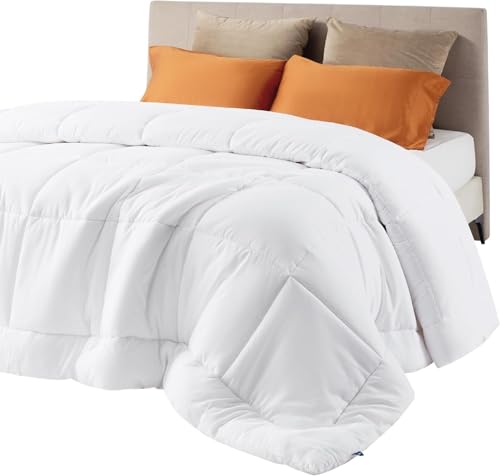
Bedsure’s GentleSoft insert is the pick if the shell matters as much as the fill. The down alternative fill is quilted into place across the 88 by 88 inch queen size, and the maker describes a multi-step finishing process intended to make the microfiber shell feel softer and quieter, worth having, since a rustling insert can be heard through a thin cover. Eight tabs are fitted around the edges rather than just at the four corners, so the insert can be tied at more points and sits flatter inside the cover. The materials carry OEKO-TEX Standard 100 certification, which speaks to the guide’s point about reading how an insert is made and sourced. It is machine washable, and Bedsure positions it as an all-season weight, so it suits the one-insert-all-year approach the guide discusses. Colored versions exist, but the plain white is the natural fit under a cover.

3. Linenspa Down Alternative Comforter and Duvet Insert, Queen — Best for Allergy-Conscious Sleepers
Linenspa builds this insert around a hypoallergenic microfiber fill, which makes it the natural shortlist entry for sleepers who want to avoid down for sensitivity reasons, one of the first questions the guide tells you to settle. The queen size is box stitched, so the fill stays distributed in squares rather than pooling at the foot of the bed. Eight loops are built in, at the corners and along the sides, giving your cover ties more anchor points than the usual four and helping the insert stay squared inside the cover. The plain white microfiber shell is unadorned, as an insert should be, and Linenspa rates the weight as all-season, a middle option rather than a summer or winter specialist. It is sold in a wide spread of sizes from twin to oversized king, plus reversible color versions, so matching an existing cover should be simple.


4. EASELAND Queen Down Alternative Comforter (White, 88 x 88 in) — Best Lightweight All-Season
EASELAND’s queen insert keeps things simple: a brushed microfiber shell over a whole-piece polyester fill. That whole-piece construction is the detail to note against the guide’s stitching advice, because the fill starts as a single layer, so there is less loose material to shift into clumps, and quilting holds it in place across the 88 by 88 inch surface. Corner tabs are fitted for tying the insert into a cover. The maker positions it as a lightweight all-season piece, suited to winter layering but not a heavy winter specialist, which fits the layered approach the guide suggests for rooms that change temperature through the year. It is machine washable, an everyday practicality with bedding this size. EASELAND offers the same insert in many colors and sizes, but inside a duvet cover the plain white queen is the standard choice.

5. Buffy Breeze Comforter, Full/Queen — Best for Hot Sleepers
The Breeze is the different construction in this list: both the shell and the fill are made from eucalyptus lyocell rather than cotton or polyester. Buffy aims it squarely at warm sleepers, since it is a lightweight, summer-weight insert, which the guide’s warmth section says is the right starting point for a bedroom that runs hot. The lyocell fabric is smooth and cool to the touch, and because the fill is a plant-based fiber rather than down or microfiber, it reads differently against the guide’s fill-type comparison. Corner tabs are included for tying the insert inside a cover, and the Full/Queen size gives a little extra drape over a queen bed. It is machine washable, which is not a given with specialty fills. If you sleep cool, look at the all-season picks above instead; this one is a deliberate warm-weather choice.

What to Look For
| Factor | Why it matters | What to check |
|---|---|---|
| Fill type | Down, down alternative and wool each feel and behave differently. | Read what the maker says the fill is made from and how it is sourced. |
| Warmth level | A bedroom that runs warm needs a lighter insert than a cool one. | Compare the maker warmth description with your room and season. |
| Shell fabric | A tightly woven shell helps hold fill in place. | Look for cotton or a similar breathable weave described clearly. |
| Stitching | Baffle box stitching keeps fill from shifting into clumps. | Check for a box or channel pattern rather than loose tufts. |
| Size | An insert that is too small leaves gaps once placed in a cover. | Match the insert to the cover dimensions, ideally close to equal. |
| Corner loops | Loops let you tie the insert to the cover so it stays put. | Confirm that loops are sewn into all four corners. |
Setup and Care Tips
- Tie the corner loops to your cover so the insert does not bunch.
- Shake and fluff the insert each morning to spread the fill evenly.
- Follow the care label for washing, and dry it fully before storing.
- Use a washable cover to limit how often the insert itself needs cleaning.
- Store it in a breathable bag, not a sealed plastic one, between seasons.
Mistakes to Avoid
- Buying an insert in a different size from the cover.
- Assuming heavier always means warmer or better.
- Ignoring the washing instructions until the insert is already dirty.
- Overlooking fill origin details if you care about how the material is sourced.
- Choosing a very thin shell that may let fill poke through over time.
Which duvet insert should you buy?
The best duvet insert is the one that matches your cover size, your room temperature and any fill sensitivities, so start with those three needs and then pick from the list above. Each product named in this guide suits a slightly different buyer.
- If you want a dependable all-rounder that follows the guide’s checklist, go for the Utopia Bedding Queen Comforter Duvet Insert. It has box stitching, piped edges and corner tabs.
- If you care most about how the shell feels and want more tie points, choose the Bedsure Comforter Duvet Insert, Queen (White). It has eight tabs and a soft-finish shell.
- If you want to avoid down and want a hypoallergenic fill, look at the Linenspa Down Alternative Comforter and Duvet Insert, Queen, which also has eight built-in loops.
- If you dislike loose fill shifting around, the EASELAND Queen Down Alternative Comforter uses a whole-piece fill held by quilting.
- If you sleep hot or live somewhere warm, the Buffy Breeze Comforter, Full/Queen is the deliberate warm-weather choice with a lyocell shell and fill.
Two of these are described as all-season, which makes them a sensible single-insert choice for most bedrooms. The Breeze is the one to pick only if heat is your main problem.
If you are still undecided, ask which mistake would bother you most: a cover that bunches, a bed that feels too warm, or an insert that is awkward to wash. The answer usually points to one product on the list.
What to check before you buy a duvet insert
Before you order any duvet insert, confirm the size against your cover, the fill type, the tab or loop count and the care instructions on the listing. A few minutes spent on these points prevents most returns.
- Cover dimensions: measure or read the label on your duvet cover and compare it with the insert size in the listing. Queen and Full/Queen are not always the same.
- Fill material: check whether the fill is a down alternative, a plant-based fiber or something else, and whether that suits your sensitivities.
- Tabs or loops: look at how many are sewn in and where. More anchor points usually help the insert stay put.
- Stitching pattern: box or quilted construction helps hold fill in place. Check the description rather than assuming.
- Warmth rating: read the maker’s wording on weight, such as all-season or lightweight, and match it to your room.
- Washing guidance: check the care label summary on the listing and make sure your machine can handle the bulk.
- Color and shell: a plain white shell is the usual choice under a cover, but check that colored versions will not show through a light cover.
- Returns and warranty: read the listing’s return window and any warranty terms before you open the package and wash it.
Also check what is included in the box. Some listings sell only the insert, while others bundle extras, and you want to know which you are buying before you compare options.
Down alternative vs natural fill in a duvet insert
A down alternative insert uses synthetic or plant-based fiber, while a natural-fill insert uses material such as down or wool. Down alternative is usually easier to launder and avoids feathers, while natural fill tends to feel lofty and soft.
Most of the picks in this guide use a down alternative or a fiber fill. That is a practical choice for many households, because synthetic fills are often simpler to wash and suit people who want to avoid animal-derived materials.
Here is how the two groups compare in general terms:
- Care: synthetic fills are often easier to launder at home, while natural fills may need gentler handling or professional cleaning. Always follow the label.
- Feel: natural fills often feel soft and lofty, while synthetic fills feel different underhand. Which you prefer is personal.
- Sensitivities: people who react to down often start with a hypoallergenic synthetic fill, though you should check the maker’s claims and talk to a doctor if reactions are a concern.
- Sourcing: if the origin of a natural fill matters to you, read what the maker says about how it is sourced.
- Warmth: warmth depends on weight and construction as much as on the fill name, so do not assume one type is always warmer.
A plant-based fill like the lyocell in the Buffy Breeze reads differently again. It is chosen for a cool, smooth feel rather than for loft. Think about how you want the bed to feel, then use the stitching and shell notes in this guide to narrow the choice.
How do you size a duvet insert for your cover?
Choose a duvet insert that is close to the same size as your cover, so the corners fill out without leaving gaps or being stretched tight. The cover label or the product page for the cover usually gives its dimensions.
An insert that is too small sags inside the cover and leaves empty corners. One that is much larger can bunch and make the cover look lumpy, although a slightly generous insert often looks fuller. Because the sizes of different makers vary a little, check measurements and not only the size name.
Some practical points:
- Compare the insert’s stated length and width with the cover’s stated length and width in the listings.
- Remember that the Full/Queen label on the Buffy Breeze covers two bed sizes, so check that it suits the cover you own.
- Use all the tabs or loops. Tie the insert at every corner and, where available, along the sides.
- If you plan to buy a new cover later, keep the insert size in mind so the two match.
- Think about bed height. A thick mattress with a deep drop may call for a more generous insert.
When you put the insert into the cover, work corner by corner. Match each corner of the insert to the matching corner of the cover, tie the tabs, then shake it down. This is easier with a second person, and it cuts down on the bunching that makes many people give up on inserts.
If the insert still shifts after tying, check that the tab positions line up with the cover’s ties. Mismatched positions are a common cause.
Is a duvet insert worth it, and who should skip it?
A duvet insert is worth it if you like changing your bedding look and want a cover that is easy to wash. It is less suitable if you want one finished piece and minimal laundry steps.
Here are the honest trade-offs:
- Two pieces to manage: you need an insert and a cover, and you have to get one inside the other. That takes a few minutes each wash.
- Bulk: inserts are large, so check that your washer and dryer can take them or plan for a laundry service.
- Is paying more worth it? Extra features such as more tabs, a softer shell or a specialty fill can add comfort, but a plain insert with box stitching and corner tabs does the core job. Pay for the features you will notice.
- Hot sleepers: a standard all-season insert may still feel warm in a heated room, so consider the lightweight option instead.
- Cold sleepers: a lightweight insert may need a blanket layered on top in winter.
You may want to skip an insert if you prefer a ready-made set, dislike dressing a duvet, or have no space to store or wash bulky bedding. A simple comforter can be a better fit in those cases.
If an insert still sounds right, compare the picks above, check the current listing for size and what is included, then choose the one that fits your cover and how you sleep.
Reading the Shortlist Again: What Really Separates One Duvet Insert From Another
Once you have read the individual reviews above, the differences between duvet inserts can look smaller than they really are. Listings tend to lead with the same handful of headline claims, and every model is described as powerful, durable or easy to use. The more reliable way to choose is to work backwards from your own situation: where the duvet insert will live, how often it will be used, and which frustrations you are trying to leave behind. A choice that suits a neighbour’s household perfectly can be the wrong one for yours, simply because the daily routine around it is different.
Start with fit, in every sense of the word. For this category that means checking the exact size of your duvet cover, the depth of your mattress if you like generous drape, and how warm your bedroom runs across the seasons. Numbers on a listing only become useful once they are compared with your own measurements, so take them before you fall in love with any particular model. Allow a little margin where the guide above suggests it, because a duvet insert that only just fits, only just reaches or only just copes will annoy you every single time you use it, while one with comfortable headroom tends to disappear into the background of the day.
Next, think about the work itself rather than the product. The main jobs here are layering for cold nights, keeping a guest bed ready without fuss, and simplifying laundry day with a cover that removes easily. Be honest about which of those you will do weekly and which you might do once a year. Features that support your weekly jobs deserve far more weight than impressive extras aimed at rare tasks. Many buyers overspend on capability they use twice and underspend on the handling, controls or build details they touch every day, and that imbalance is the most common cause of quiet disappointment with an otherwise good duvet insert.
Finally, consider the ownership side that listings rarely mention: the cleaning, the consumables, the storage footprint and the small habits a duvet insert asks of you. Typical owners here include a hot sleeper who needs breathable warmth, a couple who disagree about blanket weight, or a host keeping a guest room comfortable year round, and the right answer differs for each of them. If a model needs attention you know you will not give it, a simpler alternative that asks less of you will usually serve you better over the years, even if it looks less exciting on paper.
Planning the Purchase Around Your Space and Routine
Good planning prevents most returns. Before ordering any duvet insert, walk the space where it will be used or installed and note the obstacles that photographs never show: tight corners, uneven surfaces, doors that swing into the working area, and the route the product has to travel from the front door to its final position. Measure twice and write the figures down. If the duvet insert is replacing an older one, note what you liked and disliked about the old unit, because those specifics are a better brief than any generic wish list.
Think, too, about timing and the people around the purchase. Work such as layering for cold nights, keeping a guest bed ready without fuss, and simplifying laundry day with a cover that removes easily is easier when you are not racing a deadline, a houseful of guests or the worst of the weather. If other people in the household will use the duvet insert, ask what matters to them before you buy rather than after it arrives. A short conversation now can surface a deal-breaker — a control style someone struggles with, a size that will not work for them — while it is still free to act on.
Budget planning deserves the same realism. The purchase itself is only part of the cost of owning duvet inserts; installation help where it is needed, basic accessories the maker recommends, and routine consumables all belong in the picture. None of that argues for buying the most expensive option. It argues for comparing the whole picture rather than a single headline figure, and for leaving a little room in the budget so a sensible extra does not become a painful one.
When the duvet insert arrives, resist the urge to judge it in the first ten minutes. Unpack it fully, keep the packaging until you are sure it is staying, and read the manual properly — not as a formality, but because the setup order, safety notes and care instructions in it are written for the exact model you bought. Many early problems with duvet inserts trace back to a skipped setup step or a warning that was skimmed, and they are much easier to prevent than to undo.
How the Picks Compare When You Match Them to Real Jobs
The picks above were chosen for different buyers, and comparing them by job rather than by specification sheet makes the shortlist much easier to use. Read each model’s positioning below against the jobs you listed for yourself, and notice where the guide’s emphasis changes: some picks are there for capacity or reach, some for simplicity, and some because they suit a particular space or user. That spread is deliberate, and it is the fastest route to a confident decision.
Utopia Bedding Queen Comforter Duvet Insert earns its place as best Overall. Treat that positioning as a promise about who it suits best rather than a claim that it beats the others at everything. If the description matches your situation — your space, your routine and the jobs you actually do — it deserves to be at the top of your list. If it reads like someone else’s household, one of the neighbouring picks will almost certainly serve you better, and choosing it instead is not settling for less; it is matching the tool to the task.
Bedsure Comforter Duvet Insert, Queen (White) earns its place as best Soft Shell. Treat that positioning as a promise about who it suits best rather than a claim that it beats the others at everything. If the description matches your situation — your space, your routine and the jobs you actually do — it deserves to be at the top of your list. If it reads like someone else’s household, one of the neighbouring picks will almost certainly serve you better, and choosing it instead is not settling for less; it is matching the tool to the task.
Linenspa Down Alternative Comforter and Duvet Insert, Queen earns its place as best for Allergy-Conscious Sleepers. Treat that positioning as a promise about who it suits best rather than a claim that it beats the others at everything. If the description matches your situation — your space, your routine and the jobs you actually do — it deserves to be at the top of your list. If it reads like someone else’s household, one of the neighbouring picks will almost certainly serve you better, and choosing it instead is not settling for less; it is matching the tool to the task.
EASELAND Queen Down Alternative Comforter (White, 88 x 88 in) earns its place as best Lightweight All-Season. Treat that positioning as a promise about who it suits best rather than a claim that it beats the others at everything. If the description matches your situation — your space, your routine and the jobs you actually do — it deserves to be at the top of your list. If it reads like someone else’s household, one of the neighbouring picks will almost certainly serve you better, and choosing it instead is not settling for less; it is matching the tool to the task.
Buffy Breeze Comforter, Full/Queen earns its place as best for Hot Sleepers. Treat that positioning as a promise about who it suits best rather than a claim that it beats the others at everything. If the description matches your situation — your space, your routine and the jobs you actually do — it deserves to be at the top of your list. If it reads like someone else’s household, one of the neighbouring picks will almost certainly serve you better, and choosing it instead is not settling for less; it is matching the tool to the task.
A useful final exercise is to pick your top two duvet inserts and write down, in one sentence each, why each would suit you. If one sentence comes easily and the other feels like a stretch, you have your answer. If both feel strong, decide on the ownership details: which will be easier to clean, store, service or live with in your particular space. Those everyday factors, repeated hundreds of times, are what separate a purchase you are pleased with from one you merely accept.
From First Setup to Confident Everyday Use
The first session with a new duvet insert sets the tone for everything after it. Set it up in good light, with the manual open and no time pressure, and work through the maker’s steps in order even if some of them look obvious. Check that everything supplied is present, that moving parts move as described, and that you understand the controls before the first real job. This slow first pass is where you learn the small things — how it sounds when it is working normally, how the controls feel, where your hands naturally go — that make later use relaxed instead of tentative.
Start with an easy version of the job. If your main tasks are layering for cold nights, keeping a guest bed ready without fuss, and simplifying laundry day with a cover that removes easily, begin with the simplest of them and pay attention to how the duvet insert behaves rather than how fast you can finish. Small adjustments early — to position, settings or technique — pay off every time afterwards. It is also worth noting anything that surprises you, good or bad, while the purchase is recent; surprises often point to a setting or accessory that resolves them, and makers’ support teams are far more helpful in the first weeks than months later.
Build your routine gradually. Most people develop a personal rhythm with duvet inserts: a preferred order of steps, a place where the product lives between uses, and a quick check they run through before starting. Let that rhythm form over the first few uses rather than forcing it on day one. If other people will share the duvet insert, show them the basics in person instead of assuming the manual will be read; five minutes of demonstration prevents most of the misuse that leads to damage, frustration or avoidable safety worries.
Safety deserves a plain word here. Follow the maker’s warnings for this exact model, use the protective equipment or precautions the manual names, and stop and reassess if something feels wrong rather than pushing through. Where a job involves fixed wiring, fuel lines, structural work or anything your local rules reserve for licensed trades, bring in a professional for that part. Doing so is not a failure of DIY spirit; it is how experienced homeowners handle the edges of a project, and it protects both the warranty on the duvet insert and the people around it.
Care, Cleaning and Storage: The Routine That Keeps It Performing
Duvet inserts rarely fail all at once; they decline gradually, usually because small care tasks were skipped until they became big ones. The routine that protects yours is unglamorous: fluffing the insert to redistribute the fill, airing it as the maker suggests, and washing or dry cleaning only as the care label directs. None of those tasks takes long on its own. The trick is attaching them to moments that already exist — the end of a job, the start of a season, a regular weekend tidy — so they happen automatically rather than relying on memory or good intentions.
Cleaning deserves care of its own. Use the methods and products the maker approves for your model, because finishes, seals and working surfaces on duvet inserts can be damaged by harsh chemicals, abrasive pads or pressure applied in the wrong place. Work gently and often rather than aggressively and rarely: light, regular cleaning keeps grime from hardening into the kind of buildup that tempts people into damaging scrubbing. Let everything dry fully before storage or reassembly, since trapped moisture is behind a large share of odours, corrosion and mildew problems in stored equipment.
Storage matters more than most buyers expect. Keep the duvet insert in a dry place out of extremes of temperature where you can, with cords, hoses, attachments or accessories kept together so the next use does not start with a search. If it will sit unused for a season, follow the maker’s storage guidance — some products want a particular preparation before a long rest, and skipping it is a common reason for a disappointing first use months later. A photograph of how it was packed or assembled can be surprisingly helpful when you return to it.
Finally, keep the paperwork. The manual, proof of purchase and any warranty details for your duvet insert should live somewhere you can find them, because the first question any support line or repairer asks concerns the exact model and its purchase date. A quick note of when you performed major care tasks helps too. It turns guesswork into a record, makes seasonal servicing easier to schedule, and gives a future buyer or family member a clear picture of how the product has been looked after.
Judgement Calls: Trade-Offs Honest Buyers Should Weigh
Every duvet insert involves trade-offs, and naming them plainly leads to better choices than hunting for a model that claims to have none. Bigger usually means heavier or harder to store. More features usually mean more to learn, clean and eventually maintain. A lower purchase cost can mean simpler construction that is perfectly adequate for light use, or it can mean compromises you will feel every day. The guide above positions each pick so you can see which side of these trade-offs it sits on; your job is simply to decide which compromises you mind least.
Consider how your needs may change. A duvet insert bought for one household, one home or one stage of life may be asked to serve another. Flexibility — adjustability, compatibility with common accessories, a design that copes with more than one job — is worth something if change is likely, and worth very little if your situation is stable. Buying for a hypothetical future is as wasteful as buying too narrowly for the present, so weigh the changes you genuinely expect rather than every possibility you can imagine.
And if you are replacing an existing duvet insert, let the old one teach you. What wore out, what annoyed you, what did you never use? A replacement chosen to fix two specific frustrations will satisfy you far more than one chosen from a generic list of virtues. Where the old unit still works, passing it on, selling it or keeping it as a backup for lighter duties can also soften the cost of upgrading, and keeps a serviceable product in use rather than in landfill.
FAQ
What is the difference between an insert and a comforter?
An insert is meant to sit inside a removable cover, so it is usually plain and sometimes has corner loops. A comforter is designed to be used on its own and tends to have a finished, decorative outer look.
Can I machine wash a duvet insert?
Some can, but many cannot, and the fill and size of your machine both matter. Always follow the care label from the maker, and consider professional cleaning if the label advises it.
How do I stop a duvet insert from bunching inside the cover?
Tie every corner tab or loop to the matching ties inside the cover, then shake the cover down from the top. Using an insert that is close to the cover size also helps. Fluffing it each morning keeps the fill spread out.
Should a duvet insert be bigger than the cover?
It should be close in size to the cover, and a slightly generous insert can look fuller. One that is much larger tends to bunch, and one that is too small leaves gaps in the corners. Compare the stated measurements in both listings.
How often should you wash a duvet insert?
It depends on use and on the care label, but inserts are washed far less often than covers. A washable cover protects the insert and limits how often it needs cleaning. Follow the maker's instructions for the schedule and method.
Is a down alternative insert good for allergies?
Many people with down sensitivities start with a hypoallergenic down alternative, but results vary by person. Read the maker's description of the fill and the shell. If reactions are a concern, check with a medical professional.
What does box stitching do in a duvet insert?
Box stitching sews the layers together in squares so the fill stays spread out instead of drifting to one side. It reduces clumping and cold spots. Look for it in the product description.
Can one duvet insert work all year?
An all-season weight can work for many bedrooms, especially if you layer a blanket in winter. Very hot or very cold rooms may need a lighter or heavier insert. Check the maker's weight description against your room.
How should I store a duvet insert between seasons?
Make sure it is fully dry, then keep it in a breathable cotton bag in a clean, dry place. Avoid sealed plastic, which can trap moisture. Fluff it by hand before reuse so it recovers its loft.
How do I know which duvet insert on this list fits my home?
Start from your own measurements and routine rather than from the products. Check the exact size of your duvet cover, the depth of your mattress if you like generous drape, and how warm your bedroom runs across the seasons, then read the picks again and match each model’s positioning to those facts. The right choice is the one whose strengths line up with your most frequent jobs, not necessarily the largest or most fully featured option.
What should I check in the first week of owning a new duvet insert?
Confirm that everything supplied is present, that setup matches the manual, and that the duvet insert behaves as described on an easy first job such as layering for cold nights. Note anything that seems off while the purchase is recent, keep the packaging until you are sure it is staying, and register the warranty if the maker offers one.
How often does a duvet insert need cleaning or maintenance?
It depends on how hard and how often it works, and the maker’s schedule for your exact model is the authority. As a habit, build the routine around fluffing the insert to redistribute the fill, airing it as the maker suggests, and washing or dry cleaning only as the care label directs. Light, regular attention almost always beats occasional deep rescue, both for performance and for how long the product lasts.
Is it worth paying more for a higher-positioned pick?
Only if the extra capability maps to your real jobs. If a premium pick’s positioning describes your household — heavier use, a bigger space, more demanding tasks — the step up can be money well spent. If it describes someone else’s life, a mid-list pick matched to your actual routine will usually satisfy you just as much.
What is the most common mistake people make with duvet inserts?
Buying from the headline claims alone, without measuring or thinking through daily use. Skipping the checks around the exact size of your duvet cover, the depth of your mattress if you like generous drape, and how warm your bedroom runs across the seasons leads to poor fit, and skipping the maker’s setup and care guidance leads to most early problems. Both mistakes are easy to avoid with an hour of preparation.
When should I repair a duvet insert and when should I replace it?
Repair makes sense when the fault is isolated, parts are available, and the rest of the product is sound. Replacement makes more sense when problems repeat, when wear is general rather than local, or when your needs have genuinely changed since you bought it. A reputable repairer’s assessment, based on the exact model, is the best guide for anything beyond simple maintenance.
Matching It to Your Bed and Climate
An insert is a layer you live with for years, so think about your room, your bedding habits and your bed size before comparing fills.
Warm Bedrooms
If your room runs warm, look at lighter fills and breathable shell fabrics. Read the maker’s description of the fill weight and construction.
Cool Rooms
Heavier fills and snug construction may suit cold spaces. Layering with a blanket lets you adjust through the seasons.
Shared Beds
If sleepers differ in how warm they like to be, two lighter inserts or a layered setup can be more flexible than one heavy one.
Questions to Ask Before You Buy
- What size is my duvet cover, and does the insert match it?
- Do I want corner loops or ties to hold the insert in place?
- Is the fill natural or synthetic, and do I have sensitivities to consider?
- Will my washer and dryer fit this bulk, or will I need a service?
- Do I want one insert for all seasons or one for each?
Seasonal and Storage Notes
When swapping inserts with the seasons, make sure the insert is fully dry before storing it. Use a breathable cotton storage bag instead of sealed plastic, and keep it somewhere clean and dry. Air the insert outdoors on a mild day when you can, following the care label. Before reuse, fluff it by hand and give it time to recover its loft.
Who Should Skip It
If you prefer the ready-made look of a single bed-in-a-bag set, you may not want to manage a separate cover and insert. Those who dislike laundry upkeep might also choose simpler bedding.
Feature Trade-offs
| Choice | Upside | Consideration |
|---|---|---|
| Baffle box stitching | Helps keep fill even | Can feel more structured |
| Sewn-through stitching | Lighter, simple build | Seams can feel cooler |
| Natural fill | Soft, lofty feel | Care needs vary |
| Synthetic fill | Often easy to launder | Feels different underhand |
Look closely at the corner loops and the way the edge is finished, since these small details affect how the insert sits inside the cover. Check the care label before washing, and follow the maker’s instructions on drying and fluffing. A little attention to these details can make an insert feel more comfortable and last longer in regular use.
The Short Version
Choose a fill you understand, match the size to your cover, and look for box stitching and corner loops. A washable cover will protect the insert and keep care simple.