Disclosure: airfryerkitchensupply.com is reader-supported. When you buy through links on our site, we may earn an affiliate commission at no extra cost to you.
Where to buy
The best counter toaster ovens live or die by fit, so compare footprints as carefully as functions on Amazon, where each model below lists its dimensions and capacity together. Every pick was cross-checked against Amazon catalog data before it earned a link, so the model you read about is the model you land on. We do not print fixed prices — use the links to check price on Amazon once you have measured your counter.
- Cuisinart TOB-260N1 Convection Toaster Oven — view on Amazon
- Breville BOV450XL Mini Smart Oven — view on Amazon
- Cuisinart TOA-70NAS Air Fryer Toaster Oven — view on Amazon
- Hamilton Beach Easy Reach 6 Slice Countertop Toaster Oven — view on Amazon
- BLACK+DECKER TO1313SBD Toaster Oven — view on Amazon
- Breville BOV900BSS Smart Oven Air Fryer Pro — view on Amazon
Shopping for the best counter toaster ovens is really shopping for a countertop decision. The best counter toaster ovens earn a permanent place on the counter — which means the contest is not only about cooking, but about footprint, height under cabinets, door swing, heat clearance, and whether the oven looks and behaves like it belongs in the room where your household actually lives. An oven with brilliant specs that does not fit under your cabinets, or that vents heat into them, is the wrong oven no matter what it costs.
This guide approaches the category from the counter outward. The six picks cover the realistic counter situations: a compact premium oven for small counters, a mid-size all-rounder for the family counter, an air fry counter model for crisp-food households, a roll-top design for shallow counters, a budget compact that earns its small footprint, and a large premium counter oven for households replacing main-oven duty. Measure first — width, depth with the door open, and height to the underside of your cabinets — then match the oven to the space as deliberately as to the menu.
In this guide
Quick Picks
Six counter ovens chosen as much for how they sit as for how they cook. Each review covers footprint behavior — door swing, clearance, and presence — alongside the cooking itself.

Cuisinart TOB-260N1 Convection Toaster Oven — Best Overall Counter Toaster Oven
The family-counter benchmark: 1800W, room for a 13-inch pizza or a whole chicken, Exact Heat sensors, and a nonstick interior — big capability that still behaves on the counter.
Check on Amazon — check price on Amazon.
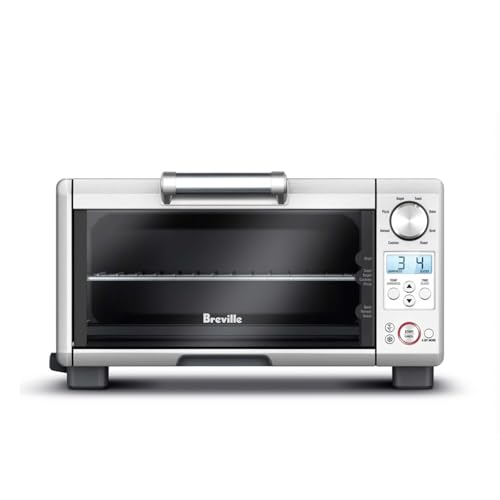
Breville BOV450XL Mini Smart Oven — Best Compact Counter Toaster Oven
Breville’s Element IQ in a mini footprint — the compact counter pick that cooks like a big oven and apologizes for none of its small size.
Check on Amazon — check price on Amazon.

Cuisinart TOA-70NAS Air Fryer Toaster Oven — Best Air Fry Counter Toaster Oven
Eight functions anchored by real air fry performance in a 0.6 cubic foot counter body — the crisp-food household’s counter pick.
Check on Amazon — check price on Amazon.
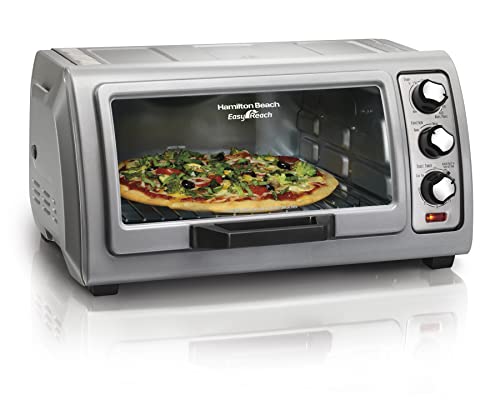
Hamilton Beach Easy Reach 6 Slice Countertop Toaster Oven — Best Counter Oven for Shallow Counters
Six-slice capacity with a roll-top door that never swings into your workspace — the counter-depth solution for family kitchens.
Check on Amazon — check price on Amazon.
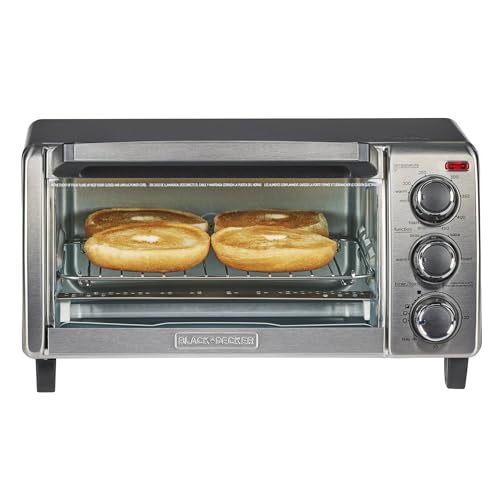
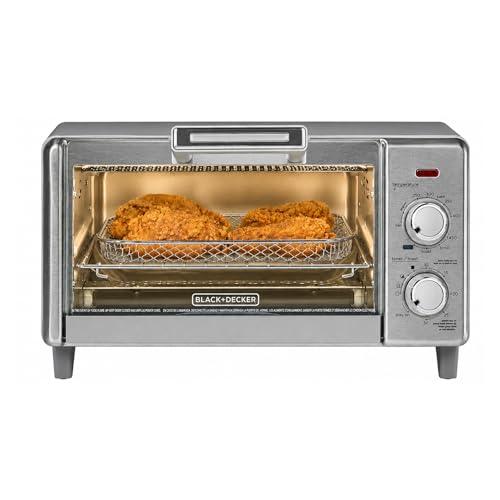
BLACK+DECKER TO1313SBD Toaster Oven — Best Budget Counter Toaster Oven
A compact 15.47-inch counter footprint, a 9-inch pizza fit, and convection circulation at a budget tier — the small-counter value pick.
Check on Amazon — check price on Amazon.
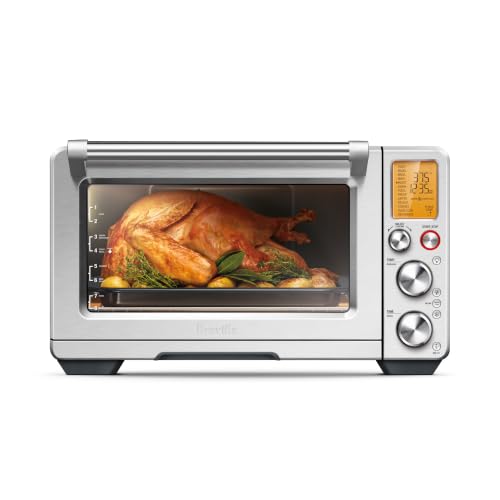
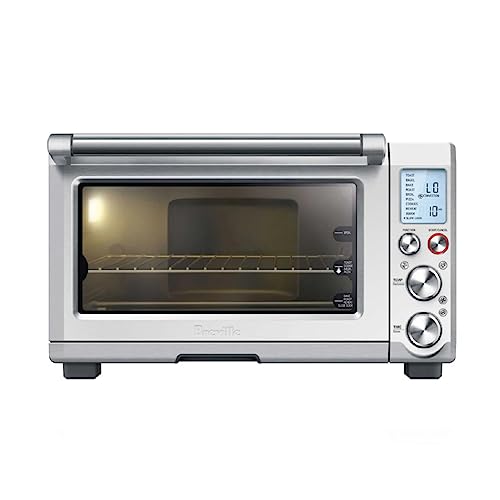
Breville BOV900BSS Smart Oven Air Fryer Pro — Best Premium Counter Toaster Oven
Thirteen functions, super convection, and Breville’s Element IQ at full size — the premium counter statement for households retiring the main oven for daily duty.
Check on Amazon — check price on Amazon.
How These Picks Were Chosen
Every candidate had to justify its counter footprint: capacity earned per inch of width, a door that opens without claiming the whole counter, and heat management that respects cabinets above. We verified each model against Amazon catalog data before linking it, confirming capacity, function set, and model identity. Models that were excellent ovens but unreasonable counter citizens — excessive depth, doors that demand a runway — were set aside for this particular guide.
Cooking standards stayed high: even toast, credible baking, and controls a household will actually use daily. We weighted family realism — a 12-inch pizza fit matters more on a family counter than a dehydrate preset — and we note in each review exactly which counter situation the oven suits, because in this category the fit is the feature.
The 6 Best Counter Toaster Ovens
Cuisinart TOB-260N1 Convection Toaster Oven — Best Overall Counter Toaster Oven
The TOB-260N1 is what a counter oven becomes when it is designed as a serious second oven. Fifteen functions and 1800 watts sit inside a stainless body that fits a 13-inch pizza or a full-size chicken, and Cuisinart’s Exact Heat system uses sensors to hold temperature the way cooks expect from a real oven. The nonstick interior acknowledges counter reality: an oven used daily must clean up in a wipe, or it slowly becomes a counter ornament.
Strengths
- Fits a 13-inch pizza and a full-size chicken — true second-oven capacity
- Exact Heat sensor control delivers unusually trustworthy temperatures
- Nonstick interior and 1800W power make daily family use practical
Trade-offs
- It is a large counter commitment in width and depth — measure carefully
- Fifteen functions exceed what simple households will ever touch
- Premium tier within the counter category
| Power | 1800W |
| Capacity | 13-inch pizza / full-size chicken |
| Functions | 15, convection |
On the counter, the Cuisinart justifies its size by replacing jobs, not duplicating them: roast chicken on Sunday, sheet-pan vegetables on Tuesday, toast every morning. Temperature trust is its quiet superpower — baked goods follow recipe times closely, which is rarer in counter ovens than marketing suggests. The door seals well, the controls read clearly across a kitchen, and the stainless finish suits a permanent position.
Buy it when the counter oven is a planned appliance, not an experiment — family households that will use its capacity weekly. If your cooking is toast and reheats, its size is empty air and the compact picks below will serve you better for less counter.
Best for: families making the counter oven a second oven / Not suited for: small counters and toast-only households
Check on Amazon — check price on Amazon.
Breville BOV450XL Mini Smart Oven — Best Compact Counter Toaster Oven
Small counters usually mean compromised ovens. The Mini Smart Oven refuses the compromise: Breville’s Element IQ system shifts power between elements for the job at hand, eight cooking functions cover the realistic list, and the brushed stainless body is sized for apartments, small kitchens, and the precious clear stretch of counter beside a sink. It toasts four slices, bakes small dishes properly, and looks like an appliance you chose rather than settled for.
Strengths
- Element IQ directs power intelligently for even toast and baking
- Genuinely compact footprint that suits apartments and small kitchens
- Eight functions cover real jobs without preset clutter
Trade-offs
- Four-slice, small-pizza capacity caps family ambitions
- No interior light or convection at this size
- Premium price for a compact — you pay for engineering, not space
| Functions | 8 cooking functions |
| Heating | Element IQ |
| Size | Mini / compact countertop |
The Mini’s intelligence shows in toast: edges and center brown together, a trick many full-size ovens miss. Its small cavity also preheats in moments and sips energy for solo meals, making it the rare counter oven that is cheaper to run than the habit it replaces. For one or two people, it covers breakfast, lunch, and most dinners without involving the main oven at all.
Choose it when counter space is the binding constraint but cooking standards are not negotiable. Households of four or more should take the Cuisinart’s capacity instead and give it the counter this one would have saved.
Best for: apartments, couples, and small counters / Not suited for: large families
Check on Amazon — check price on Amazon.
Cuisinart TOA-70NAS Air Fryer Toaster Oven — Best Air Fry Counter Toaster Oven
Some counters need the fan. The TOA-70NAS brings Cuisinart’s air fry system to a 0.6 cubic foot counter oven with 1800 watts, eight functions, and a 60-minute timer — enough cavity for family portions of wings, fries, and roasted vegetables, with convection bake, broil, and warm modes behind the headline act. It is the counter pick for households whose frozen and crisped foods outnumber their casseroles.
Strengths
- Air fry function crisps family portions without a separate appliance
- 0.6 cu ft cavity and 1800W handle real family cooking
- 60-minute timer and warm mode round out daily usefulness
Trade-offs
- Fan noise is part of air fry life — this is not the silent option
- Air fry basket and tray add cleaning steps versus a plain oven
- Footprint is mid-large; small counters should measure twice
| Power | 1800W |
| Capacity | 0.6 cubic feet |
| Functions | 8-in-1 incl. air fry, 60-min timer |
Counter math favors this oven in crisp-food homes: one appliance replaces a basket air fryer and a toaster oven, freeing the space the second appliance would have taken. Wings emerge properly crisped, frozen snacks cook faster than in a conventional cavity, and the convection bake handles the rest of the week. The stainless body keeps a permanent counter position looking intentional.
Pick it if air frying is a weekly verb in your kitchen. If it is a monthly one, the quieter conventional and compact picks will suit your counter — and your ears — better across the year.
Best for: crisp-food families consolidating appliances / Not suited for: silence seekers and tiny counters
Check on Amazon — check price on Amazon.
Hamilton Beach Easy Reach 6 Slice Countertop Toaster Oven — Best Counter Oven for Shallow Counters
Counter depth is the silent constraint: a swing-down door on a 6-slice oven claims the entire front counter when open. The Easy Reach 6 Slice rolls its door up and over instead, so a family-size oven works on a shallow counter and food lifts straight out without reaching over hot glass. Inside, bake, broil, and toast run from 150 to 450 degrees with auto shutoff — the full conventional range in a family cavity.
Strengths
- Roll-top door makes a 6-slice oven viable on shallow counters
- Family capacity with a full 150–450°F conventional range
- Easy access is safer for older cooks and supervised young helpers
Trade-offs
- Needs headroom above for the rolled door — check cabinet clearance
- No air fry or convection headline functions
- Roll-top mechanism wants an occasional crumb wipe to stay smooth
| Capacity | 6 slices |
| Temperature | 150–450°F |
| Door | Roll-top easy reach |
Families in older kitchens — where counters are shallower than modern builds — will feel the difference daily. The oven sits closer to the wall, the door disappears upward, and a tray of nachos or a family pizza portion comes out without choreography. Cooking is honest Hamilton Beach conventional: predictable, even enough, and easy for every household member to run.
Choose it when depth, not width, is your counter problem. Kitchens with generous depth and low cabinets may prefer a standard door; measure the rolled-door clearance before ordering, as with any pick here.
Best for: shallow counters and family kitchens / Not suited for: low-cabinet counters without headroom
Check on Amazon — check price on Amazon.
BLACK+DECKER TO1313SBD Toaster Oven — Best Budget Counter Toaster Oven
Budget counter ovens earn their place by being small, simple, and present. The TO1313SBD is 15.47 inches wide — a genuinely compact counter citizen — yet fits a 9-inch pizza, circulates convection heat for more even small bakes, and includes the timer, stay-on option, and removable crumb tray that daily use demands. It is the oven for the studio counter, the office kitchenette, and the first apartment where every inch is negotiated.
Strengths
- Compact 15.47-inch width suits the tightest counters
- Convection circulation improves small bakes beyond its tier
- Removable crumb tray and simple timer keep ownership painless
Trade-offs
- 9-inch pizza is the ceiling — family sizes need not apply
- Stay-on function demands a household habit of checking the dial
- Basic materials reflect its budget tier
| Width | 15.47 inch |
| Capacity | 9-inch pizza |
| Heating | Compact convection |
Within its size, it performs with more polish than its tier suggests: toast is respectable, reheats are quick, and the convection fan keeps a small tray of roasted vegetables honest. The silver finish blends into rental kitchens, and the footprint leaves room for the kettle and board that share its counter.
Buy it when the counter and the budget are both small and the job list is personal-size. It is also a sensible second oven for a holiday overflow corner — cheap insurance against a crowded main oven in December.
Best for: studios, offices, and first apartments / Not suited for: family-size cooking
Check on Amazon — check price on Amazon.
Breville BOV900BSS Smart Oven Air Fryer Pro — Best Premium Counter Toaster Oven
The Smart Oven Air Fryer Pro is the counter oven as flagship: thirteen functions from toast to dehydrate, super convection that cuts cooking time substantially, air fry capability, and the build quality of a brushed stainless appliance designed to live on the counter permanently and look correct doing it. It fits family roasts, large pizzas, and slow-cooked projects, and its two-speed convection distinguishes gentle baking from aggressive crisping.
Strengths
- 13 functions with super convection cover nearly every oven job
- Element IQ plus PID-style control gives main-oven-grade consistency
- Premium build justifies a permanent, visible counter position
Trade-offs
- The largest counter commitment in this guide — width, depth, and budget
- Capability far exceeds toast-and-reheat households’ needs
- Premium tier pricing within the counter category
| Functions | 13 incl. air fry and dehydrate |
| Heating | Element IQ, super convection |
| Finish | Brushed stainless steel |
Households that adopt it tend to reorganize cooking around it: bread proofed and baked, chickens roasted, vegetables dehydrated, pizza nights upgraded. The interior light, clear display, and magnetic auto-eject rack are small luxuries that compound daily. It is, deliberately, the oven for people who cook — a counter appliance with a main oven’s ambitions and, for most daily jobs, its results.
Choose it when the counter oven is the kitchen’s primary oven in practice. If that sentence sounds excessive for your household, it is — the Cuisinart above offers the same idea at a step down in size and ceremony.
Best for: serious home cooks and main-oven replacers / Not suited for: small households and small counters
Check on Amazon — check price on Amazon.
Comparison Table
| Pick | Badge | Key spec | Best for | Shop |
|---|---|---|---|---|
| Cuisinart TOB-260N1 Convection Toaster Oven | Best Overall Counter Toaster Oven | 1800W, 13-inch pizza, 15 functions | families making the counter oven a second oven | Check on Amazon |
| Breville BOV450XL Mini Smart Oven | Best Compact Counter Toaster Oven | Compact, Element IQ, 8 functions | apartments, couples, and small counters | Check on Amazon |
| Cuisinart TOA-70NAS Air Fryer Toaster Oven | Best Air Fry Counter Toaster Oven | 0.6 cu ft, 1800W air fry | crisp-food families consolidating appliances | Check on Amazon |
| Hamilton Beach Easy Reach 6 Slice Countertop Toaster Oven | Best Counter Oven for Shallow Counters | 6-slice roll-top, 150–450°F | shallow counters and family kitchens | Check on Amazon |
| BLACK+DECKER TO1313SBD Toaster Oven | Best Budget Counter Toaster Oven | 15.47in wide, 9-inch pizza | studios, offices, and first apartments | Check on Amazon |
| Breville BOV900BSS Smart Oven Air Fryer Pro | Best Premium Counter Toaster Oven | 13 functions, super convection | serious home cooks and main-oven replacers | Check on Amazon |
Counter ovens should be compared in inches before functions: the BLACK+DECKER asks the least counter, the Breville Pro the most, and the Cuisinart TOB-260N1 the most justified middle. Door style — swing versus the Hamilton Beach roll-top — decides shallow-counter viability more than any cooking spec.
How to Choose the Best Counter Toaster Ovens for Your Countertop
Measure three dimensions before reading another spec: counter width available, depth from wall to edge, and vertical clearance to cabinet undersides. Add the door’s claim — a swing door needs its full arc of clear counter in front, while a roll-top trades that for headroom above. Then add heat clearance: ovens radiate upward and backward, and cabinets directly above a daily-used oven age faster. If clearance is tight, plan to pull the oven forward during use and make sure the cord and counter allow it.
Match capacity to the largest job you do weekly, not monthly. A 13-inch pizza or whole chicken justifies the Cuisinart class; toast and personal pizzas justify the Breville Mini class and return counter space to your life. Remember that cavity ratings in slices assume standard sandwich bread — artisan loaves and bagels take more room, so size up one step if those are your staples.
Consider the counter as a system. An air fry counter oven can retire a separate basket fryer and net you space. A premium oven with a light and display earns a visible position; a budget compact can live in a lower-traffic stretch. The right counter oven is the one whose footprint, door, and daily jobs all agree with the kitchen it lands in.
Countertop Heat, Safety, and Cabinet Care
Counter ovens get hot on their outer surfaces, the large and powerful ones especially. Keep the manufacturer’s clearance on all sides, never store bread bags or paper on top, and teach the household that the top is a warming surface only in imagination. Stone and quartz counters shrug off the heat; laminate and wood deserve a trivet habit under smaller ovens that sit close to the surface.
Cabinet undersides are the long-term concern. Daily heat and steam shorten finish life directly above any oven. Good habits are simple: pull the oven a few inches forward for long bakes, run it under the range hood’s zone when possible, and wipe cabinet undersides occasionally to remove the grease film that heat carries upward. These small acts keep a permanent counter position from leaving a permanent mark.
Making a Counter Oven Your Second Oven: Workflow Tips
Households get the most from a counter oven when it has an assigned role: breakfasts and reheats, or weeknight mains, or baking while the main oven roasts. Keep its pans with it — a quarter sheet pan, a small casserole, and the oven’s own tray stored nearby turn intention into habit. A counter oven that requires a trip across the kitchen for its pan is a counter oven that slowly stops being used.
Preheat discipline differs by size: compacts are ready in two to three minutes, large counter ovens in five to eight — still a fraction of a main oven. Build that into weeknight timing and the counter oven becomes the fast oven by default, which is precisely how it earns its footprint month after month.
Counter Oven Footprints, Decoded: Reading Dimensions Like a Designer
Manufacturers list width, depth, and height; experienced buyers read four more numbers between the lines. Depth with the door open decides whether you can stand comfortably in front of the oven in a galley kitchen. Height to the top of the raised door or control panel decides cabinet clearance that the closed height conceals. The cord’s exit point decides whether the oven can sit flush to the wall or floats two inches proud, stealing the depth you measured. And the feet decide stability on your counter material — small rubber feet on polished stone can skate when a heavy door opens.
Apply those readings to this guide’s range and the counter story sharpens: the BLACK+DECKER compact is honest smallness, the Breville Mini spends its inches on engineering rather than cavity, the Cuisinart TOB-260N1 spends them on family capacity with the door and clearance to match, and the Breville Pro asks for a planned appliance bay rather than a gap between the kettle and the fruit bowl. None of these is the wrong size — each is the wrong size for a specific counter, which is why measuring precedes admiring in this category.
One more designer habit worth stealing: tape the oven’s footprint on your counter with painter’s tape and live with the outline for two days. You will learn where it interrupts prep, whether the door zone collides with your usual standing spot, and whether the size feels like furniture or clutter — knowledge no dimension table can give you, at the cost of two days and a roll of tape.
Door Systems Compared: Swing, Roll-Top, and What Your Kitchen Prefers
The swing door is the default for a reason: it seals well, costs little, and doubles as a resting shelf in a pinch — though resting hot trays on it is a habit manuals discourage. Its tax is geometry: the open door claims a horizontal runway exactly where the cook stands, and in shallow kitchens that runway is the cook’s own body space. Swing doors also drop crumbs and drips onto the counter line in front of the oven, a small daily housekeeping note that owners of every swing-door model will recognize.
The roll-top, Hamilton Beach’s signature in this guide, deletes the runway: the door travels up and over, the opening is unobstructed, and food lifts vertically out of the cavity. Its taxes are headroom — the rolled door needs space above — and one more mechanism to keep crumb-free. French doors, covered in depth in our counter top sibling guide, split the difference for larger ovens. Choose by kitchen geometry, not by novelty: shallow counters vote roll-top, deep counters are free to choose on other merits, and low cabinets veto the roll-top regardless of its charms.
Counter Ovens for Specific Households: A Field Guide
The studio dweller’s counter is a negotiation among kettle, board, and oven, and the winners here are the true compacts — the BLACK+DECKER for value, the Breville Mini for cooking quality per inch. Both preheat almost instantly and sip energy, and both leave enough counter for actual food preparation, which is the entire point of a kitchen that small. The couple’s counter relaxes: a mid-size oven covers two-person dinners completely, and the choice turns on whether air fry joins the household’s vocabulary.
The family counter is a production surface, and it rewards the Cuisinart class: capacity for the week’s real jobs, controls every member can run, and cleaning that survives daily use. The serious cook’s counter treats the oven as a second range — the Breville Pro’s territory — where proofing, dehydrating, and precision roasting justify a permanent appliance bay. The downsizer’s counter deserves its own sentence: retirees cooking for one or two often find a good counter oven replaces the main oven almost entirely, with lower bills and no bending to a low oven cavity — a quality-of-life upgrade disguised as an appliance purchase.
Across all five households, the pattern holds: the right counter oven is sized to the week’s cooking, placed with respect for its door and its heat, and chosen once. The wrong one is sized to a fantasy — the dinner party that happens twice a year — and spends its life being moved, stored, and resented.
Counter Oven Accessories That Actually Earn Their Space
Most counter oven accessories are drawer filler, but three earn their keep in any household. A quarter sheet pan that fits the cavity turns the oven into a roasting and reheating platform and contains the drips that age interiors. A small oven-safe casserole with a lid extends the oven into braises and baked pastas that pans cannot hold. And a heat-resistant mat under the oven protects delicate counters and makes the pull-forward-for-clearance habit effortless — the accessory that quietly improves safety every long bake.
Beyond those three, buy against evidence: bake in the oven for a month, notice what you reach for and cannot do, and let that list — not a bundle’s marketing — decide the next purchase. The oven’s included tray and rack cover more than accessory marketing admits, and counter households are better served by two perfect pans than by a drawer of almost-right ones.
Smart Features on Counter Ovens: Which Ones Survive Month Two
Counter ovens accumulate features the way phones accumulate apps, and the honest test is month two: what still gets touched weekly. Interior lights survive — checking browning without opening the door and dumping heat is a daily grace. Clear displays and positive-feel controls survive. Presets divide sharply: the handful matched to your real menu — toast, bagel, pizza, reheat — survive, while the long tail of named-food programs becomes decoration. Convection survives in households that bake; dehydrate survives only in households that already dehydrated before the oven arrived to help.
Connectivity and exotic modes mostly do not survive, and that is not a moral failing — it is a sizing signal. A counter oven bought for features you will not use is counter space spent on a brochure. The picks in this guide were chosen with month two in mind: the Breville Mini’s Element IQ works invisibly on every cook, which is the best kind of smart; the Cuisinart’s fifteen functions justify themselves only in kitchens that will actually rotate through them; and the BLACK+DECKER compact’s near-featurelessness is, for its households, a feature — nothing to learn, nothing to ignore.
Apply the same audit before buying: list the functions you used on your current oven in the last month, and let that list, not the showroom’s, size the next one. Features you already use are worth paying for; features you aspire to use are a subscription you pay once and redeem never.
The Counter Oven Cleaning System: Ten Minutes a Month
Counter ovens age through their interiors: baked-on splatter polymerizes a layer at a time until the cavity smells faintly of every meal it ever cooked. The system that prevents it is boring and total. After greasy cooks, wipe the warm — not hot — interior with a damp cloth; the splatter that resists a warm wipe today will resist everything short of abrasion next month. Weekly, empty and wash the crumb tray and shake out the door’s lower seam, where crumbs migrate and smolder. Monthly, wash the rack and tray in the sink, wipe the element guards with a barely damp cloth when cold, and clean the glass with a baking soda paste where browning film has built.
What not to do matters equally: no oven-cleaner sprays inside a counter oven, no abrasive pads on nonstick interiors like the Cuisinart’s, no water anywhere near the elements or the control panel’s seams. The stainless exteriors in this guide want only a microfiber wipe along the grain; fingerprints are a cloth problem, not a chemical one.
Owners who run this system report the same discovery: a clean counter oven cooks better. Elements radiate evenly without a carbon layer, thermostats read a cavity rather than an insulating crust, and toast stops tasting faintly of last week’s garlic bread. Ten minutes a month is the cheapest performance upgrade in this entire guide.
Counter Oven Placement Patterns: Three Kitchens That Work
The breakfast-station pattern clusters the counter oven with the kettle and the bread box on one stretch of counter, creating a morning zone the household runs half-asleep. Its discipline is clearance discipline — the oven pulled forward in use, nothing stored above it — and its reward is a kitchen where weekday breakfasts happen in one square meter. The baking-corner pattern gives the oven the counter beside the mixer and the flour, turning one corner into a production bakery; it suits the Cuisinart and Breville Pro class, whose owners bake weekly and want their pans, racks, and oven in a single reach.
The island pattern, the third, treats the oven as the island’s anchor appliance, facing the room, serving the entertaining workflow our counter top guide explores at XL scale. It demands the most of placement — power in the island, heat respected by seating distance — and returns the most socially: cooking that happens with guests rather than away from them. Whichever pattern your kitchen adopts, the principle is the same: the oven gets a designed home, not a leftover gap, and designed homes are what separate appliances that serve for a decade from appliances that migrate to the garage.
Counter Ovens and Small Households: The Downsizing Dividend
One- and two-person households are the counter oven’s natural constituency, and the dividend is larger than energy. A small oven preheats in minutes, cooks a single portion without heating a family-sized cavity, and — in the case of the compact picks here — leaves the rest of the counter for the chopping board that is the real workstation of small-household cooking. Meals scale down gracefully: two chicken thighs, a tray of vegetables for two, a personal pizza each, baked without the faint absurdity of a full-size oven roaring for a plate’s worth of food.
There is also an accessibility dividend that deserves plain statement. A counter oven’s cavity sits at counter height: no bending to a low oven, no lifting a heavy dish from knee level, no reaching across a hot door at floor height. For older cooks and anyone with mobility limits, the counter oven is not a compromise appliance — it is the safer, kinder kitchen, and households discover this benefit only after the oven arrives, which is why it is stated here in advance.
Counter Oven Resale, Gifting, and Second Lives
A well-kept counter oven has a second life that cheap appliances rarely get, and planning for it changes how you buy. Models with stainless finishes, intact interiors, and complete trays and racks — the Cuisinart and Breville class in this guide — move easily to a college graduate’s first kitchen, a family cabin, or a resale listing, because the category’s good machines are durable in a way that shows. Keeping the manual and the original accessories together in one labeled bag is the unglamorous habit that makes the handover clean when the day comes.
The second life also reframes the first purchase: a household expecting to upgrade in three years — students, short postings, a kitchen renovation on the horizon — can buy the compact tier without the usual disposable guilt, provided the oven is chosen honestly for the interim and cared for well enough to be giftable. The counter oven you pass on with pride is the one that was sized right, placed right, and cleaned on the monthly system described in this guide; the one that goes to landfill is usually the one that was none of the three.
How to Set Up a Counter Toaster Oven Safely and Use It Daily
Setup: place the oven on a level, heat-tolerant surface with the manual’s clearance behind and above, plug it directly into a wall outlet rather than a power strip, and run it empty on a moderate bake setting for ten minutes to burn off manufacturing residues with a window open. Position it where its door — swing or roll-top — opens without moving anything else; if you have to move things to use it, move its home instead.
Daily use: preheat only as long as the cavity size requires, use the rack position the job calls for (middle for baking and toast, high for broiling), and keep the crumb tray on a weekly emptying rhythm. After greasy cooking, leave the door ajar as it cools so moisture escapes instead of seasoning the interior. Wipe the interior when warm with a damp cloth; the nonstick and stainless interiors in this guide need nothing stronger for routine care.
Common Buying Mistakes
The classic counter oven mistakes are spatial. Buying by capacity without measuring, then exiling the oven to a cupboard where it dies of inconvenience. Parking it tight under cabinets and wondering why the finish above dulls. Blocking the rear vents with a wall-hugging placement. And the cooking mistakes follow from the spatial ones: an oven pulled out only for guests never becomes the daily tool that justifies it. Measure, place it properly once, and the rest of ownership is easy.
Final Recommendation
Short on time? Start your comparison with Cuisinart TOB-260N1 Convection Toaster Oven, Breville BOV450XL Mini Smart Oven, Cuisinart TOA-70NAS Air Fryer Toaster Oven — then check price on Amazon for the one that matches your needs.
For most family counters, the Cuisinart TOB-260N1 is the answer — capacity, temperature trust, and easy cleaning in one justified footprint. Shrink the brief and the Breville Mini or BLACK+DECKER compact takes over; add air fry ambition and the Cuisinart TOA-70 steps in; solve a shallow counter with the Hamilton Beach roll-top; or go all in with the Breville Pro when the counter oven is truly the main oven. Fit first, functions second — that order never regrets.
Set this guide beside its siblings: the traditionalists in Best Conventional Toaster Ovens, the space planners in Best Counter Top Toaster Ovens, the full category at Best Toaster Ovens, and the convection deep-dive in Best Convection Ovens. For the sliced-bread purist, Best 2 Slot Toasters remains the honest alternative.
Frequently Asked Questions
How much clearance does a counter toaster oven need?
Follow the manual for your model, but plan on several inches behind and above as a working rule, with nothing stored on top. If cabinet clearance is tight, pull the oven forward during long bakes so rising heat misses the cabinet face.
What size counter toaster oven fits a 12-inch pizza?
Look for cavities rated for 12- or 13-inch pizzas — in this guide, the Cuisinart TOB-260N1, the larger Hamilton Beach, and the Breville Pro class. Compact 4-slice ovens typically top out at 9-inch pizzas.
Can I put a counter toaster oven under cabinets?
Only with the manufacturer’s clearance respected and good habits — pulling it forward for long or hot jobs and keeping the top clear. Heat and steam rise; cabinets directly above a daily oven will age faster without those habits.
Is a roll-top door better than a swing door?
For shallow counters, yes: it never claims front counter space and gives unobstructed access. It trades for headroom above the oven, so it suits kitchens with depth problems better than kitchens with height problems.
Do counter toaster ovens scratch countertops?
Feet vary by model. A thin heat-resistant mat or trivet under the oven protects delicate surfaces and makes sliding the oven forward for clearance effortless — a small accessory that improves both safety and workflow.
Should my counter oven replace my main oven?
For daily jobs in most households it effectively does — preheating in minutes and cooking portions efficiently. Keep the main oven for large roasts, full sheet pans, and holiday volume; let the counter oven carry the week.
Can a counter toaster oven go in a cabinet or pantry when not in use?
It can be stored there, but it must be used on the counter with full clearance — never operated inside a cabinet. In practice, households that store the oven away use it a fraction as much; if storage is unavoidable, choose a compact model whose weight makes the daily move painless.
Do counter ovens work for baking bread?
Small loaves, rolls, and focaccia bake well in the mid and large models here, with a watchful eye on top browning in the last minutes. Full-size loaves and Dutch oven boules at main-oven scale exceed compact cavities; the larger Cuisinart and Breville models handle modest Dutch ovens — measure yours before promising it a bake.
How do I stop my counter oven from sliding when I open the door?
Check that all feet are present and clean — a missing or greasy foot is the usual culprit — and place the oven on a thin heat-resistant mat, which grips both surfaces. Heavier models rarely slide; if a light compact walks when its door opens, the mat solves it permanently and protects the counter as a bonus.
Which counter oven is best for a dorm or first studio?
A true compact with simple controls and an auto-shutoff timer — in this guide, the BLACK+DECKER TO1313SBD for value or the Breville Mini for cooking quality. Confirm your housing’s appliance rules first, since some dormitories restrict counter ovens regardless of size.