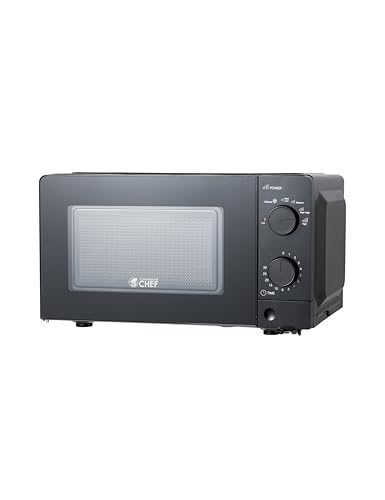
A convection microwave pairs a standard microwave with a heating element and fan, so it can bake, roast and brown as well as reheat. It is a good fit when you want one appliance to do the job of two. Cooking modes and cavity size are the main differences between models. Think about the jobs you do most. If you mainly reheat and occasionally roast vegetables or bake a small casserole, a mid-size model is plenty, while frequent bakers will want to look closely at the cavity, the rack position and the way the convection mode is controlled. Also check whether a turntable or flat base is used, since that affects which pans fit. Check the weight too, because these units are heavy and need a sturdy counter.
The six models below are countertop models from well-known brands. We have not used these microwaves ourselves, so please confirm the capacity, mounting type and cooking modes on the current listing before buying. Measure the counter space, including the height under cabinets and the clearance the maker asks for around the vents, and use only cookware the maker approves for each mode.
As an Amazon Associate we earn from qualifying purchases. Links below are affiliate links, and they do not change the product information we give.
What to Look For
| Feature | Why it matters |
|---|---|
| Footprint | Countertop models vary a lot in width and depth |
| Modes | Look for convection, grill and combination |
| Capacity | Check interior size against your pans |
| Accessories | Racks and trays are often included |
In this guide
Specs at a Glance
| Microwave | Type | Size | Notes |
|---|---|---|---|
| Samsung MC11K7035CG | Convection microwave | Mid class | Ceramic enamel interior |
| Toshiba ML2-EC09SA | Convection microwave | Compact class | Convection with microwave |
| GE Profile PEB9159 | Convection microwave | Large class | Stainless finish |
| Breville Combi Wave | Combination oven | Mid-to-large class | Microwave, convection, air fry |
| Cuisinart CMW-200 | Convection microwave | Mid class | Convection with grill |
| Panasonic NN-CD87KS | Convection microwave | Mid-to-large class | Inverter, convection |
The 6 Best Convection Microwaves
Top pickBest for everyday cooking
1. Samsung MC11K7035CG Convection Microwave
A Samsung convection microwave with a ceramic enamel interior and several cooking modes. It aims at everyday bakers and reheaters. Check the listing for the interior size, the rack and the combination modes it offers before you order.
Suits: everyday cooking. Strengths: easy cleaning. Weaknesses: larger body. Skip it if you want a tiny unit.
View Samsung MC11K7035CG on Amazon
Best for small kitchens
2. Toshiba ML2-EC09SA(BS) Convection Microwave
A Toshiba convection microwave on the compact side of the range. It fits smaller kitchens that still want baking. Look at the listing for the interior size and for whether the turntable can be removed for larger pans.
Suits: small kitchens. Strengths: compact convection. Weaknesses: smaller cavity. Skip it if you bake large trays.
View Toshiba ML2-EC09SA on Amazon
Best for premium kitchens
3. GE Profile PEB9159SFSS Convection Microwave
A GE Profile convection microwave with a stainless finish, aimed at kitchens that want a premium look. Read the listing for the dimensions and the cooking modes, and plan on a generous counter spot for its bulk.
Suits: premium kitchens. Strengths: a stainless finish and strong brand. Weaknesses: bulky body. Skip it if you have limited counter space.
View GE Profile PEB9159 on Amazon
Best for all-in-one kitchens
4. Breville Combi Wave 3-in-1
A Breville combination appliance with microwave, convection and air frying modes. A premium all-in-one. Check the listing for the cooking modes included and for what accessories are in the box.
Suits: all-in-one kitchens. Strengths: versatility. Weaknesses: a premium class. Skip it if you want a basic unit.

Best for versatile cooking
5. Cuisinart CMW-200 Convection Microwave
A Cuisinart convection microwave with a grill function. A practical choice for cooks who want more than reheating. Look at the listing for the grill element details, the rack and the interior size.
Suits: versatile cooking. Strengths: combined modes. Weaknesses: moderate cavity. Skip it if you want the smallest unit.
View Cuisinart CMW-200 on Amazon
Best for one-oven kitchens
6. Panasonic NN-CD87KS Convection Microwave
A Panasonic convection microwave with inverter technology, a long-running favorite among small-kitchen cooks. Read the listing for the inverter details and the size of the cavity, and confirm that it fits your usual baking pan.
Suits: one-oven kitchens. Strengths: inverter power. Weaknesses: takes more counter space. Skip it if you want a basic microwave.
View Panasonic NN-CD87KS on Amazon
Care and Setup
- Wipe the interior after use.
- Use the right rack for each mode.
- Let it cool after convection.
- Keep vents clear.
Mistakes to Avoid
- Using metal in microwave mode.
- Skipping the rack.
- Ignoring the manual.
- Blocking vents.
How Convection Mode Works Inside a Microwave
A convection microwave has two separate ways of cooking. In microwave mode it behaves like any other microwave, using microwave energy to heat water in the food. In convection mode, a heating element and a fan circulate hot air around the cavity, so it works like a small fan oven. This is what allows browning, baking and roasting, which a standard microwave cannot do.
Combination modes mix the two, using microwave energy to speed up cooking while hot air or a grill element browns the surface. These programs can be useful for casseroles, roast chicken pieces or reheating leftovers with a crisp finish. Each maker names and describes them differently, so read the manual carefully to understand what each mode does and what cookware is allowed.
The trade-off is space and time. The cavity is smaller than a typical oven, so batches are limited, and convection mode often needs a preheat. The exterior also gets hot in convection use, so check the clearance advice and the heat warnings. Expect to adjust recipes written for a full-size oven: smaller pans, shorter times and frequent checking are normal. Many people use a convection microwave as a second oven for small meals and keep the full oven for big roasts or multiple trays. If you cook for one or two, it can cover a surprising amount.
Cavity Size, Turntable and Pan Fit
Capacity in cubic feet does not tell you whether your pan fits. Measure the pans you bake with, such as a small casserole dish, a pie plate or a muffin tin, and compare with the interior width, depth and height on the listing. Take into account the turntable, which may reduce usable space, and the height needed for the rack. Some models let you remove the turntable for larger flat pans, and others do not, so check before you buy.
The rack is more important than it seems. Convection cooking needs air to circulate around the food, and a rack raises items off the base. Racks may be metal, and some are meant for specific modes only. Using the wrong rack or placing metal where it is not allowed can damage the microwave, so follow the manual closely. Ask whether the unit includes a baking tray, a rack and a crisping surface, or whether you must buy them.
- Measure the inside dimensions of your favorite pans.
- Look for notes on the maximum dish size and weight.
- Check whether the turntable can be turned off or removed.
- Find out which cookware is recommended for each mode.
A cavity that looks large on paper but has a tall turntable and a low ceiling may not fit what you plan to cook.
Cookware and Safety Rules for Each Mode
The most important rule of a convection microwave is that cookware depends on the mode. In plain microwave mode, use microwave-safe dishes and avoid metal unless the manual says otherwise. In convection mode, oven-safe dishes are needed, since the cavity gets hot, and metal pans may be allowed. In combination mode, rules are usually the strictest, because microwaves and metal do not mix well. Many makers advise using glass or ceramic dishes for combination cooking, but follow your manual.
Do not guess. Keep the instruction manual handy, and note which dishes and racks are approved for each mode. Never use sealed containers or anything not designed for heat. Be careful with plastic, since many plastics are only for microwave mode and can melt in convection. Use oven mitts, because the interior, the door glass, the rack and the dishes will be hot. Allow the oven to cool before cleaning.
Ventilation matters too. Keep the vents clear and allow the clearance the maker specifies around the sides, top and back. Do not place the unit in an enclosed cabinet unless it is rated for that. If you see sparks, stop the unit immediately and check for metal that should not be there. Children should be supervised since the exterior can become very hot during convection and grill operation.
Choosing Between Convection Microwave, Toaster Oven and Air Fryer
A convection microwave is one option among several small cooking appliances. A toaster oven typically offers more baking space for the footprint and better toasting, while a convection microwave brings microwave speed for reheating and defrosting. An air fryer excels at crisping with a basket, though it does not bake or microwave. Some all-in-one units combine several functions.
Think about your counter and your habits. If you already have a good toaster oven or air fryer and you mainly want a microwave, a standard model may suit you better. If you are short on space and want one machine to reheat, bake small items and brown the top of a casserole, a convection microwave is practical. If you want to replace a full oven for baking, check whether the capacity is sufficient for your usual recipes.
Budget tiers can help narrow the choice. Lower-cost models tend to offer a basic set of functions and smaller cavities, mid-range models add more modes and better controls, and premium all-in-one units add features such as air frying or sensor cooking. More features mean a steeper learning curve and more to clean. Be honest about which modes you will use. Ask yourself what you cook weekly and whether a simpler appliance already does it. The best choice is the one that you will use often, not the one with the longest feature list.
Cleaning, Care and Signs It Needs Replacing
Convection use creates more grease and baked-on residue than plain microwaving, so cleaning matters. Wipe the interior after use when it is cool, and use mild detergent and a soft cloth. Remove and wash the turntable, ring and rack as advised by the maker. Interior coatings such as ceramic enamel may be easier to wipe, but avoid abrasive pads that can scratch. Do not spray cleaners directly onto vents or control panels.
Check the door seal and latch regularly. Food debris on the seal can prevent proper closing and should be wiped off. If the door is bent, the hinges are loose or the seal is damaged, stop using the microwave and have it checked. For the convection element and fan area, follow the manual: some units keep these hidden, while others require care around the element. Do not run it empty unless the manual says so.
Signs it is time to replace include arcing that cannot be traced to a simple cause, food that heats unevenly even after cleaning, a fan that is loud or grinding, a turntable that no longer rotates, a door that will not close properly, or a persistent burning smell. Check the warranty first, and consider the cost of repair compared with a new unit. Because these appliances are heavy, plan the removal and the placement of a replacement in advance.
Adapting Recipes for a Combination Oven
Recipes written for a conventional oven do not always translate directly to a convection microwave. The fan moves hot air around, and some modes combine microwave energy with heat, so times and temperatures often need adjustment. The manual that comes with your unit is the best source for conversion advice, and many makers include charts for common foods.
General principles to keep in mind:
- Begin by following the manual’s suggested settings for the mode you choose.
- Check food earlier than the recipe says, because convection can brown faster.
- Use the rack position the manual recommends, since airflow changes with height.
- Choose metal or glass bakeware only if the manual allows it for that mode.
- Keep notes on what worked so you can repeat it.
Treat the first few bakes as practice. Small cakes, muffins, roasted vegetables and reheated casseroles are forgiving first projects. Do not rely on recipe times alone for meat and poultry; confirm doneness with a thermometer and follow official food guidance for safe temperatures.
Which Mode for Which Job: A Quick Table
Convection microwaves offer several modes. Names vary by maker, but the general pattern is similar. The table below summarizes what each mode is typically used for.
| Mode | Typical use | Cookware note |
|---|---|---|
| Microwave only | Reheating drinks and leftovers, defrosting | Use microwave-safe dishes only |
| Convection only | Baking, roasting, browning | Oven-safe bakeware that fits the cavity |
| Combination | Faster cooking with browning for casseroles and some meats | Follow the manual, since metal may be restricted |
| Grill element, where present | Crisping the top of dishes | Keep food at the distance the maker advises |
| Preheat function | Warming the cavity before baking | Do not leave empty during microwave modes |
Because the rules about which cookware is allowed in each mode differ from one model to another, read the cookware section of the manual before using unfamiliar dishes.
Counter Space and Clearance
A convection microwave runs hotter than a regular one, which affects where it can sit. The maker specifies clearance for the top, sides and rear, and these figures are not suggestions. Measure your counter and the space above, then compare the numbers. If you plan to build it into cabinetry, make sure the model is designed for that and that a trim kit is available from the maker.
Consider these placement points:
- Keep the vents clear of walls and cabinets.
- Do not place the unit beside a heat source such as a range.
- Use a stable, heat-tolerant surface.
- Plug it directly into a suitable outlet as the manual describes.
- Leave room to open the door fully and slide in a tray.
If the unit will share an outlet with other appliances, check the electrical requirements and speak to an electrician if you are unsure.
Keeping the Interior Clean and Odor-Free
Convection modes can bake grease onto the walls of the cavity, so regular wiping matters. Let the oven cool after use, then wipe the inside with a soft cloth and mild detergent. For stuck-on food, many makers suggest steaming the cavity with a bowl of water for a short time to loosen residue, but confirm that method in the manual first.
Do not use harsh abrasives on the interior, and avoid spraying cleaner into vents or controls. Remove and wash the turntable and any racks according to the care instructions. If you see sparks, a persistent burning smell or a damaged door seal, stop using the unit and contact the maker. Those issues call for a qualified technician rather than a do-it-yourself fix.
Cookware Rules for Each Cooking Mode
Convection microwaves mix two kinds of heating, and cookware that is fine in one mode can be a problem in another. Always read the cookware section of your manual, then use this overview as a memory aid.
- In microwave mode, use glass, ceramic or plastic dishes labeled as microwave suitable. Avoid metal unless the manual says otherwise.
- In convection mode, use oven-safe dishes and metal bakeware that fit within the cavity with room for air to move.
- In combination modes, stick to what the maker lists, because mixing metal and microwaves can cause sparking.
- Keep dishes clear of the walls and the heating element by the distance the manual states.
- Use oven mitts, since dishes and the cavity become very hot.
- Do not use sealed containers that can build up pressure.
If you are unsure whether a pan or bowl is safe in a particular mode, check the manual or contact the maker. Avoid improvising with items such as takeout containers, foil trays or decorative dishes unless they are clearly marked suitable. A moment of checking is far kinder to your oven than a repair.
A Closer Look at What Convection Adds to a Microwave
Adding convection to a microwave sounds like a small upgrade and behaves like a different appliance. The microwave half is about speed and moisture; the convection half is about browning, crisping and baking, and the interesting cooking happens where the two meet. When you read this guide, keep asking which half of the appliance each pick serves best. Households that mostly reheat should weight microwave evenness and controls; households that want to retire the main oven for small meals should weight the oven half: preheat speed, temperature stability and cavity shape. Combination programmes are the bridge, and their usefulness depends on how thoughtfully they are implemented rather than how many the brochure lists. The sections that follow explore how to choose, cook and care for these two-in-one machines.
Choosing a Convection Microwave in Depth: Two Appliances in One Box
A convection microwave promises to replace two appliances, so judge it on both halves of that promise rather than on the microwave figures alone. As a microwave, what matters is even heating: how the turntable or flatbed distributes energy, whether the controls offer sensible power levels rather than just full blast, and whether reheating staples like soup, rice and leftovers comes out uniformly hot without scorched edges. As an oven, the questions change: how the heating element and fan work together, how accurate and stable the temperature is, and whether the cavity and rack arrangement let air circulate around food instead of trapping steam against it.
Capacity needs honest thought. The litre figure on the box counts the whole cavity, but convection cooking needs space around the dish for air to move, so the usable size is smaller than the same figure on a plain microwave. Measure your most-used dishes, including handles, and check they fit with room to spare and can rotate if the model has a turntable. A family casserole dish that only just squeezes in will cook unevenly and be a wrestling match to remove when hot.
Controls and programmes deserve scepticism and attention in equal measure. Useful features include a genuine convection mode with adjustable temperature, combination modes that use microwave speed with oven browning, and clear manual controls you can override. Long lists of automatic programmes matter less than whether the basics are quick to set with wet or floury hands. Finally, consider placement and ventilation: convection mode makes the exterior and the air around the unit genuinely hot, so the model needs the clearance its manual specifies, on a surface that can take the heat, away from anything that should not warm up.
Before You Buy: Space, Ventilation and Power
A convection microwave needs more planning than a basic microwave because convection mode makes real oven heat. Measure the counter or housing space including the clearance the manual will demand on the top and sides, and check the surface beneath can tolerate warmth. Confirm the door can open fully without striking cupboard doors or blocking a walkway, and that the socket it will use is sensibly placed, since trailing cables across a hob are an accident rehearsing itself. If the unit is destined for a fitted housing, only choose a model designed for it.
Think, too, about what it will replace. If it takes over most small-oven work, its cavity must take your everyday dishes, so measure them, including the tall casserole and the wide baking dish, and compare with the internal dimensions rather than the headline litre figure. If it will mostly reheat and occasionally bake, a smaller footprint may serve better and leave counter for preparation. Deciding the unit’s real job first makes the shortlist in this guide much easier to read, because the best pick for a baking enthusiast is rarely the best for a reheating household.
Cooking Well With a Convection Microwave, Day to Day
The skill in using a combination appliance is choosing the right mode for the food in front of you. Microwave mode wins for reheating, defrosting, melting and steaming vegetables, where speed and moisture matter more than browning. Convection mode is your small oven: choose it for pastry, roasting vegetables, gratins and anything where a crisp, browned surface is the point. Combination mode sits between, using microwave energy to cook the interior quickly while the hot air browns the outside, and it shines on dense foods such as jacket potatoes, whole chickens and thick casseroles that would take a long oven session.
Preheating matters in convection mode just as it does in a full oven. Putting food into a cold cavity and timing from there gives pale, uneven results; a short preheat while you prepare the dish costs nothing and transforms consistency. Use the rack supplied for convection cooking so air reaches the underside of food, and choose dishes that suit both worlds: glass, ceramic and oven-safe silicone move between modes, while metal belongs only in convection-only cooking and only if the manual allows it. Never run microwave mode with metal inside.
Build a repertoire of weeknight wins: a tray of roast vegetables started on combination and finished on convection, frozen pastry snacks baked in small batches, leftovers reheated on microwave then refreshed for a few minutes on convection to restore crispness. Keep notes on the modes and times that worked for your regular dishes, because combination cooking varies between models more than ordinary oven cooking does, and your own record quickly becomes more useful than generic charts.
Your First Week With a Convection Microwave: Learning Its Modes
Spend the first days deliberately testing each mode with familiar food. Reheat a portion of something you know well on microwave mode and judge evenness. Bake a small batch of something simple, such as scones or a tray of vegetables, on convection after a proper preheat, and compare with your main oven’s result. Then try one combination-mode dish, a jacket potato or a small gratin, and note the time saved and the texture achieved. Write these three results down; they calibrate your expectations faster than any chart.
By the end of the week, choose the three jobs this appliance will own in your kitchen: perhaps weekday reheating, small bakes and frozen pastry snacks, and set up your cupboard so the right dishes for those jobs live nearby. Teach everyone who will use it the one safety rule that matters, which cookware belongs in which mode, and label the rack if it helps. An appliance with a clear role gets used daily; one that tries to do everything tends to do nothing in particular.
Comparing the Picks in This Guide, Side by Side
Six products can look similar in a list and feel very different in a kitchen. The comparison below restates what each review in this guide already says about the convection microwaves, in one place, so you can match each pick to your household before deciding. Read it alongside the full reviews above: the aim is not to crown one winner, but to make the trade-offs impossible to miss.
Samsung MC11K7035CG Convection Microwave
It is positioned for everyday cooking; its stated strengths are easy cleaning; its honest limitation is larger body. As the review notes, skip it if you want a tiny unit. If that profile matches your cooking, this is the pick to examine first; if the limitation touches something you do every day, one of the other five will serve you better, and the contrast with its neighbours in this list is the quickest way to see why.
Toshiba ML2-EC09SA(BS) Convection Microwave
It is positioned for small kitchens; its stated strengths are compact convection; its honest limitation is smaller cavity. As the review notes, skip it if you bake large trays. If that profile matches your cooking, this is the pick to examine first; if the limitation touches something you do every day, one of the other five will serve you better, and the contrast with its neighbours in this list is the quickest way to see why.
GE Profile PEB9159SFSS Convection Microwave
It is positioned for premium kitchens; its stated strengths are a stainless finish and strong brand; its honest limitation is bulky body. As the review notes, skip it if you have limited counter space. If that profile matches your cooking, this is the pick to examine first; if the limitation touches something you do every day, one of the other five will serve you better, and the contrast with its neighbours in this list is the quickest way to see why.
Breville Combi Wave 3-in-1
It is positioned for all-in-one kitchens; its stated strengths are versatility; its honest limitation is a premium class. As the review notes, skip it if you want a basic unit. If that profile matches your cooking, this is the pick to examine first; if the limitation touches something you do every day, one of the other five will serve you better, and the contrast with its neighbours in this list is the quickest way to see why.
Cuisinart CMW-200 Convection Microwave
It is positioned for versatile cooking; its stated strengths are combined modes; its honest limitation is moderate cavity. As the review notes, skip it if you want the smallest unit. If that profile matches your cooking, this is the pick to examine first; if the limitation touches something you do every day, one of the other five will serve you better, and the contrast with its neighbours in this list is the quickest way to see why.
Panasonic NN-CD87KS Convection Microwave
It is positioned for one-oven kitchens; its stated strengths are inverter power; its honest limitation is takes more counter space. As the review notes, skip it if you want a basic microwave. If that profile matches your cooking, this is the pick to examine first; if the limitation touches something you do every day, one of the other five will serve you better, and the contrast with its neighbours in this list is the quickest way to see why.
Notice how the six divide: some trade convenience for control, some trade capacity for compactness, and some trade features for simplicity and price-free virtues like durability and easy cleaning. Your own priority among those trades, stated honestly before you shop, is the most reliable decision tool in this whole guide.
Three Household Scenarios: Matching a Combination Microwave to Your Life
The small household retiring the big oven
If one or two of you cook single dishes most nights, a convection microwave can honestly become your main oven, and you should choose the pick with the most capable convection half: stable temperatures, a sensible rack and a cavity that takes your everyday dishes. The energy and time saved across a year of small meals is the real return on the purchase, and it arrives quietly, week after week.
The family kitchen’s second in command
In a busy family kitchen the combination unit plays support: reheating, baking the side dish while the main oven roasts, crisping snacks without a full preheat. Prioritise controls that several people, including older children, can operate safely and a cavity that swallows the family’s standard casserole. The best pick for you is the one that removes friction at 6pm, not the one with the longest programme list.
The keen baker or batch cook
If you will push the convection half hardest, baking in small batches and roasting vegetables while the main oven is occupied, judge the picks by temperature accuracy and airflow evenness, and plan to calibrate with an oven thermometer in the first week. Your notes on modes and times become the appliance’s real manual, and a model with fine, honest manual controls will suit you better than one that hides everything behind automatic programmes.
Cleaning and Caring for a Convection Microwave
Combination appliances collect two kinds of mess: microwave splashes and oven-style baked-on grease, so cleaning has two gears. For everyday splashes, steam is your friend: heat a bowl of water with a slice of lemon or a splash of vinegar until the cavity steams, let it sit, then wipe with a soft cloth. Most fresh residue lifts without scrubbing, and the door seal and the area around the latch deserve the same wipe, since a clean seal keeps the door closing properly.
Convection cooking adds grease that settles on the cavity walls, the rack and around the fan cover. Wipe these down after roasting or grilling sessions once the unit has cooled, using warm soapy water and a non-abrasive sponge; grease left in place smokes and flavours the next meal. Wash the turntable and its support ring regularly and check that the rollers run freely, because a wobbling plate means uneven cooking and spills. If your model has filters or a specific cleaning programme, follow the manual’s schedule rather than improvising.
Long-term care is mostly about respect for the door and the electrics. Do not slam the door, do not run the microwave empty, and keep the vents unblocked so the unit can cool itself. Clean the exterior and control panel with a damp rather than wet cloth so moisture stays out of the electronics. If the interior light, turntable motor or fan starts behaving oddly, or you see sparking, stop using the appliance and seek a qualified repairer; microwave ovens store dangerous energy even unplugged, so internal repairs are never a home job.
Convection Microwave Mistakes That Spoil Good Food
The most common error is using the wrong cookware for the mode: metal in microwave mode causes sparking, while flimsy plastic in convection mode melts. Keep the two worlds separate in your mind and check every dish before it goes in. The second mistake is skipping the preheat in convection mode and then blaming the appliance for soggy pastry. Hot circulating air only crisps food if it is actually hot when the food arrives.
Overcrowding causes the third failure. Convection depends on air movement, so a cavity packed wall to wall steams the food instead of roasting it; cook in two smaller batches and the results improve immediately. Fourth, many cooks forget that combination mode cooks the inside faster than an ordinary oven, so timings copied from oven recipes overshoot; start checking early until you know your model. Finally, neglecting the turntable or rack position leads to uneven results that look random: food placed off-centre, a plate that cannot rotate, or a dish jammed against the wall all cook patchily. Most convection microwave disappointments are workflow issues, and all of them are fixable without spending anything.
Energy use is a quiet advantage worth understanding. Heating a small cavity for a single portion uses far less energy than bringing a full-size oven to temperature, and microwave reheating is thriftier still. The savings come automatically if you build the habit of choosing the smallest appliance that does the job well, which for many weeknight meals is the combination unit rather than the big oven.
If you cook for someone who reheats meals independently, such as a teenager or an older relative, favour the pick with the clearest controls and the most forgiving programmes. Legible displays, a simple dial and a reliable sensor reheat matter more to daily satisfaction than a long list of exotic functions nobody presses. Try setting your three most-used programmes together the first week so everyone learns them while you are there to help.
Frozen food is where combination cooking quietly excels. Defrosting in microwave mode followed immediately by convection cooking in the same cavity removes the transfer step where partially thawed food sits around. Plan meals around that strength: bread rolls refreshed, frozen gratins baked, pastry snacks crisped, all without heating the main oven or washing an extra tray.
Think about sound and light as well as heat. A combination microwave lives in the room where people eat, talk and work, so a fan that drones through every convection session or a beep that cannot be softened will irritate daily. Where the reviews in this guide mention noise or display clarity, weight those remarks seriously; they describe the appliance you will actually live with, long after the novelty of combination cooking has faded.
Finally, keep the manual’s cooking charts for the first month and your own notes forever after. Combination cooking times vary between models more than almost any other kind, and the household that writes down its winning settings for jacket potatoes, gratins and pastry snacks stops experimenting and starts enjoying the appliance. A note on the fridge door is the cheapest accessory it will ever have.
One last habit ties the whole appliance together: clean as you go between modes. A cavity wiped after a splashing microwave session will not smoke during the next convection bake, and a rack washed after roasting will not scent tomorrow’s cake. Thirty seconds with a cloth at the end of each use is the entire secret, and it is why well-kept combination ovens smell of nothing but the food inside them.
Convection Microwave FAQ
Can a convection microwave bake?
Yes, small batches. Capacity is limited.
Is it better than a toaster oven?
It adds microwave speed, but a toaster oven may hold more.
Do I need special cookware?
Use oven-safe dishes in convection mode.
Does it brown food?
Yes, convection and grill modes brown.
Do I need to preheat a convection microwave?
In convection mode, preheating is usually recommended, as with an oven. Check the manual because some units preheat automatically and others prompt you.
Can I use metal pans in a convection microwave?
Often in convection mode only, and not in microwave or combination mode, though rules differ. Follow the manual for each mode.
Why is the outside of my microwave hot during convection?
The cavity reaches oven-like temperatures, so the exterior and door can get hot. Allow the clearance the maker requires, and keep children and flammable items away.
Can a convection microwave replace a regular oven?
For small meals and baking in small pans, it can. For large roasts, several trays or big batches, a full oven is usually more practical.
How do I convert an oven recipe?
Use a smaller pan, shorten the time and check early. Your manual may offer guidance, and notes from the first few tries will help you adjust.
Does a convection microwave need special cleaning products?
No, mild detergent and a soft cloth are usually enough. Avoid abrasive pads or harsh chemicals that can damage the interior, and check the manual for your model.
What is a combination mode?
It uses microwave energy together with a heating element or convection fan to cook faster and brown the surface. Cookware rules are often stricter in this mode.
Can I bake a cake in a convection microwave?
Yes, in convection mode it behaves like a small fan oven, and cakes, muffins and traybakes all work well. Preheat the cavity, use a light-coloured metal or silicone pan as the manual allows, and start checking a little earlier than an ordinary oven recipe suggests, because compact cavities can brown the top quickly. The texture is usually indistinguishable from a full oven for everyday baking.
Why does my food brown on top but stay cool in the middle?
The surface is getting convection heat while the interior lags, which happens with dense or thick foods started from cold. Use combination mode for thick items so microwave energy helps the centre, let chilled dishes lose their fridge chill before cooking, and give the food a short standing time afterwards, because the centre continues to equalise after the programme ends.
Is it safe to use metal racks in a convection microwave?
Only in convection-only mode, and only the rack supplied or approved for your model, used exactly as the manual describes. Metal must never be used in microwave or combination mode unless the manufacturer explicitly designs a feature for it. When in doubt, use glass or ceramic, which are safe in every mode.
How is a convection microwave different from an air fryer?
An air fryer is a small, very intense fan oven optimised for crisping small batches quickly, while a convection microwave is a full microwave plus a gentler fan oven in a larger cavity. The convection microwave reheats, defrosts and bakes; the air fryer crisps faster but cannot microwave. Many kitchens use them as complements rather than substitutes.
Why does the outside of the unit get hot?
Convection mode uses a real heating element, so the cavity and cabinet warm up much like a small oven. That is normal within the clearances the manual specifies, but it means the unit should not be boxed into a tight cupboard, used under low cabinets that dislike heat, or have items stored on top while it cooks. Give it the breathing room the instructions require.
Can I replace my main oven with a convection microwave?
For small households and simple meals, many people do exactly that, especially for midweek cooking. The limits are capacity and simultaneity: you cannot bake a large batch and roast a big joint at the same time, and wide dishes may not fit. If your cooking is mostly for one to four people in single dishes, it can cover most oven work; keen batch bakers will still want the full oven.
The Short Version
For easy cleaning, the Samsung MC11K7035CG. For compact baking, the Toshiba ML2-EC09SA. For a premium look, the GE Profile PEB9159. For an all-in-one, the Breville Combi Wave. For grill cooking, the Cuisinart CMW-200. For inverter power, the Panasonic NN-CD87KS.